
 Pin it
Where you sit at a table can quietly affect who you face, how easily you make eye contact, and whether the moment feels collaborative, formal, or private. It does not reveal your whole personality, but it can send social cues and shape conversation. Use these steps to choose a seat that fits the connection you want to build.
Notice what each seat makes easier
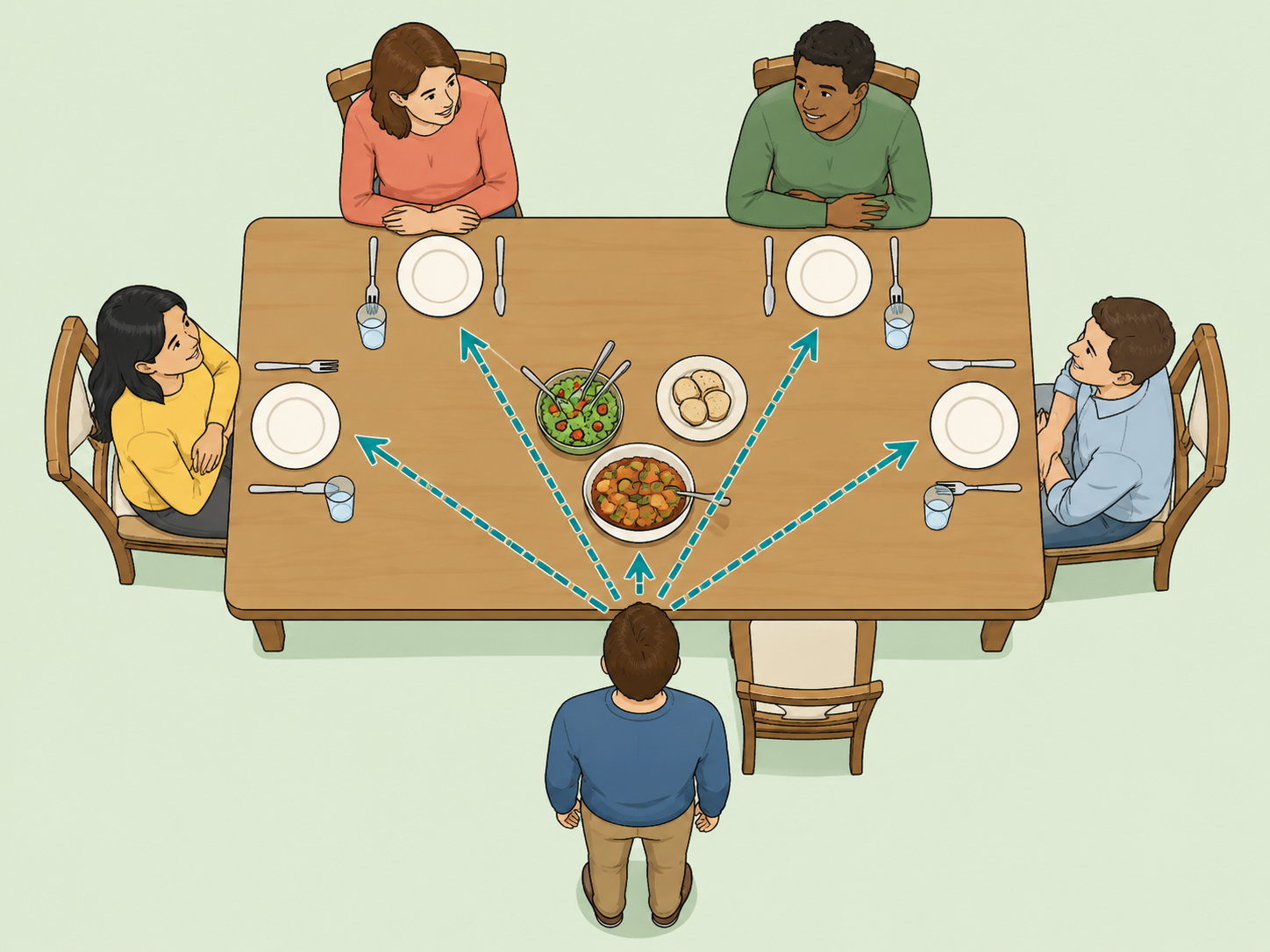
Before you sit down, look at who you will be facing, who will be beside you, and who may be hard to see. A research review on seating position and group interaction found that central positions can make eye contact with more people easier, which can increase participation. Treat your seat as a practical choice, not a personality label.
Choose a corner seat for relaxed one-on-one talk
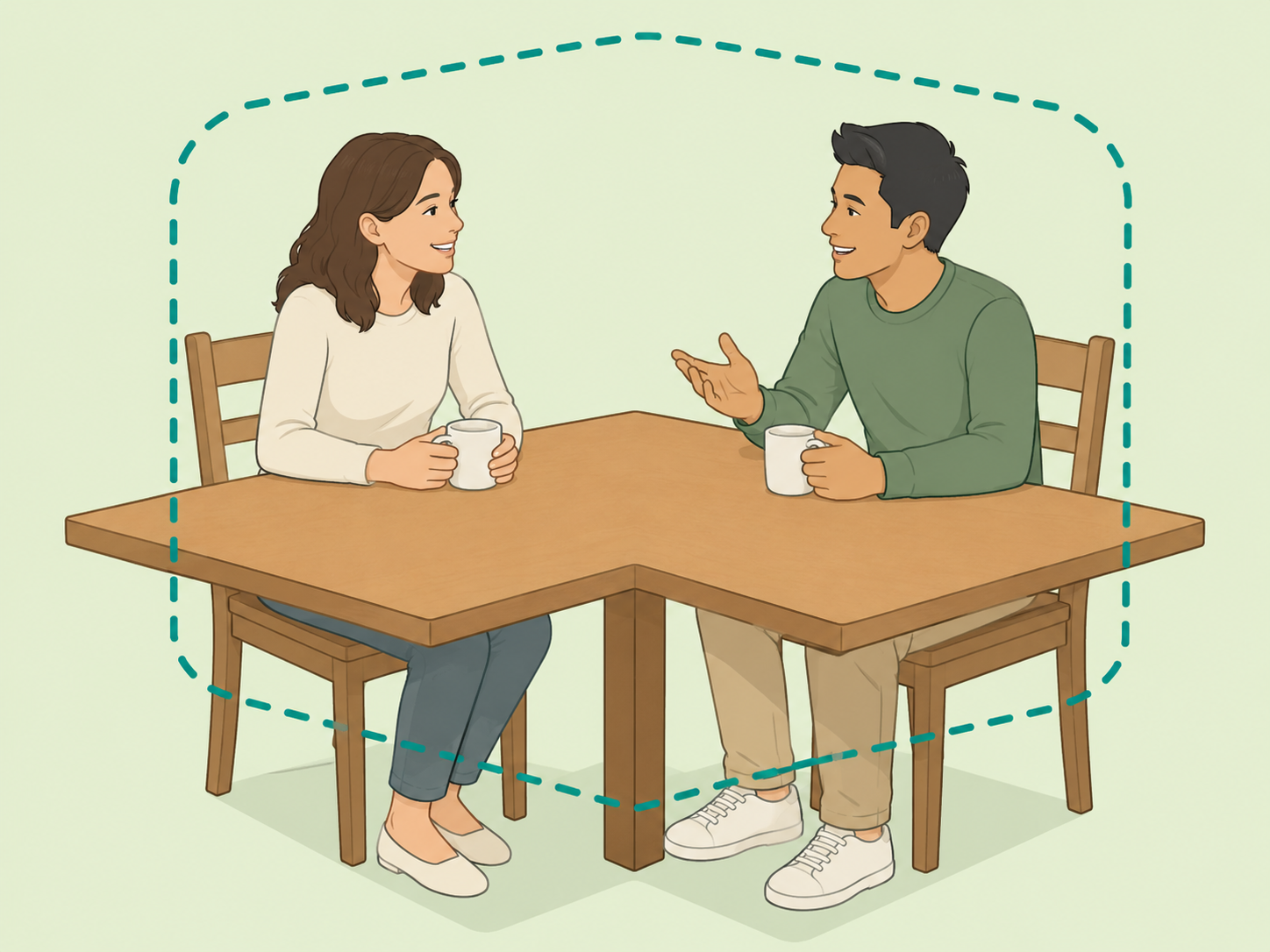
If you want to connect with one person, sit at a corner or at a gentle angle instead of directly across the table. A University of Toronto review of interpersonal space notes that people often prefer right-angle seating for informal conversation and collaboration, while face-to-face positions can feel more competitive depending on the task. This setup lets you make eye contact, look away naturally, and keep the mood less intense.
Sit beside someone when you are sharing a task
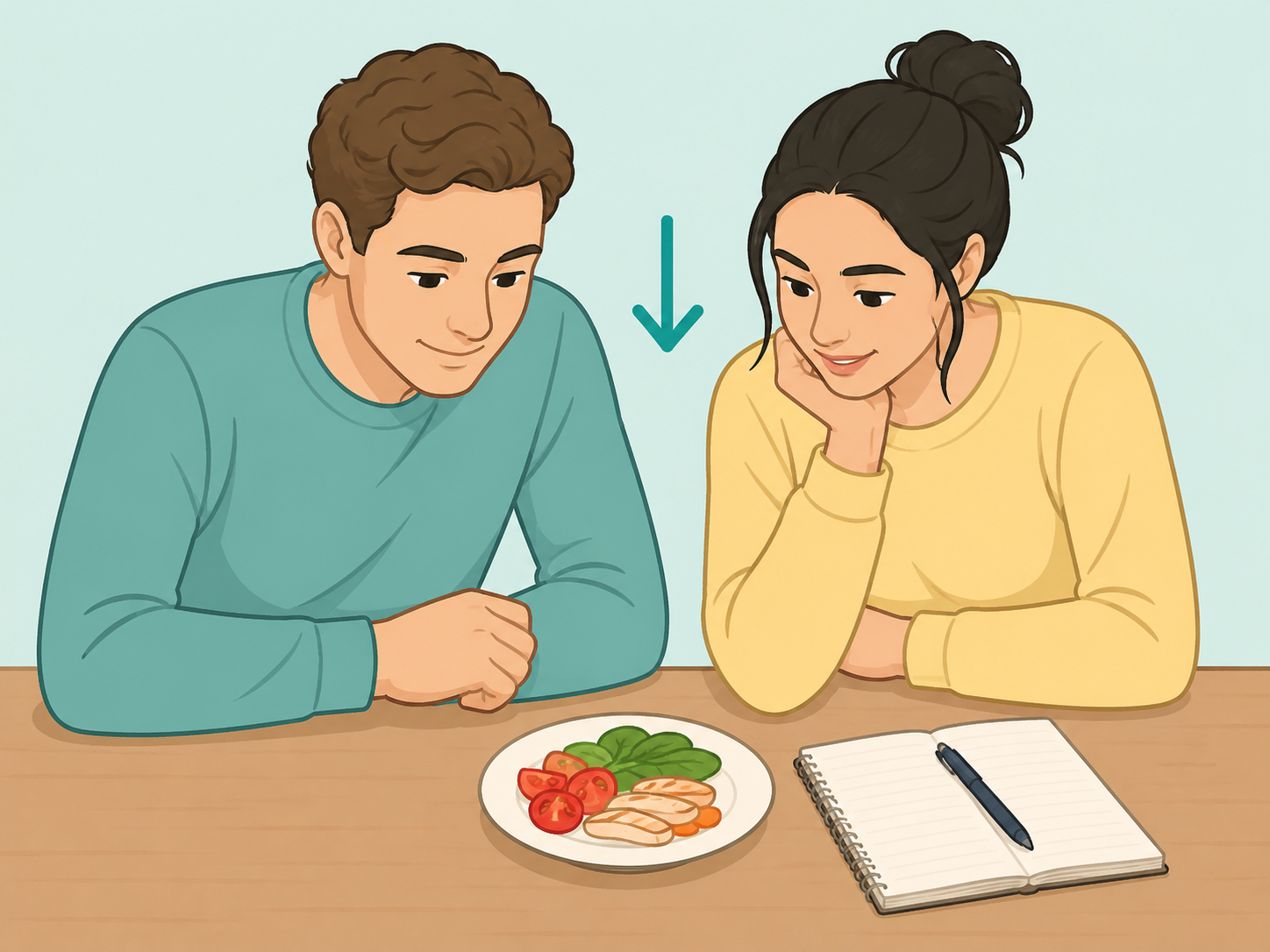
When you are helping a child cut food, looking at a menu together, playing a game, or planning something on paper, sit next to the person. The same interpersonal space review describes side-by-side seating as a common choice for cooperative work. It also makes it easier to look at the same object without turning the whole conversation into a debate.
Use the head seat only when you mean to guide
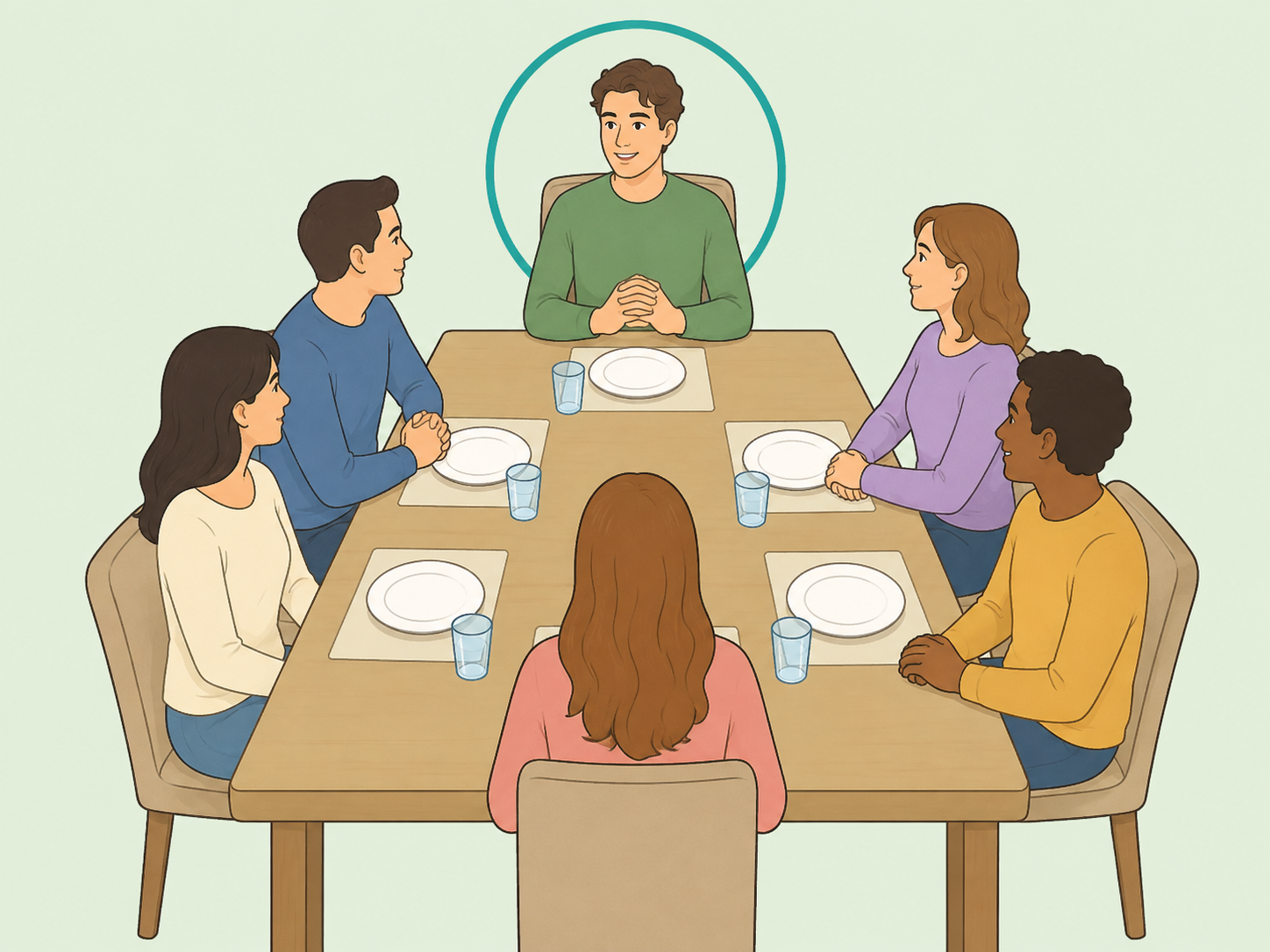
The end of a rectangular table often carries a leadership signal, so use it when you are hosting, serving, or helping keep the meal moving. In one study summary from the University of Kentucky, the end-of-the-table position worked as a cue people used when choosing a leader. If you want a more equal conversation, leave the head seat open or rotate who sits there.
Move quiet people into the sightline
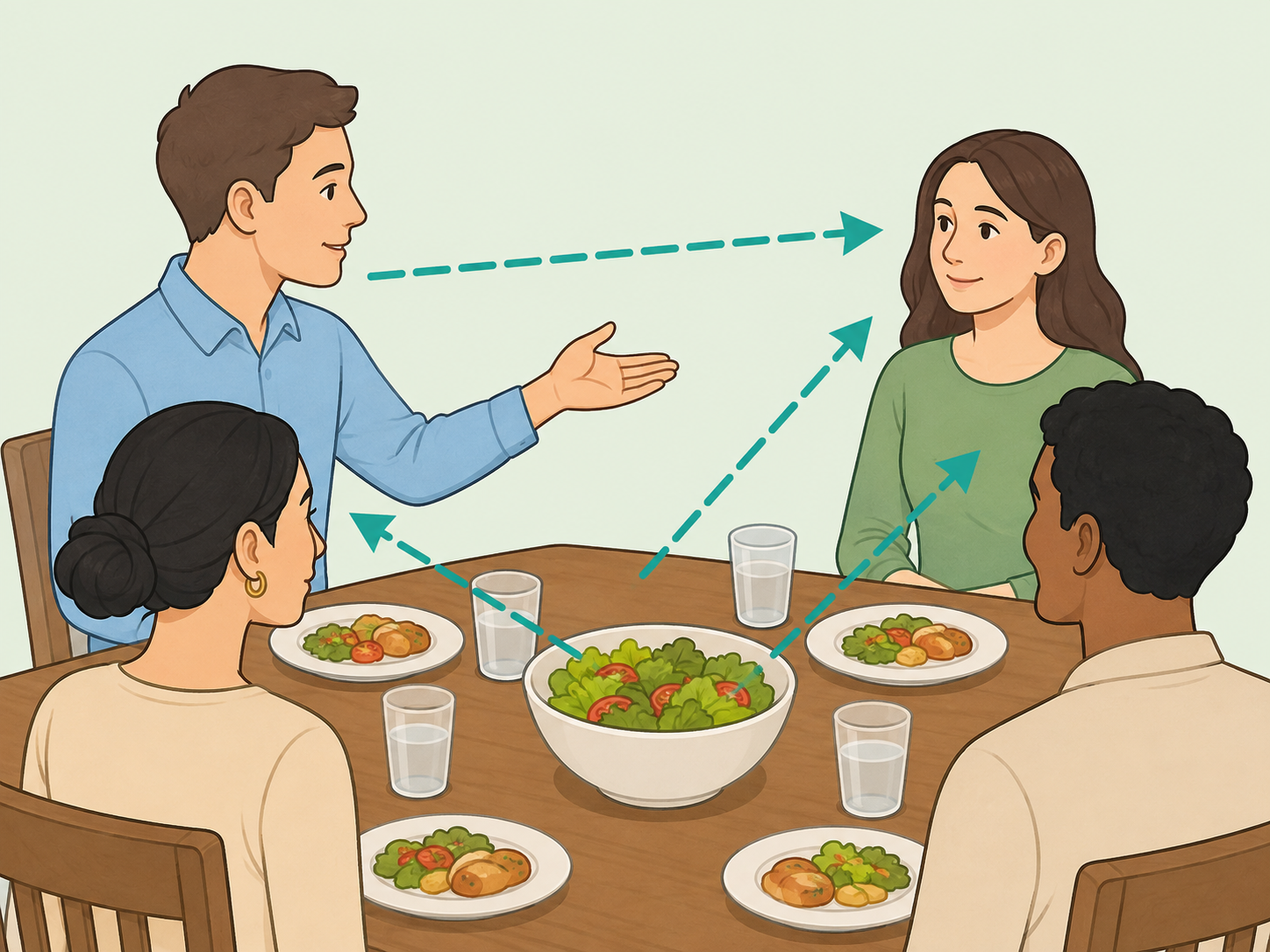
If someone often gets talked over, do not tuck them at the far corner behind a centerpiece or serving dish. Seat them where others can see their face, because eye contact and central seating are linked with more group interaction. Then invite them in with a simple question instead of demanding a performance.
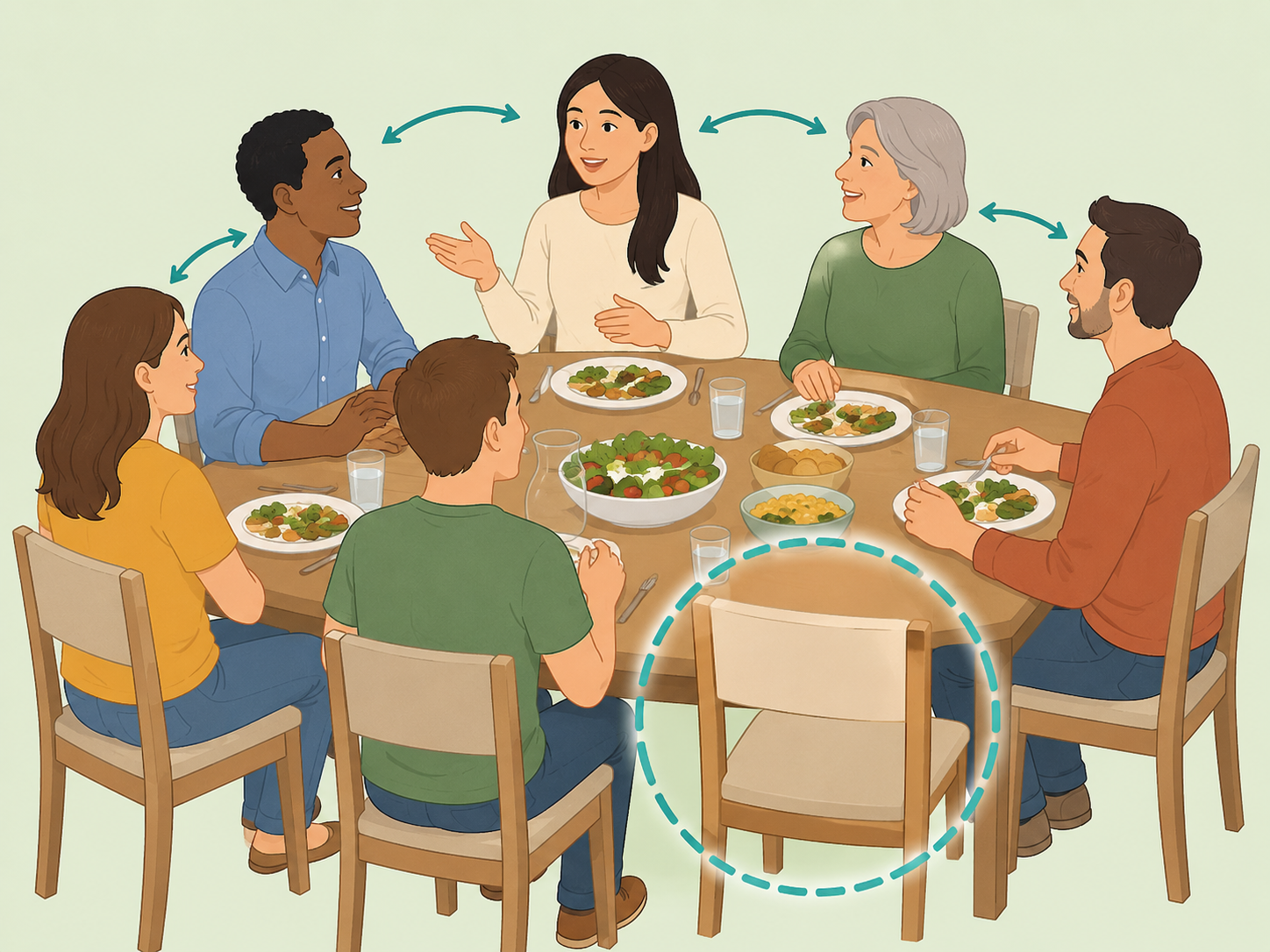
Use a round or oval setup for group connection
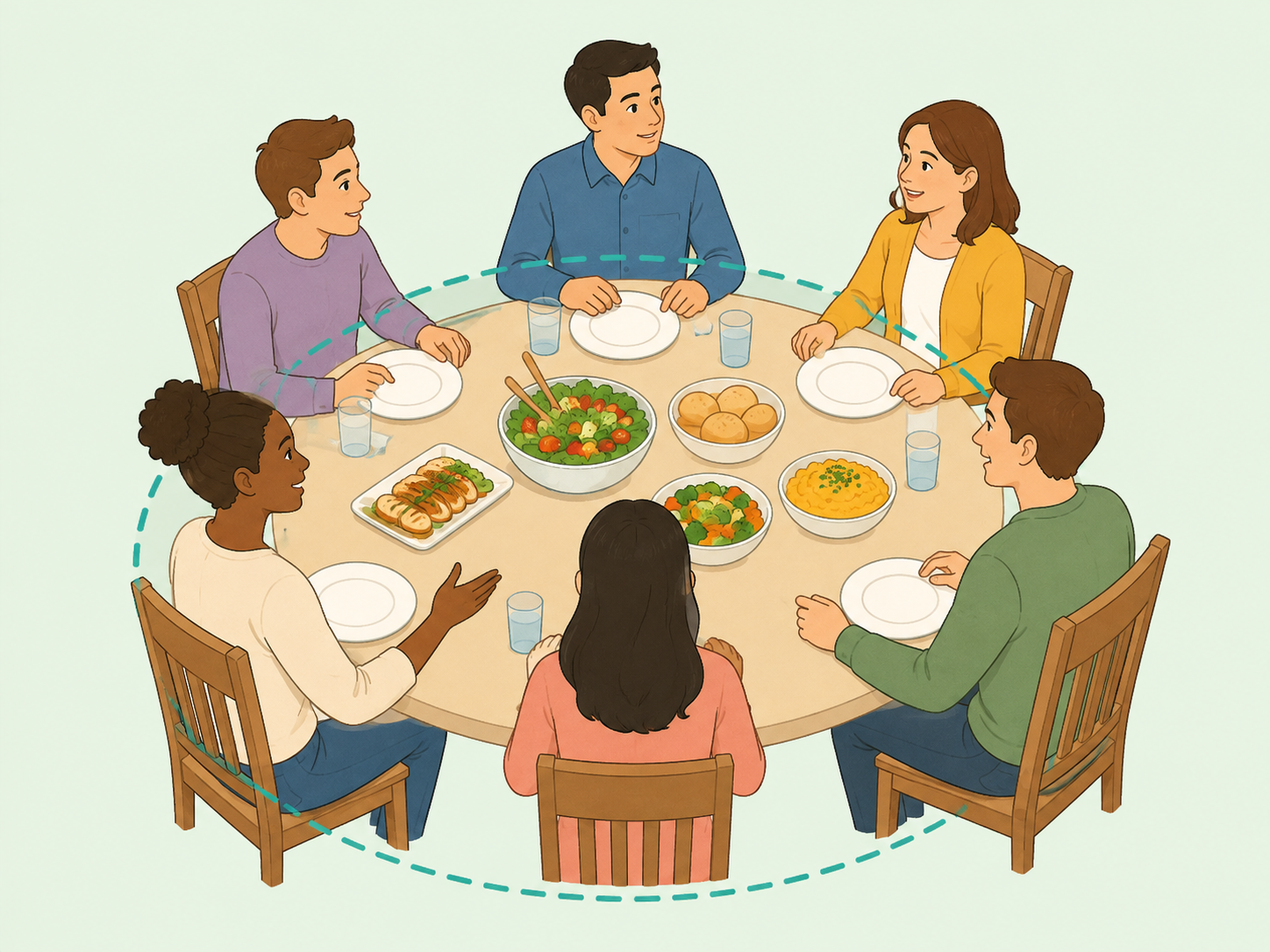
For a meal where everyone should feel included, choose a round or oval table when you can, or arrange chairs so there is no obvious top spot. Utah State University Extension notes that round or oval tables can support family interaction because they remove hard boundaries. If you have a rectangular table, you can create a similar effect by keeping the ends casual and balancing talk across both sides.
Keep phones and distractions away from the table
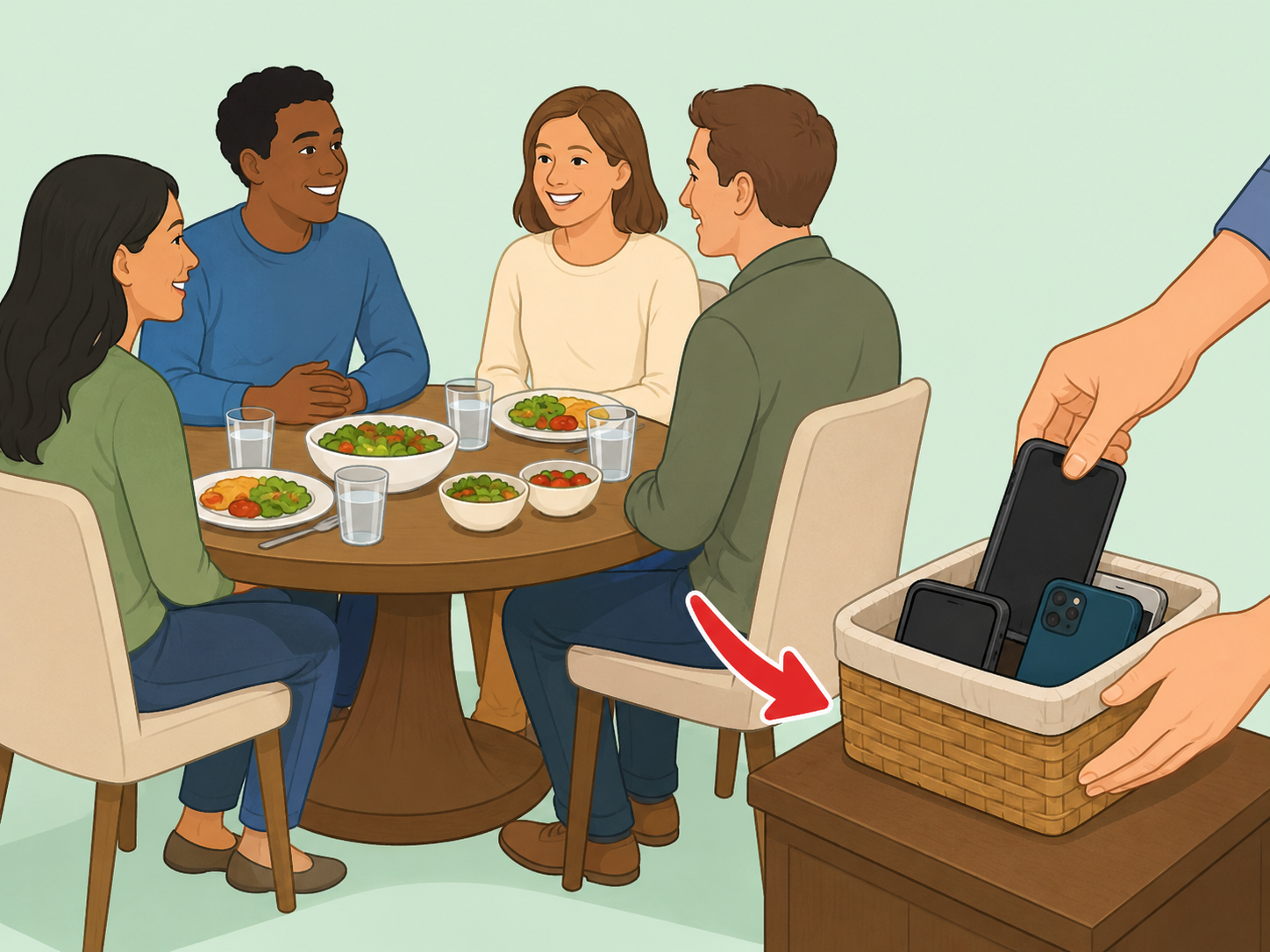
A good seat will not help much if everyone is looking at a screen. Utah State University Extension recommends a distraction-free mealtime and making an effort to include everyone in the conversation. Put phones away, keep the television off, and make the table a place where people can actually hear and notice each other.
Listen actively from the seat you choose
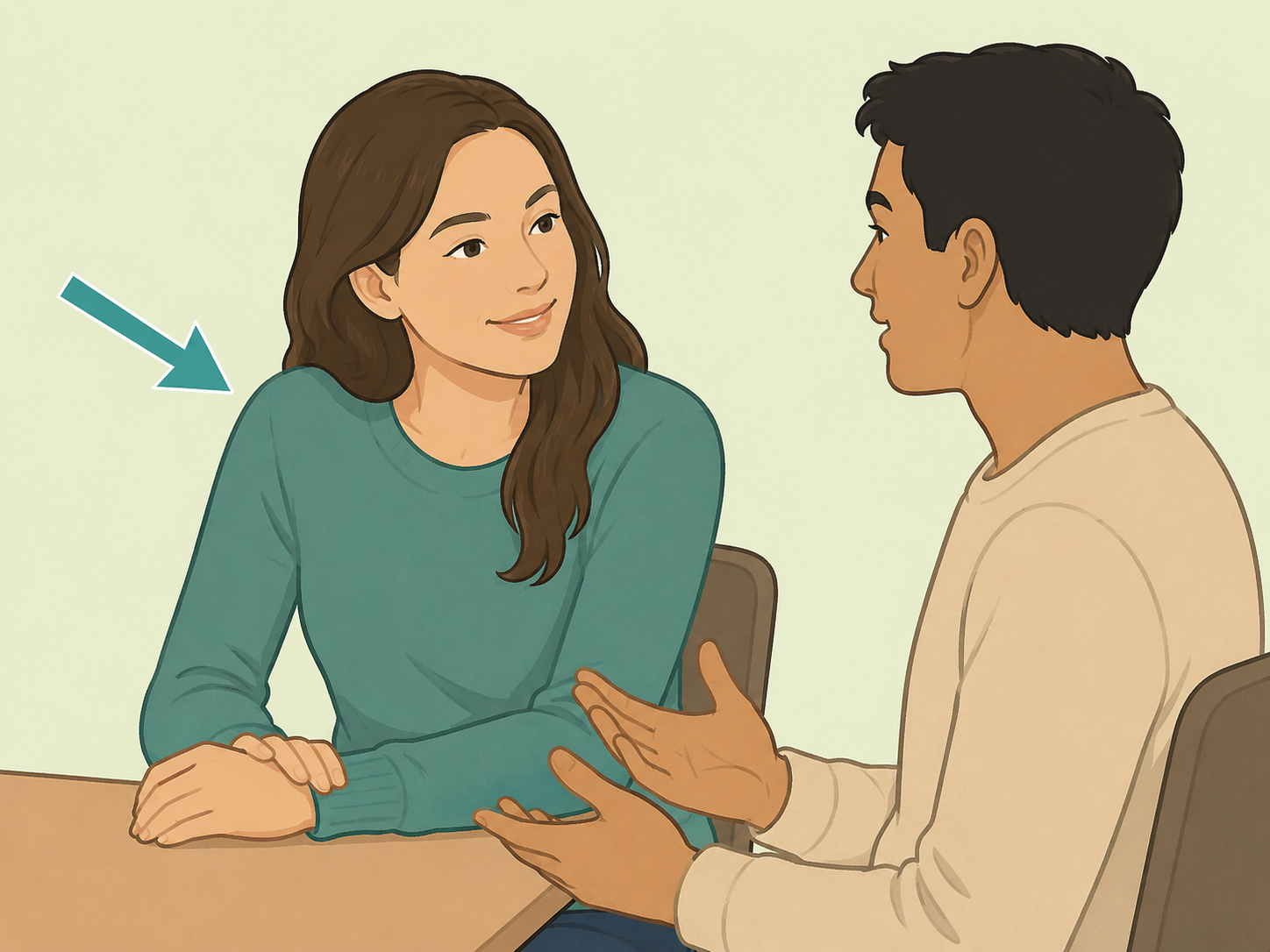
Once you sit down, turn your body toward the person speaking, make comfortable eye contact, and avoid planning your reply while they are still talking. Utah State University Extension describes active listening as paying attention to both words and nonverbal messages. Your posture can make your seat feel welcoming even if the table layout is not perfect.
Rotate seats to refresh the conversation
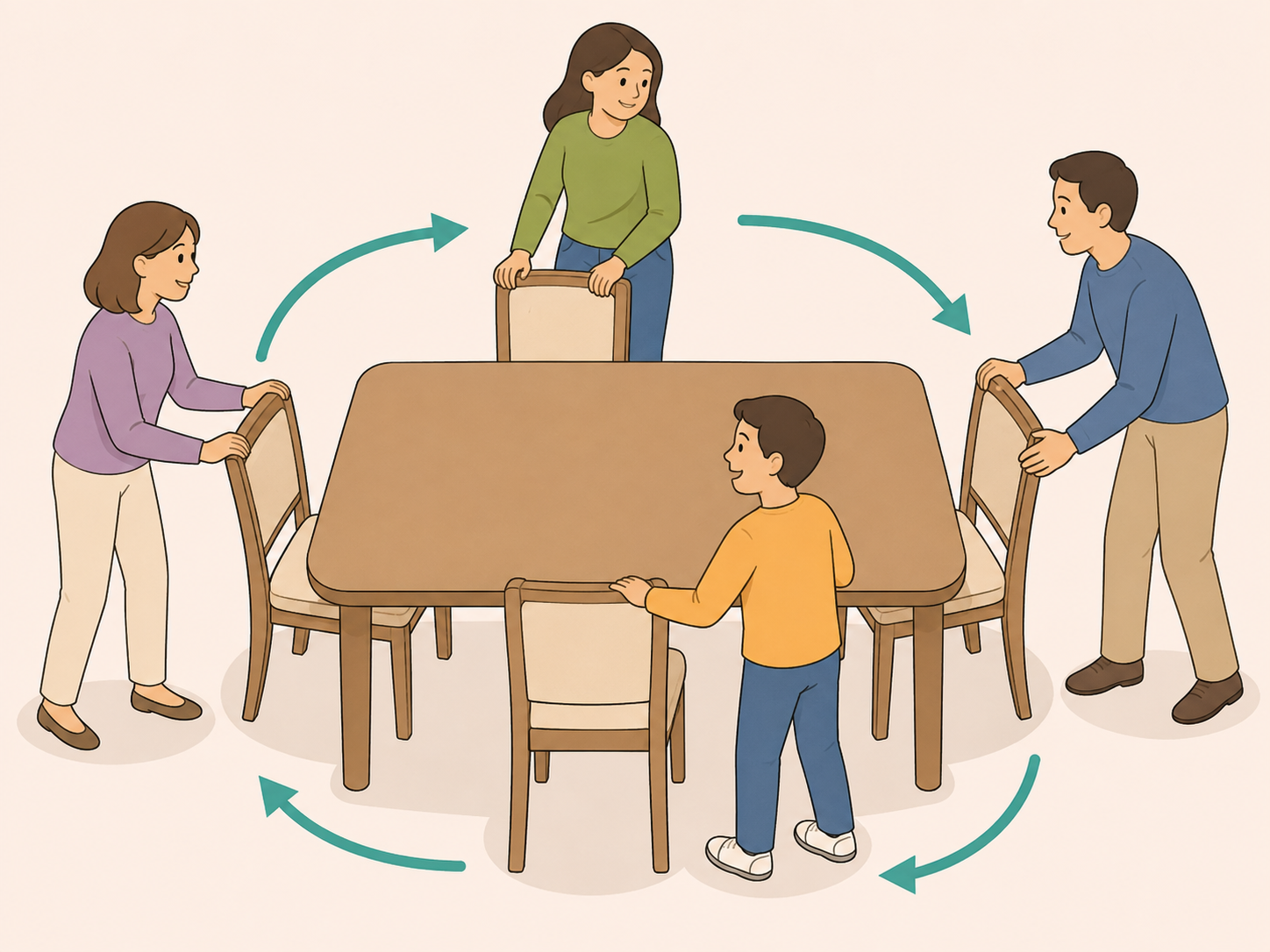
If the same person always sits at the head, the same pair always sits together, or one seat always feels left out, change the pattern. Family mealtime guidance from Utah State University Extension emphasizes positive communication, inclusion, and realistic routines. Switching seats occasionally helps people connect with different family members or guests without making a big announcement about it.
Summary
The bottom line: your chair is a small social tool. Choose a corner for relaxed one-on-one talk, sit beside someone for shared tasks, use central or round seating to include more people, and keep rotating so the same people do not always lead, listen, or get left out.
Frequently Asked Questions
- Does my usual table seat say something about my personality?
Not by itself. A seat can suggest what feels comfortable, such as leading, listening, or talking one-on-one, but it is only one cue among many.
- What is the best seat for a private conversation?
A corner or angled seat is often easier for a calm one-on-one talk because you can see the other person without sitting in a confrontational face-to-face line.
- What seat feels most like leadership?
At many rectangular tables, the end seat can be read as a leadership cue, especially in formal groups. Use it intentionally when you are hosting, guiding the meal, or helping organize the conversation.
- How can I help a quiet person join the conversation?
Seat them where they can see several faces, then ask open-ended questions and pause long enough for them to answer. Avoid putting them on the spot in a teasing or pressured way.
- Is a round table better for connection?
A round or oval table can make group conversation feel more even because there is no obvious head seat and more people can face each other naturally.
- Should families assign seats at dinner?
Assigned seats can help if they reduce conflict or help younger children settle, but rotating seats sometimes keeps conversation fresh and prevents one person from always being isolated or in charge.
References
Reliable references aided in composing and refining this content.
- https://journals.sagepub.com/doi/10.1177/105960117600100306
- https://scholars.uky.edu/en/publications/think-leader-think-male-and-female-sex-vs-seating-arrangement-as-
- https://www.dgp.toronto.edu/OTP/papers/video.mediated.collaboration/ishii.html
- https://extension.usu.edu/relationships/faq/the-power-of-family-mealtime
- https://extension.usu.edu/archive/the-benefits-of-family-meals
- https://extension.usu.edu/relationships/faq/using-active-listening-to-enhance-your-relationships