
 Pin it
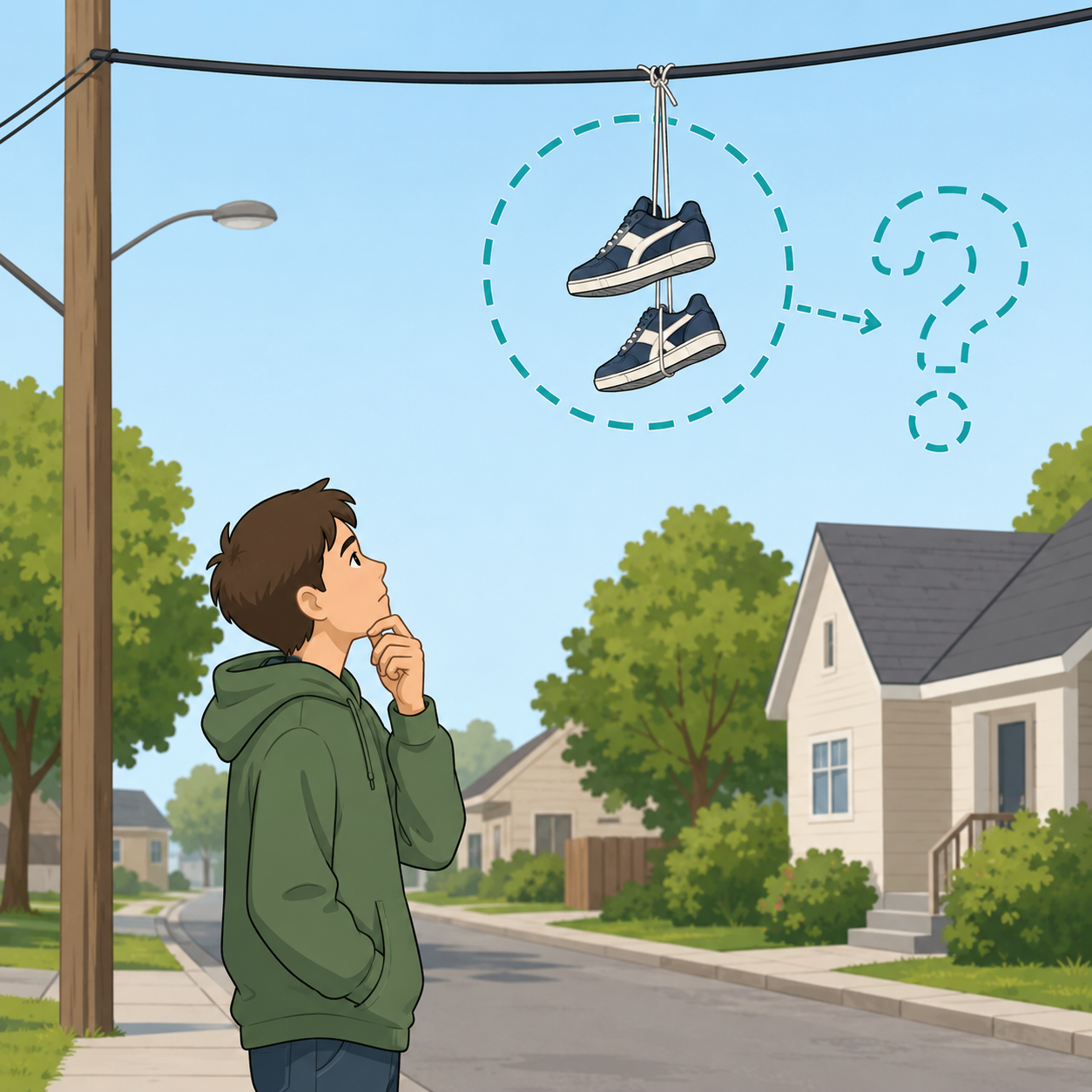
A pair of shoes hanging from a power line can look mysterious, but there is no single meaning that applies everywhere. The explanation often depends on the neighborhood, the people involved, and local stories passed around over time. This guide walks through the most common meanings and what to do if the shoes look unsafe or need to be reported.
Start with the idea that there is no single meaning
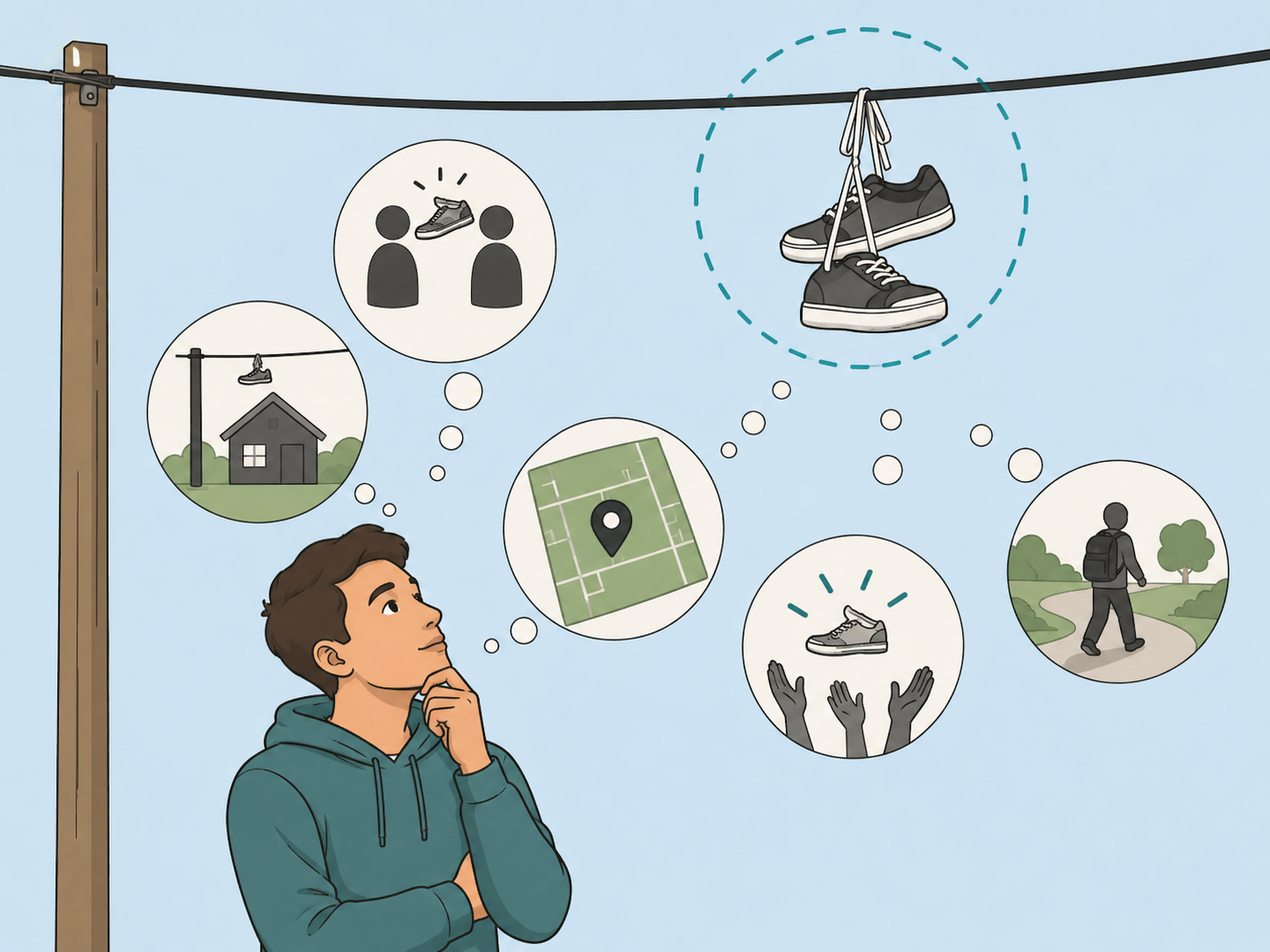
Do not assume one pair of shoes is sending the same message in every city. A WBEZ investigation found many explanations, from teenage mischief to memorials and neighborhood stories, while the Office of Justice Programs describes the gang-sign claim as a common urban legend. Treat the shoes as a clue with local context, not a universal code.
Consider a prank, dare, or lost bet first
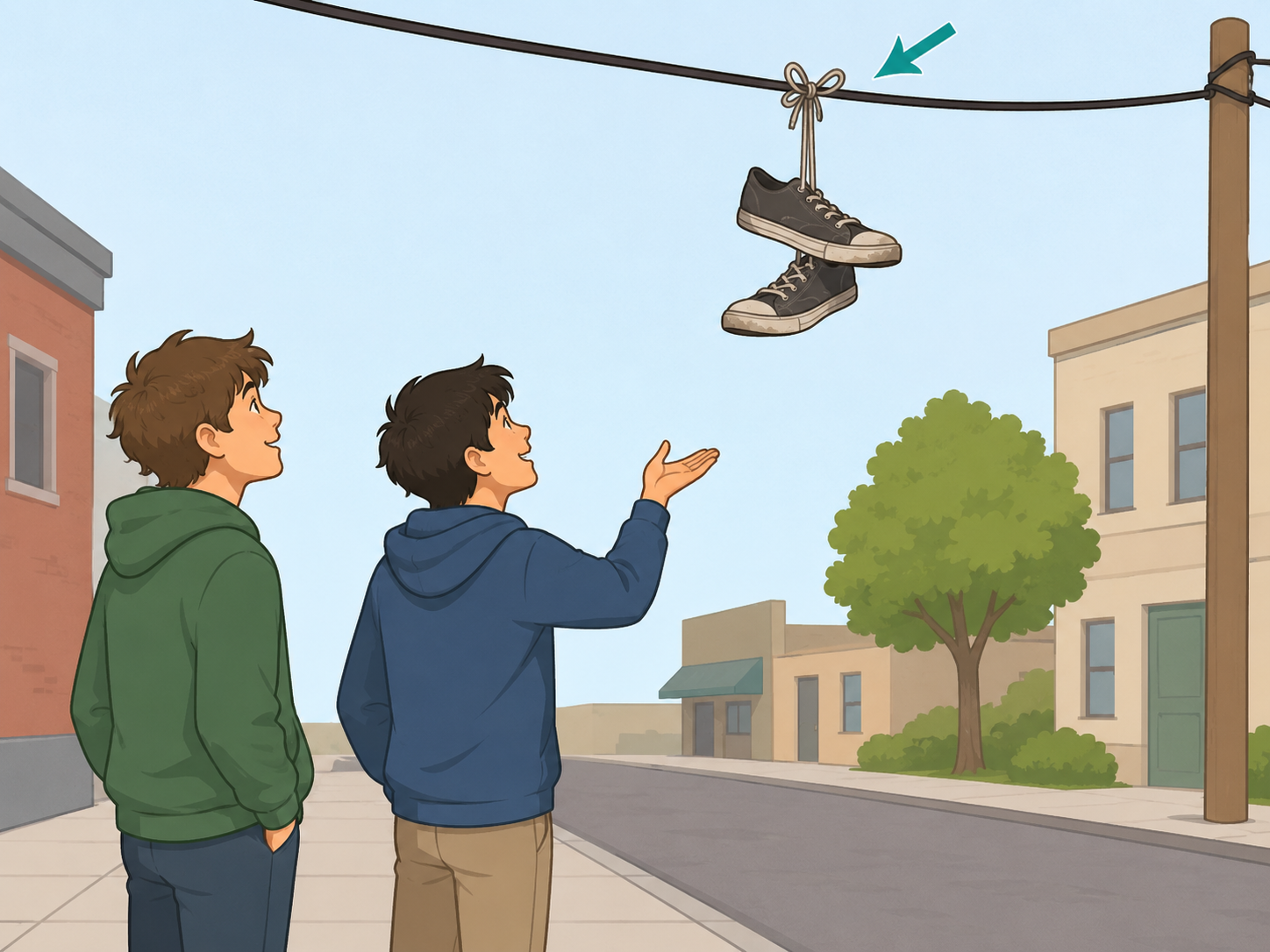
The simplest explanation is often that someone tied the laces together and threw the shoes up for fun, as a dare, or after losing a bet. WBEZ collected first-person accounts where shoes ended up on wires through taunting, boredom, and bets. This is especially likely near schools, parks, alleys, or places where teenagers gather.
Look for signs of a memorial or tribute
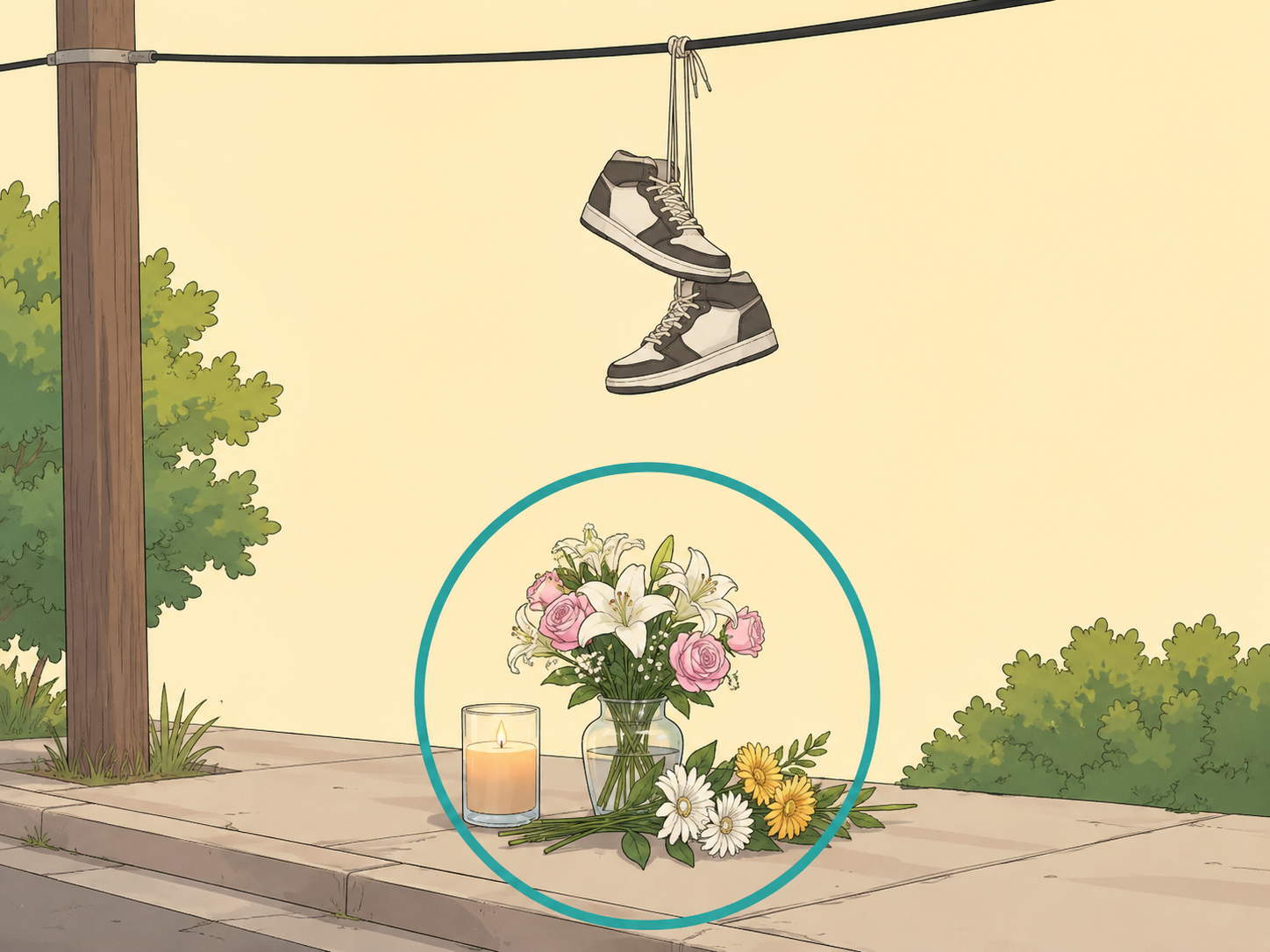
In some neighborhoods, hanging shoes may be used as an informal memorial for someone who died nearby or had a connection to the block. WBEZ reported that community members and interviewees sometimes connected shoes on wires with memorials for friends or neighbors. If there are candles, flowers, posters, or repeated pairs in one spot, a tribute is more plausible than a random prank.
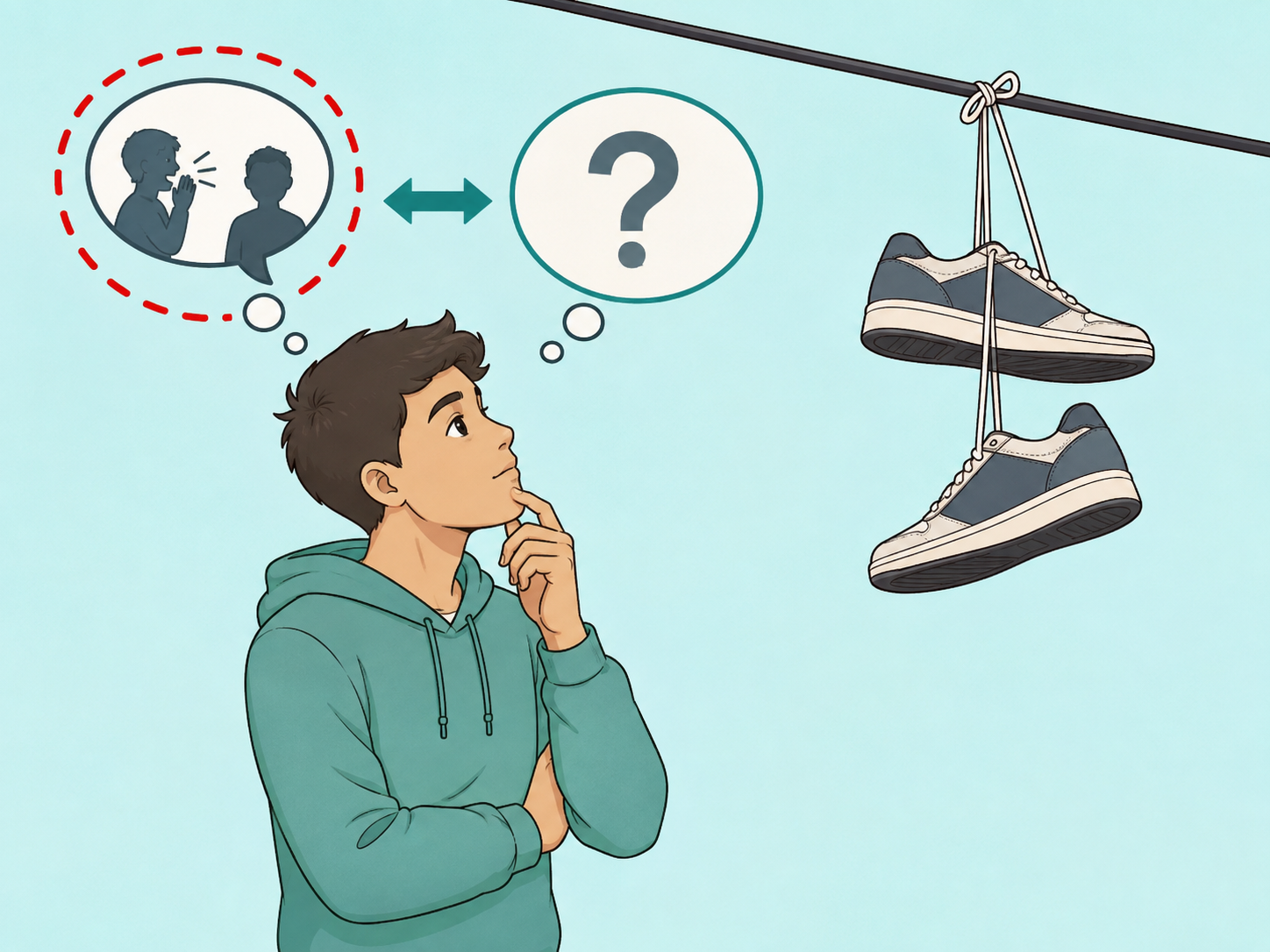
Treat gang and drug explanations carefully
Some public officials have claimed that shoes can mark gang territory or drug activity, and a Los Angeles council file once described shoes on wires as a concern tied to gangs and drug dealers. But Los Angeles police quoted by the Los Angeles Times called that interpretation doubtful, and the Office of Justice Programs lists the claim among viral urban legends. The safest reading is that it can be alleged locally, but it is not proof by itself.
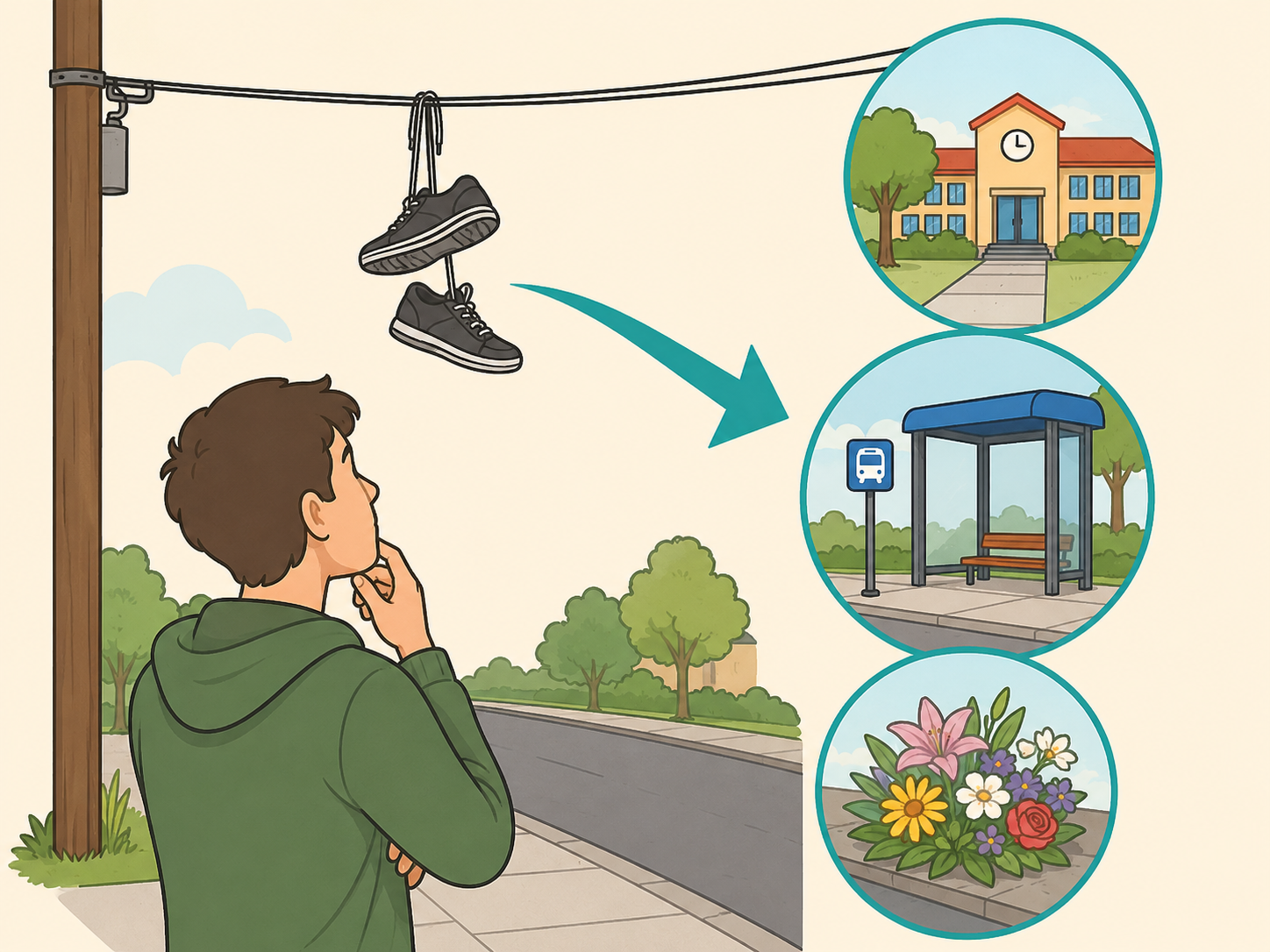
Check the location before drawing conclusions
Context matters more than the shoes alone. A single old pair above a quiet street may mean something different from many pairs near a school, bus stop, alley, or memorial site. WBEZ found that reports in Chicago varied by neighborhood and declined over time, showing that local patterns can shift.
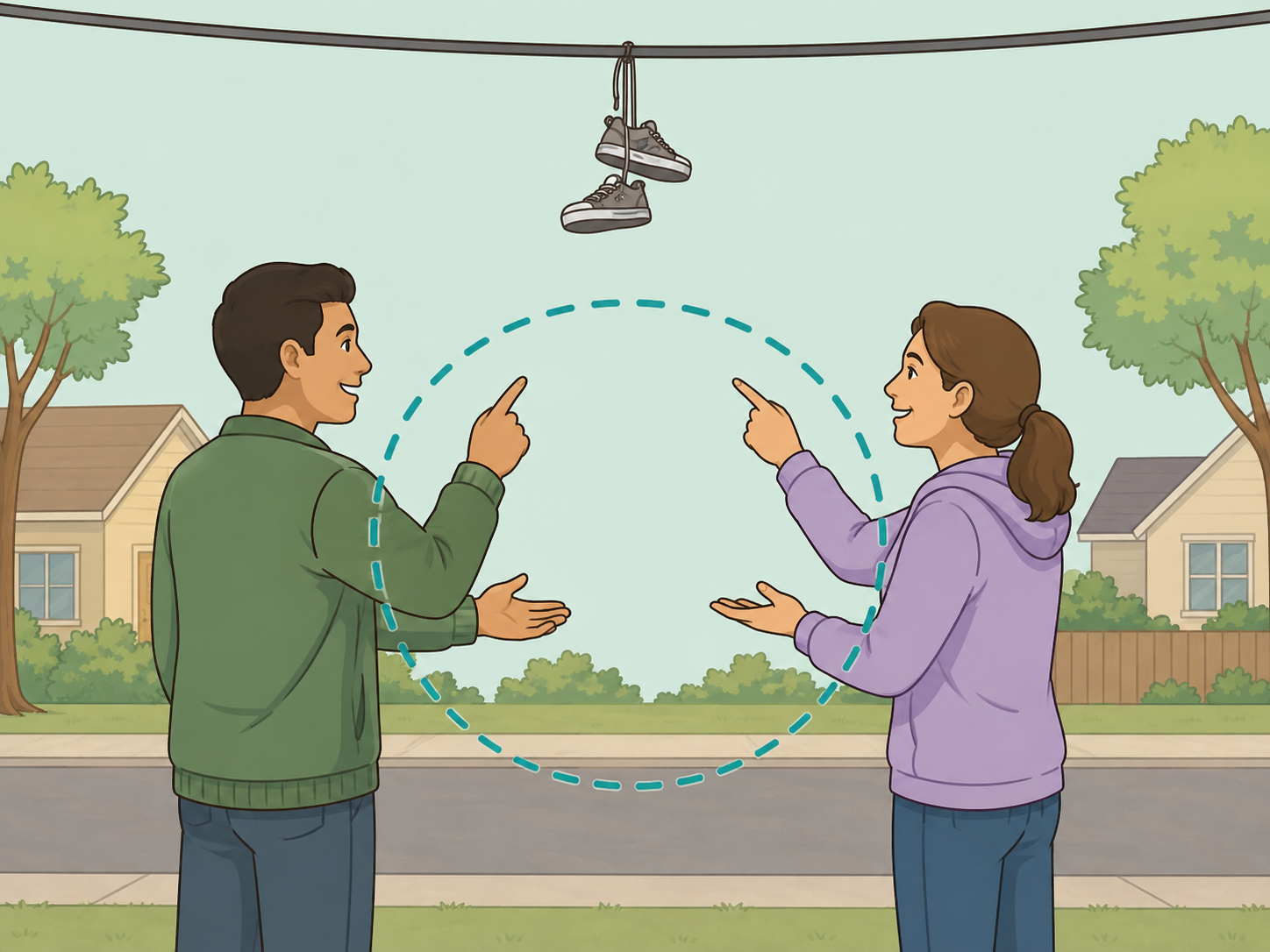
Ask local sources if you need the real story
If you genuinely need to know, ask someone with local knowledge, such as a longtime neighbor, block association, school staff member, or non-emergency city contact. Local accounts are more useful than internet rumors because shoe tossing is a place-based practice. Keep the question neutral so you do not turn an uncertain symbol into an accusation.
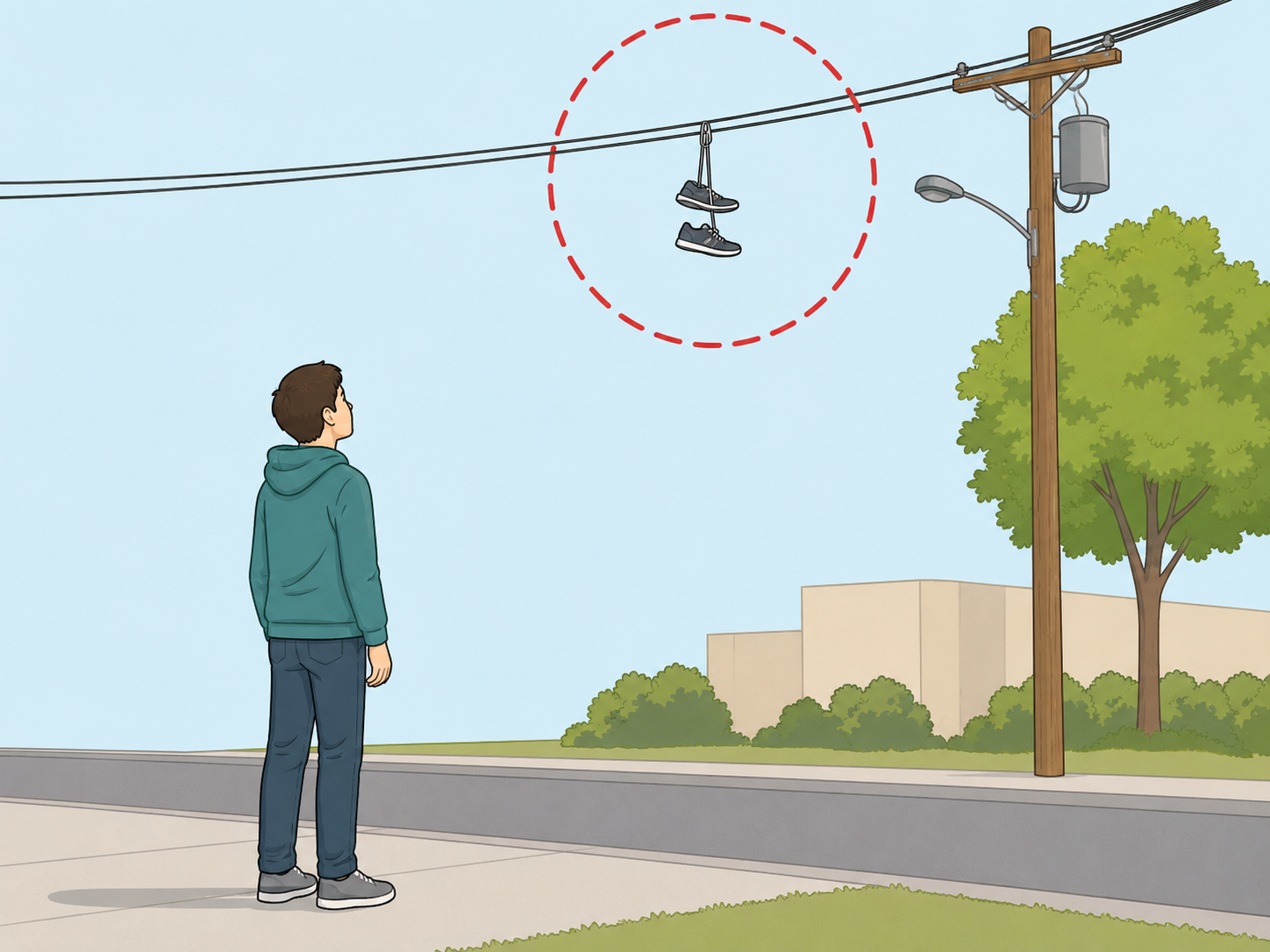
Stay away from the wires
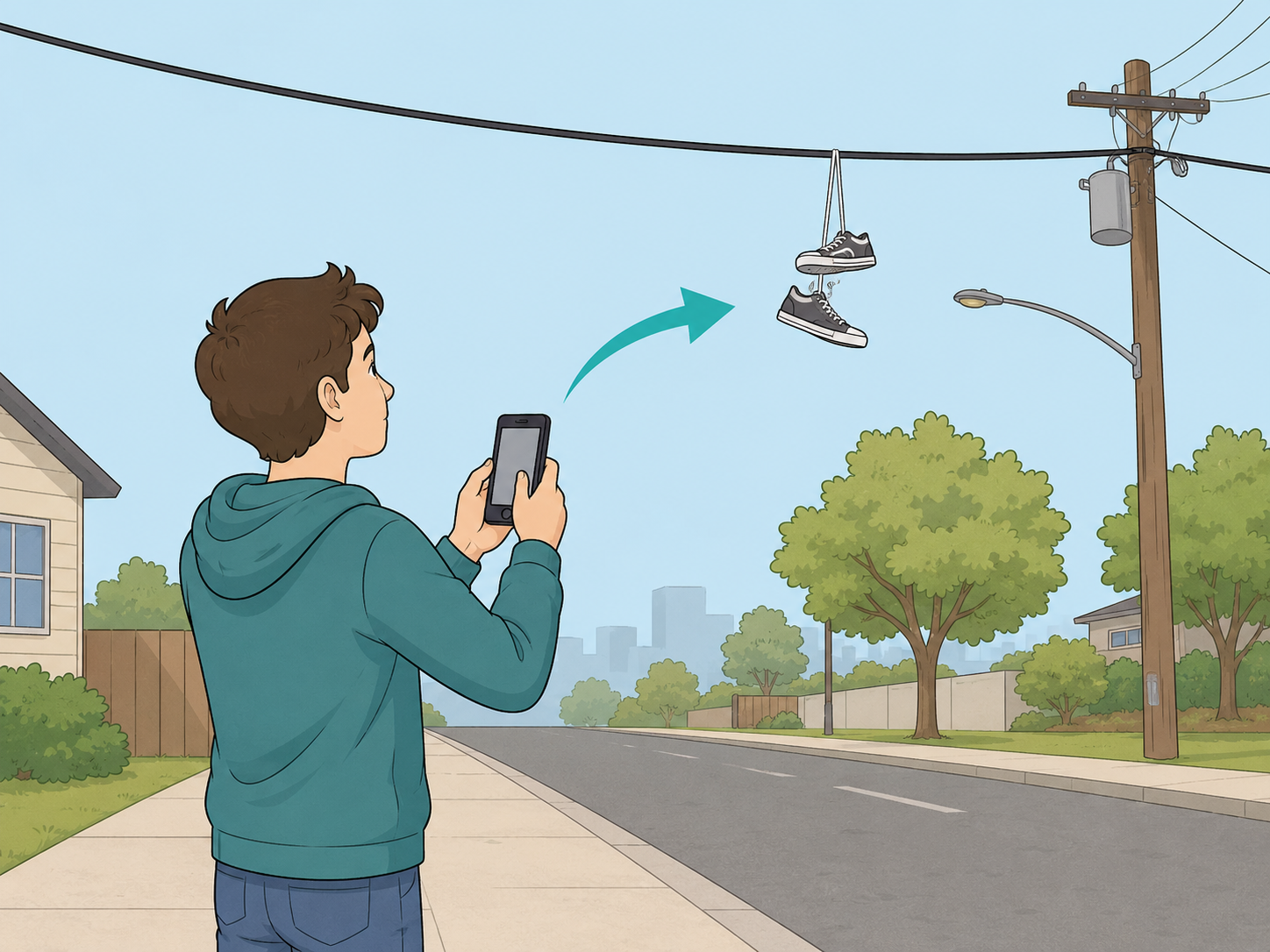
Never climb, throw objects, or use a pole to remove shoes from overhead wires. Duke Energy explains that shoes may not burn because they do not give electricity a path to the ground, but that does not make the situation safe; OSHA also says power lines should be presumed energized unless the utility confirms otherwise. If a line is down, sparking, dangling low, or creating immediate danger, call emergency services.
Report them if they create a safety or neighborhood problem
If the shoes bother neighbors, appear tangled with a damaged wire, or hang over a busy area, report the location to the utility company or local 311 service. NYC311 directs residents to contact utilities for outdoor electrical system and wire problems, while Cincinnati lists objects hanging on overhead wires as a 311 request type. Give the nearest address or intersection and let trained crews handle removal.
Summary
The bottom line: shoes on a power line are usually best understood as a local symbol, prank, memorial, or rumor rather than a guaranteed sign of one specific activity. Look at context, avoid assumptions, and contact the utility company or local 311 service if removal or safety is needed.
Frequently Asked Questions
- Do shoes on a power line always mean drugs are sold nearby?
- No. That is one of the best-known rumors, but reporting and law-enforcement comments do not support it as a universal rule.
- Are shoes hanging from a power line always a gang sign?
- No. Some people have linked shoes to gangs in certain places, but the meaning changes by location and may be nothing more than a prank or dare.
- Why do the shoes not burn on the power line?
- Shoes may not burn because they usually do not create a path for electricity to travel to the ground. That does not make the wires safe to touch or approach.
- What is shoe tossing or shoefiti?
- Shoe tossing is the act of tying shoes together by their laces and throwing them over wires, trees, or other high objects. Shoefiti is a slang term that combines shoes and graffiti.
- Who removes shoes from power lines?
- Removal usually belongs to the utility company, cable company, phone company, or a city service, depending on who owns the line. Local 311 services can often point you to the right place.
- Should I try to knock the shoes down myself?
- No. Do not throw objects, use poles, climb, or touch anything near overhead wires. Report the location instead.
References
Reliable references aided in composing and refining this content.
- https://www.wbez.org/curious-city/2015/08/05/shoes-on-a-wire-untangling-an-urban-myth
- https://www.ojp.gov/ncjrs/virtual-library/abstracts/no-fear-education-prevents-spread-viral-urban-legends
- https://www.latimes.com/archives/la-xpm-1999-sep-12-me-9389-story.html
- https://cityclerk.lacity.org/lacityclerkconnect/index.cfm?cfnumber=07-2312&fa=ccfi.viewrecord
- https://safety.duke-energy.com/schools/parents/66147-electricity-natural-gas-energy-efficiency-faq-parents
- https://www.osha.gov/laws-regs/regulations/standardnumber/1926/1926.1407
- https://nyc311.microsoftcrmportals.com/article/?kanumber=KA-01048
- https://www.cincinnati-oh.gov/311/requests