
 Pin it
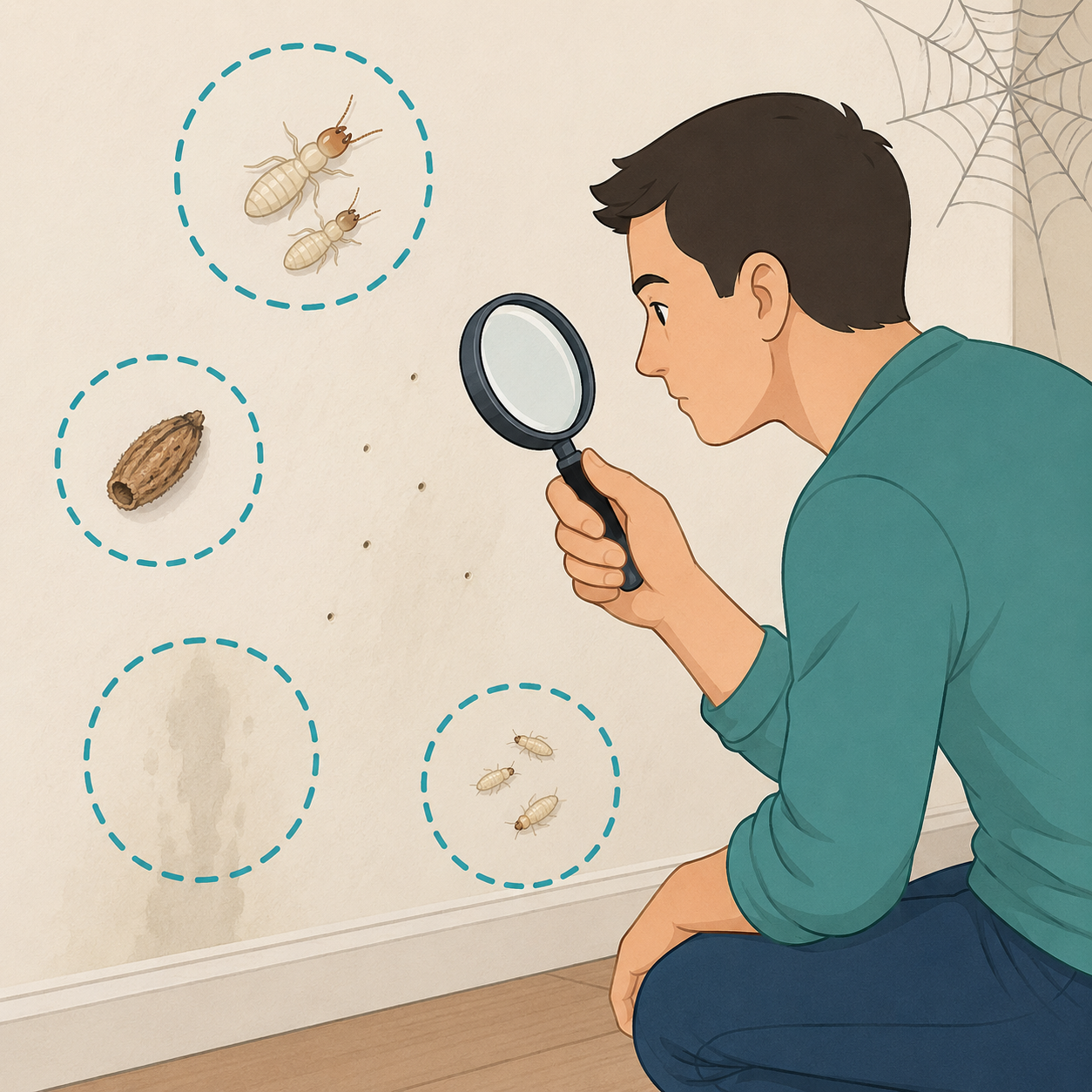
Tiny insects on your walls are unsettling, but they usually have a practical explanation. The most common reasons are excess moisture, mold or mildew, spider webs, stored paper, or fibers that certain pests feed on. This guide shows you how to identify the likely insect, find what is attracting it, and remove the conditions that let it keep coming back.
Identify the insect before you act
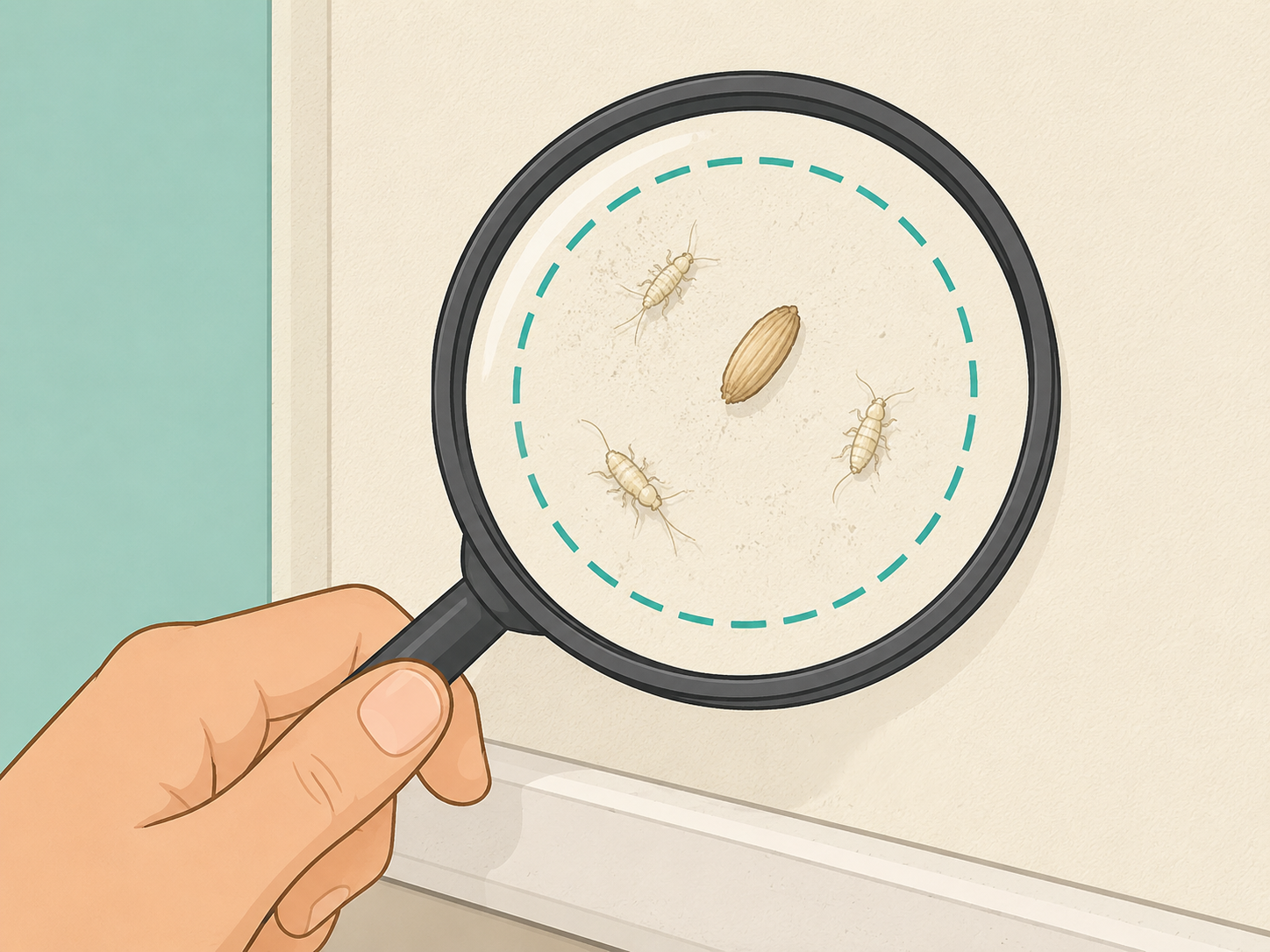
Look closely at the size, shape, and where the insects are gathering. Booklice are usually tiny, pale gray to light brown insects about 1 to 2 millimeters long, and they often show up near damp paper or books, according to University of Maryland Extension. If you see flat, seed-like cases stuck to the wall, they may be household casebearers, which UF/IFAS Extension says are the larval cases of a moth.
Treat the insects as a moisture clue
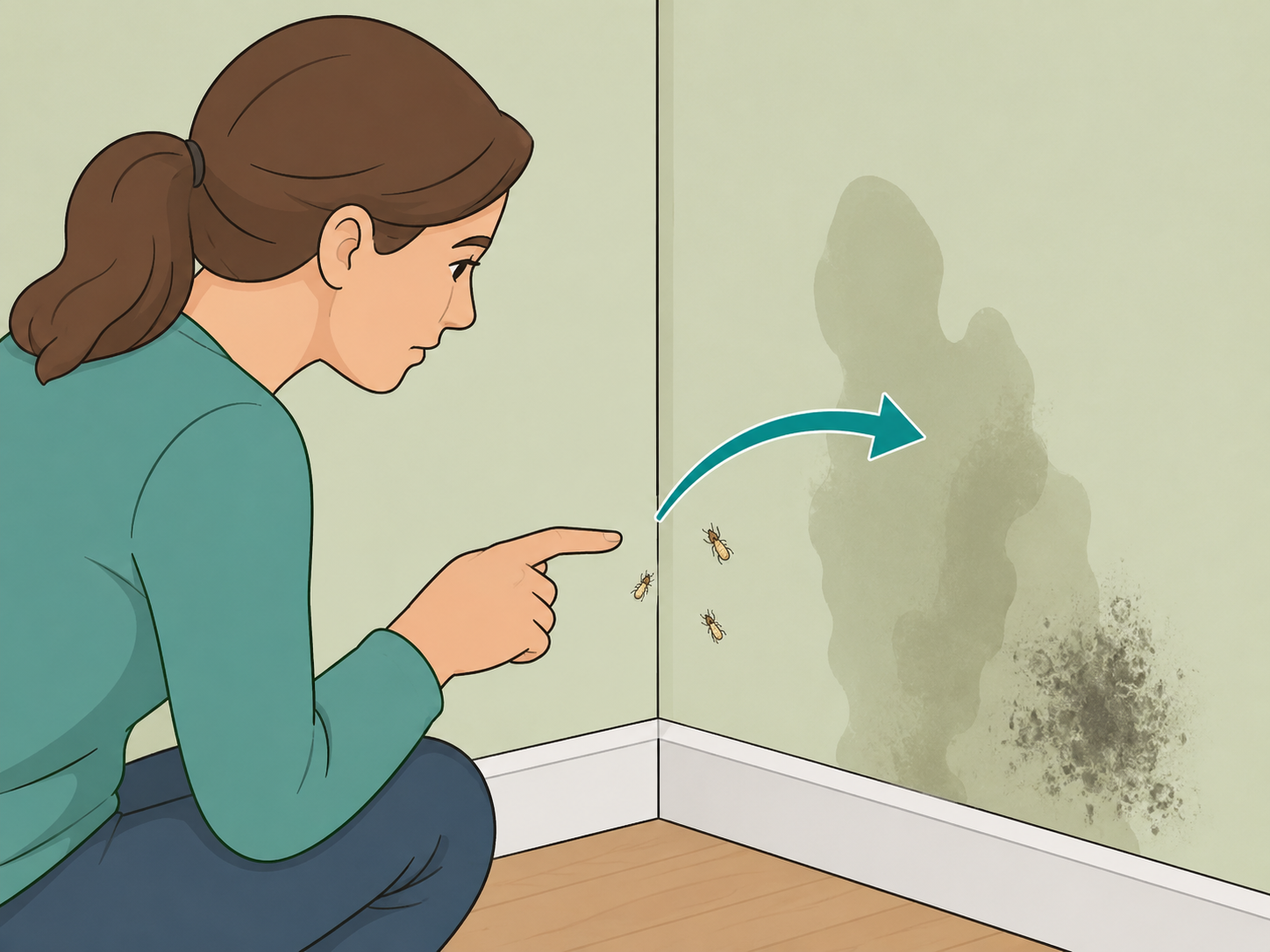
Do not assume the wall is simply dirty or that the insects came from nowhere. Booklice commonly live in damp, warm, undisturbed places where mold and fungi grow, and University of Minnesota Extension says reducing moisture is the best way to manage them. Texas A&M AgriLife Extension also notes that mildew-feeding insects can point to leaks or other moisture problems.
Check humidity, condensation, and leaks
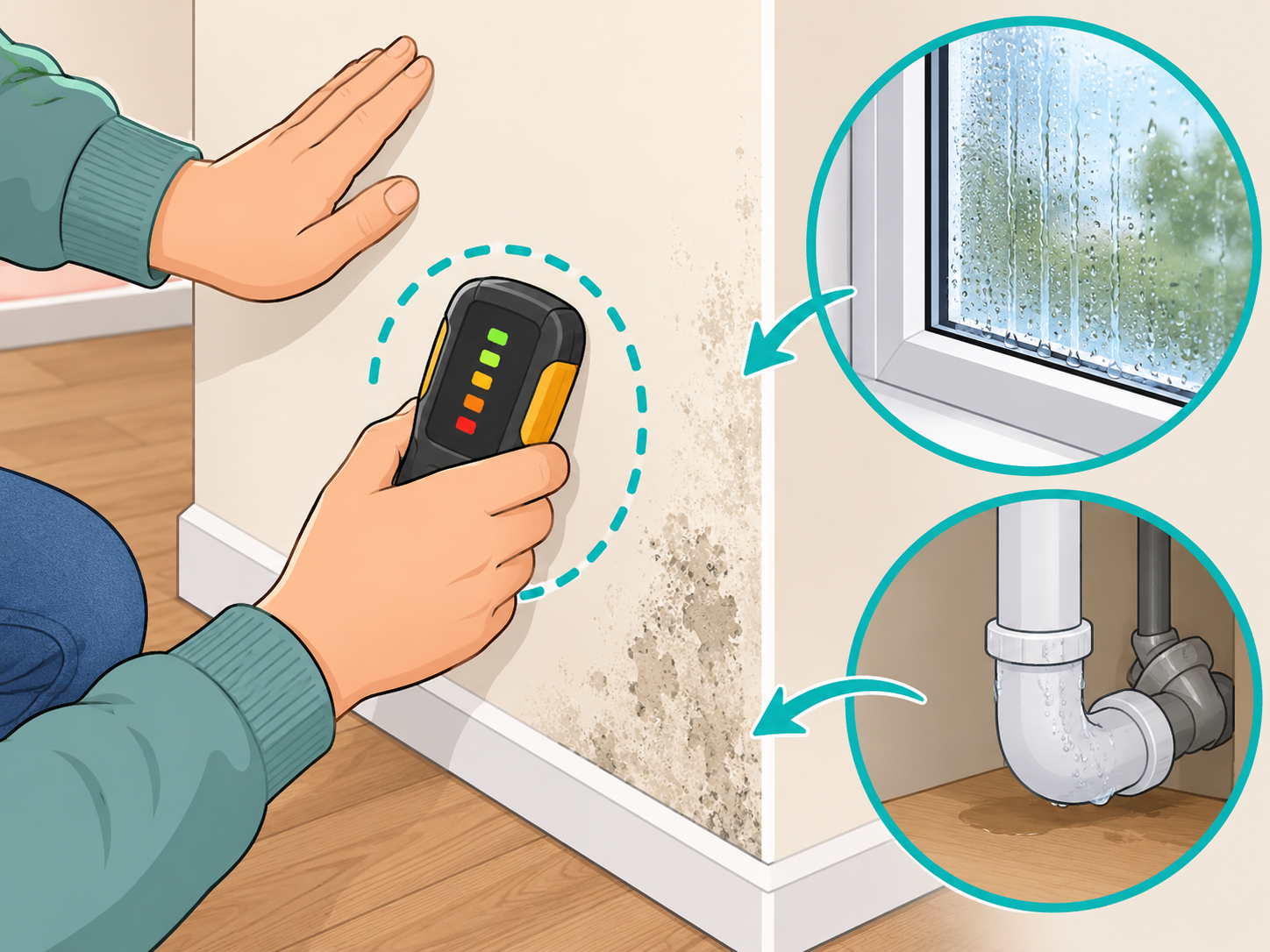
Use a small hygrometer to check the room, then inspect window frames, pipes, ceilings, baseboards, and the wall area behind furniture. The EPA mold guide recommends keeping indoor humidity below 60 percent, ideally between 30 and 50 percent, because mold needs moisture to grow. Condensation on windows, walls, or pipes is a sign that you should dry the surface and reduce the moisture source.
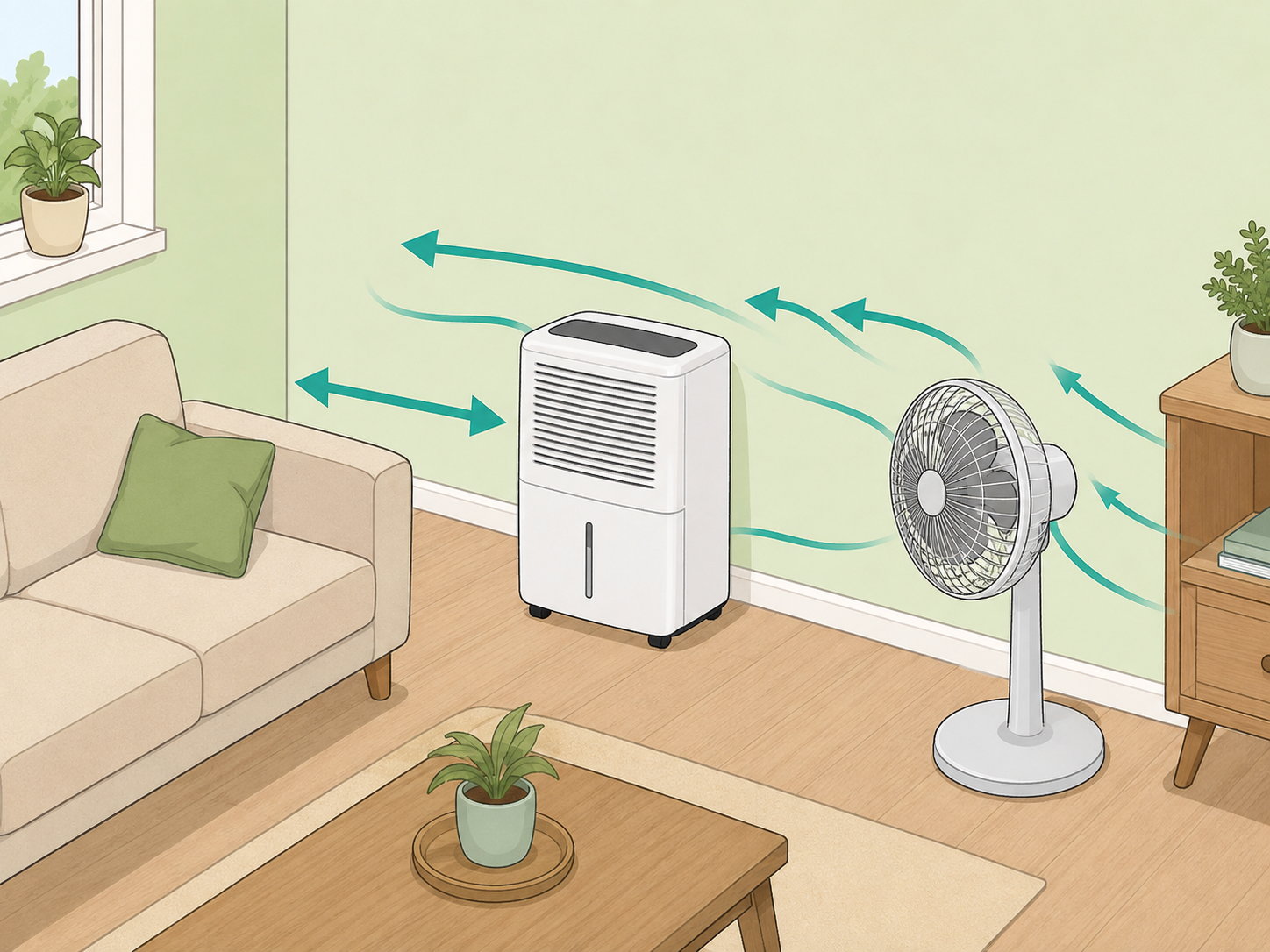
Dry the room and improve airflow
Run a dehumidifier, use exhaust fans, open interior doors when practical, and move furniture slightly away from damp exterior walls. For psocids, University of Minnesota Extension recommends airing out rooms, keeping air moving, and storing boxes, books, and papers off damp floors. If the room stays humid after these steps, look harder for a hidden leak or ventilation problem.
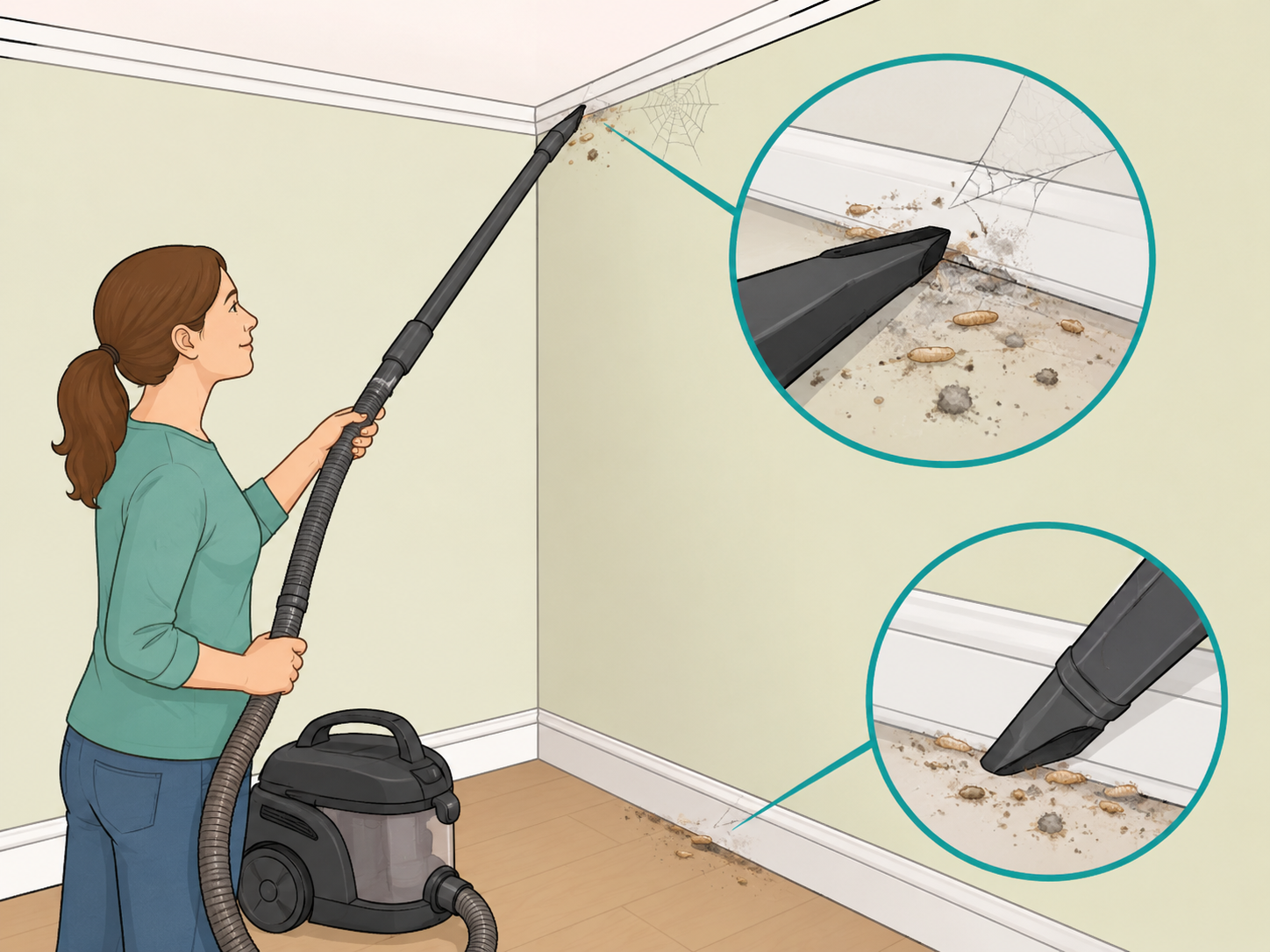
Vacuum cases, insects, webs, and dust
Use a vacuum crevice tool along corners, ceiling lines, window frames, baseboards, shelves, and behind furniture. Household casebearers are often found around spider webs, and Mississippi State University Extension explains that they feed on webs, dried insect parts, hair, dandruff, and animal-based fibers. Empty the vacuum outdoors or into a sealed bag so the insects and debris do not remain in the room.
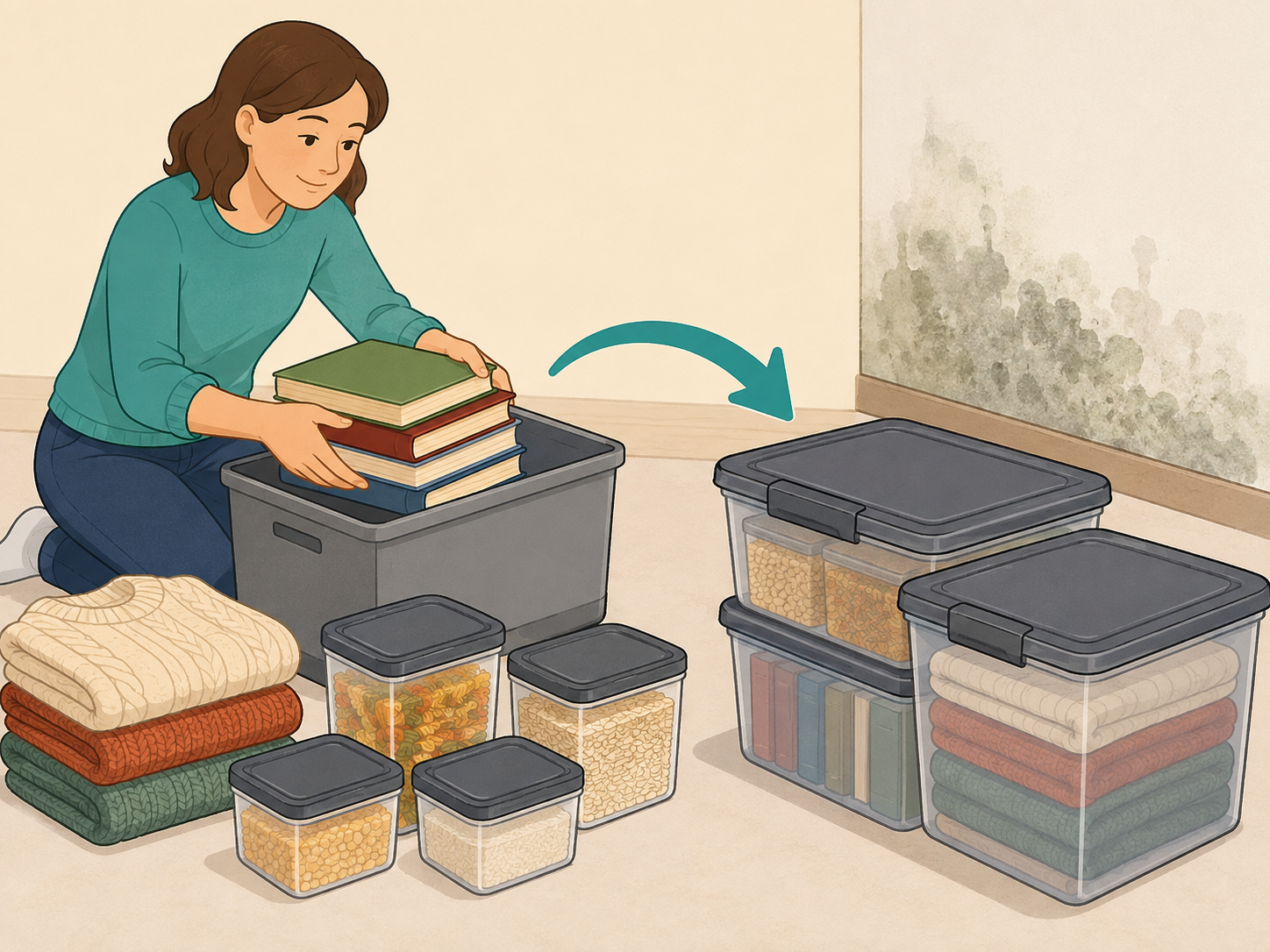
Protect paper, pantry items, and fabrics
Move books, papers, cardboard, dry foods, wool rugs, silk, feathers, and stored textiles away from damp walls. Booklice may feed on mold spores and starchy materials, while UF/IFAS Extension notes that household casebearers can feed on woolens, silks, felt, hair fibers, and similar materials. Store dry goods and keepsakes in tight plastic or glass containers after the area is clean and dry.
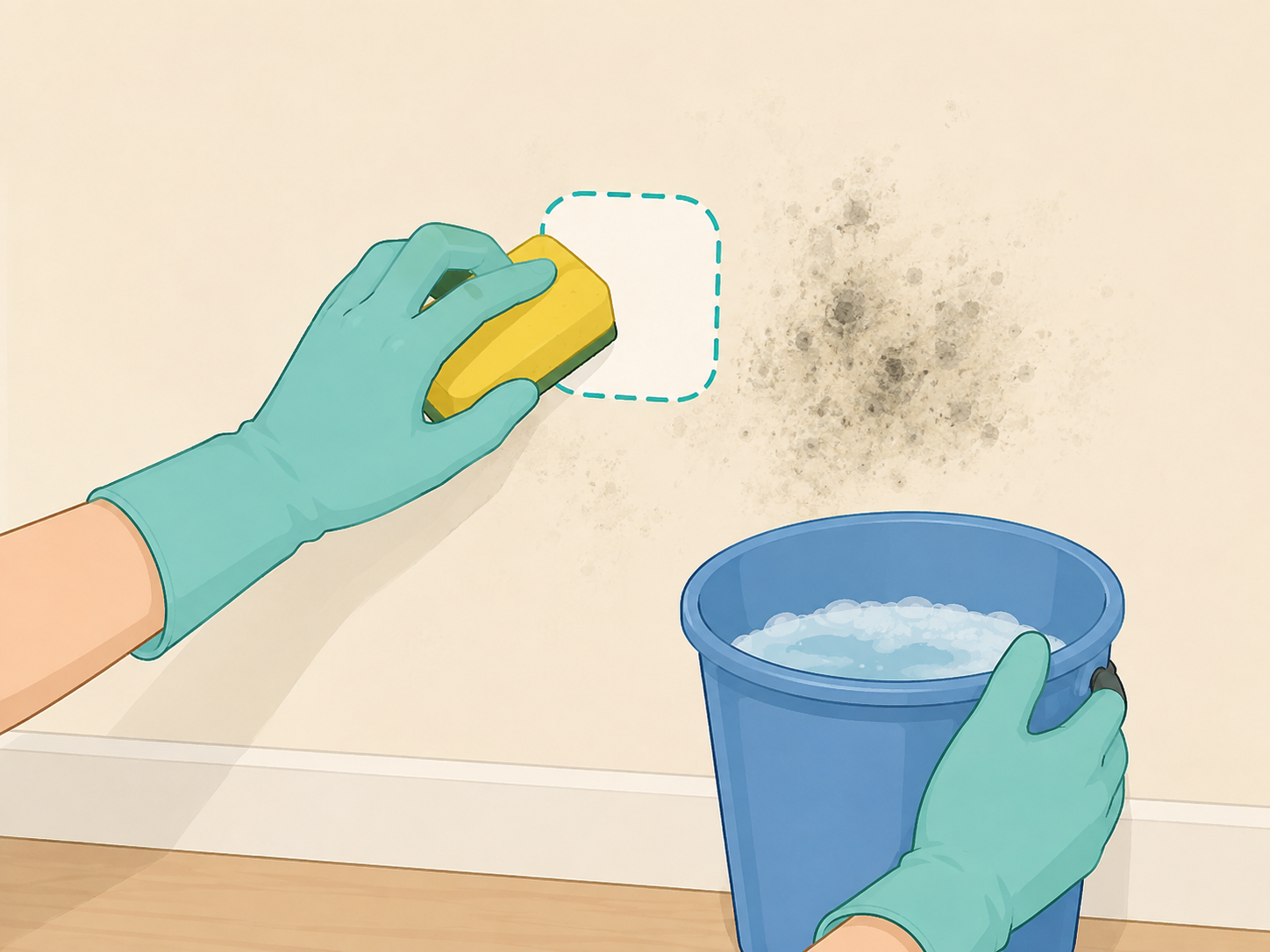
Clean small moldy spots safely
If you find a small moldy area on a hard surface, clean it only after fixing the moisture source. The EPA mold cleanup guidance says mold can be scrubbed from hard surfaces with detergent and water, then dried completely, while porous materials may need to be discarded if mold has grown into them. Do not paint or caulk over moldy surfaces before cleaning and drying them.
Call a professional when the source is hidden
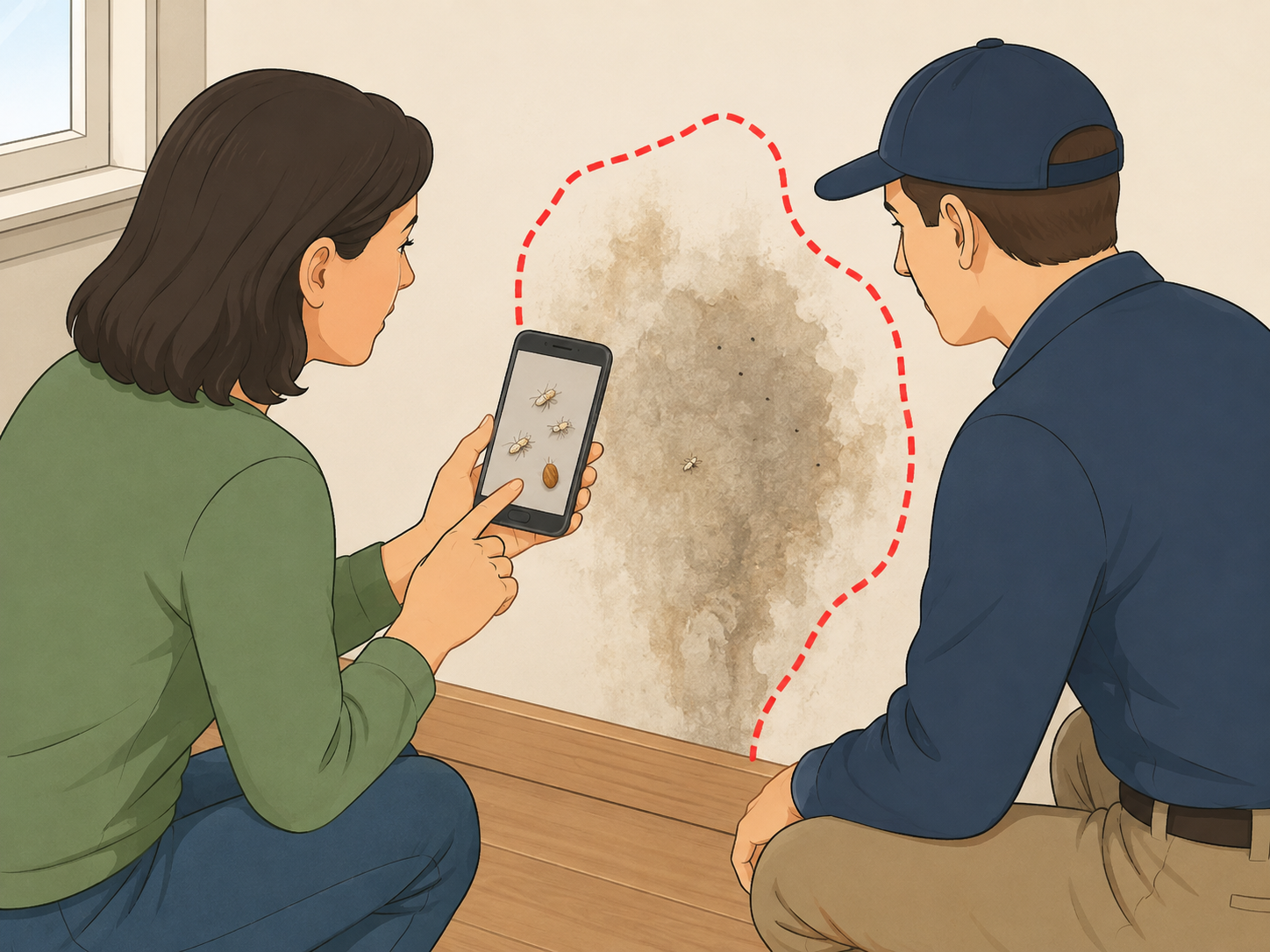
Get help if insects keep returning, the wall feels damp, you smell mustiness, you see staining spreading, or the moldy area is larger than a small patch. The EPA recommends consulting an experienced contractor for larger mold problems, major water damage, suspected HVAC contamination, or sewage-related water damage. A local Extension office or pest professional can also help identify the insect before you spend money on treatment.
Summary
The bottom line: do not treat tiny wall insects as a mystery or start spraying first. Identify the pest, check for moisture and hidden mold, remove webs and debris, protect stored items, and call a professional if the problem points to a leak, large mold area, or repeated infestation.
Frequently Asked Questions
- Are tiny insects on walls dangerous?
- Most tiny wall insects, such as booklice, are mainly a nuisance and are not known to harm people or pets, according to University of Minnesota Extension. The bigger concern is often the moisture, mold, or stored material that is attracting them.
- What does it usually mean when tiny bugs appear on walls?
- It often means the area is damp, dusty, moldy, or has food sources such as spider webs, paper, cardboard, or fibers. Texas A&M AgriLife Extension notes that some mildew-feeding insects can be a clue to leaks or other moisture problems.
- Are booklice the same as head lice?
- No. Booklice are psocids, not parasitic head lice. They are tiny insects that feed on mold, fungi, grains, insect fragments, and starchy material, according to University of Minnesota Extension.
- What are the seed-like cases stuck to my walls?
- They may be household casebearers, often called plaster bagworms. UF/IFAS Extension describes their cases as flat, spindle-shaped, and often noticed on walls, especially in humid areas.
- Should I spray insecticide on the walls?
- Usually no. For booklice, University of Minnesota Extension says insecticides are normally unnecessary and do not work well if moisture is still present.
- Will the insects go away after I dry the area?
- Often, yes. Texas A&M AgriLife Extension explains that mildew-feeding insect problems usually do not persist once moisture drops enough that mold and mildew cannot keep growing.
References
Reliable references aided in composing and refining this content.
- https://extension.umn.edu/garden-and-home/home-maintenance/household-insects/booklice-barklice
- https://www.extension.umd.edu/resource/booklice
- https://ask.ifas.ufl.edu/publication/IN129
- https://extension.msstate.edu/newsletters/bugs-eye-view/2023/plaster-bagworm-vol-9-no-30
- https://citybugs.tamu.edu/factsheets/household/misc-house/ent-2010
- https://www.epa.gov/mold/brief-guide-mold-moisture-and-your-home
- https://www.epa.gov/mold/mold-cleanup-your-home