
 Pin it
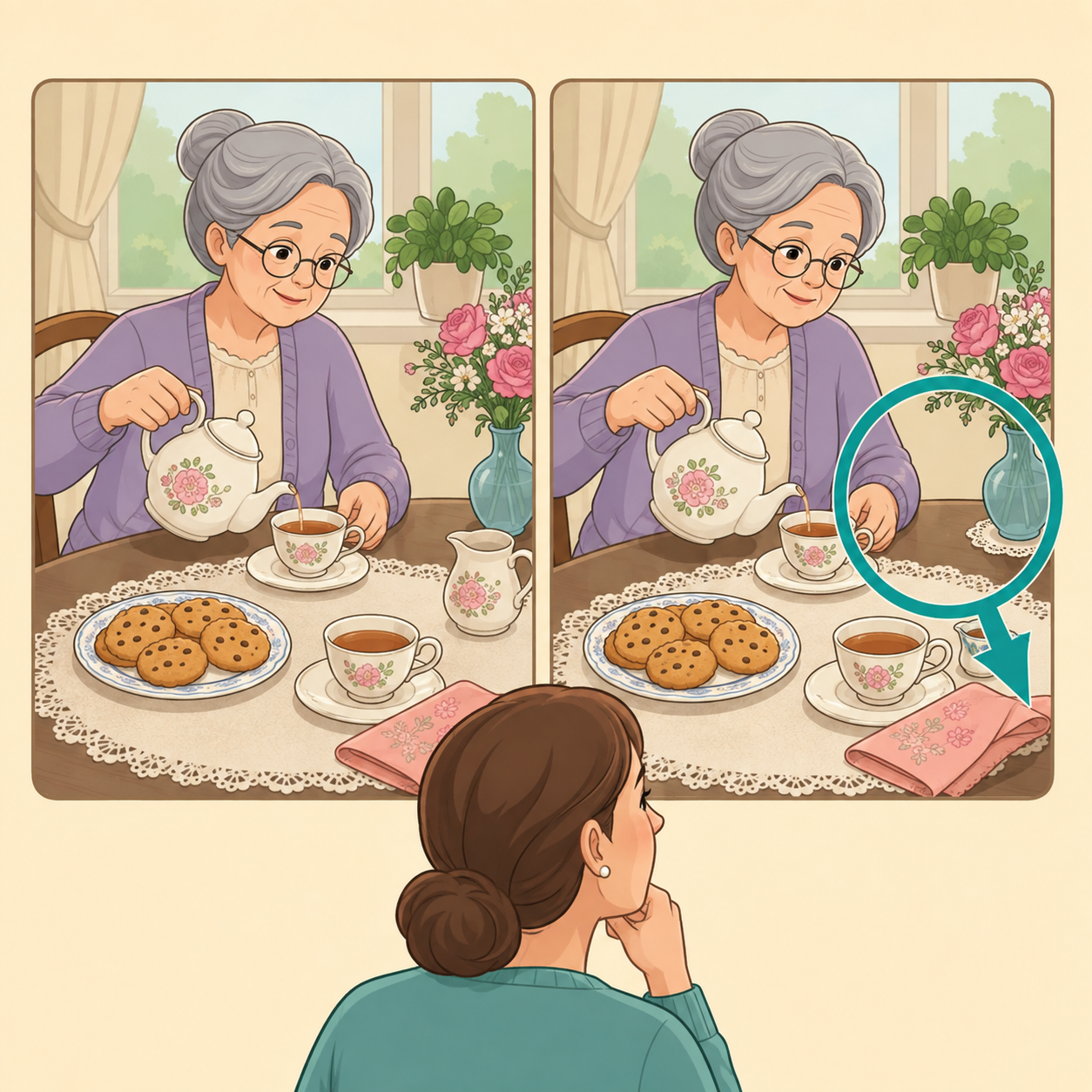
Grandma's Tea Time is the kind of cozy spot-the-difference puzzle where small changes can hide in plain sight. Because visual search depends on focused attention, it helps to compare the scene slowly instead of jumping around at random. This guide gives you a simple method for finding the differences without spoiling the answer.
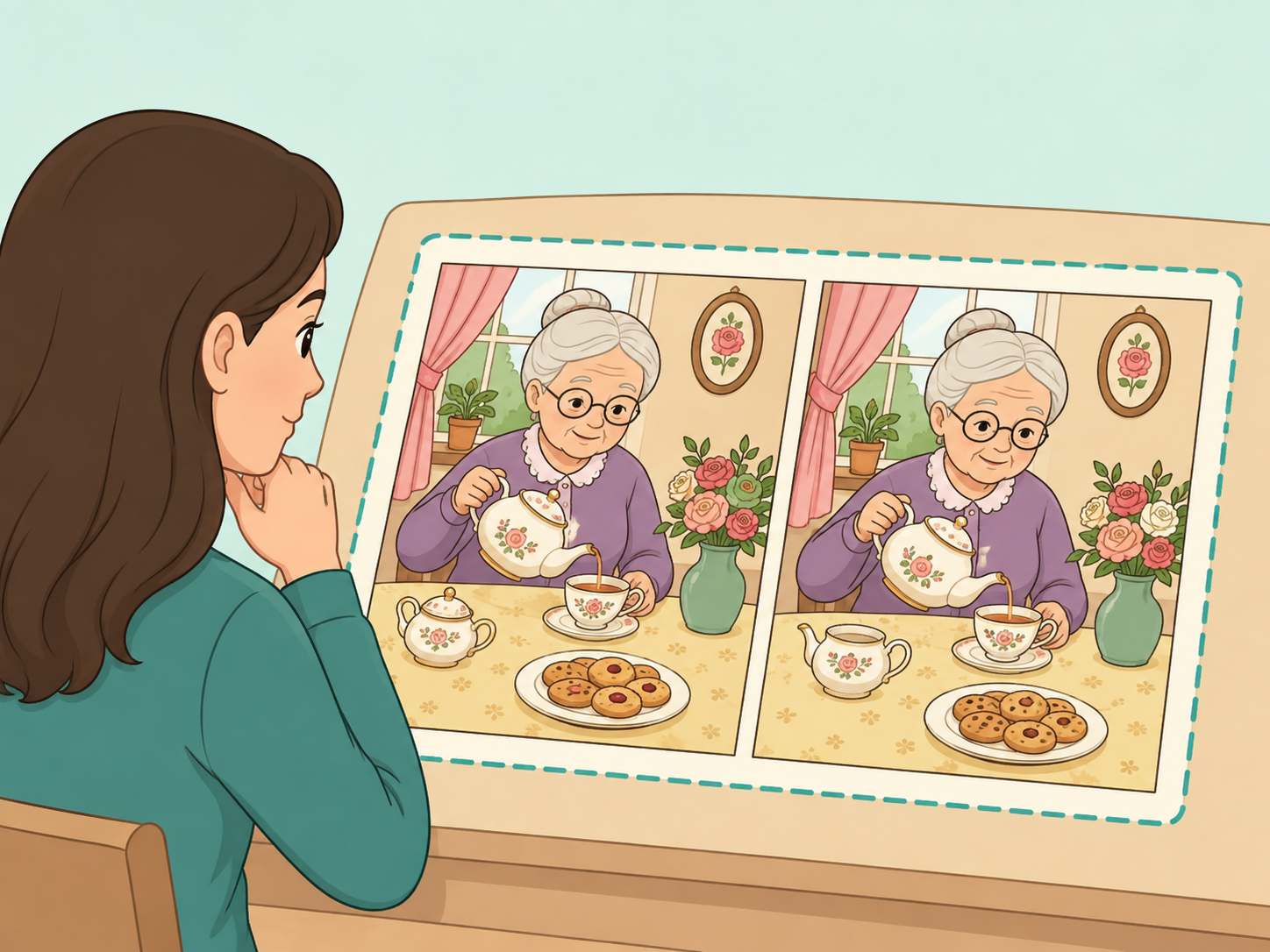
Look over both pictures once
Begin with a relaxed look at the full Grandma's Tea Time scene so you understand the layout before hunting for details. Visual search works best when attention is directed to likely areas, not scattered randomly across the page, according to research on visual attention.
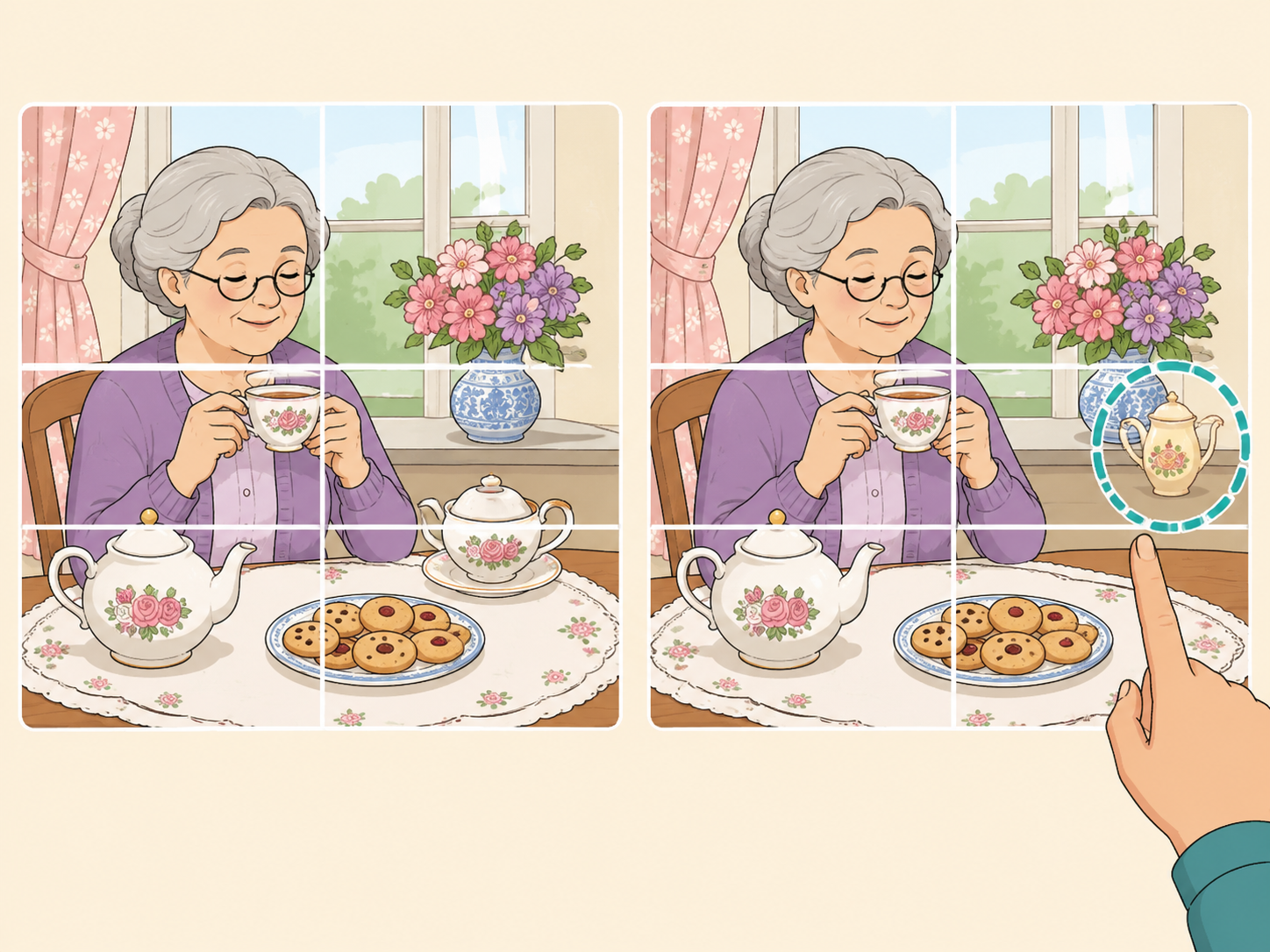
Divide the scene into small sections
Mentally split the picture into a grid: upper left, upper right, tea table, Grandma, and the floor or background. Side-by-side difference tasks can require steady linear scanning because differences do not always stand out automatically, as noted in research on comparing images.
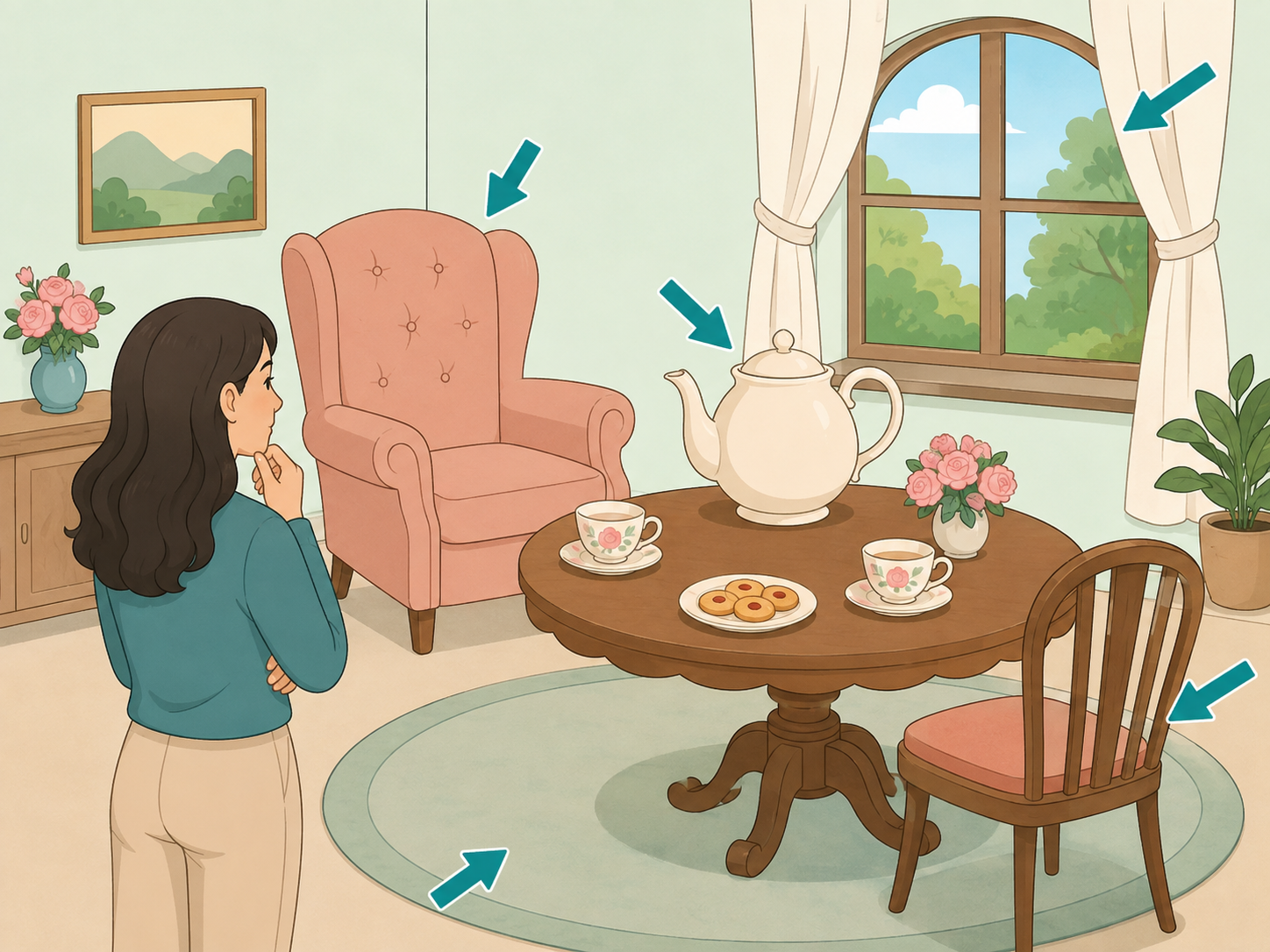
Compare the big shapes first
Check the teapot, cups, chair, table, window, shelves, and Grandma's outline before studying smaller decorations. Big changes in shape, size, color, or position are easier to use as search clues because attention can be guided by visible features such as color, orientation, size, and shape, according to visual search research.
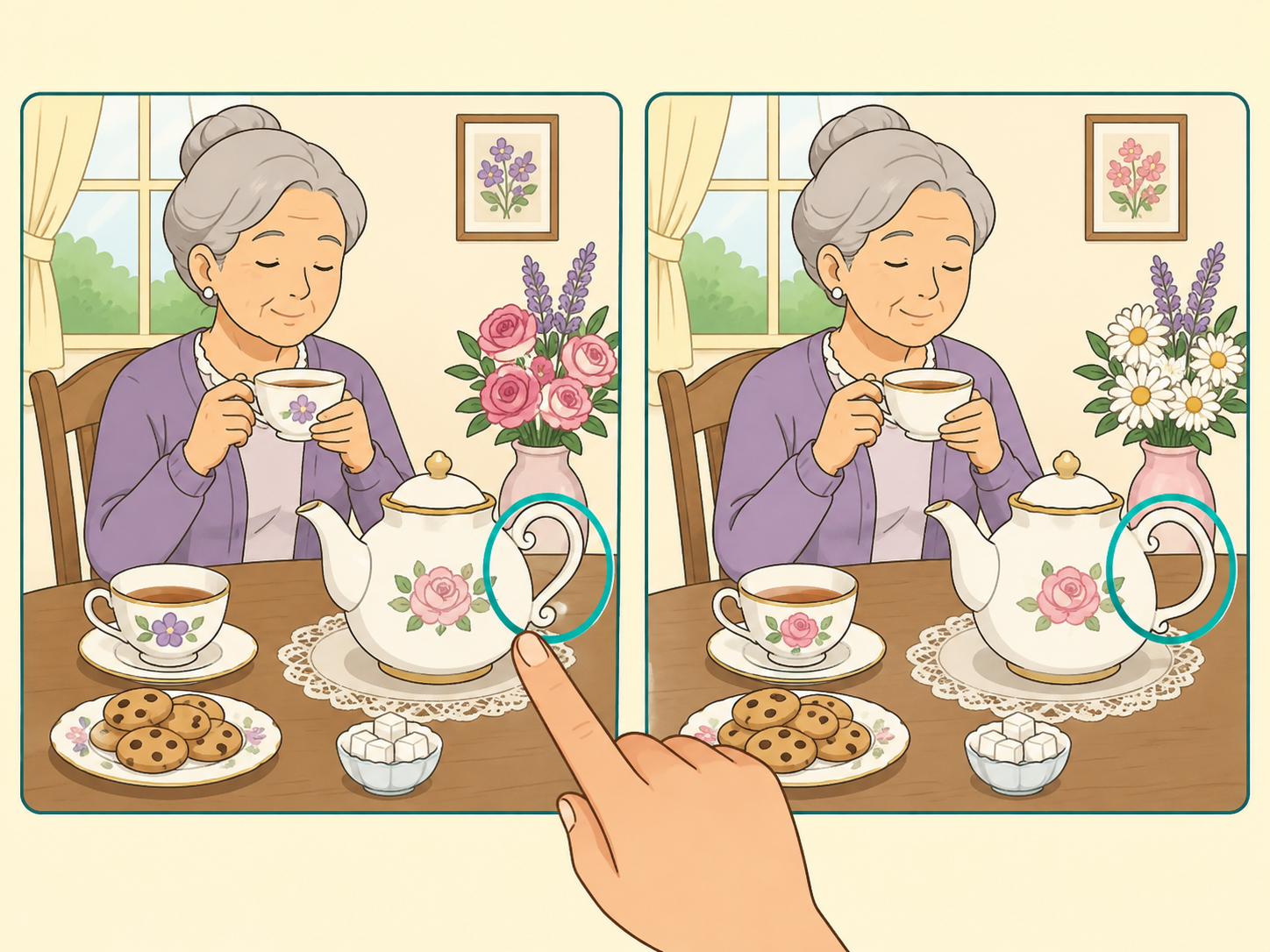
Match one object at a time
Pick one object in the left picture, then look at the same object in the right picture before moving on. For example, compare the teapot spout, then the lid, then the handle, rather than checking every tea item at once.
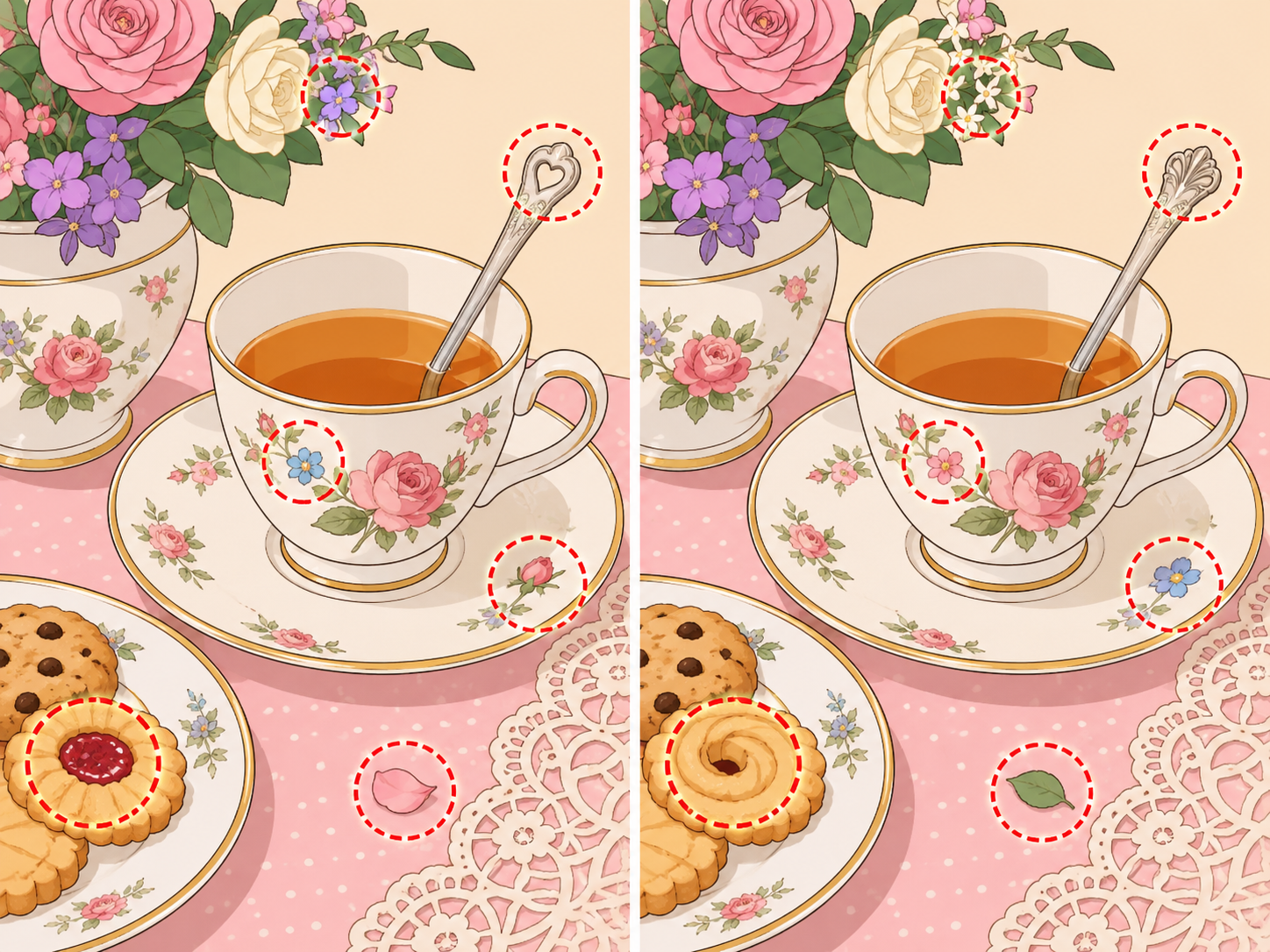
Check edges, handles, and patterns
Look closely at curved edges and repeated shapes, such as saucer rims, spoon handles, chair rails, apron prints, flower petals, cookies, and tablecloth folds. Small missing or shifted details often hide in repeated patterns because your eyes may treat them as background after the first pass.
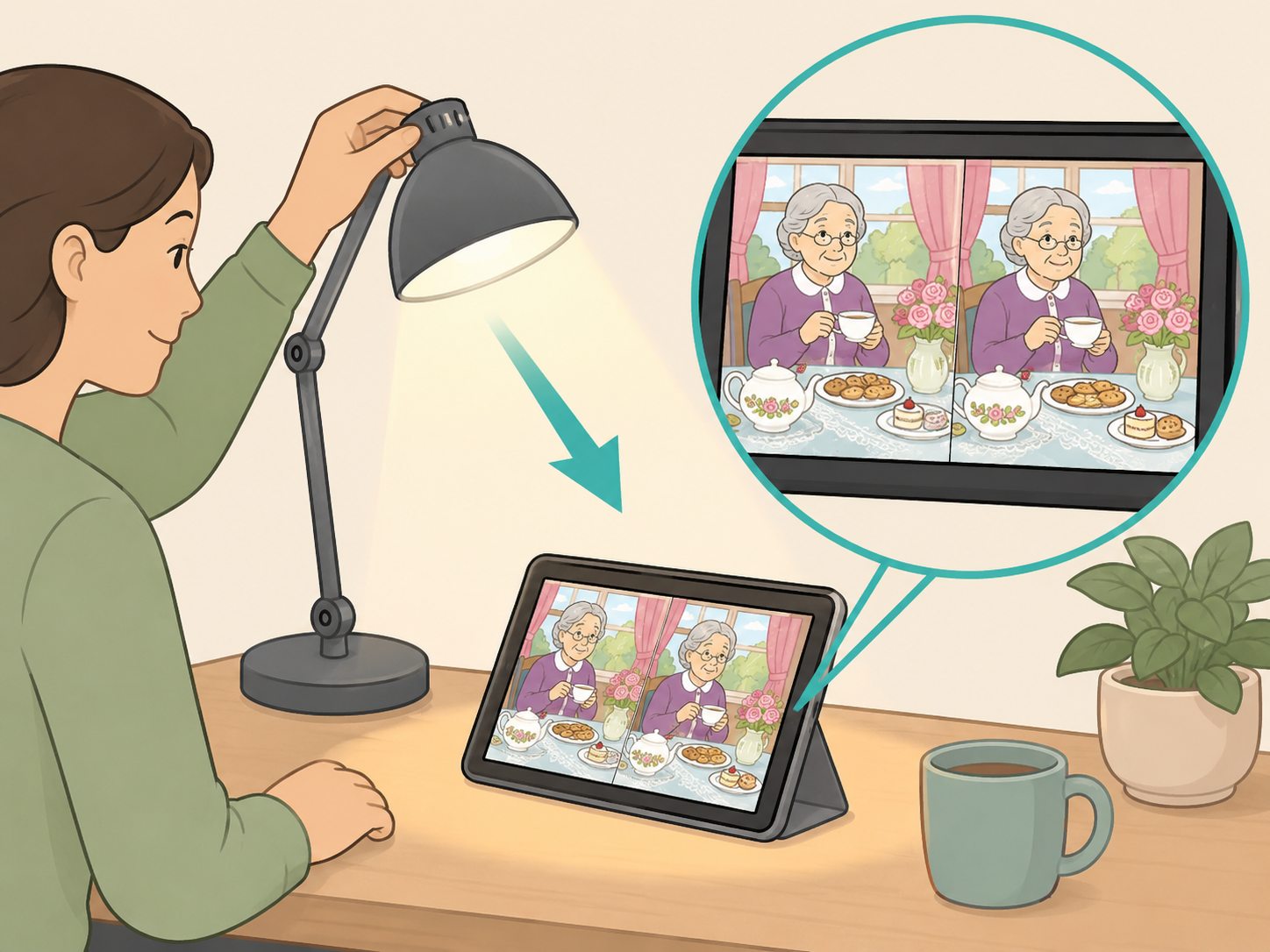
Use good light and a comfortable view
Brighten the page or screen enough that small lines are clear, and zoom in if the picture is on a phone. MedlinePlus recommends good lighting and eye rest to help you see comfortably during close visual tasks.
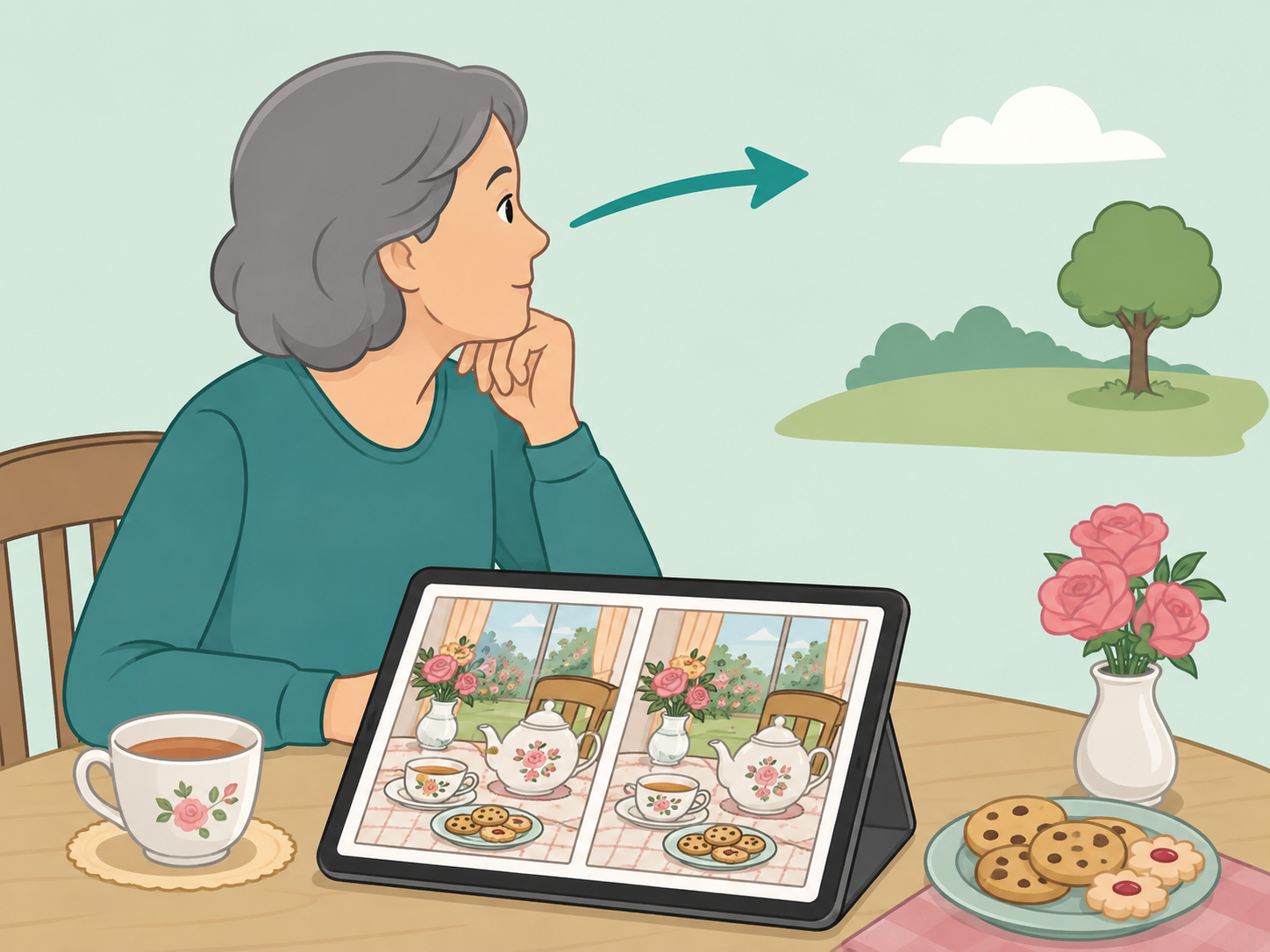
Take a short eye break
If the scene starts to blur together, stop for a moment and look away before returning to the puzzle. MedlinePlus describes the 20-20-20 rule for screen-related eye rest: every 20 minutes, look about 20 feet away for 20 seconds.
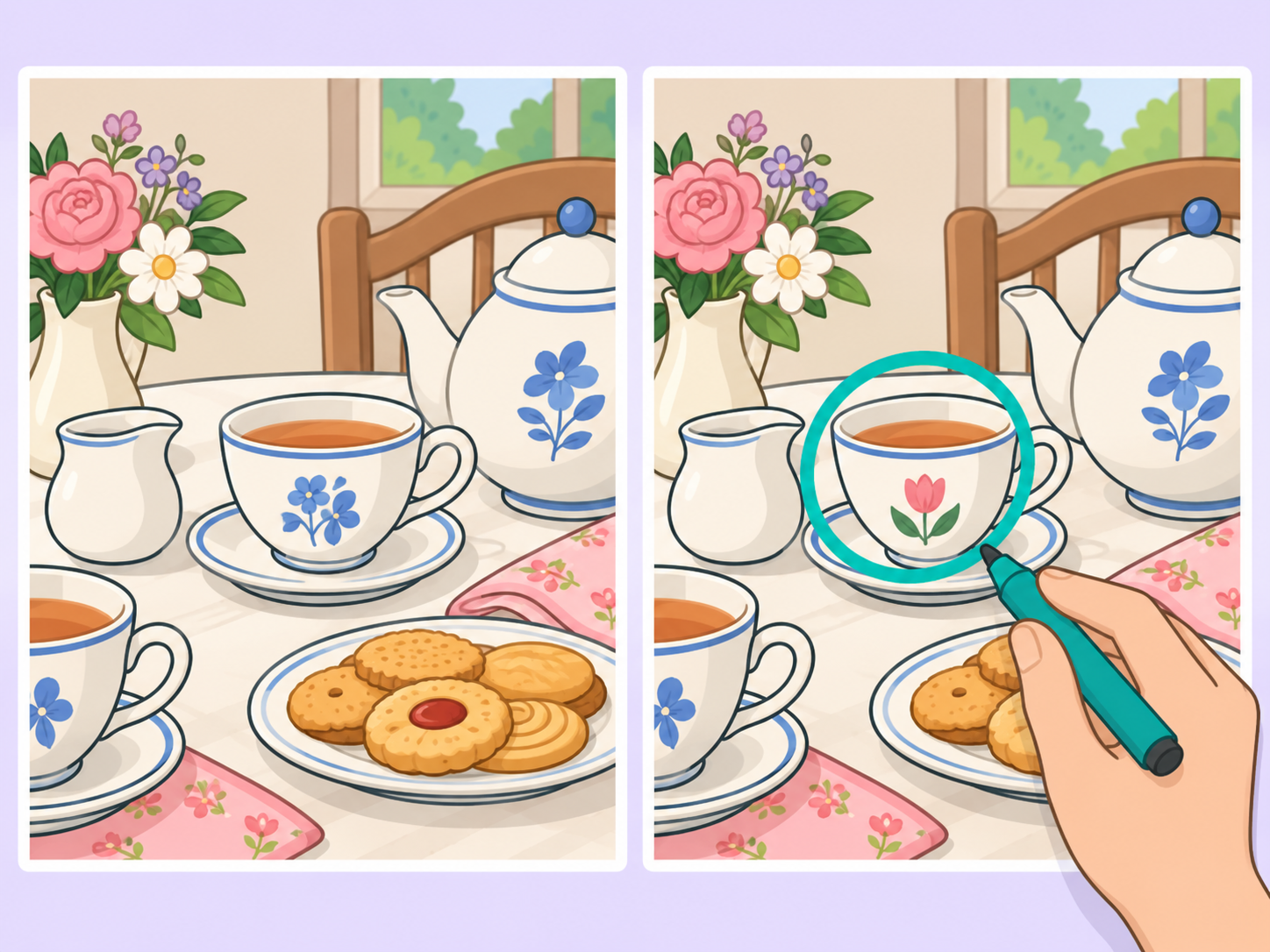
Verify each difference before moving on
When you think you have found a change, compare the exact same spot in both images and name the difference to yourself, such as "missing flower," "shorter spoon," or "changed cup handle." Mark it lightly or keep a count so you do not waste time rechecking the same discovery.
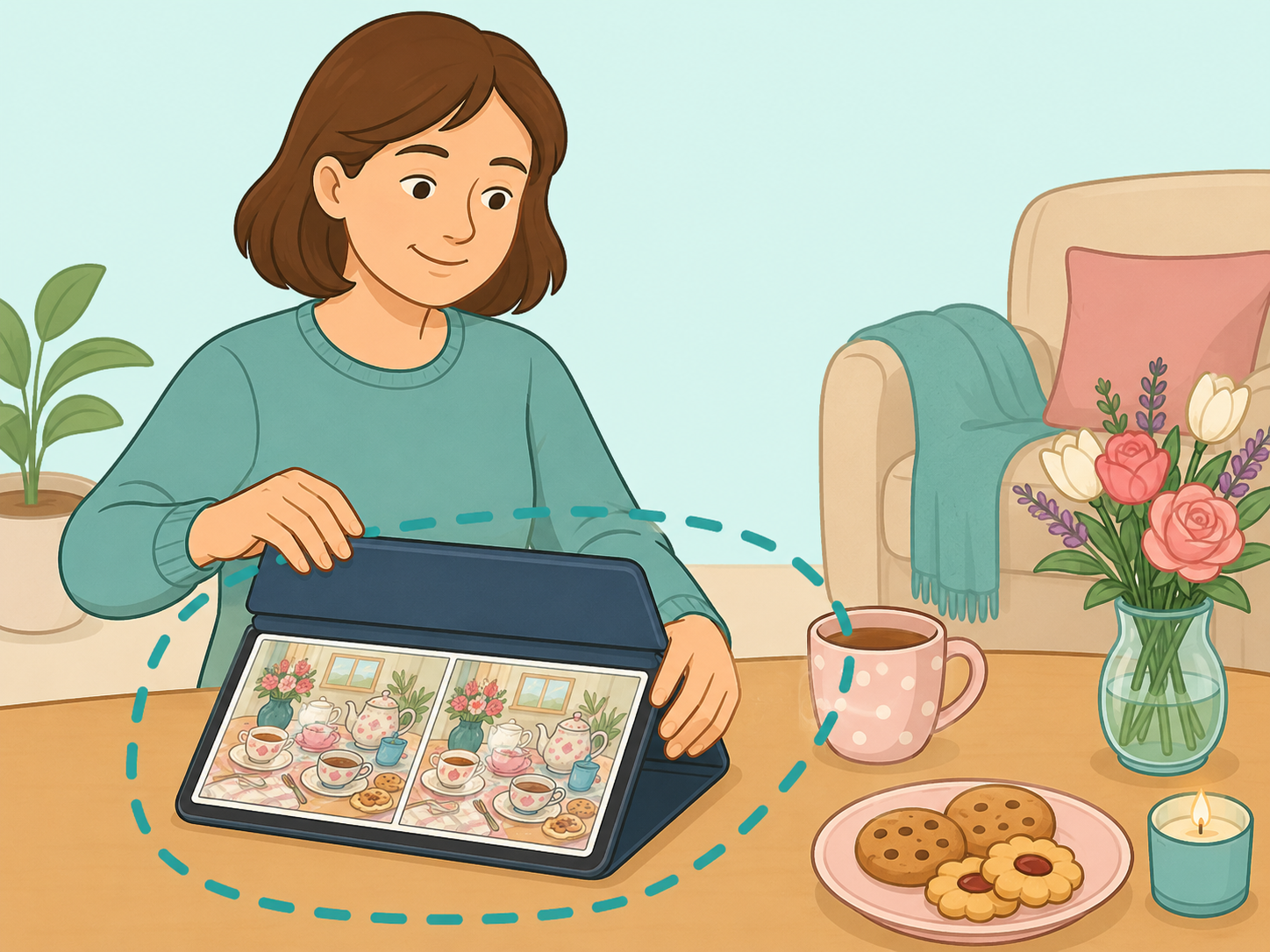
Avoid treating the puzzle as a health test
Enjoy Grandma's Tea Time as a fun visual challenge, not as a measure of memory, eyesight, or cognitive health. The National Institute on Aging advises caution around claims that online games or puzzles have proven brain-training effects, because the evidence is limited.
Summary
The bottom line: treat Grandma's Tea Time like a careful visual search. Divide the image into sections, compare matching objects, check edges and patterns, and take a short break if your eyes start skipping over details.
Frequently Asked Questions
- What should I look at first in Grandma's Tea Time?
- Start with the biggest objects, such as the teapot, cups, table, chair, curtains, and Grandma's clothing. Large shapes help you build a map of the scene before you move to tiny decorations.
- Why is this puzzle harder than it looks?
- Side-by-side comparisons can be tricky because your attention only lands on part of the picture at a time. A steady scanning pattern keeps you from repeatedly checking the same area.
- Should I compare the whole picture at once?
- No. Divide the picture into small zones, such as the top left, top right, table area, and floor area. Comparing one zone at a time makes small changes easier to notice.
- What details are easiest to miss?
- Tiny repeated details are often the hardest: spoon handles, cup rims, flower petals, cookie shapes, chair legs, apron patterns, clock hands, and the edges of tablecloths.
- Can spot-the-difference puzzles improve memory?
- They can be a pleasant mentally engaging activity, but do not treat any single puzzle as a proven way to improve memory or prevent cognitive decline. The National Institute on Aging notes that evidence for commercial brain-training claims is still limited.
- What if I still cannot find the final difference?
- Take a short break, then return and scan in the opposite direction. The last difference is often in an area you assumed was already checked.
References
Reliable references aided in composing and refining this content.