
 Pin it
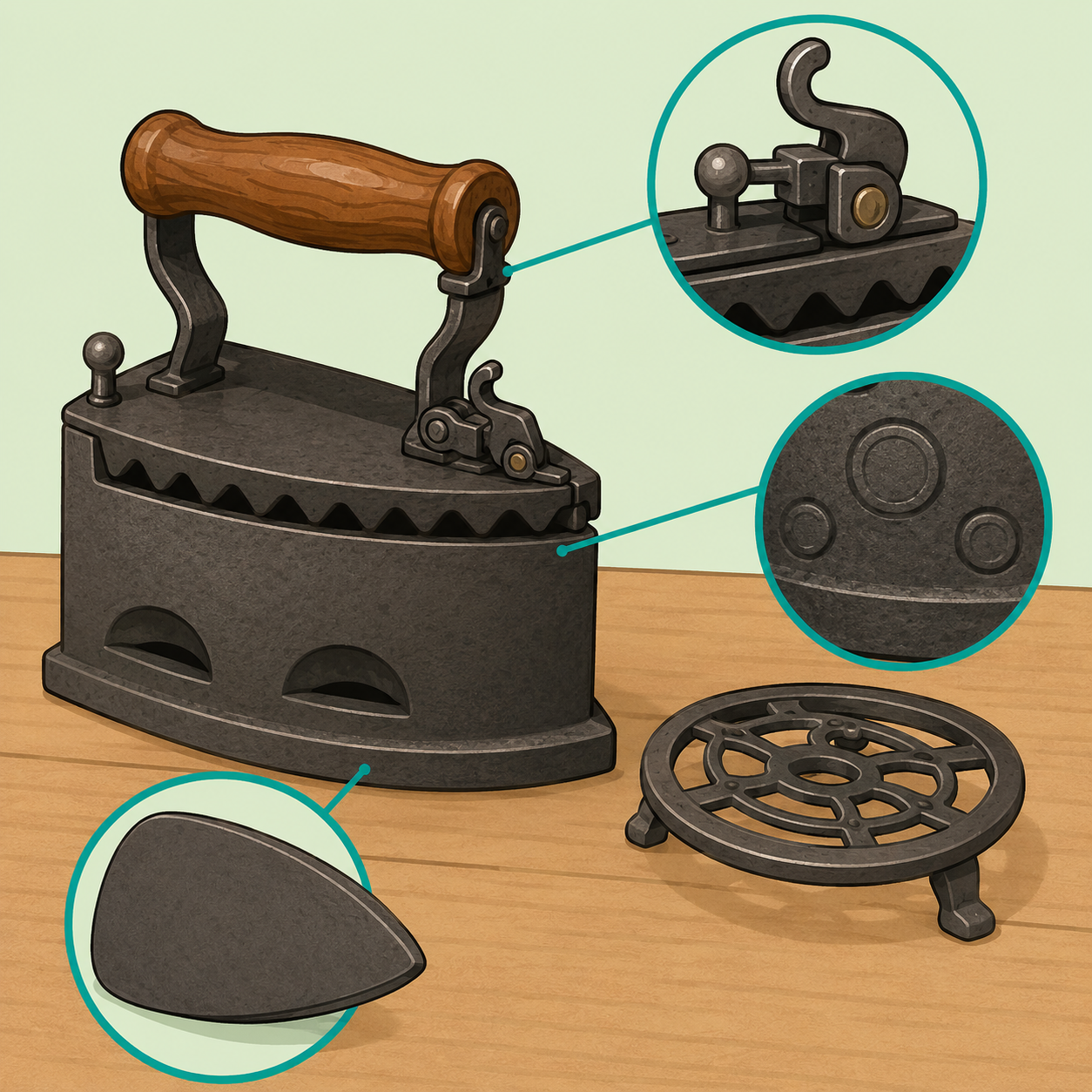
That mysterious chunk of metal is often not a machine part at all. If it has a smooth flat bottom, a heavy body, and signs of a handle or latch, it may be an antique sad iron: a pre-electric tool once heated and used to press clothing. This guide shows you how to identify one without damaging it.
Start with the shape
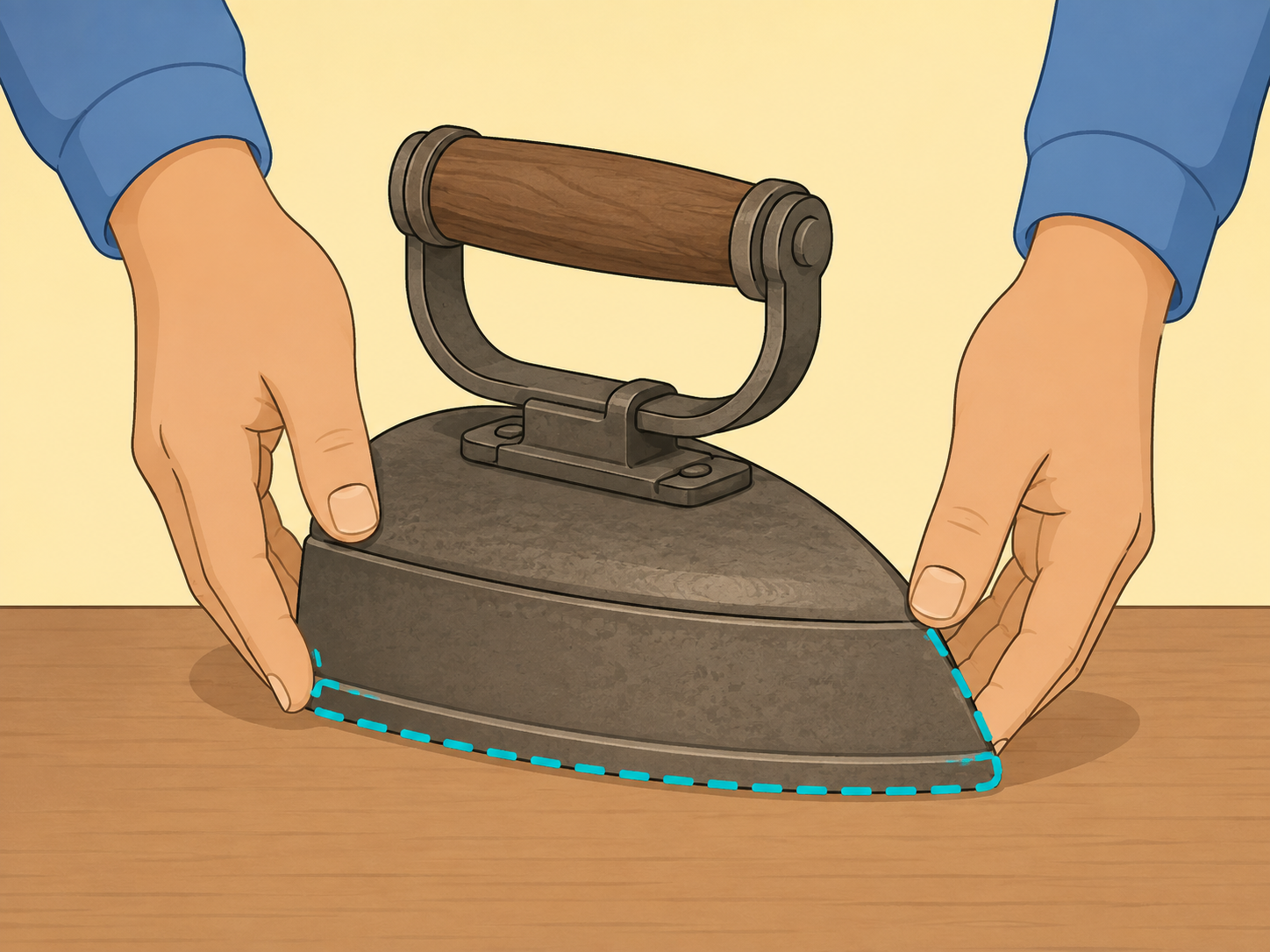
Set the object on a stable table and look for a broad, smooth, flat underside. Historic sad irons were shaped pieces of metal used for pressing fabric, and museum examples describe them as flat or smoothing irons that were heated before use, according to the London Museum collection record. A pointed front, rounded back, or double-pointed body is a strong clue.
Check whether the bottom looks polished
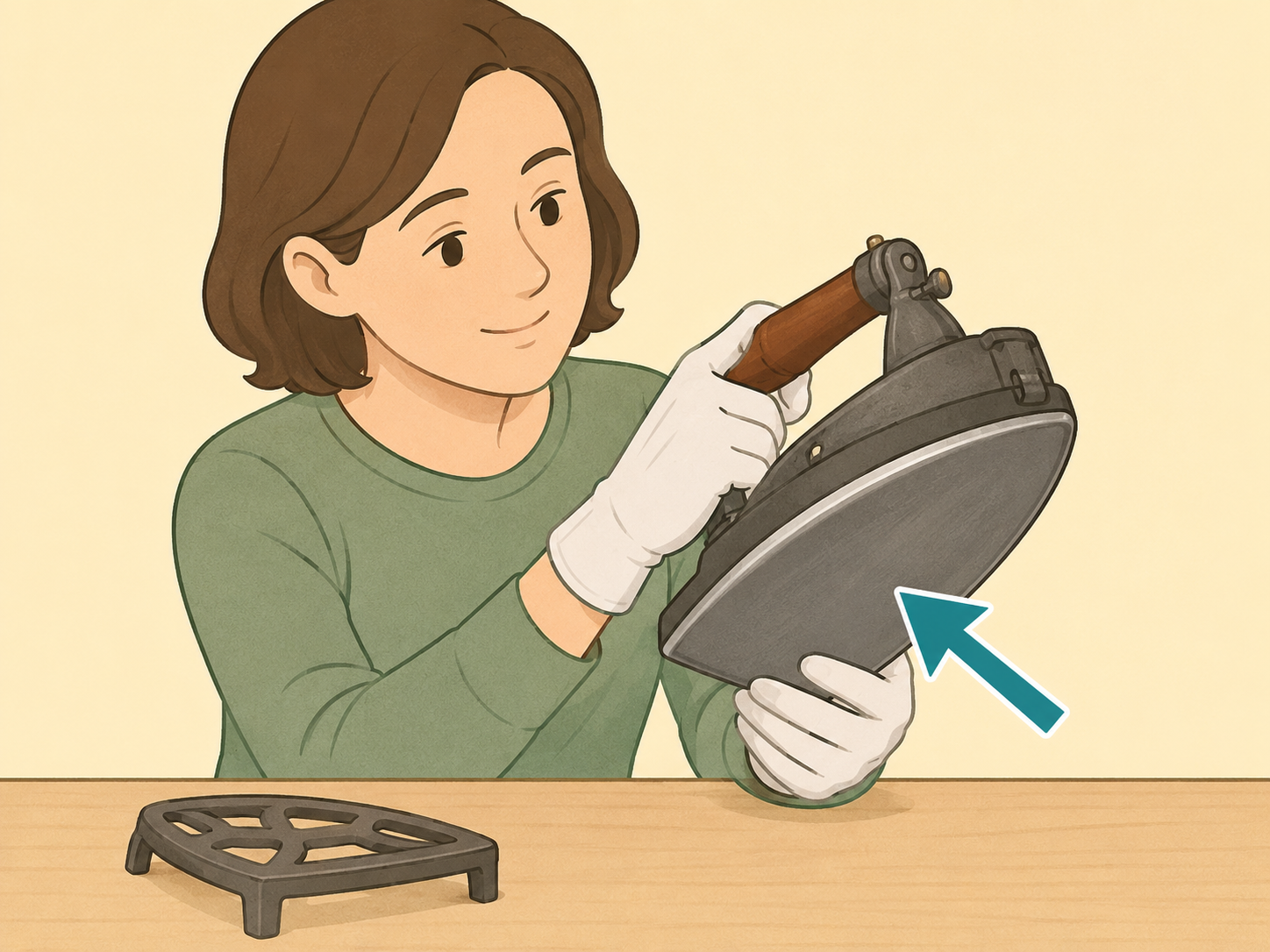
Turn the object carefully and inspect the base for a flatter, smoother surface than the sides or top. The National Park Service describes sad irons as metal tools with one flat polished side used to remove wrinkles from clothing, so a worn smooth sole is more meaningful than random rust or dents on the rest of the body. If the underside is rough, jagged, or shaped for striking, it may be another kind of tool.
Look for handle fittings
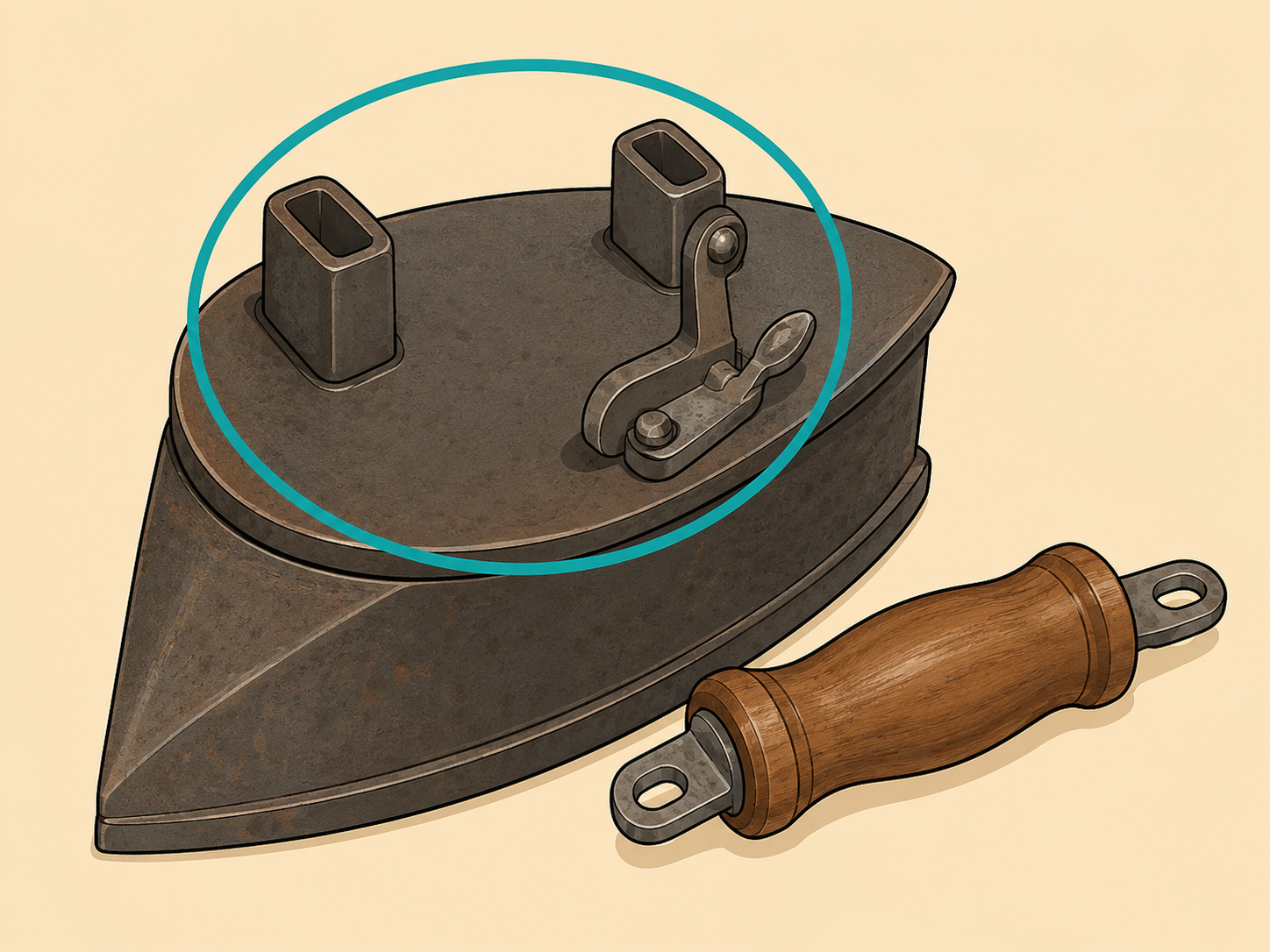
Search the top for a fixed handle, two raised attachment points, a latch, a knob, or empty recesses where a handle once locked in. Mary Florence Potts popularized improved sad irons with cooler, detachable handles in the 1870s, and the National Inventors Hall of Fame notes that sets often used one handle with several heated bases. Missing handle hardware can still leave obvious slots or worn locking surfaces.
Weigh it without dropping it
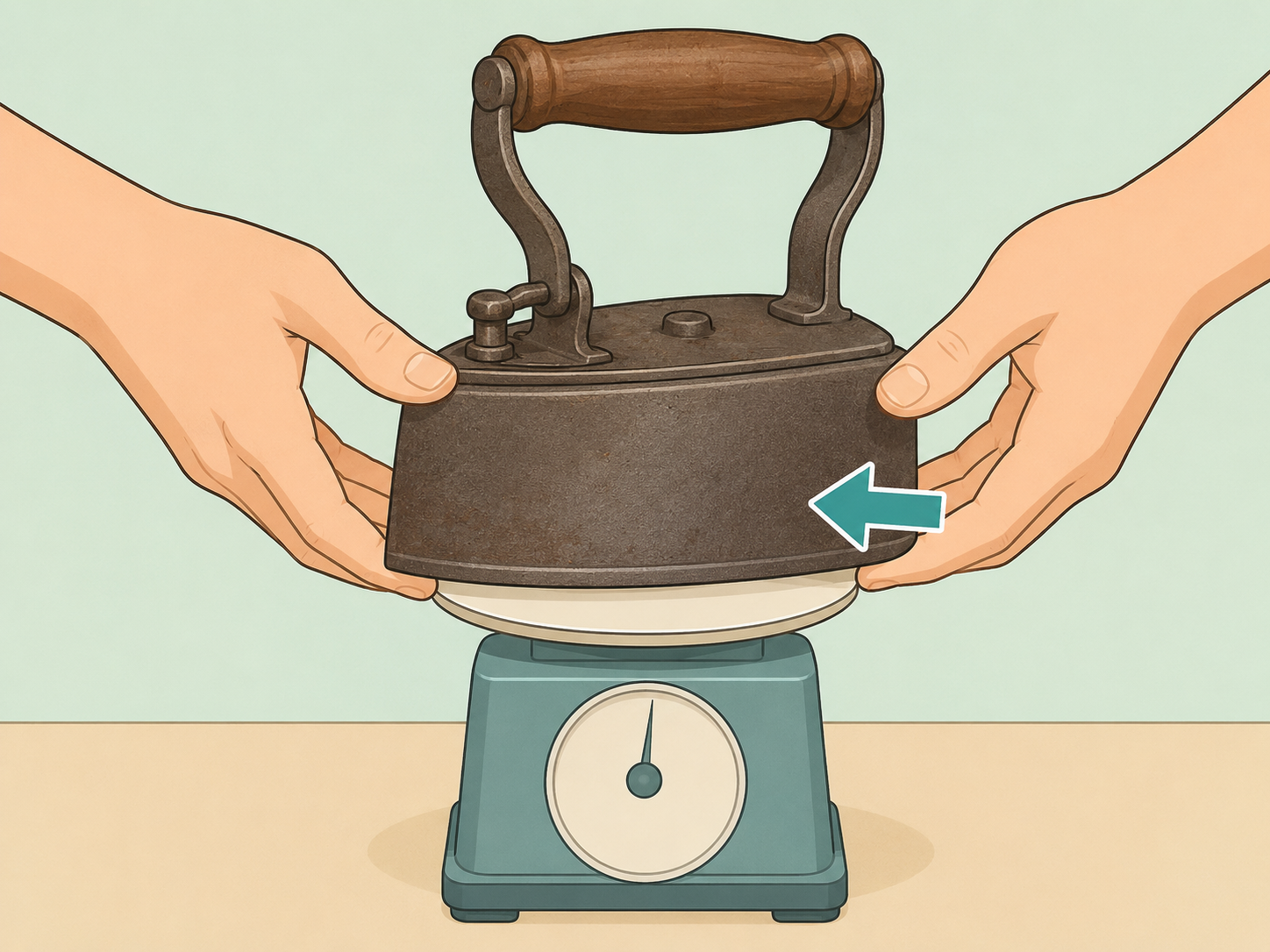
Lift the piece with two hands, or weigh it on a sturdy scale if you can do so safely. The National Park Service explains that sad irons were heavy household irons, often several pounds, because their mass held heat for pressing. A small decorative paperweight will usually feel too light, while a true sad iron feels dense for its size.
Read the markings
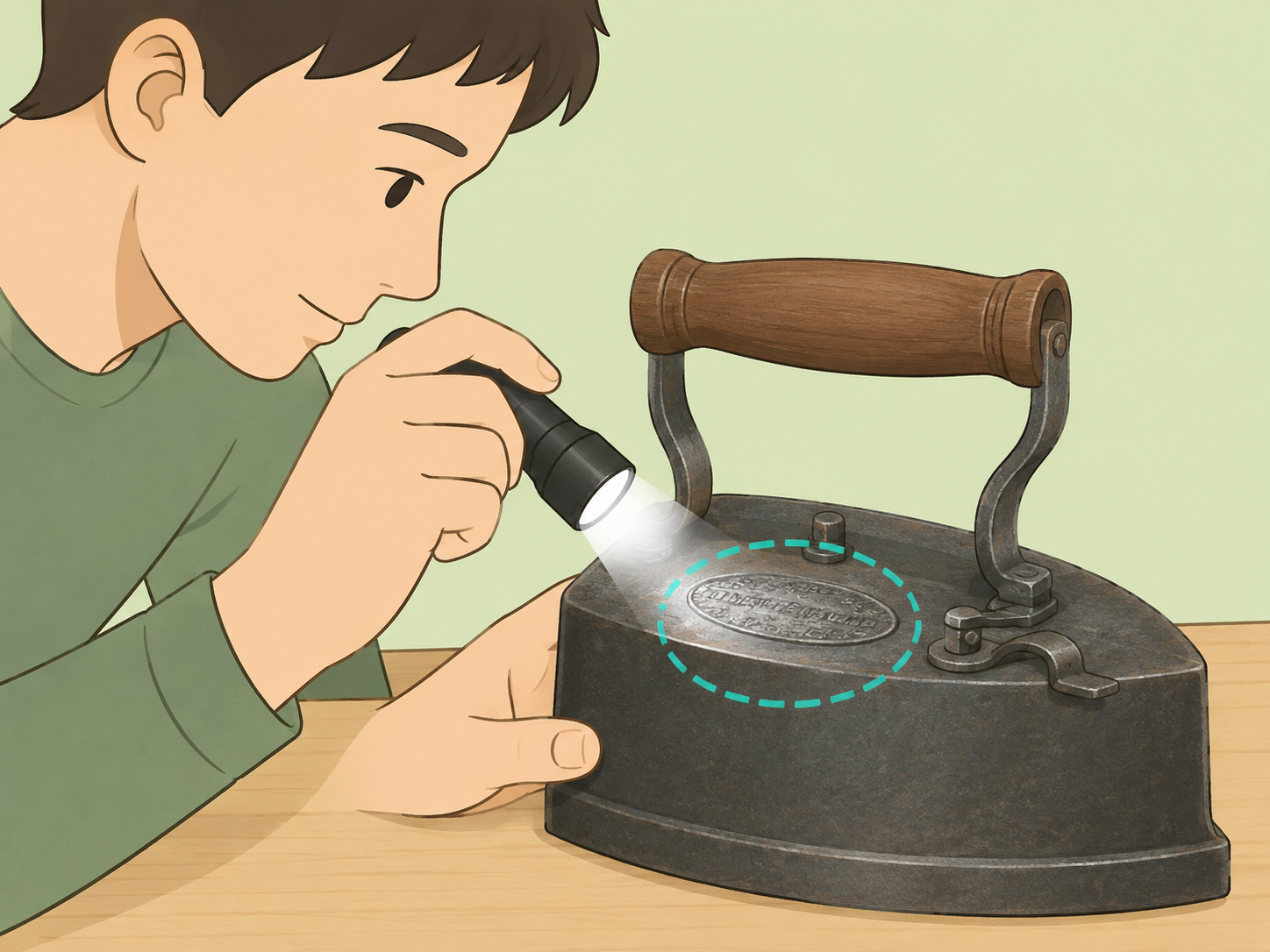
Use a flashlight at a low angle to find raised or stamped words, patent dates, maker names, or size numbers. Names such as Mrs. Potts, Enterprise, or other manufacturer marks can point to a laundry iron rather than a machine part, and Potts held U.S. sad iron patents listed by the National Inventors Hall of Fame. Photograph every mark before cleaning because rust removal can erase faint details.
Compare it with a trivet or stand
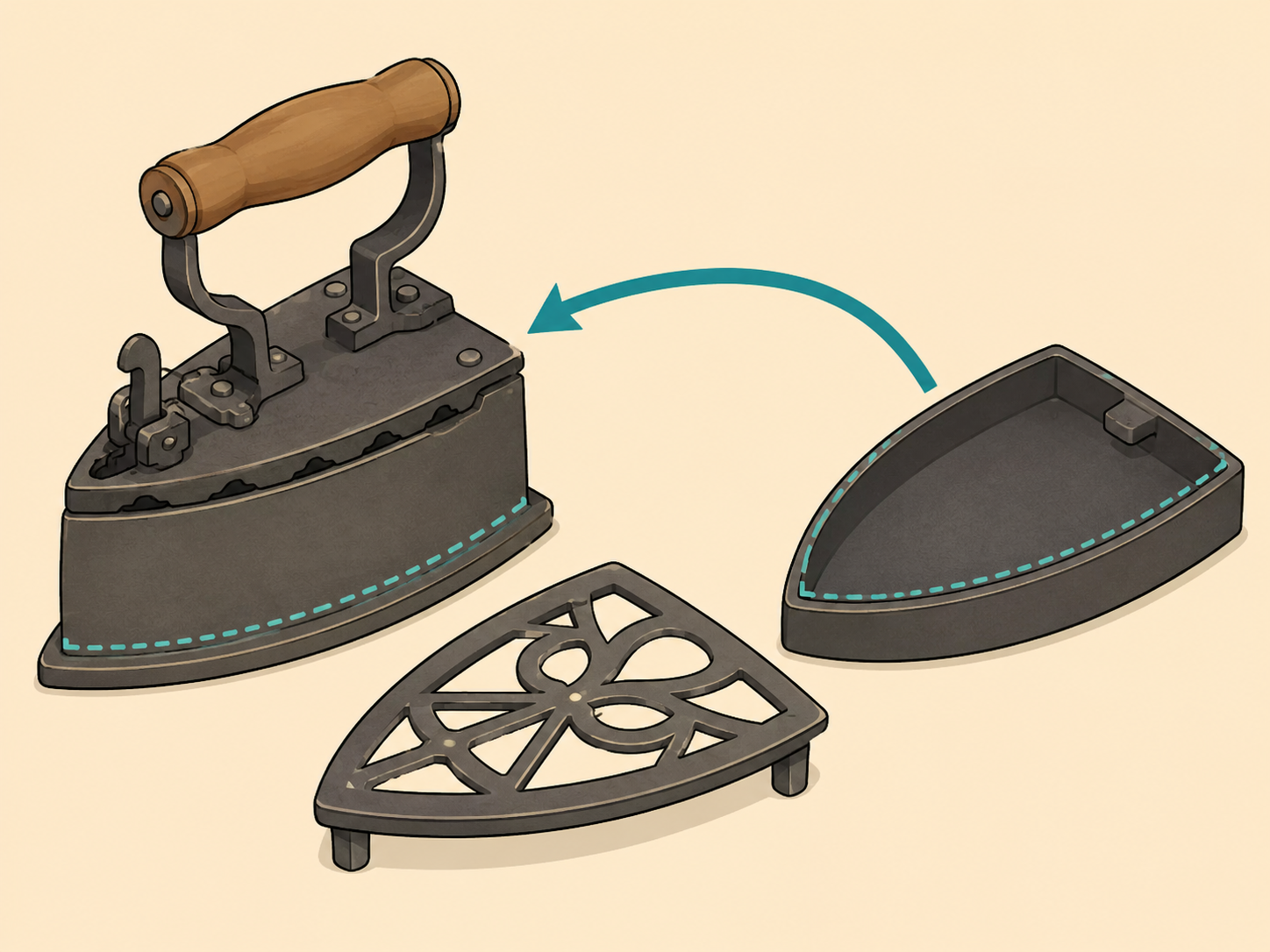
Look nearby for a small metal stand, rest, or frame that matches the iron's shape. Sad irons were commonly heated on a stove or hearth, and the London Museum notes that more than one iron might be used because they lost heat during work. A matching stand or multiple similar bases makes the sad-iron identification much stronger.
Handle rust gently
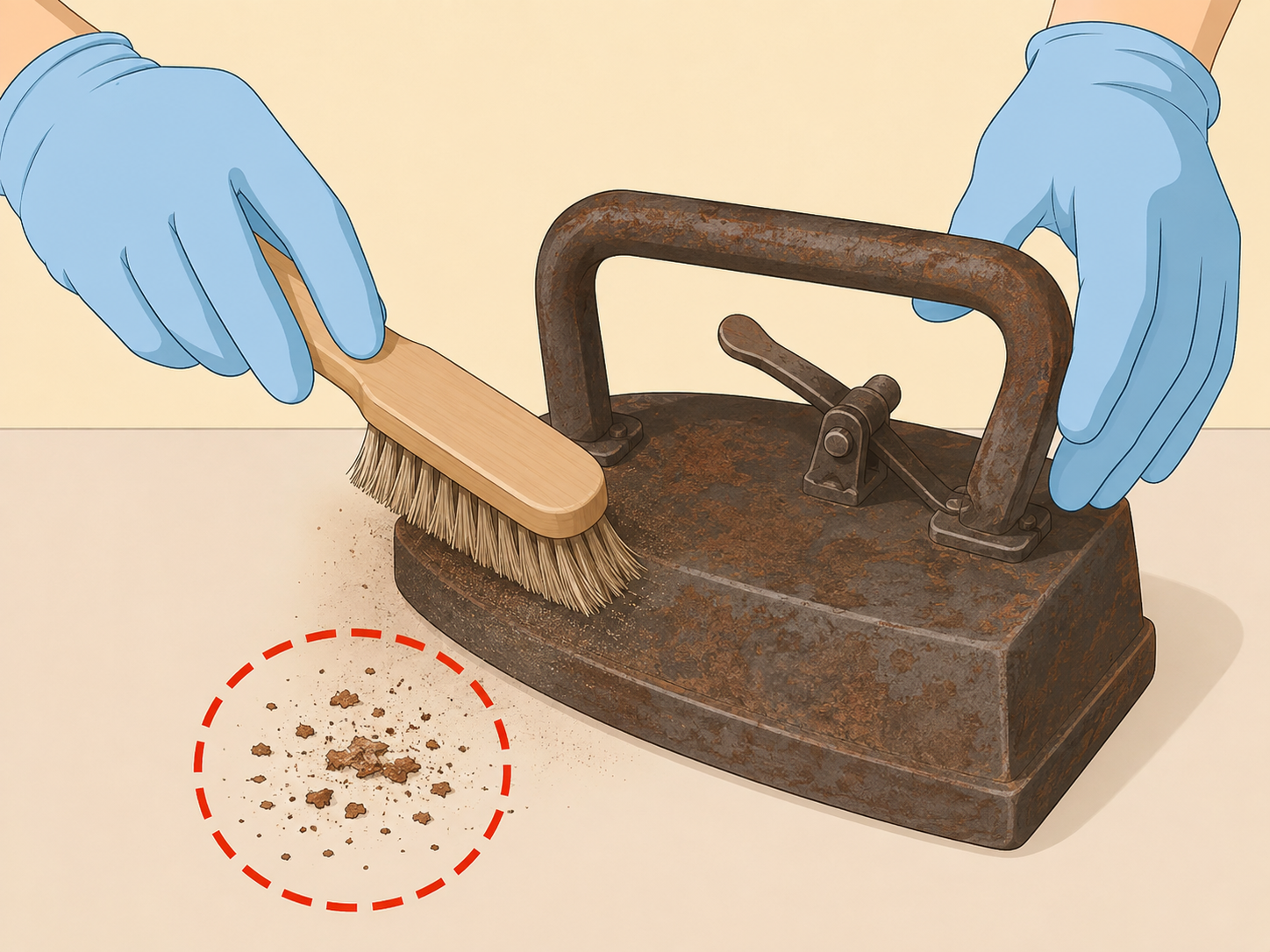
Do not scrub the object down to shiny bare metal just to make it look new. The Canadian Conservation Institute says iron can rust quickly when exposed to moisture, and its care guidance for iron artifacts recommends dry, gentle cleaning for many stable indoor objects. Loose orange powder, flaking layers, or weeping spots are signs to stop and ask a conservator.
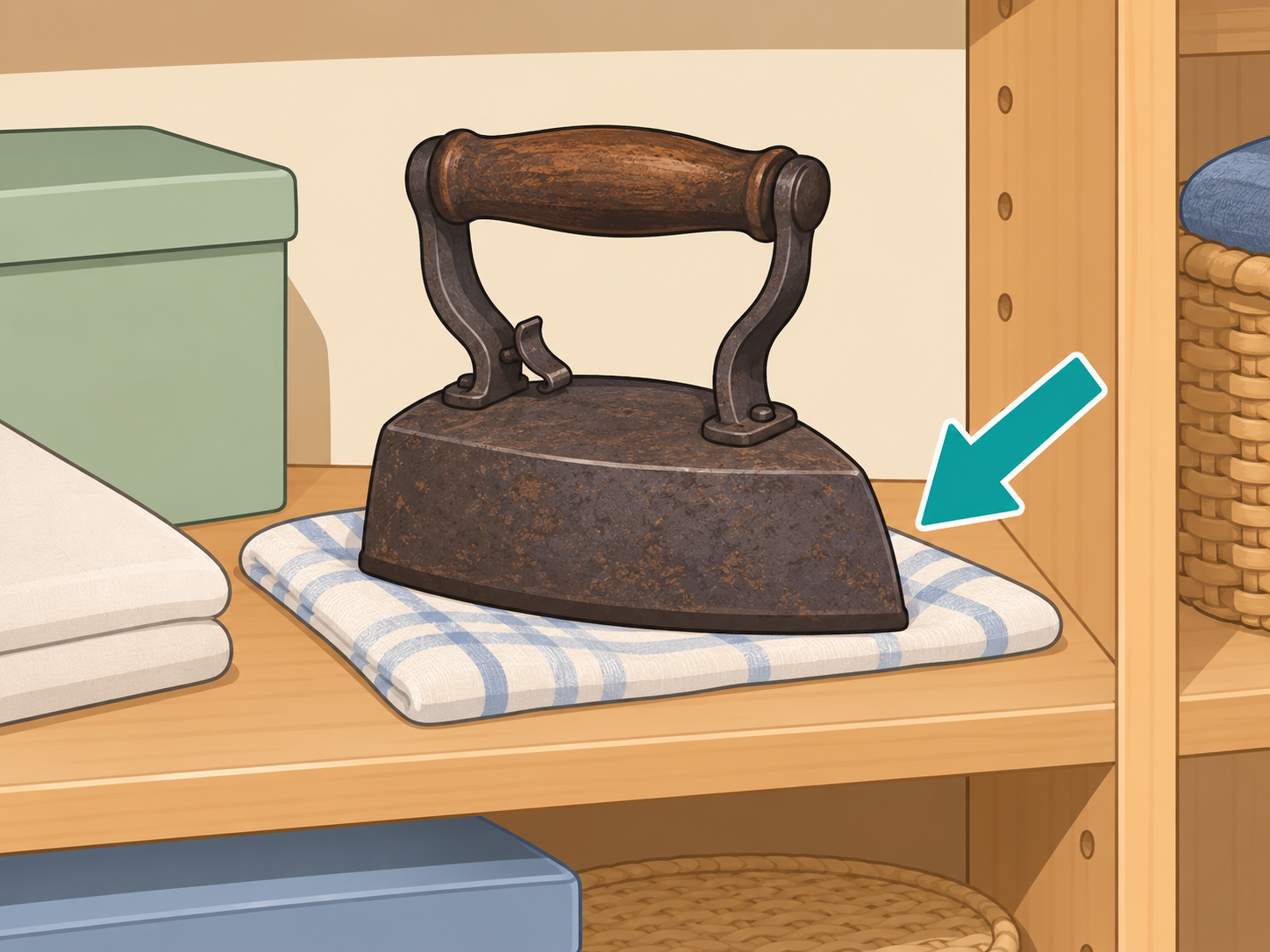
Store it in a dry place
Keep the iron indoors, off damp concrete, and away from basements, garages, sinks, and laundry moisture. The Canadian Conservation Institute's basic care advice for iron objects says salts and oils from skin can encourage corrosion and that valuable iron objects should be protected from excessive handling. Use a dry shelf, a soft support, and a label with what you know about its history.
Summary
The bottom line: identify a possible sad iron by its flat sole, heavy iron body, handle hardware, maker marks, and laundry-related shape. Handle it gently, keep it dry, and get expert help before cleaning deeply or disturbing anything marked asbestos.
Frequently Asked Questions
- Why is it called a sad iron?
In this context, sad comes from an older meaning of solid or heavy. Museums use the term for heavy metal flat irons that were heated before use.
- Is a sad iron made of steel or iron?
Most antique sad irons were cast iron, though people often describe any heavy gray metal object as steel. The safest wording is iron or cast iron unless a maker record or expert confirms the exact metal.
- Can I still use an antique sad iron?
It is better to keep it as a display or collection object. Heating and using an old iron can damage the finish, loosen parts, stain fabric, or disturb hazardous materials in some models.
- What if my iron has no handle?
Many old irons lost their handles, especially detachable-handle types. Look for sockets, recesses, latch plates, or a matching trivet shape to help confirm what it was.
- How can I tell if it is valuable?
Value depends on condition, rarity, maker, markings, completeness, and local demand. Document clear photos, measurements, weight, and any cast lettering before asking an antique dealer, auction house, or museum curator.
- Should I remove all the rust?
No. Heavy cleaning can remove original finish, markings, and value. For a potentially historic iron object, start with dry dusting and ask a conservator before aggressive rust removal.
References
Reliable references aided in composing and refining this content.
- https://home.nps.gov/jeff/blogs/household-goods.htm
- https://www.londonmuseum.org.uk/collections/v/object-118996/smoothing-iron-flat-iron
- https://www.invent.org/inductees/mary-florence-potts
- https://www.canada.ca/en/conservation-institute/services/care-objects/metals/basic-care-iron.html
- https://www.canada.ca/en/conservation-institute/services/conservation-preservation-publications/canadian-conservation-institute-notes/care-iron.html
- https://www.atsdr.cdc.gov/asbestos/prevention/index.html