
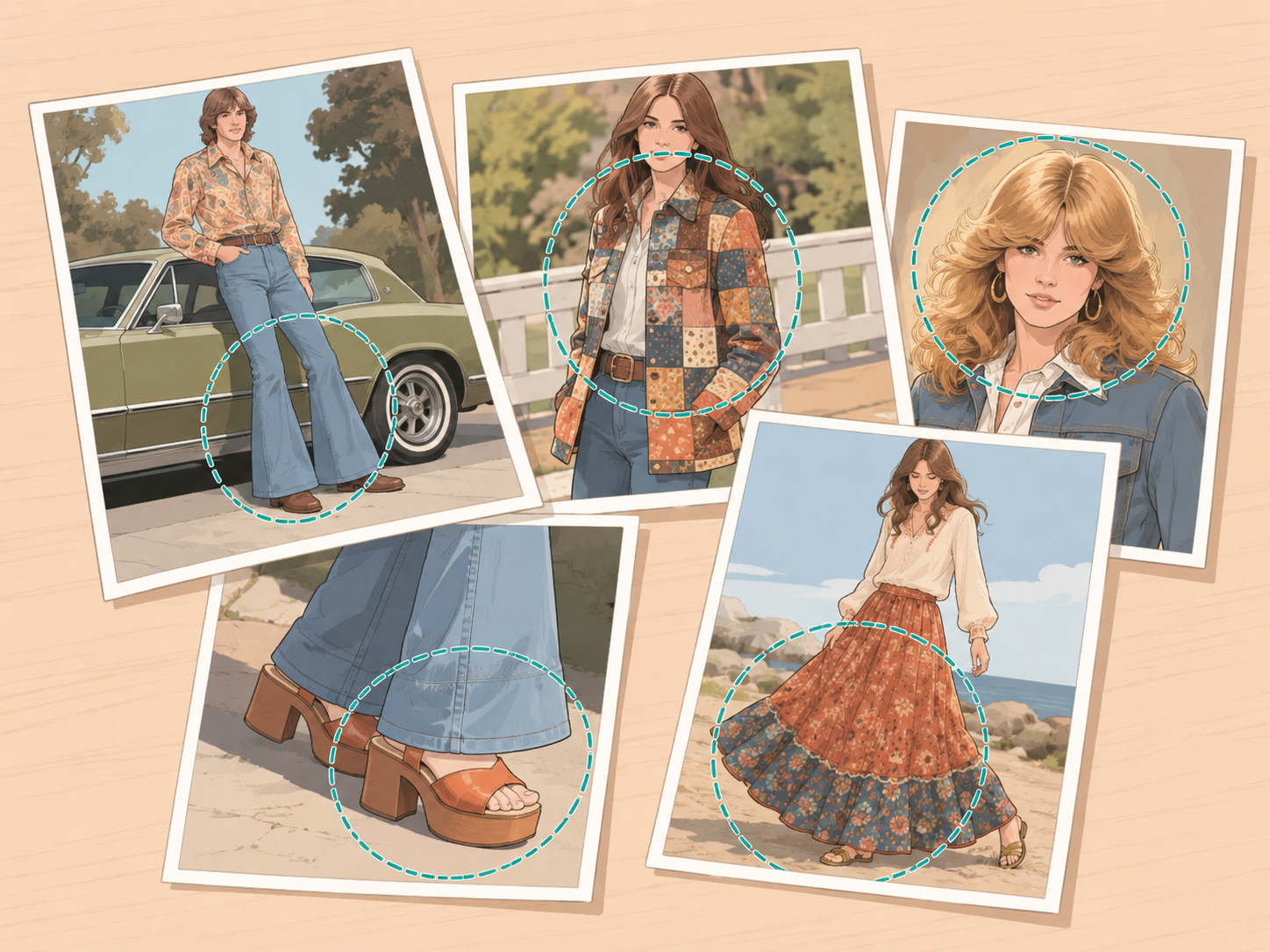
 Pin it
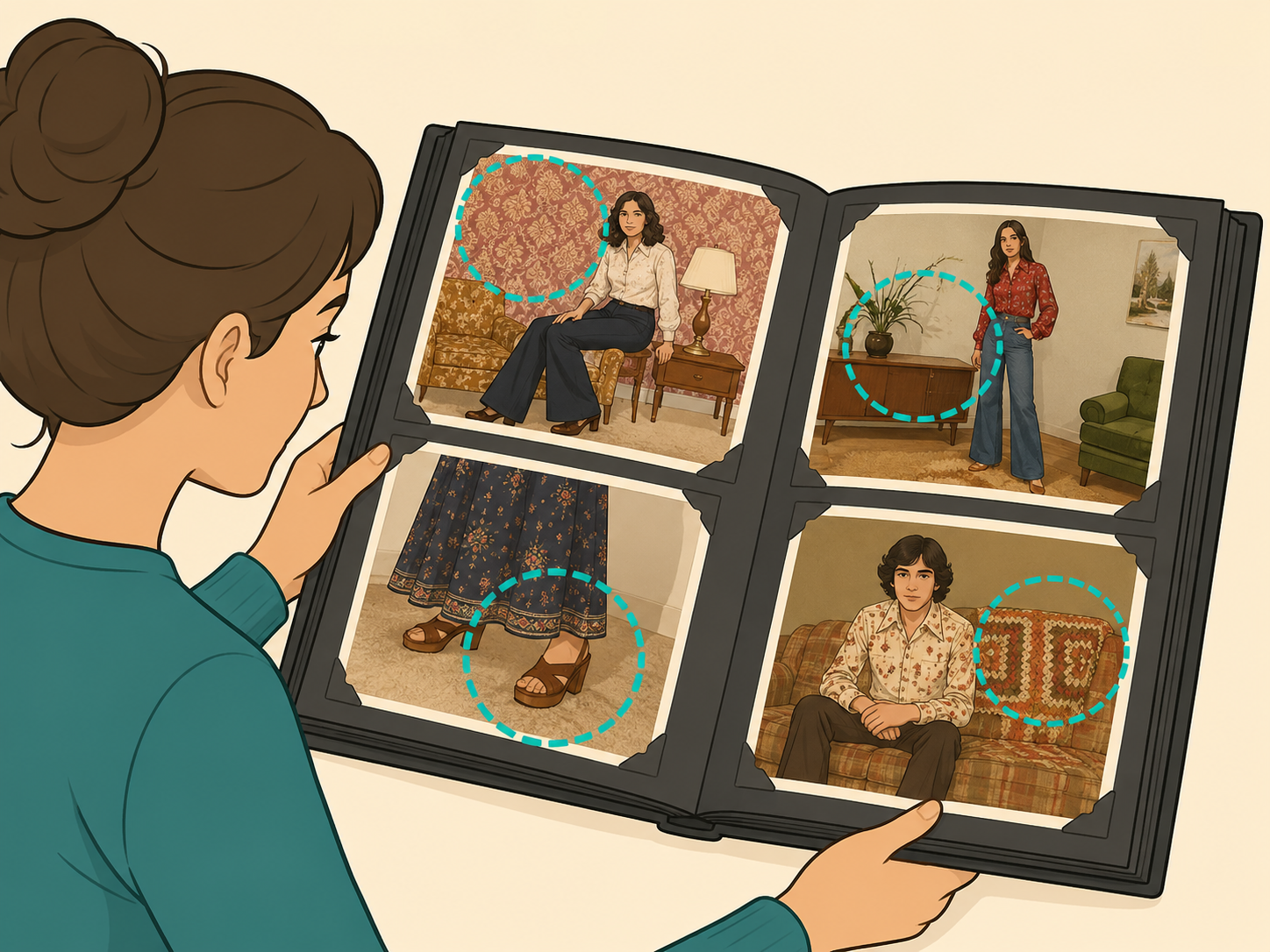
Old photos from the 1970s can be easy to recognize once you know which style details to look for. Girls' and young women's clothing often reflected broader trends in denim, handmade decoration, relaxed silhouettes, and disco-era shine. This guide shows you how to read the visual clues carefully without assuming too much from a single outfit.
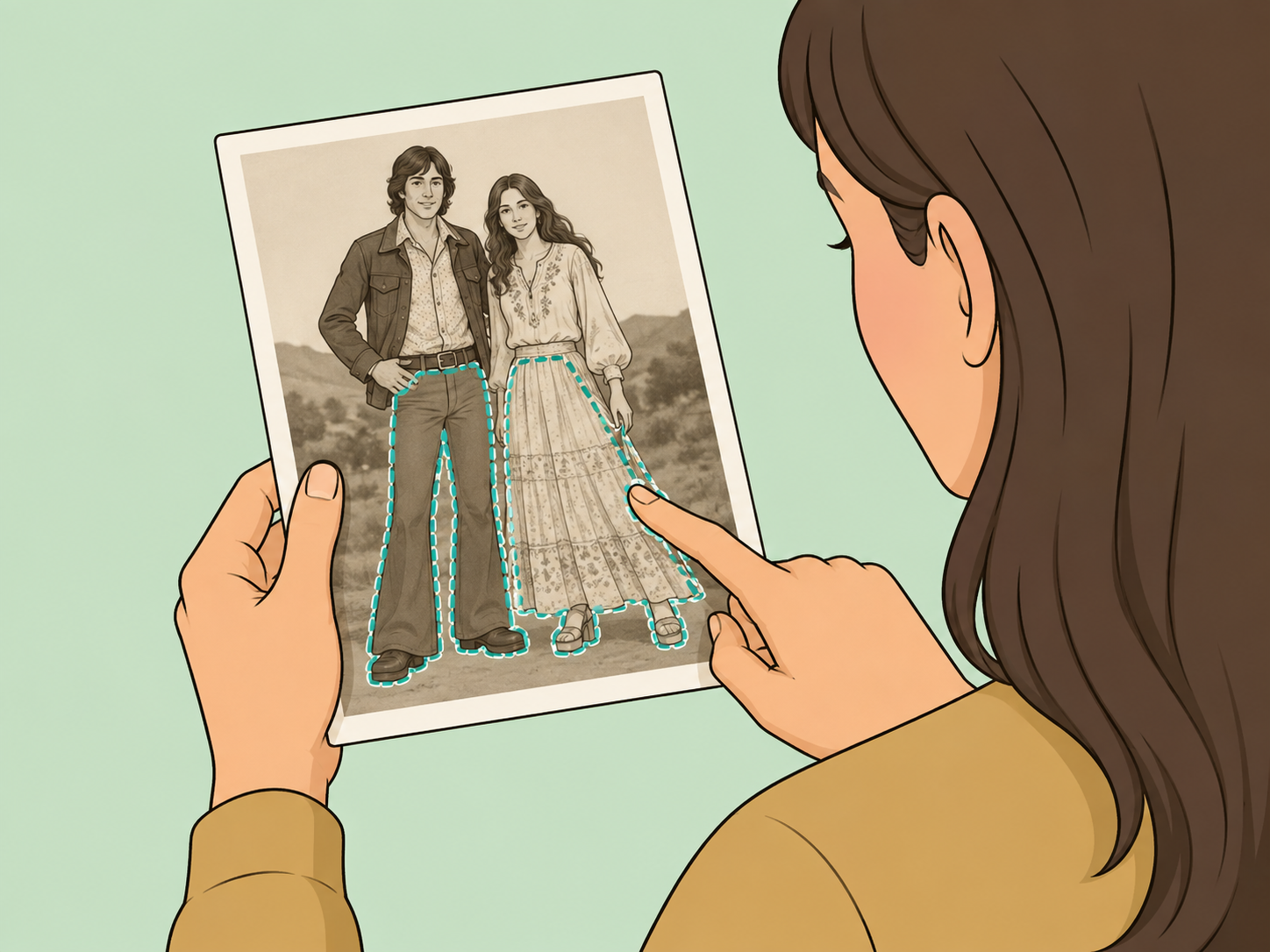
Start with the whole silhouette
Scan the outline before focusing on small details. Fashion History Timeline describes the 1970s as a decade of bold colors, patterns, relaxed dress codes, and shifting shapes, so a photo may show flared pants, long skirts, wide collars, or flowing dresses rather than one single uniform look.
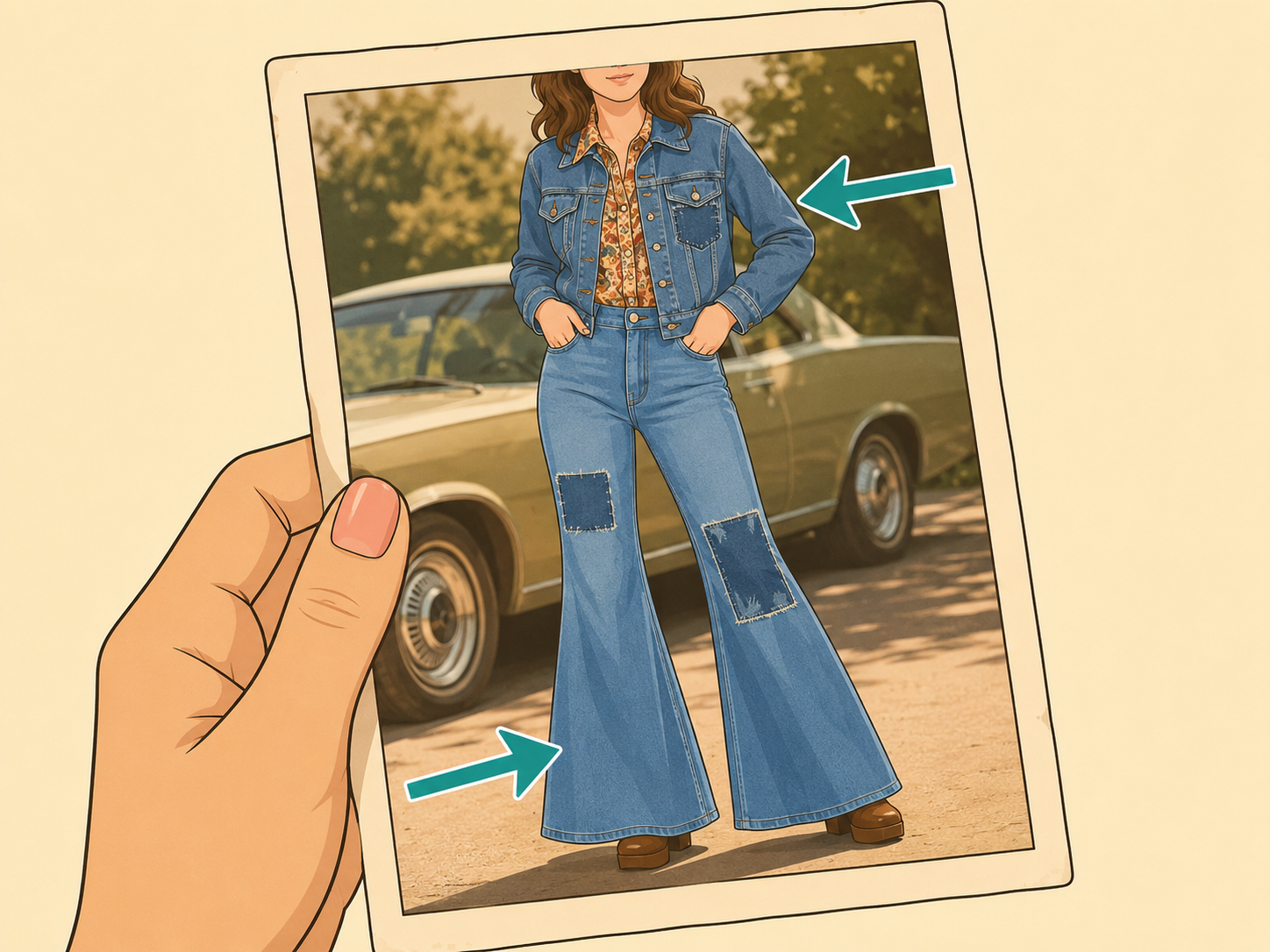
Look for flared jeans and denim
Denim is one of the strongest 1970s clues, especially when it appears as bell-bottoms, patched jeans, embroidered jeans, denim jackets, or denim suits. The Museum at FIT notes that hippie denim trends such as bellbottom jeans, embroidered denim, and patched denim moved into the mainstream by the early 1970s.
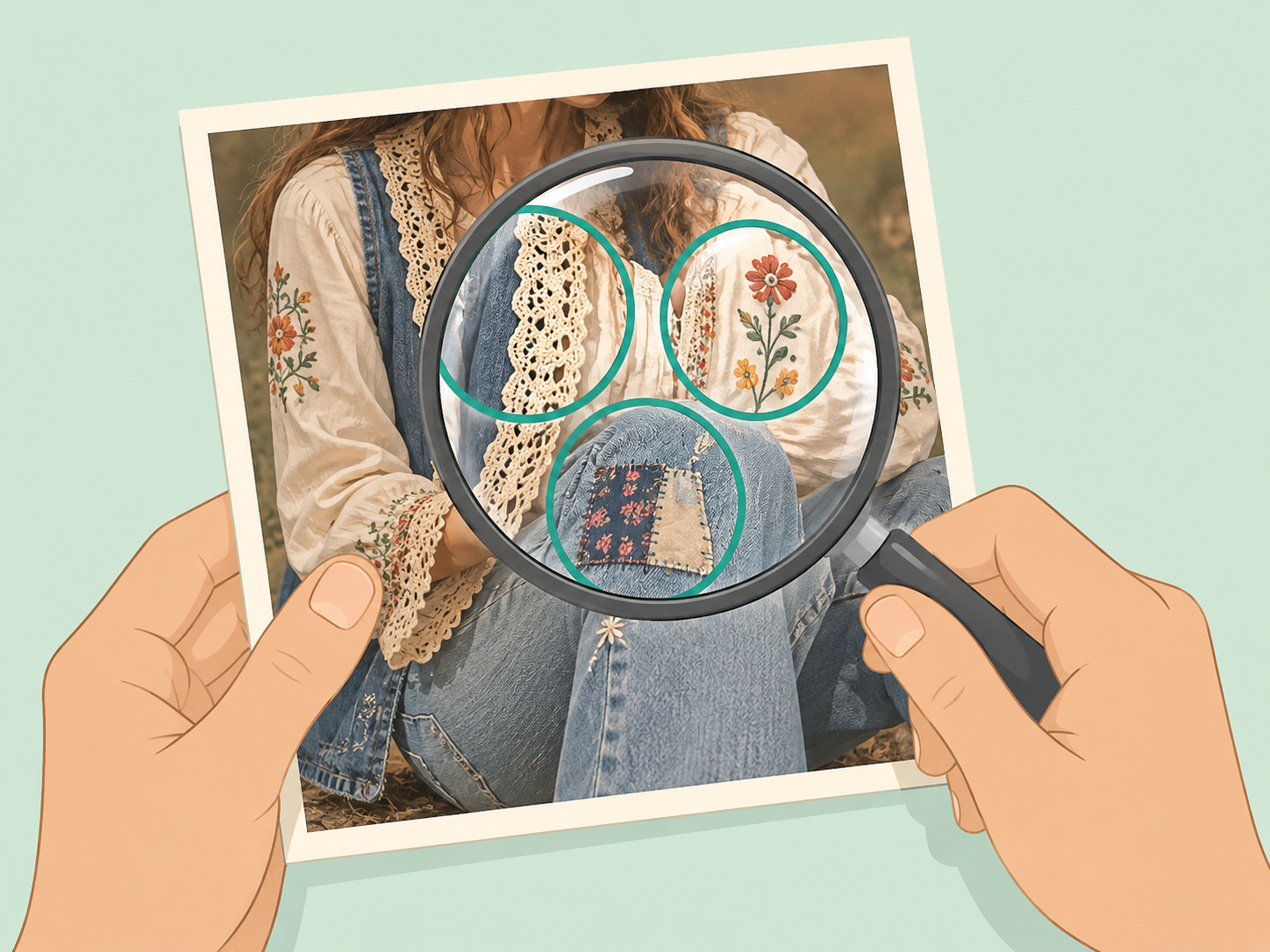
Check for handmade or patchwork details
Look closely at hems, pockets, bags, vests, and jackets for crochet, embroidery, appliqué, patches, or mismatched fabric. The V&A explains that patchwork became associated with fashion in the late 1960s and carried into the early 1970s as a handmade, individual look.
Notice prairie, midi, and maxi shapes
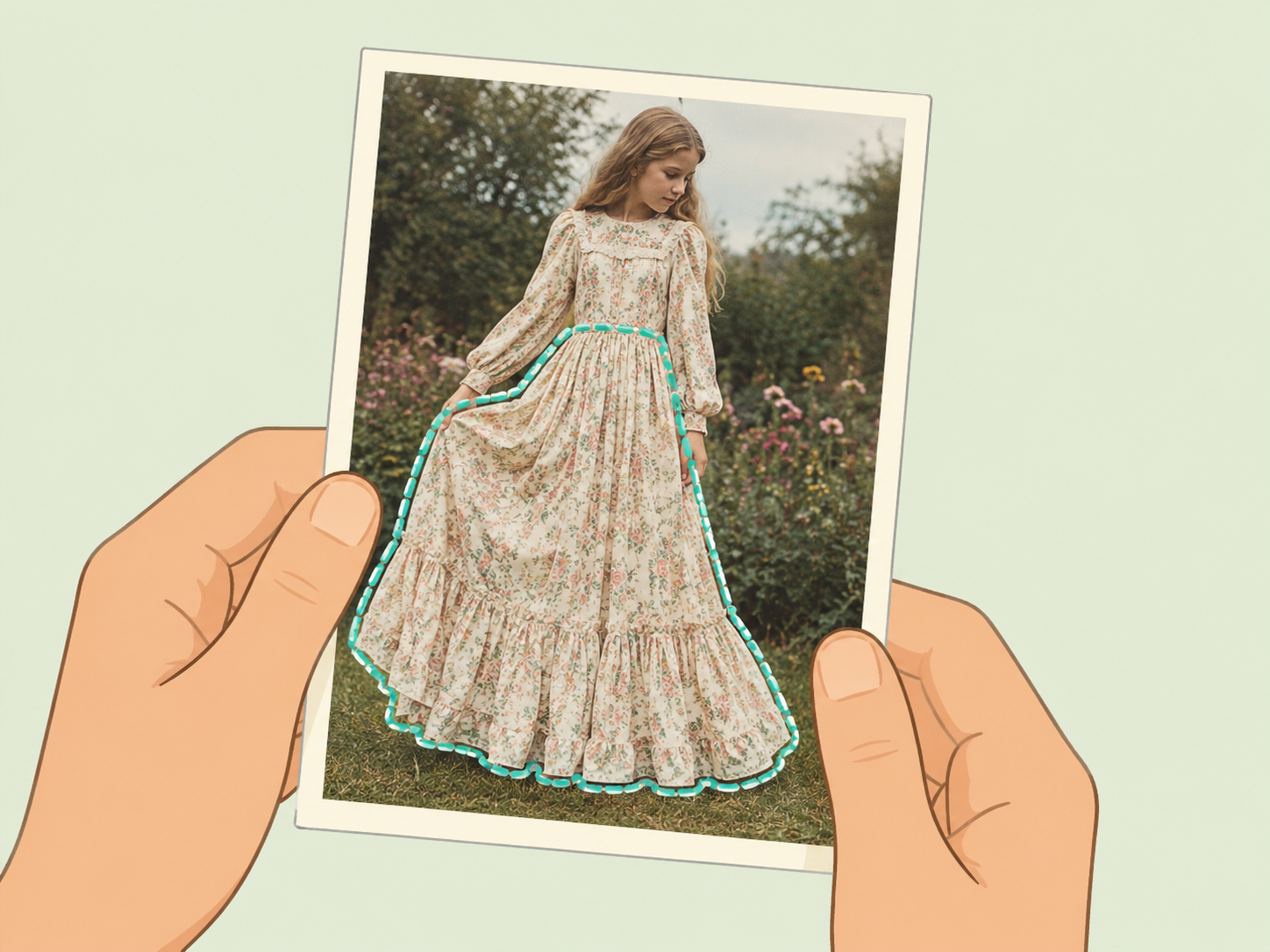
Longer dresses and skirts can be just as telling as jeans. Fashion History Timeline points to early 1970s prairie dresses, midi lengths, flounces, delicate florals, and loose flowing shapes as part of the decade's style mix, so check whether a dress has a soft, vintage-inspired outline rather than a sharp modern cut.
Spot disco shine and party fabrics
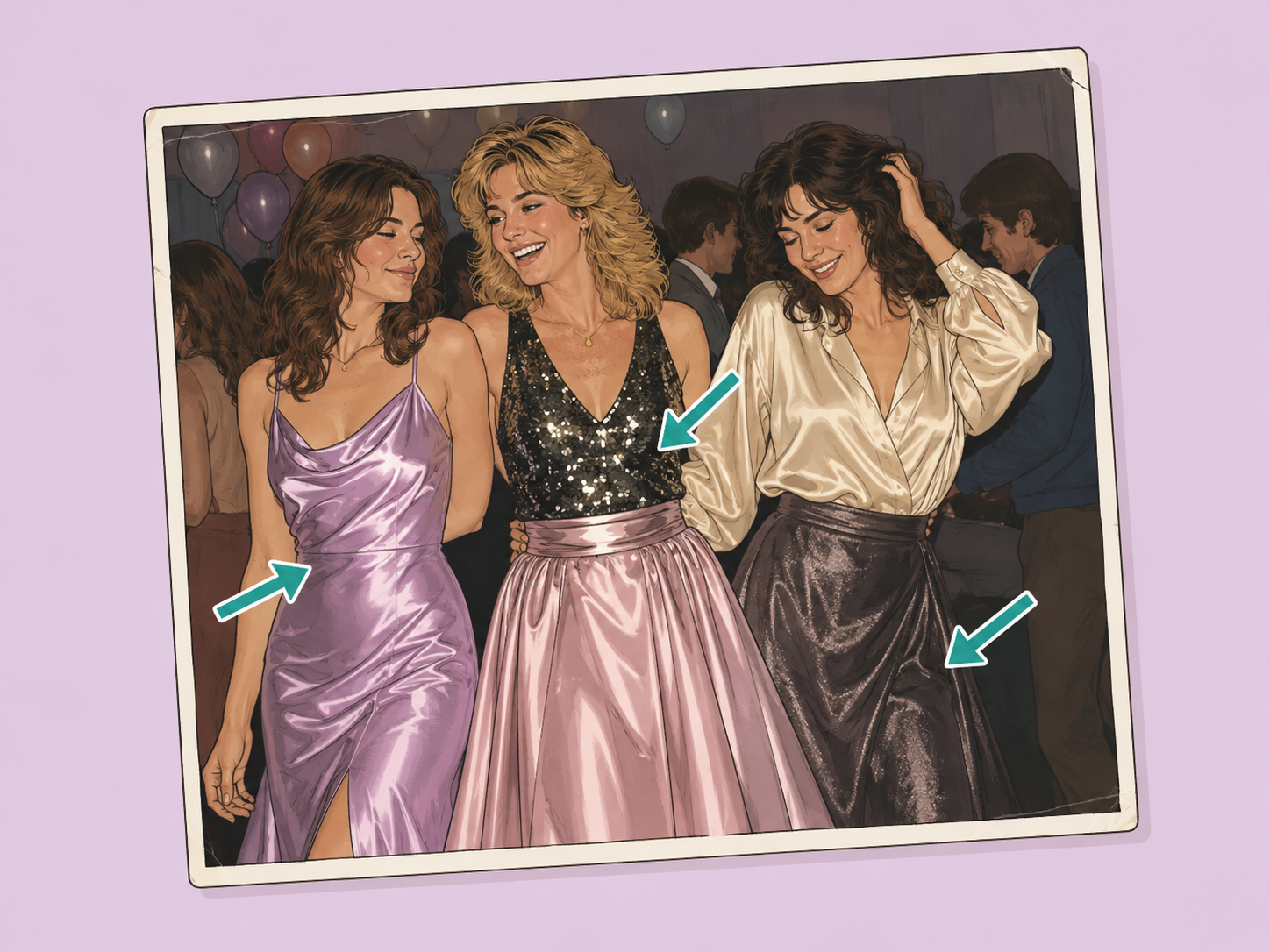
If the photo looks like a dance, school event, party, or night out, look for satin, velvet, sequins, hot pants, halter shapes, or swishy skirts. According to Fashion History Timeline's womenswear overview, disco helped make glamorous evening clothes and shiny fabrics especially visible in the decade.
Examine shoes and hemlines together
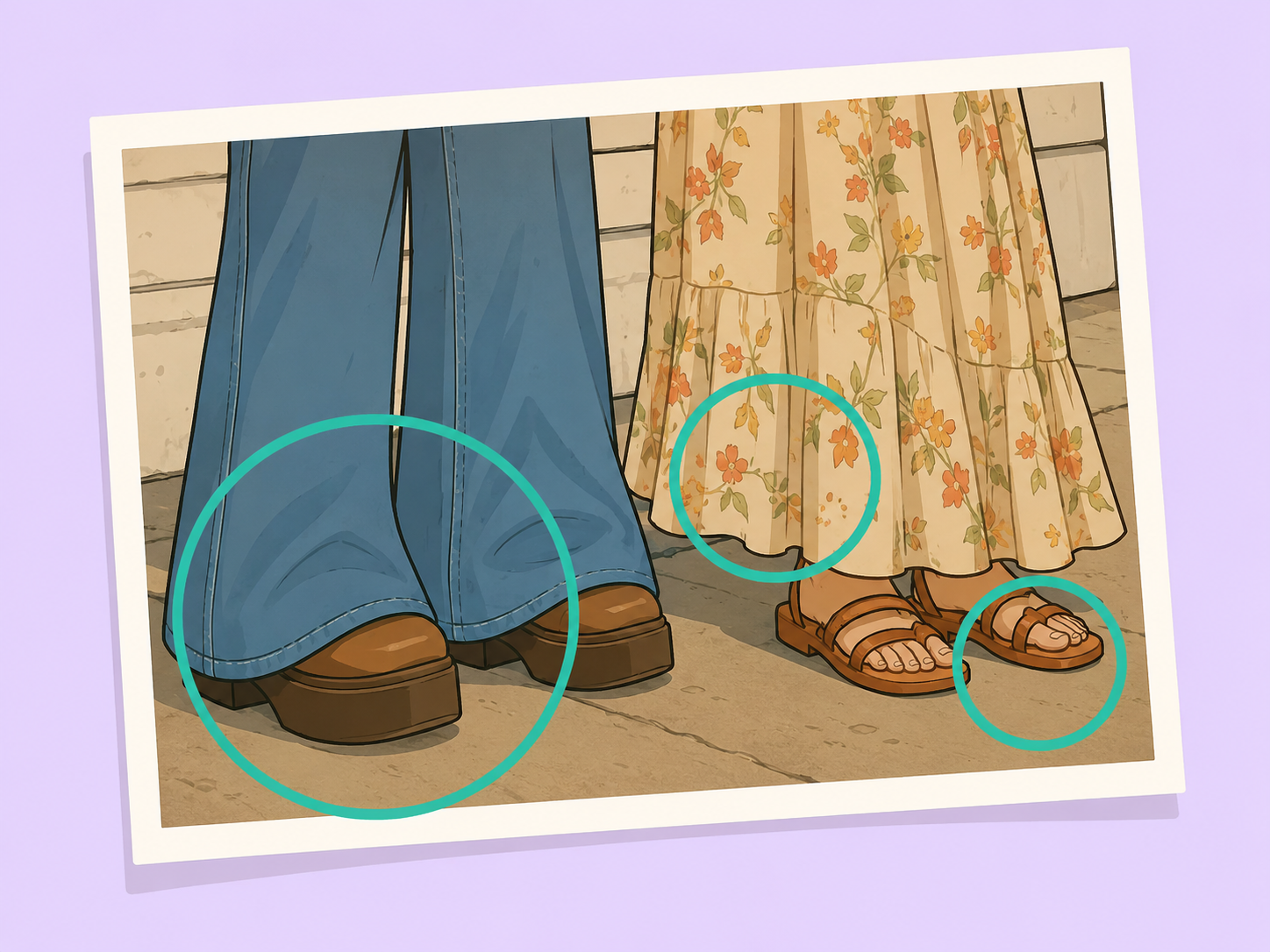
Shoes can confirm what the clothes suggest, especially when wide pants fall over chunky soles or long skirts are paired with high sandals. The V&A's footwear collection notes how designers used provocative shoes and boots in the 1970s punk scene, including 1974 stilettos and 1976 bondage boots, while mainstream 1970s photos may show simpler clogs, sandals, or platform-inspired soles.
Use hair and accessories as supporting clues
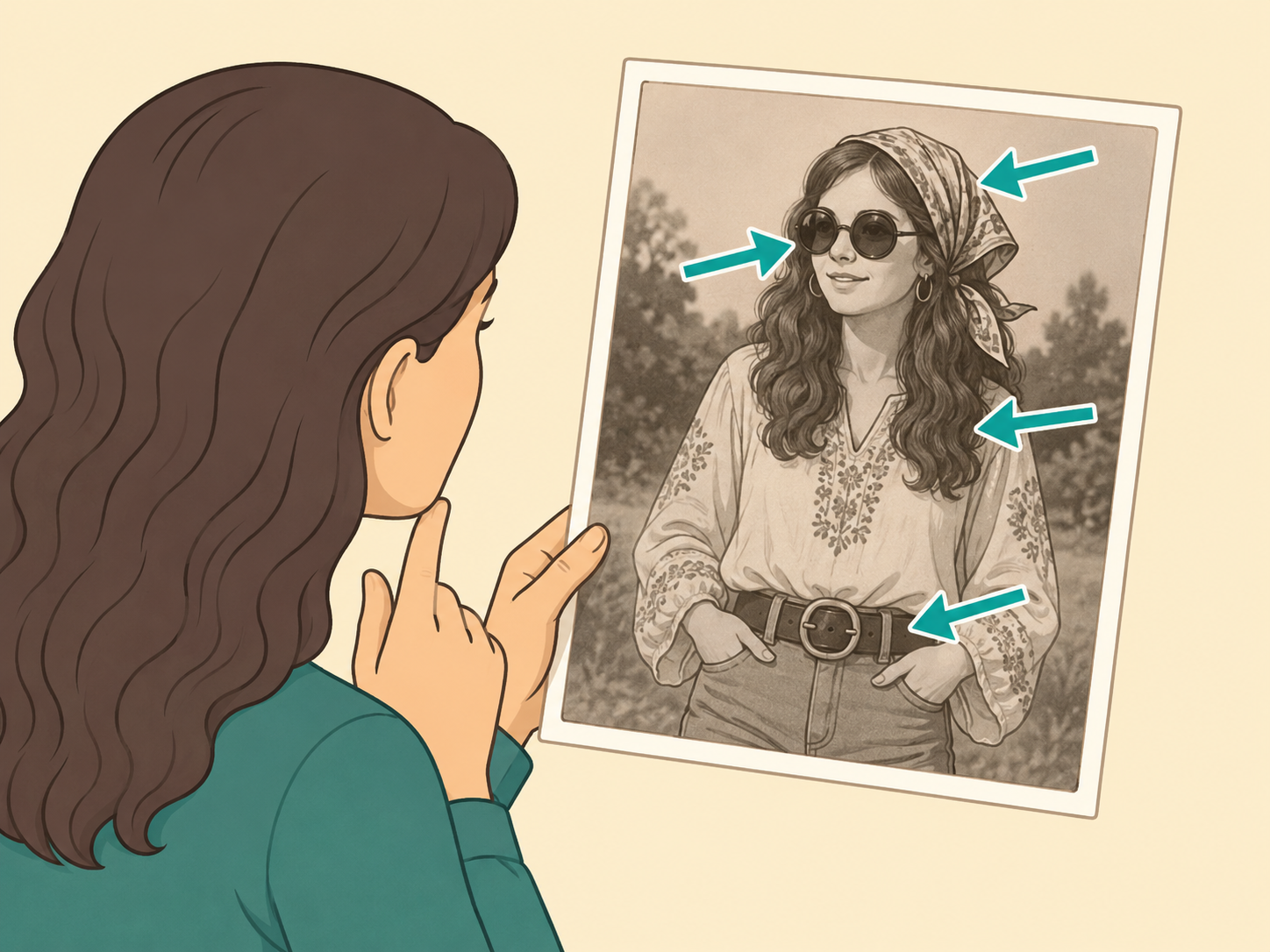
Hair is helpful, but treat it as supporting evidence. Middle parts, long loose hair, feathered layers, headscarves, wide belts, large collars, and bold sunglasses can fit 1970s styling, but people kept older habits and local trends varied. Pair these clues with the clothing and setting before deciding.
Compare the photo with its setting and date
Look at cars, furniture, school interiors, wallpaper, album paper, and any visible calendar or event clue. FIT's exhibition on Saint Laurent and Halston describes the 1970s as a period when fashion codes became more relaxed, so context helps separate everyday casual clothes from formal outfits, costumes, or later retro styling.
Avoid judging the person from the clothes
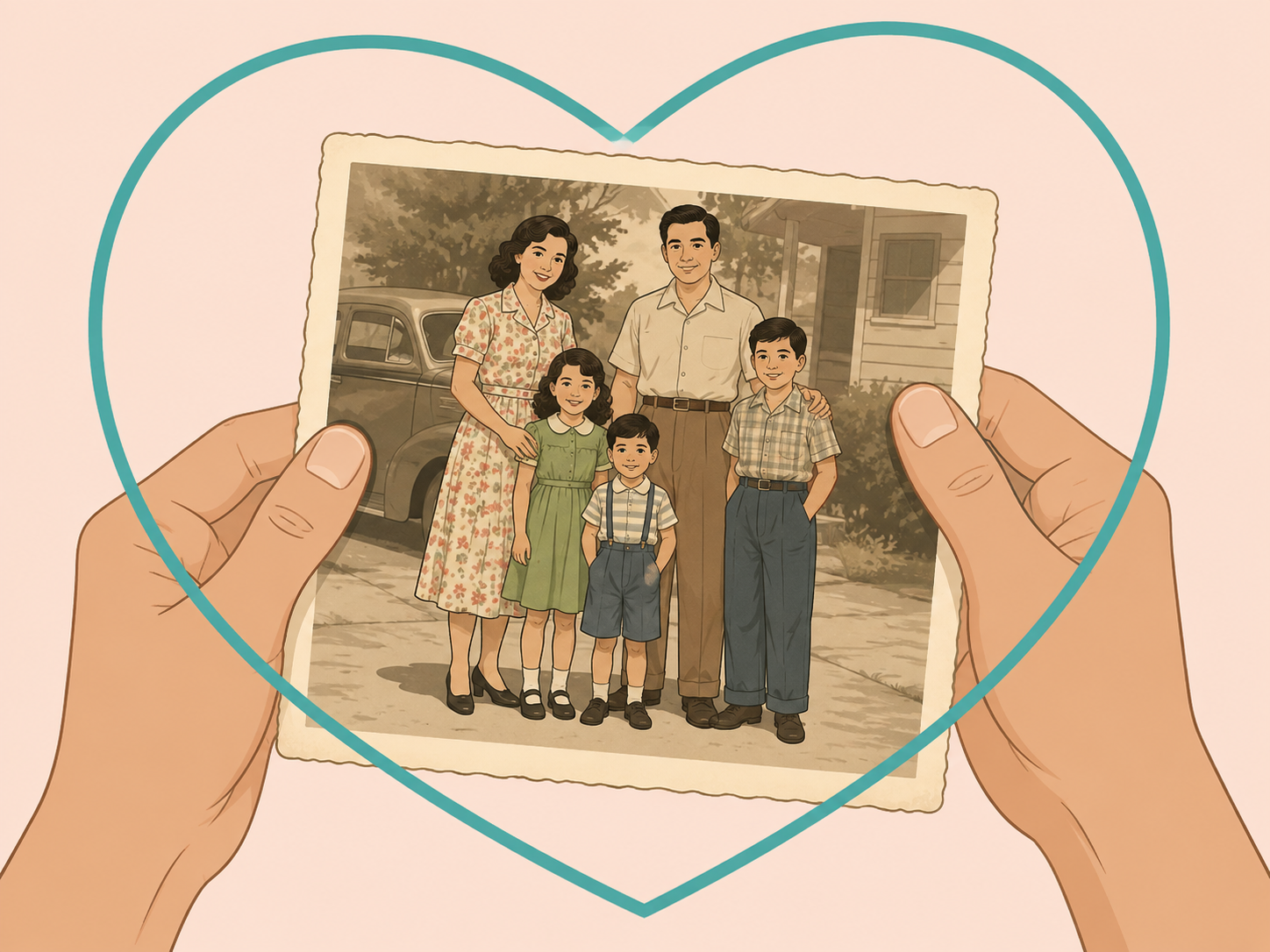
Use the details to understand the photo, not to make assumptions about personality, class, or values. Clothing in old photos can reflect hand-me-downs, school rules, family budgets, regional fashion, or what happened to be clean that day. A careful reading says, "this detail fits the 1970s," not "this explains the whole person."
Summary
The bottom line: the detail that often catches the eye first is the silhouette, especially flared denim or a long, flowing shape. Confirm the era by checking handmade decoration, fabrics, shoes, hair, and the setting together.
Frequently Asked Questions
- What detail usually makes a 1970s photo stand out first?
The silhouette is often the first clue: flared pants, wide collars, long skirts, or relaxed flowing shapes can immediately suggest the 1970s. Denim and handmade-looking decoration are also strong clues.
- Were girls in the 1970s mostly wearing dresses or pants?
Both were common. Fashion History Timeline notes that children's wear increasingly followed adult fashion and that gender distinctions in casual clothing lessened, so jeans, trousers, T-shirts, dresses, and skirts can all fit the decade.
- Are bell-bottoms enough to date a photo to the 1970s?
No. Flared pants are a useful clue, but they should be checked with other details such as hair, shoes, fabric, prints, photo quality, and the setting. Styles also overlap from one decade to the next.
- What fabrics or textures look especially 1970s?
Look for denim, crochet, patchwork, embroidery, polyester knits, satin, velvet, and sequins. The decade mixed casual counterculture details with more polished disco and designer influences.
- How can I avoid misreading an old family photo?
Use several clues instead of relying on one item. Also consider hand-me-downs, regional differences, school dress rules, income, and whether the photo was casual, formal, or staged.
- Did 1970s style look the same all decade?
No. Early 1970s looks often carried hippie, handmade, and prairie influences, while later years added more disco shine, athletic casualwear, and punk-inspired details in some places.
References
Reliable references aided in composing and refining this content.