
 Pin it
The idea that planes do not cross the Atlantic during the day is a common misunderstanding. In reality, North Atlantic flight traffic is organized around direction, time zones, passenger demand, airport restrictions, and winds. This guide explains how to read the pattern without turning it into a myth.

Start by correcting the premise
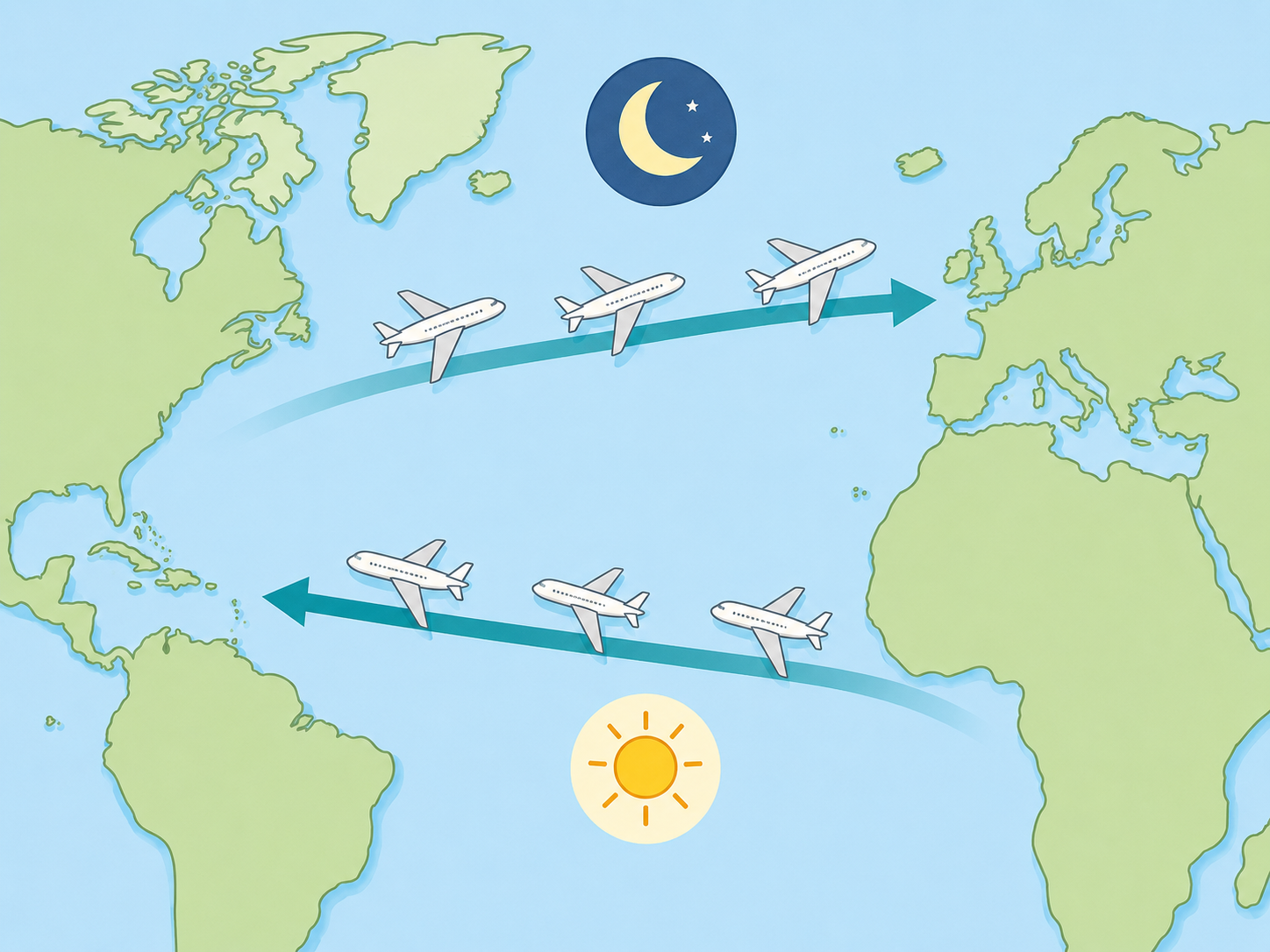
Do not assume daytime Atlantic crossings are rare or forbidden. The ICAO North Atlantic manual describes two main flows: westbound flights leaving Europe in the morning and eastbound flights leaving North America in the evening. That means many planes cross the ocean in daylight, especially when traveling west.
Check which direction the flight is going
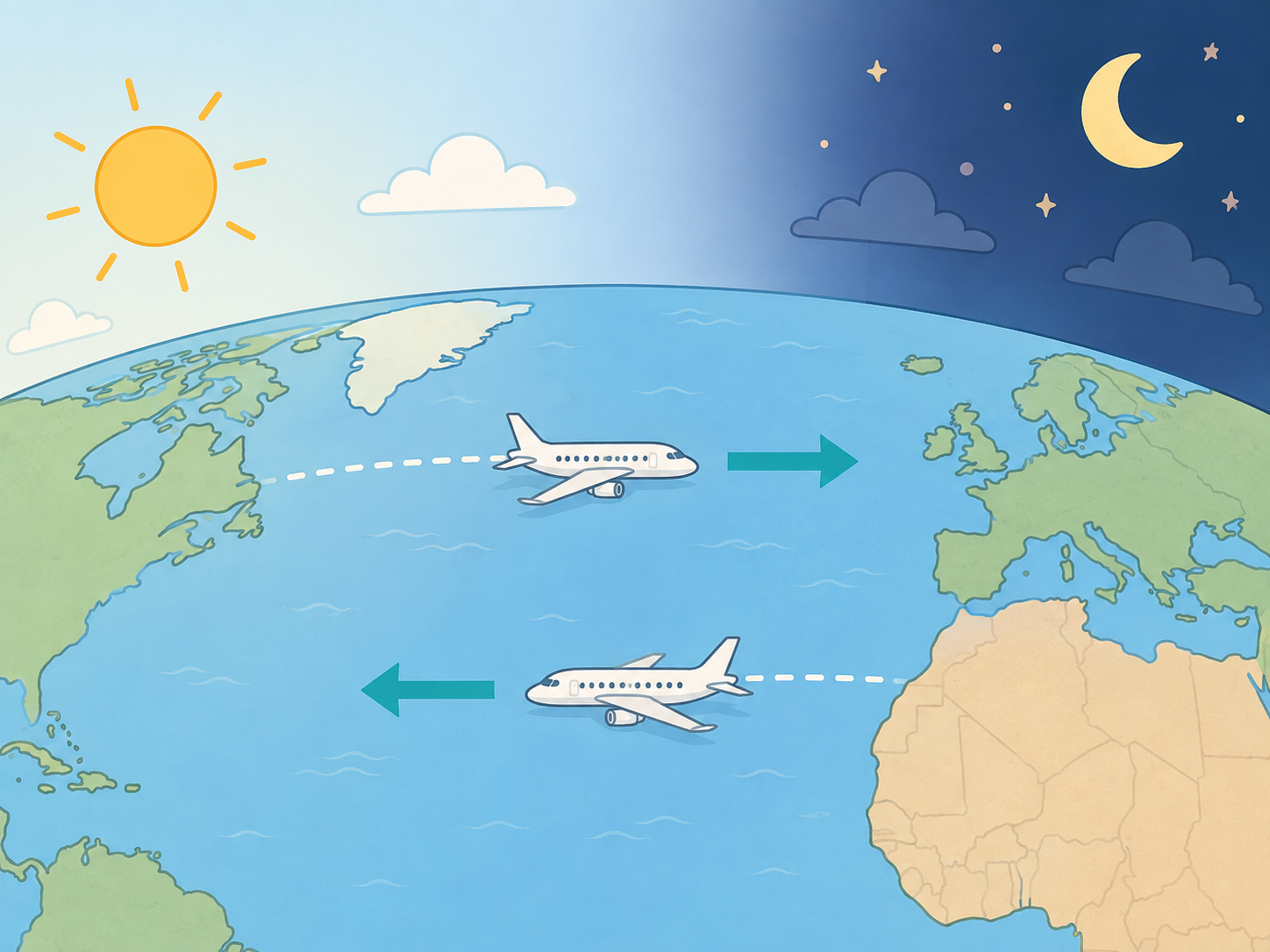
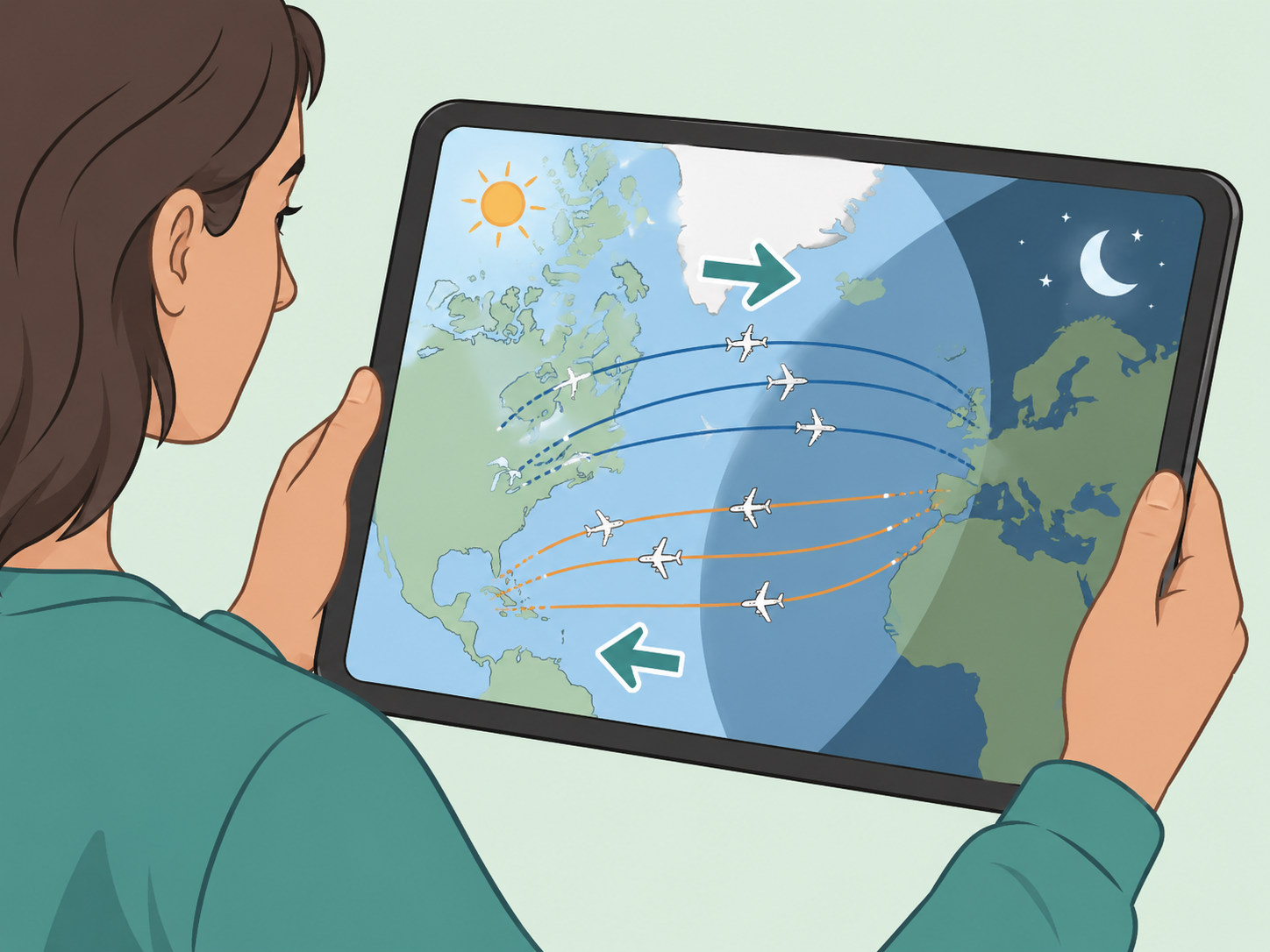
Eastbound flights from North America to Europe often depart in the evening, cross the ocean overnight, and arrive in Europe in the morning. Westbound flights from Europe to North America often depart Europe in the morning and cross the Atlantic during the day, which matches the major North Atlantic traffic flows. The question usually comes from noticing the eastbound overnight pattern, not from a rule against daytime flying.

Convert the schedule to UTC before comparing flights
Atlantic flight planning often refers to UTC, not your local clock. ICAO lists the typical organized track periods at 30 degrees west as 1130 to 1900 UTC for daytime westbound traffic and 0100 to 0800 UTC for nighttime eastbound traffic in the North Atlantic Organized Track System. A flight that looks late at night in New York may line up neatly with morning arrival banks in Europe.

Account for time zones and passenger demand
Airlines schedule flights when passengers and connections are most useful, not just when the sky is light. The main North Atlantic pattern is shaped by passenger demand, time zone differences, and airport noise restrictions, according to ICAO guidance for the region. Overnight eastbound flights let travelers sleep on board and land near the start of the European day.
Look at the jet stream's direction
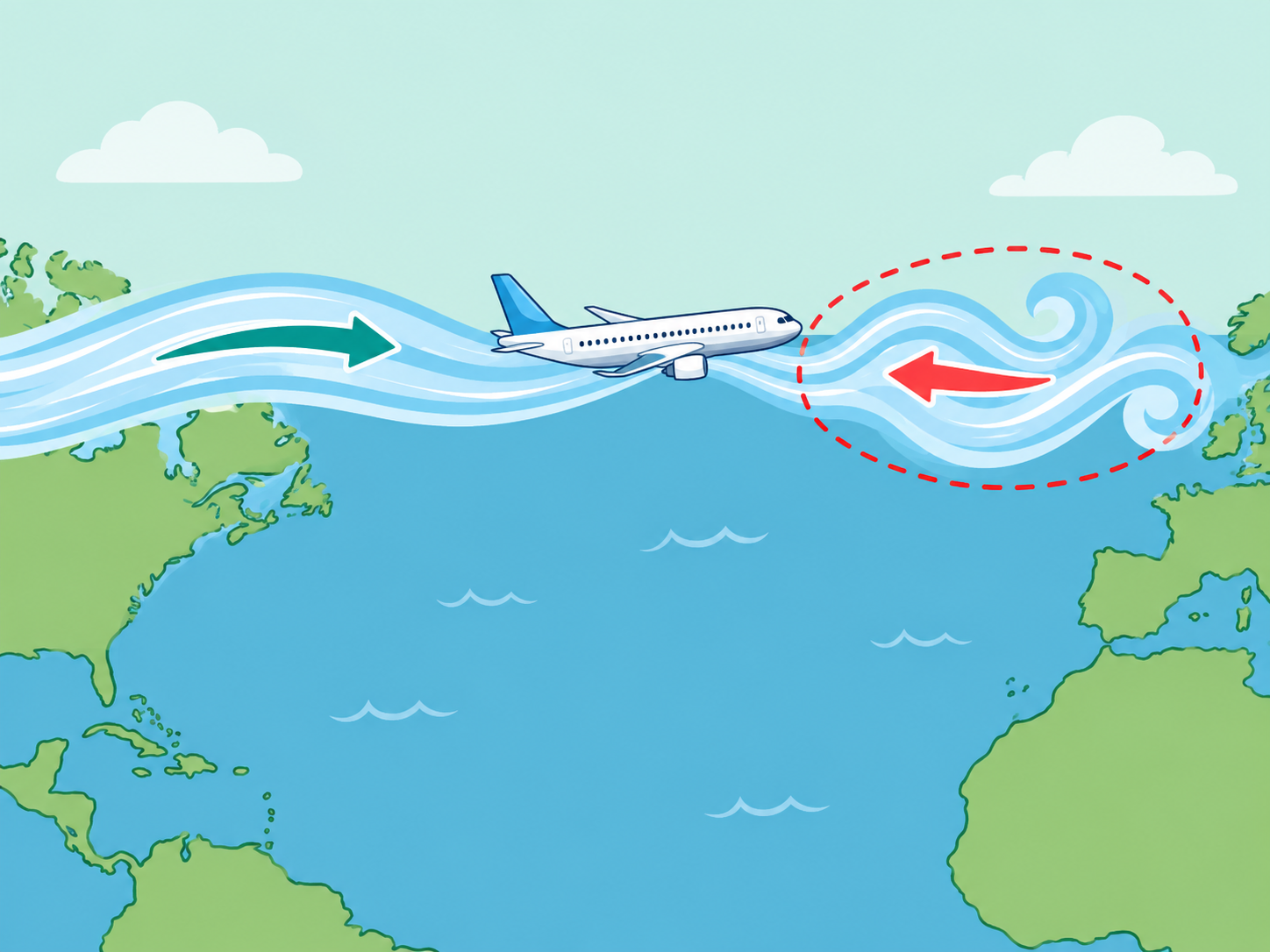
The jet stream is a high-altitude band of strong wind that generally blows from west to east, and NOAA explains that aircraft flying with it can get a speed boost. The Met Office notes that flying along the jet stream can save time and fuel, while flying against it can cost more fuel and time. This helps explain why eastbound and westbound routes may sit in different parts of the ocean.
Know that oceanic tracks change with weather
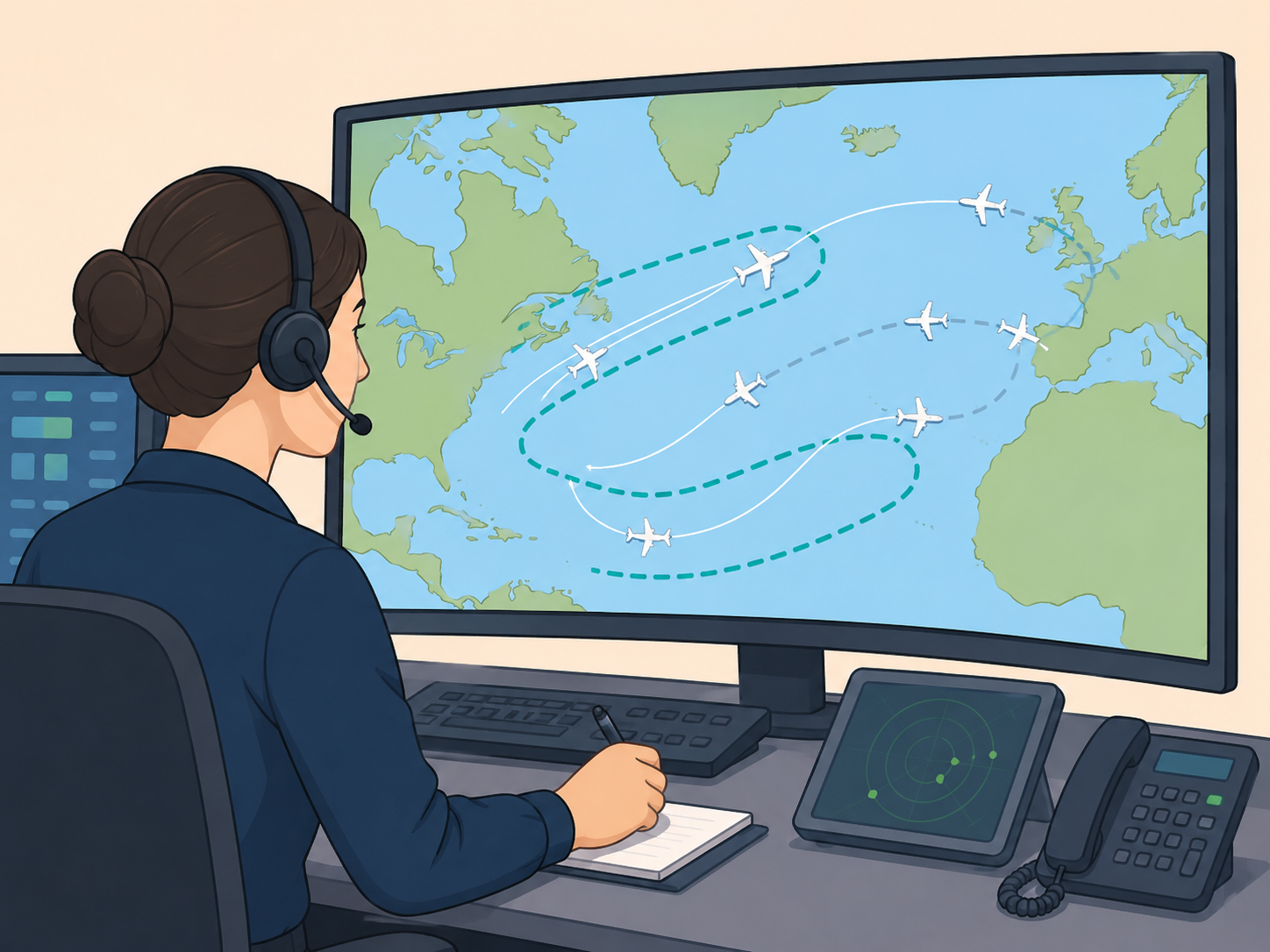
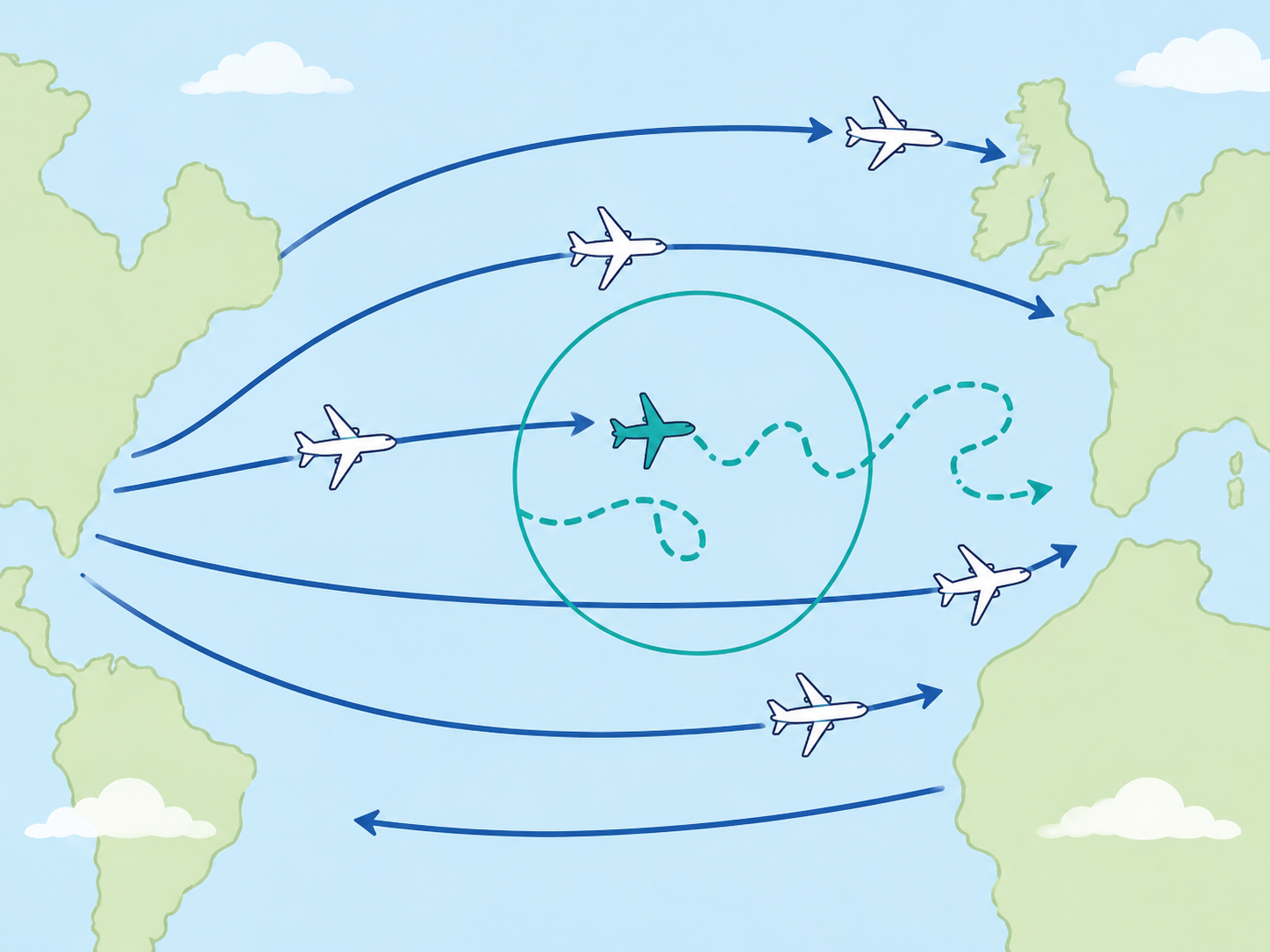
Transatlantic flights do not simply follow one permanent highway. The FAA says North Atlantic tracks are revised every 12 hours and are based mainly on weather and winds. Eastbound tracks use letters from the end of the alphabet, while westbound tracks use letters from the beginning.
Expect random routes and exceptions
The organized tracks are important, but they are not mandatory for every flight. ICAO explains that aircraft may plan random routes that remain clear of, join, leave, or cross the organized track system, although reroutes or altitude changes may be needed during busy periods. This is why a flight tracker can show aircraft crossing at many times of day.
Read flight trackers with context
Flight-tracking maps can make the traffic wave look more mysterious than it is. In one 24-hour view, Flightradar24 observed eastbound traffic building around late evening in North America before the balance shifted westward later on. Use trackers as a visual clue, then check direction, UTC time, and winds before drawing a conclusion.
Summary
The bottom line: transatlantic flying is not avoided in daylight. Eastbound flights from North America often run overnight because the schedule works well with time zones, while westbound flights from Europe commonly cross during the day and route around winds and traffic.
Frequently Asked Questions
- Do planes cross the Atlantic during the day?
- Yes. Many westbound flights from Europe to North America cross the Atlantic during daylight hours, and some flights operate outside the main traffic pattern as well.
- Why do many flights from the United States to Europe leave at night?
- An evening departure from North America can arrive in Europe the next morning, which is useful for passengers, airline schedules, and connecting flights.
- Are daytime Atlantic crossings unsafe?
- No. The timing pattern is not about daylight being unsafe. Transatlantic flights use strict oceanic procedures, approved navigation, communications, and air traffic control planning.
- Why are westbound flights often longer than eastbound flights?
- The jet stream generally moves from west to east, so eastbound aircraft may get a helpful tailwind while westbound aircraft may face headwinds or route around the strongest winds.
- What are North Atlantic Tracks?
- They are organized oceanic routes published for busy traffic flows. They change with weather, winds, and traffic demand rather than staying fixed like roads.
- Can an airline choose a route outside the organized tracks?
- Yes. Flights can use random routes, but air traffic control may require reroutes or altitude changes when traffic is heavy.
References
Reliable references aided in composing and refining this content.
- https://www.icao.int/sites/default/files/EURNAT/Documents/EUR%20and%20Nat%20Docs/NAT%20Documents/NAT%20Documents/NAT%20Doc%20007/NAT-Doc-007-EN-Edition-V.2026-1-Amd-0.pdf
- https://www.faa.gov/air_traffic/publications/ifim/intl_overview
- https://www.nesdis.noaa.gov/about/k-12-education/atmosphere/what-the-jet-stream
- https://weather.metoffice.gov.uk/learn-about/weather/types-of-weather/wind/what-is-the-jet-stream
- https://www.flightradar24.com/blog/inside-flightradar24/over-the-ocean-24-hours-of-transatlantic-flight