
 Pin it
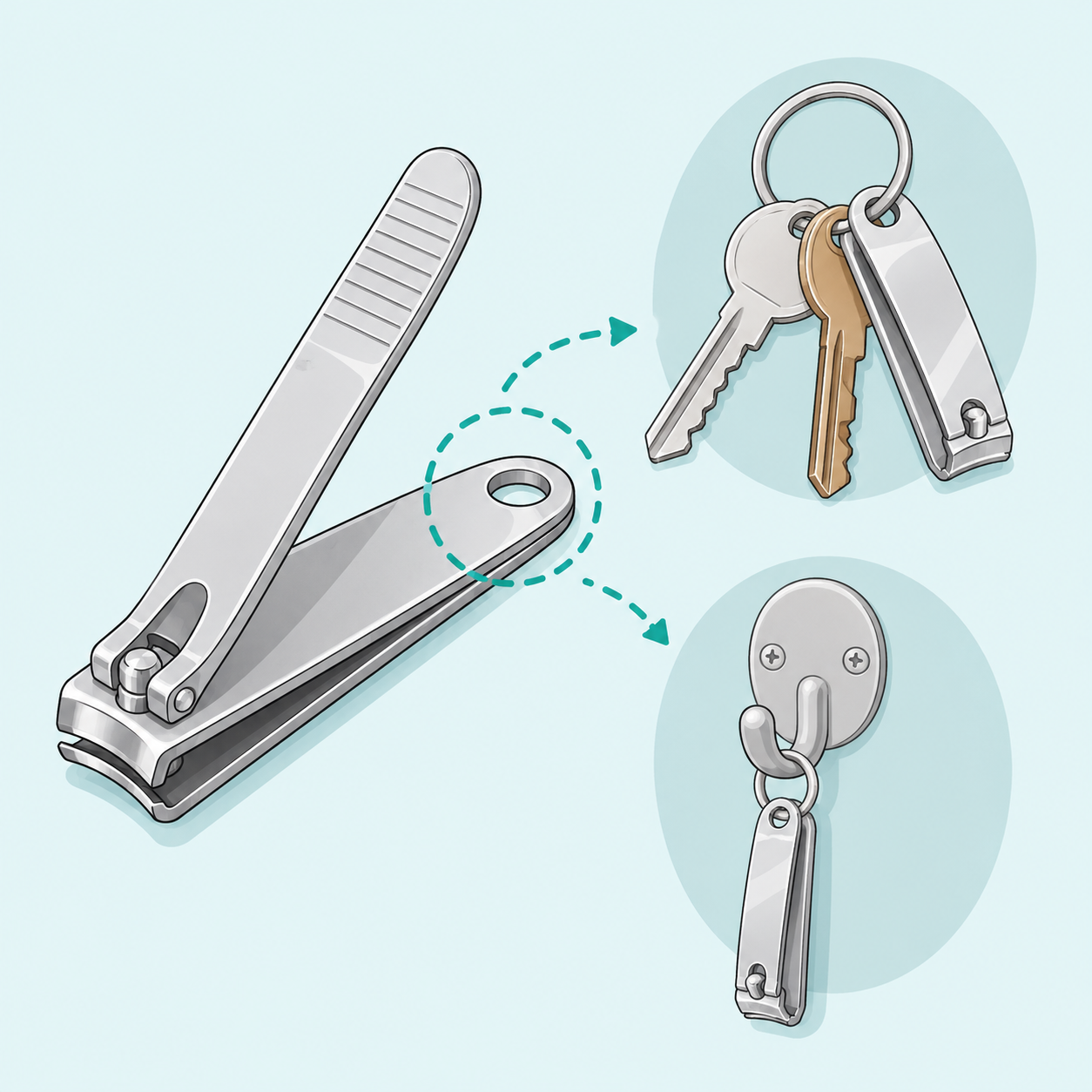
The small round hole on a nail clipper is easy to ignore, but it has a practical purpose. It is mainly there so you can attach the clipper to a key ring, lanyard, hook, or grooming kit. Used well, it can also help you keep the tool clean, dry, and easy to find.
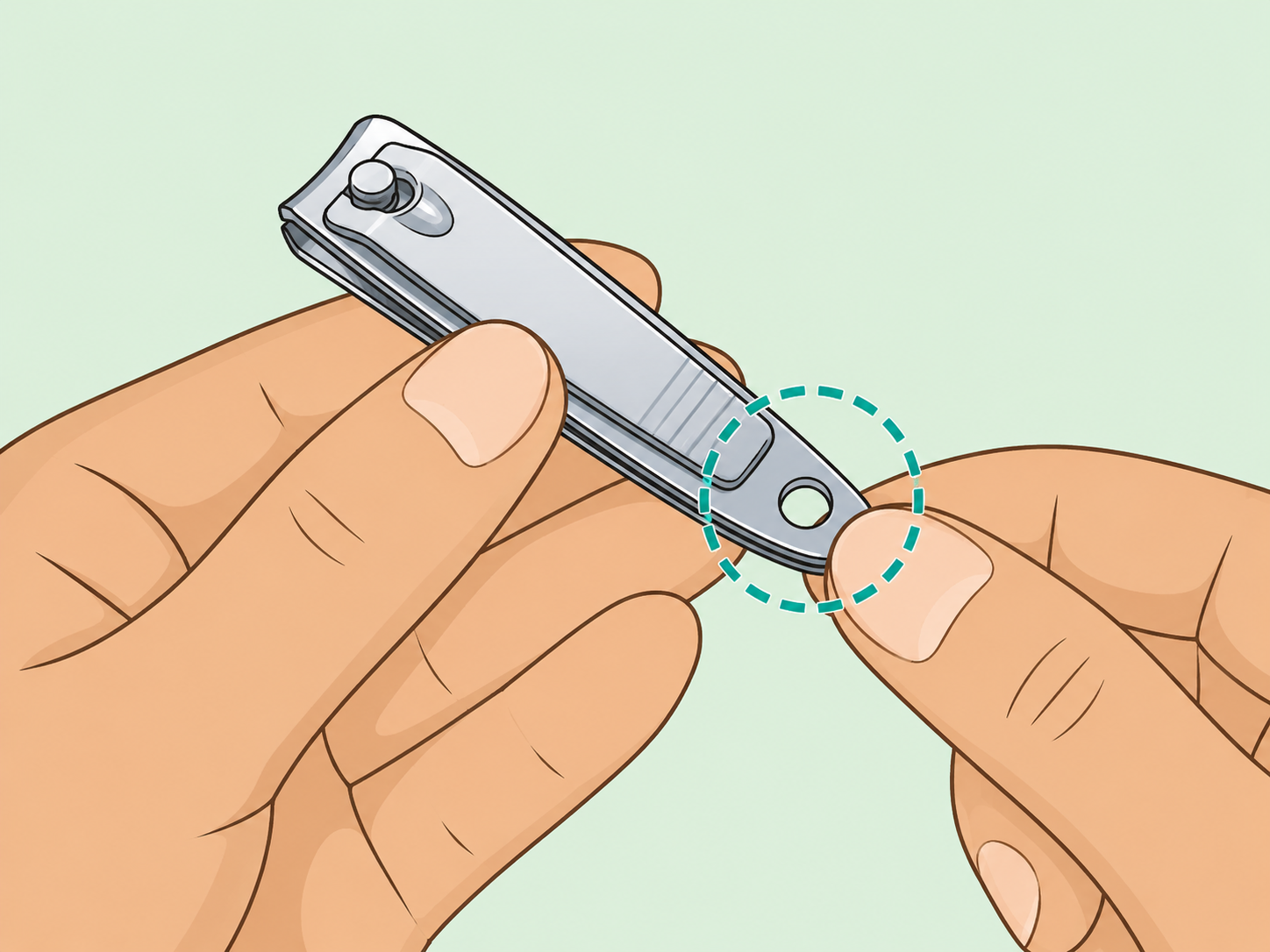
Identify the hole as an attachment point
Look at the end of the lever or the back end of the clipper body. In many designs, that small opening is a lanyard or key-ring hole; a nail clipper patent describes a hole for receiving a key chain, and a current Victorinox clipper lists a lanyard hole as one of its tool features. The idea is simple: a tiny tool is less useful if it disappears in a drawer.
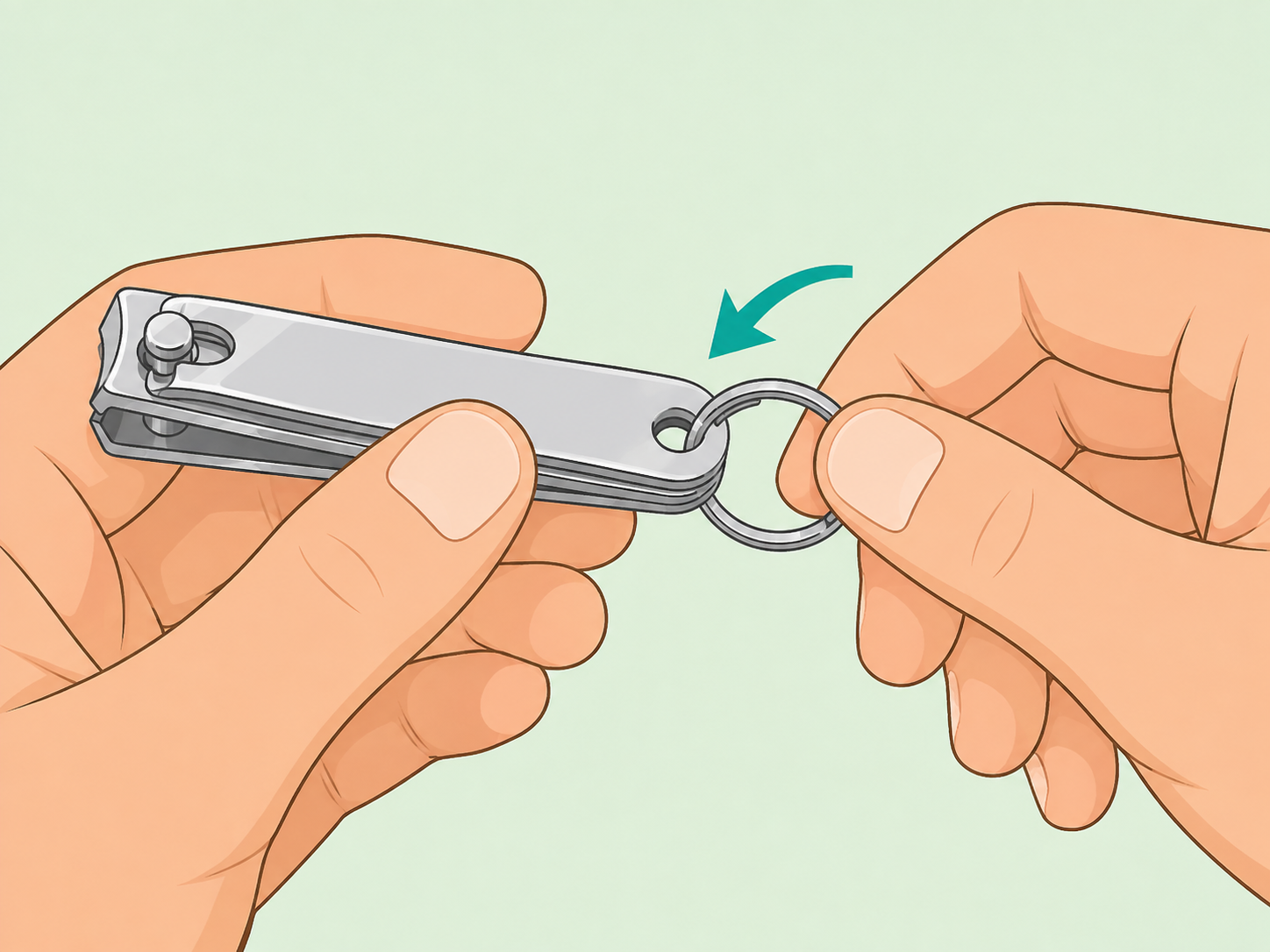
Attach a small ring or lanyard through it
Thread a thin split ring, small chain, or cord through the hole so the clipper can hang from keys, a toiletry pouch, or a bathroom hook. Some designs were specifically made to expose the key-ring hole clearly, as shown in this nail clipper patent. Use a ring that moves freely, because forcing a thick ring through the hole can bend the metal or make the lever awkward to open.
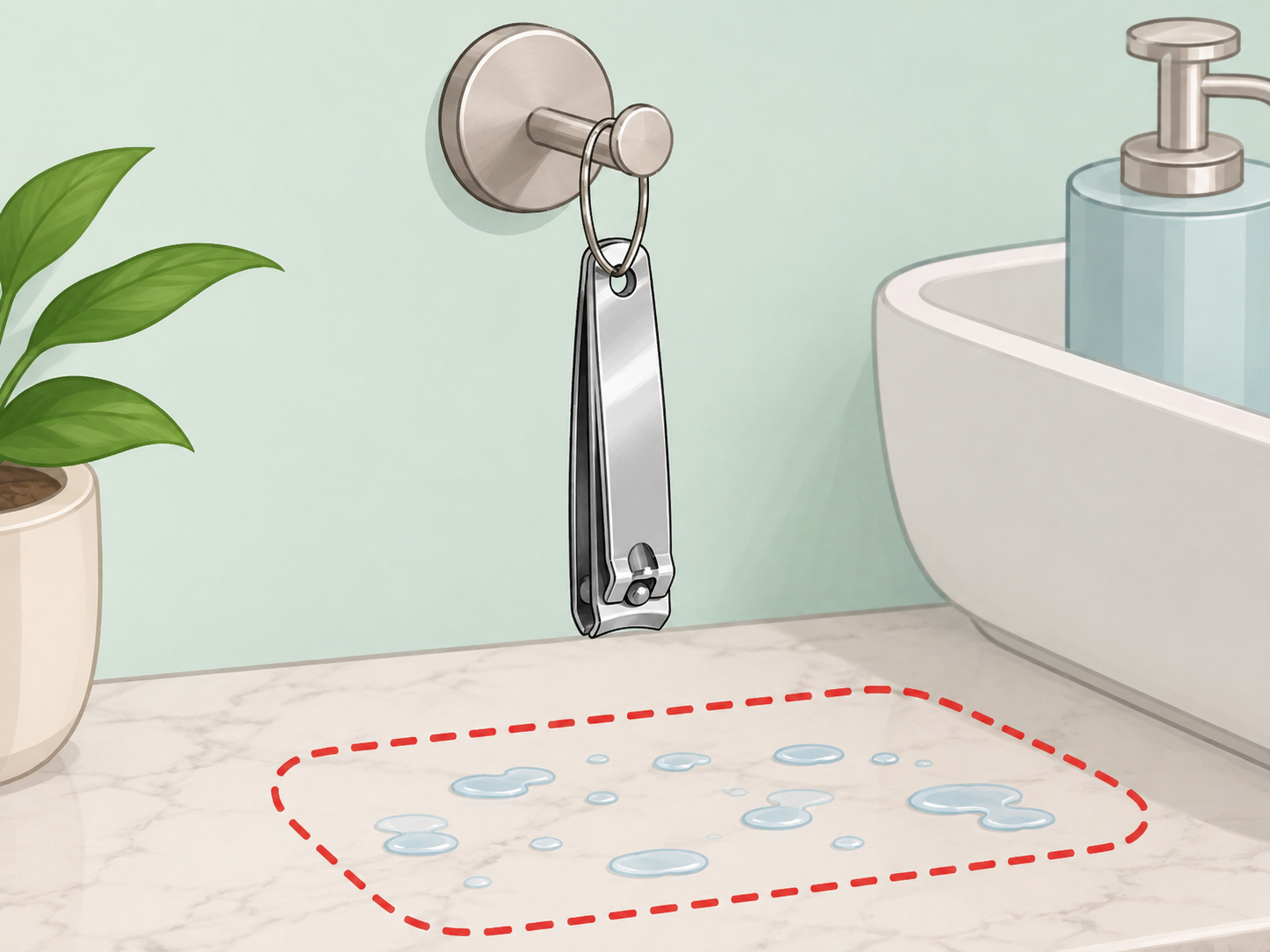
Hang the clipper where it stays clean and dry
Use the hole to store the clipper off wet counters and away from loose bathroom clutter. The CDC says dirt and germs can collect under nails and recommends keeping nail tools clean, so storage matters for basic nail hygiene. After washing or disinfecting the clipper, let it dry fully before putting it back in a closed pouch.
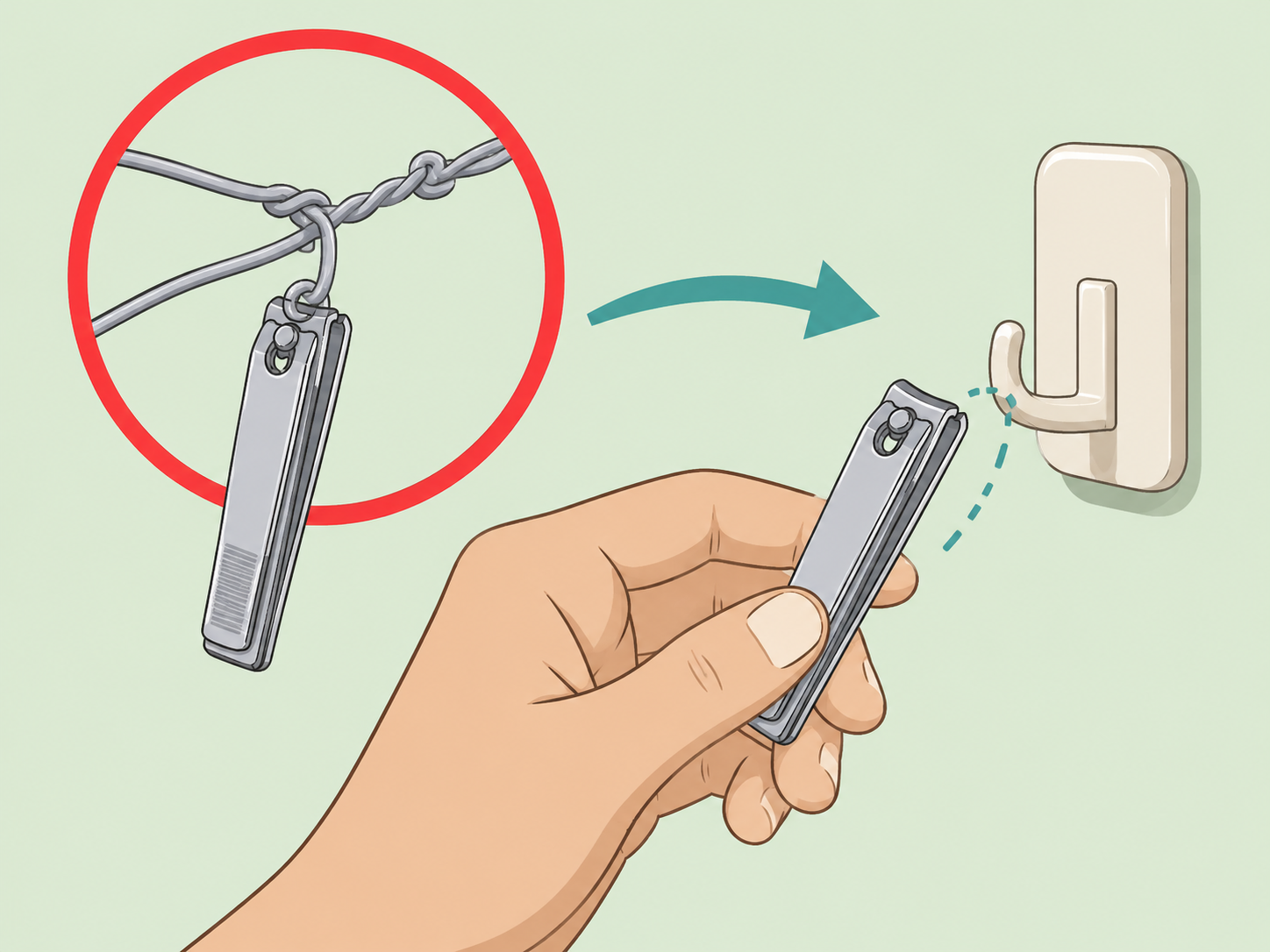
Use the hole for storage, not risky hacks
Treat the hole as a carry and hanging feature, not as a prying tool, wire bender, bottle opener, or substitute for pliers. Those uses can nick the cutting edges, bend the lever, or leave grime on a tool that touches your nails. If the clipper has a built-in file, use that file only for smoothing nails, not for scraping dirty surfaces.
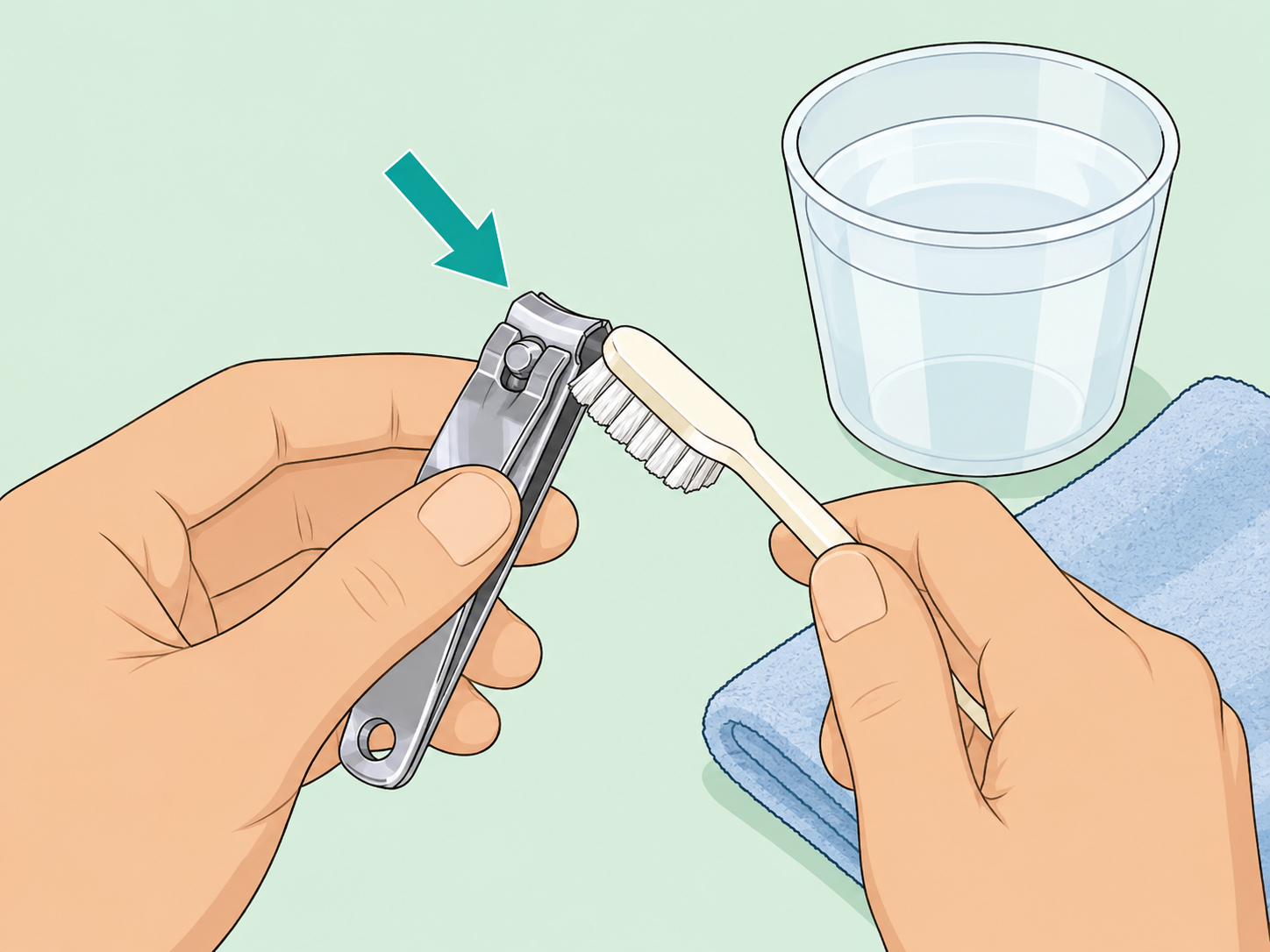
Clean the clipper before regular use
Wipe away nail dust and rinse the tool after trimming, then dry it so moisture does not sit in the hinge. Dermatologists with the American Academy of Dermatology recommend disinfecting nail clippers monthly with 70 to 90 percent isopropyl alcohol, then rinsing and drying them completely as part of safe nail trimming. Clean it sooner if it has been loose in a bag, used on thick toenails, or shared.
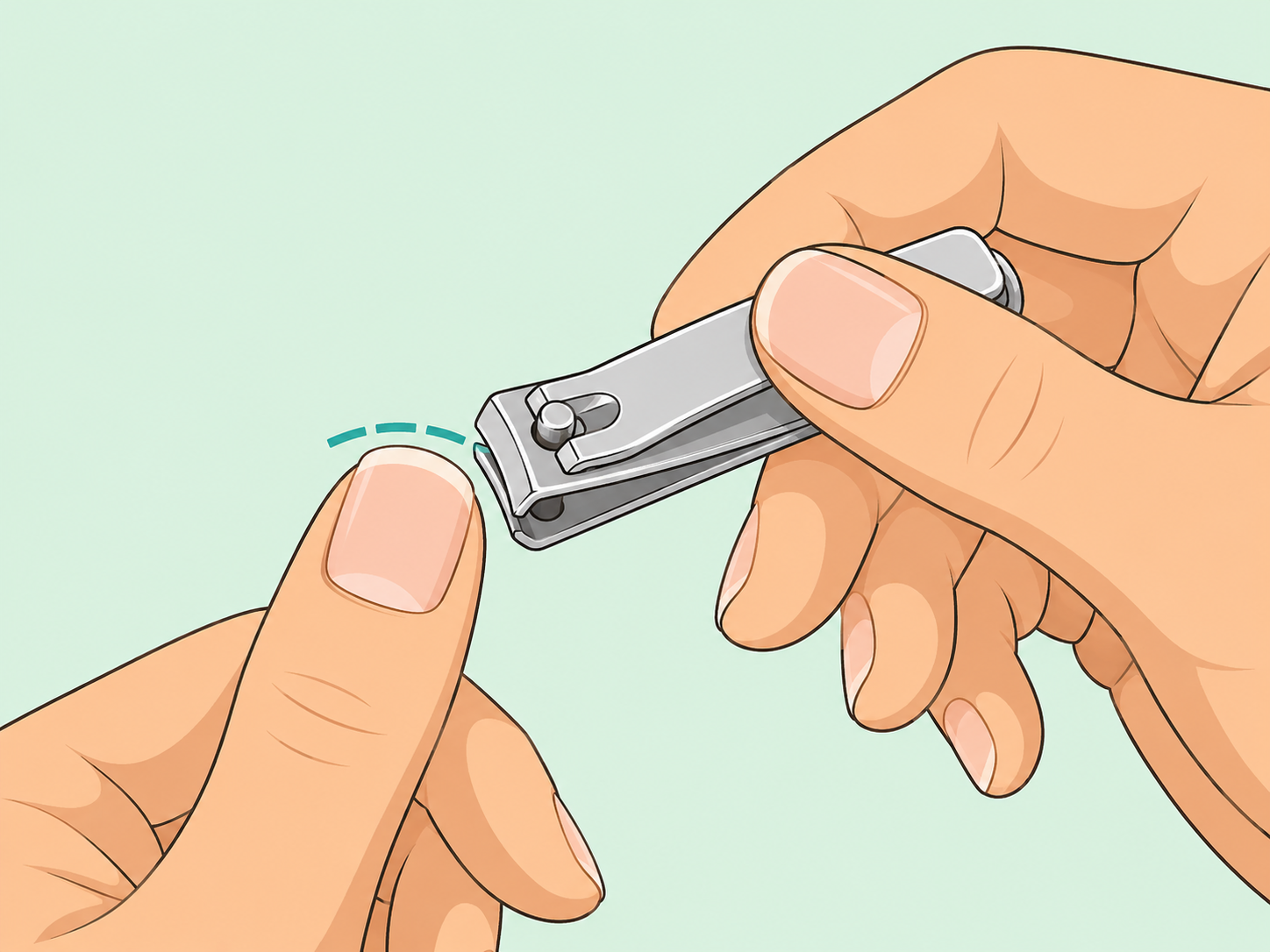
Trim nails with the right technique
Soften nails after a bath or shower, then use a fingernail clipper for fingers and a larger toenail clipper for toes. The AAD recommends cutting fingernails almost straight across and lightly rounding the corners with a file, while Cleveland Clinic advises cutting toenails straight across to help reduce the risk of ingrown toenails. Do not cut cuticles, because they help protect the nail root.
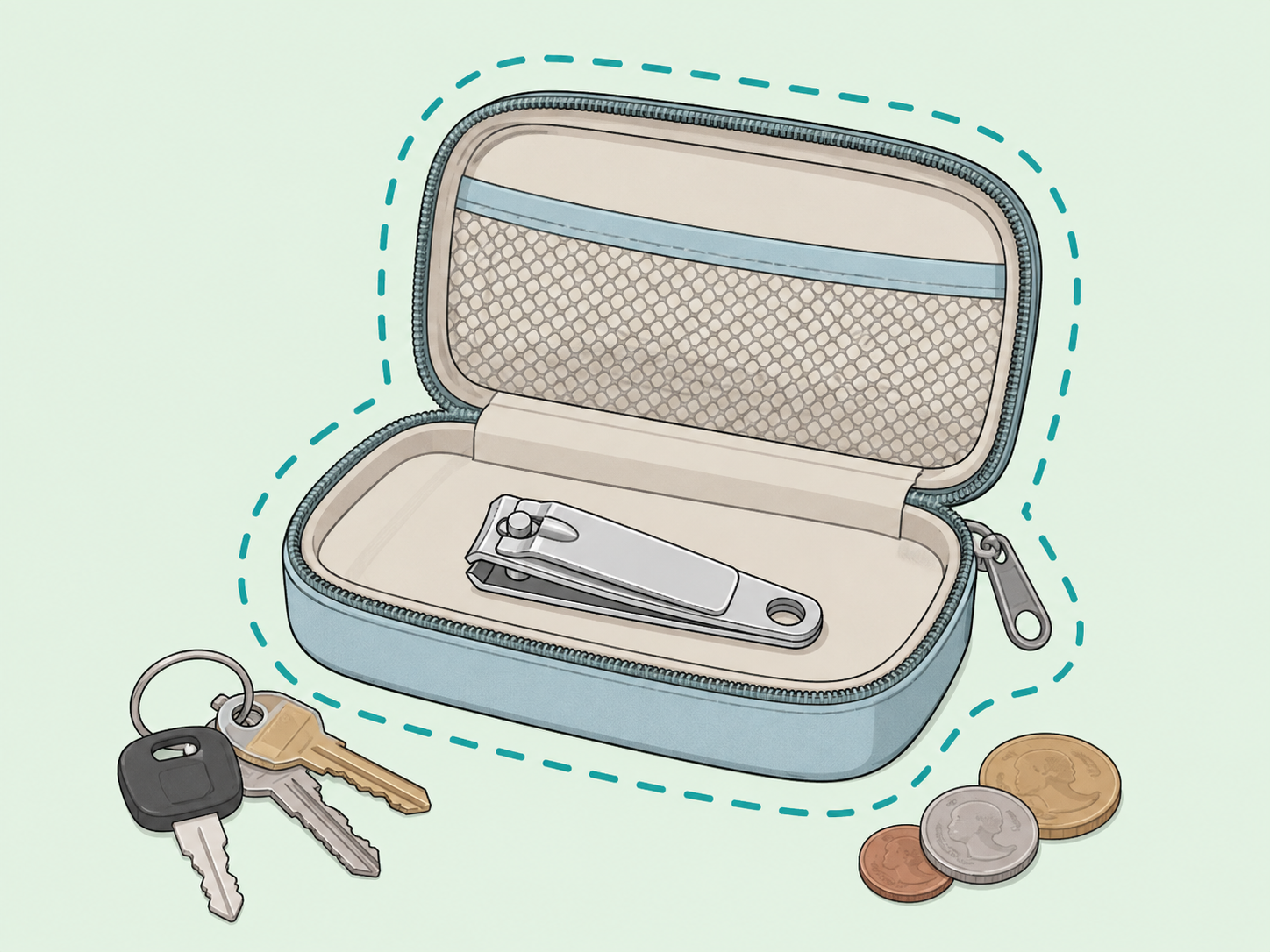
Keep travel clippers separate from dirty items
If you carry a clipper through the small hole, give it a clean home inside your bag. A small pouch keeps it away from coins, keys, makeup residue, and pocket lint, and MedlinePlus advises not sharing tools used for manicures and pedicures to help prevent fungal nail problems. Clean the clipper before using it if the blades have touched dirty surfaces.
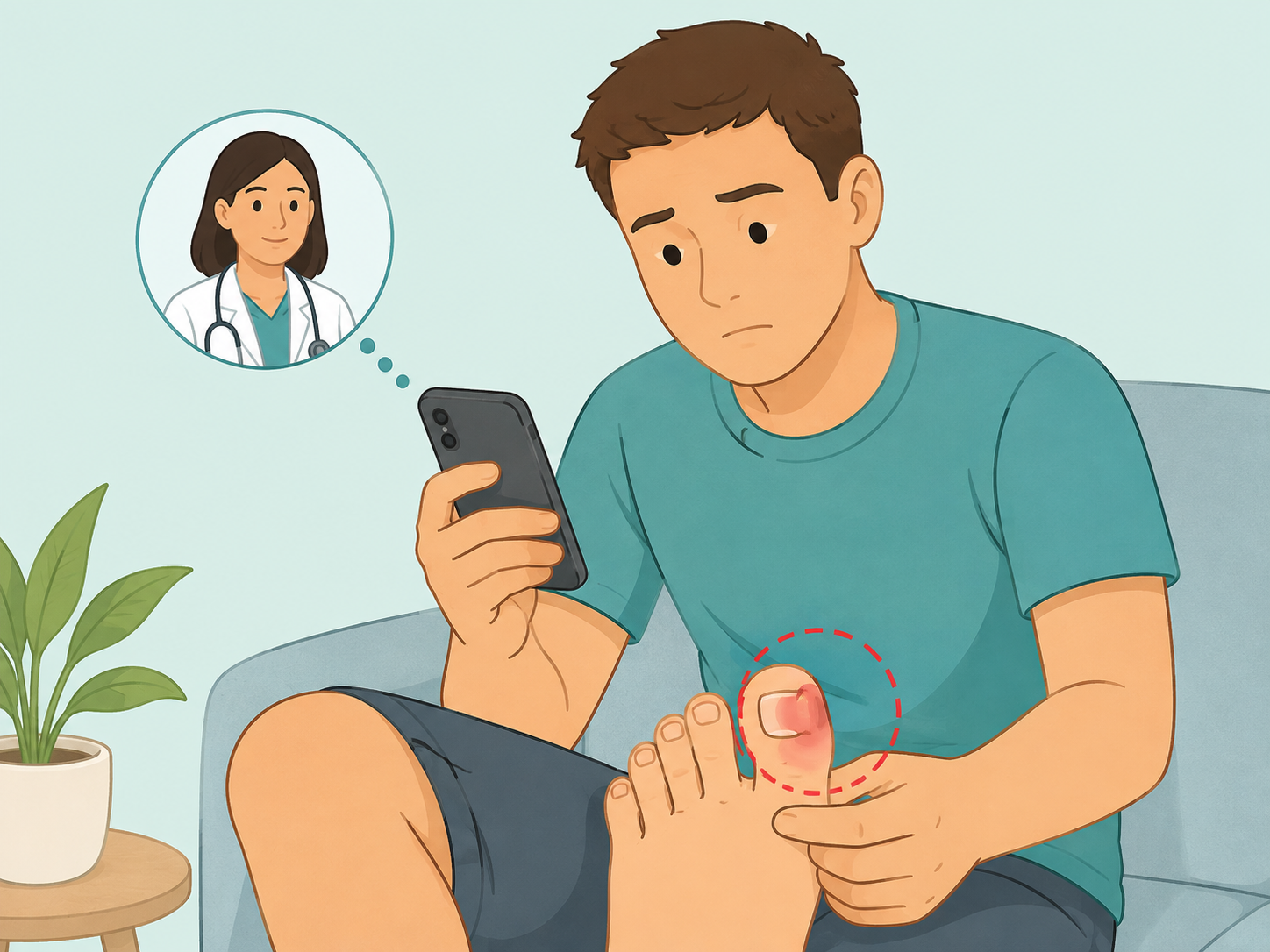
See a doctor for painful or unusual nail changes
Get medical advice if a nail becomes very painful, red, swollen, drains pus, thickens, changes color, or does not improve with basic care. The AAD recommends seeing a dermatologist for changes in nail color, texture, or shape, and Cleveland Clinic says people with diabetes, poor circulation, or signs of infection should seek care for an ingrown toenail. Do not try to dig out a painful toenail corner with the clipper hole or any sharp tool.
Summary
The bottom line: the small round hole is not a mystery decoration. It is a simple attachment point that helps a tiny grooming tool stay portable, visible, clean, and ready when you need it.
Frequently Asked Questions
- What is the small round hole on a nail clipper for?
- It is mainly an attachment point for a key ring, lanyard, small chain, or hook. That makes a small tool easier to carry, hang, and find.
- Is the hole still useful if I do not carry clippers on my keys?
- Yes. You can use the hole to hang the clipper on a bathroom hook, attach it inside a toiletry bag, or keep it clipped into a small grooming kit.
- Is the hole part of the cutting mechanism?
- Usually no. The main cutting action comes from the jaws, lever, spring tension, and pivot post. The round hole near the end is mainly for attachment or storage.
- Should I keep a nail clipper on my keychain?
- You can, as long as the clipper folds securely and stays clean. If it rubs against dirty keys or pocket debris, clean it before using it on your nails.
- How often should I clean nail clippers?
- The American Academy of Dermatology recommends disinfecting nail grooming tools monthly. It is also smart to clean them before use if they have been in a bag, pocket, or shared storage area.
- Can I share my nail clipper with someone else?
- It is better not to share personal nail tools. If a clipper is shared, clean and disinfect it carefully before and after use.
- When should I replace a nail clipper?
- Replace it when the blades are dull, rusty, misaligned, cracked, or hard to clean. A dull clipper can crush or split the nail instead of making a clean cut.
References
Reliable references aided in composing and refining this content.
- https://patents.google.com/patent/US20110079234A1/en
- https://www.victorinox.com/en-US/Products/Swiss-Army-Knife%E2%84%A2-and-Tools/Personal-Care/Nail-Clipper/p/8.2050.B1
- https://www.cdc.gov/hygiene/about/nail-hygiene.html
- https://www.aad.org/public/everyday-care/nail-care-secrets/basics/how-to-trim-nails
- https://my.clevelandclinic.org/health/diseases/17664-ingrown-toenails
- https://medlineplus.gov/ency/article/001330.htm