
 Pin it
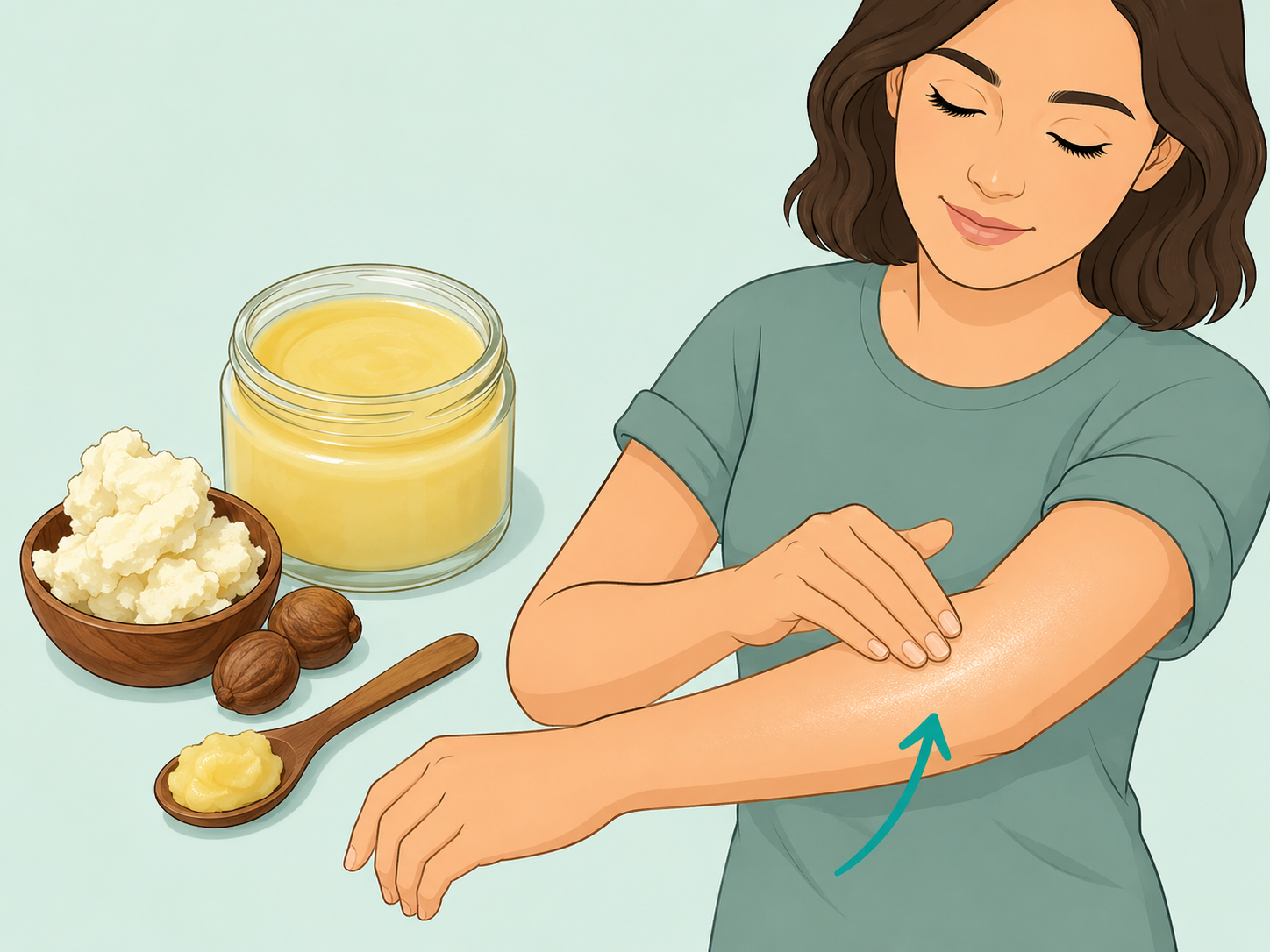
Dry hands and arms can feel rough, tight, or flaky, especially after frequent washing, cold weather, or hot showers. A simple homemade balm can help skin feel softer when it uses gentle, fragrance-free ingredients and is handled cleanly. This guide shows you how to make a small batch and use it as part of a safe dry-skin routine.
Choose a simple, fragrance-free formula
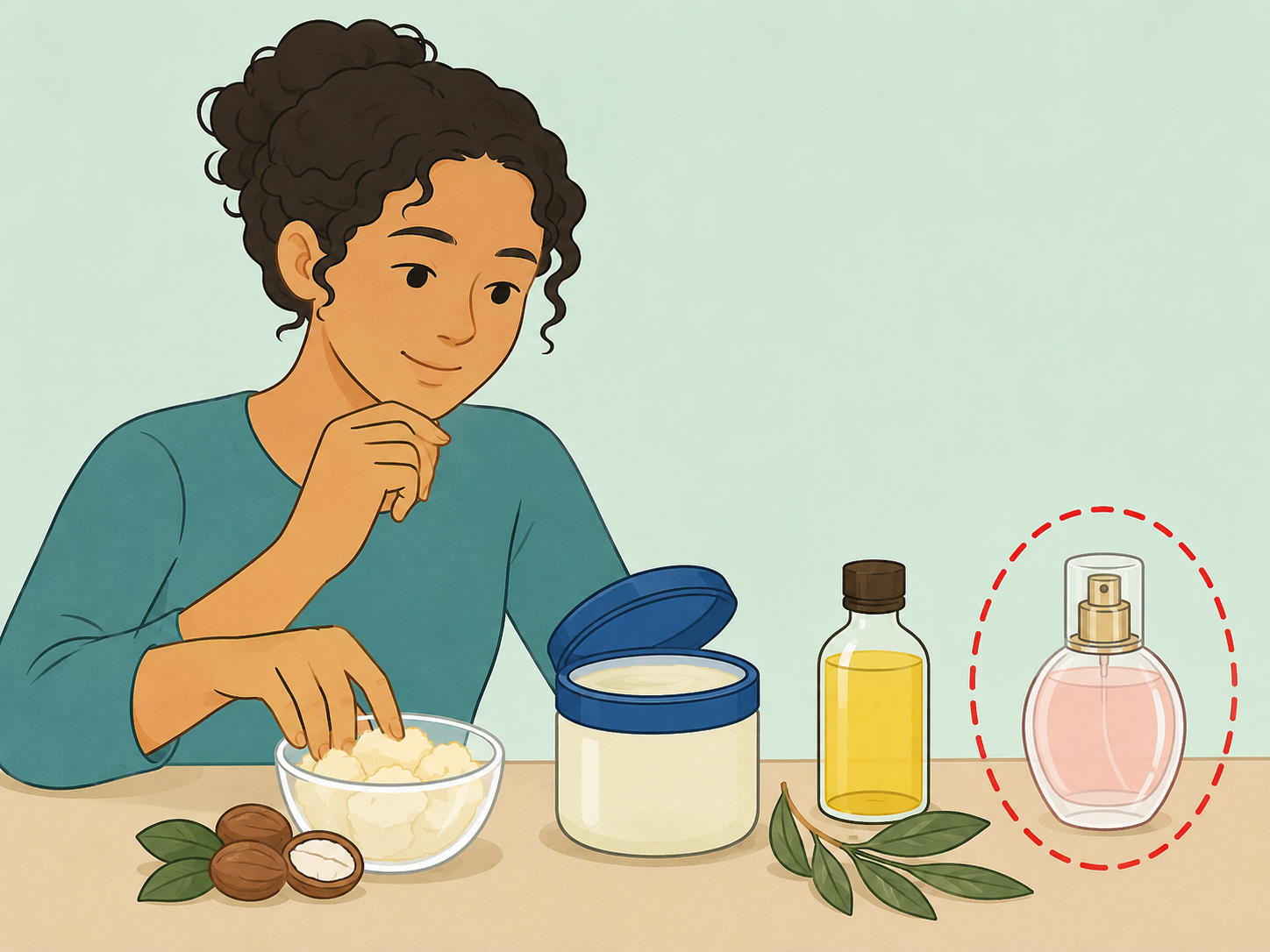
Use plain shea butter, petroleum jelly, and jojoba or mineral oil instead of perfumes, lemon juice, baking soda, or rough scrub ingredients. Dermatologists recommend fragrance-free creams or ointments for dry skin, and Cleveland Clinic notes that ingredients such as petrolatum, mineral oil, glycerin, lanolin, and hyaluronic acid can help dry skin hold moisture. Keeping the formula simple lowers the chance of irritation.
Clean your tools and container first
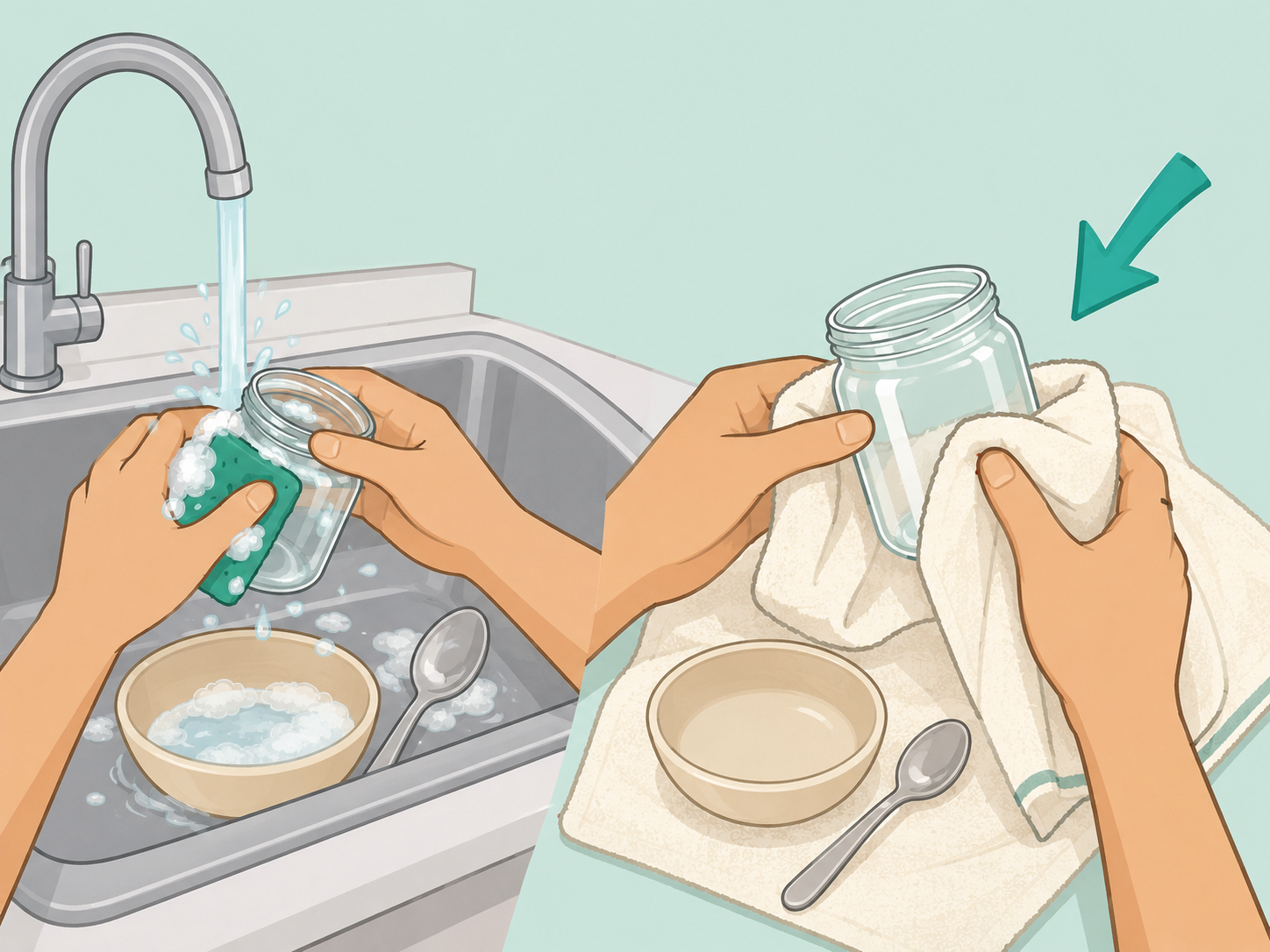
Wash your hands, spoon, mixing bowl, and small jar with hot soapy water, then dry everything fully before you start. The FDA explains that cosmetics can become contaminated through dirty containers, damp storage, or dipping fingers into jars. A clean, dry setup is especially important for homemade skincare.
Mix a small water-free balm
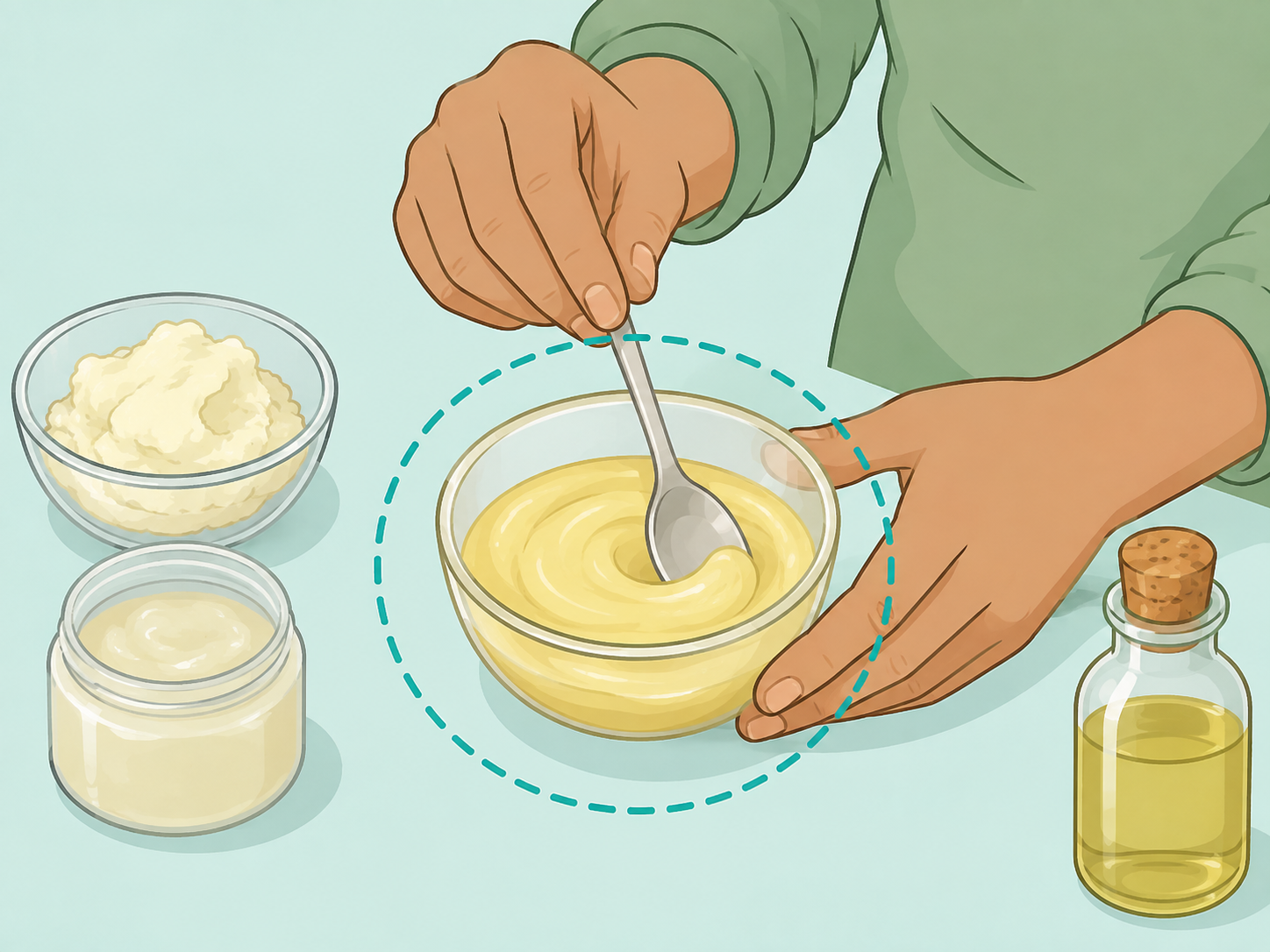
Soften 2 tablespoons of shea butter, then stir in 1 tablespoon of petroleum jelly and 1 teaspoon of jojoba oil or mineral oil until smooth. Keep water, aloe juice, tea, and fresh plant ingredients out of this recipe because water-based mixtures spoil more easily without proper preservation. Make only enough for a couple of weeks so the balm stays fresh and easy to monitor.
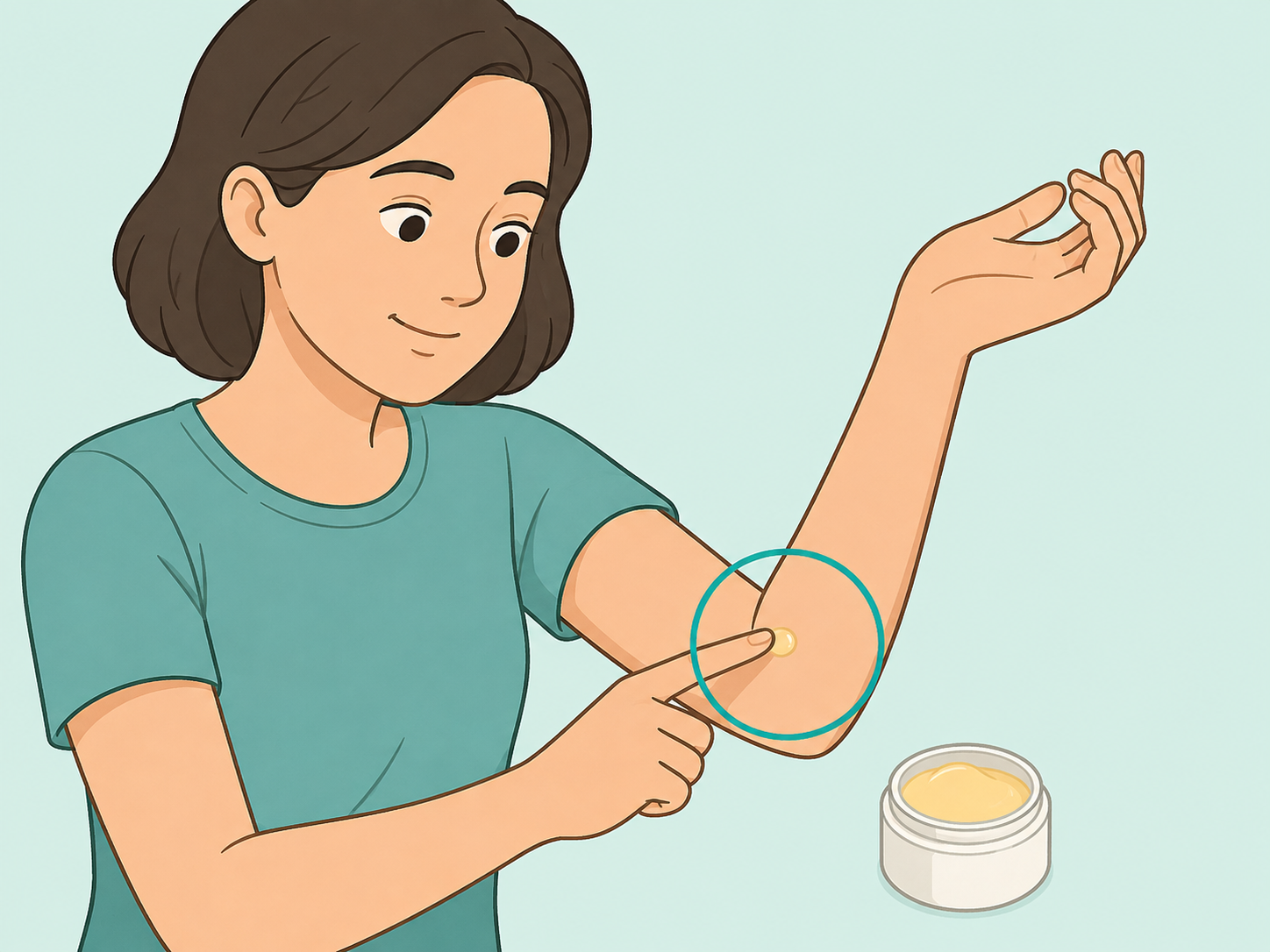
Patch test before using it widely
Apply a small amount to the inside of your arm or the bend of your elbow and leave it on as you normally would. The American Academy of Dermatology recommends testing new skin care products on a small area for 7 to 10 days to watch for redness, itching, swelling, or irritation. Stop using the balm if your skin reacts.
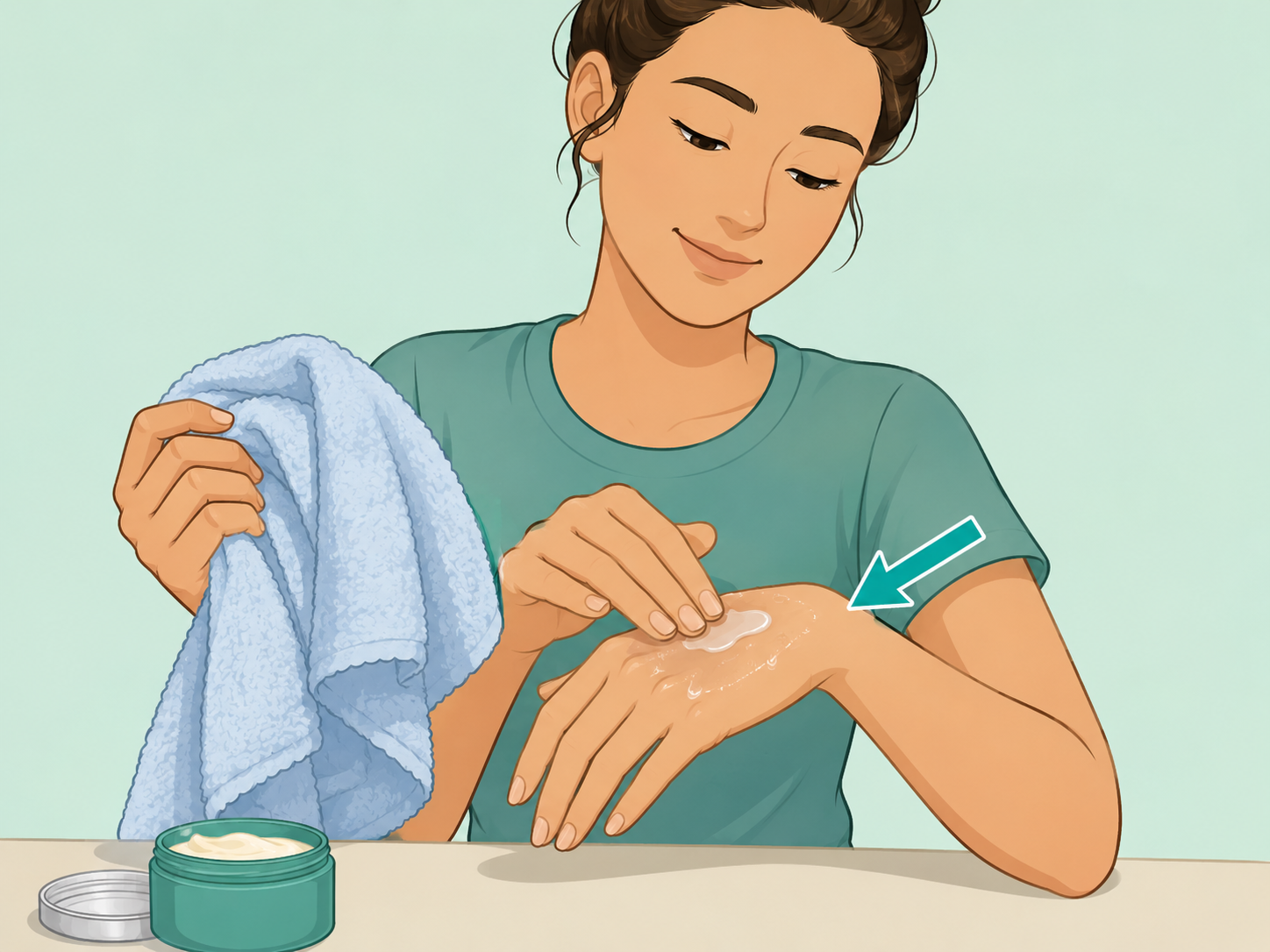
Apply it to slightly damp skin
After washing your hands or bathing, pat your skin so it is damp rather than dripping, then massage on a thin layer of balm. MedlinePlus notes that moisturizers work best on damp skin because they help lock in moisture. Focus on knuckles, wrists, elbows, and any rough areas on the arms.
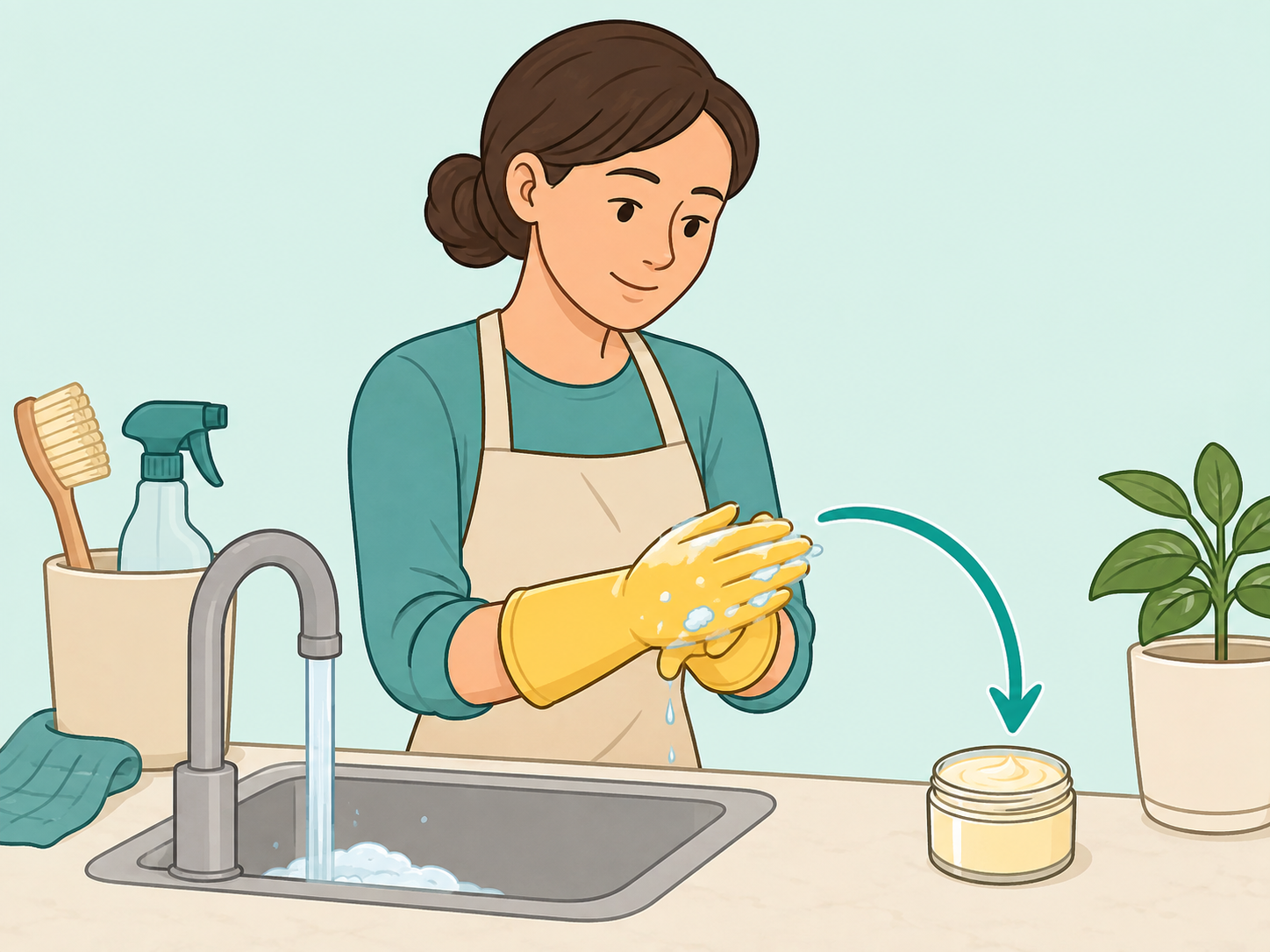
Protect your hands after washing
Frequent washing and sanitizer can leave hands dry, so reapply a small amount of balm or hand cream after your skin is clean. The AAD advises moisturizing after handwashing and choosing fragrance-free, dye-free hand creams or ointments. For dishwashing or cleaning, wear gloves so soap and household cleaners do not keep stripping your skin.
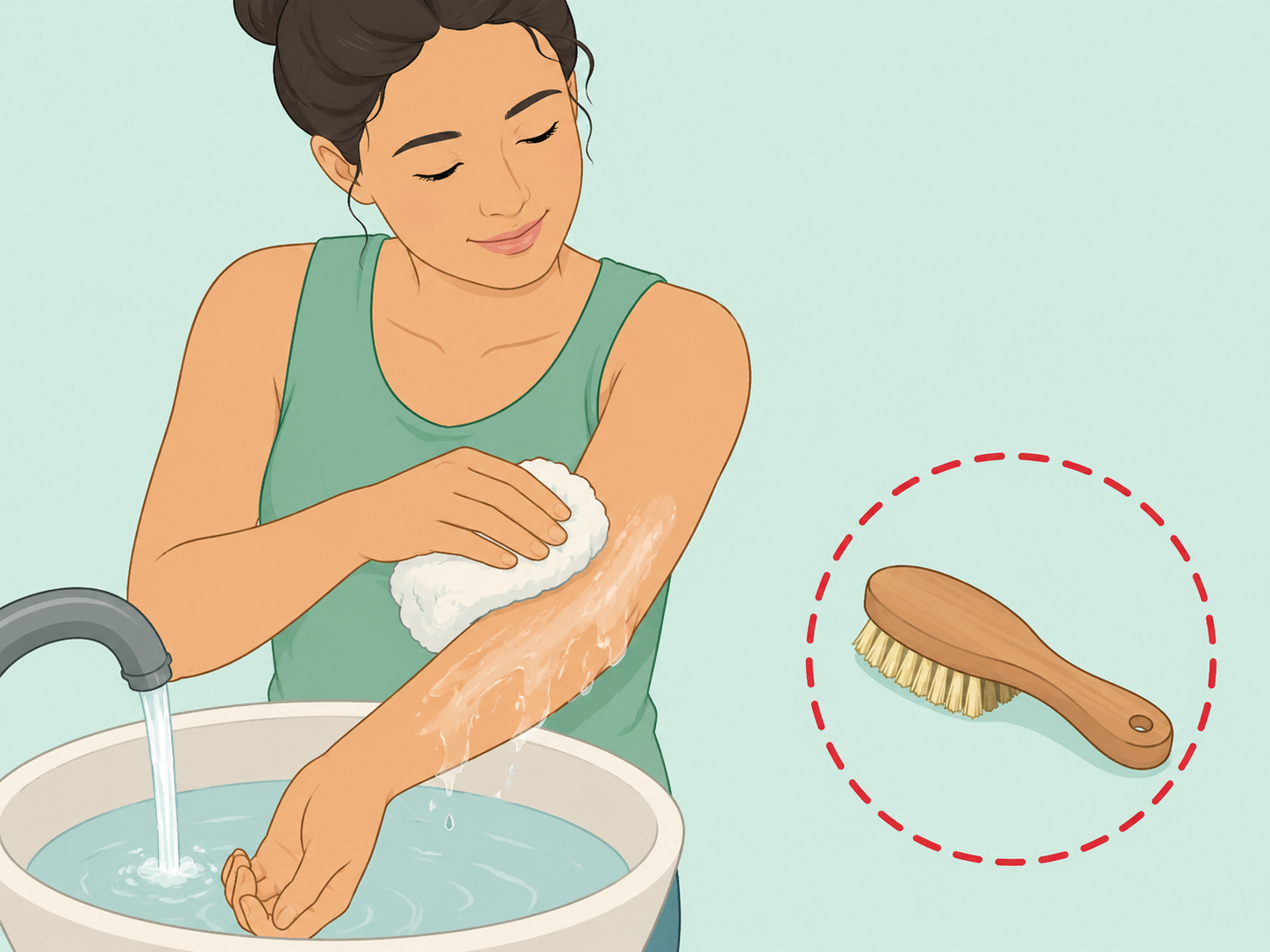
Avoid hot water and harsh scrubbing
Use warm water, keep showers or baths short, and skip abrasive scrubs on dry hands and arms. MedlinePlus recommends short warm baths or showers and avoiding harsh soaps, while the AAD says hot water and long bathing can worsen dryness. Gentle care is more helpful than trying to polish rough skin away.
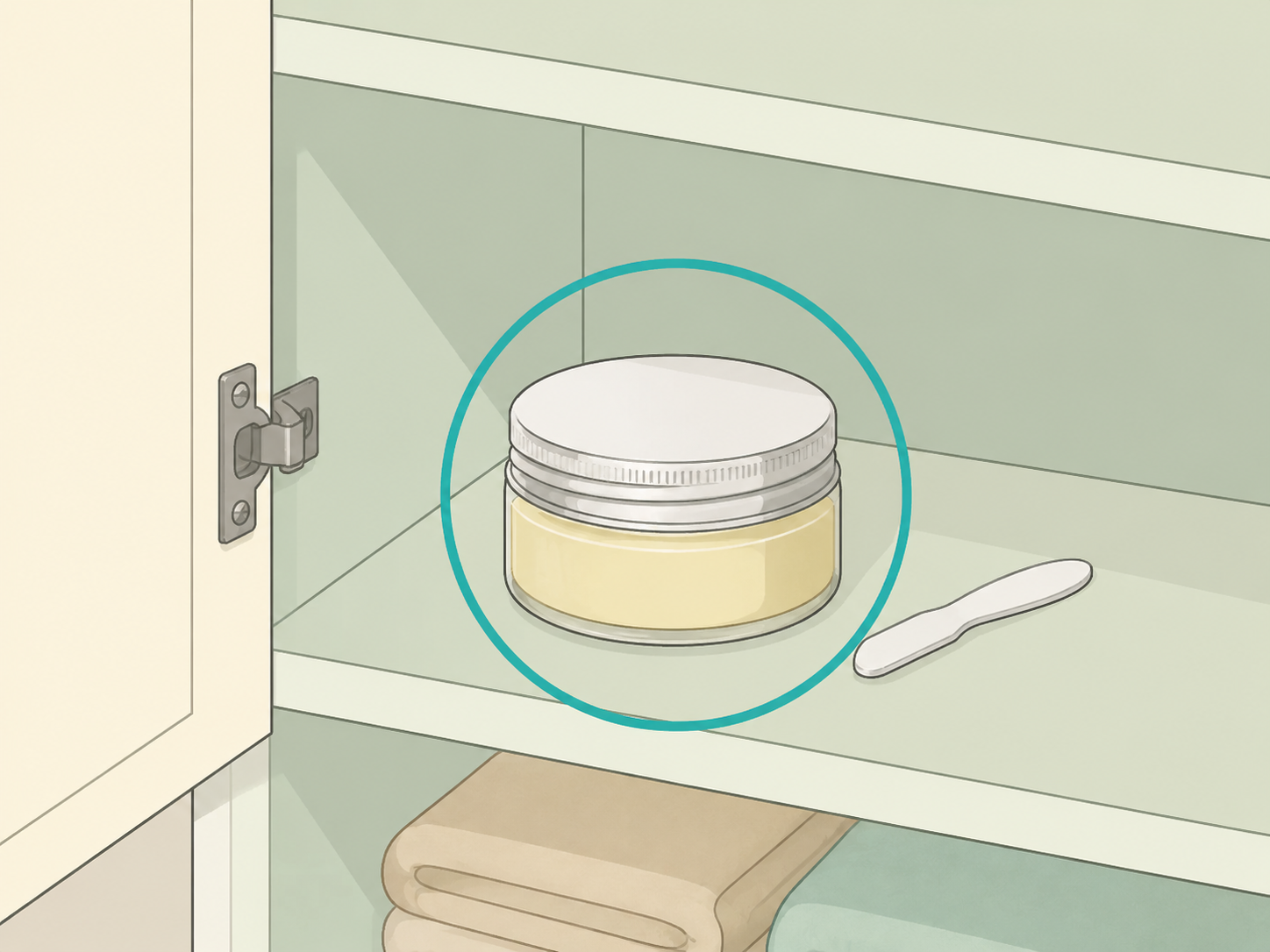
Store the balm safely and discard it if it changes
Keep the jar closed in a cool, dry place, use clean dry fingers or a small spatula, and do not add water later to loosen the texture. The FDA notes that heat, moisture, air exposure, and repeated finger-dipping can affect cosmetic shelf life and safety. Throw the balm away if it smells different, separates oddly, changes color, or looks contaminated.
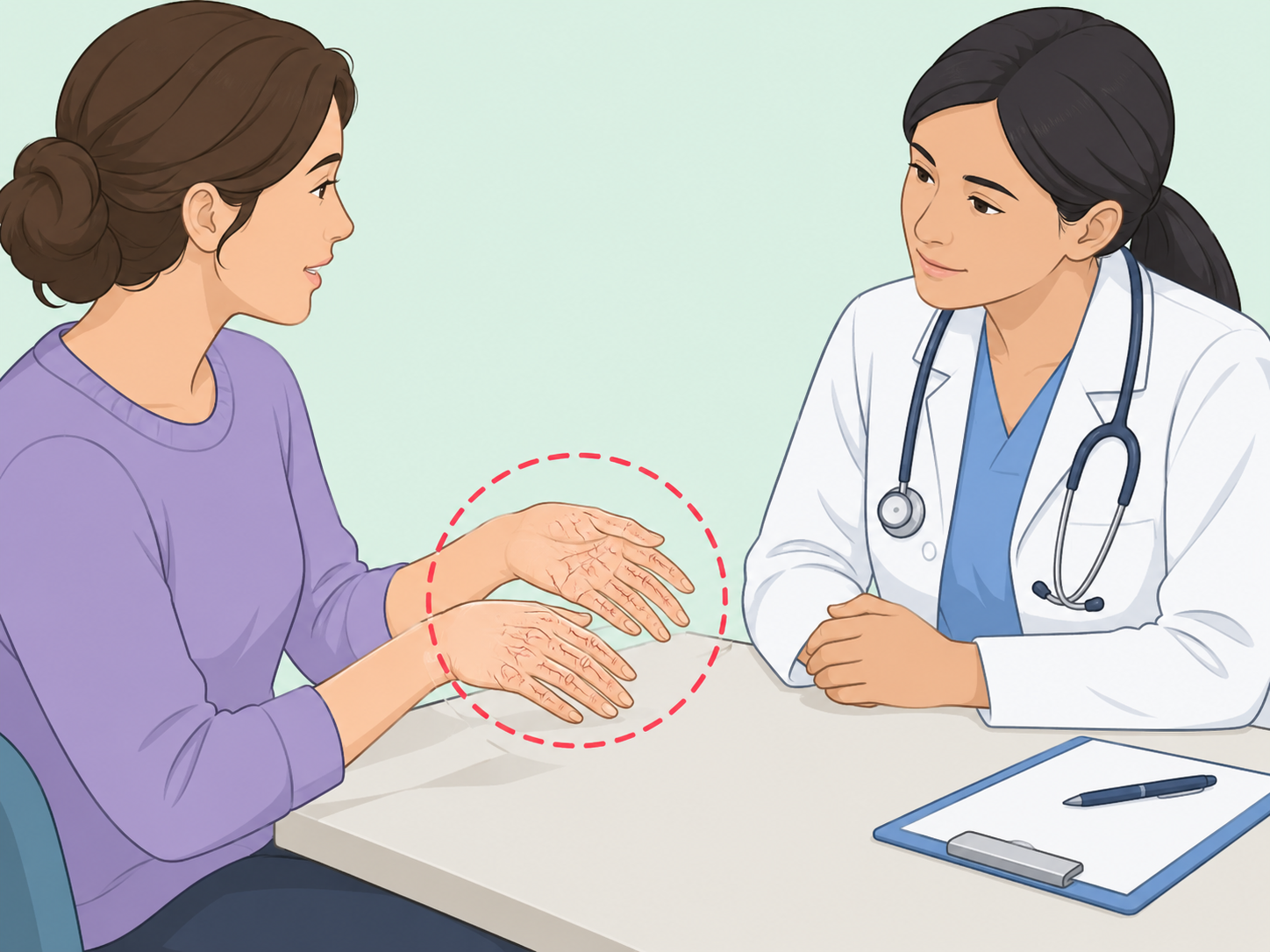
See a doctor if dryness is severe or persistent
Make an appointment with a doctor or dermatologist if your skin has deep cracks, bleeding, open sores, signs of infection, severe itching, or dryness that does not improve with gentle care. The AAD says persistent dry skin can sometimes be related to conditions such as eczema, psoriasis, or other medical issues. Get medical guidance before using medicated creams or changing any treatment plan.
Summary
The bottom line: keep the recipe simple, fragrance-free, and water-free; apply it to slightly damp skin; and protect your hands from frequent washing and harsh products. See a doctor or dermatologist if dryness is painful, cracked, infected, or not improving.
Frequently Asked Questions
- Can a homemade balm cure very dry skin?
No. A gentle balm may help dry skin feel softer by sealing in moisture, but it does not treat every cause of dryness. If symptoms persist, a doctor or dermatologist can check for eczema, psoriasis, infection, medication effects, or another cause.
- Is petroleum jelly natural?
Petroleum jelly is not plant-derived, but dermatology sources commonly list petrolatum or petroleum jelly as an effective occlusive ingredient for dry skin. If you prefer a more plant-based balm, use more shea butter and jojoba oil, but keep the recipe fragrance-free.
- Should I add essential oils for scent?
It is safer to skip them, especially if your skin is dry, cracked, itchy, or sensitive. Fragrance and some botanical ingredients can irritate skin or trigger allergic contact dermatitis.
- How often should I use the balm?
Apply a thin layer after handwashing, after bathing, and whenever your hands or arms feel dry. Use less during the day if it feels greasy, and save a thicker layer for bedtime.
- Can I use this balm on my face?
This guide is written for hands and arms. Facial skin can be more sensitive and acne-prone, so test carefully first or choose a product made for the face if you are prone to breakouts or irritation.
- How long can I keep a homemade balm?
Make small batches, keep the container clean, and discard it if the smell, color, or texture changes. Because homemade products are not tested like commercial cosmetics, cautious storage and clean handling matter.
References
Reliable references aided in composing and refining this content.
- https://www.aad.org/public/everyday-care/skin-care-basics/dry/dermatologists-tips-relieve-dry-skin
- https://www.aad.org/public/everyday-care/skin-care-basics/care/skin-care-tips-hands
- https://www.aad.org/public/everyday-care/skin-care-secrets/prevent-skin-problems/test-skin-care-products
- https://medlineplus.gov/ency/patientinstructions/000751.htm
- https://my.clevelandclinic.org/health/diseases/16940-dry-skin
- https://www.fda.gov/cosmetics/potential-contaminants-cosmetics/microbiological-safety-and-cosmetics
- https://www.fda.gov/cosmetics/cosmetics-labeling/shelf-life-and-expiration-dating-cosmetics