 Pin it
Licorice sounds old-fashioned, but it keeps showing up in modern skin care for a reason. The root contains compounds such as glabridin, liquiritin, and glycyrrhizin that researchers study for pigmentation, inflammation, oral comfort, and digestive support.
The beauty angle is strongest when licorice is used topically in a well-formulated product. Tea and capsules are different. They can feel gentle, but regular licorice root is not something to sip or supplement without limits.
What Licorice Really Contains
Licorice is the root of Glycyrrhiza plants, most often Glycyrrhiza glabra in Western herbal products. It tastes naturally sweet because of glycyrrhizin, but the beauty interest comes from a wider group of plant compounds. Glabridin is the one you will often see in brightening discussions. Liquiritin and licochalcone A also show up in skin and inflammation research.
The important distinction is form. A serum with licorice extract is not the same thing as licorice candy. Tea is not the same as DGL. Powder sold for drinking is not automatically safe or elegant on skin. If you like plant-based wellness guides, the same practical lens helps with papaya for health and beauty benefits and mango benefits and nutrition facts.
Skin Benefits With Evidence
For beauty, licorice is most interesting for uneven tone, post-blemish marks, and skin that looks easily flushed. A 2024 review of over-the-counter hyperpigmentation ingredients noted studies on licorice components such as liquiritin and glabridin, while also making clear that stronger clinical work is still needed for ideal formulas and concentrations. You can read the review in JEADV Clinical Practice.
Glabridin appears to work on more than one part of the pigmentation process. A 2026 review describes effects on tyrosinase activity, inflammation signaling, melanosome transfer, and melanosome breakdown. That does not mean a random licorice cream will erase dark spots. It means licorice extract is a reasonable supporting ingredient when the product is made well and used with daily sunscreen.
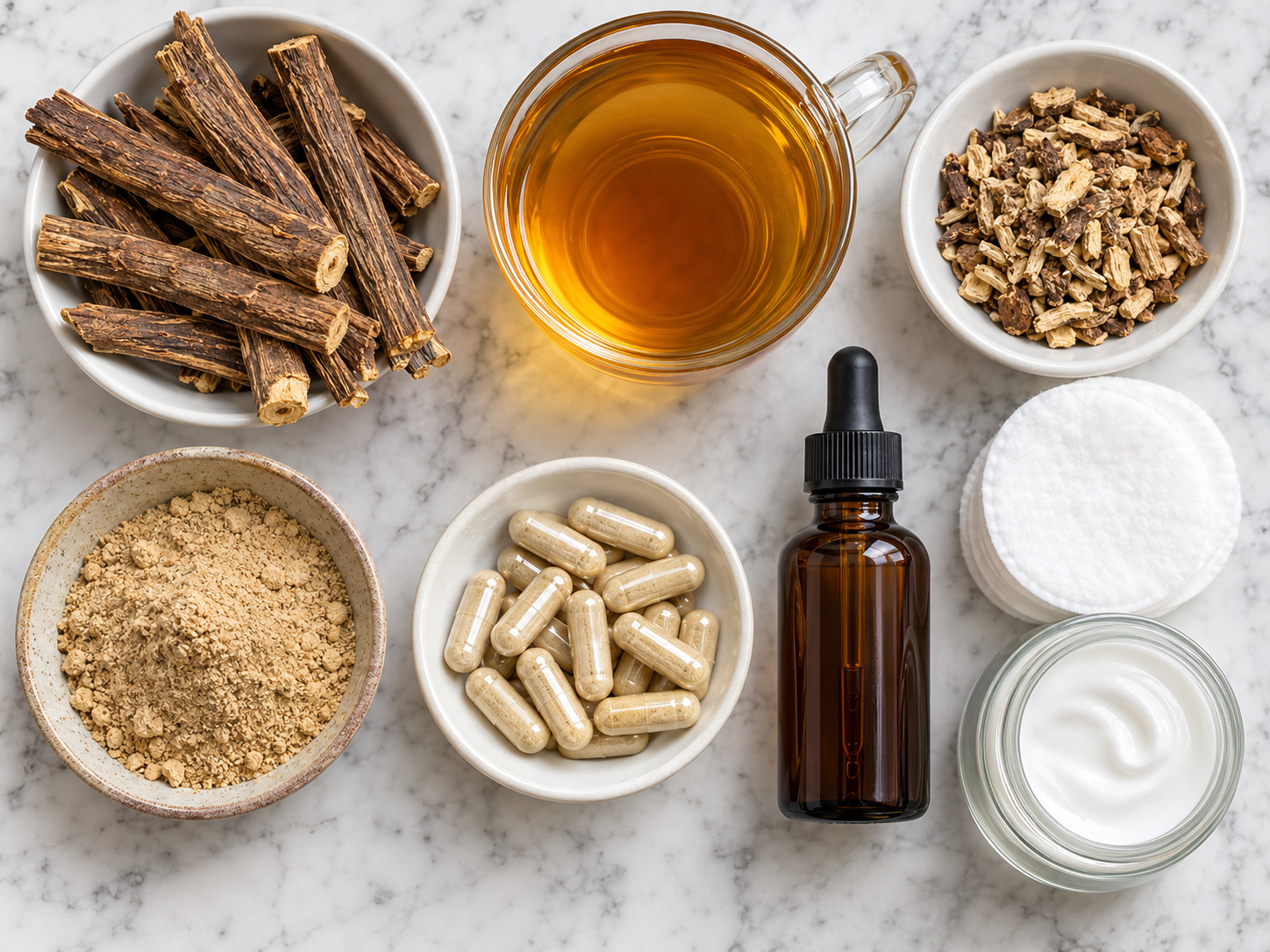
Root, Tea, Powder, DGL
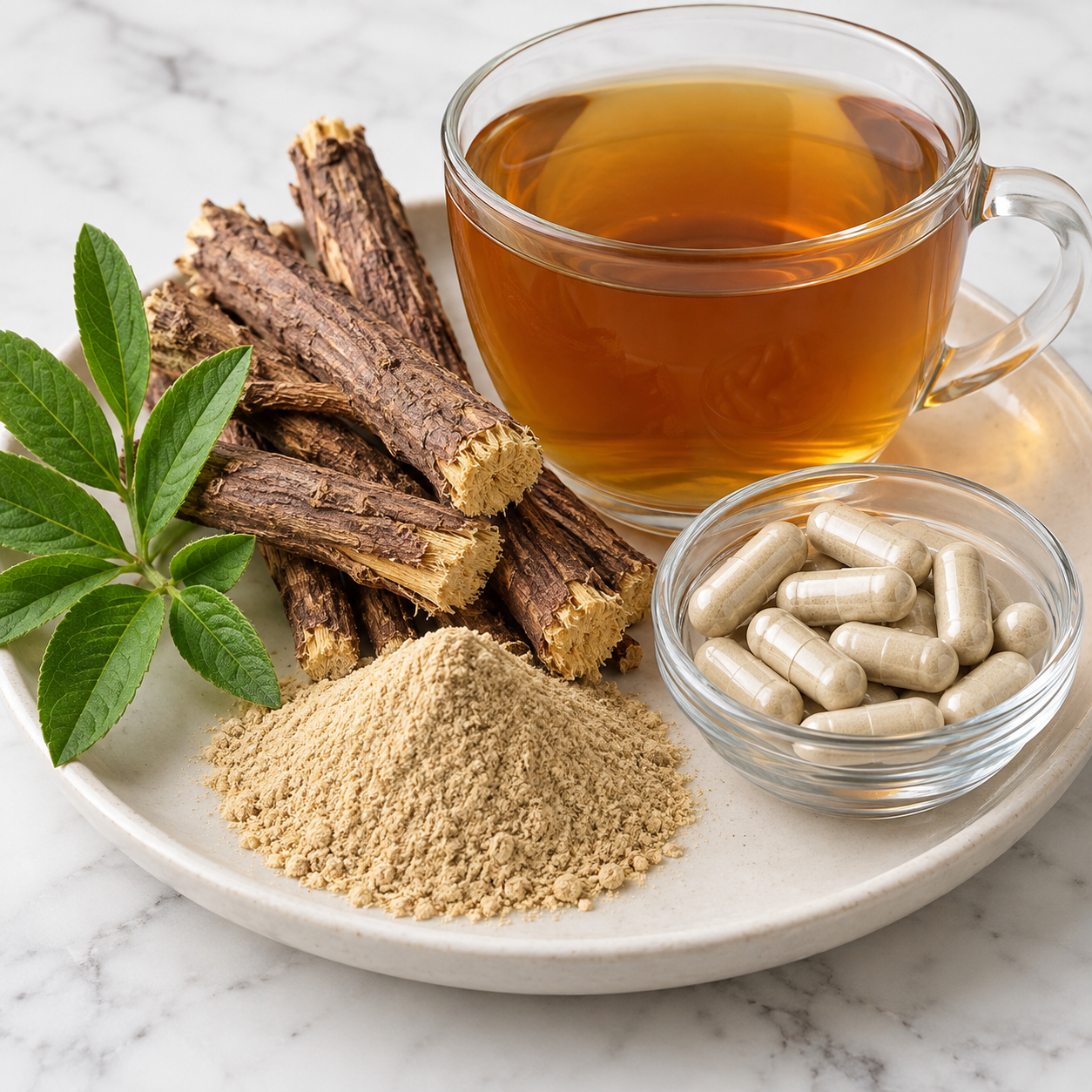
Whole dried root is usually steeped for tea or used in traditional herbal blends. It tastes sweet and earthy with a faint anise-like finish, though licorice and anise are different plants. Tea may soothe the throat for some people, but it still contains glycyrrhizin unless the product says otherwise.
Licorice powder is more flexible, but also easier to misuse. If it is food-grade, treat it as an oral product. If it is cosmetic-grade, follow the supplier directions and keep it away from the eyes. DGL is different because it has had most glycyrrhizin removed. It is usually sold as chewable tablets, capsules, or lozenges for digestive comfort. The NCCIH licorice root overview notes that DGL may be safer for short-term oral use than regular licorice, but it is still a supplement.
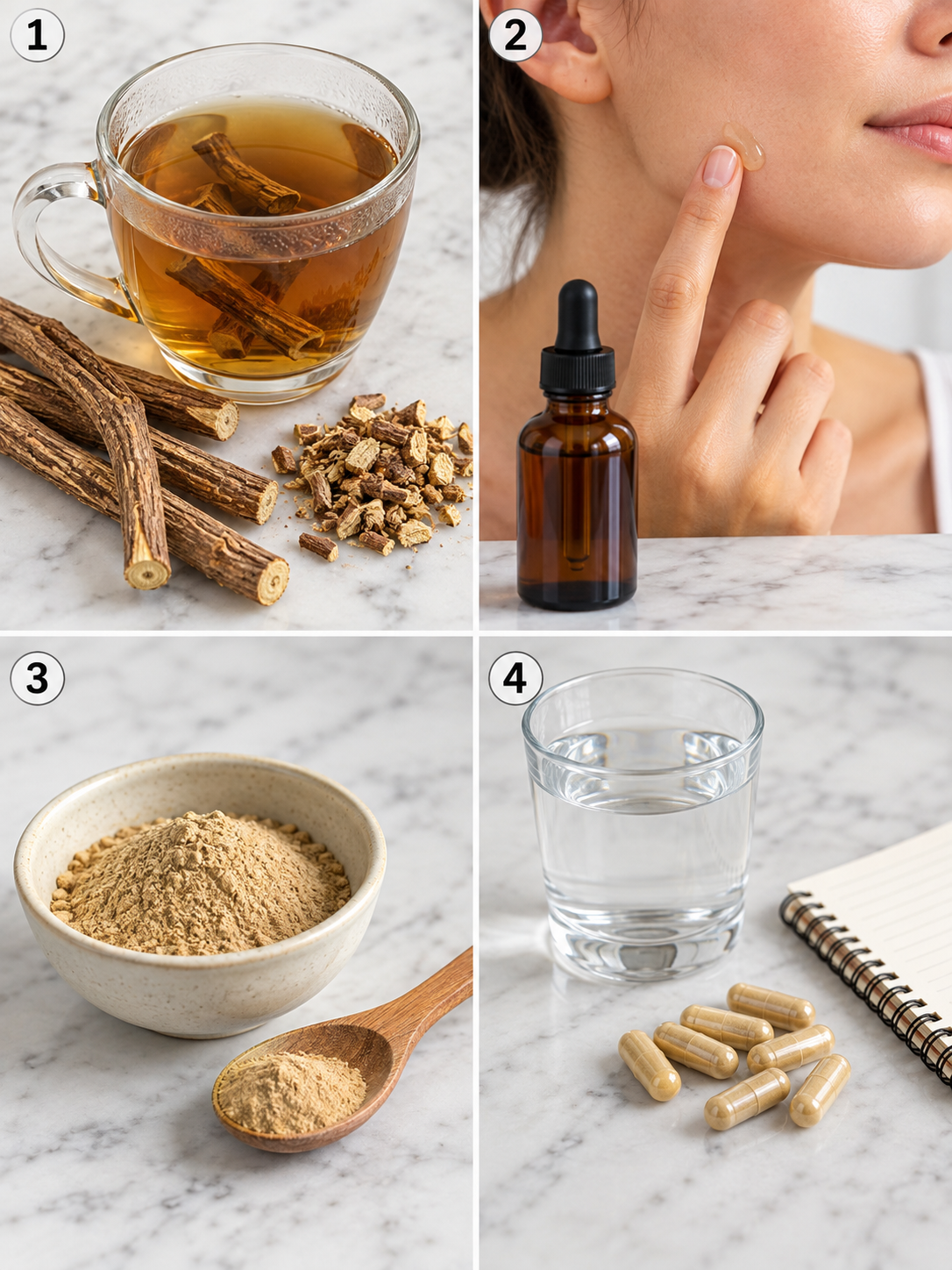
A Safer Beauty Routine
For skin, start with a finished product from a reputable brand instead of mixing strong DIY pastes. Use it at night three times a week for the first week. If your skin stays calm, move to once daily. Watch for stinging, rash, new dryness, or a warm prickly feeling that does not settle.
Licorice plays nicely with calm routine builders. A gentle cleanser, moisturizer, sunscreen, and one treatment step are enough. If your routine is already crowded, simplify it first with a simple beauty routine that works. Then add licorice as the tone-support step. For a bright drink habit that is easier to dose, compare it with lemon water for evidence-based benefits.
Who Should Be Careful
The safety concern is glycyrrhizin. In regular oral licorice, it can make the body hold sodium and lose potassium. That can raise blood pressure and disturb heart rhythm in sensitive people. NCCIH warns that serious effects are possible with large or long-term use, and even smaller amounts can matter for people with hypertension, heart disease, kidney disease, high salt intake, or certain medication use.
Skip oral licorice unless your clinician says it is appropriate if you are pregnant, breastfeeding, taking diuretics, corticosteroids, blood pressure medicine, heart medicine, or digoxin. Stop and seek care if you have muscle weakness, swelling, severe headache, faintness, or an irregular heartbeat after using licorice.
What Results To Expect
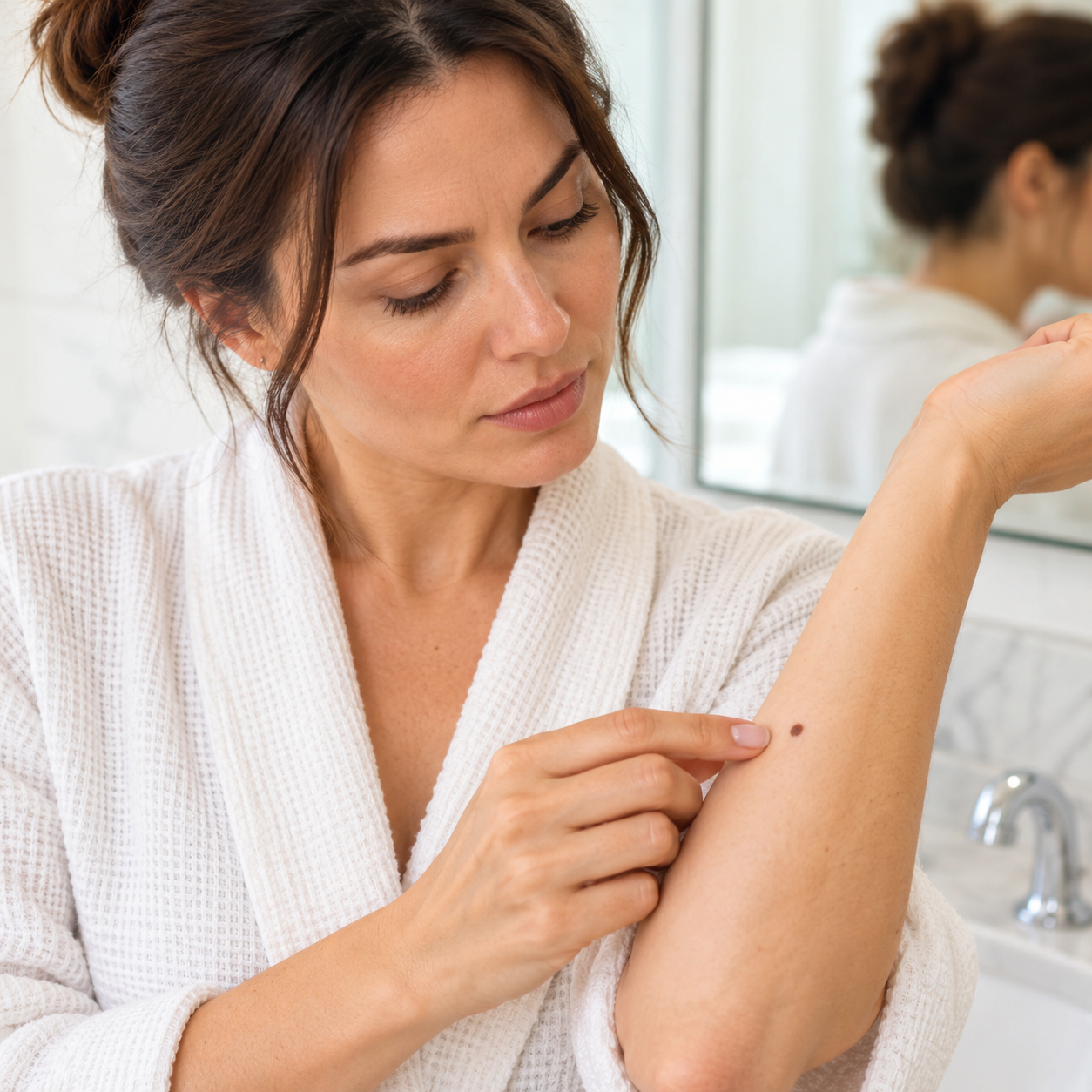
Topical licorice is a slow ingredient. Think in weeks, not days. Redness may look calmer first. Uneven tone usually takes longer because pigment turnover is slow. If a spot is changing shape, bleeding, itching, or appearing suddenly, do not try to fade it at home. Get it checked.
Licorice is best as part of a steady routine, much like other gentle wellness ingredients. It is not as dramatic as a prescription brightener. It is also not as irritating for many people. That middle ground is why it has stayed popular in skin care.
Summary
Use licorice like a targeted helper, not a cure-all. Topical formulas are the best fit for beauty goals, while DGL is the safer oral choice for people who want licorice without glycyrrhizin.
Frequently Asked Questions
- → Is licorice root actually good for skin?
Licorice root extract is one of the better-known botanical ingredients for uneven tone and visible redness. The most useful evidence points to topical compounds such as glabridin and liquiritin, not candy or sweet tea.
- → What is the difference between licorice root and DGL?
Regular licorice root contains glycyrrhizin, the sweet compound linked with blood pressure and potassium concerns when taken often or in high amounts. DGL stands for deglycyrrhizinated licorice, which means most glycyrrhizin has been removed.
- → Can I use licorice powder on my face?
You can use a cosmetic-grade licorice product, but a homemade powder paste is harder to control. It may be gritty, too strong, or contaminated if it was sold as a food or supplement powder. Patch test first and avoid broken or irritated skin.
- → Can I drink licorice tea every day?
Daily licorice tea is not a good habit for everyone. Regular licorice can affect blood pressure, potassium, heart rhythm, and medication response. People who are pregnant, breastfeeding, or managing heart, kidney, or blood pressure issues should ask a clinician first.
- → Does licorice lighten dark spots?
Licorice extract may help the look of uneven tone because some compounds can influence melanin pathways and inflammation. It works slowly and is best paired with sunscreen. It should not replace medical care for melasma, sudden pigmentation changes, or suspicious spots.
- → What should I pair licorice with in a beauty routine?
Licorice pairs well with gentle basics such as sunscreen, moisturizer, niacinamide, and vitamin C if your skin tolerates them. Keep exfoliating acids and retinoids separate at first so you can tell what your skin likes.