
 Pin it
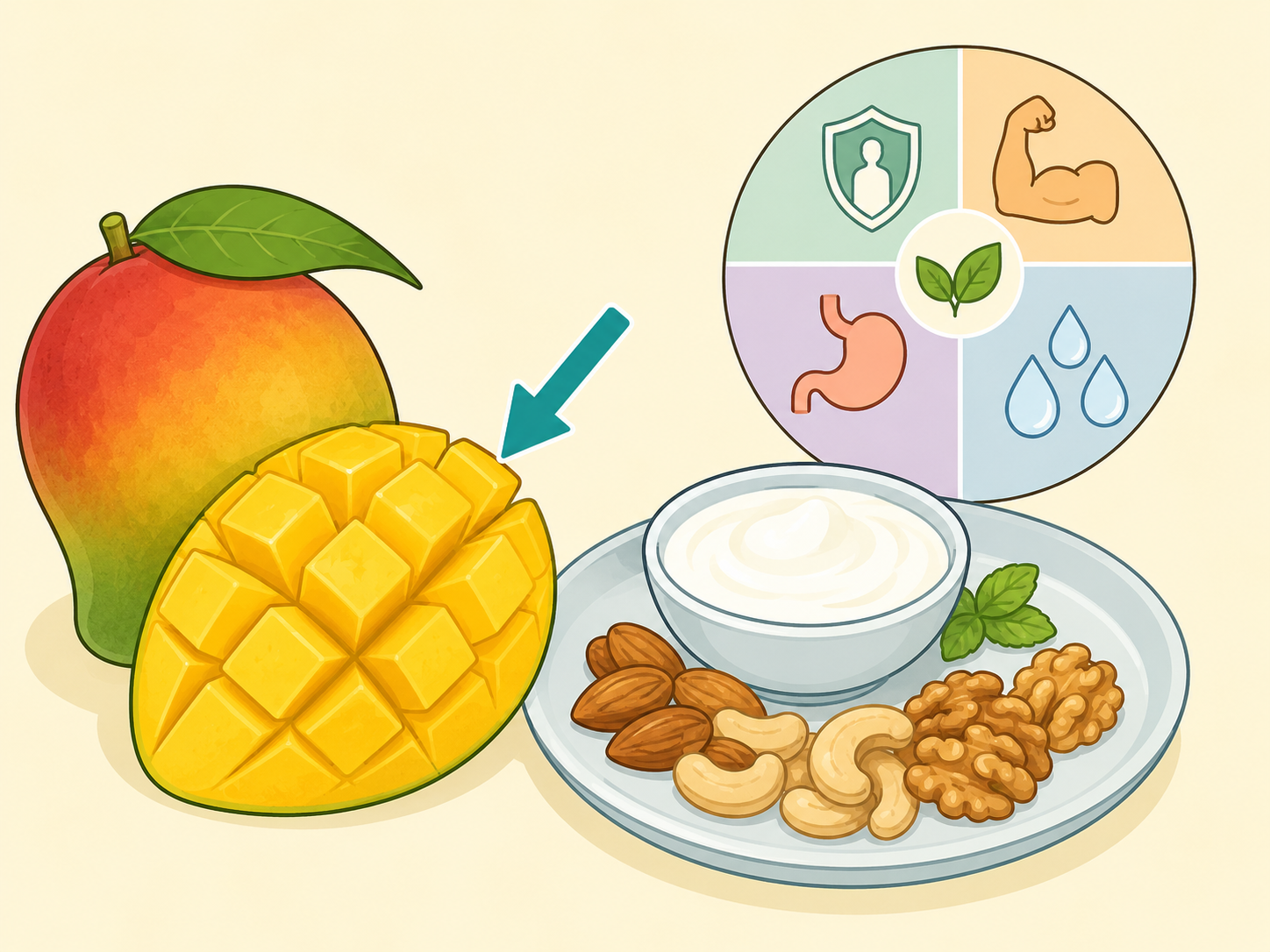
Mango is a sweet tropical fruit with fiber, vitamin C, carotenoids, and other nutrients that can fit into a balanced diet. This guide explains how to read the nutrition facts, what the science supports for skin and general wellness, and when to be cautious. It is written for everyday food choices, not for diagnosing or treating any condition.
Start with a realistic serving size
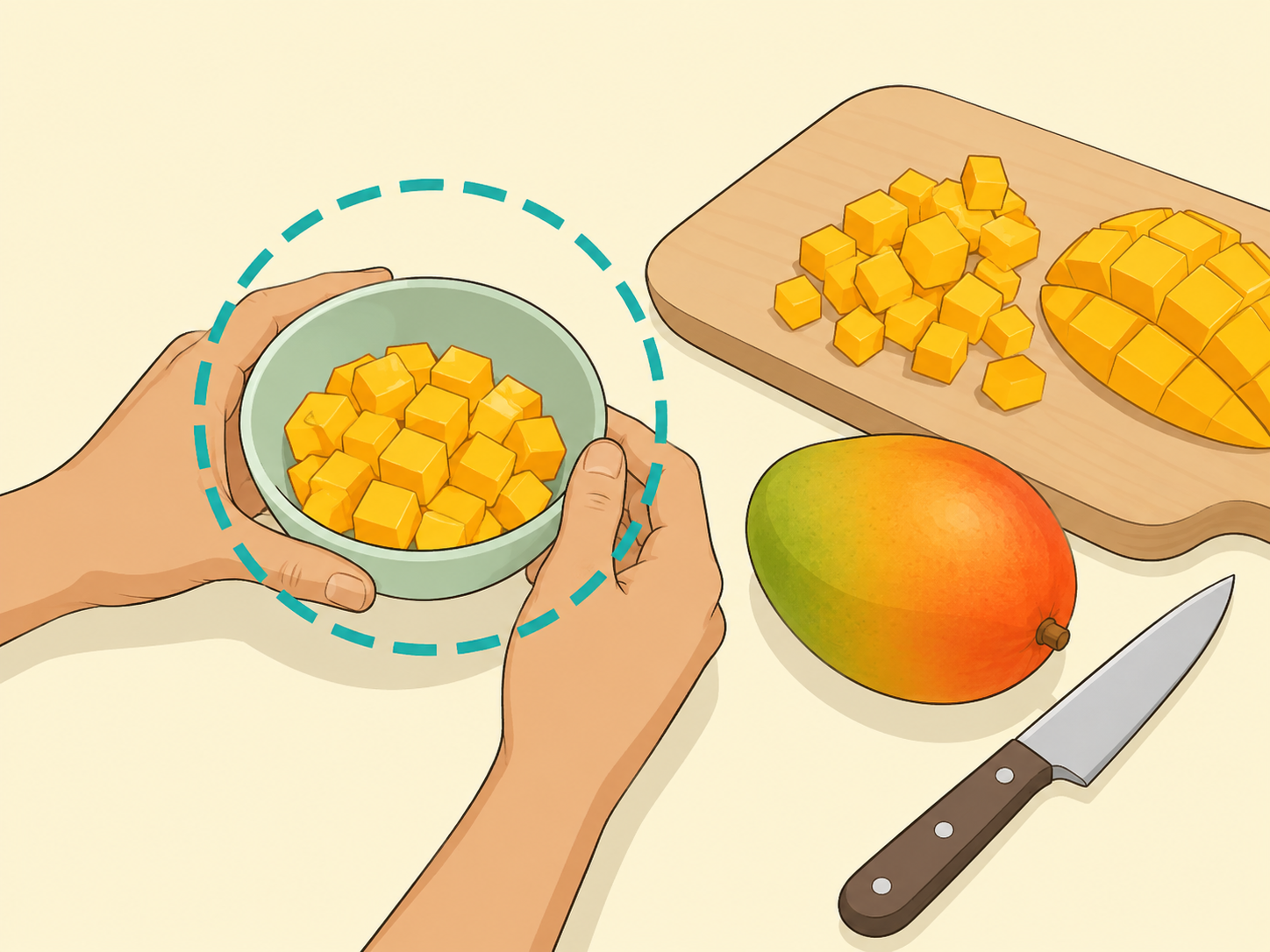
Use a measured serving before judging mango's benefits. Cleveland Clinic lists one cup of chopped mango at about 99 calories, 2.6 grams of fiber, 1.35 grams of protein, 0.62 grams of fat, and 22.6 grams of natural sugar. That makes mango nutrient-dense, but still worth portioning if you track calories or carbohydrates.
Use the fiber to support digestion
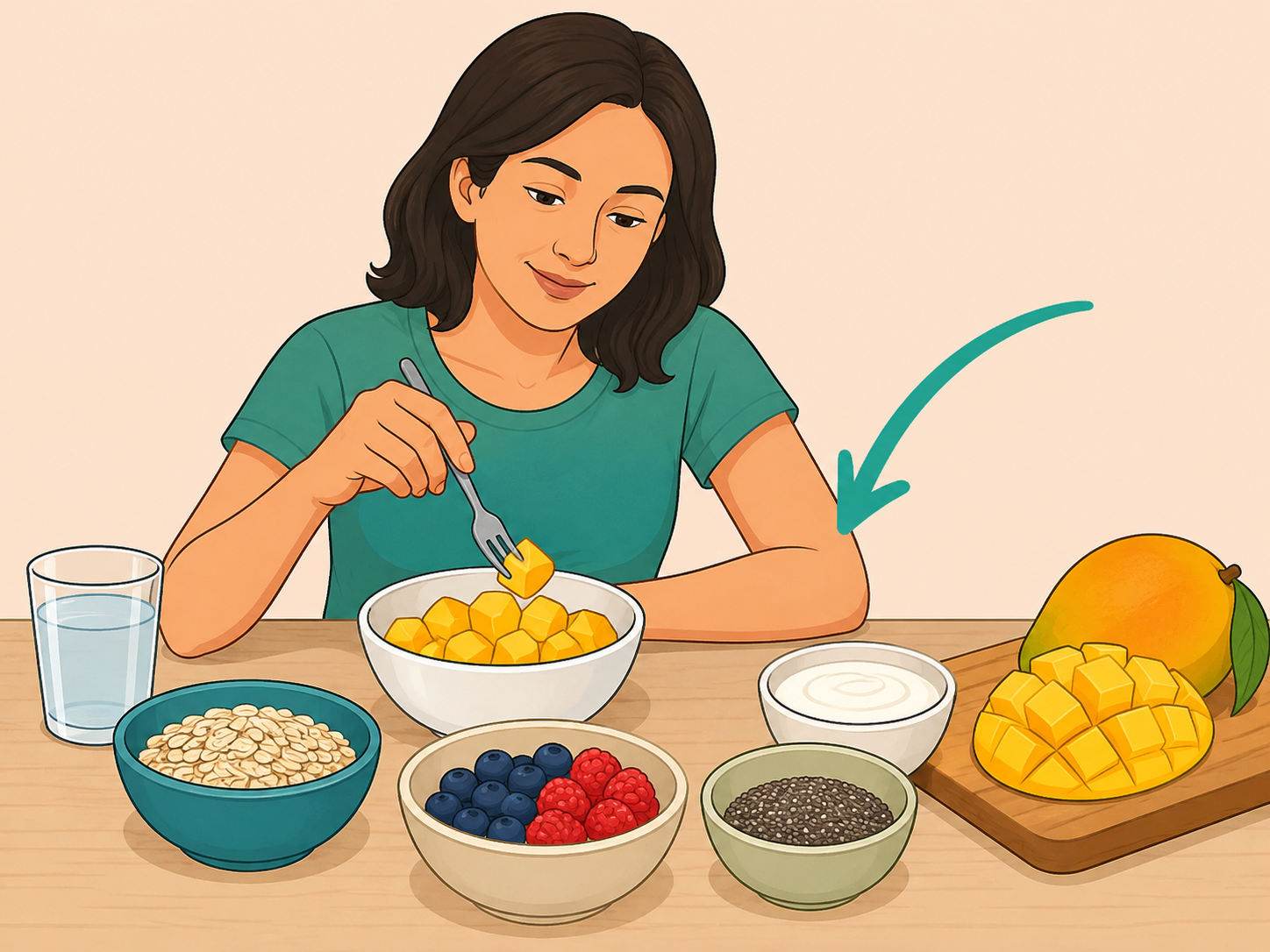
Mango contributes dietary fiber, which is one reason it can feel more satisfying than a juice or candy-like snack. MedlinePlus explains that dietary fiber helps digestion, adds bulk, supports fullness, and may help prevent constipation. Add higher-fiber foods gradually if your usual diet is low in fiber.
Treat vitamin C as skin support, not a shortcut
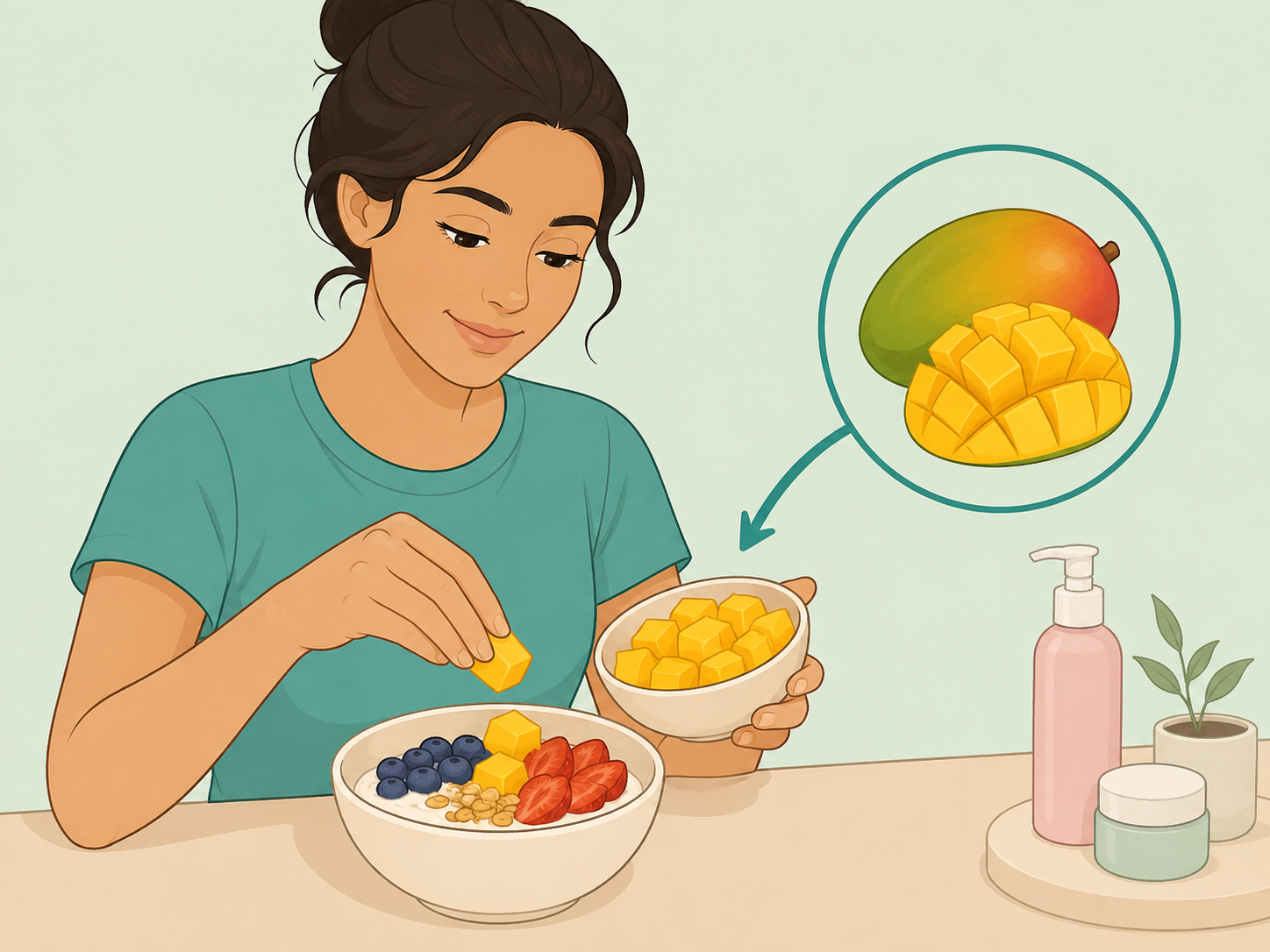
Mango's vitamin C matters because the body uses vitamin C to make collagen and support wound healing, according to the NIH Office of Dietary Supplements. That does not mean mango will erase wrinkles or replace sunscreen, acne treatment, or dermatology care. Think of it as one helpful food in a pattern that supports normal skin health.
Notice the carotenoids behind the orange color
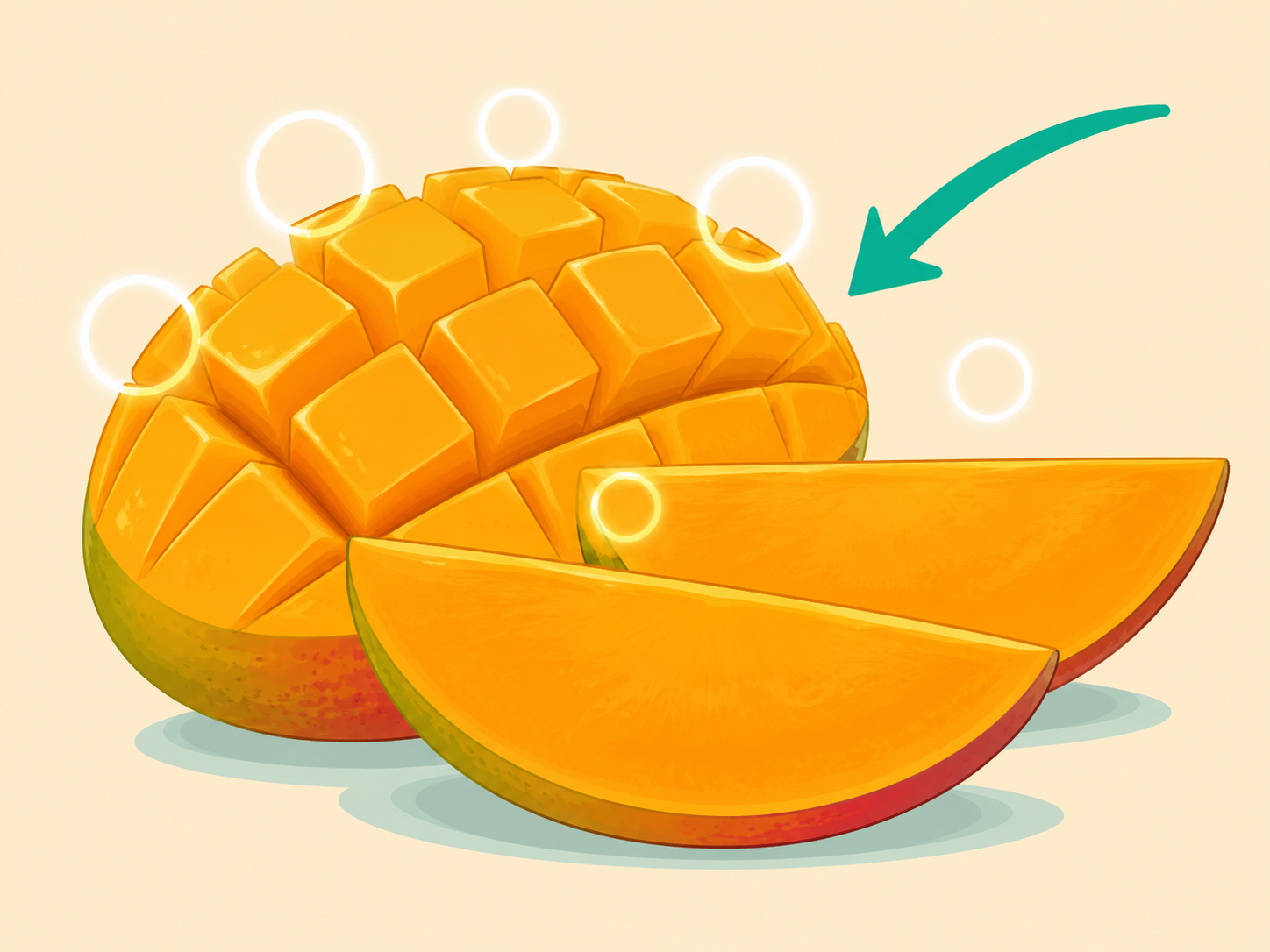
The orange-yellow color of mango comes partly from carotenoids, including beta-carotene. The NIH notes that provitamin A carotenoids from fruits and vegetables can be converted into vitamin A, which supports normal vision, immune function, growth, and development. Food sources are a safer everyday focus than high-dose vitamin A supplements.
Balance mango with the rest of your meal
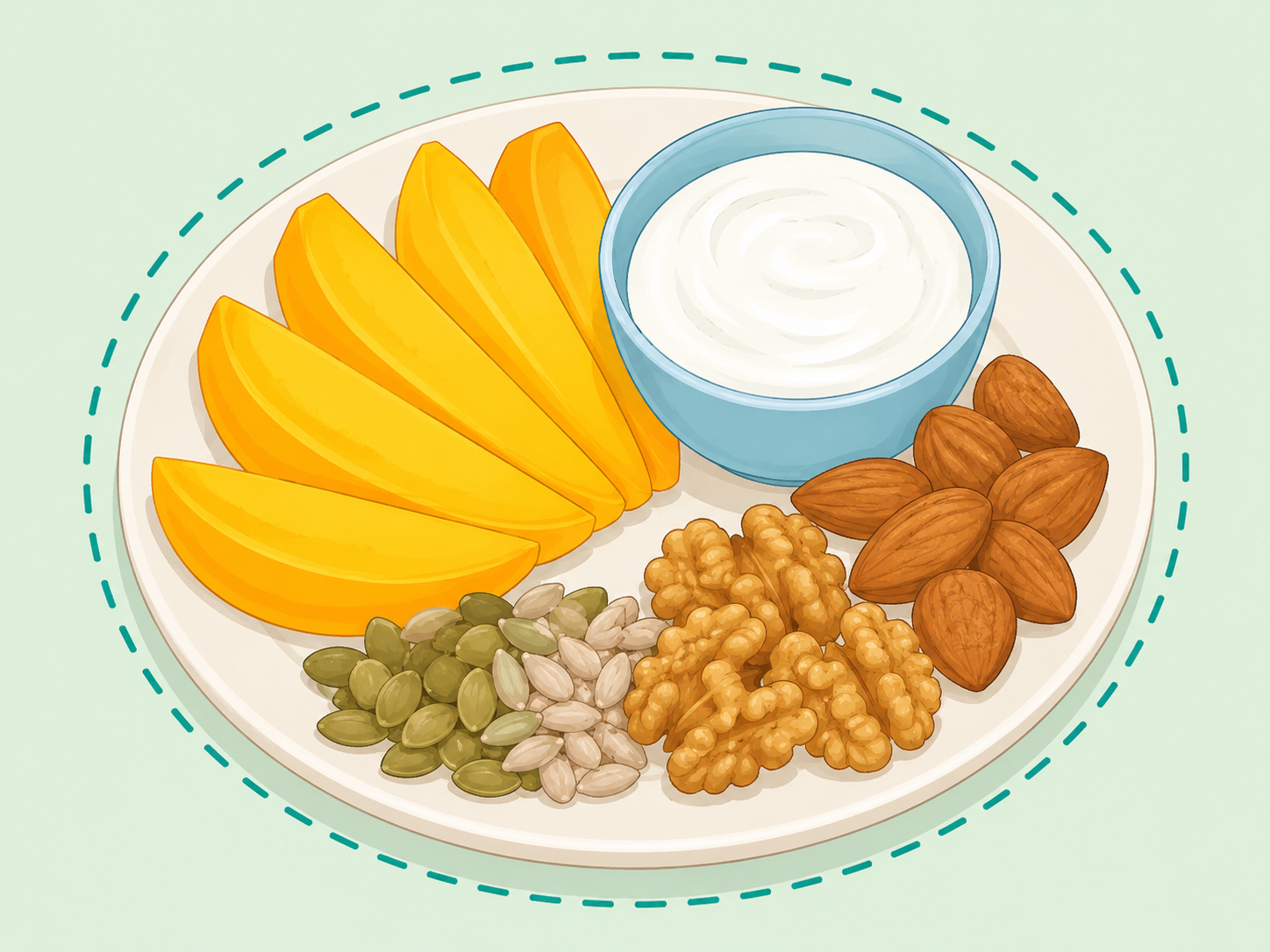
Mango is mostly carbohydrate, so pair it with foods that add protein, fat, or extra fiber when you want a steadier snack. Try mango with plain yogurt, cottage cheese, nuts, chia seeds, or a meal that includes beans, eggs, fish, or tofu. This keeps the fruit in context instead of letting a large smoothie or dried mango snack become the whole meal.
Choose whole mango over beauty supplements
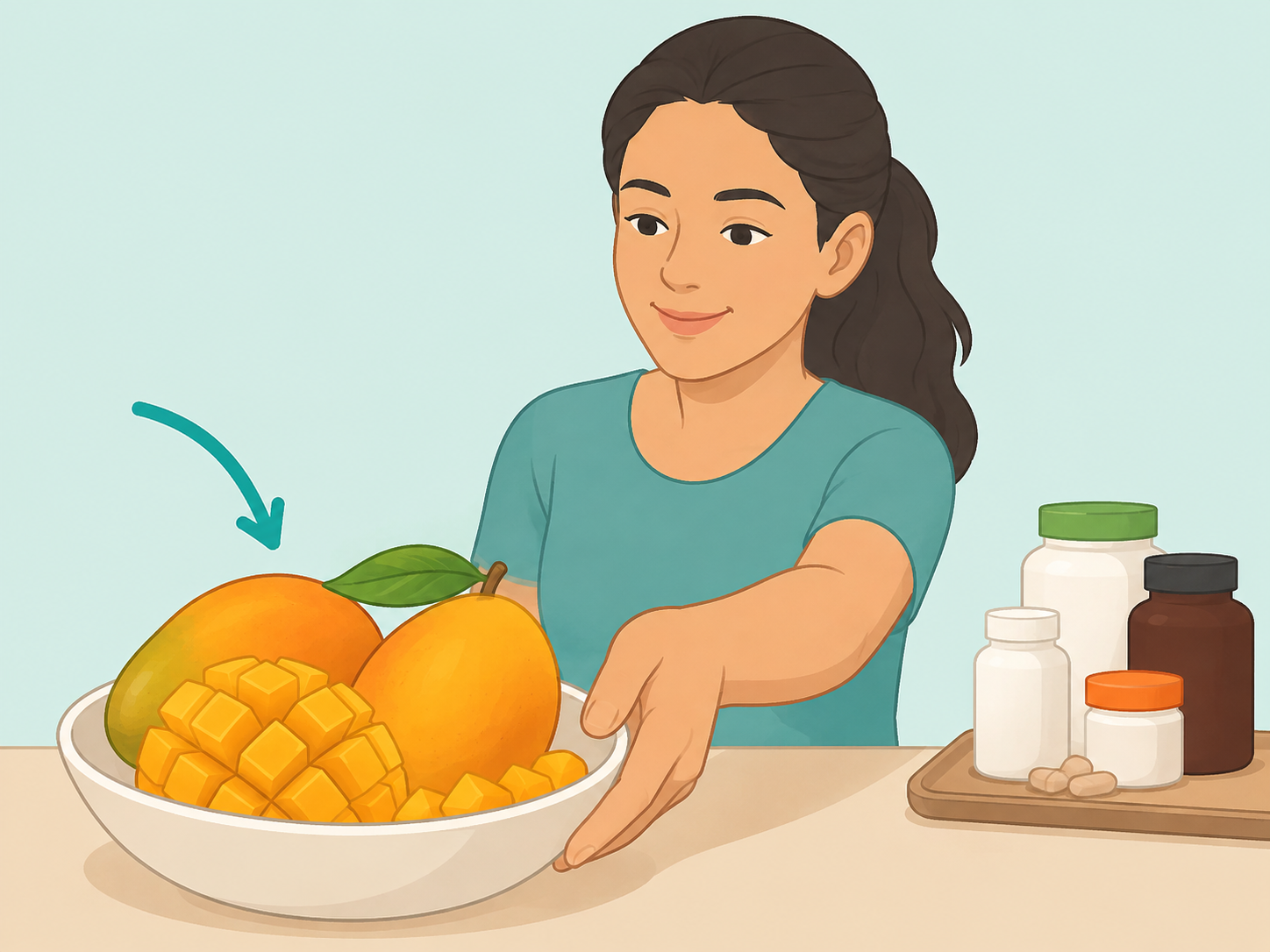
For beauty goals, whole mango is a better place to start than mango powders, extracts, or hair-skin-nail pills. The American Academy of Dermatology says healthy adults should generally meet nutrient needs through diet, while supplements may be unnecessary, poorly supported, or risky with some medications and medical conditions. Ask a clinician before using concentrated mango or vitamin supplements.

Handle the peel and portions carefully
Mango is safe for many people, but the peel can irritate some skin because it may contain urushiol, and mango's fructose may bother some people with IBS or digestive sensitivity. Cleveland Clinic also notes that people with chronic kidney disease or certain blood pressure medications may need to watch potassium intake. Peel mango carefully, stop eating it if it triggers symptoms, and adjust portions to your own tolerance.

Ask a clinician when mango affects your care
Talk with a doctor, registered dietitian, or dermatologist if you have diabetes, chronic kidney disease, IBS, unexplained rashes, repeated reactions to mango, or sudden hair or skin changes. Food can support wellness, but it cannot diagnose or treat medical problems. Bring a simple list of what you ate, how much, and what symptoms followed.
Summary
The bottom line: mango is a useful, nutrient-rich fruit, especially for vitamin C, carotenoids, and fiber. Eat it in realistic portions, choose whole fruit most often, and talk with a health professional if allergies, kidney disease, diabetes, IBS, or medications affect your food choices.
Frequently Asked Questions
- Is mango good for skin?
Mango can support skin health as part of a balanced diet because it contains vitamin C and provitamin A carotenoids. It should not be treated as a cure for acne, wrinkles, dark spots, or any skin condition.
- How many calories are in a cup of mango?
One cup of chopped mango has about 99 calories, along with fiber, vitamin C, vitamin A compounds, folate, potassium, and natural sugars.
- Can mango make hair grow faster?
No single food is proven to make hair grow faster. Mango provides nutrients involved in normal body function, but hair loss or sudden thinning should be discussed with a doctor or dermatologist.
- Is mango too high in sugar?
Mango contains natural sugar, so portion size matters if you monitor carbohydrates or blood sugar. Many people can enjoy it in moderate portions, especially with a meal or a protein-rich snack.
- Should I eat mango peel?
Some people react to mango peel because it can contain urushiol, the same type of irritating oil linked with poison ivy reactions. If peeling mango makes your skin itch, avoid the peel and consider wearing gloves.
- Are mango supplements better than eating mango?
For most healthy adults, whole foods are the better first choice. Supplements can interact with health conditions, medications, or lab tests, so use them only with guidance from a qualified health professional.
References
Reliable references aided in composing and refining this content.