
 Pin it
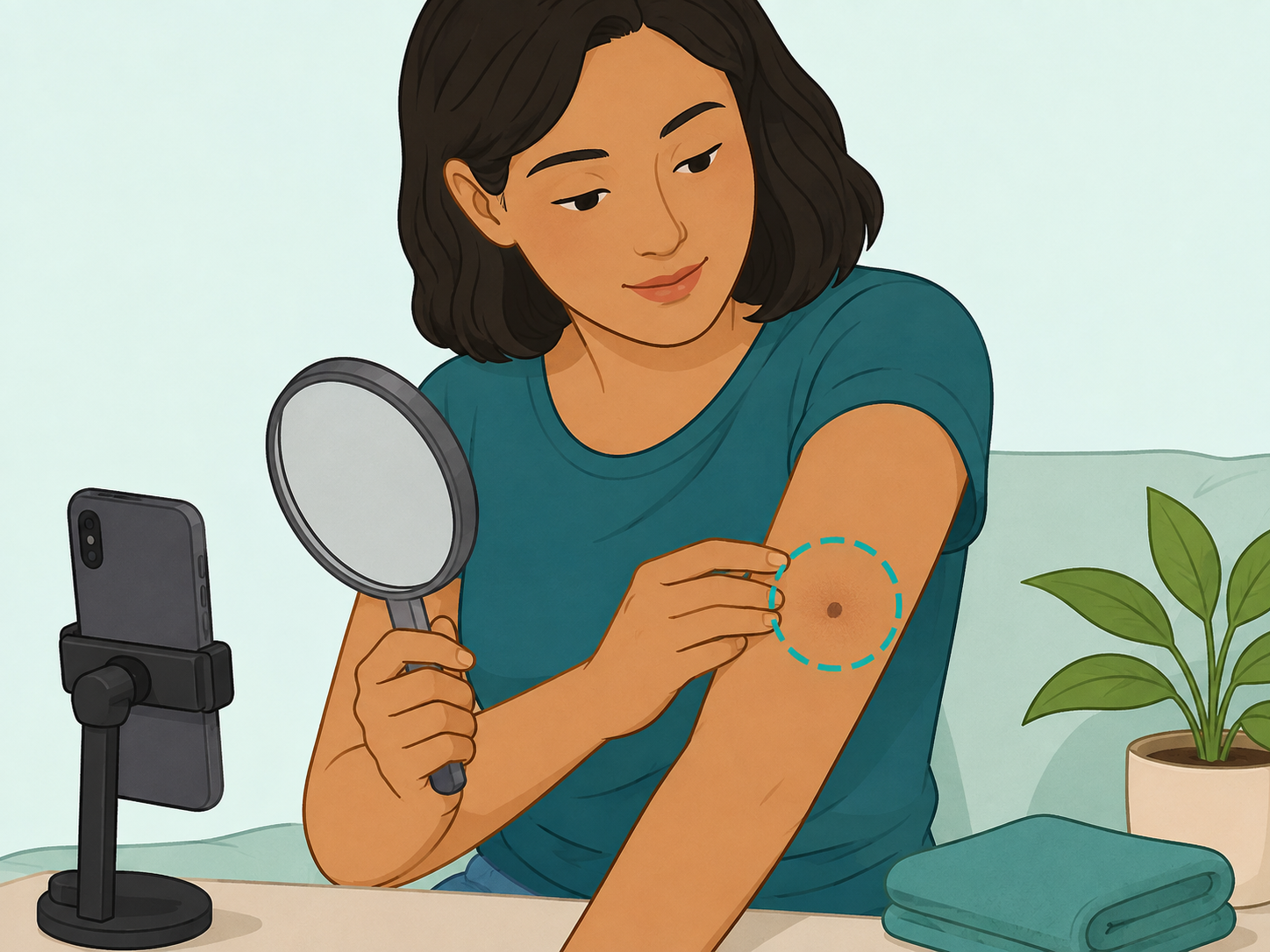
An unusual skin spot can be easy to dismiss, especially if you notice it in a photo or while doing your normal beauty routine. This guide shows you how to look at the spot safely, what warning signs to watch for, and when to get medical help. It does not diagnose the spot, but it can help you decide what to do next.
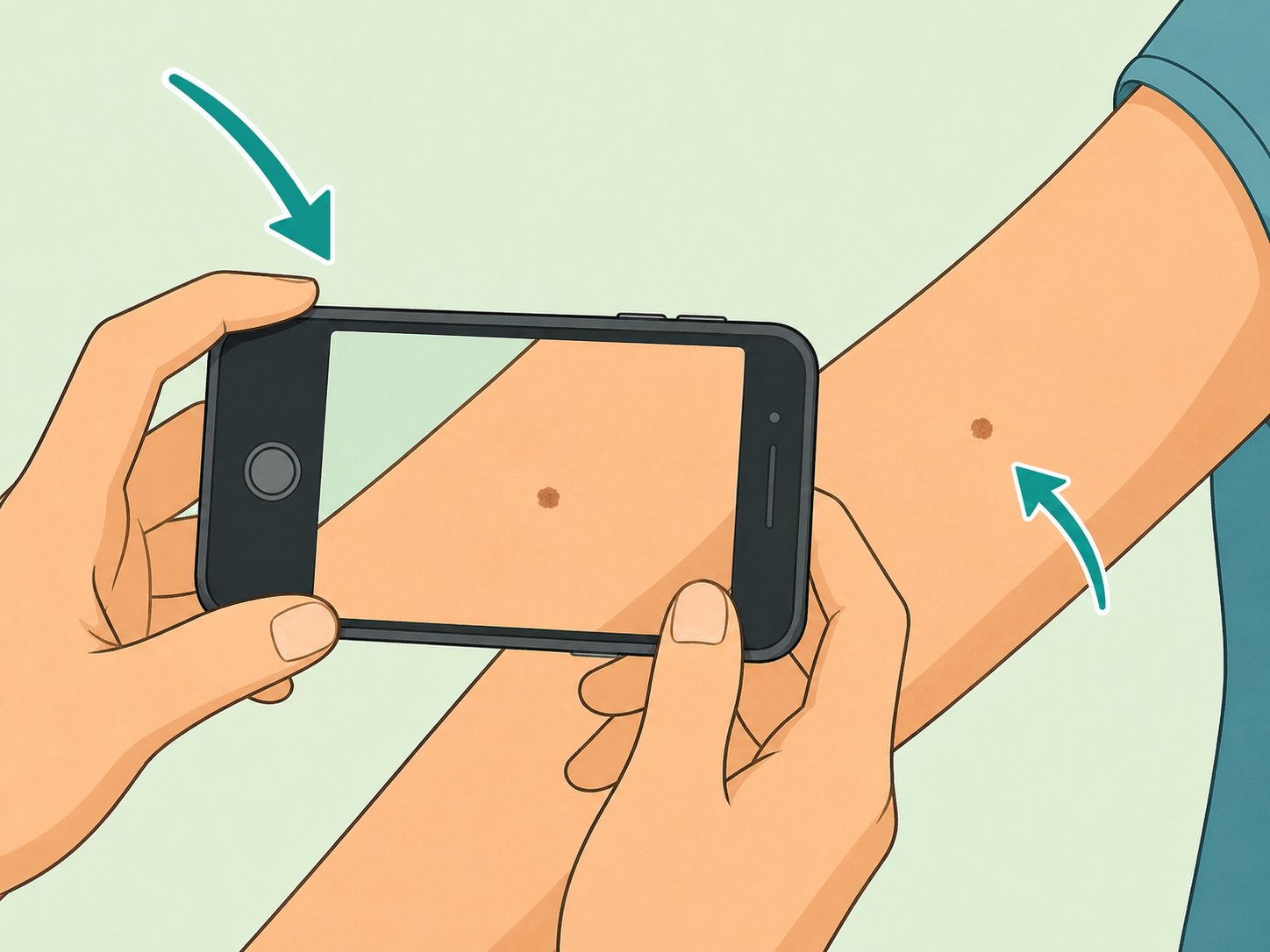
Take a clear photo in bright, even light
Photograph the spot straight on, without filters or makeup covering it. Use natural light or a bright room, and include a small familiar object nearby for scale without pressing on the skin. A clear photo makes it easier to notice whether the spot changes later.
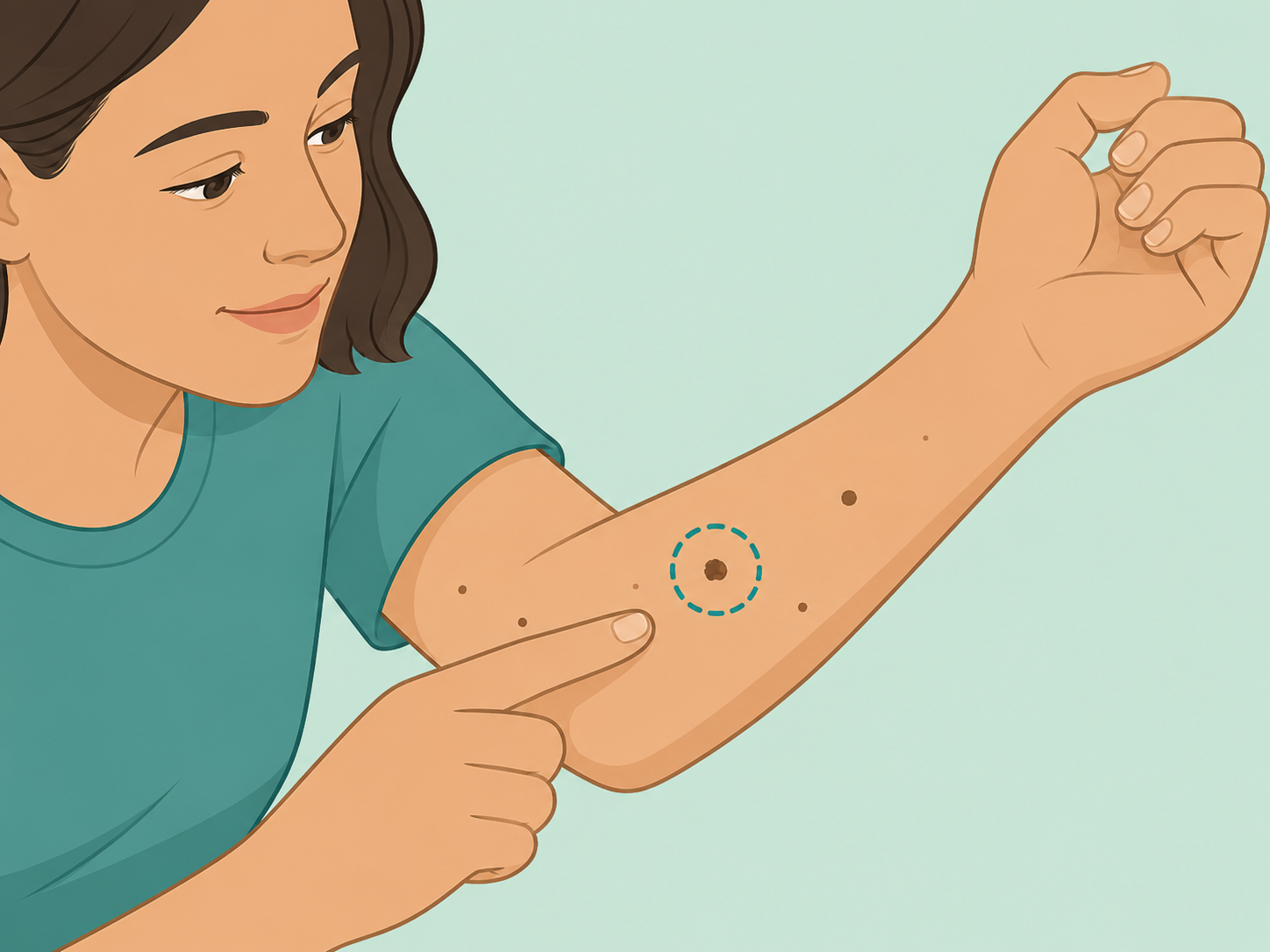
Compare it with the rest of your skin
Look at whether the spot is new, different from your other moles, or unlike the skin around it. The American Academy of Dermatology says a growing, bleeding, or changing spot should be checked by a dermatologist. Do not assume a spot is harmless just because it does not hurt.
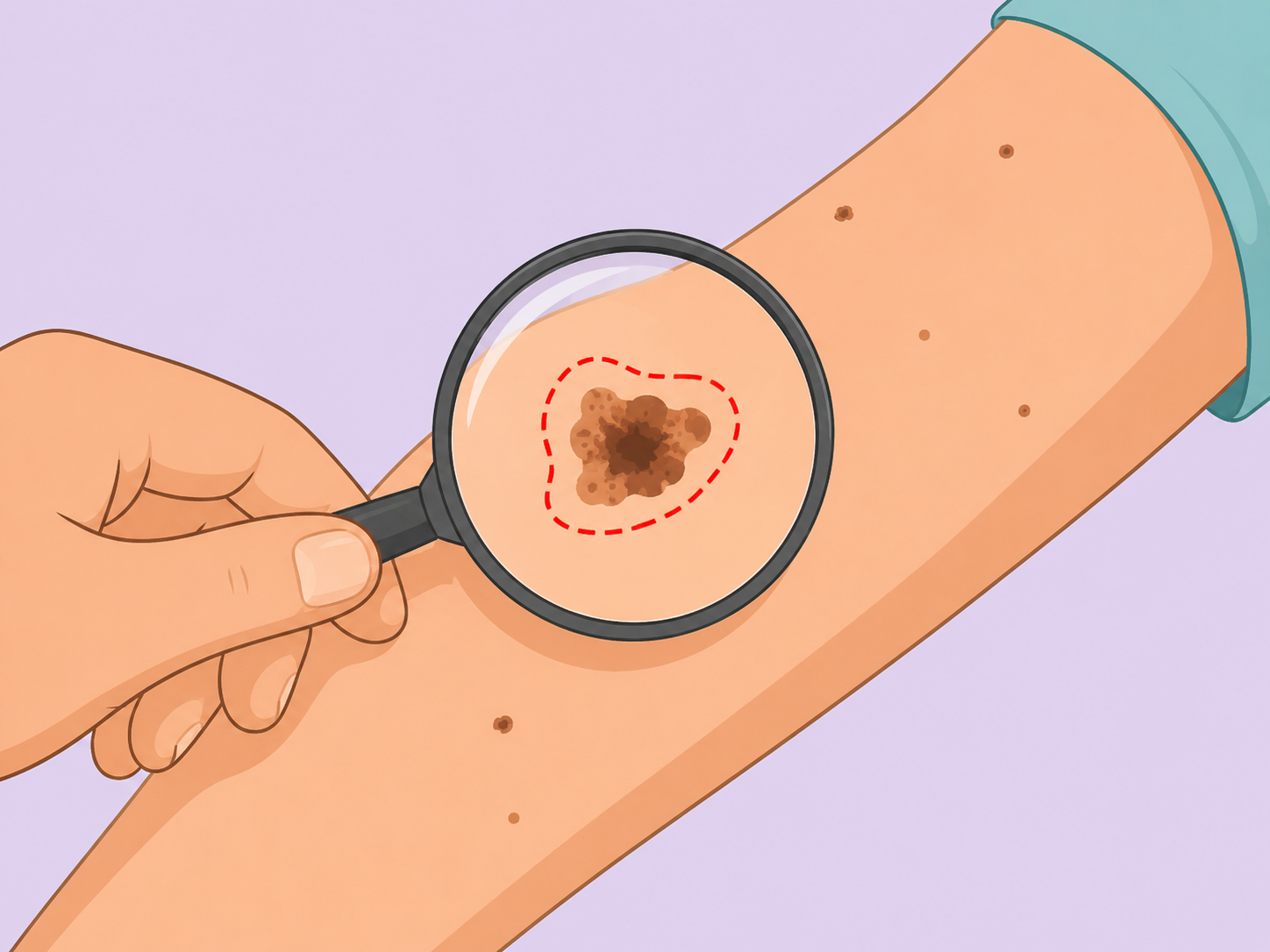
Check the ABCDE warning signs
Use the ABCDE guide: asymmetry, border, color, diameter, and evolving. The AAD's ABCDE guide explains that concern rises when one half looks unlike the other, the edge is irregular, the color varies, the spot is larger than about 6 mm, or it is changing. Any one of these signs is enough reason to arrange a medical check.
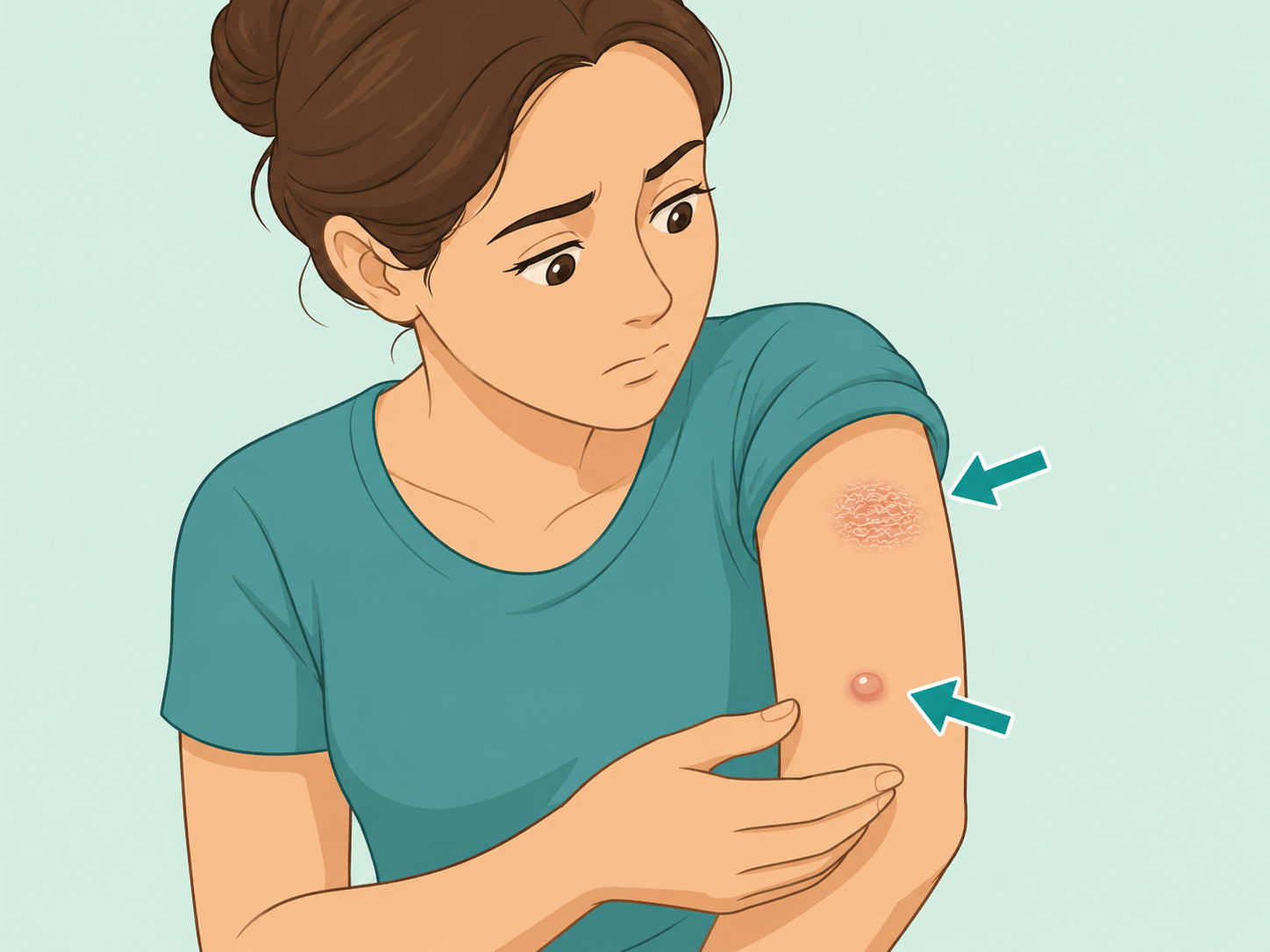
Look for non-mole warning signs too
Skin cancer does not always look like a classic dark mole. According to the AAD's skin cancer overview, warning signs can include a sore that does not heal, a shiny bump, a rough scaly patch, or a firm dome-shaped growth. Treat these as reasons to get the spot looked at, not as a diagnosis.
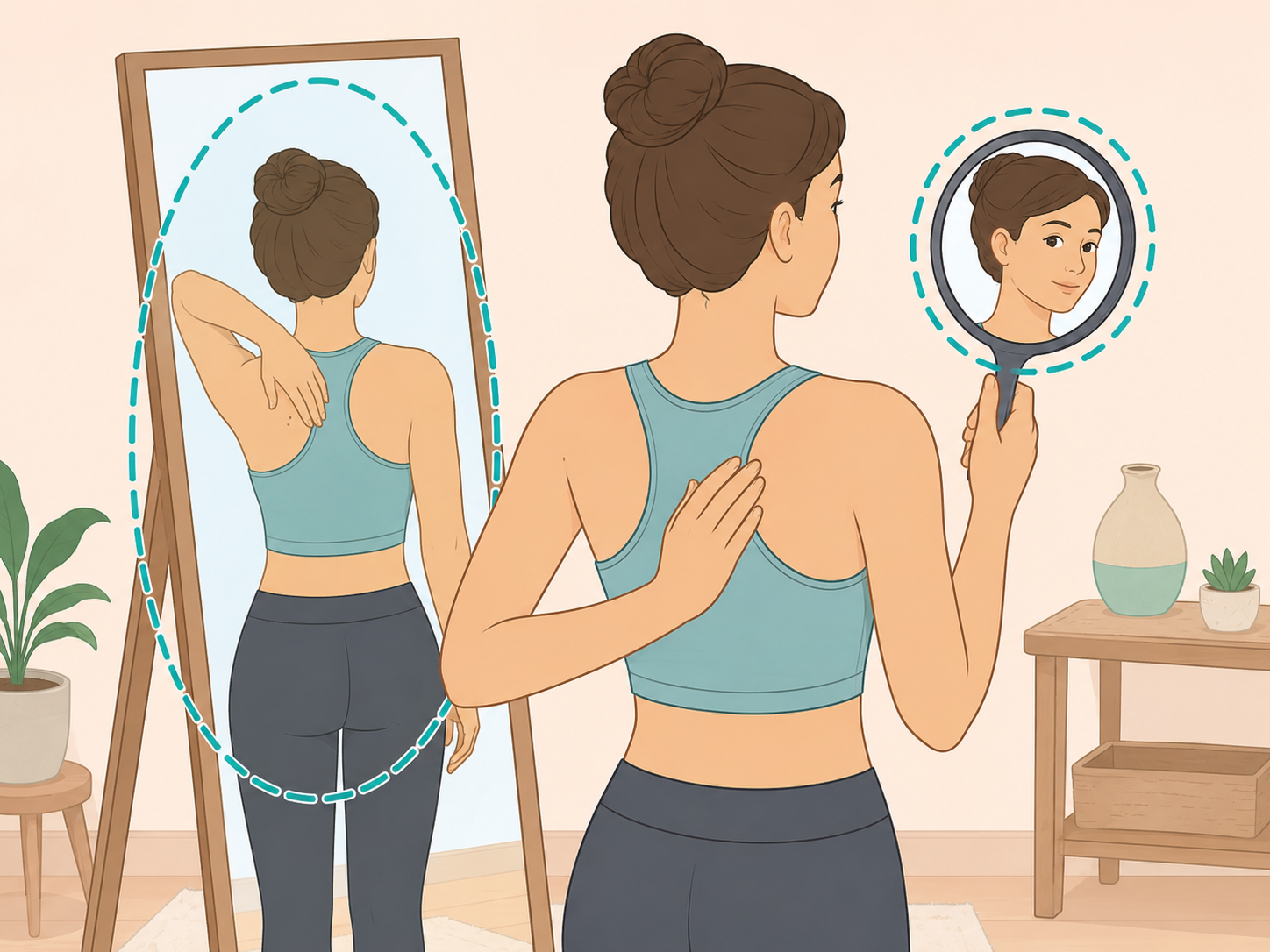
Check hard-to-see areas with a mirror
Use a full-length mirror, a hand mirror, or help from someone you trust to check your scalp, back, soles, between the toes, and under or around nails. MedlinePlus recommends checking your skin in a well-lit room and looking for new markings or changes in color, size, shape, or texture. Spots can appear in areas you do not usually inspect.
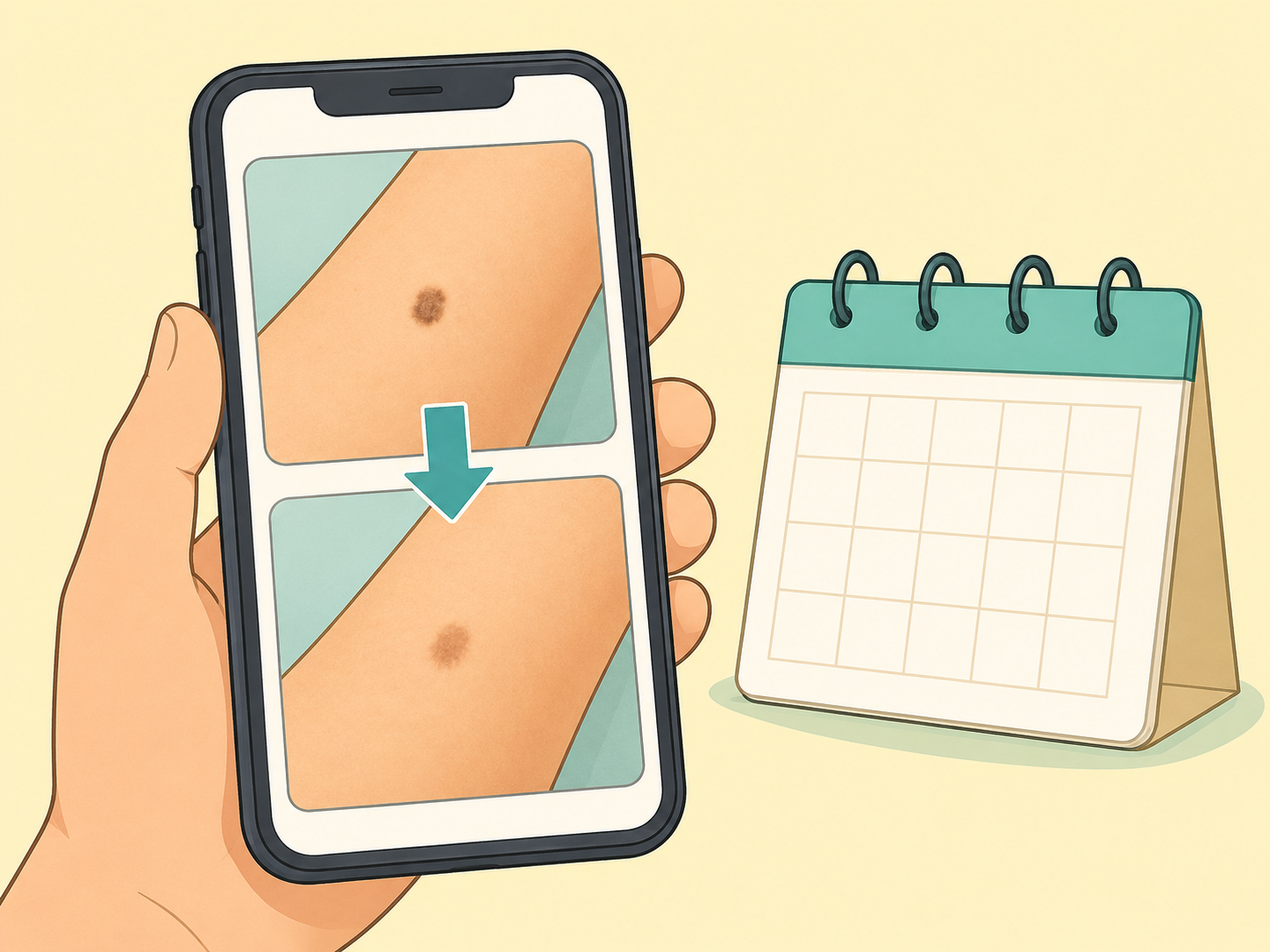
Track changes without picking at the spot
Save the photo with the date and take another photo later if your doctor has not already advised urgent care. Avoid scratching, squeezing, shaving over, or exfoliating the spot, because irritation can make it harder to judge and may injure the skin. If it starts to bleed, crust, itch, or hurt, move from tracking to booking a medical appointment.
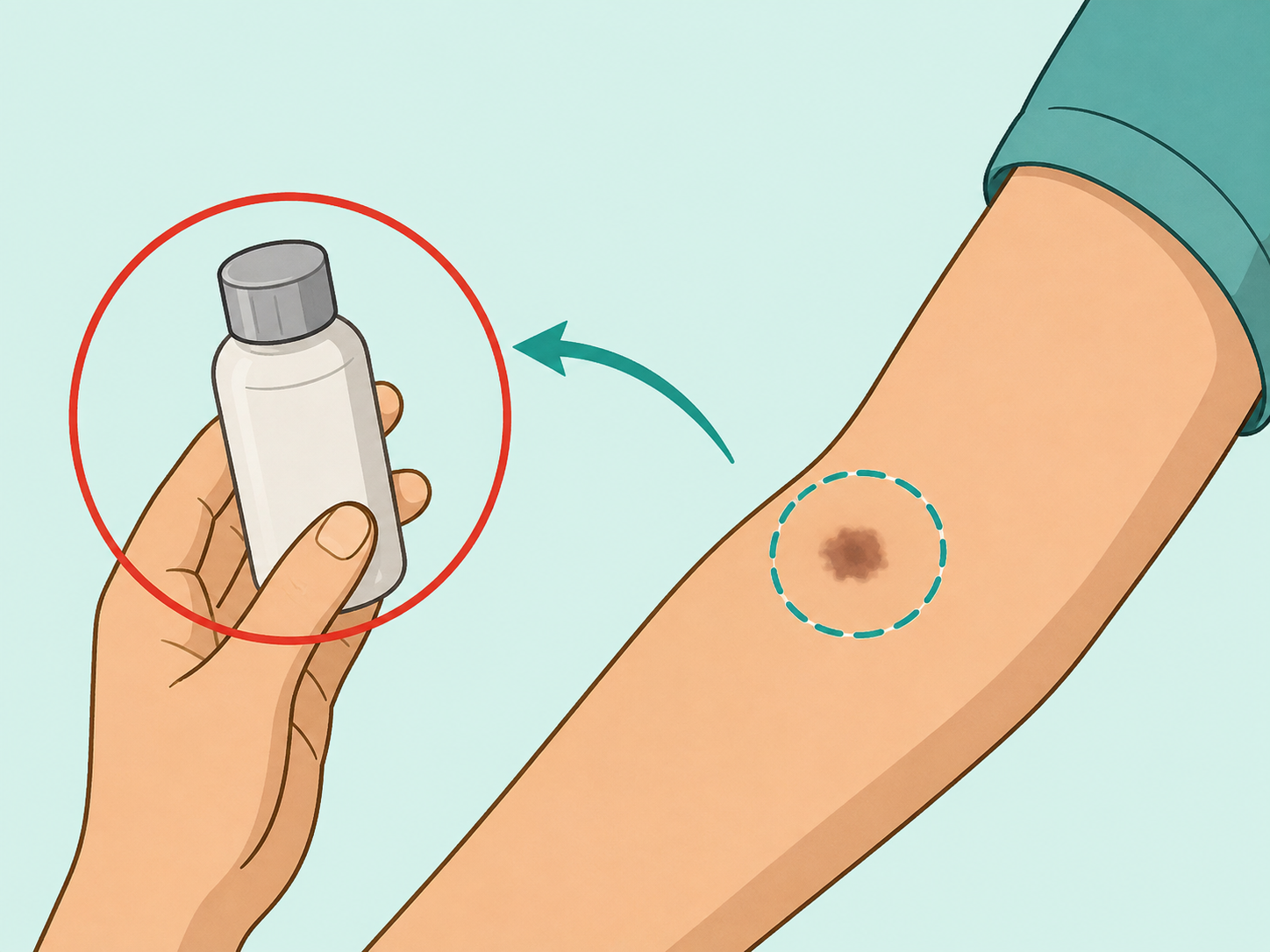
Do not cover it with harsh beauty treatments
Skip peels, brightening acids, wart removers, at-home freezing products, and strong exfoliants on any unexplained spot. Some benign growths, such as seborrheic keratoses, are harmless, but Cleveland Clinic notes that a provider can diagnose them and rule out look-alike problems. Cosmetic treatment should wait until you know what the spot is.
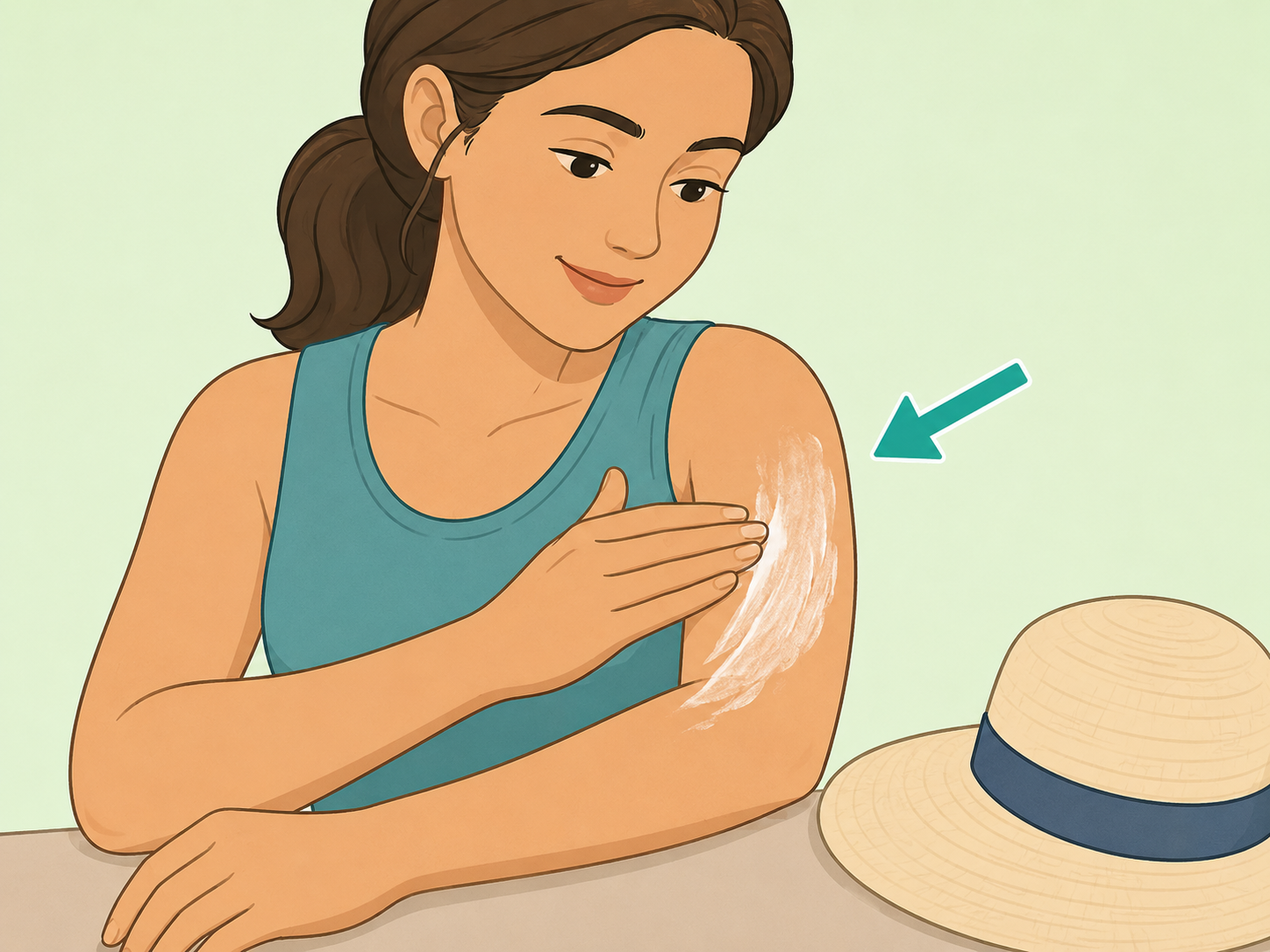
Protect the area from UV exposure
Use shade, protective clothing, and sunscreen on exposed skin while you are monitoring the spot. The AAD recommends choosing broad-spectrum, water-resistant sunscreen with SPF 30 or higher. Sunscreen is not a treatment for a suspicious spot, but it helps reduce UV damage to the surrounding skin.
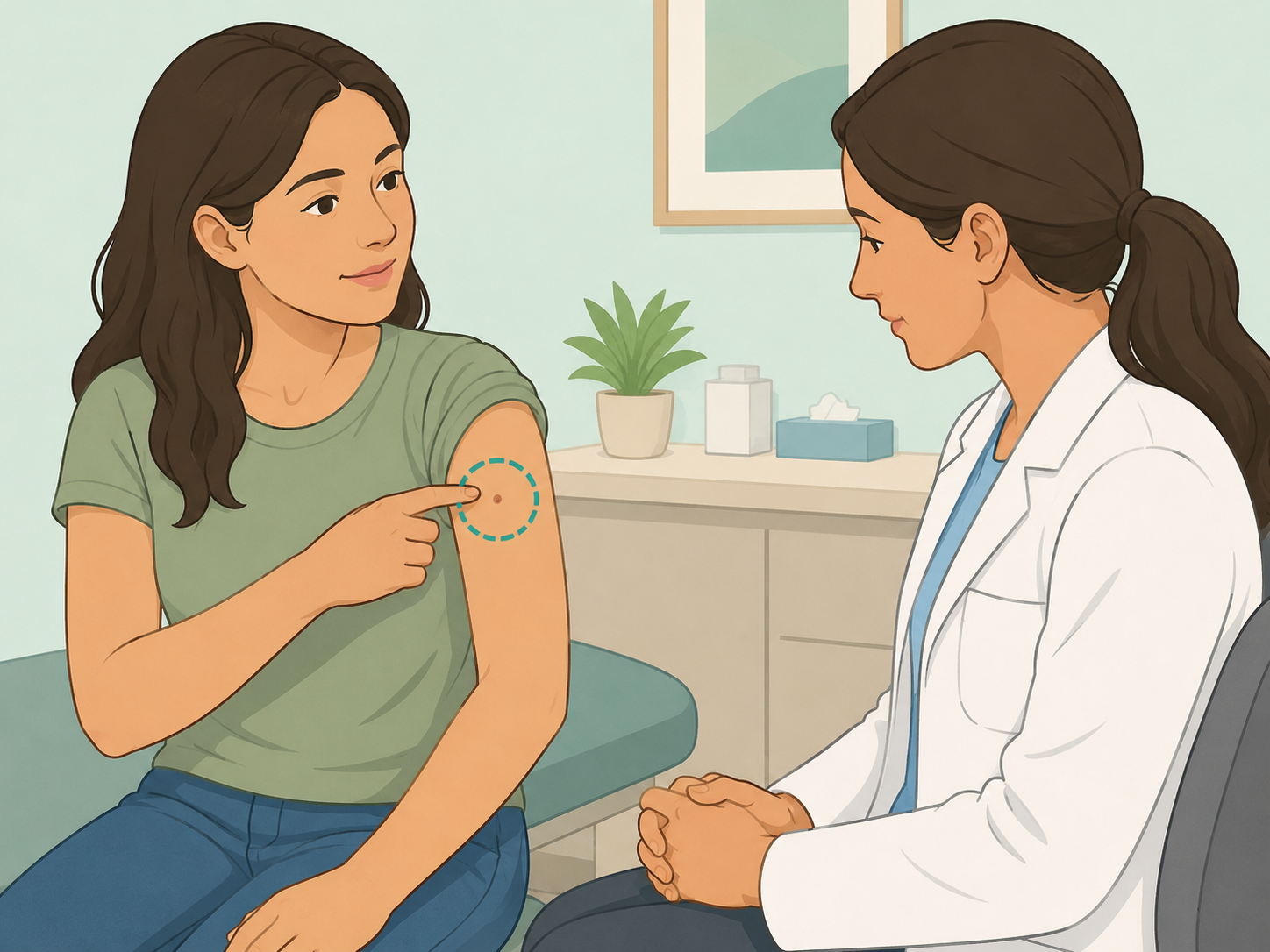
See a doctor for concerning changes
Make an appointment promptly if the spot changes size, shape, or color, becomes painful or itchy, bleeds, crusts, or does not go away after a few weeks. The NHS advises getting changes to a new or existing mole checked by a GP. Seek urgent medical advice sooner if the change is rapid or the spot is bleeding heavily.
Summary
The bottom line: do not try to diagnose or remove an unusual skin spot yourself. Photograph it clearly, check it against trusted warning signs, protect your skin from UV exposure, and make an appointment if it is new, changing, bleeding, painful, itchy, crusty, or not healing.
Frequently Asked Questions
- Can I tell what a skin spot is from a photo?
A photo can help you notice size, color, border, and changes over time, but it cannot confirm what the spot is. A doctor or dermatologist has to examine it to make a diagnosis.
- What does ABCDE mean for moles?
ABCDE stands for asymmetry, border, color, diameter, and evolving. A spot that is uneven, has an irregular edge, has several colors, is larger than about a pencil eraser, or is changing should be checked by a health professional.
- Should I remove a mole or dark spot at home?
No. Do not cut, burn, freeze, peel, or use acids on a mole or unexplained growth at home. Home removal can injure the skin and may delay a proper diagnosis.
- Are all raised brown spots dangerous?
No. Some raised brown growths are benign, such as seborrheic keratoses, but they can resemble other skin conditions. Have a new, changing, irritated, or bleeding growth checked instead of guessing.
- How often should I check my skin?
Follow your health care provider's advice. Many people find it practical to check their skin regularly after a shower, using good light, a full-length mirror, and a hand mirror for hard-to-see areas.
- Does sunscreen matter if I already have a spot?
Yes. Sunscreen will not identify or treat a spot, but broad-spectrum SPF 30 or higher helps protect skin from UV damage when used with shade and protective clothing.
References
Reliable references aided in composing and refining this content.
- https://www.aad.org/public/diseases/skin-cancer/find/at-risk/abcdes?os=..
- https://medlineplus.gov/ency/patientinstructions/000711.htm
- https://www.nhs.uk/conditions/melanoma-skin-cancer/symptoms-of-melanoma-skin-cancer
- https://www.aad.org/public/everyday-care/sun-protection/shade-clothing-sunscreen/choosing-right-sunscreen
- https://my.clevelandclinic.org/health/diseases/21721-seborrheic-keratosis
- https://www.aad.org/public/diseases/skin-cancer