 Pin it
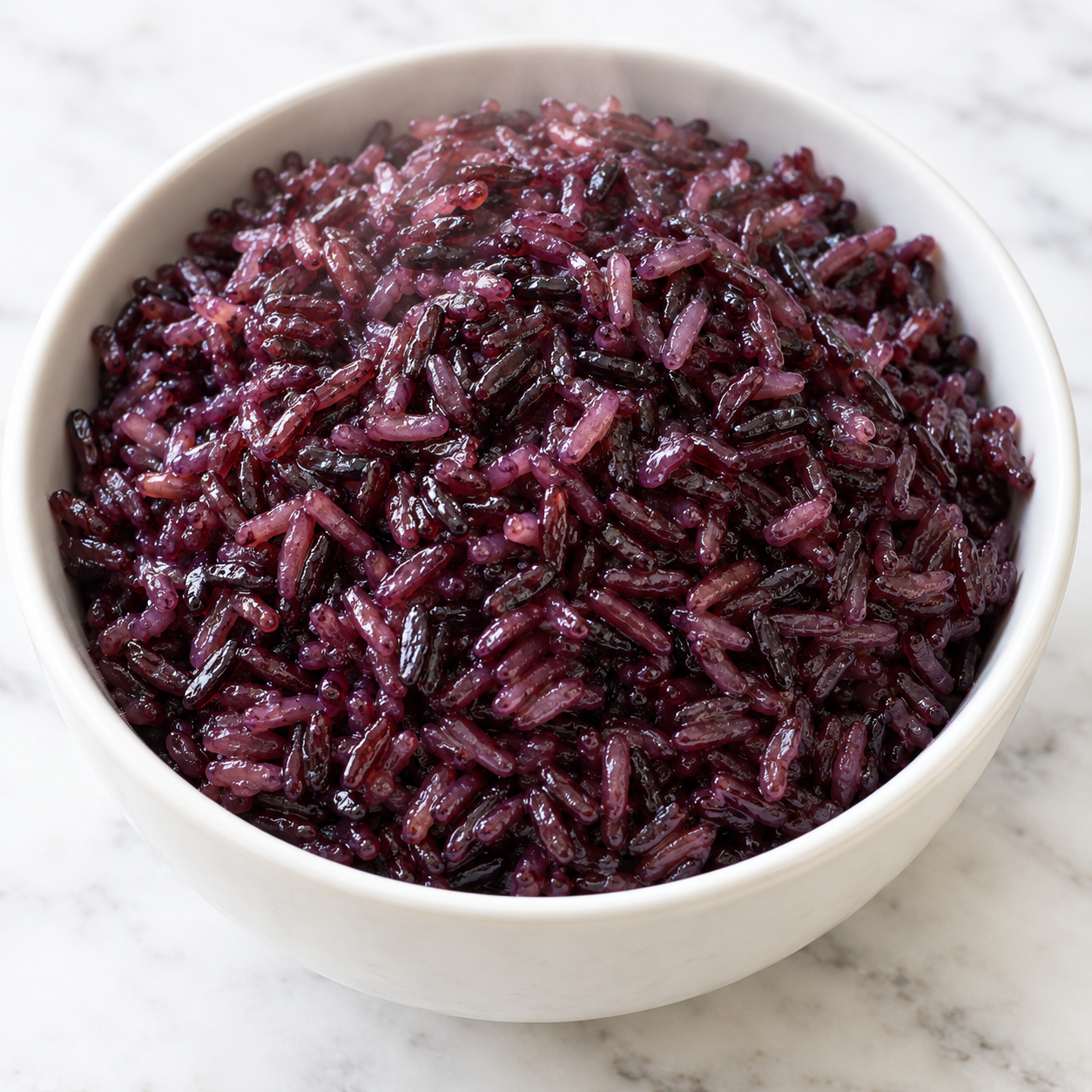
The most amazing health benefits of purple rice start with its deep color. Those almost black grains turn violet as they cook because their bran holds anthocyanins, the same pigment family found in blueberries and purple cabbage.
I like purple rice because it feels hearty without being heavy. It has a nutty smell, a chewy bite, and enough personality to stand beside salmon, tofu, beans, eggs, or roasted vegetables.
The science is promising, but it is not a cure-all food. Think of purple rice as one useful whole grain in a varied plate, not a supplement or a treatment.
Why Purple Rice Stands Out
Purple rice is a whole-grain rice with the bran layer left on. That bran holds fiber, minerals, oils, and the dark pigments that make the rice look so striking. White rice has had that layer removed, which makes it softer and quicker to cook but lower in many naturally occurring compounds.
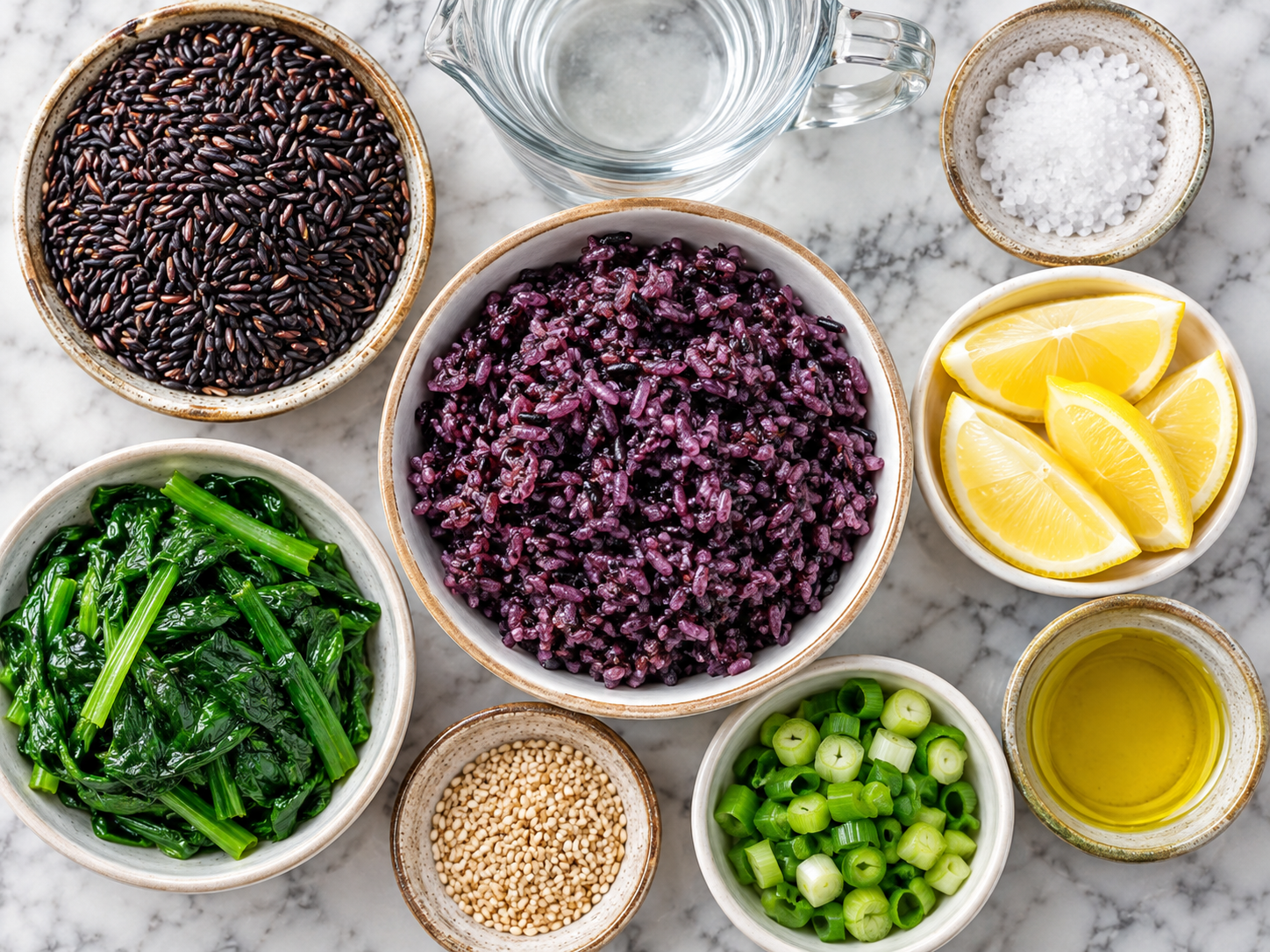
- Anthocyanins. These purple pigments act as antioxidants in the plant and are a main reason researchers study black and purple rice.
- Whole-grain fiber. Fiber helps slow digestion and supports a steadier, more filling meal.
- Bran minerals. Whole rice varieties can provide magnesium, phosphorus, selenium, and manganese.
- Plant phenolics. Pigmented rice contains phenolic acids and flavonoids that white rice has in much smaller amounts.
- Chewy starch. The firm texture helps it hold up in bowls, salads, and meal prep.
How To Use It
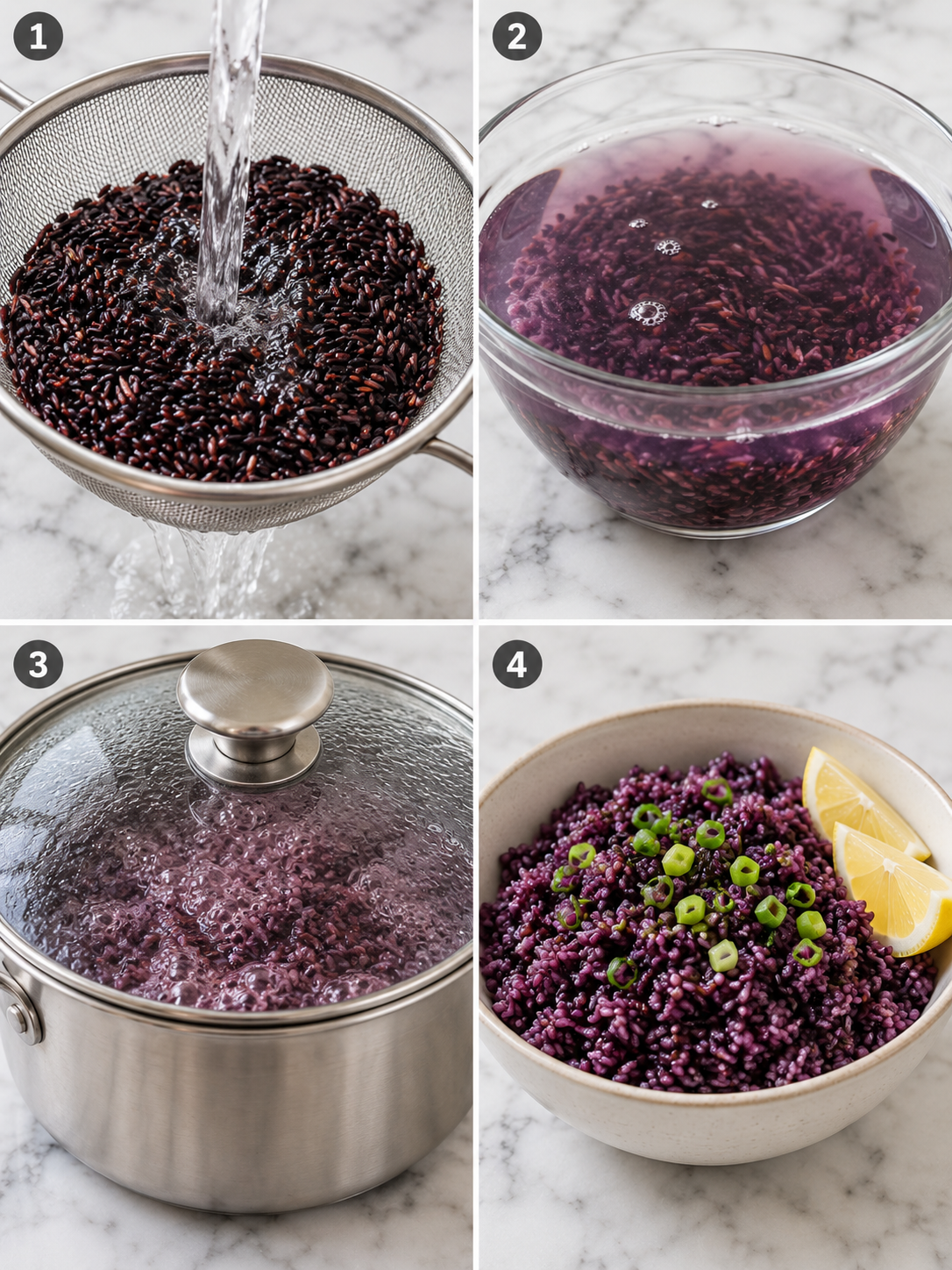
- Rinse the grains. Swirl the rice in cool water until the water looks less cloudy. This cleans the surface starch and keeps the pot from tasting dusty.
- Soak if you can. A 30-minute soak softens the bran and helps the rice cook more evenly.
- Simmer gently. Use about 2 cups water for 1 cup rice. Cook covered on low heat until the grains are chewy and the liquid is absorbed.
- Rest before serving. Keep the lid on for 10 minutes, then fluff with a fork. The grains finish steaming and separate better.
Purple Rice Benefits, Science-Based
The color is the headline, but the whole-grain structure is just as important. A Food Chemistry analysis found that black rice varieties contained anthocyanins, phenolic acids, flavonoids, and higher antioxidant activity than non-pigmented rice varieties. You can read the study summary at PubMed.
That does not mean purple rice works like medicine. It means the grain brings compounds that are missing from refined white rice. If you already enjoy science-backed foods like cacao and dark chocolate or chia seeds, purple rice fits the same practical idea. Eat the whole food, keep portions reasonable, and let the daily pattern do the work.
Heart And Blood Sugar Support
Purple rice is still rice, so it contains carbohydrates. The difference is that whole grains digest more slowly than refined grains because the bran and germ remain. Harvard's Nutrition Source explains that whole-grain rice varieties, including black and purple rice, keep more fiber and phytochemicals than polished white rice. Their rice guide also notes that processing affects blood-sugar response.
For a steadier meal, serve purple rice with protein and fat. Try it with eggs, beans, tofu, chicken, or salmon. Add vegetables for volume. This matters more than treating one scoop of rice as a health shortcut.
Gut-Friendly Fiber
Because purple rice is a whole grain, it gives you more fiber than white rice. Fiber helps food move through the digestive tract and can make meals feel more satisfying. It also pairs well with other high-fiber foods, especially lentils, greens, okra, and beans.
If your stomach is sensitive, start small. Purple rice is chewier and denser than jasmine or long-grain white rice. A half-cup cooked serving is enough the first time. For another gentle fiber-focused food, see this guide to okra's science-based benefits.
Skin And Beauty Angle
Purple rice gets attention in beauty circles because anthocyanins are antioxidants. Oxidative stress is one part of skin aging, so antioxidant-rich foods can support your overall skin-health pattern. The better claim is modest. Purple rice may help your diet look more colorful and nutrient-dense.
It will not smooth wrinkles overnight. It will not replace sunscreen. It will not cancel out poor sleep. Pair it with vitamin C foods like citrus, papaya, or peppers. You may also like this practical guide on papaya for health and beauty benefits.
Cooking Preserves More Color
Anthocyanins are sensitive to heat and water. A study on black rice cooking found that cooking can reduce anthocyanins and total phenolics, though the final food still keeps valuable compounds. The PubMed record is here: black rice cooking methods.
Use a gentle simmer instead of a hard boil. Keep the lid on so the water does not disappear too fast. Do not add baking soda, which can muddy the color. A squeeze of lemon after cooking is fine if you like a brighter taste.
Who Should Be Careful
Purple rice is gluten-free by nature, but cross-contact can happen in bulk bins or factories. Choose certified gluten-free packaging if you have celiac disease. People who need tight blood-sugar control should count it as a carbohydrate and test their own response.
Rice can also contain inorganic arsenic from the environment. The FDA advises variety in grains and notes that cooking rice like pasta, in extra water and draining it, can lower arsenic levels. Read the FDA arsenic guidance if rice is a daily staple in your home. For checking bold food claims online, this guide may help: how to check a health claim.
Summary
Use purple rice where you would use brown rice, grain bowls, salads, stir-fries, or simple sides. Pair it with protein, vegetables, and healthy fats for the best blood-sugar and satiety support.
Frequently Asked Questions
- → Is purple rice the same as black rice?
Most packages use the names purple rice, black rice, and forbidden rice for the same family of pigmented whole-grain rice. The grains often look black when dry and turn deep purple after cooking.
- → Is purple rice healthier than white rice?
Usually, yes. Purple rice keeps its bran layer, so it brings more fiber and plant compounds than polished white rice. It is still a starchy grain, so portion size and the rest of the meal matter.
- → Can purple rice help my skin?
Purple rice contains anthocyanins and other antioxidants that help protect cells from oxidative stress. That can support overall wellness, which matters for skin, but eating purple rice will not replace sunscreen, sleep, hydration, or a steady skin-care routine.
- → How much purple rice should I eat?
A practical serving is about 1/2 to 3/4 cup cooked rice. Build the rest of the plate with vegetables and protein so the meal feels satisfying and does not lean too heavily on starch.
- → Does purple rice contain arsenic?
Rice can absorb inorganic arsenic from soil and water, including whole-grain types. The FDA advises eating a varied diet, and cooking rice in extra water then draining it can reduce arsenic exposure, though some nutrients may be lost too.
- → How do I cook purple rice so it is tender?
Rinse it well, then simmer 1 cup rice with about 2 cups water for 30-40 minutes. Let it rest covered for 10 minutes. Soaking for 30 minutes first gives a softer bite and shortens the cooking time.