
 Pin it
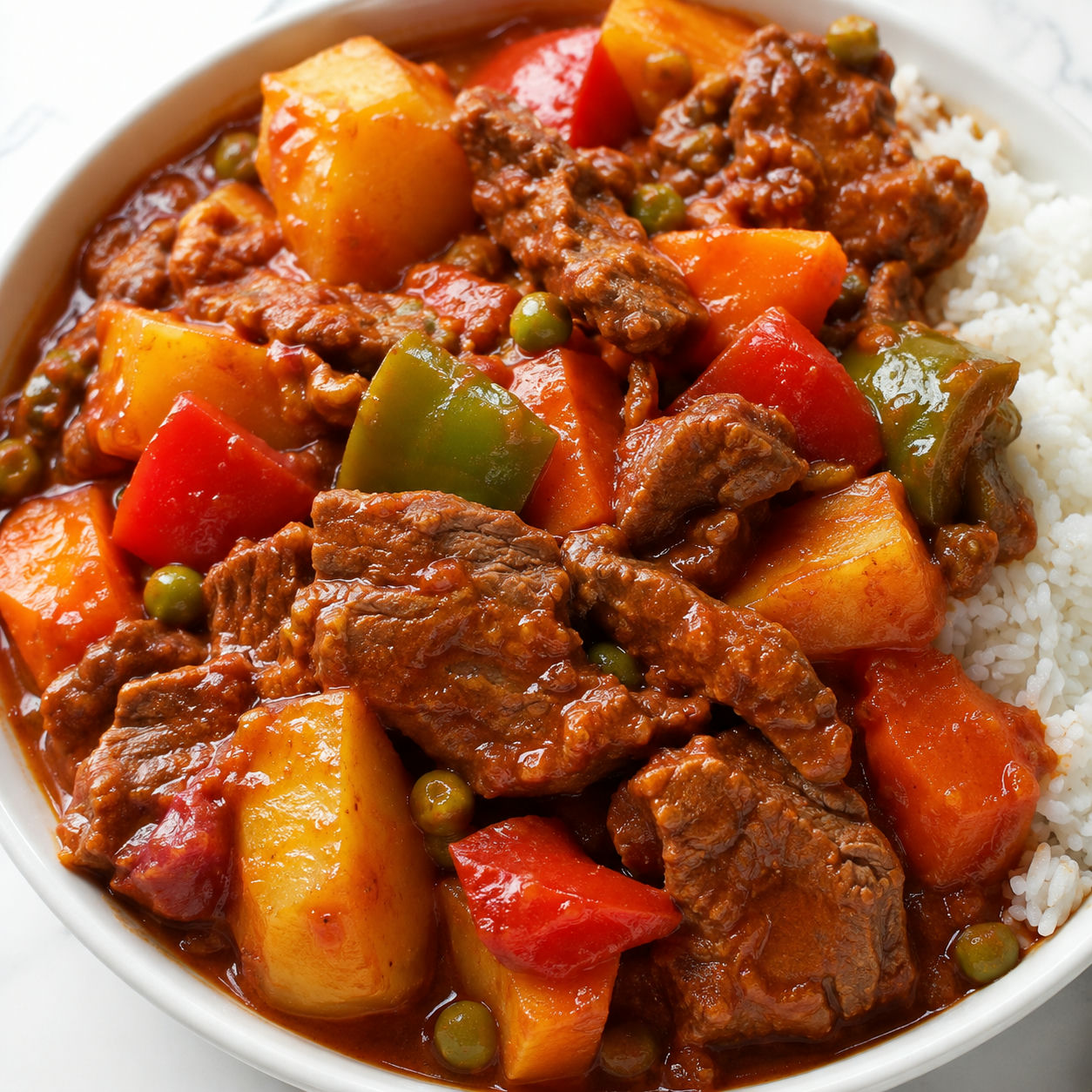
Filipino Beef Afritada is the kind of dinner that makes a pot of rice feel necessary. The sauce is tomato-rich, lightly savory from soy and oyster sauce, and just sweet enough to round out the acidity.
Traditional beef afritada often simmers tougher cuts until tender. This version keeps the same comfort but uses very thin beef so you can get it on the table faster. The potatoes and carrots still soften in the sauce, and the bell peppers go in near the end so they keep their color.
What Builds The Sauce
This dish is all about balance. Use a tomato sauce that tastes bright, not metallic, and slice the beef thin so it cooks quickly without turning chewy.
The vegetables matter too. Potatoes make the sauce heartier, carrots add sweetness, and bell peppers bring that familiar afritada aroma.
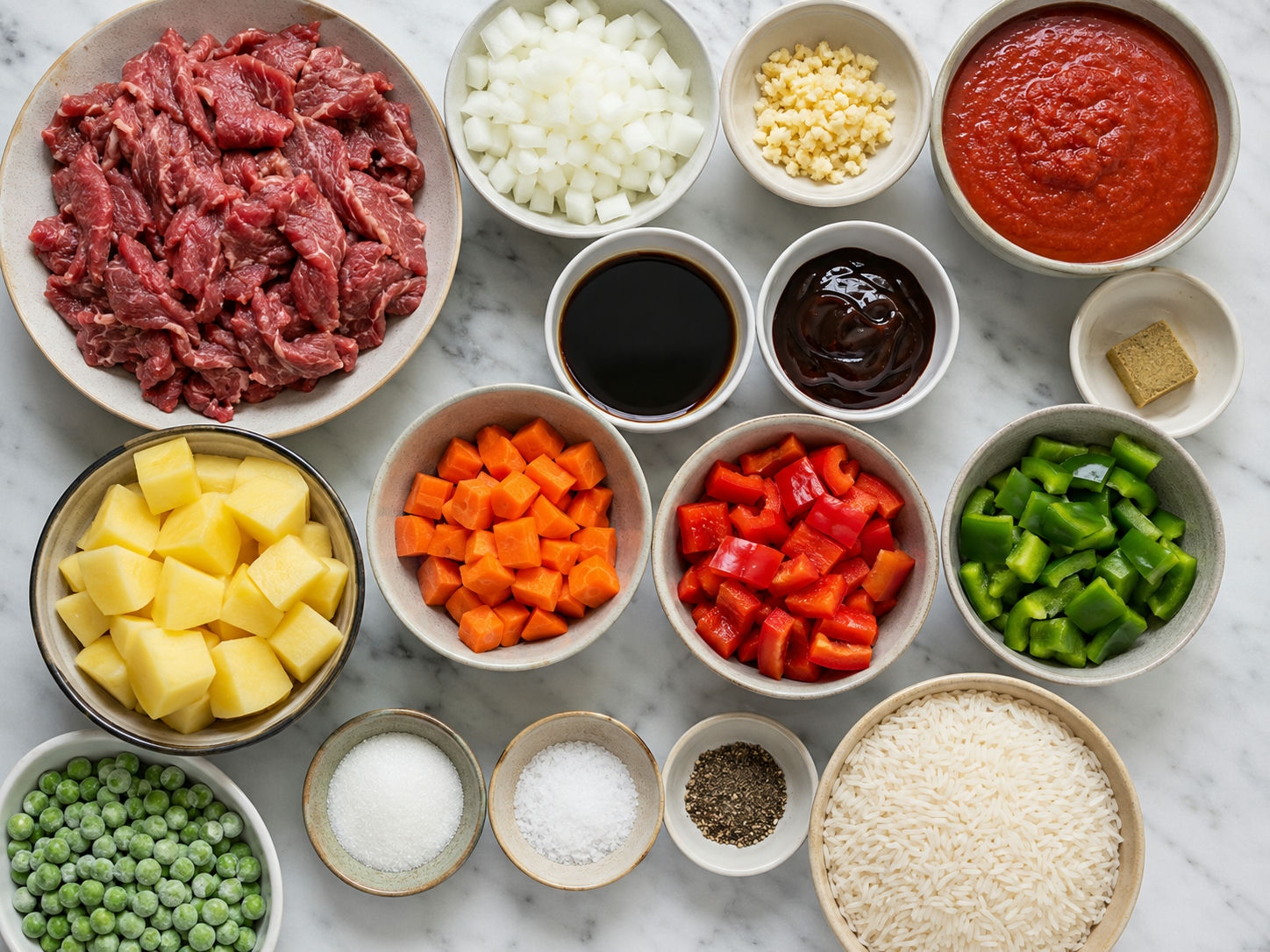
- Thin-sliced beef. Carne asada-style beef, shaved beef, or very thin sirloin cooks fast and stays tender when simmered briefly.
- Onion and garlic. These start the savory base and soften the sharp edge of the tomato sauce.
- Tomato sauce. It gives afritada its red color and smooth body.
- Soy sauce. Adds salt and deeper flavor without making the stew taste heavy.
- Oyster sauce. Rounds out the tomato with a little sweetness and savoriness.
- Beef bouillon and water. A quick way to build a broth when you are not doing a long braise.
- Potatoes and carrots. They make the stew filling and soak up the sauce.
- Red and green bell peppers. Added late so they stay bright and gently crisp.
- Frozen peas. A sweet, easy finish that only needs a few minutes.
Quick Filipino Beef Afritada Steps
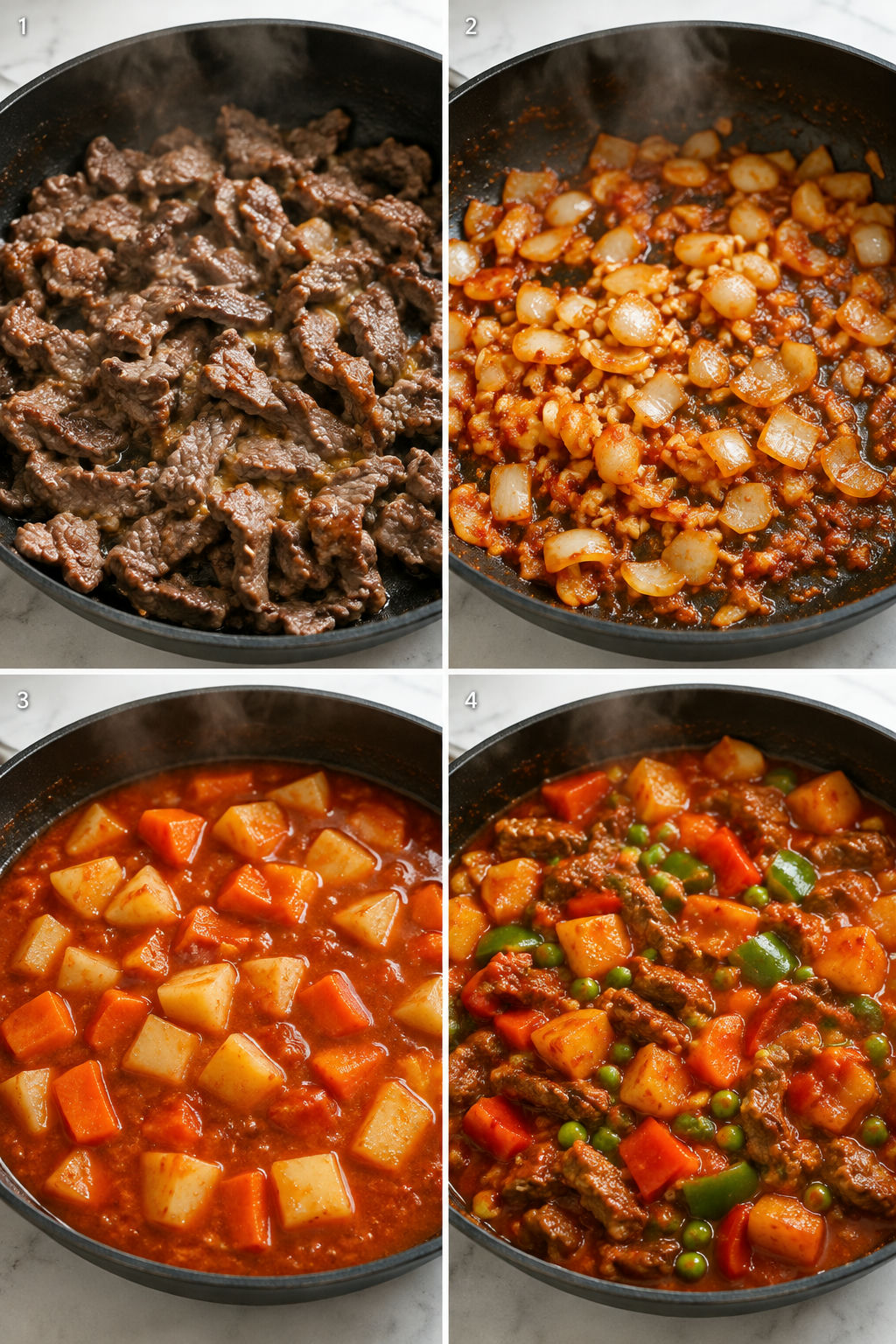
- Brown the beef. Heat oil in a deep skillet and cook the thin beef in batches just until it loses its raw color and picks up a little browning. Move it to a plate so it does not overcook.
- Soften the aromatics. Add onion to the same pan and cook until glossy, then stir in garlic for about 30 seconds. Keep it moving so the garlic smells sweet, not burnt.
- Build the tomato base. Stir in tomato sauce, water, bouillon, soy sauce, oyster sauce, sugar, and black pepper. Scrape the pan so the browned bits melt into the sauce.
- Simmer the vegetables. Add potatoes and carrots, cover, and cook gently until almost tender, about 12-15 minutes. Stir once or twice so the sauce does not catch.
- Finish the stew. Return the beef with bell peppers and peas. Simmer uncovered for 3-5 minutes until the sauce thickens slightly and the beef is hot.
- Taste and serve. Adjust salt and pepper, then spoon the afritada over hot rice while the sauce is glossy.
Why Thin Beef Works
Classic beef afritada is often made with chuck, brisket, or shank. Those cuts have more connective tissue and become tender with a slow simmer. The USDA notes that less tender cuts like chuck and round do best with moist heat methods like braising in its beef cooking guidance.
This quicker version takes another route. Very thin beef does not need hours. It needs a fast browning step and a short finish in the sauce. If you let shaved beef simmer for too long, it tightens and loses its soft bite. Keep the pieces moving when you brown them, then let the potatoes and carrots do most of the simmering before the beef returns.
If beef dinners are your weeknight fallback, you may also like quick easy beef broccoli noodles for a faster stir-fry night.
Getting The Sauce Right
Afritada sauce should be rich enough to coat the rice but loose enough to spoon. If it looks watery after the vegetables soften, simmer uncovered for a few minutes. If it tightens too much, add water a few tablespoons at a time.
The sugar is not there to make the stew sweet. It softens the acidity of tomato sauce. Start with one teaspoon, then taste near the end. Soy sauce and oyster sauce bring salt, so wait before adding extra. A small pinch at the end is often enough.
For a more old-school flavor, swap the oyster sauce for fish sauce. Recipes like Kawaling Pinoy's beef afritada lean on tomato and savory seasoning in a longer-simmered version. This one stays quicker, but the same balance applies.
Vegetables That Stay Bright
Potatoes and carrots need time. Bell peppers and peas do not. That timing is the difference between a stew that looks fresh and one where everything turns the same soft red.
Cut the potatoes and carrots small enough for a weeknight pan, about 3/4 inch. They should be tender when pierced but not crumbling. Add the bell peppers only at the end, then let them simmer just until their edges soften. Frozen peas can go in straight from the freezer.
Need a bright side with all that tomato sauce? quick refrigerator-pickled red onions are sharp, cold, and good spooned beside the rice.
Make It Your Own
Afritada is flexible at home. Add a bay leaf if you like a deeper stew aroma. Use beef broth instead of bouillon and water if you have it open. For a saucier pot, increase the water by 1/2 cup and simmer uncovered at the end until it tastes right.
You can also change the vegetables without losing the spirit of the dish. Sweet potato adds a gentle sweetness. Green beans work when peas are not around. If you want heat, add a sliced chili with the onion or a little chili garlic sauce near the end.
For another easy beef dinner with vegetables, easy beef cabbage stir-fry keeps things lighter. If you want rice on the side, fluffy yellow rice makes the plate feel extra cozy.
Storing And Reheating
Cool leftovers quickly and move them to shallow containers. The USDA recommends using refrigerated leftovers within 3-4 days and reheating them to 165 F in its leftovers food safety guide.
Afritada reheats best on the stove over medium-low heat. Add a splash of water, cover the pan for a minute, then stir until the sauce loosens. The potatoes will absorb sauce as they sit, which is not a problem. It often tastes even fuller the next day.
Summary
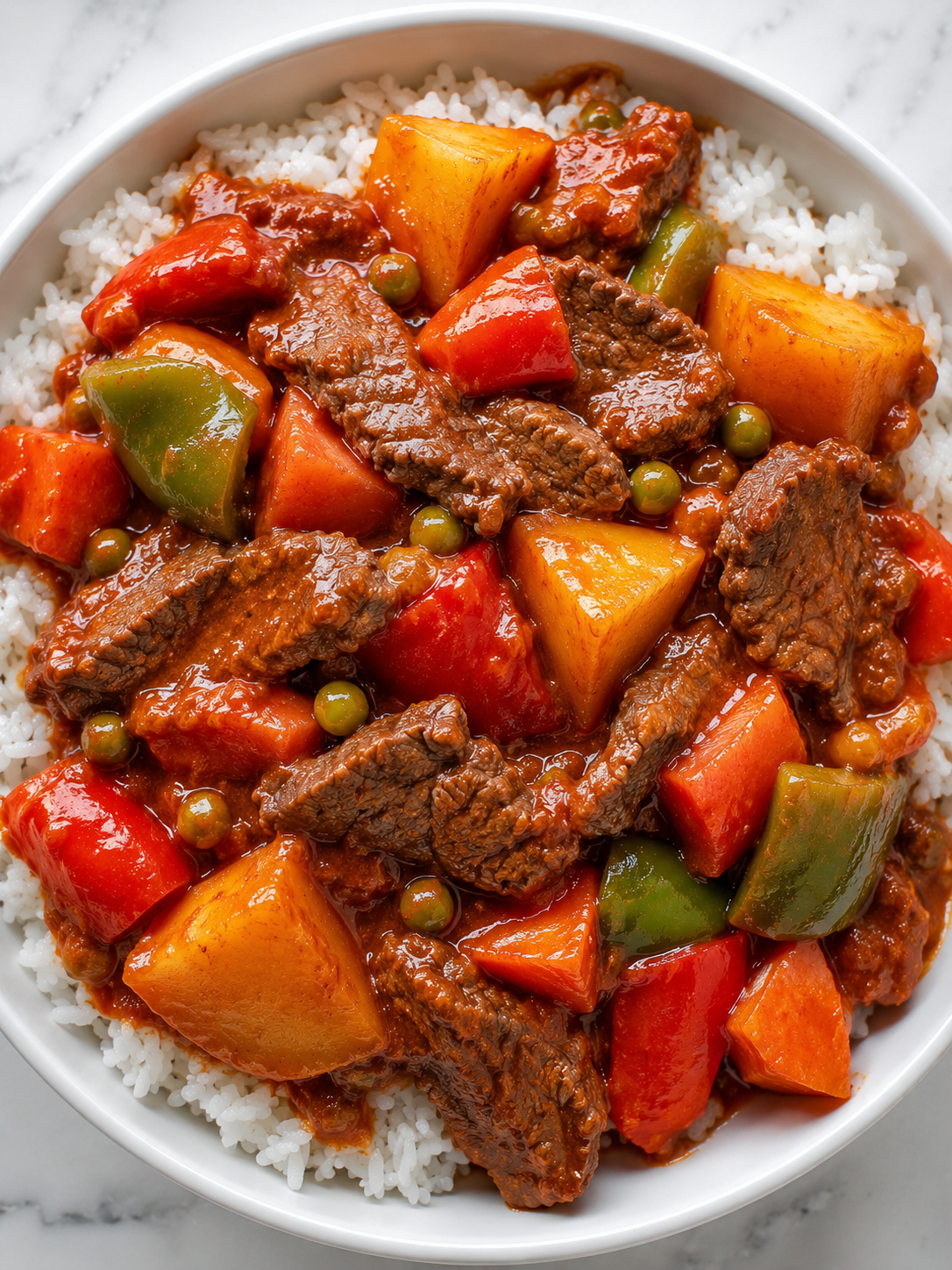
Serve this saucy beef afritada hot with steamed rice and a spoon for every bit of tomato gravy.
Frequently Asked Questions
- What is Filipino Beef Afritada?
-
Filipino Beef Afritada, also called afritadang baka, is a tomato-based beef stew with potatoes, carrots, and bell peppers. It is usually served with steamed rice because the sauce is the main event.
- Can I use beef chuck instead of thin-sliced beef?
-
Yes, but the cook time changes. Chuck needs a longer covered simmer, usually 1 1/2 to 2 hours, before the vegetables go in. Add extra water or broth as needed so the sauce does not dry out.
- Can I make beef afritada without oyster sauce?
-
Yes. Use fish sauce for a more traditional salty depth, or add an extra tablespoon of soy sauce plus a small pinch of sugar. The sauce will still taste good, just a little less rounded.
- How do I keep the potatoes from falling apart?
-
Cut them into even 3/4-inch pieces and simmer gently. A hard boil breaks the edges before the centers are tender. If your stove runs hot, keep the lid slightly ajar and lower the heat.
- How long do leftovers keep?
-
Store leftovers in a shallow airtight container in the fridge for 3-4 days. Reheat until hot throughout, adding a splash of water if the sauce thickened too much.
- Is Filipino Beef Afritada gluten-free?
-
Not as written because many soy sauce and oyster sauce brands contain wheat. To make it gluten-free, use certified gluten-free tamari and a gluten-free oyster sauce or mushroom sauce.
- What should I serve with beef afritada?
-
Steamed jasmine rice is the classic choice. Garlic fried rice, simple cucumber slices, or quick pickled onions also work well because they balance the tomato sauce.
References
Reliable references aided in composing and refining this content.
- https://www.kawalingpinoy.com/beef-afritada
- https://www.panlasangpinoymeatrecipes.com/beef-afritada.htm
- https://www.fsis.usda.gov/food-safety/safe-food-handling-and-preparation/food-safety-basics/leftovers-and-food-safety
- https://www.fsis.usda.gov/food-safety/safe-food-handling-and-preparation/meat-catfish/beef-farm-table
