
 Pin it
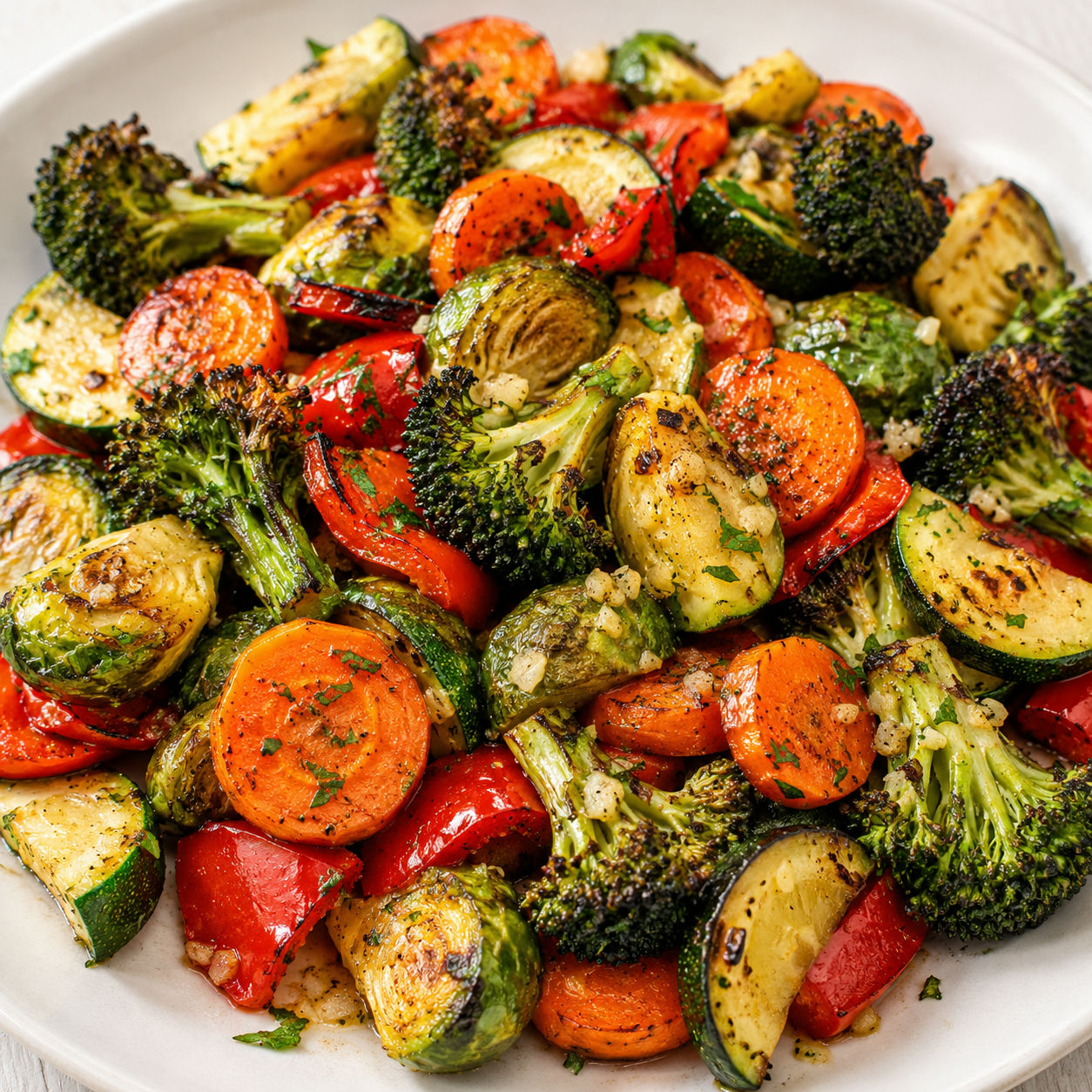
Garlic Herb Roasted Vegetables are the side dish I make when the main course needs color and the fridge has a little bit of everything. The tray comes out with crisp broccoli tips, sweet carrots, browned Brussels sprouts, and soft zucchini that soaks up the garlicky oil.
The method is simple, but the details matter. Give the vegetables space, season them in a bowl, and add lemon at the end so the edges stay roasty instead of wet.
The Garlic Herb Lineup
Choose vegetables that roast in roughly the same time once cut. Broccoli and Brussels sprouts bring crisp edges, carrots add sweetness, and zucchini keeps the tray juicy.
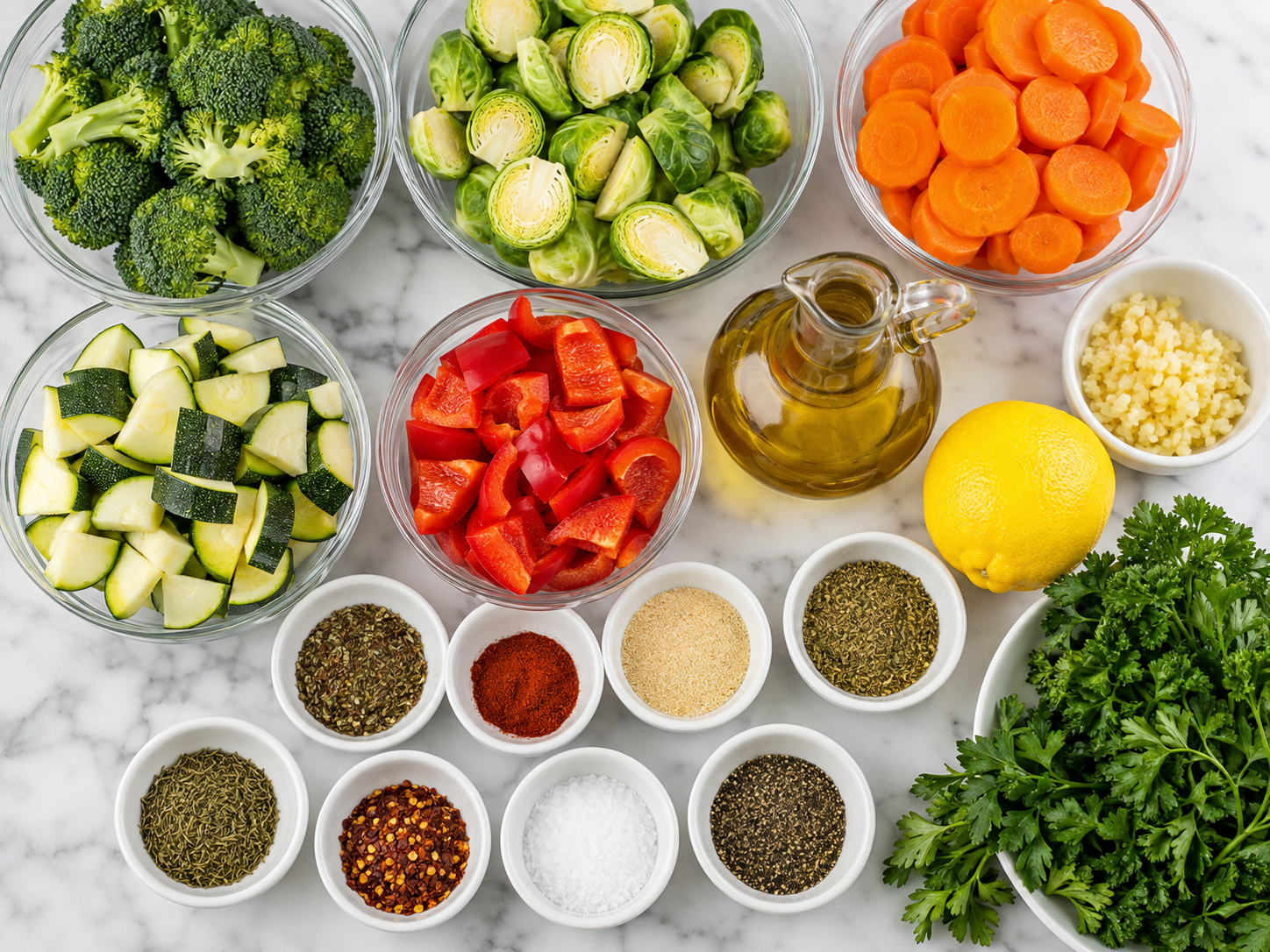
- Broccoli florets. The tips brown fast and bring the best crisp bits on the pan.
- Brussels sprouts. Halved sprouts turn nutty and golden where they touch the hot tray.
- Carrots. Thin slices sweeten as they roast and balance the sharper garlic.
- Zucchini. Larger chunks stay tender without disappearing into the pan.
- Red bell pepper. It softens into sweet, bright pieces that make the tray colorful.
- Olive oil. It coats the vegetables so the herbs bloom and the edges brown.
- Garlic. Fresh minced garlic gives the vegetables their savory bite.
- Italian seasoning and paprika. The herbs add depth while paprika gives warmth and color.
- Lemon juice. A final splash lifts the whole pan after roasting.
Roast Them For Real Color
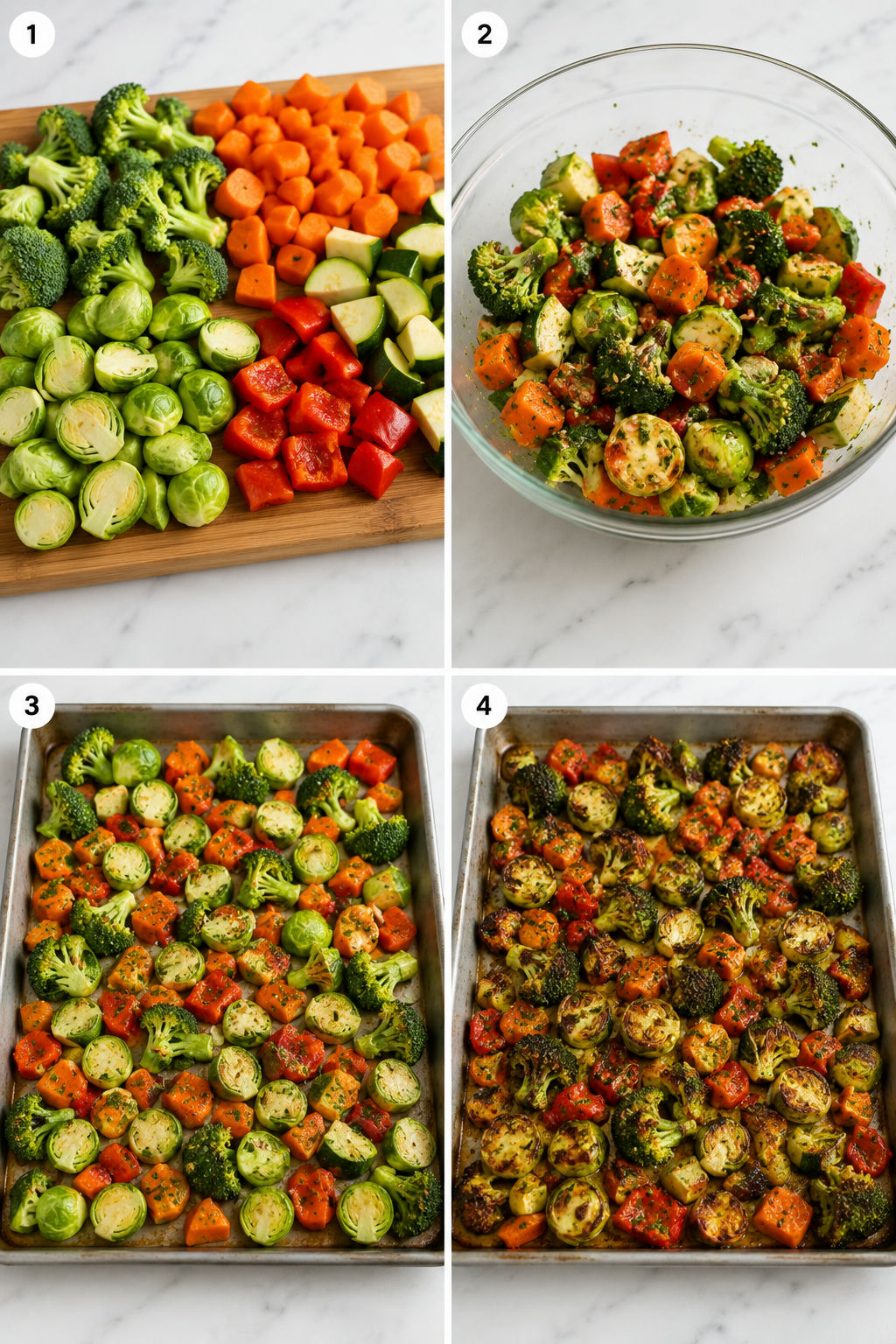
- Heat the oven. Set the oven to 425°F and place a rack in the center. Lightly oil a large rimmed sheet pan or use two pans for more space.
- Prep the vegetables. Wash and dry everything well. Cut broccoli into florets, halve the sprouts, slice carrots thinly, and keep zucchini in chunky half-moons.
- Season in a bowl. Toss the vegetables with olive oil, garlic, Italian seasoning, paprika, onion powder, oregano, thyme, salt, pepper, and chili flakes if using.
- Spread in one layer. Tip everything onto the pan and turn the Brussels sprouts cut side down where you can. Leave small gaps between pieces.
- Roast and flip. Roast for 12 minutes, flip with a spatula, then roast 10-13 minutes more until the edges are browned and the carrots are tender.
- Finish bright. Squeeze lemon over the hot vegetables and scatter parsley on top. Taste before adding extra salt.
Why Garlic Herb Roasted Vegetables Work
The oven does most of the work, but the pan setup decides the texture. A roomy sheet pan lets moisture escape so broccoli tips crisp and carrots caramelize. The Cookie and Kate roasted vegetables guide uses the same high-heat idea, and the University of Maryland Extension recipe also points home cooks toward a 425°F oven for roasted vegetables.
I like tossing the seasoning in a bowl instead of sprinkling it on the pan. Garlic hides in corners if you scatter it over the top. A bowl gives every piece a thin, even coat of oil and herbs.
Cut Sizes That Match
Even cooking starts on the cutting board. Brussels sprouts should be halved unless they are tiny. Carrots need thinner slices because they are dense. Zucchini should be bigger than you think because it loses water quickly. Bell pepper can handle one-inch chunks.
If you want to stretch the tray into dinner, serve it beside one-pan lemon herb chicken and vegetables. For seafood nights, the same lemony finish works nicely with garlic butter baked salmon.
Small Swaps That Taste Right
Cauliflower can stand in for broccoli. Red onion can replace some of the Brussels sprouts. Mushrooms are good too, but give them space because they release a lot of water. If you add sweet potato, cut it into small half-inch cubes so it does not lag behind.
For a sharper finish, swap lemon for a teaspoon or two of balsamic vinegar. For a richer tray, add a little grated Parmesan after roasting, but keep it off if you want the recipe dairy-free and vegan.
Buying Better Vegetables
This recipe is forgiving, but fresher vegetables roast better. Look for tight Brussels sprouts, firm zucchini, heavy carrots, and broccoli with compact green crowns. If you shop by weight, trimming large stems before bagging can help reduce waste. The site has a practical guide on paying less for weighed fruits and vegetables if you want to shop smarter.
Storage And Reheating
Cool leftovers and refrigerate them in a shallow airtight container. The USDA says cooked leftovers should be refrigerated within 2 hours and kept in the fridge for 3-4 days, as outlined in its leftovers food safety guidance.
For reheating, use a 400°F oven for 8-10 minutes or a skillet over medium heat. The microwave works in a hurry, but the vegetables will be softer.
Summary
Serve these vegetables hot from the oven, tuck leftovers into bowls, or reheat them for an easy side later in the week.
Frequently Asked Questions
- What temperature is best for Garlic Herb Roasted Vegetables?
-
Roast them at 425°F. That heat is high enough to brown the edges before tender vegetables like zucchini collapse, but not so harsh that the garlic burns right away.
- Can I use different vegetables?
-
Yes. Cauliflower, red onion, asparagus, mushrooms, sweet potato, and yellow squash all work. Keep dense vegetables smaller and tender vegetables slightly larger so they finish at the same time.
- How do I keep roasted vegetables from getting soggy?
-
Dry the vegetables after washing and spread them in one layer. If the pan looks crowded, split the batch over two sheet pans because piled vegetables steam.
- Can I make these vegetables ahead?
-
You can chop the vegetables and mix the seasoning earlier in the day. For the best texture, roast them close to serving time and add lemon after they come out of the oven.
- How long do leftovers keep?
-
Store leftovers in an airtight container in the refrigerator for 3-4 days. Reheat them in a hot oven or skillet so the edges wake up again.
- What should I serve with garlic herb vegetables?
-
They are easy with chicken, salmon, steak, rice bowls, eggs, or pasta. For a full sheet-pan meal, pair them with lemon herb chicken or serve them beside baked salmon.
