
 Pin it
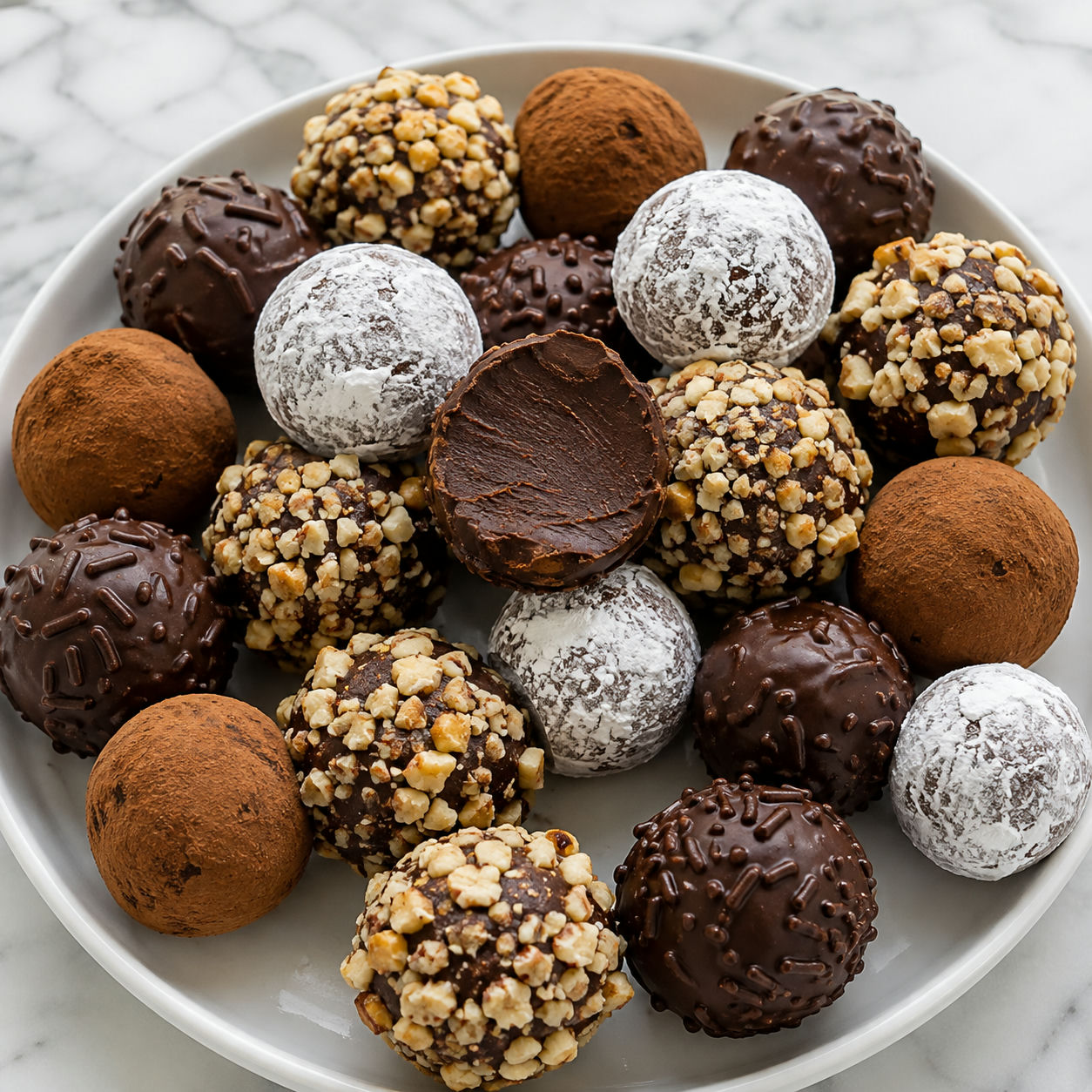
Rich, smooth, and melt-in-your-mouth is exactly what a good chocolate truffle should be. The center should feel creamy as soon as it hits your tongue, with just enough firmness to hold its shape on a plate.
This version stays close to the classic ganache method. Warm cream melts finely chopped chocolate, a small spoonful of butter adds silkiness, and vanilla rounds off the bitter edge.
The hands-on work is short. Most of the time is chilling, which makes these a calm dessert to make ahead for holidays, gifts, or a small after-dinner treat.
The Ganache Lineup
Use the best chocolate you are willing to eat on its own. Since this recipe has only a few ingredients, waxy chocolate or weak vanilla has nowhere to hide.
Bars chop more cleanly than chips and melt into a smoother center. Heavy cream should be hot enough to steam and bubble at the edges, not boiling hard.
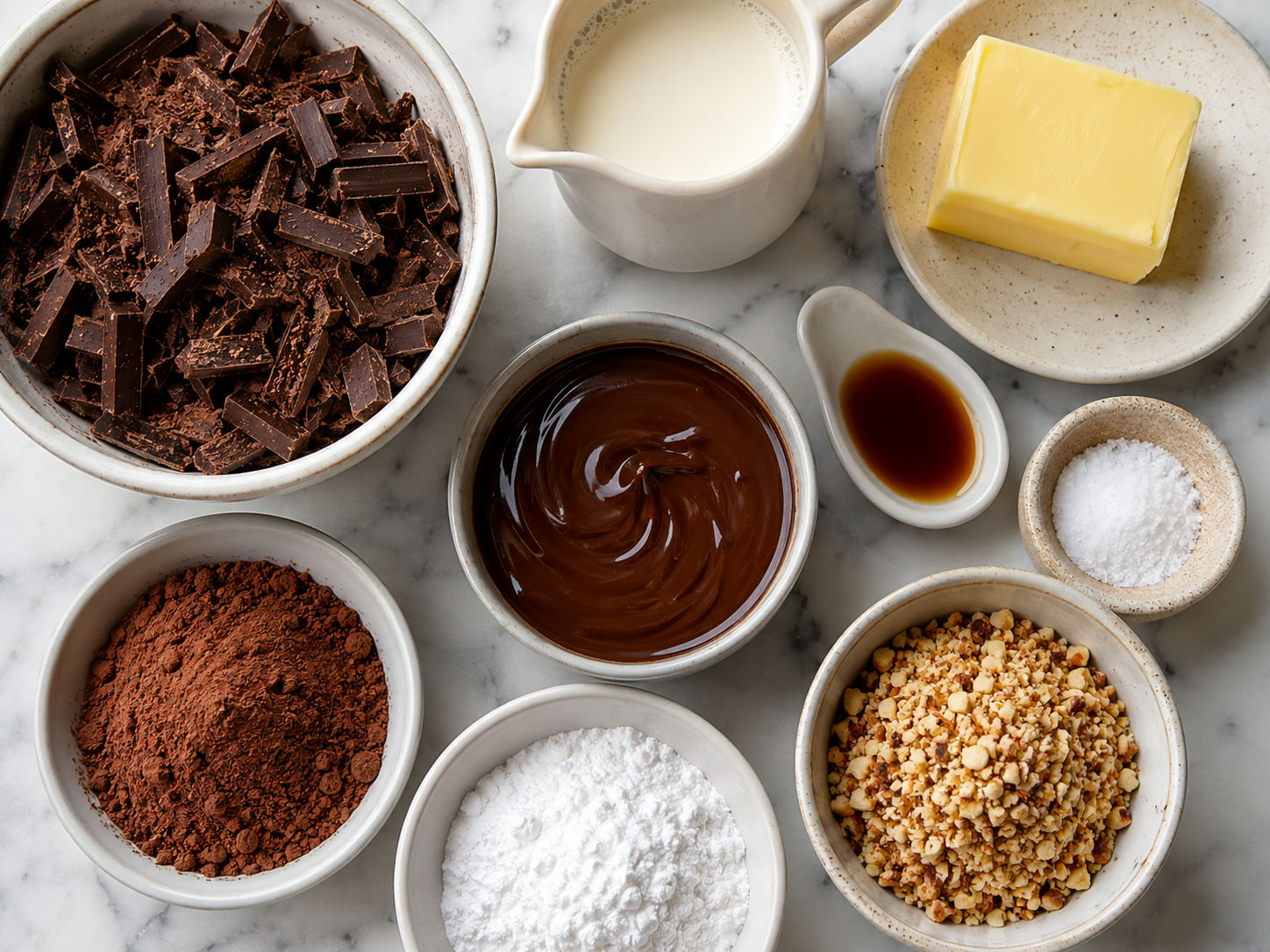
- Semi-sweet or dark chocolate. The base of the ganache and the main flavor. Choose bars around 55-70 percent cacao for a deep but balanced truffle.
- Heavy cream. Melts the chocolate and gives the center its soft, creamy body.
- Unsalted butter. Adds a polished texture and a slightly softer bite.
- Vanilla extract. Rounds out the chocolate and makes the flavor taste fuller.
- Fine salt. A small pinch sharpens the chocolate without making the truffles taste salty.
- Cocoa powder. Gives the truffles their classic bittersweet coating.
- Powdered sugar. Makes a sweeter coating with a snowy finish.
- Finely chopped nuts. Add crunch and a toasted flavor around the soft center.
- Melted chocolate. Creates a thin shell if you want a neater candy-box finish.
Shape the Silky Centers
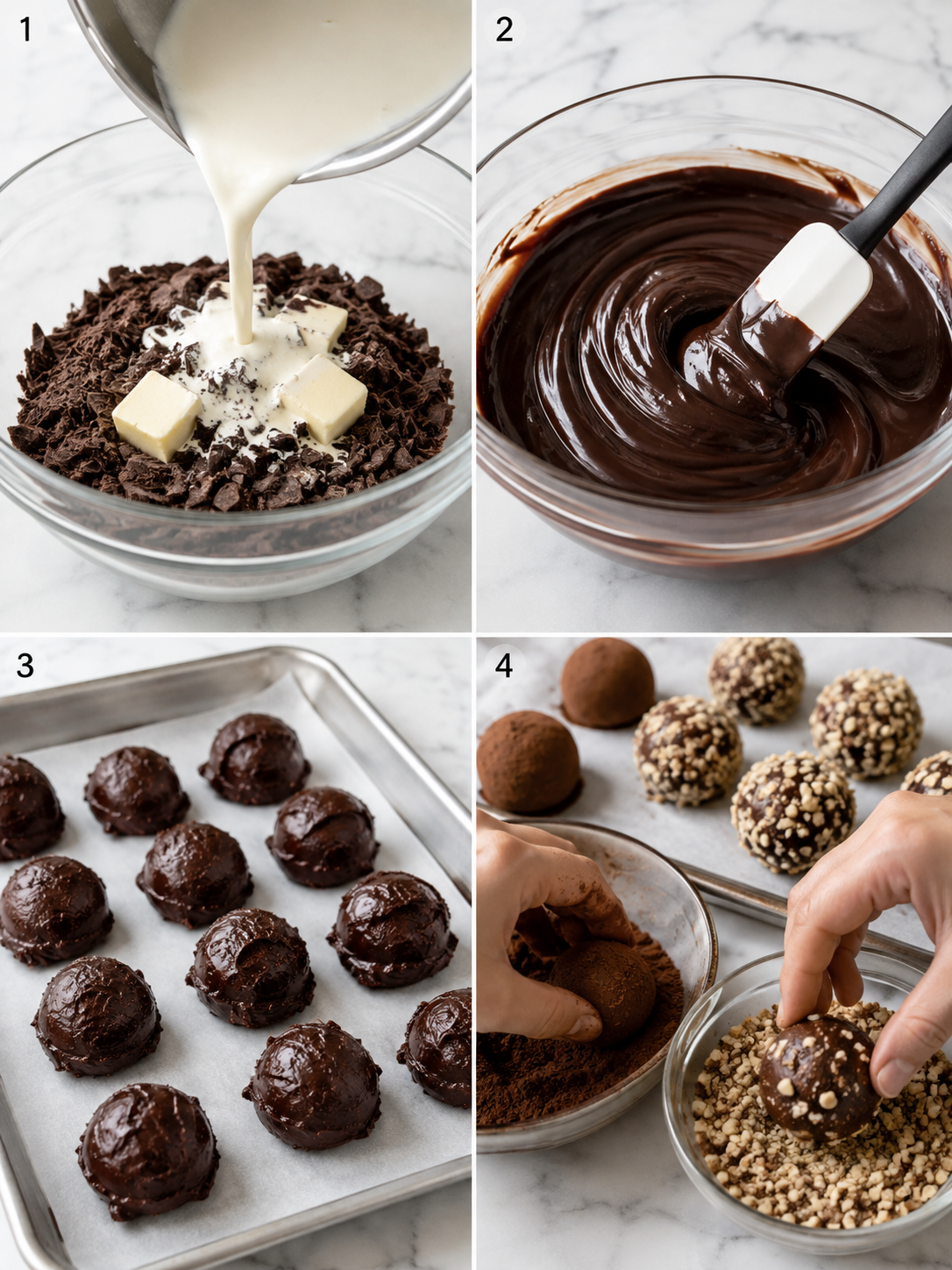
- Chop the chocolate. Cut it into small, even pieces so the cream can melt it quickly and evenly.
- Warm the cream. Heat the cream until it steams and small bubbles appear at the edge, then take it off the heat before it boils hard.
- Make the ganache. Pour the hot cream over the chocolate and butter. Let it sit for 3 minutes, then add vanilla and salt and stir slowly until glossy.
- Chill until scoopable. Press plastic wrap or parchment onto the surface and refrigerate for 1-2 hours, until the ganache feels like firm nut butter.
- Scoop the mounds. Use a small cookie scoop or two teaspoons to portion the ganache onto a parchment-lined pan.
- Roll and coat. Chill the mounds for 15 minutes if sticky, then roll quickly between cool hands and coat with cocoa, powdered sugar, nuts, or melted chocolate.
Rich, Smooth, and Melt-in-Your-Mouth Centers
The smooth center comes from a stable ganache, which is just chocolate and cream blended into one glossy mixture. King Arthur Baking describes truffle centers as ganache, and its classic chocolate truffles recipe uses the same basic idea of warm cream, chopped chocolate, and chilling until firm.
Do not rush the first stir. Let the hot cream sit on the chocolate so the pieces soften all the way through. Then stir from the middle in small circles. It may look streaky at first. Keep going gently and it will tighten into a shiny bowl of chocolate. If you still see lumps, set the bowl over barely simmering water for a minute and stir until smooth.
Rolling Without Sticky Hands
Truffle ganache melts from the warmth of your hands, so the easiest rolling trick is a short second chill. Scoop the ganache into rough mounds first, chill those mounds for 15-20 minutes, then roll them. This gives the surface time to firm up without making the center rock hard.
Cold hands help. Rinse your hands under cool water, dry them well, and roll only a few truffles at a time. Food-safe gloves also make the job cleaner. If the ganache starts smearing, stop and return the pan to the refrigerator. A small pause fixes more problems than extra cocoa powder. For another soft-centered sweet, the creamy filling in Soft, Rich, and Stuffed with Creamy Goodness has the same cozy dessert-table feel.
Coatings That Fit the Mood
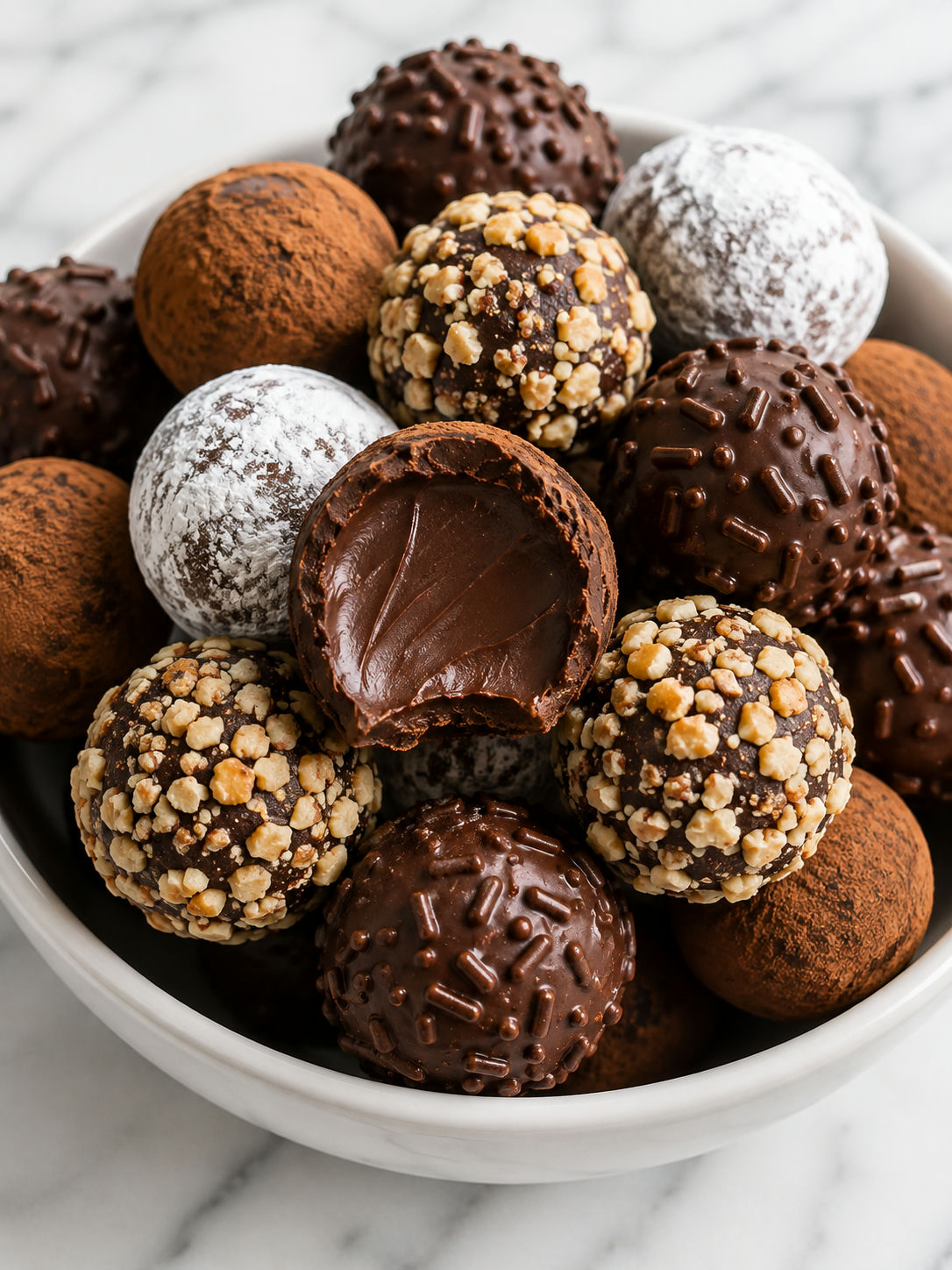
Cocoa powder gives the grown-up, bittersweet finish people expect from classic truffles. Powdered sugar makes them softer and sweeter. Finely chopped toasted hazelnuts, almonds, or walnuts add crunch and a little warmth. Melted chocolate makes the cleanest outside, but it also firms the bite.
Keep coatings shallow and ready before you start rolling. A warm truffle surface grabs cocoa and nuts better than a dry one. If your cocoa disappears into the truffles after a few hours, roll them again just before serving. That second dusting makes them look fresh. A small tray of these with 3-Ingredient Biscoff Cookies gives you a quick mix of creamy and crisp without turning on the oven for long.
Make-Ahead Storage Notes
Truffles keep well because they are dense, low-moisture candies, but they still contain cream. Store them airtight in the refrigerator and keep the fridge at 40 F or below, which matches the FDA refrigerator guidance for slowing bacterial growth.
Layer truffles between parchment so coatings stay neat. If you freeze them, use a freezer-safe container and thaw overnight in the refrigerator. Serve them slightly cool or let them sit out for 10-15 minutes. Straight from the fridge they taste firmer and less fragrant. At room temperature the chocolate flavor opens up and the center softens. For a lighter chocolate make-ahead dessert, Tiramisu Chia Pudding pairs nicely with a few truffles on a dessert board.
Flavor Tweaks Worth Trying
Vanilla is the safest all-purpose flavor, but truffles welcome small changes. Add 1 teaspoon instant espresso powder to the hot cream for a darker chocolate note. Orange zest gives the ganache a bright, clean lift. Peppermint extract works, but start with 1/4 teaspoon because it can take over fast.
Liqueur is good in small amounts. Replace 1 tablespoon of cream with rum, bourbon, orange liqueur, or coffee liqueur. Do not add too much liquid or the ganache may stay soft. If you want a sweeter truffle, use semi-sweet chocolate. If you want a sharper bite, choose a 70 percent dark bar and roll the finished truffles in plain cocoa.
Summary
These classic chocolate truffles use a simple ganache base with optional coatings for texture and contrast. Serve them slightly cool or at room temperature for the creamiest bite.
Frequently Asked Questions
- Can I use chocolate chips for truffles?
-
Chocolate chips can work in a pinch, but chopped baking bars make a smoother ganache. Chips often contain stabilizers that help them keep their shape, which can leave the center thicker and less silky.
- Can I make these chocolate truffles dairy-free?
-
Yes, but choose full-fat canned coconut milk instead of heavy cream and use dairy-free dark chocolate. The flavor will have a light coconut note, and the texture may be a little softer.
- Why did my ganache split or look oily?
-
The cream may have been too hot, or the mixture may have been stirred too hard before the chocolate softened. Let the cream sit on the chopped chocolate for a few minutes, then stir slowly from the center until it turns glossy.
- How long do homemade chocolate truffles keep?
-
Store them in an airtight container in the refrigerator for up to 2 weeks. For the creamiest texture, let them sit at room temperature for 10-15 minutes before serving.
- Can I freeze chocolate truffles?
-
Yes. Freeze them in a single layer until firm, then pack them with parchment between layers. Thaw in the refrigerator before bringing them to room temperature.
- What are the best coatings for classic truffles?
-
Unsweetened cocoa powder gives the most classic finish. Finely chopped nuts add crunch, powdered sugar softens the bitterness, and melted chocolate gives a firmer shell.
