 Pin it
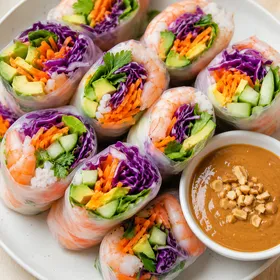
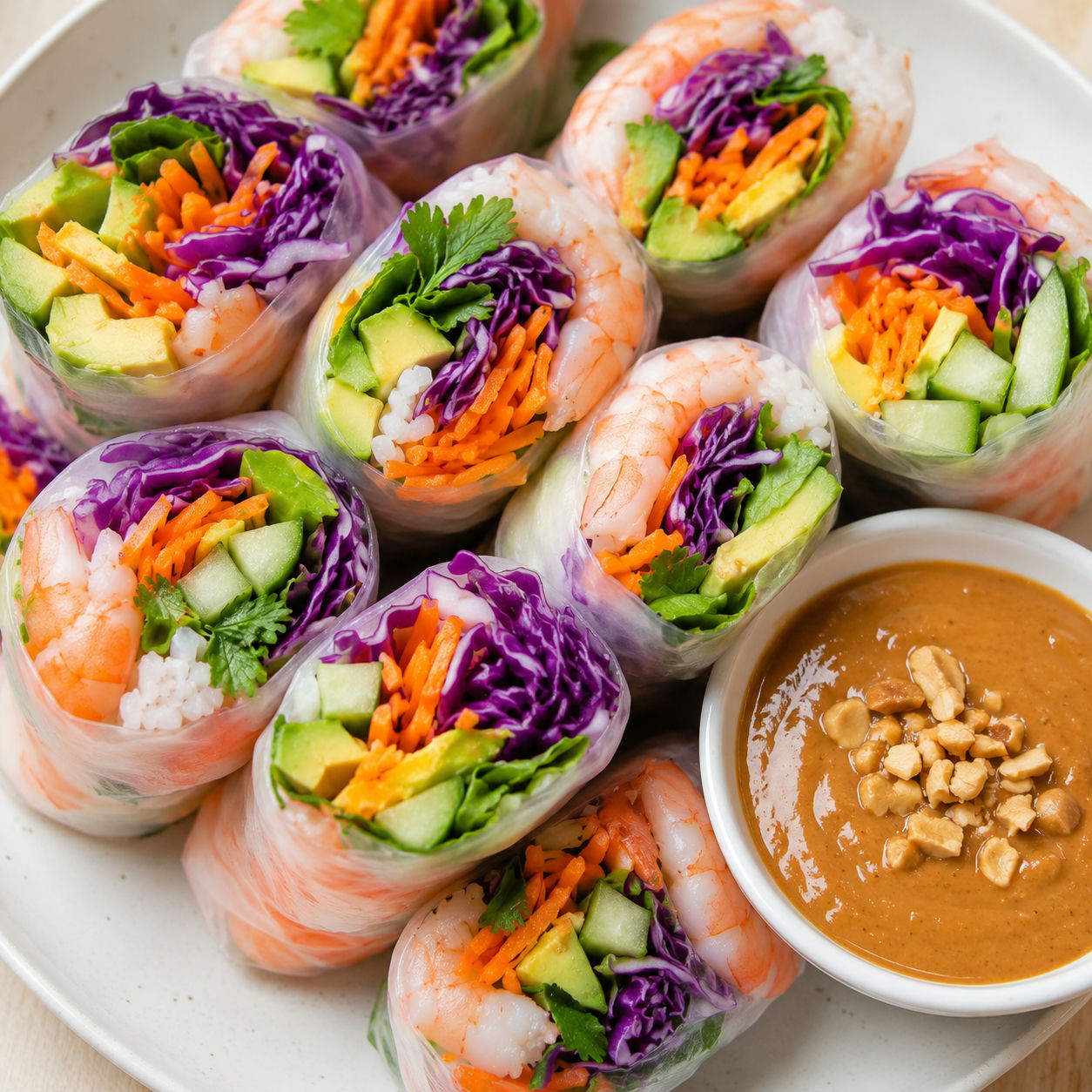
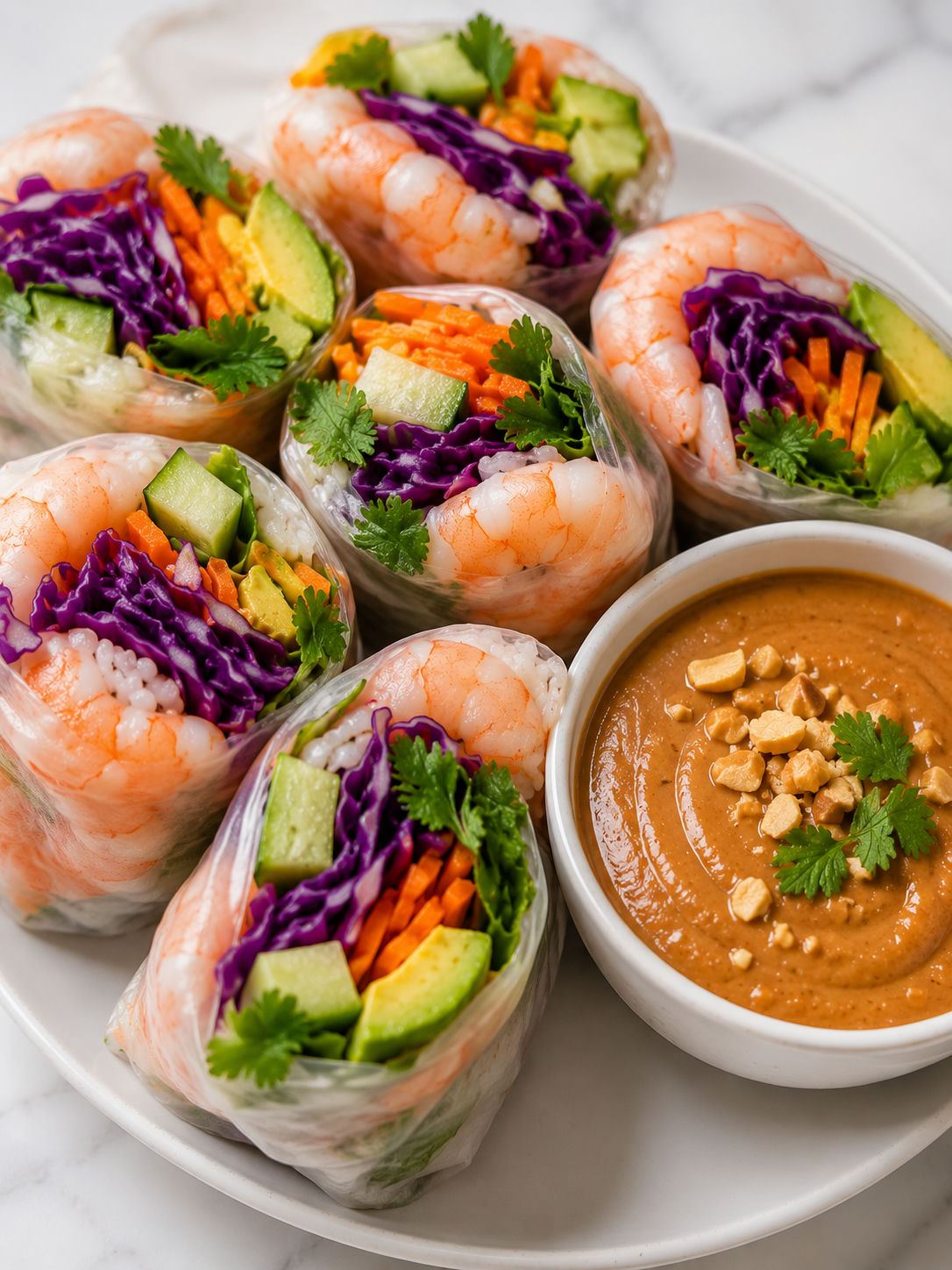
Summer rolls perfect for meal prep, parties, appetizers, or an easy weeknight meal should taste fresh even after a few hours in the fridge. These do. You get chewy rice paper, cool noodles, crisp vegetables, creamy avocado if you want it, and juicy seasoned shrimp in every bite.
The small details matter here. Pat the vegetables dry, soak one wrapper at a time, and stop dipping the rice paper while it still feels a little firm. It softens as you fill it.
I like these with a peanut sauce that is thick enough to cling but loose enough for dipping. A little chili garlic oil gives it warmth without burying the mint and cilantro.
Fresh Roll Filling
Choose vegetables that are crisp and dry, because wet fillings make rice paper slippery. Cook the noodles early enough that they are fully cooled before rolling.
Use large shrimp if you can. They slice neatly, show through the wrapper, and give each roll a real bite.
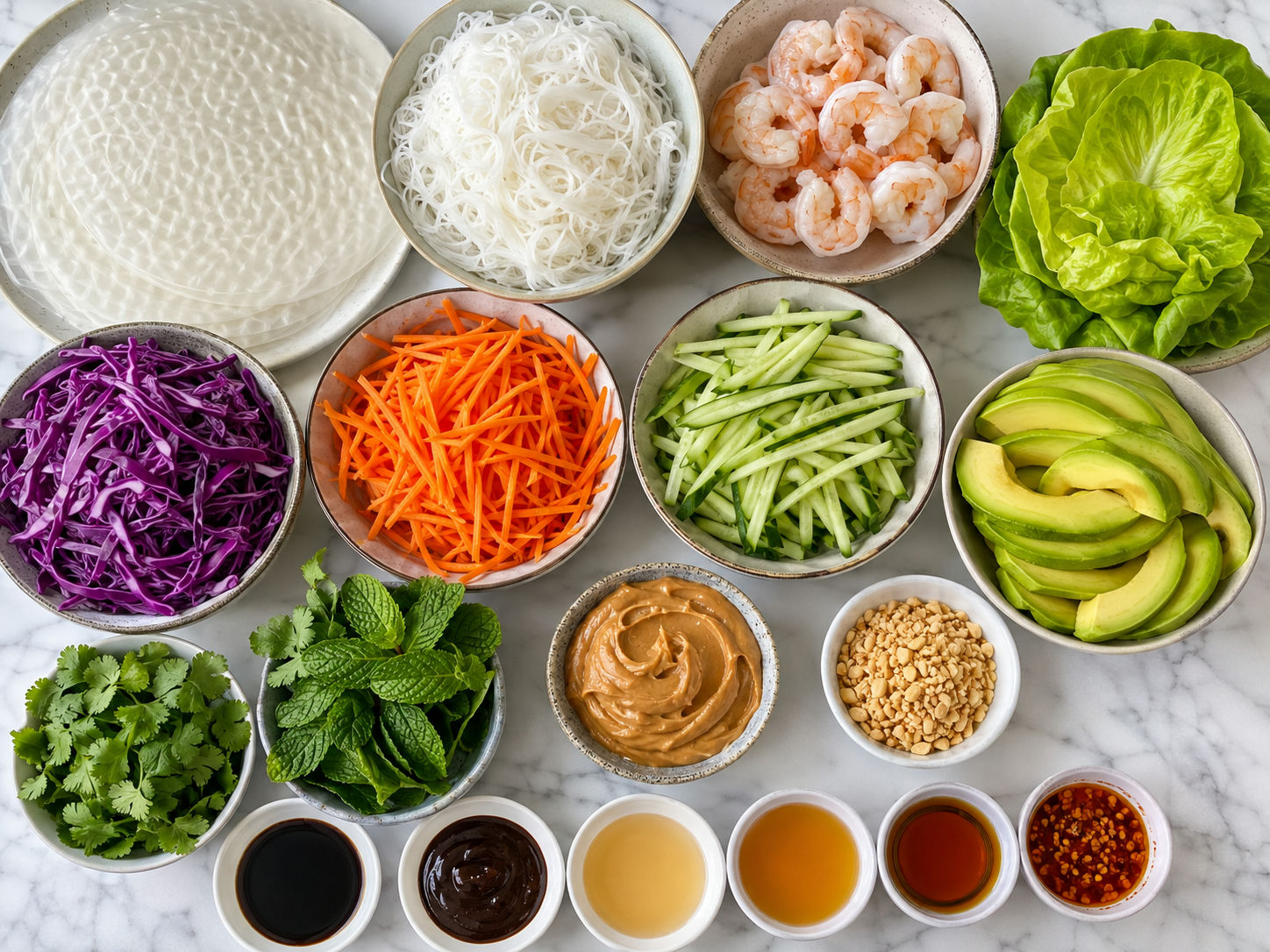
- Rice paper wrappers. They soften into chewy, translucent sheets that hold the fresh filling together.
- Vermicelli rice noodles. They make the rolls more filling and help soak up the sauce.
- Large shrimp. Quick-seared shrimp add protein, color, and a lightly smoky edge.
- Lettuce leaves. They create a soft barrier between the wrapper and the sharper vegetables.
- Red cabbage. It brings crunch and a deep purple stripe that looks great through the rice paper.
- Carrots and cucumber. These give the rolls their fresh snap.
- Avocado. It adds creaminess, but leave it out for longer meal prep.
- Mint and cilantro. Fresh herbs make the rolls taste bright instead of plain.
- Peanut sauce. Peanut butter, tamari, hoisin, vinegar, sesame oil, honey, and chili garlic oil make a creamy dip with salt, tang, and heat.
Roll Them Without Tearing
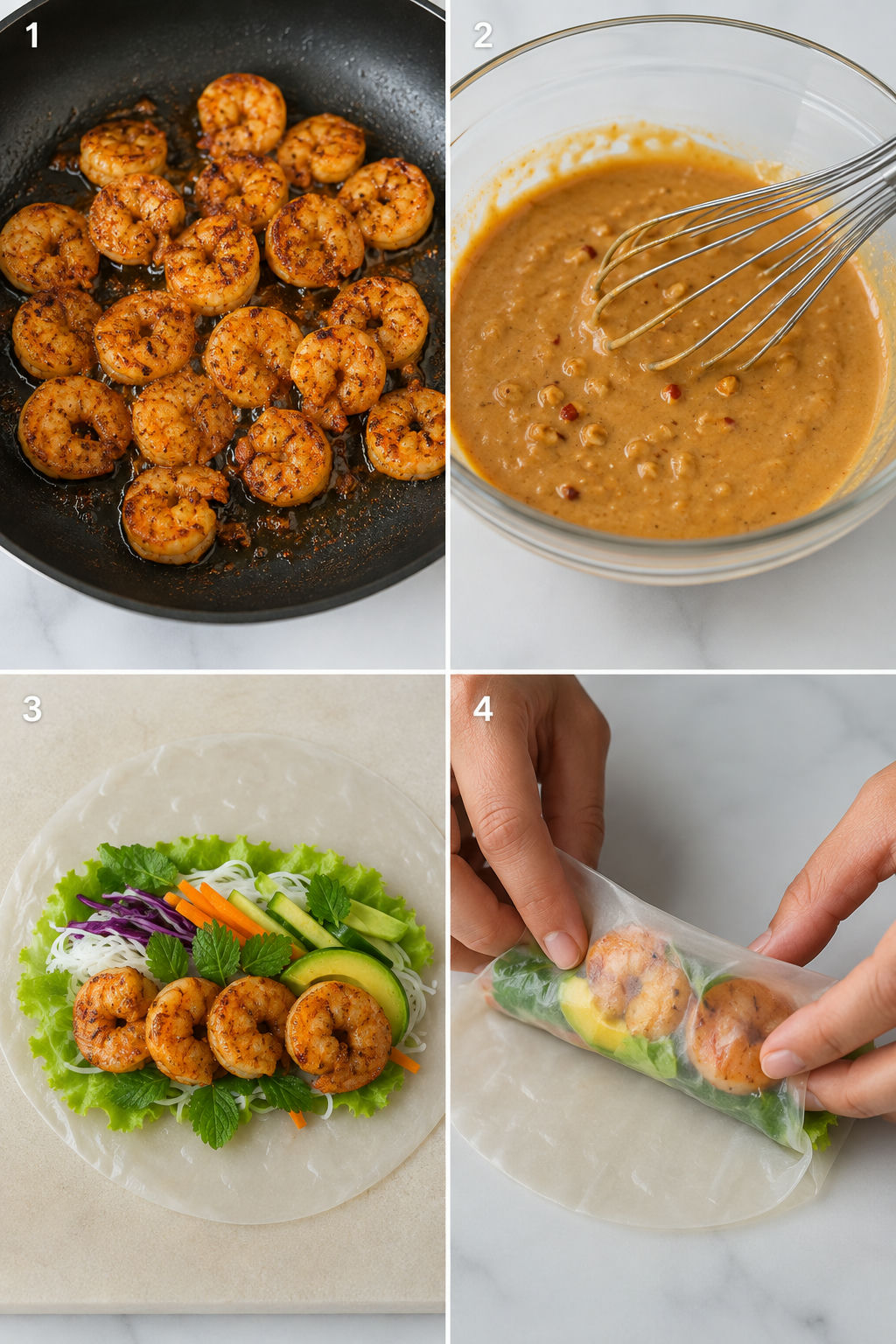
- Cook the noodles. Soak or boil the rice noodles according to the package, then rinse under cool water and drain very well.
- Sear the shrimp. Toss shrimp with garlic powder, paprika, salt, pepper, and chili flakes. Sear in a hot oiled skillet for 1-2 minutes per side until firm, opaque, and lightly browned.
- Whisk the sauce. Stir peanut butter, tamari, hoisin, rice vinegar, honey, sesame oil, warm water, and chili garlic oil until smooth. Add more warm water if it feels too thick.
- Soften one wrapper. Dip one rice paper round in room-temperature water for about 5-8 seconds. It should still feel slightly firm when it hits the board.
- Layer the filling. Add lettuce, noodles, cabbage, carrot, cucumber, herbs, avocado if using, and shrimp near the lower third of the wrapper.
- Fold and roll. Fold the bottom over the filling, tuck in the sides, then roll snugly without squeezing so hard that the wrapper tears.
The Rice Paper Timing
The biggest summer roll problem is not the filling. It is over-soaked rice paper. A wrapper that feels soft in the water will become too limp by the time you add noodles and vegetables. Dip it quickly, set it on a damp board, and trust that it will keep softening.
Room-temperature water gives you more control than very hot water. If your kitchen is dry, lay a barely damp towel over finished rolls while you work. Do not stack them directly on top of each other, because fresh rice paper likes to stick. For another rice paper dinner with a similar rhythm, try the Asian chicken lettuce rice paper rolls.
Meal Prep That Holds Up
For meal prep, build the rolls a little tighter and skip watery extras. Avocado tastes lovely, but it browns and softens after a few hours. Use cucumber, bell pepper, or mango instead if the rolls need to last until tomorrow.
Line an airtight container with damp paper towel, add the rolls in one layer, then cover with another damp towel before sealing. Keep the peanut sauce in a small jar. The flexible three-day meal plan is a useful match if you want one batch of these to become lunches, snacks, and a light dinner through the week. The USDA says perishable leftovers should be refrigerated within 2 hours, and cold party foods need extra care in hot weather. You can read the USDA leftovers guidance for the details.
Shrimp Safety And Texture
Shrimp cooks fast, so have a plate ready before it hits the skillet. Pull it when the pieces are opaque, firm, and curled into a loose C shape. If they curl into tight rings, they have gone too far and will taste springy.
The FDA recommends cooking seafood to 145°F, and notes that shrimp should look pearly and opaque when done. Their seafood safety guide is worth checking if you are thawing frozen shrimp or serving these for a crowd. Seasoned shrimp gives these rolls more flavor than plain boiled shrimp. If you want another chilled, prep-friendly lunch with a different protein, the chickpea avocado salad keeps the same fresh, no-fuss spirit.
Sauce Swaps And Party Serving
The peanut sauce should pour slowly from a spoon. If it is stiff, whisk in warm water one teaspoon at a time. If it tastes flat, add rice vinegar or lime. If it tastes too sharp, add a little honey.
For nut-free guests, use sunflower seed butter or serve sweet chili sauce on the side. For a more savory dip, stir in extra hoisin and a splash of hot water. Put the sauce in a wide bowl so people can dip without breaking the rolls. If you are building an appetizer table, these pair well with loaded egg rolls for a hot and cold contrast, and easy homemade sauces if you want a few dipping options.
Summary
Serve these chilled or at room temperature with extra peanut sauce on the side. For longer meal prep, leave out the avocado and add it the day you serve.
Frequently Asked Questions
- Are summer rolls the same as spring rolls?
-
Summer rolls are usually served fresh, soft, and cool in rice paper wrappers. Spring rolls are often fried or baked until crisp, depending on the style.
- Can I make summer rolls ahead for meal prep?
-
Yes, but they are best within 24 hours. Wrap each roll in damp paper towel, place them in a single layer in an airtight container, and keep the sauce separate until serving.
- What can I use instead of shrimp?
-
Cooked chicken, tofu, thin steak, crab, or extra vegetables all work. For tofu, use firm tofu and press it well so the rolls do not get watery.
- How do I stop rice paper from tearing?
-
Dip the wrapper briefly, then fill it while it is still slightly firm. Over-soaked wrappers turn sticky and fragile. A damp cutting board also helps them release cleanly.
- Can I make these gluten-free?
-
Yes. Rice paper and rice noodles are usually gluten-free, but check every label. Use gluten-free hoisin and tamari in the peanut sauce.
- How long can summer rolls sit out at a party?
-
Keep them chilled until serving. Since they contain shrimp, follow the USDA 2-hour rule for perishable foods, or 1 hour if the room or outdoor temperature is above 90°F.
- What should I serve with summer rolls?
-
They are great with extra peanut sauce, sweet chili sauce, or a simple lime fish sauce dip. For a bigger meal, add fried rice, grilled chicken, or a crunchy cucumber salad.