 Pin it
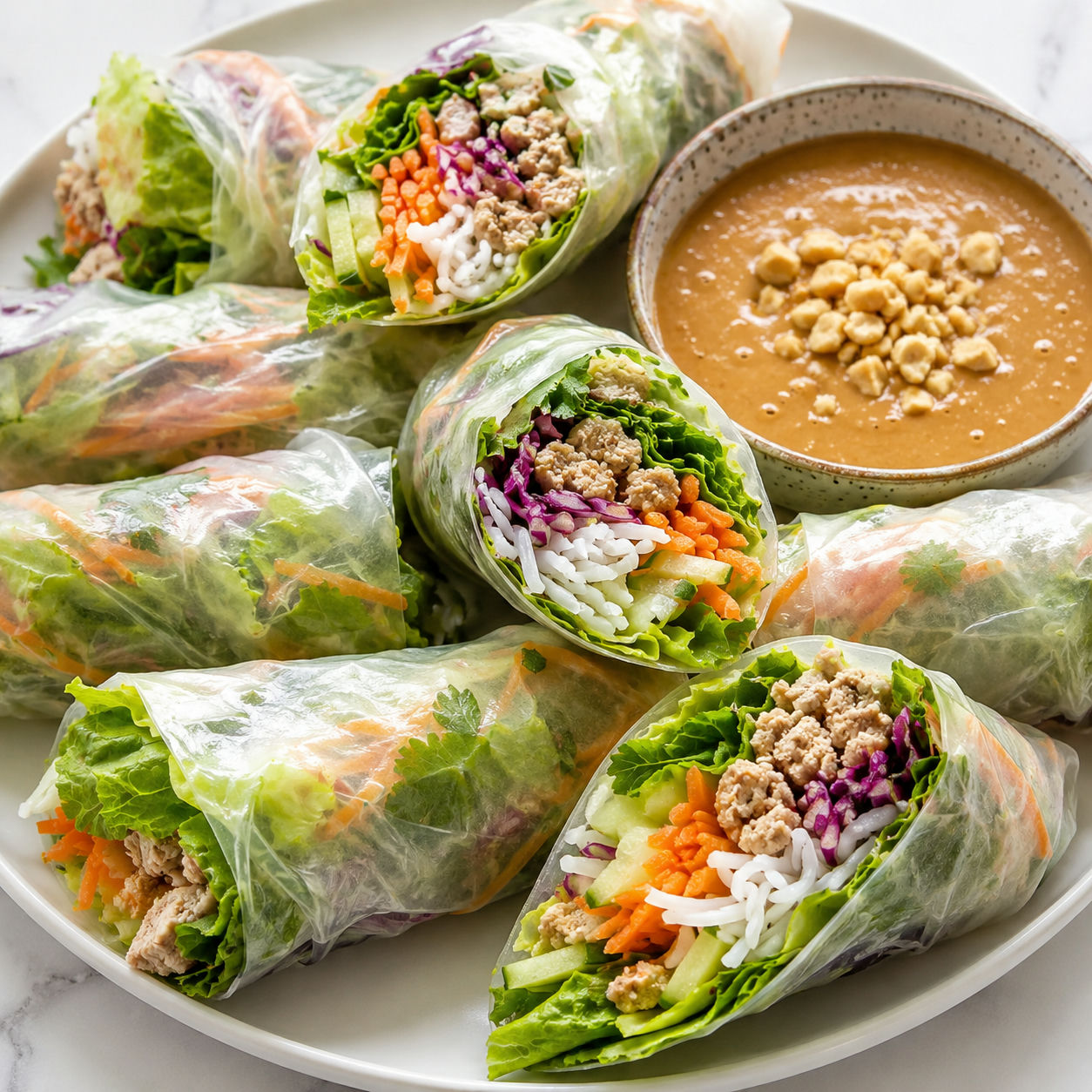
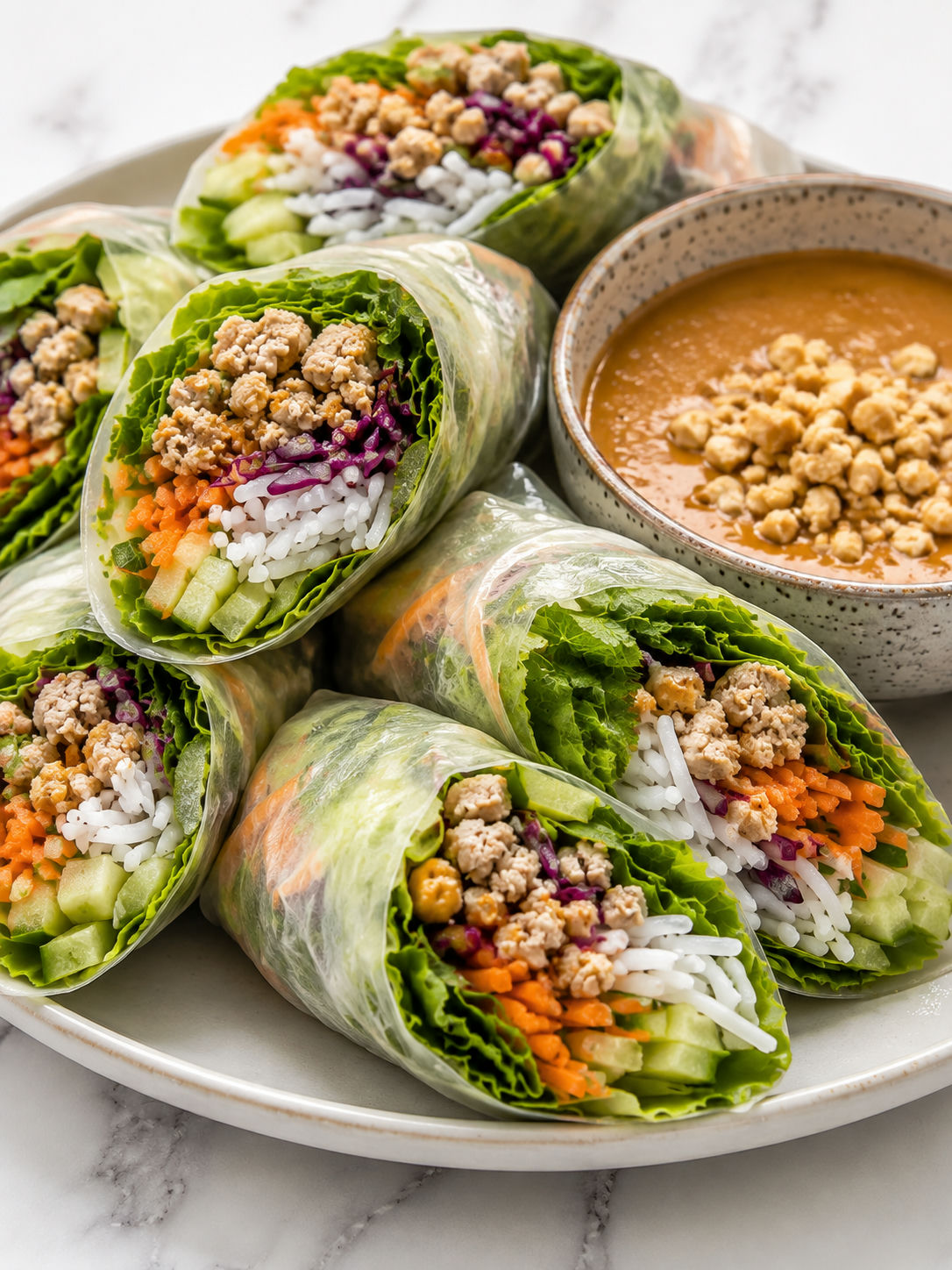
Asian Chicken Lettuce Rice Paper Rolls are fresh and crunchy, but they still feel like dinner. The warm filling is made with ground chicken, mushrooms, water chestnuts, garlic, ginger, soy, hoisin, and a little sesame oil. Once it cools, it gets wrapped with lettuce, noodles, herbs, and crisp vegetables.
The trick is balance. The chicken should be savory and a little glossy, the lettuce should act like a shield inside the wrapper, and the rice paper should be softened just enough to bend without turning sticky and weak.
I like these for a light dinner, a lunch platter, or a no-fork party bite. They sit somewhere between lettuce wraps and summer rolls, with enough texture to keep every bite interesting.
The Crunchy Chicken Lineup
Choose crisp vegetables and fresh herbs because the filling is rich and savory. Rice paper rolls are simple, so every limp cucumber or tired lettuce leaf shows up in the final bite.
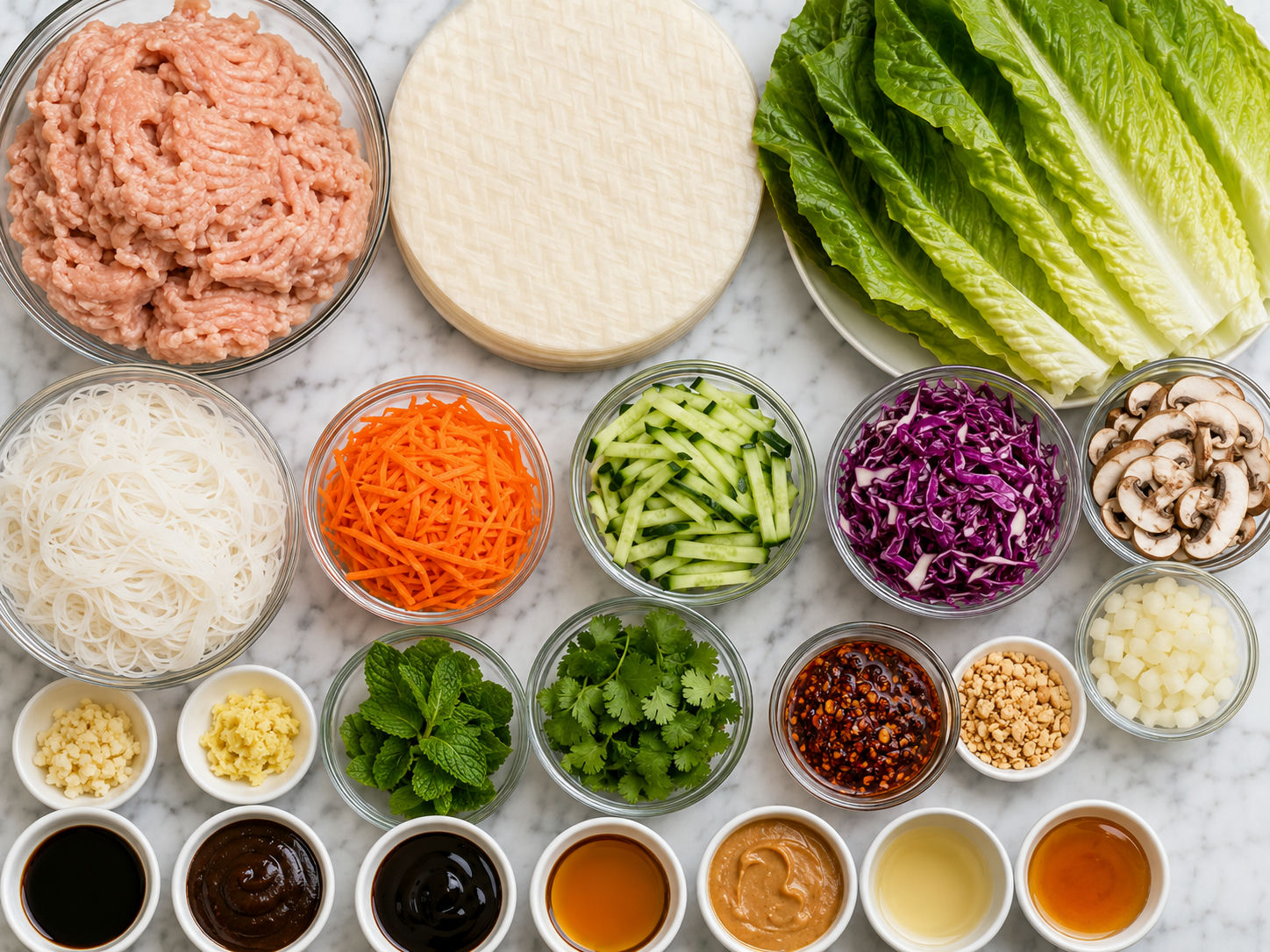
- Ground chicken. Cooks quickly and soaks up the garlic, ginger, soy, hoisin, and sesame flavors.
- Mushrooms. Add moisture and a deeper savory note without making the filling heavy.
- Water chestnuts. Bring the clean crunch that makes the chicken filling feel fresh.
- Garlic and ginger. Give the filling its warm base aroma in the skillet.
- Soy sauce, oyster sauce, and hoisin. Make the chicken glossy, salty, and lightly sweet.
- Rice paper wrappers. Hold everything together once briefly softened in water.
- Romaine lettuce. Protects the wrapper from wet fillings and adds snap.
- Vermicelli noodles. Make the rolls more filling and help absorb sauce inside the wrap.
- Carrot, cucumber, and red cabbage. Add color, crunch, and a cool contrast to the cooked chicken.
- Mint and cilantro. Keep the rolls tasting bright instead of heavy.
- Peanut dipping sauce. Adds creamy richness and a little heat on the side.
Roll Them Without Tearing
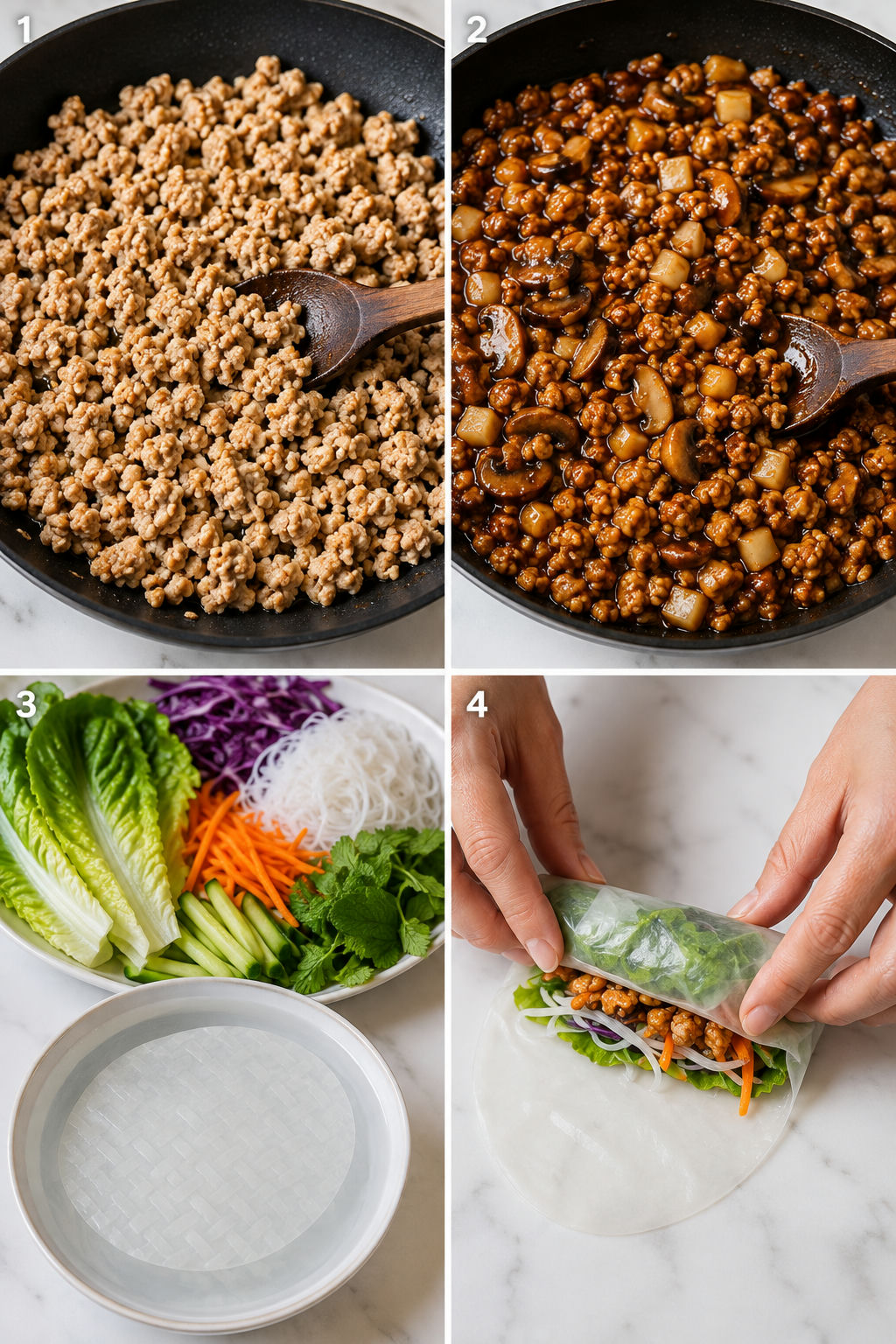
- Cook the chicken filling. Brown the ground chicken in a skillet, then add onion, garlic, ginger, mushrooms, and water chestnuts. Stir in the sauces and cook until glossy.
- Cool the filling. Spread it on a plate for 10 minutes so steam does not soften the lettuce or make the rice paper fragile.
- Mix the peanut sauce. Whisk peanut butter, soy sauce, rice vinegar, hoisin, honey, sesame oil, chili crisp, and warm water until creamy.
- Soften one wrapper. Dip rice paper in warm water for about 5 seconds, then lay it on a damp board. It will keep softening as you fill it.
- Layer the fillings. Place lettuce near the lower third, then add noodles, chicken, vegetables, and herbs. Keep the pile narrow.
- Fold and roll tightly. Fold the bottom over the filling, tuck in the sides, and roll forward with gentle pressure. Repeat and serve with sauce.
Why Lettuce Goes First
Lettuce is more than filler here. It creates a dry, flexible barrier between the rice paper and the juicy chicken. Put the lettuce down first, then noodles and chicken, then the crisp vegetables and herbs. That order keeps the wrapper from getting slick and helps the roll hold its shape.
Romaine is easy because the leaves are sturdy and narrow. Butter lettuce tastes softer and sweeter, but it tears more easily. If the rib is thick, trim it down with a knife so the leaf bends without punching through the wrapper.
The same rolling logic works in Korean BBQ beef rice paper rolls. Start with a protective leaf, keep saucy fillings contained, and treat the wrapper gently once it turns tacky.
Rice Paper Timing Matters
The most common mistake is soaking the wrapper until it feels fully soft in the bowl. By the time you move it to the board, it keeps absorbing water and becomes floppy. A quick dip is enough. It should still have a little structure when it leaves the water.
Use a damp cutting board or a smooth plate. A dry wood board can grab the wrapper, while a soaked surface makes it slide around. If your first roll feels too firm, wait 15 seconds before filling the next one. If it tears, shorten the dip.
Food Network uses a similar summer roll method with lettuce, chicken, herbs, and peanut sauce in its chicken summer rolls, which is a helpful reference for the basic wrap style.
Sauce Thickness Is Personal
The peanut sauce should be creamy enough to cling but loose enough for dipping. Warm water is the easiest fix. Add it one tablespoon at a time and whisk longer than you think you need to. Peanut butter can look broken at first, then it suddenly smooths out.
If you want a brighter sauce, add extra rice vinegar or lime juice. For more heat, stir in chili garlic crisp. For a sweeter party-style dip, add another small spoon of honey. The sauce can be made two days ahead and stored in the fridge. Let it sit at room temperature for a few minutes and whisk again before serving.
For another sauce-forward dinner, the sweet and savory profile pairs naturally with Vietnamese lemongrass chicken bowls.
Safe Prep For Fresh Rolls
These rolls include cooked poultry and raw vegetables, so clean prep matters. Cook ground chicken to 165°F, which matches the USDA safe temperature chart for poultry. Then cool the filling quickly before rolling.
Wash lettuce, herbs, cucumber, carrots, and cabbage under running water before cutting. The FDA recommends rinsing produce and drying it with a clean towel as part of safe produce handling. Keep raw chicken tools away from the fresh vegetables and use a clean board for assembly.
Storage And Serving Notes
Rice paper rolls taste best the day they are made. If you need to store them, keep them separated with parchment or lettuce leaves and cover them with a barely damp towel inside an airtight container. Do not stack them. The wrappers can glue themselves together.
The chicken filling, noodles, cut vegetables, and peanut sauce can all be prepped ahead. Store each part separately, then roll close to serving. If the vegetables release water, blot them dry first. For a party spread, add a platter of shrimp pad Thai or saucy noodle bowls so guests can build a fresh, colorful plate.
Summary
These Asian Chicken Lettuce Rice Paper Rolls are crisp, savory, and fresh with a creamy peanut sauce for dipping. Keep the filling cool, soften each wrapper briefly, and roll with lettuce first for the cleanest texture.
Frequently Asked Questions
- Can I make Asian Chicken Lettuce Rice Paper Rolls ahead of time?
-
Yes, but they are best within a few hours of rolling. Place them in a single layer, cover with a barely damp paper towel, and store airtight in the fridge. If they touch each other too much, the rice paper can stick and tear.
- Can I use cooked shredded chicken instead of ground chicken?
-
Yes. Toss about 2 1/2 cups shredded cooked chicken with the sauteed onion, mushrooms, water chestnuts, garlic, ginger, soy sauce, hoisin, oyster sauce, and sesame oil. Warm it just until coated, then cool before rolling.
- How do I keep rice paper rolls from tearing?
-
Dip each wrapper briefly and let it soften on the board. It should still feel a little firm when you start filling. Use lettuce as the first layer, keep the filling modest, and roll with steady pressure instead of pulling hard.
- Are these rice paper rolls gluten-free?
-
They can be gluten-free if you use certified gluten-free rice paper, rice vermicelli, tamari, and gluten-free hoisin and oyster-style sauce. Regular soy sauce and many bottled sauces contain wheat, so check labels before cooking.
- What can I serve with chicken rice paper rolls?
-
They work well with extra peanut sauce, sweet chili sauce, or a bright cucumber salad. For a fuller spread, serve them with Asian green vegetables or a simple bowl of cilantro lime rice.
- Can I make the filling spicy?
-
Yes. Add chili garlic crisp, sambal, or sriracha to the cooked chicken filling. Start with a teaspoon or two, then add more after tasting because hoisin and oyster sauce already bring salt and sweetness.