 Pin it
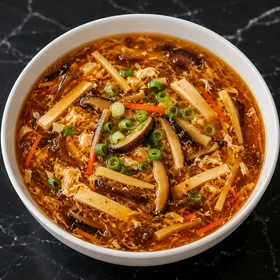
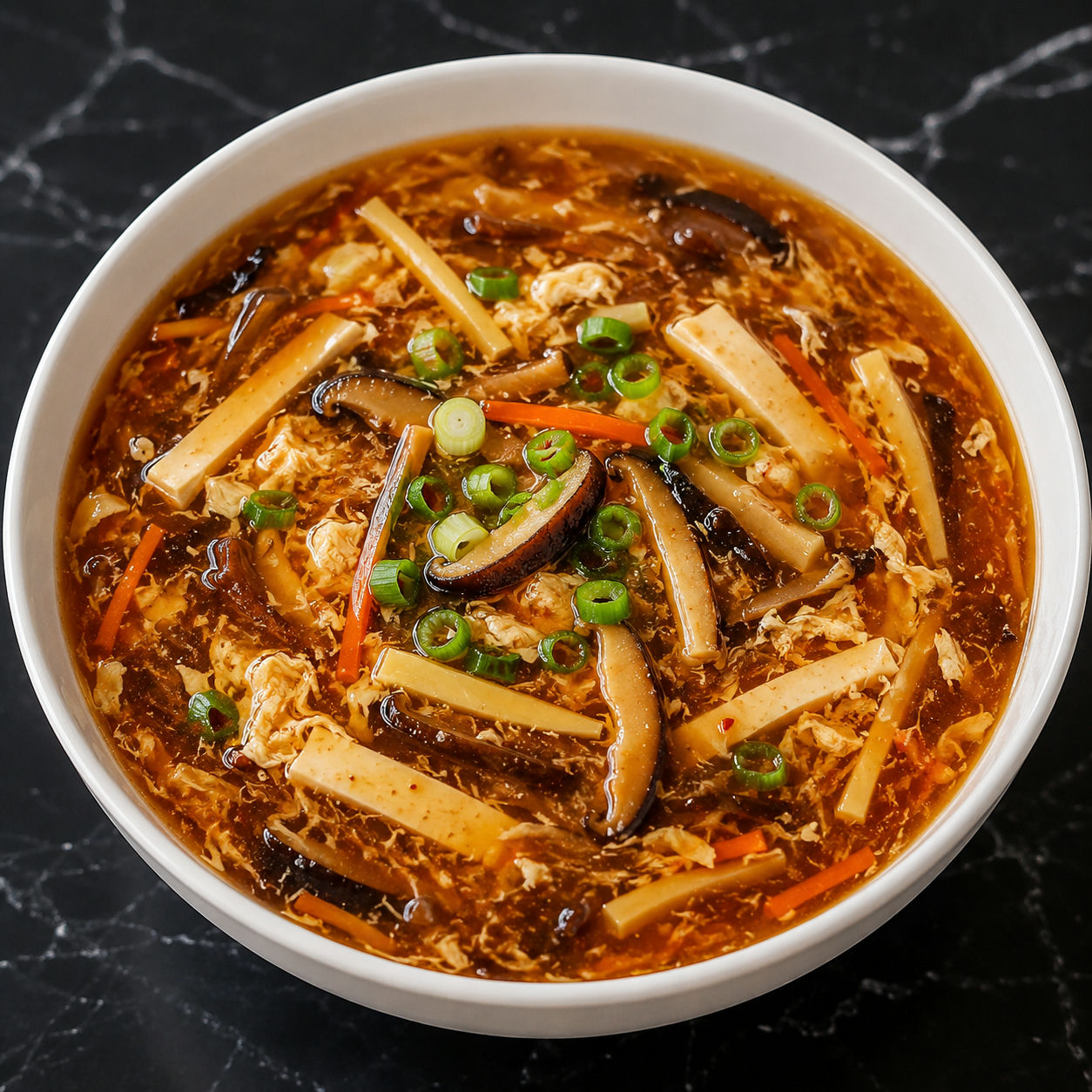
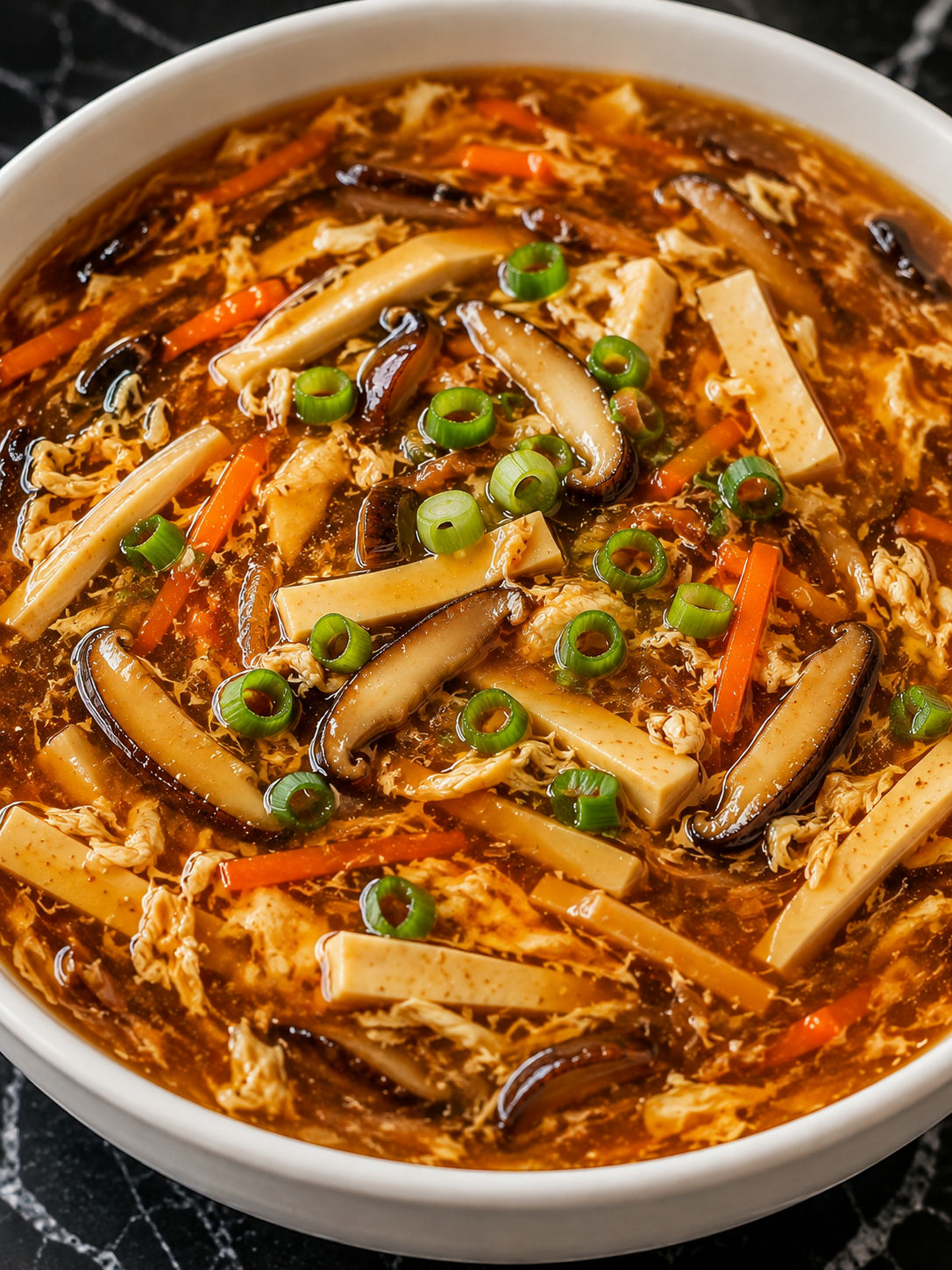
This homemade version gives you everything you love about restaurant-style hot and sour soup. The broth is savory and sharp, the tofu is silky, and every spoonful has mushrooms, bamboo shoots, carrots, and soft egg ribbons.
The real trick is balance. White pepper brings the familiar heat, vinegar gives the clean sour edge, and a small cornstarch slurry turns the broth glossy without making it heavy.
I like this as a starter, but it is filling enough for a light dinner with rice or a crisp side salad.
Restaurant-Style Soup Staples
Hot and sour soup is simple once the ingredients are sliced and waiting beside the stove. Look for firm tofu, sliced bamboo shoots, and mushrooms with a deep, savory smell.
Dried shiitake mushrooms give the strongest flavor, but fresh shiitakes are useful when dinner needs to happen quickly.
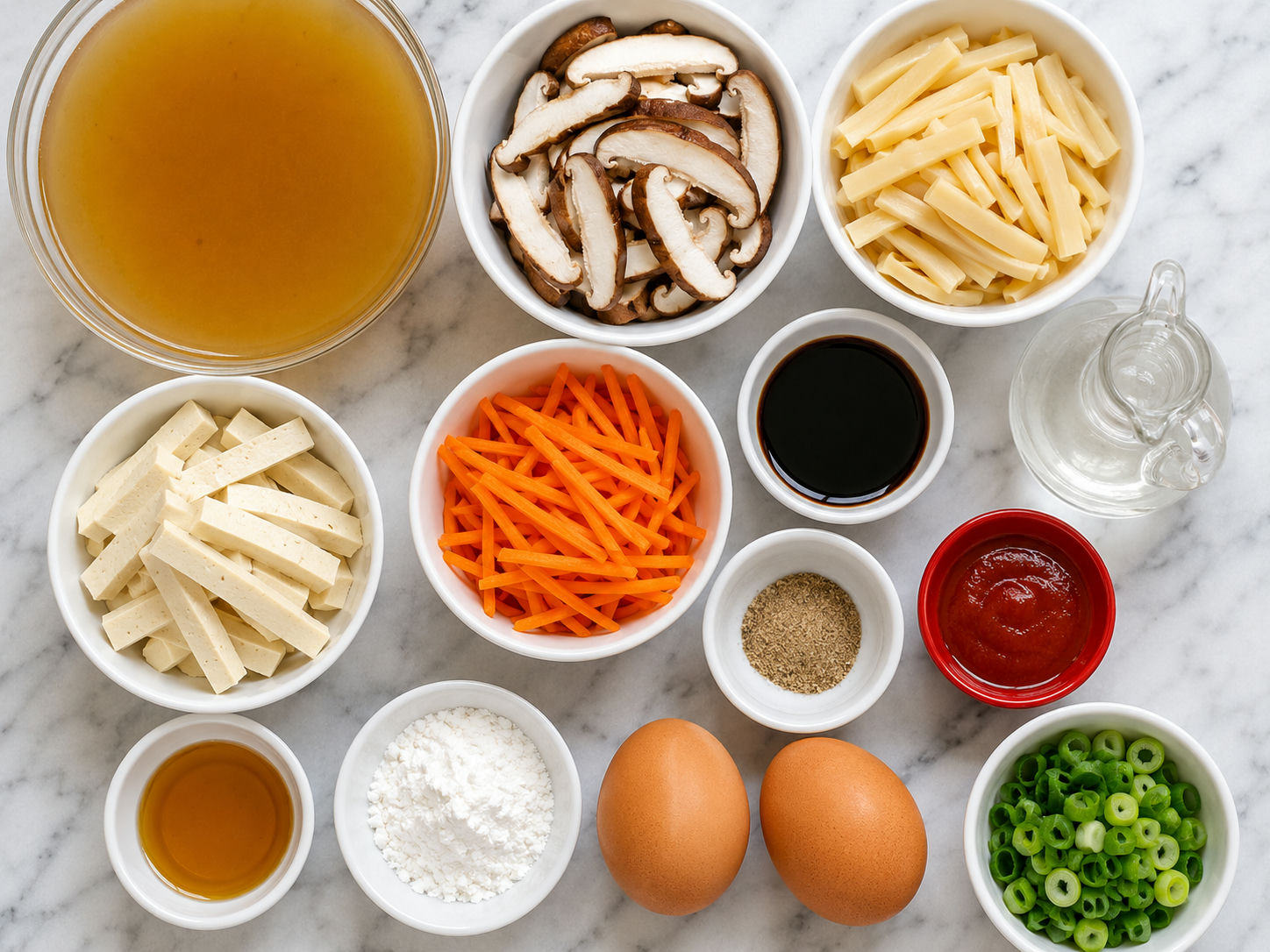
- Chicken broth. Gives the soup a savory base that carries the vinegar and pepper.
- Shiitake mushrooms. Add deep umami and a chewy bite.
- Firm tofu. Stays tender in thin strips and makes the soup feel hearty.
- Bamboo shoots. Bring the crisp restaurant-style texture people expect.
- Carrot. Adds color and a little natural sweetness.
- Soy sauce. Seasons the broth and deepens the color.
- White vinegar. Gives the clean sour finish.
- White pepper. Provides the warm, nose-tingling heat.
- Cornstarch slurry. Thickens the soup into a glossy broth.
- Eggs. Form delicate ribbons when streamed into the simmering soup.
- Sesame oil and scallions. Finish the soup with fragrance and freshness.
Build The Broth In Layers
- Slice everything first. Cut the tofu, mushrooms, carrots, and bamboo shoots into thin strips so each spoonful has a little of everything.
- Simmer the vegetables. Bring the broth to a steady boil, then add the mushrooms, carrot, bamboo shoots, and tofu. Cook until the carrot just softens.
- Season the broth. Stir in soy sauce, sugar, sriracha, white pepper, vinegar, and sesame oil. Taste before thickening so you can adjust the heat and sourness.
- Thicken slowly. Whisk the cornstarch and water again, then stream it into the simmering soup while stirring. Stop once the broth lightly coats a spoon.
- Add the eggs. Stir the soup in a slow circle and pour in the beaten eggs in a thin stream. Let the ribbons set for a few seconds before serving.
The Pepper Matters Most
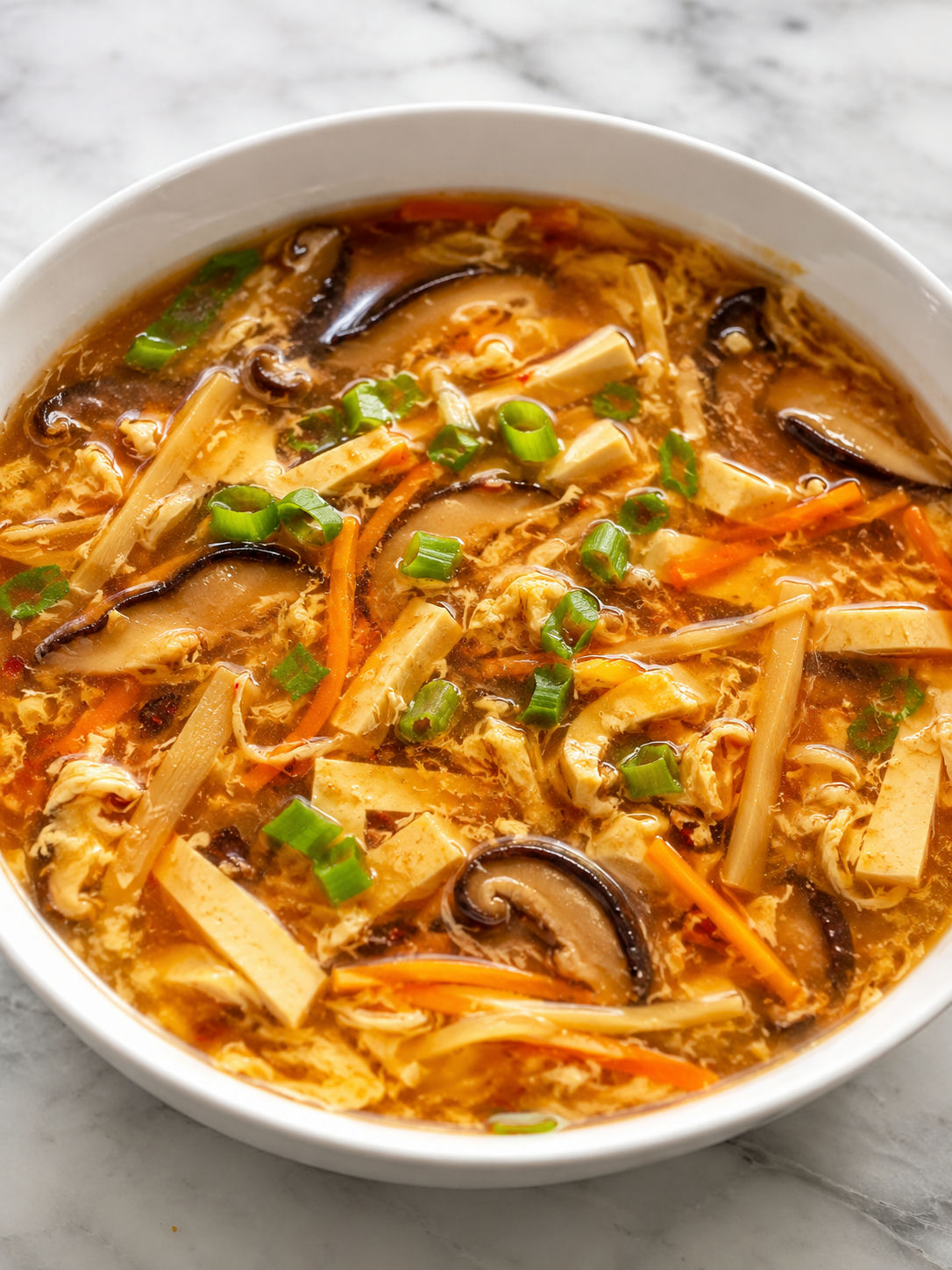
The hot part of hot and sour soup should feel warm and peppery, not just chili-hot. White pepper has a sharp aroma that blooms in broth and gives the soup that familiar takeout bite. Sriracha is optional here. I use a spoonful because it rounds out the color and adds a mild chili note, but the white pepper is doing the real work.
If your pepper has been sitting in the cabinet for years, buy a fresh jar. Old white pepper can taste dusty instead of fragrant. Start with 3/4 teaspoon, then add more at the end. It is much easier to build heat than to rescue a soup that tastes harsh.
How To Get Silky Thickness
Restaurant-style hot and sour soup should not be watery, but it should not feel like gravy either. Mix cornstarch with cold water until smooth, then stir it once more right before adding it. Cornstarch settles fast. If you pour from the top of the bowl without whisking, the soup gets thin at first and gluey at the end.
The method used by many takeout-style recipes, including versions from The Woks of Life and Food Network Kitchen, is to stream the slurry into simmering broth while stirring. Stop when the broth looks glossy and lightly coats the spoon. It thickens a little more as it sits.
Small Swaps That Work
No bamboo shoots? Use thin broccoli stems or skip them and add more mushrooms. Fresh shiitakes are fine, but dried shiitakes give a deeper flavor if you have time to soak them. For a vegetarian version, swap in vegetable broth or mushroom broth. For a gluten-free bowl, use tamari instead of soy sauce and check that your broth is gluten-free.
This soup is a good match for other bright, savory dishes. Serve it with spicy Korean cucumber salad for crunch, or make it part of a takeout-style dinner with crispy General Tso's chicken.
Egg Ribbons Without Clumps
The eggs need movement, heat, and patience. Beat them until loose, then keep the soup at a gentle simmer. Stir the broth in a slow circle and pour the egg in a thin stream. The egg should float out into soft ribbons. If you pour too quickly, it clumps. If the soup is boiling hard, the ribbons can turn rough.
Once the egg goes in, stop fussing with the pot. Give it a few seconds to set, then ladle gently. If you are serving someone with food-safety concerns, the USDA lists 160°F as the safe temperature for egg dishes on its safe temperature chart.
Storing The Leftovers
Let the soup cool, then refrigerate it in a covered container for up to 3 days. The broth will thicken as it chills. Reheat it in a saucepan over medium-low heat with a splash of broth or water, stirring from the bottom until it loosens.
I do not love freezing this soup. Tofu can turn spongy, and the egg ribbons lose their soft texture. If you want to prep ahead, slice the tofu and vegetables, mix the seasoning liquids, and keep everything chilled. Then the actual cooking is quick. For more quick flavor builders to keep ready, try easy homemade sauces to keep stocked.
Summary
Restaurant-style hot and sour soup is all about balance. Keep the strips thin, thicken the broth gently, and adjust white pepper and vinegar after the soup turns glossy.
Frequently Asked Questions
- What makes hot and sour soup hot?
-
The heat usually comes from ground white pepper, not fresh chilies. Sriracha or chili oil can add extra warmth, but white pepper gives the soup its familiar restaurant flavor.
- Can I make this vegetarian?
-
Yes. Use vegetable broth or mushroom broth instead of chicken broth. The soup will still have plenty of depth from shiitake mushrooms, soy sauce, sesame oil, tofu, and vinegar.
- Can I use rice vinegar instead of white vinegar?
-
Rice vinegar works, but the soup will taste softer and a little sweeter. White vinegar gives a cleaner, sharper sour note that feels closer to many takeout versions.
- How do I keep the egg ribbons silky?
-
Keep the soup at a gentle simmer and stir it in a slow circle. Pour the beaten eggs in a thin stream so they set into ribbons instead of clumps.
- How long does hot and sour soup keep?
-
Store it in an airtight container in the fridge for up to 3 days. Reheat it gently on the stove and stir often because the thickened broth can catch on the bottom of the pot.
- Why did my soup turn too thick?
-
The cornstarch slurry may have reduced too much after it was added. Thin the soup with a splash of broth or water, then taste again because the seasoning may need a small adjustment.