
 Pin it
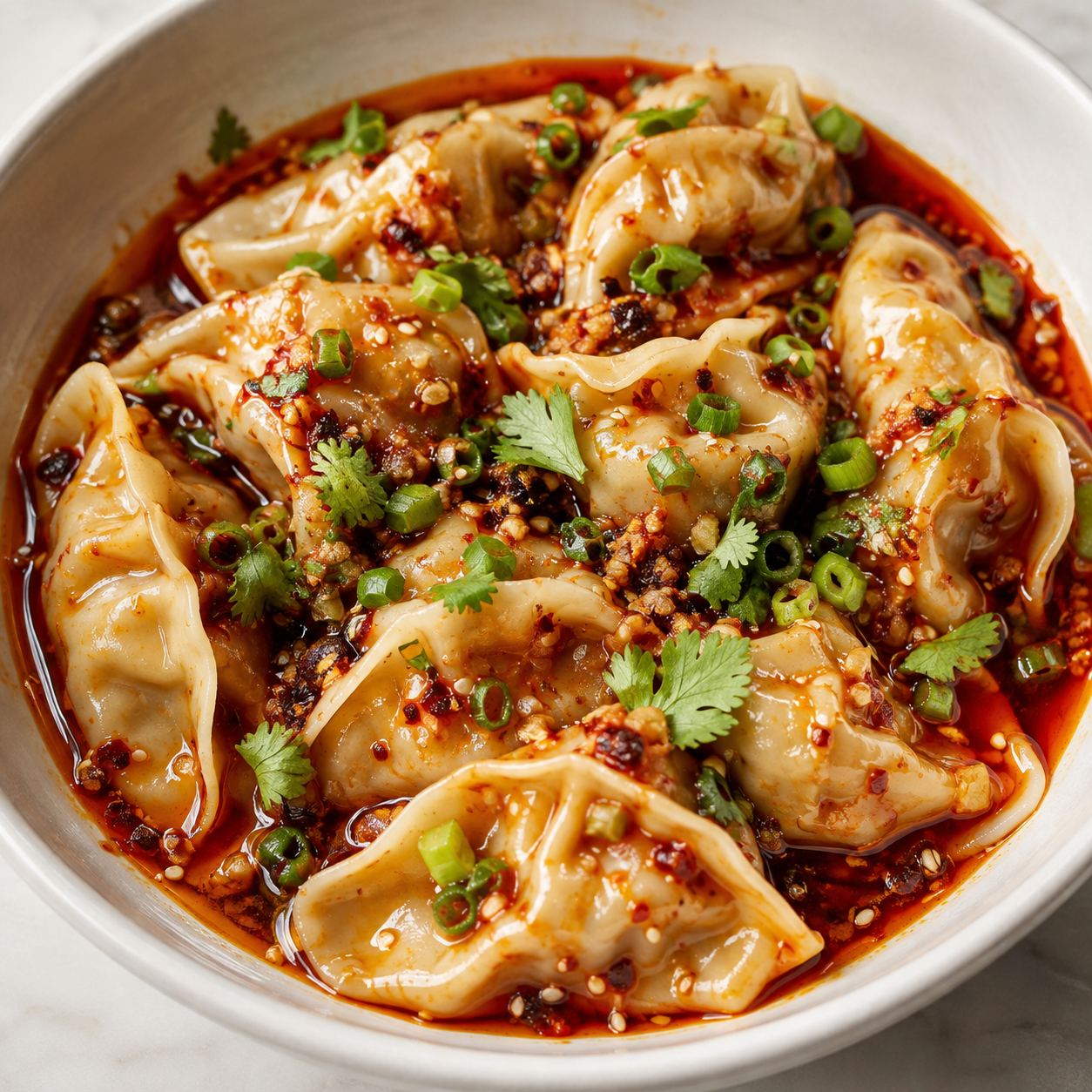
Spicy garlic chili oil dumplings are the kind of freezer meal that does not feel like a freezer meal. The dumplings stay soft and bouncy, then the sauce clings to every fold with garlic, toasted sesame, vinegar, and a warm chile sting.
I like this recipe when I want something loud and savory without making wrappers from scratch. The hot oil blooms the aromatics in seconds, so the sauce tastes deeper than the time suggests.
The fiery pantry lineup
Most of the flavor comes from pantry staples, but freshness matters. Use garlic that still smells sharp, bright green scallions, and chili flakes with good color rather than a dusty jar from the back of the cabinet.
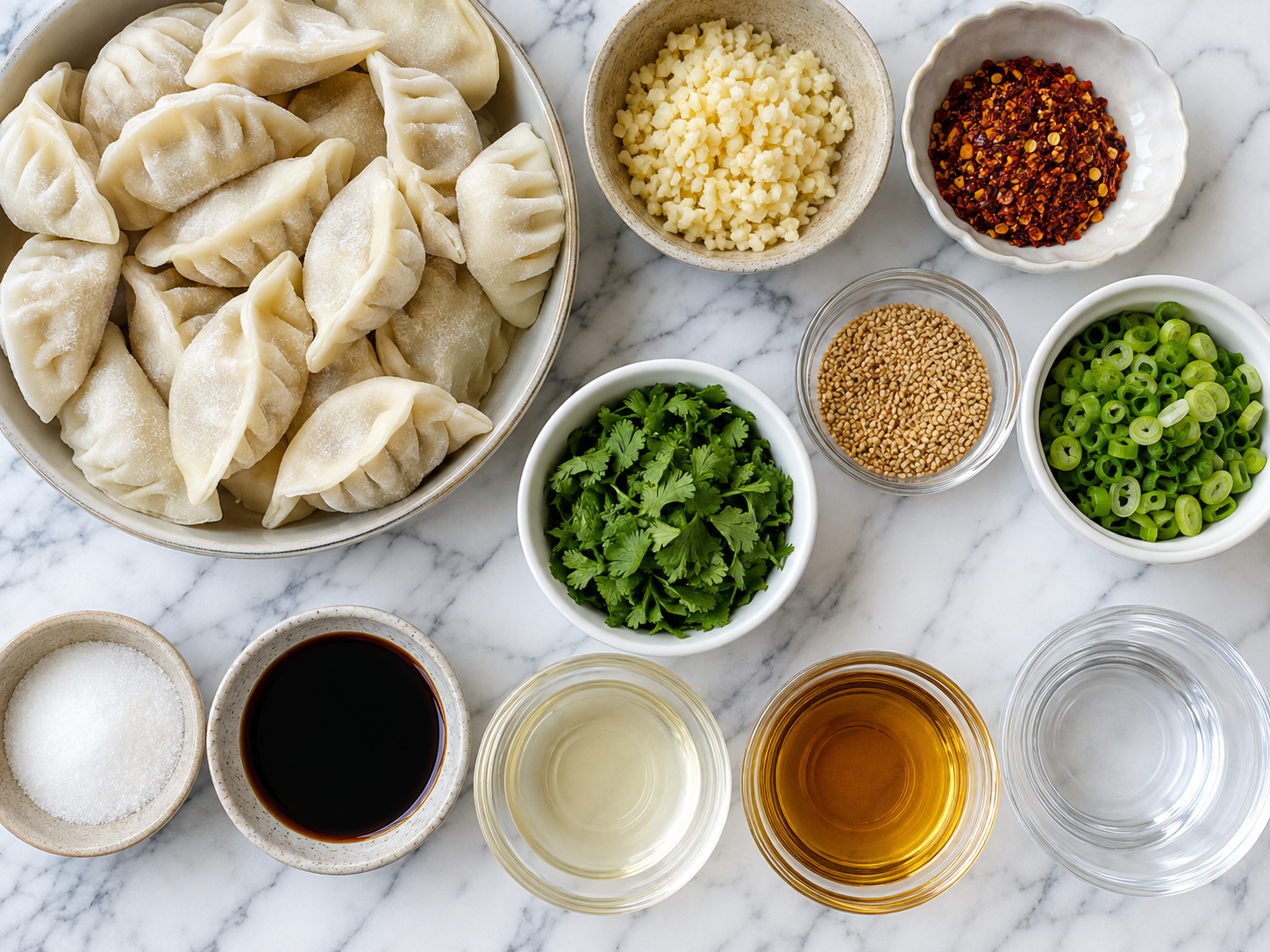
- Frozen dumplings. The shortcut that makes this a weeknight recipe. Pork, chicken, shrimp, or vegetable dumplings all work.
- Garlic. Minced finely so the hot oil wakes it up fast without leaving raw bites.
- Chili flakes. Bring heat, color, and a warm toasted chile flavor once the oil hits them.
- Sesame seeds. Add nutty crunch and make the sauce cling to the dumpling skins.
- Green onions. Give the sauce a fresh onion bite and a clean finish.
- Cilantro. Cuts through the oil with a fresh, herbal edge.
- Soy sauce. Adds salt and deep savory flavor.
- Rice vinegar. Keeps the sauce bright so it does not taste heavy.
- Sugar. Softens the chile heat and helps balance the vinegar.
- Sesame oil. Adds roasted aroma. A little goes a long way.
- Avocado oil. Gets hot enough to bloom the aromatics cleanly.
Build the saucy bowl
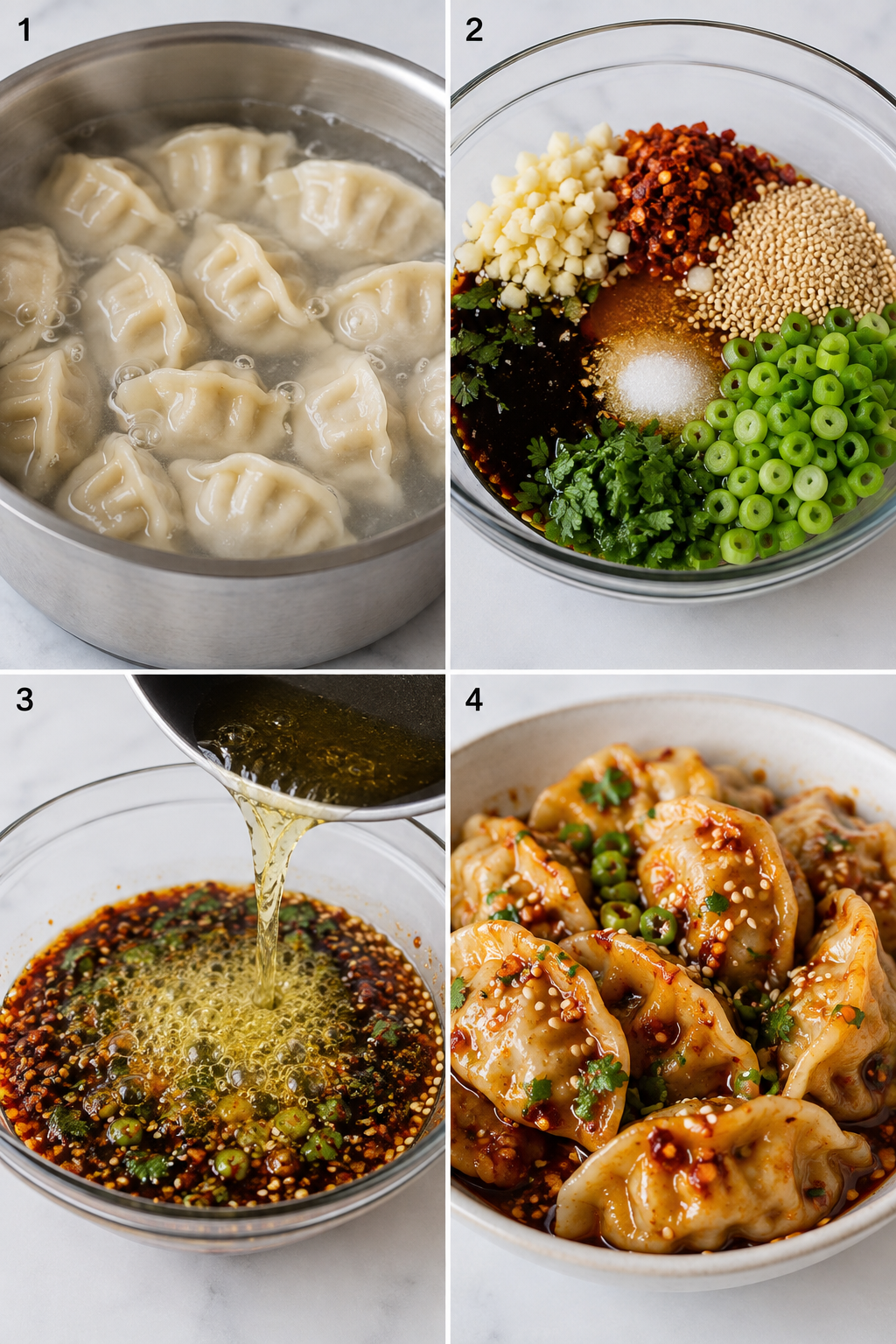
- Cook the dumplings. Simmer the frozen dumplings according to the package directions until the wrappers look tender and the filling is fully hot. Save a spoonful of cooking water before draining.
- Make the flavor base. Add garlic, chili flakes, sesame seeds, scallions, cilantro, sugar, soy sauce, rice vinegar, and sesame oil to a large heatproof bowl.
- Heat the oil. Warm the avocado oil in a small pan until it shimmers and looks thin. Pull it from the heat before it smokes.
- Bloom the aromatics. Pour the hot oil over the garlic and chili mixture. It should sizzle right away. Stir until the sugar dissolves and the sauce turns glossy.
- Toss and serve. Add the hot dumplings and a tablespoon of dumpling water if needed. Toss gently until every wrapper is stained red and shiny.
Why hot oil matters
The hot oil is doing more than making the sauce shiny. It pulls flavor from the garlic, chile, scallions, and sesame in a way cold oil cannot. The moment it hits the bowl, the garlic softens, the chili flakes darken slightly, and the whole kitchen smells toasted.
Do not heat the oil until it smokes. Smoking oil can scorch the garlic and make the sauce taste harsh. You want a shimmer, not a haze. If you love this kind of spicy sauce energy, the site also has a dedicated spicy dumpling sauce that is worth keeping in rotation.
Boiled versus crispy dumplings
Boiled dumplings give you the glossiest, sauciest bowl because the wrappers stay tender and a little slippery. That is the style I use here. The sauce slides into the pleats and coats every bite.
If you want crisp bottoms, pan-fry the dumplings first, then add a splash of water and cover until cooked through. Toss them right before serving so the bottoms keep some texture. For another crispy dumpling idea, try these crispy chicken rice paper dumplings. For a soupier take with the same cozy dumpling shortcut, red curry dumpling soup goes in a completely different direction.
Balance the heat
Good chili oil dumplings should taste spicy, salty, tangy, and a little sweet. If the sauce tastes flat, it usually needs vinegar. If it tastes sharp, add a pinch more sugar. If it tastes oily, loosen it with a spoonful of hot dumpling water and toss again.
Food Network's wontons in chili oil use the same broad idea of tender wrappers with chile oil, soy, vinegar, garlic, and sugar. That balance is what makes this bowl taste like more than heat.
Safety and doneness cues
Frozen dumplings vary. Some are fully cooked and just need reheating, while others contain raw meat or seafood. Follow the package directions first. If your dumplings contain poultry, the USDA lists 165°F as the safe internal temperature for poultry on its food thermometer guide.
A visual cue helps too. The wrappers should look tender and slightly translucent, and the dumplings should float or feel plump when lifted. Cut one open if you are unsure. The filling should be steaming hot all the way through.
Leftovers and quick sides
These dumplings are at their best right after tossing, while the skins are soft and the oil is fragrant. Leftovers still work, but the wrappers absorb sauce as they sit. Reheat gently in a covered skillet with a spoonful of water, then add a tiny drizzle of sesame oil to wake them back up.
The USDA recommends keeping cooked leftovers for 3 to 4 days in the refrigerator in its leftovers safety guidance. I like serving these with cucumber slices, steamed bok choy, or restaurant-style hot and sour soup when I want a bigger meal.
Summary
These saucy dumplings are best served hot, with extra scallions, sesame seeds, and a spoon for every last bit of chili oil left in the bowl.
Frequently Asked Questions
- Can I use any frozen dumplings for chili oil dumplings?
-
Yes. Pork, chicken, shrimp, or vegetable dumplings all work. Use dumplings that can be boiled or steamed, since soft wrappers grab the sauce better than very thick potsticker wrappers.
- Can I make these less spicy?
-
Use 1 teaspoon chili flakes instead of 1 tablespoon and add more sesame seeds for nuttiness. You can also stir in an extra teaspoon of sugar or a splash more vinegar to round out the heat.
- What oil works best for blooming chili flakes?
-
Use a neutral high-heat oil such as avocado, canola, peanut, or grapeseed oil. Avoid olive oil here because its flavor can fight the soy, sesame, and chile.
- Can I make the chili oil sauce ahead?
-
You can mix the sauce base a few hours ahead, but add the hot oil close to serving for the freshest garlic flavor. If you store extra sauce, keep it refrigerated in a clean jar and use it within 3 days.
- How do I stop the dumplings from breaking?
-
Keep the water at a steady simmer instead of a hard rolling boil. Lift the dumplings with a slotted spoon and toss them gently, using a wide bowl so they are not crushed together.
- What should I serve with spicy garlic chili oil dumplings?
-
Serve them with cucumber salad, steamed greens, hot and sour soup, or simple rice. The sauce is rich and salty, so crisp or brothy sides work especially well.
References
Reliable references aided in composing and refining this content.
- https://www.foodnetwork.com/recipes/food-network-kitchen/wontons-in-chili-oil-17947453
- https://www.fsis.usda.gov/food-safety/safe-food-handling-and-preparation/food-safety-basics/food-thermometers
- https://www.fsis.usda.gov/food-safety/safe-food-handling-and-preparation/food-safety-basics/leftovers-and-food-safety
