
 Pin it
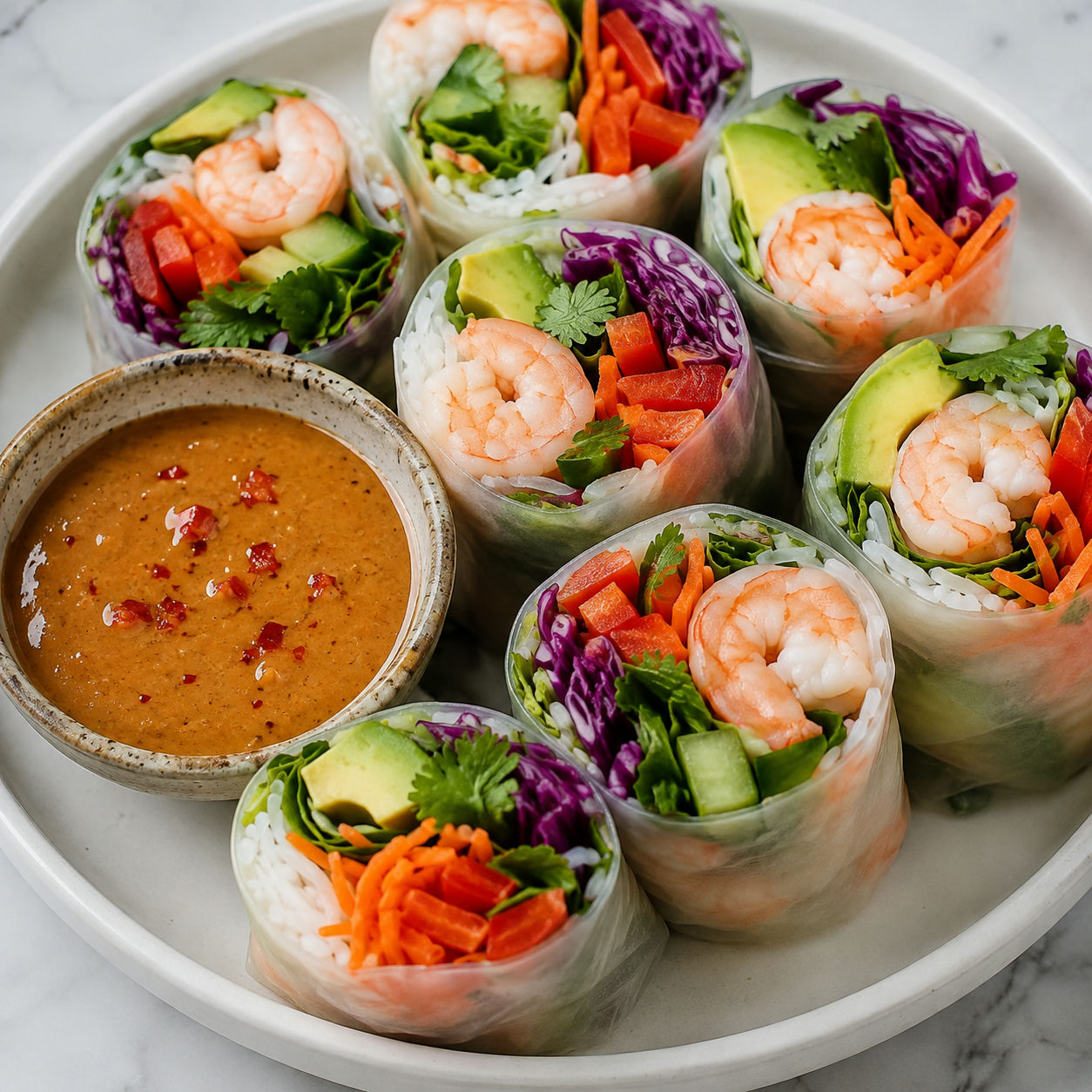
These summer rolls with spicy peanut sauce are light, refreshing, and so satisfying when the fridge is full of crisp vegetables and you want dinner cold, colorful, and still filling.
The trick is not fancy rolling. It is a tidy setup, rice paper that is softened just enough, and a peanut sauce with enough lime and heat to keep every bite bright.
I like these as a weekend lunch, a no-oven dinner, or a party platter with the sauce in the middle. They feel fresh without leaving you hungry an hour later.
Crisp Colorful Roll Fillings
Freshness matters more than exact measurements here. Choose firm cucumber, sweet carrots, crisp cabbage, ripe but not mushy avocado, and cooked shrimp that smells clean and mild.
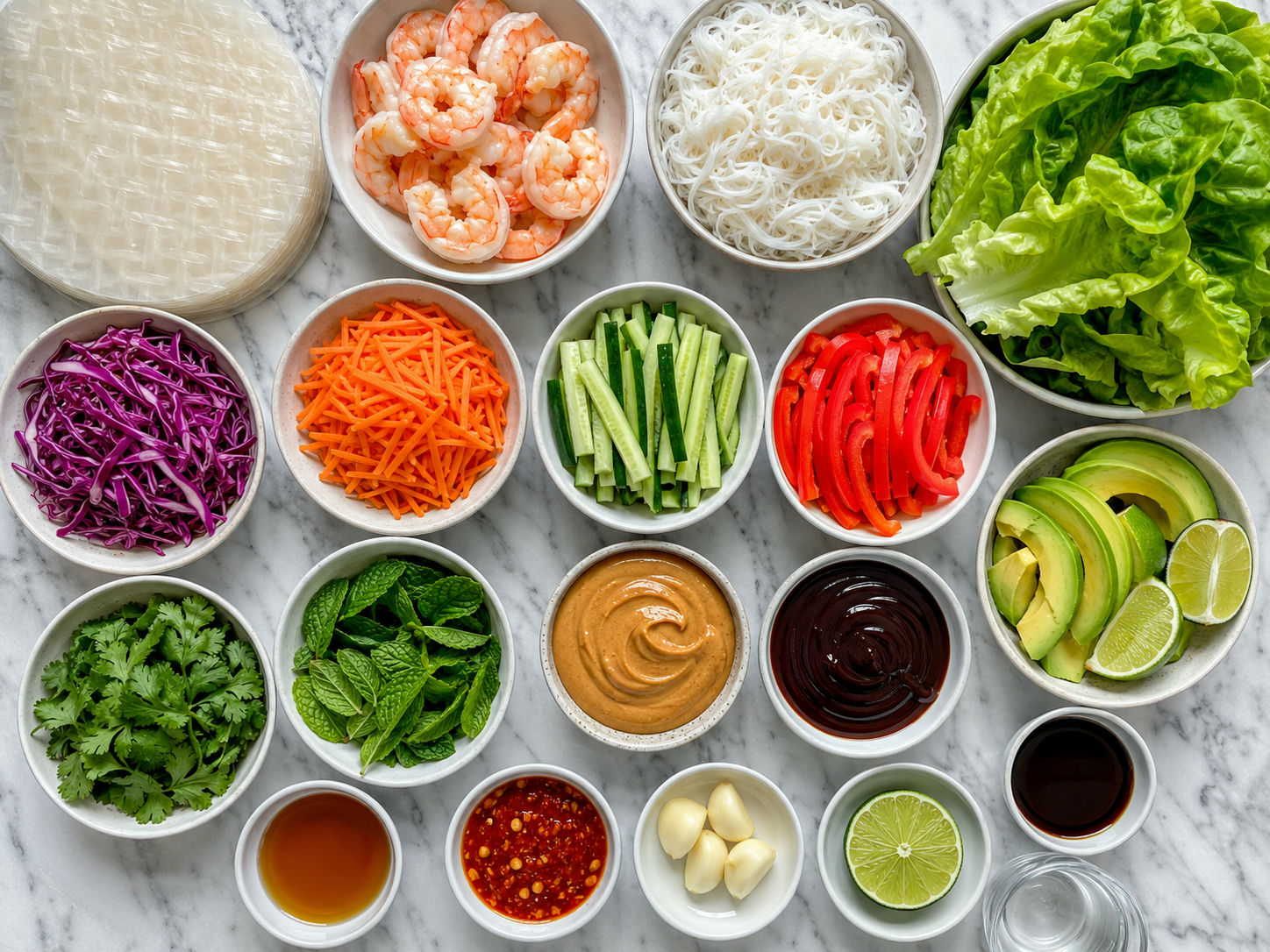
- Rice paper wrappers. They soften into a tender, chewy wrap that holds the whole roll together.
- Cooked shrimp. Adds lean protein and the pink striped look people expect from classic fresh rolls.
- Rice vermicelli. Makes the rolls more filling and gives the sauce something to cling to.
- Butter lettuce. Creates a soft layer that keeps sharp vegetables from poking through the wrapper.
- Red cabbage. Brings crunch, color, and a faint peppery bite.
- Carrots and cucumber. Keep each bite crisp, cool, and clean.
- Red bell pepper. Adds sweetness and a juicy snap.
- Avocado. Gives the roll a creamy center without any dairy.
- Cilantro and mint. Add the fresh herbal lift that makes the rolls taste cold and bright.
- Peanut butter. Forms the creamy base of the dipping sauce.
- Hoisin, soy sauce, lime, sesame oil, and chili garlic sauce. Build the salty, tangy, nutty, spicy balance.
Roll Summer Rolls With Spicy Peanut Sauce
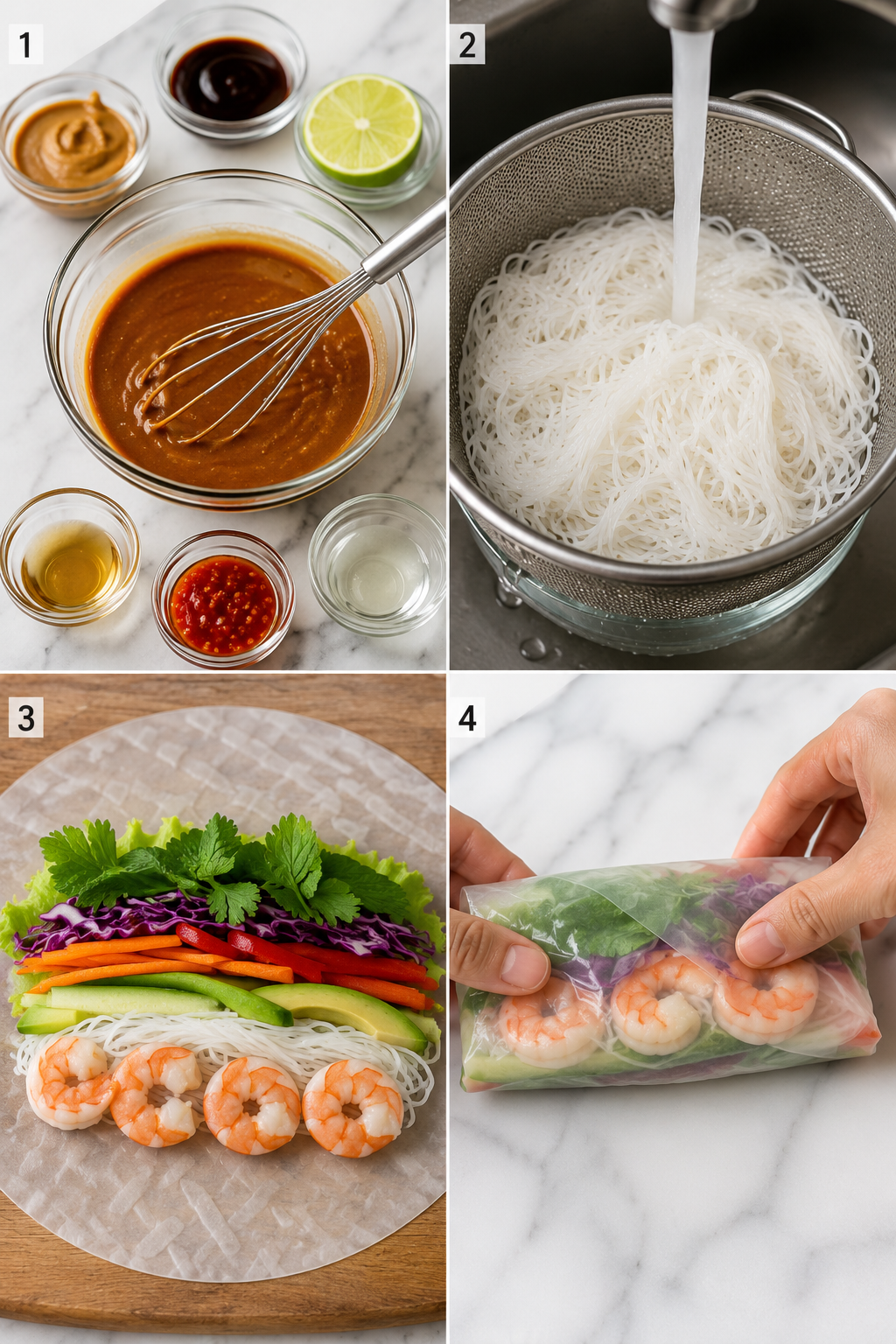
- Make the sauce. Whisk peanut butter, hoisin, soy sauce, lime juice, sesame oil, chili garlic sauce, and warm water until smooth. Add more warm water one spoonful at a time until it dips easily.
- Cook and cool the noodles. Boil the vermicelli until tender, usually 3-5 minutes, then rinse under cold water and drain very well.
- Set up the board. Arrange shrimp, lettuce, vegetables, avocado, herbs, noodles, and a shallow dish of warm water before you wet the first wrapper.
- Soften one wrapper. Dip rice paper in warm water for 5-8 seconds. It should still feel a little firm because it keeps softening as it sits.
- Layer the filling. Place shrimp cut side up near the center, then add lettuce, noodles, vegetables, avocado, and herbs in a compact pile.
- Roll snugly. Fold the bottom over the filling, tuck in the sides, and roll forward with gentle pressure. Serve with spicy peanut sauce right away.
Rice Paper Without Tears
Rice paper is easier when you stop treating it like a tortilla. It should not be fully soft when it leaves the water. A quick dip gives you a wrapper that becomes pliable on the board, which makes it less likely to sag, wrinkle, or tear.
Use a plastic cutting board or a damp clean towel as your rolling surface. Wood can grab the wrapper. Keep the filling tight and narrow, almost like a small log. If your first roll looks messy, eat it as the cook's snack and keep going. The second one usually behaves better.
For more rice paper ideas, the site also has Asian chicken lettuce rice paper rolls and summer rolls for meal prep and parties.
Sauce Balance Matters
The sauce should taste bold on its own because the rolls are mild. Peanut butter gives body, hoisin adds sweetness, soy sauce brings salt, lime sharpens the edges, and chili garlic sauce gives heat. Warm water is not filler. It loosens the peanut butter so the sauce coats instead of clumps.
If your peanut sauce tastes flat, add lime first. If it tastes too sharp, add a small spoonful of hoisin or peanut butter. If it is too thick after resting, whisk in warm water until it falls from the spoon in a ribbon. The peanut dipping sauce from RecipeTin Eats rice paper rolls is a useful reference for how smooth and loose this style of sauce should be.
Shrimp And Food Safety
Cooked shrimp makes this recipe fast, but it still needs careful handling because the rolls are served cold. Keep shrimp chilled while you prep the vegetables, and do not leave the finished platter out for a long stretch on a hot day.
If you start with raw shrimp, poach or saute it until firm and opaque. The FDA recommends cooking seafood to 145 degrees F, and its seafood safety guide also notes that cooked shrimp should have a pearly, opaque look. Cool it before rolling so the rice paper does not become gummy.
Swaps That Keep It Fresh
These rolls are flexible as long as the filling stays crisp and not too wet. Swap shrimp for shredded chicken, tofu, or thin steak. Change the vegetables with mango, bean sprouts, radish, or extra bell pepper. Skip avocado if you need cleaner slices for a party platter.
For a peanut-free sauce, use sunflower seed butter with a little extra lime, or serve the rolls with sweet chili sauce. If you like a sharper dip, borrow the heat from hot honey chili ranch for a fusion platter, but keep this peanut sauce on the side for the classic flavor.
Storage Without Sticking
Summer rolls are at their best the day they are made. To store them, wrap each roll on its own or set them apart with damp parchment. Do not stack bare rolls together. The rice paper will glue itself into one sheet.
Keep the sauce separate in a lidded jar for up to 4 days. It thickens in the fridge, so loosen it with warm water and whisk before serving. Leftover filling is easy to turn into a bowl with noodles on the bottom, vegetables on top, and peanut sauce spooned over everything.
Summary
Fresh rice paper rolls are best served soon after rolling, with the sauce whisked smooth right before serving.
Frequently Asked Questions
- Can I make summer rolls ahead of time?
-
Yes, but they are best within 4-6 hours. Wrap each roll separately in plastic wrap or place them in a container with damp parchment between layers so the rice paper does not dry out or fuse together.
- Can I use chicken or tofu instead of shrimp?
-
Yes. Use shredded cooked chicken, baked tofu strips, or thin omelet strips. Keep the filling pieces narrow so the rolls stay easy to wrap and bite.
- Why are my rice paper wrappers tearing?
-
They were probably soaked too long or packed too full. Dip each wrapper for just a few seconds, then let it finish softening on the board while you add the filling.
- Is the spicy peanut sauce gluten-free?
-
Not automatically. Many soy sauces and hoisin sauces contain wheat, so use certified gluten-free tamari and gluten-free hoisin if needed.
- What can I serve with summer rolls?
-
They work well with cold drinks, noodle salads, or a simple fruit side. For a bigger spread, pair them with spicy dumpling sauce or refreshing sweet tea.
- How do I keep avocado from browning?
-
Slice it right before rolling and toss the slices with a little lime juice. Once tucked inside the rice paper, the avocado is mostly protected from air.
