
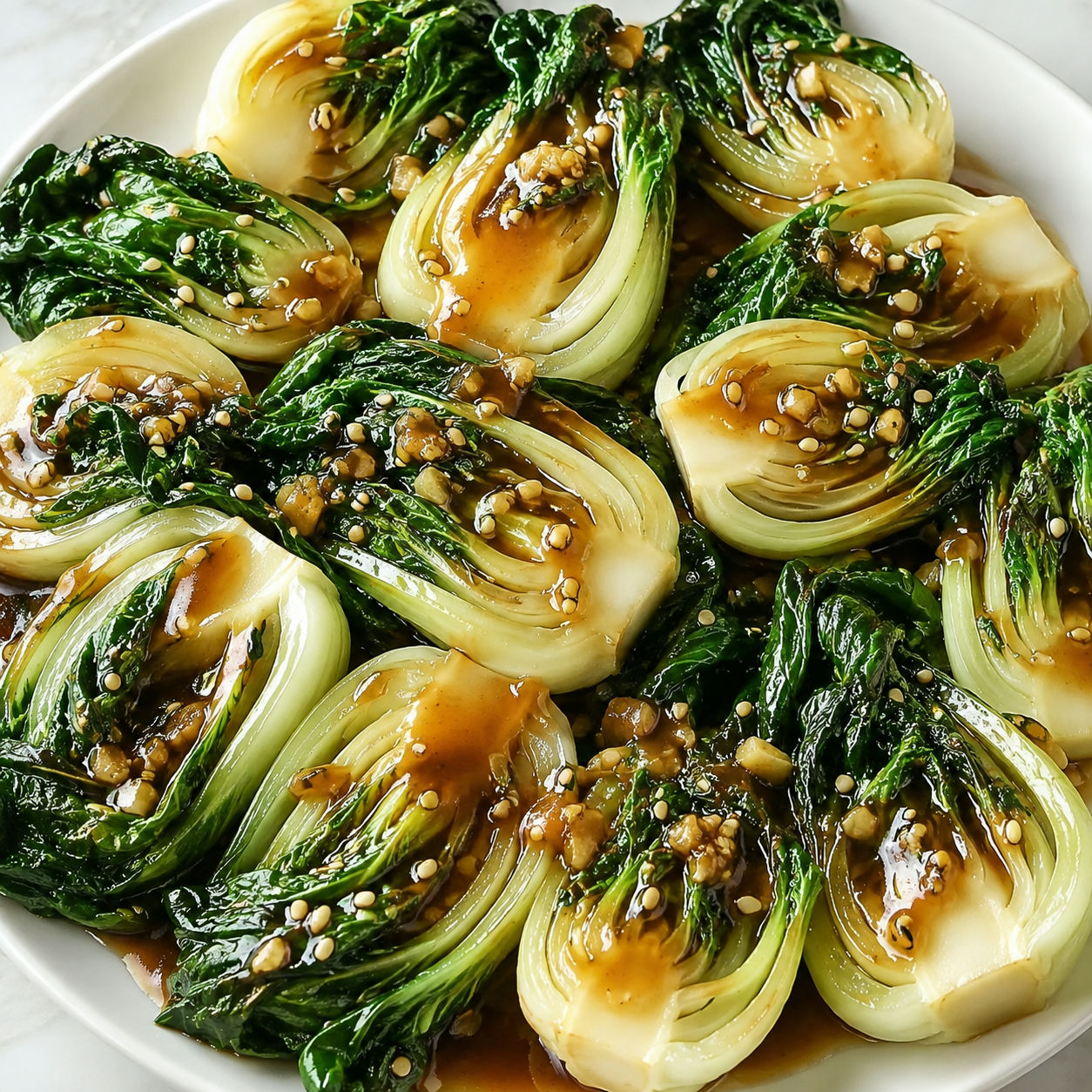
 Pin it
Bok Choy in Garlic Oyster Sauce is the kind of side dish that makes a plain bowl of rice feel finished. The stems stay juicy and crisp, the leaves soften just enough, and the sauce lands salty, glossy, garlicky, and a little sweet.
I like blanching the bok choy first instead of simmering it to death in the sauce. It keeps the vegetable clean-tasting and bright green. The garlic sauce takes barely a minute in the pan, so have everything measured before the heat goes on.
Garlic Sauce Greens
Baby bok choy is best here because the stems cook quickly and look good on a platter. Choose heads with firm pale stems and perky green leaves. A little ginger is optional, but it adds warmth without taking over the garlic oyster sauce.
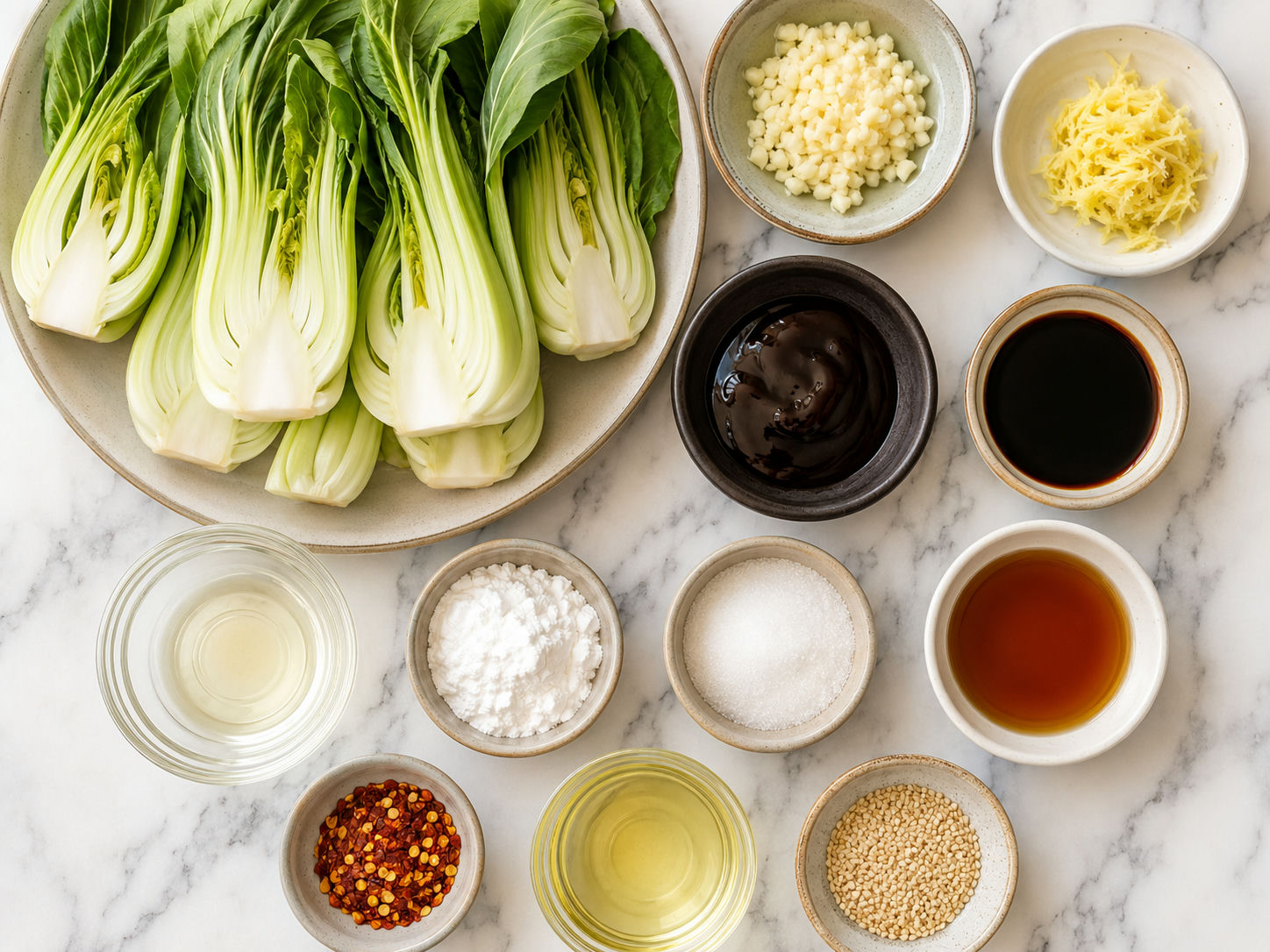
- Baby bok choy. The crisp stems and tender leaves give the dish its fresh bite.
- Oyster sauce. Brings deep savory sweetness and the glossy body of the sauce.
- Low-sodium soy sauce. Adds salt and color without making the sauce harsh.
- Garlic. Cooks briefly in oil so it smells nutty, not bitter.
- Ginger. Adds a clean heat that works well with the greens.
- Cornstarch. Thickens the sauce so it clings to the bok choy instead of sliding off.
- Rice vinegar. Gives a small lift that keeps the sauce from tasting flat.
- Sesame oil. Goes in at the end for aroma.
- Red pepper flakes. Optional, but useful if you like a quiet heat.
Cook Bok Choy in Garlic Oyster Sauce
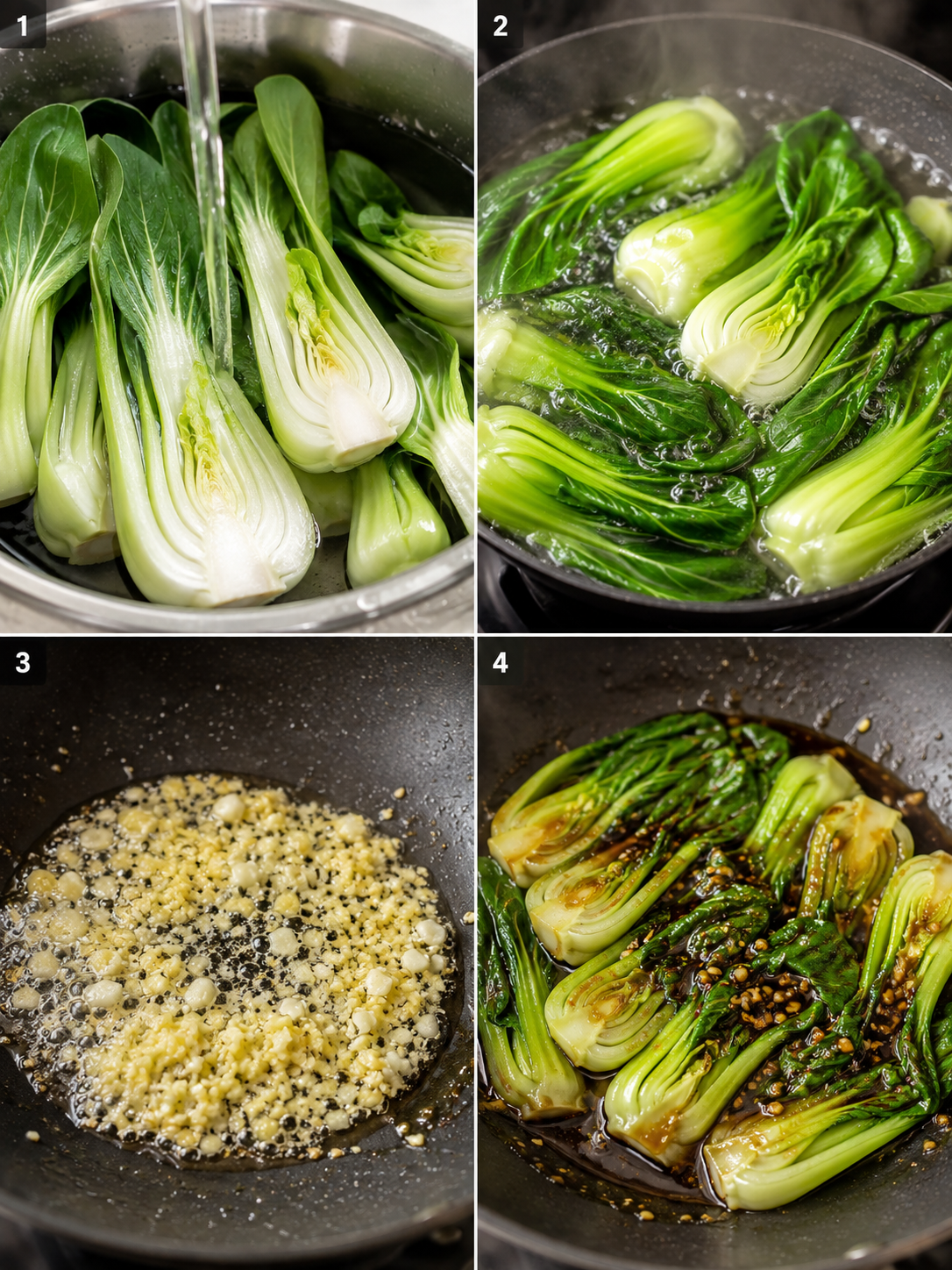
- Wash the bok choy. Trim the dry root ends, halve the heads lengthwise, and rinse between the stems where grit hides.
- Mix the sauce. Stir oyster sauce, soy sauce, water, rice vinegar, sugar, cornstarch, sesame oil, and red pepper flakes in a small bowl until smooth.
- Blanch the greens. Boil a large pot of water with a pinch of salt. Add the bok choy and cook for 45-60 seconds, just until the leaves turn glossy green and the stems start to bend.
- Drain well. Move the bok choy to a colander and let it sit for a minute. Shake off extra water so the sauce stays shiny and concentrated.
- Sizzle the aromatics. Heat oil in a skillet or wok over medium heat. Add garlic and ginger and stir for 20-30 seconds until fragrant.
- Thicken and serve. Stir the sauce again, pour it into the pan, and simmer for about 1 minute until glossy. Spoon it over the warm bok choy and serve right away.
Bok Choy in Garlic Oyster Sauce Tips
The make-or-break move is short cooking. Bok choy should not collapse into limp ribbons. Blanch it only until the thick stems lose their raw snap, then drain it well. The Food Network version also keeps the cook time brief, which is why the finished greens stay crisp-tender.
Do not walk away from the garlic. It only needs a few seconds in hot oil. Pale gold is good. Brown and crunchy is too far for this sauce because burnt garlic turns sharp fast.
How Thick Should Sauce Be
The sauce should coat the back of a spoon, not set like gravy. If it thickens too much, whisk in a tablespoon of water while it bubbles. If it looks thin after a minute, simmer it for another 20 seconds and keep stirring.
Oyster sauce is already rich and salty, so low-sodium soy sauce keeps the balance easier. The classic pairing of bok choy, garlic, soy sauce, and oyster sauce shows up in many quick Chinese-style vegetable sides, including this Lee Kum Kee bok choy recipe. Taste before adding extra salt.
Smart Swaps That Work
Regular bok choy works if you cut it smaller. Shanghai bok choy works too and tastes a little sweeter. For the sauce, mushroom oyster sauce is the best vegetarian swap. It keeps the same dark, savory feel.
If you want more heat, add chili crisp at the table rather than loading the pan with flakes. For a bigger meal, tuck the greens beside spicy garlic beef noodles or spoon the extra sauce over rice with garlic butter chili shrimp.
Serving It Without Fuss
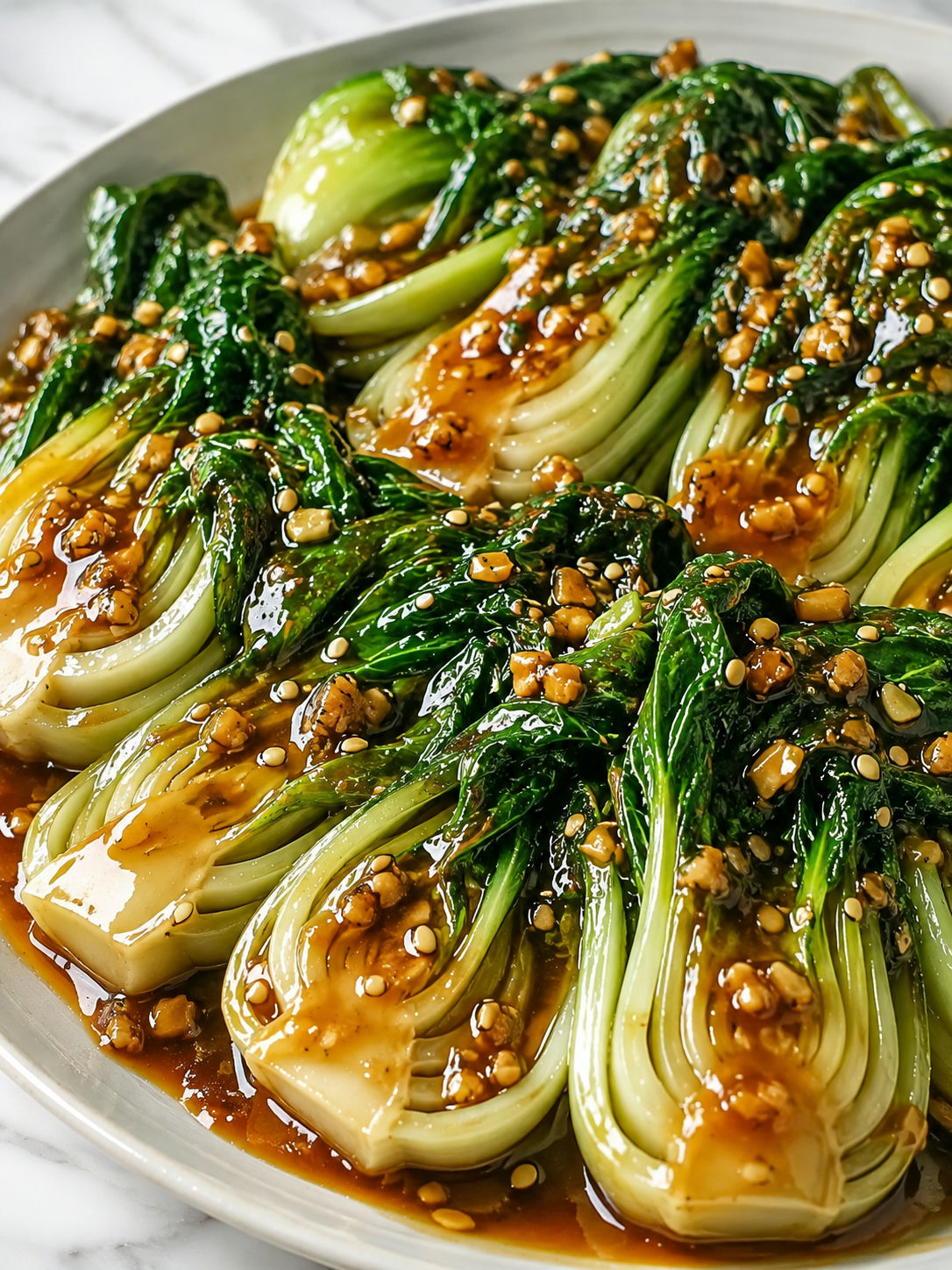
Arrange the bok choy cut-side up on a shallow platter, then spoon the glossy garlic oyster sauce over the stems first. The thick parts need the most seasoning. A small pile of rice nearby will catch the extra sauce.
This side also fits well with dumplings and soups. Pair it with spicy dumpling sauce for a snack-style dinner, or serve it next to popular Asian green vegetables side dish when you want a bigger vegetable spread.
Leftovers And Reheating
Store leftovers in an airtight container for up to 3 days. The flavor gets stronger as it sits, but the stems lose some snap. Reheat in a skillet over medium-low heat with a spoonful of water. Stop as soon as the sauce loosens and the bok choy is warm.
I do not recommend freezing it. The stems turn soft after thawing, and the sauce can separate. If you want to prep ahead, wash and halve the bok choy, mix the sauce, and keep both chilled separately.
Summary
Serve this bok choy hot, with extra sauce spooned over the stems so every bite gets a little garlic and oyster sauce sheen.
Frequently Asked Questions
- Can I use regular bok choy instead of baby bok choy?
-
Yes. Slice regular bok choy crosswise into thick stem pieces and leafy pieces. Blanch the stems first for about 45 seconds, then add the leaves for the last 20-30 seconds so both parts cook evenly.
- What can I use instead of oyster sauce?
-
For a vegetarian version, use mushroom oyster sauce. It gives a similar dark, savory sweetness. Hoisin is sweeter and thicker, so use less sugar and thin it with a little water if that is what you have.
- How do I keep bok choy from turning watery?
-
Drain it very well after blanching and let steam escape for a minute before saucing. If water pools on the platter, tilt it off before adding the garlic oyster sauce.
- Can I make this ahead?
-
You can wash and cut the bok choy a day ahead and mix the sauce a few hours ahead. Cook it right before serving. Leftovers are still tasty, but the stems soften once they sit in the sauce.
- Is bok choy in garlic oyster sauce gluten-free?
-
Not automatically. Many soy sauces and some oyster sauces contain wheat. Use certified gluten-free tamari and a gluten-free oyster sauce if you need the dish to be gluten-free.
- What should I serve with this bok choy?
-
Serve it with steamed jasmine rice, fried rice, noodles, dumplings, salmon, shrimp, or grilled chicken. The sauce is strong enough to carry a simple bowl but light enough to sit beside a saucy main.
