
 Pin it
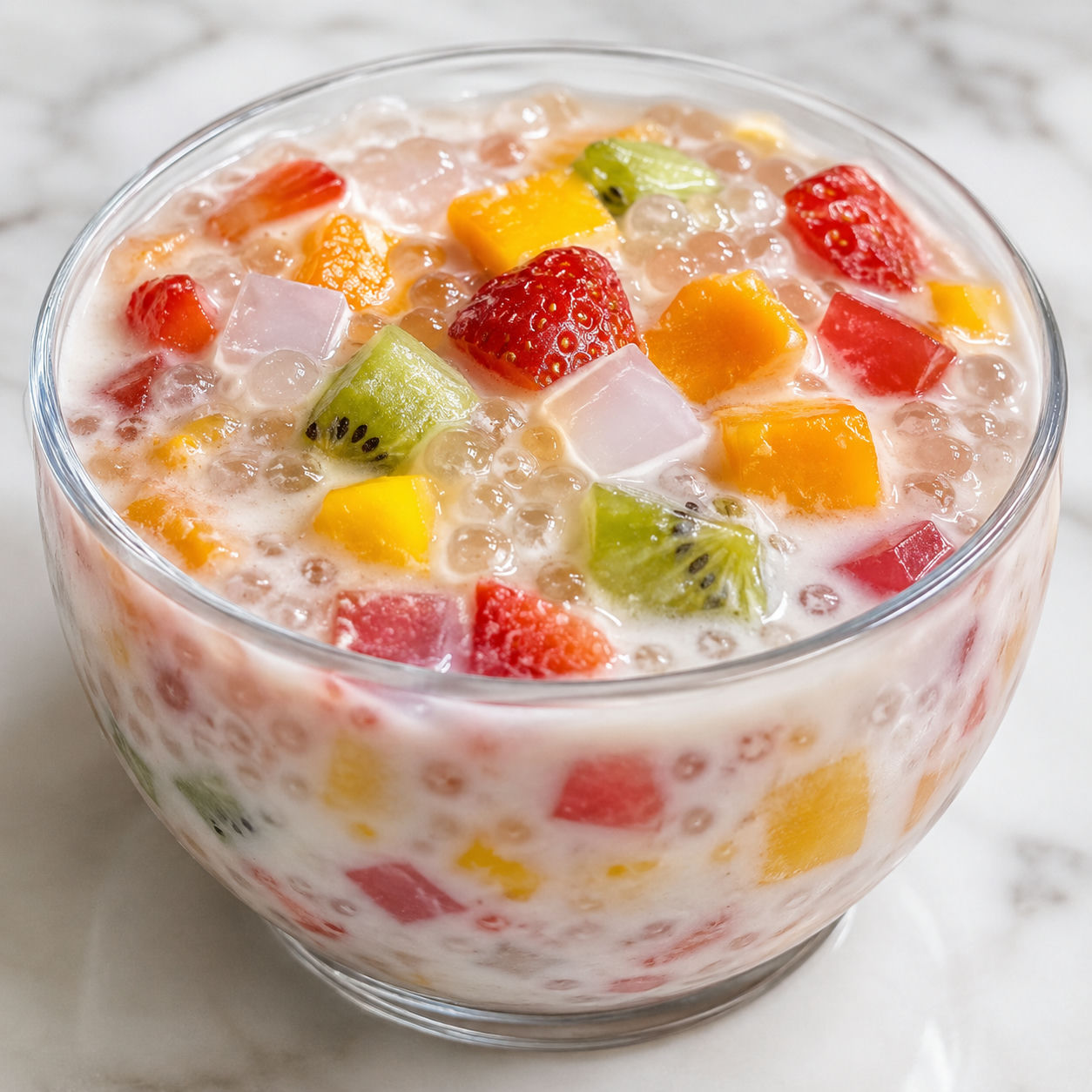
Tropical fruit sago is part dessert, part drink, and exactly what I want when the fridge is full of ripe fruit. You get chewy pearls, cold coconut milk, little pops of jelly, and sweet fruit in every spoonful.
This version is creamy but still pourable. Mango gives the base body, strawberries add brightness, and kiwi cuts through the sweetness so the whole pitcher tastes fresh instead of heavy.
Tropical Fruit Sago Lineup
Pick fruit that smells ripe before you cut it. Mango should be soft at the stem end, strawberries should look glossy, and kiwi should give slightly when pressed.
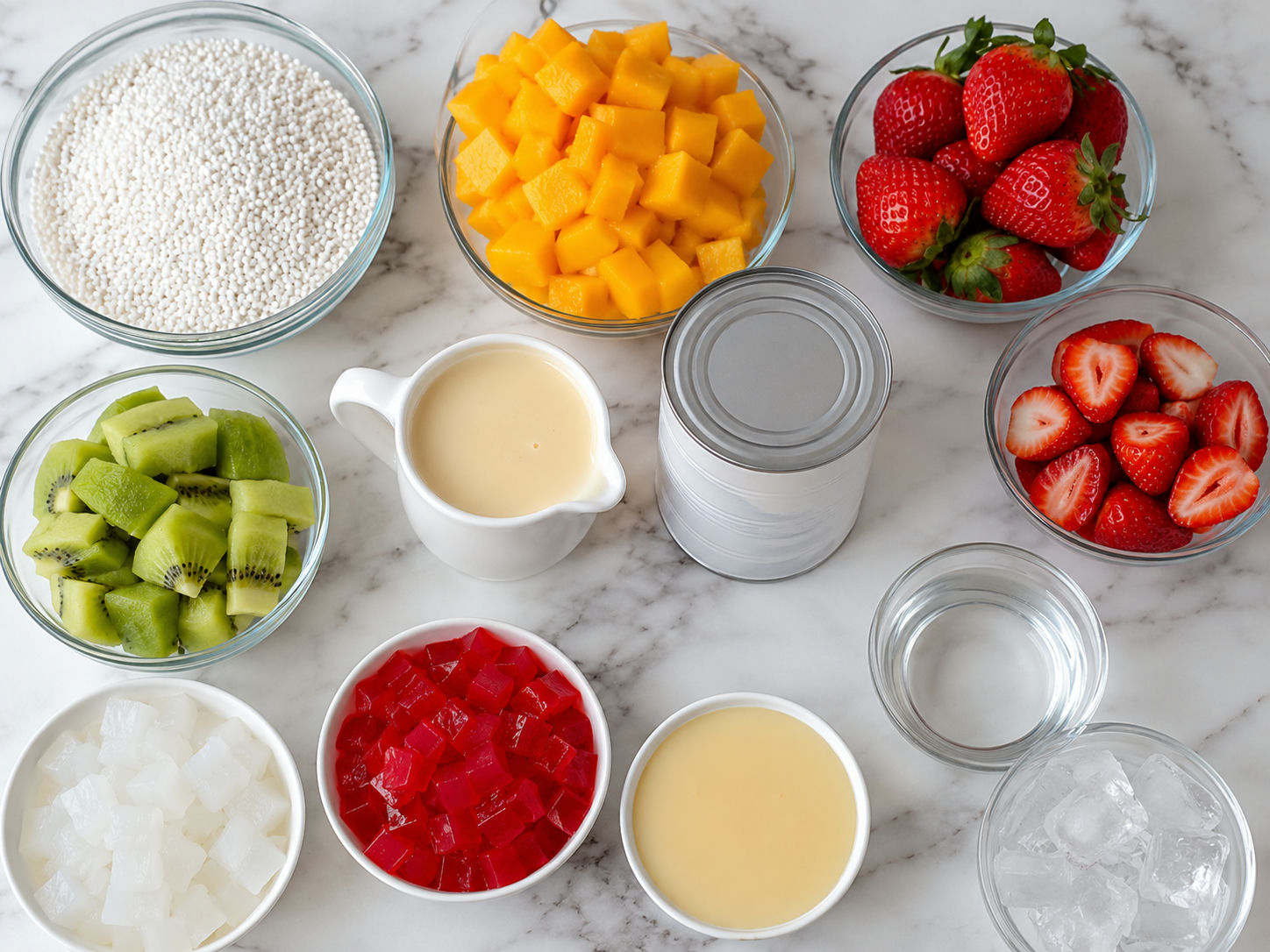
- Small sago pearls. They bring the soft, chewy texture that makes the drink feel like dessert.
- Mango. Some goes into the bowl as cubes, and some can be lightly mashed to thicken the coconut base.
- Strawberries. They add color and a clean berry flavor that keeps the drink lively.
- Kiwi. Its tart edge balances the condensed milk.
- Nata de coco. These coconut jelly cubes add a crisp chew and make each glass more fun.
- Coconut milk. It gives the drink its tropical richness.
- Evaporated milk. It softens the coconut flavor and makes the base smooth.
- Sweetened condensed milk. It sweetens and thickens the drink, so add it gradually.
- Cold water or ice. It loosens the mixture when you want it more sip-friendly.
Cook, Mix, Chill
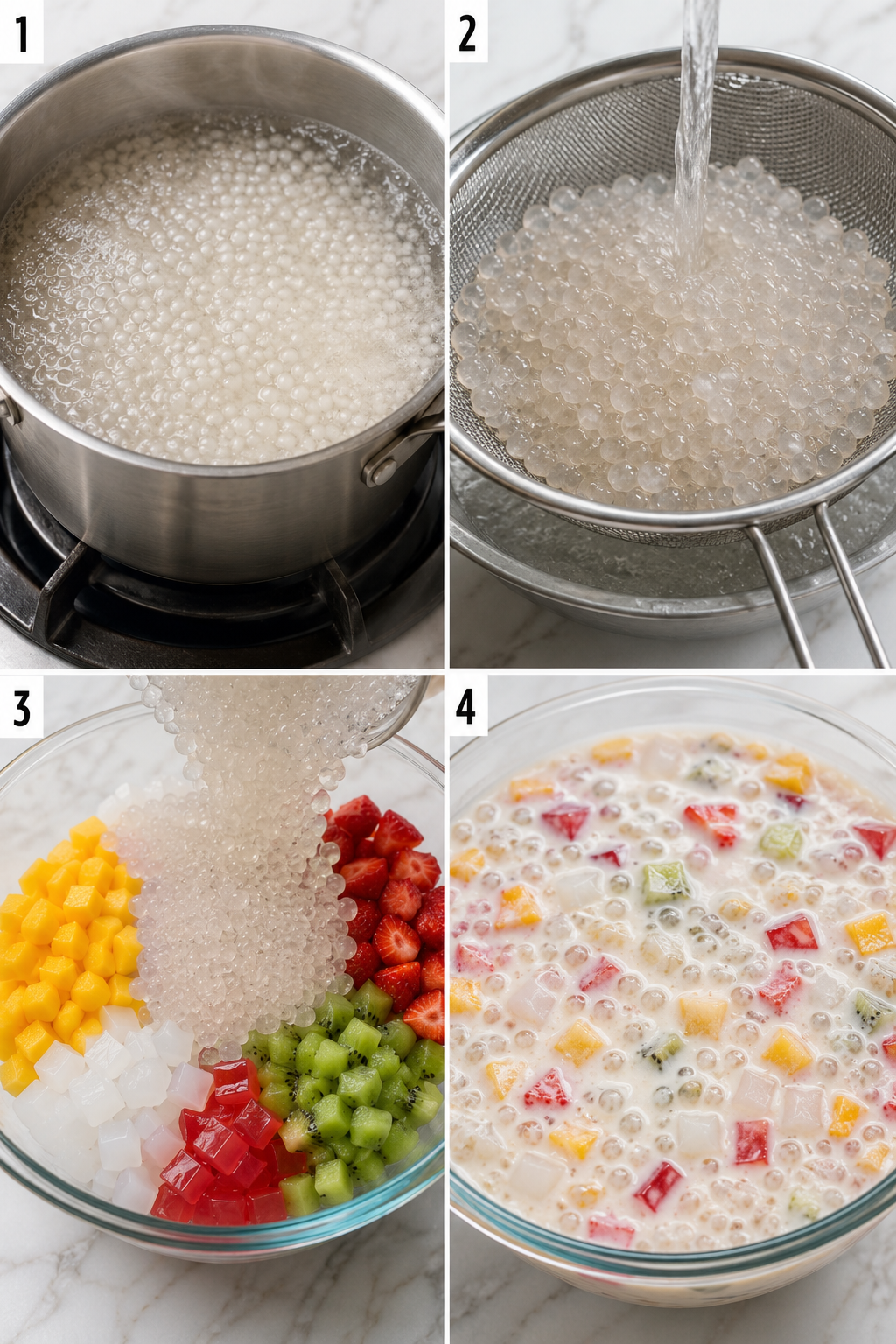
- Boil the pearls. Cook the sago in plenty of boiling water until mostly translucent, then cover off the heat for a few minutes if the centers still look white.
- Rinse until cool. Drain the pearls in a fine-mesh sieve and rinse with cold water to stop the cooking and remove extra starch.
- Cut the fruit. Dice the mango, strawberries, and kiwi into small spoonable pieces. Keep the kiwi separate if you are making the drink far ahead.
- Make the creamy base. Stir coconut milk, evaporated milk, and condensed milk in a large pitcher or bowl until smooth.
- Fold everything together. Add the drained sago, fruit, and nata de coco. Stir gently so the mango and berries stay pretty.
- Chill before serving. Refrigerate for at least 1 hour, then thin with cold water or serve over ice.
Pearls Need Room
Sago looks tiny at first, but it swells and releases starch as it cooks. Use a roomy pot with more water than you think you need. Stir during the first few minutes so the pearls do not settle and stick to the bottom. If a few pearls still have a small white dot after simmering, turn off the heat, cover the pot, and let them finish gently. That short rest gives a better texture than boiling them hard until they split.
Once the pearls are translucent, rinse them with cold water. This step is not just for cooling. It washes away surface starch so the finished drink stays creamy instead of gluey. If you like chewy drinks, you might also enjoy this green sago drink with a softer, cooler flavor.
Balance The Sweetness
Condensed milk can take over fast, especially when the fruit is already ripe. Start with 1/2 cup, stir, then taste after the mixture has chilled for at least 30 minutes. Cold dulls sweetness a little, while ice will dilute it. That is why the base should taste just slightly sweeter than you want before it goes into the fridge.
The best bowls have contrast. Mango gives round sweetness. Strawberries add a little acidity. Kiwi keeps each sip from feeling flat. If you are shopping for fruit on a budget, the same ripeness cues from classic mixed fruit salad apply here. For food safety, rinse fresh produce under running water before cutting, as the FDA produce guide recommends.
Make It More Drinkable
This recipe lands between a spoon dessert and a creamy cooler. For a thicker bowl, leave it as written and serve with spoons. For a party pitcher, stir in 1 to 2 cups cold water, coconut water, or crushed ice right before serving. Do not add too much ice early. It melts in the fridge and makes the coconut base taste thin.
You can also blend half of the mango with the coconut milk before mixing everything together. That makes the base golden and a little thicker without needing extra condensed milk. For a colder drink table, serve this beside coconut lime slush or refreshing sweet tea recipes. The colors look good together, and guests get one creamy option and one lighter option.
Fruit Swaps That Work
Keep the sago, coconut milk, and sweetened milk as the base, then change the fruit with the season. Dragon fruit makes it bright and speckled. Lychee adds a floral bite. Ripe watermelon makes it lighter, but drain extra juice first so the milk does not get watery. If watermelon is your pick, this guide on choosing the best watermelon helps you find one that is sweet enough for dessert.
Skip pineapple if you plan to store leftovers for more than a day. It can turn sharper as it sits with dairy. Bananas are also tricky because they brown and soften quickly. If you want them, add slices directly to each glass right before serving.
Storage For Gatherings
Tropical fruit sago tastes best cold and freshly stirred. Store it covered in the refrigerator for 2 days, or 3 days if the fruit is firm and very fresh. The pearls keep absorbing liquid, so leftovers often need a splash of cold water or milk before serving. Add kiwi on day two only if you want it to keep a clean shape and bright color.
For cookouts, keep the pitcher nested in a bowl of ice and set out smaller amounts at a time. The USDA food safety basics advise refrigerating perishable foods within 2 hours, or within 1 hour when the temperature is above 90°F. This drink has dairy and cut fruit, so treat it like a chilled dessert.
Summary
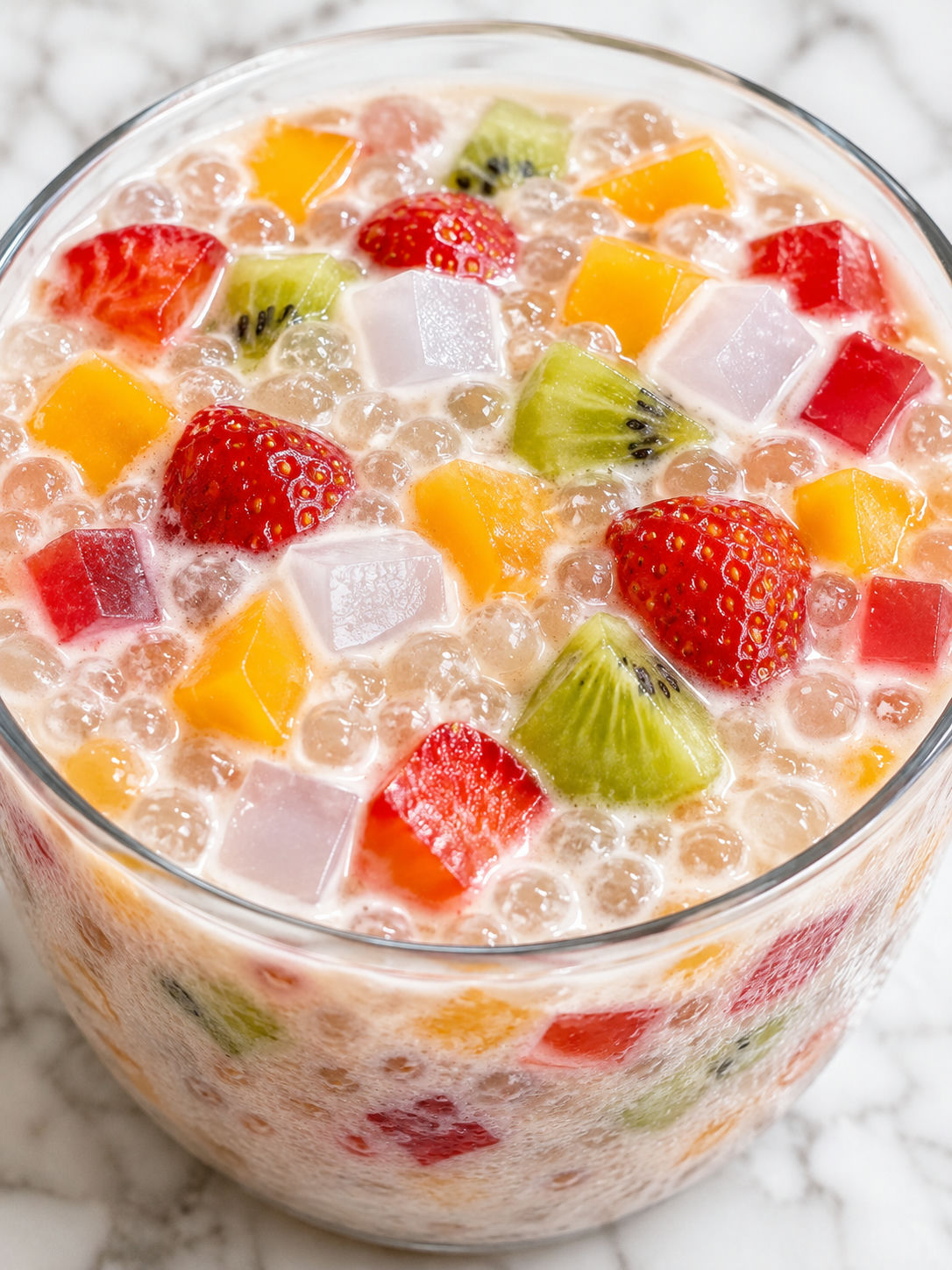
Serve tropical fruit sago very cold, with plenty of chewy pearls and small fruit pieces in each glass. It is easy to scale for a family gathering and flexible enough for whatever ripe fruit you have.
Frequently Asked Questions
- What is tropical fruit sago?
-
It is a chilled dessert drink made with cooked sago pearls, fruit, coconut milk, and sweetened milk. It is usually served in glasses or bowls because it is thick, creamy, and full of chewy bits.
- Can I use tapioca pearls instead of sago?
-
Yes. In many U.S. grocery stores, small tapioca pearls are the easiest stand-in for sago. Cook them until they look mostly clear, then rinse them well so they do not clump.
- Can I make tropical fruit sago ahead?
-
Yes, but it is best within 24 hours. Cook the pearls and mix the milk base ahead, then add softer fruit like kiwi closer to serving so it keeps its shape.
- How do I keep sago pearls from sticking?
-
Use plenty of boiling water and stir during the first few minutes. After cooking, rinse the pearls under cold water and drain them well before adding them to the milk base.
- Can I make this dairy-free?
-
Yes. Use full-fat coconut milk and sweetened condensed coconut milk instead of evaporated milk and dairy condensed milk. Add cold coconut water if you want a lighter, more drinkable texture.
- What fruit works best in fruit sago?
-
Mango, strawberries, kiwi, dragon fruit, lychee, and ripe melon all work well. Choose fruit that is sweet, juicy, and firm enough to hold its shape after chilling.
