
 Pin it
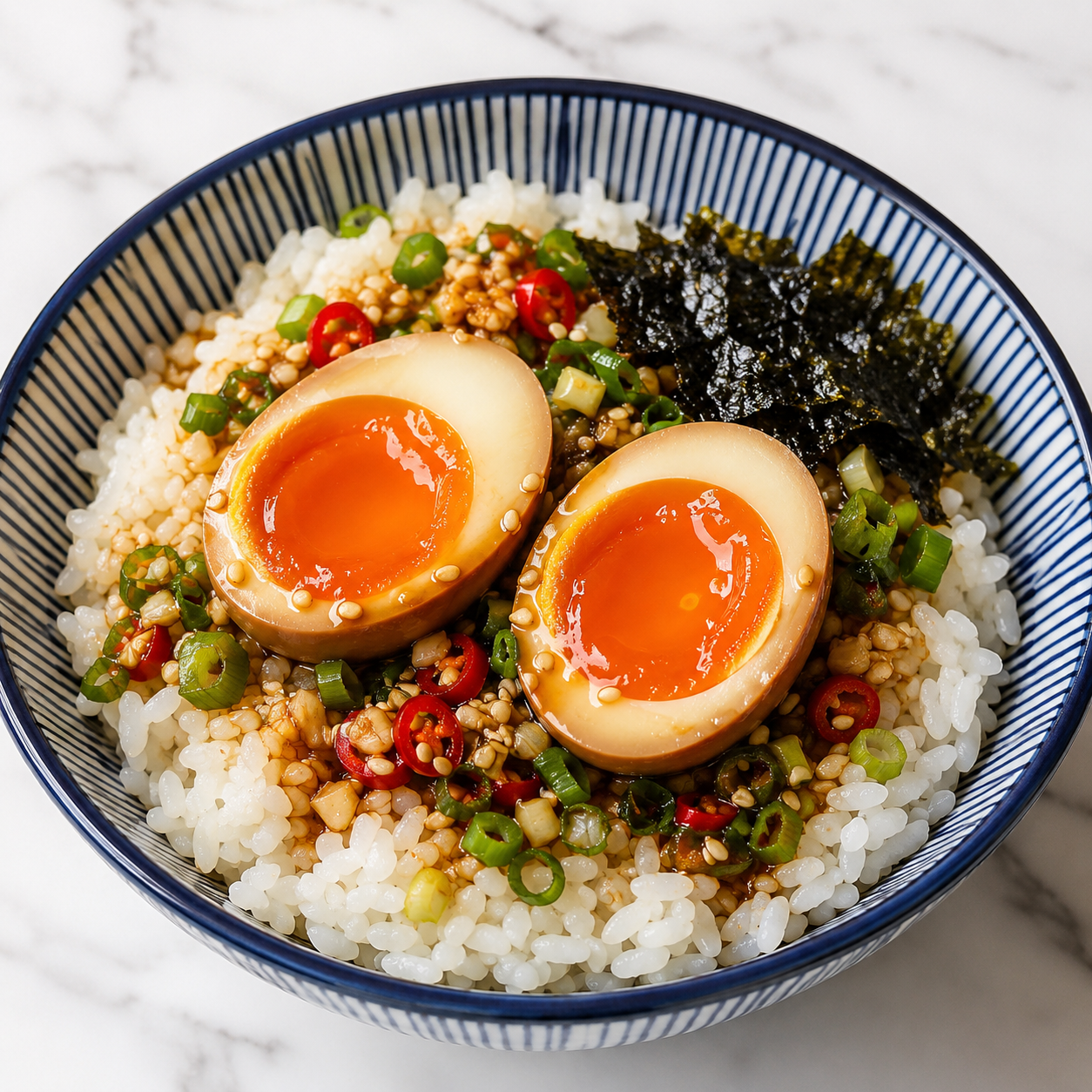
These Korean Mayak Eggs are dangerously addictive. That sounds dramatic until you cut one open over hot rice and the jammy yolk slides into the salty-sweet soy marinade.
The recipe is simple, but the details matter. A real ice bath keeps the yolks soft, a balanced marinade keeps the eggs from tasting flat, and a little time in the fridge does most of the work.
I like them as a quick lunch with rice, cucumber, and roasted seaweed. They also make a strong little side dish beside noodles, grilled meat, or anything that needs a savory punch.
The Soy-Soaked Lineup
Use eggs you can peel cleanly and a soy sauce you already like, because there is nowhere for harsh flavor to hide. Fresh garlic, scallions, sesame, and chilies give the marinade its bite and texture.
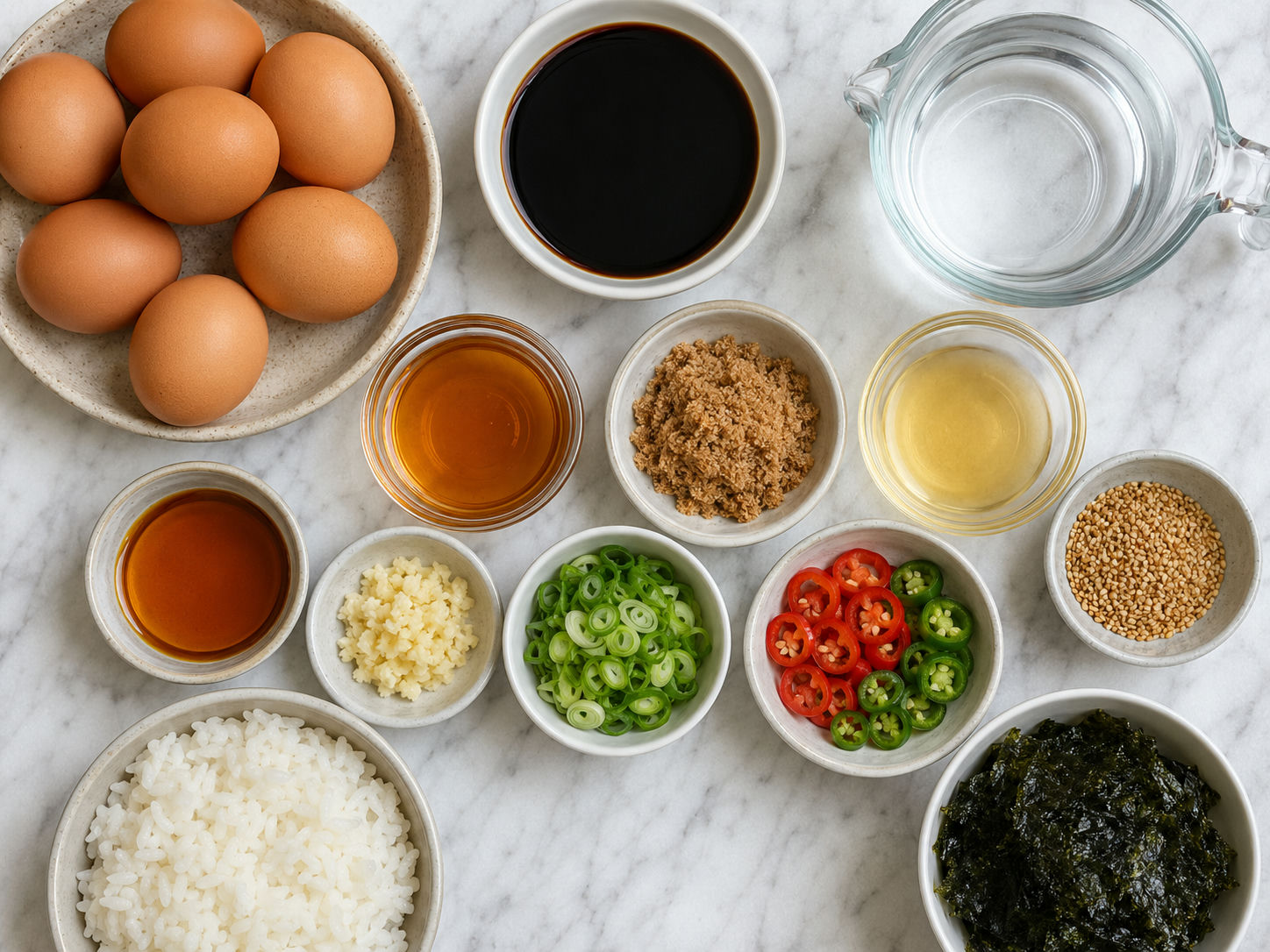
- Large eggs. They cook into tender whites with rich, jammy centers that soak up the marinade.
- Soy sauce. The salty, savory base that stains the egg whites and seasons each bite.
- Water. Softens the soy sauce so the eggs marinate without turning aggressively salty.
- Honey and brown sugar. Round out the soy sauce and give the marinade a gentle gloss.
- Rice vinegar. Adds a clean tang that keeps the eggs from tasting heavy.
- Garlic. Brings the sharp, savory edge that makes the marinade smell incredible.
- Green onions. Add freshness and a little crunch when spooned over rice.
- Red and green chilies. Bring color and heat. Remove the seeds for a milder batch.
- Sesame oil and sesame seeds. Add nutty aroma and the finish that makes the bowl taste complete.
How The Eggs Come Together
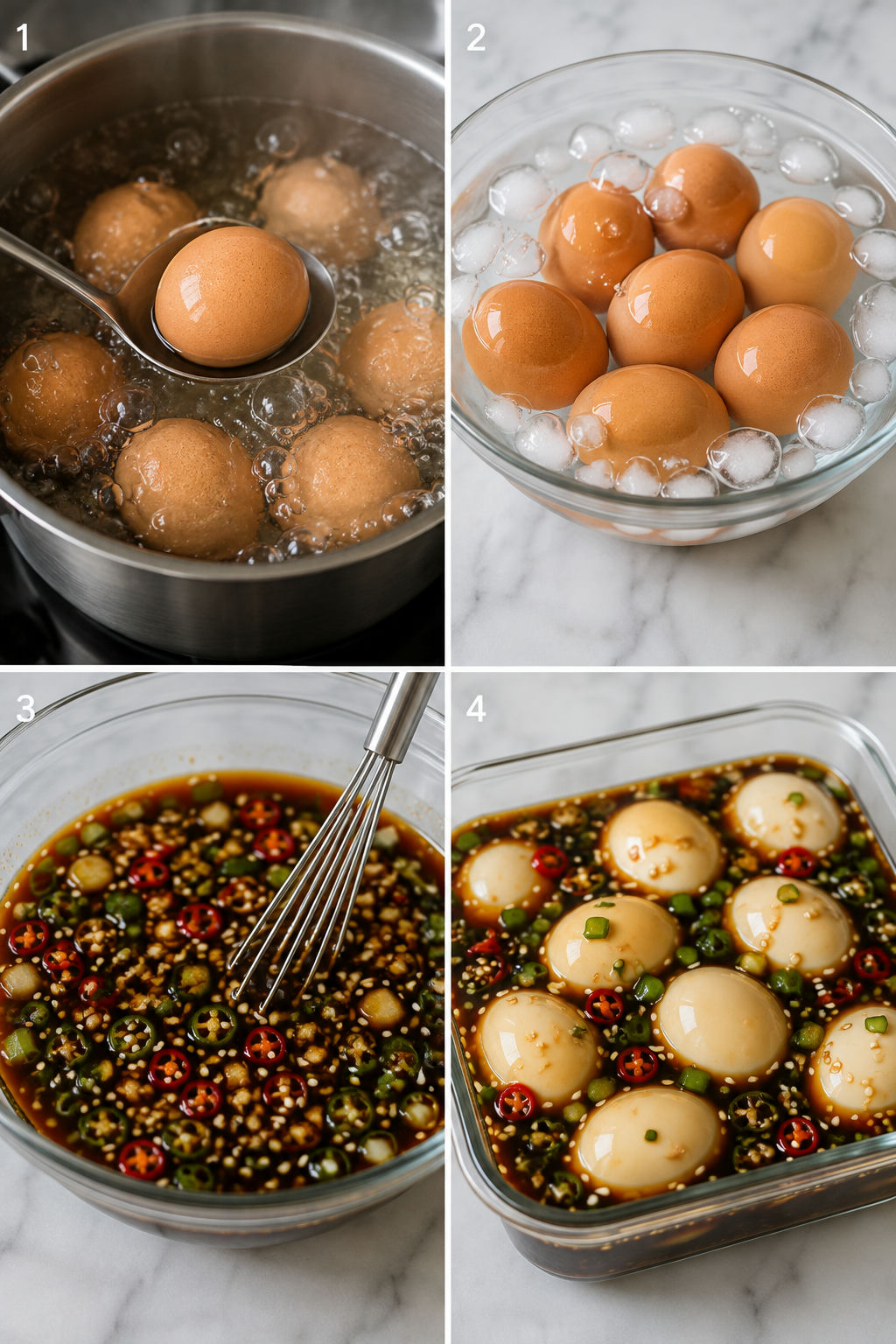
- Boil the eggs. Bring water to a steady boil, lower in the eggs, and cook 6-7 minutes for jammy yolks. Stir gently for the first 30 seconds if you want the yolks more centered.
- Chill them fast. Move the eggs straight into a bowl of ice water and let them cool for at least 10 minutes. This stops the cooking and makes peeling easier.
- Mix the marinade. Stir soy sauce, water, honey, brown sugar, rice vinegar, and sesame oil until the sweeteners dissolve. Add garlic, green onions, chilies, and sesame seeds.
- Peel with patience. Crack each shell all over and peel under a thin stream of cool water. Start at the wider end where the air pocket usually sits.
- Marinate until seasoned. Place the peeled eggs in a snug container, pour the marinade over them, cover, and refrigerate at least 6 hours. Turn the eggs once if they are not fully submerged.
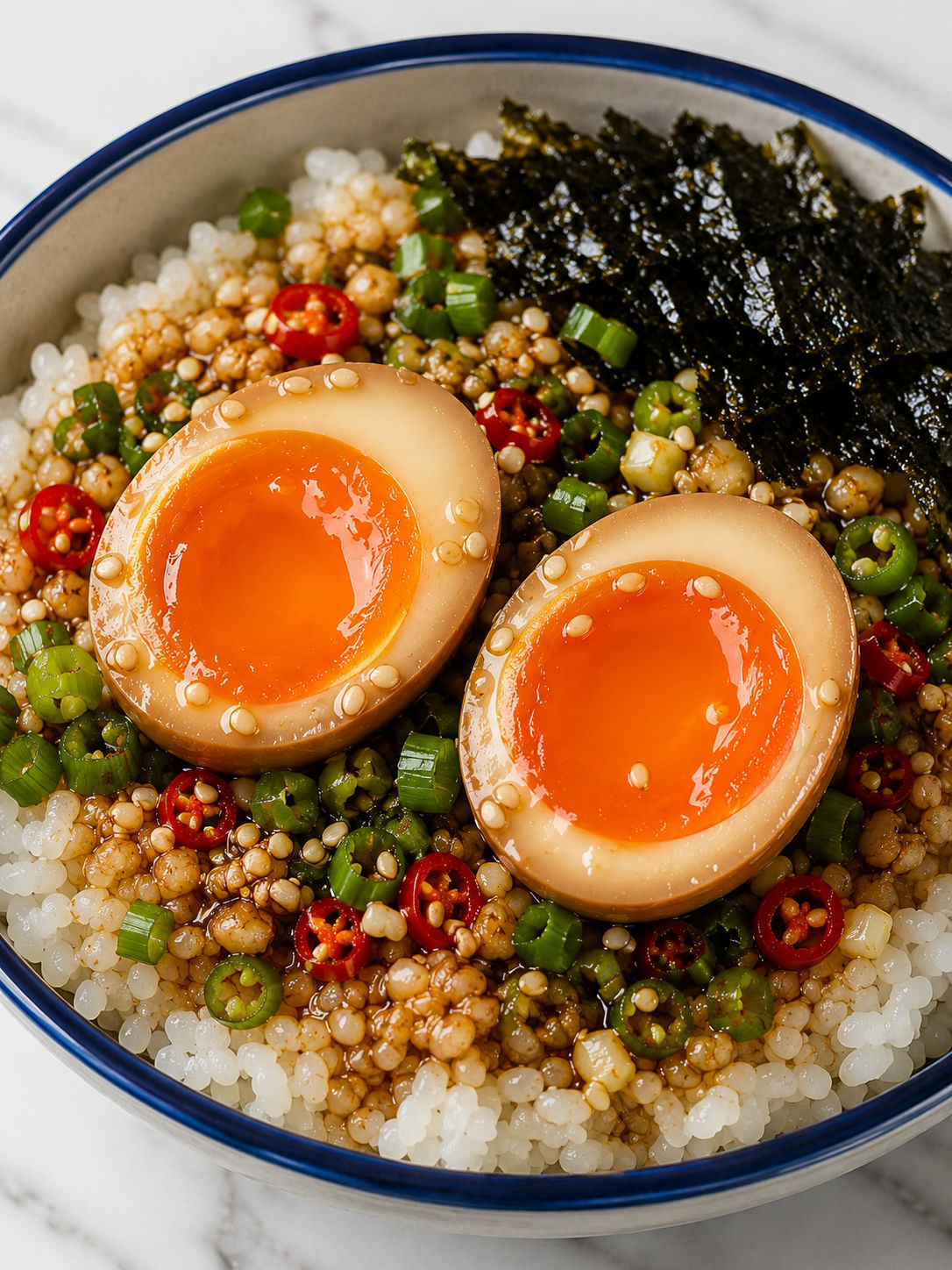
- Serve over rice. Halve the eggs, set them on hot rice, and spoon the marinade bits over the top. Add seaweed, chili oil, or cucumber if you like.
The Jammy Yolk Window
For these eggs, 6-7 minutes is the sweet spot in boiling water. Six minutes gives a softer center. Seven minutes gives a yolk that is still glossy but a little more set. Egg size, fridge temperature, and pot size can shift the result, so set a timer and use the same method next time if you love the texture.
The ice bath is not optional. Carryover heat keeps cooking the yolk after the egg leaves the pot. A cold shock locks in the center and firms the white enough to peel. If egg prep is part of your weekly rhythm, the storage basics in How to Store Eggs the Right Way are worth keeping handy.
These Korean Mayak Eggs are dangerously addictive
The hook is balance. Soy sauce gives salt and umami, honey softens the edges, vinegar wakes it up, and sesame oil adds a nutty finish. The garlic and scallions stay raw, so they keep a sharp bite that cuts through the yolk.
Mayak gyeran is known for that sweet-savory pull. Christie at Home notes the Korean name and common soy-marinated style in her Mayak Eggs recipe. This version leans into a rice-bowl balance, with enough water in the marinade to keep the eggs seasoned instead of harsh.
How To Serve The Bowl
Hot rice is the easiest base because it catches every drop of marinade. Slice the eggs in half, spoon over the garlicky scallion bits, and add roasted seaweed or cucumber for crunch. For a bigger Korean-style spread, pair them with Spicy Korean Cucumber Salad, Japchae, or Korean Corn Cheese.
If you are packing lunch, keep the eggs and rice separate until eating. Cold eggs over warm rice are great. Fully reheating the eggs can push the yolks past jammy.
Storage Without Guesswork
Keep Mayak Eggs refrigerated in a covered container and eat them within 3-4 days for the best texture. The USDA egg safety guide says hard-cooked eggs should be refrigerated within 2 hours and used within a week. These marinated soft-boiled eggs have fresh garlic and scallions in the mix, so I keep the window shorter.
Do not leave the container out on the counter while you snack from it. The FDA egg safety guidance recommends keeping cooked eggs refrigerated and limiting time at room temperature.
Swaps That Still Taste Right
For less heat, skip the fresh chilies or use thin strips of red bell pepper. For more heat, add gochugaru or a spoonful of chili crisp when serving. Maple syrup can replace honey, but it will add its own flavor. Plain sugar works too, as long as you stir until it dissolves.
For a gluten-free batch, use certified gluten-free tamari instead of soy sauce. If you want a bigger pickled-egg mood, the method in Pickled Eggs Just Got a Serious Upgrade is a fun next stop, but Mayak Eggs stay softer, sweeter, and more rice-friendly.
Frequently Asked Questions
- What are Korean Mayak Eggs?
-
Korean Mayak Eggs, also called mayak gyeran, are peeled soft-boiled eggs soaked in a soy-based marinade with garlic, scallions, sesame, sweetness, and chilies. The whites turn savory and seasoned while the yolks stay rich and jammy.
- Can I make Mayak Eggs with hard-boiled eggs?
-
Yes. Cook the eggs for about 10-11 minutes if you want firm yolks. The flavor still works, but the soft, custardy center is what makes the rice bowl feel rich without adding much else.
- Can I use tamari instead of soy sauce?
-
Yes. Use gluten-free tamari in the same amount for a gluten-free version. If your tamari tastes stronger than regular soy sauce, add 1-2 extra tablespoons of water to soften the saltiness.
- How long should Mayak Eggs marinate?
-
They taste good after 6 hours and better after 12-24 hours. After that, the whites keep getting saltier and firmer, so I like eating them within 3-4 days.
- Can I reuse the marinade?
-
I do not reuse it for another batch of eggs. It has held cooked eggs and fresh aromatics, so the cleaner move is to make a fresh marinade. You can spoon leftover marinade over rice, noodles, or vegetables within the same storage window.
- What should I serve with Mayak Eggs?
-
Warm white rice is the classic base. Add cucumber salad, kimchi, roasted seaweed, sesame seeds, or a drizzle of chili oil if you want a fuller bowl.
