
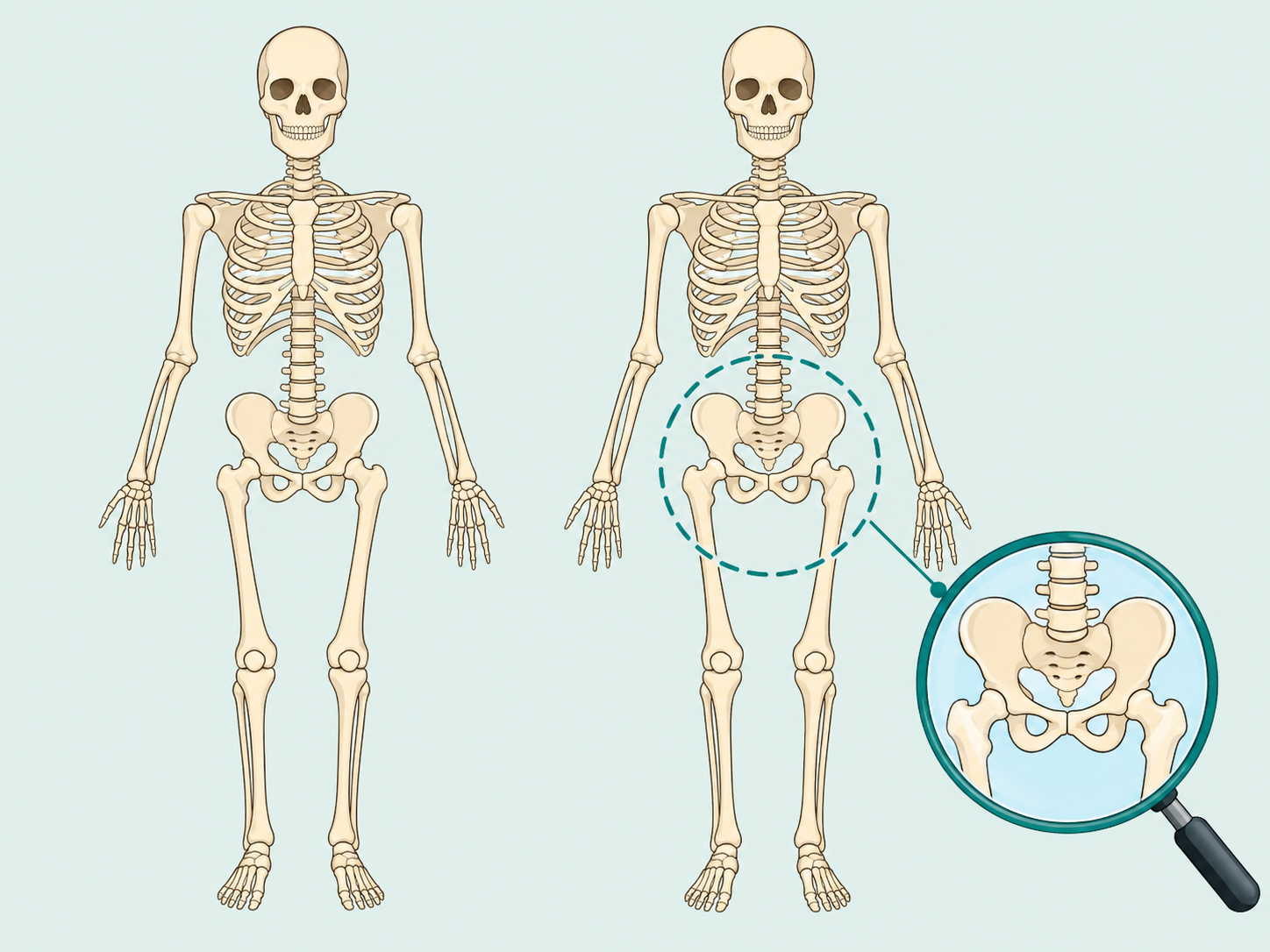
 Pin it
Skeleton observation puzzles can be fun, but real skeletal sex estimation is a careful forensic and anatomical task. This guide shows the main clues experts look at, especially the pelvis, while keeping the limits clear. Use it as an educational observation guide, not as a way to identify a real person or make a medical decision.
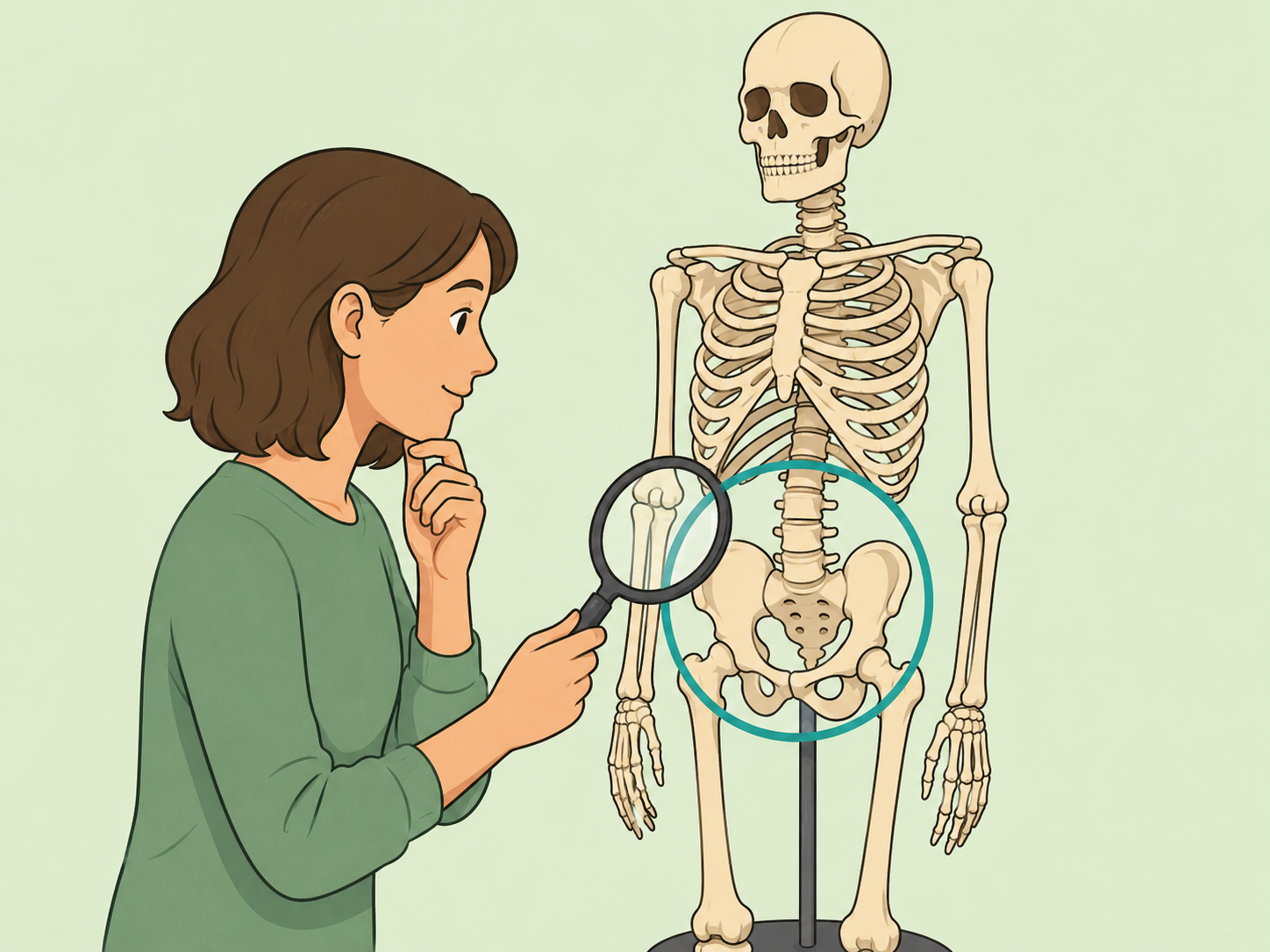
Start with the pelvis
Look at the pelvis before the skull or limbs because pelvic shape is the strongest visual clue in adult skeletal sex estimation. The Smithsonian explains that pelvic bones provide the best evidence for estimating sex, and Cleveland Clinic describes clear average differences between male and female pelvic anatomy.
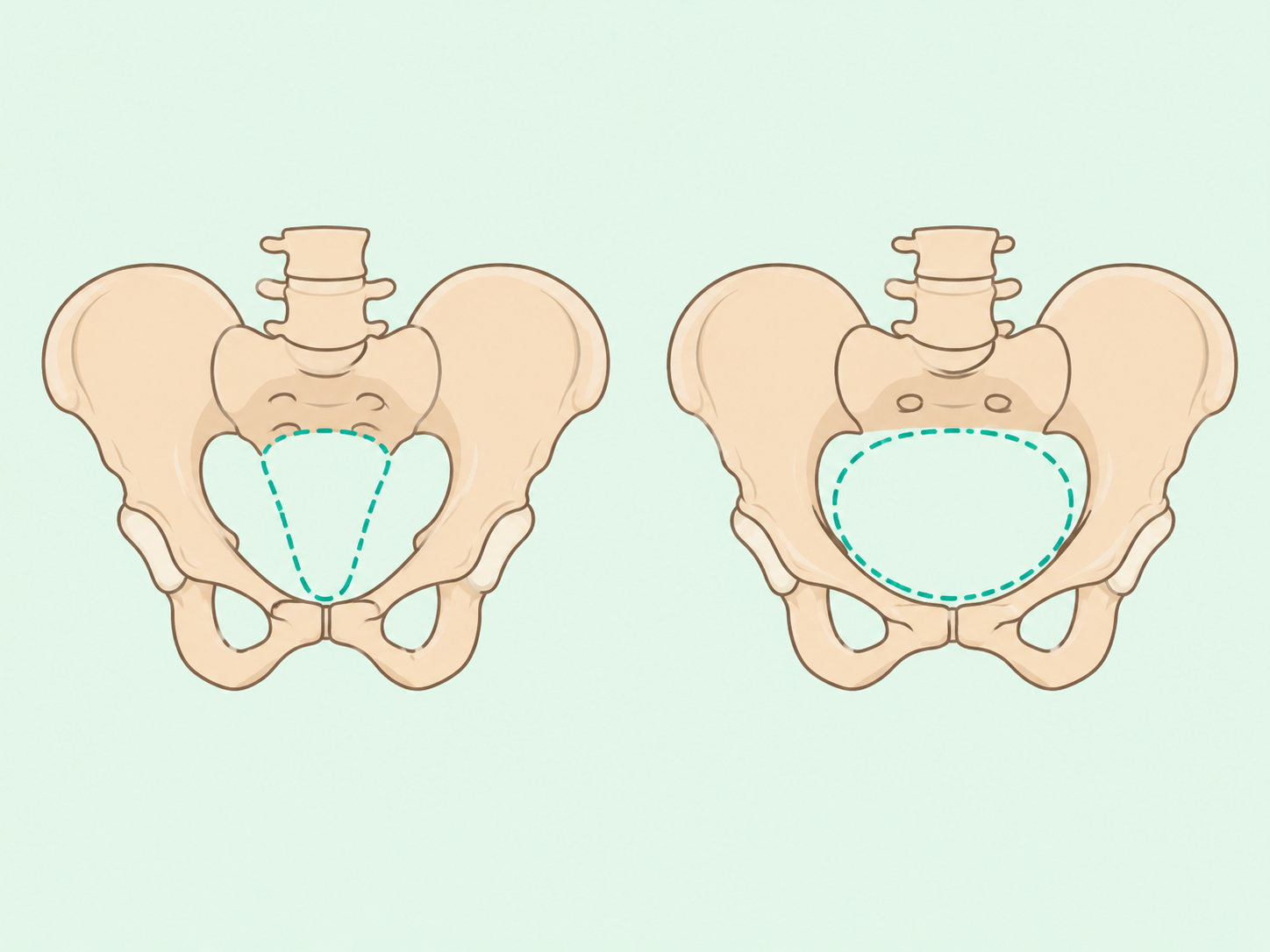
Check whether the pelvic opening looks broad and rounded
A pelvis that may be female often looks broader and shallower, with a larger central opening. Cleveland Clinic notes that female pelvic anatomy is typically adapted for childbirth, including a larger inlet and wider outlet.
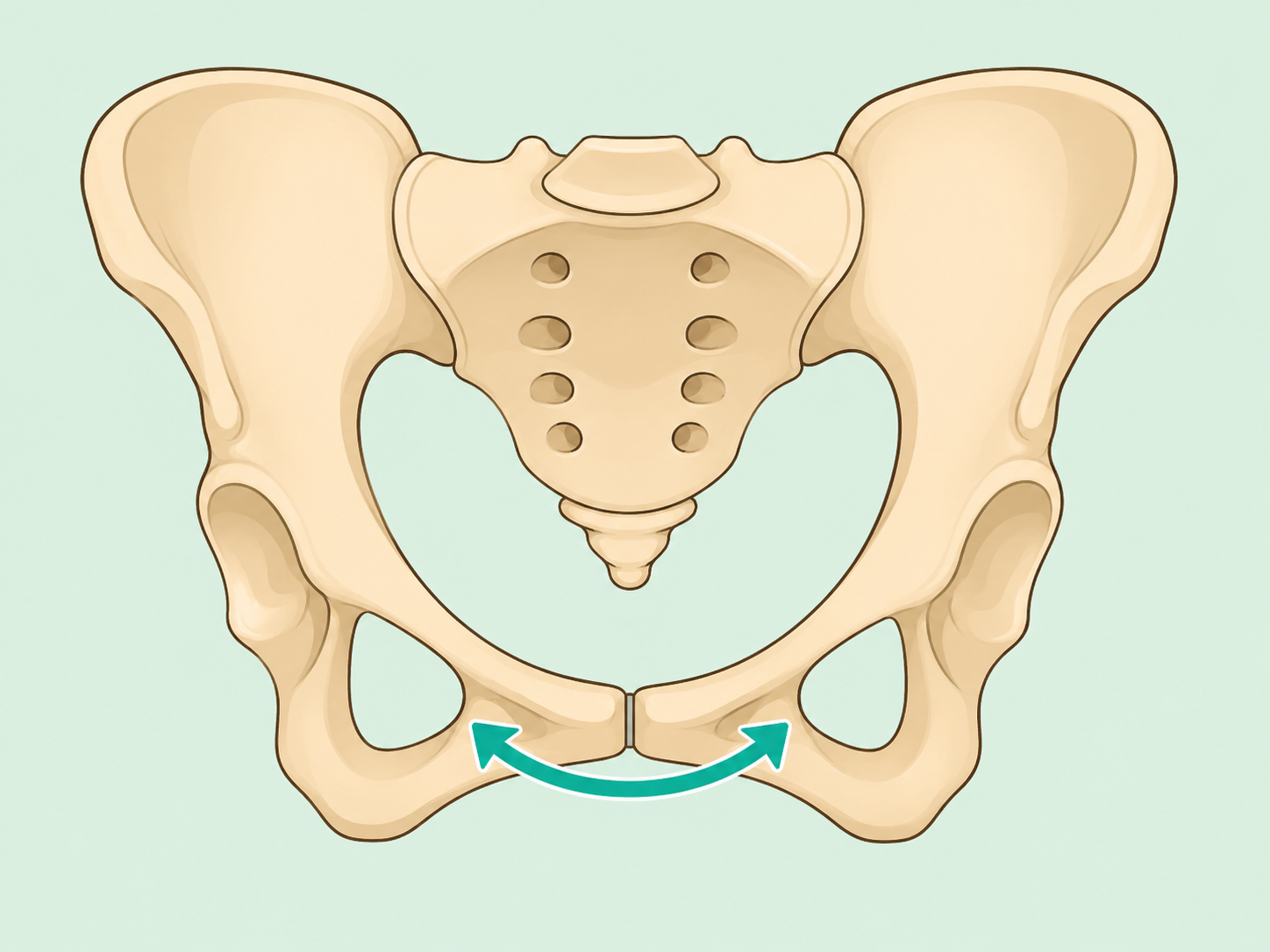
Compare the pubic arch angle
Focus on the angle where the two pubic bones meet at the front of the pelvis. A wider, more open arch points more toward a typically female pelvis, while a narrower V-shaped arch points more toward a typically male pelvis, according to Cleveland Clinic's pelvis anatomy guide.
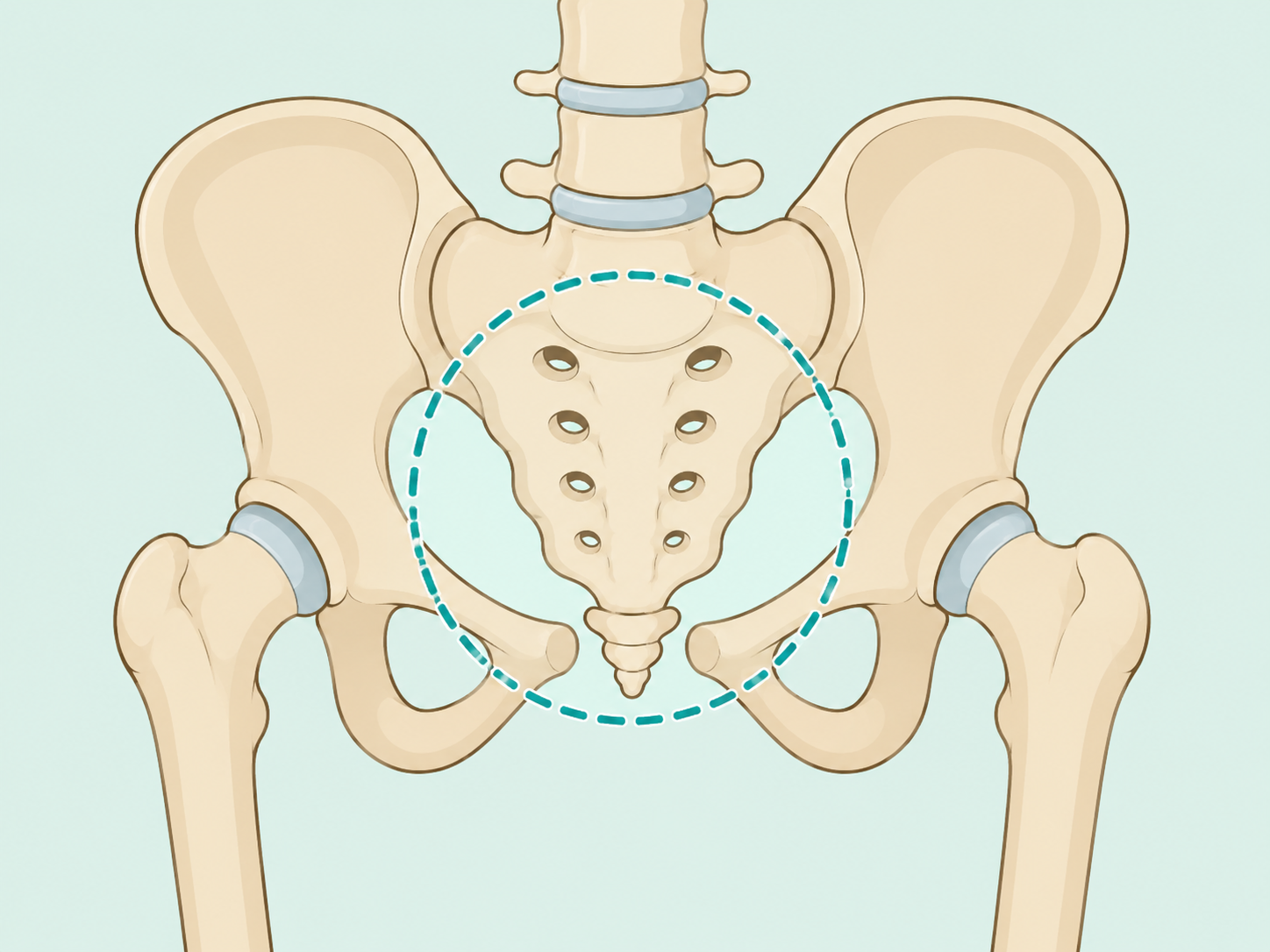
Look at the sacrum and coccyx
Next, compare the lower spine area at the back of the pelvis. NCBI Bookshelf describes the female sacrum as generally shorter and less curved, with a more mobile coccyx, while male pelvic anatomy tends to be narrower and more compact.
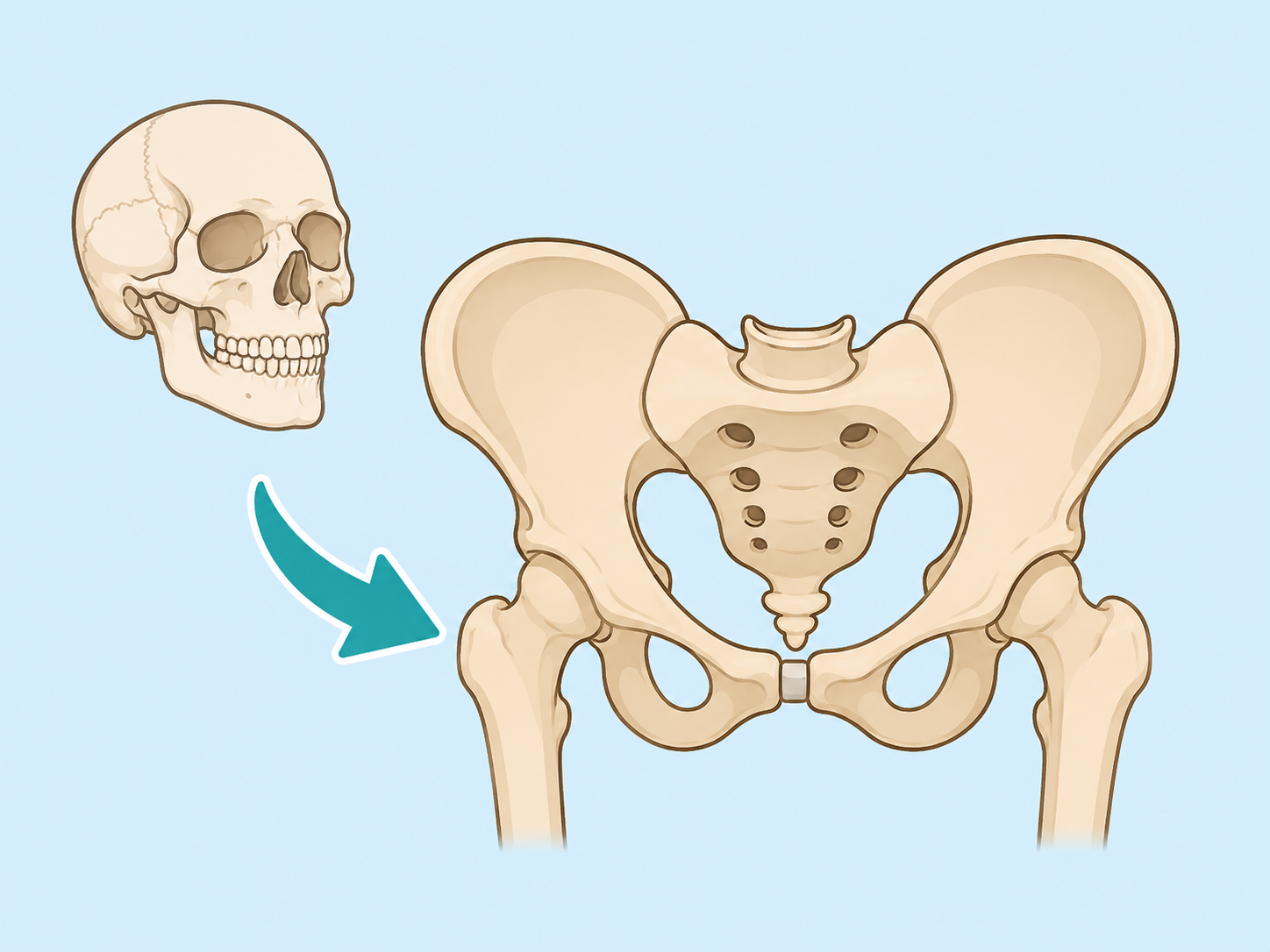
Use skull clues only as support
If the pelvis is hidden or missing, look at the skull cautiously. Forensic research indexed by PubMed describes the skull and pelvis as sexually dimorphic skeletal areas, but skull clues are best treated as supporting evidence rather than a final answer.
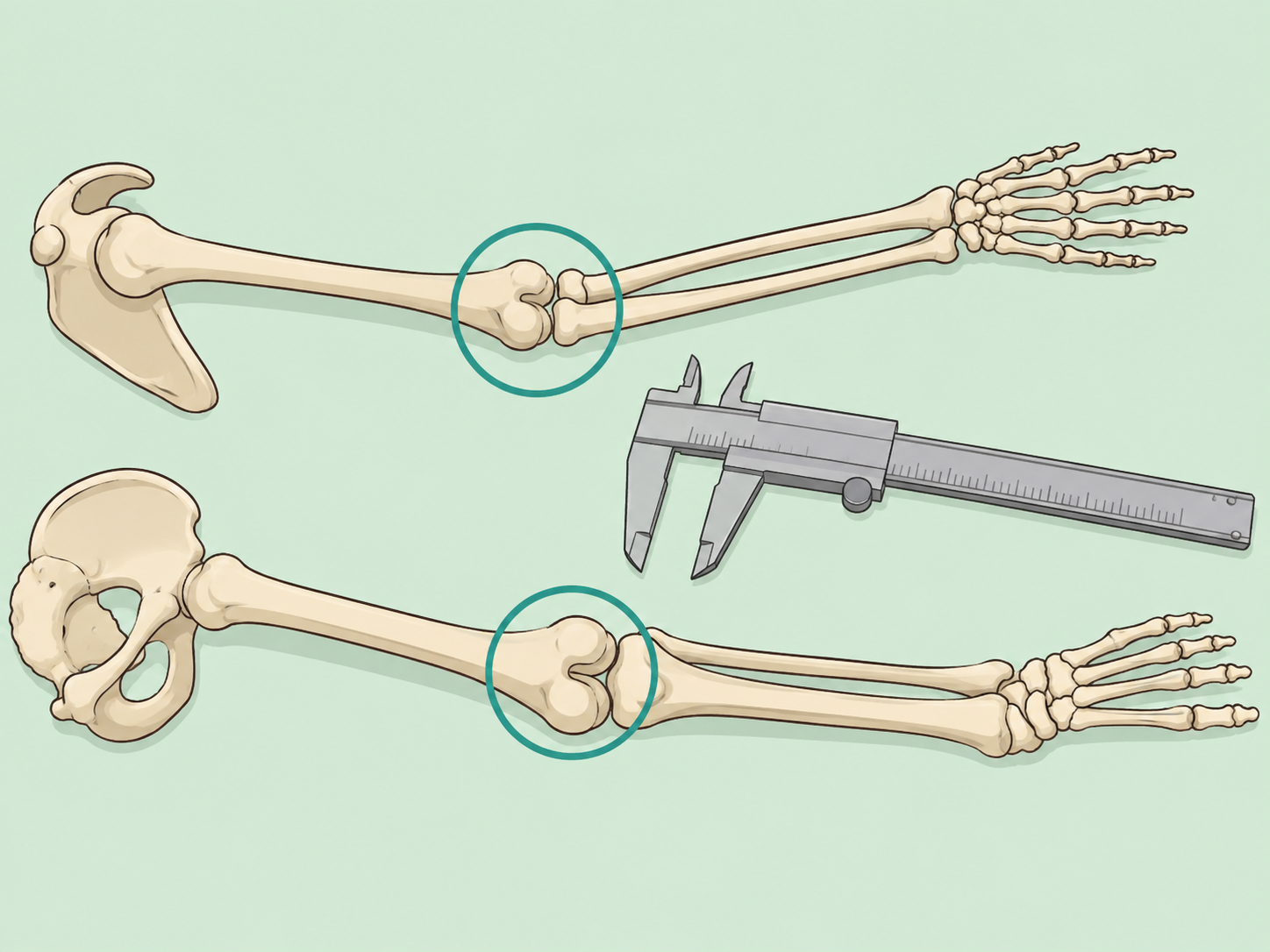
Compare the long bones carefully
Long bones such as the femur and humerus may add context because body size and joint size can differ on average. A forensic anthropology study found that several postcranial measurements can perform well for sex estimation, but those methods rely on measurements and reference data, not quick visual guessing.
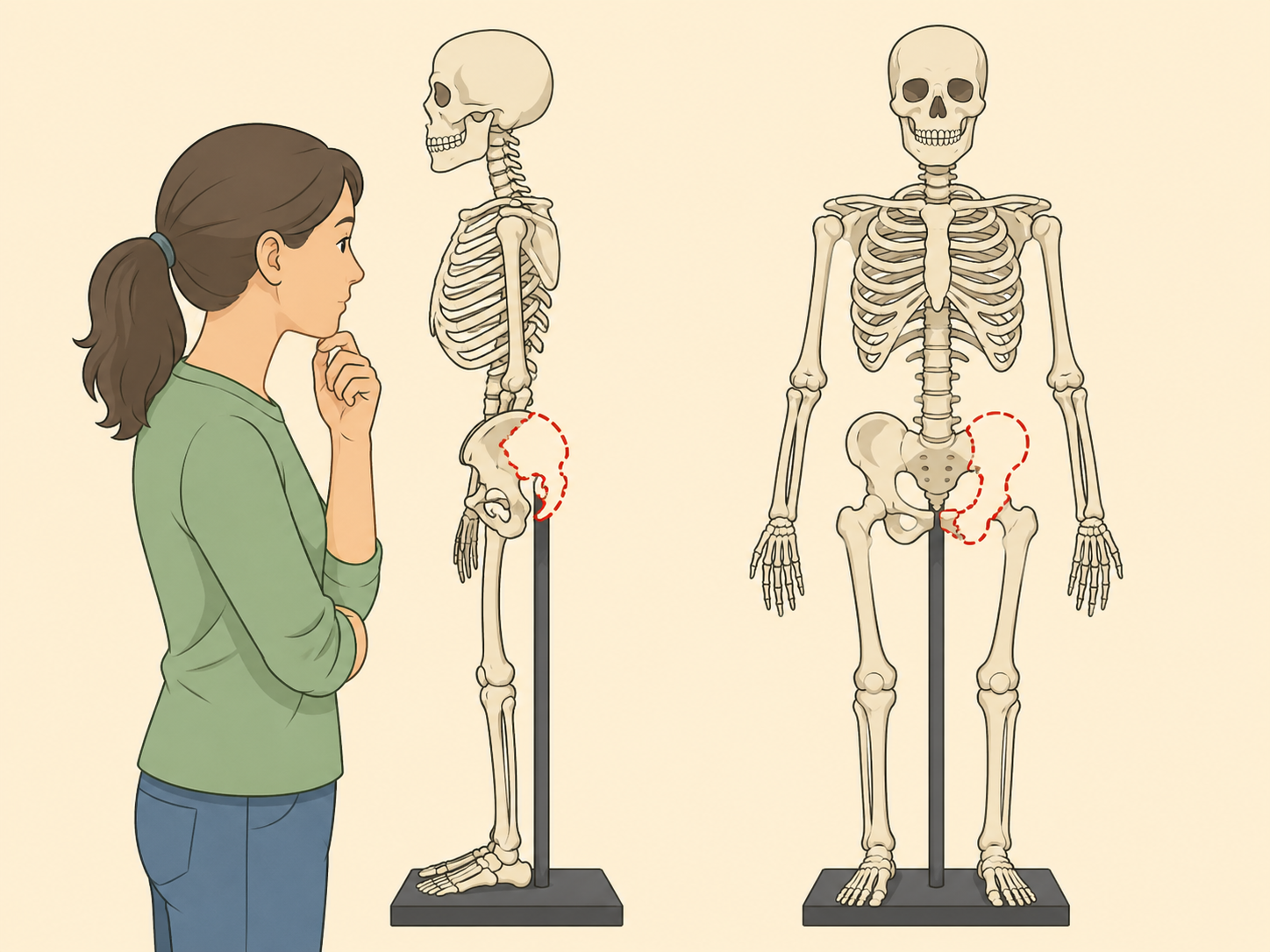
Rule out age, damage, and display angle
Before choosing an answer, ask whether the skeleton is adult, complete, and shown from a useful angle. Pelvic bones grow and change through puberty, and NCBI Bookshelf notes that pelvic growth plates close during mid-puberty, so immature skeletons are much harder to judge visually.
Get help when the question matters
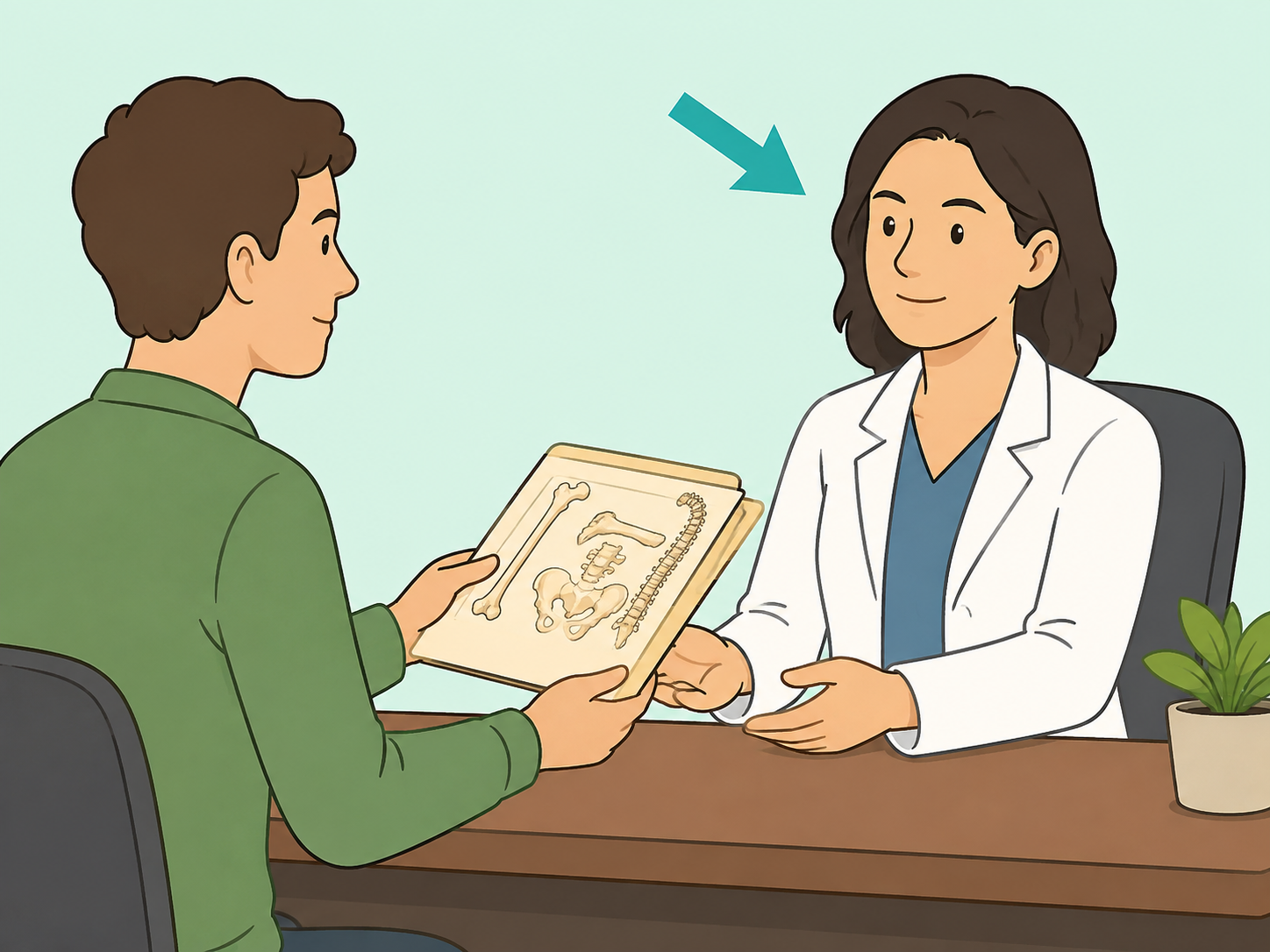
If you are looking at your own X-ray, an injury image, or anything involving possible human remains, do not try to decide on your own. The human skeleton is living tissue that supports, protects, and changes with the body, as the National Cancer Institute's SEER training module explains, so health questions belong with a doctor and possible remains belong with local authorities or forensic professionals.
Summary
The bottom line: start with the pelvis, use the skull and limb bones only as supporting clues, and treat the result as a cautious estimate. Real skeletal identification requires training, context, and often imaging or DNA.
Frequently Asked Questions
- Can you really tell if a skeleton belonged to a woman?
You can sometimes estimate biological sex from adult skeletal features, but you cannot identify a person's gender identity from bones. The Smithsonian explains that trained forensic anthropologists combine skeletal clues with context and other tests.
- What bone gives the best clue?
The pelvis is usually the strongest single area to examine. The Smithsonian notes that pelvic bone shape provides the best evidence for estimating sex.
- What does a typically female pelvis look like?
On average, a female pelvis is broader and shallower, with a larger opening and a wider pubic arch. Cleveland Clinic describes these as common sex-related pelvic differences, while also noting that pelvic shapes vary.
- Is the skull enough to decide?
No. Skull shape may add clues, but it is weaker than the pelvis and should not be used alone. A PubMed-indexed forensic study describes the skull and pelvis as sexually dimorphic, but professional methods still use measurements and population context.
- Do children show the same skeletal clues?
Not reliably. Many sex-related skeletal differences become clearer after puberty, and NCBI Bookshelf notes that pelvic growth plates close during mid-puberty.
- What should I do if I find bones?
Do not handle, move, clean, or photograph them for a puzzle. If the bones could be human or you are unsure, contact local authorities so trained professionals can evaluate the scene and preserve evidence.
References
Reliable references aided in composing and refining this content.
- https://naturalhistory.si.edu/education/teaching-resources/anthropology-and-social-studies/forensic-anthropology
- https://my.clevelandclinic.org/health/body/pelvis
- https://www.ncbi.nlm.nih.gov/books/NBK551580
- https://training.seer.cancer.gov/anatomy/skeletal
- https://pubmed.ncbi.nlm.nih.gov/42387195
- https://pubmed.ncbi.nlm.nih.gov/21210801