
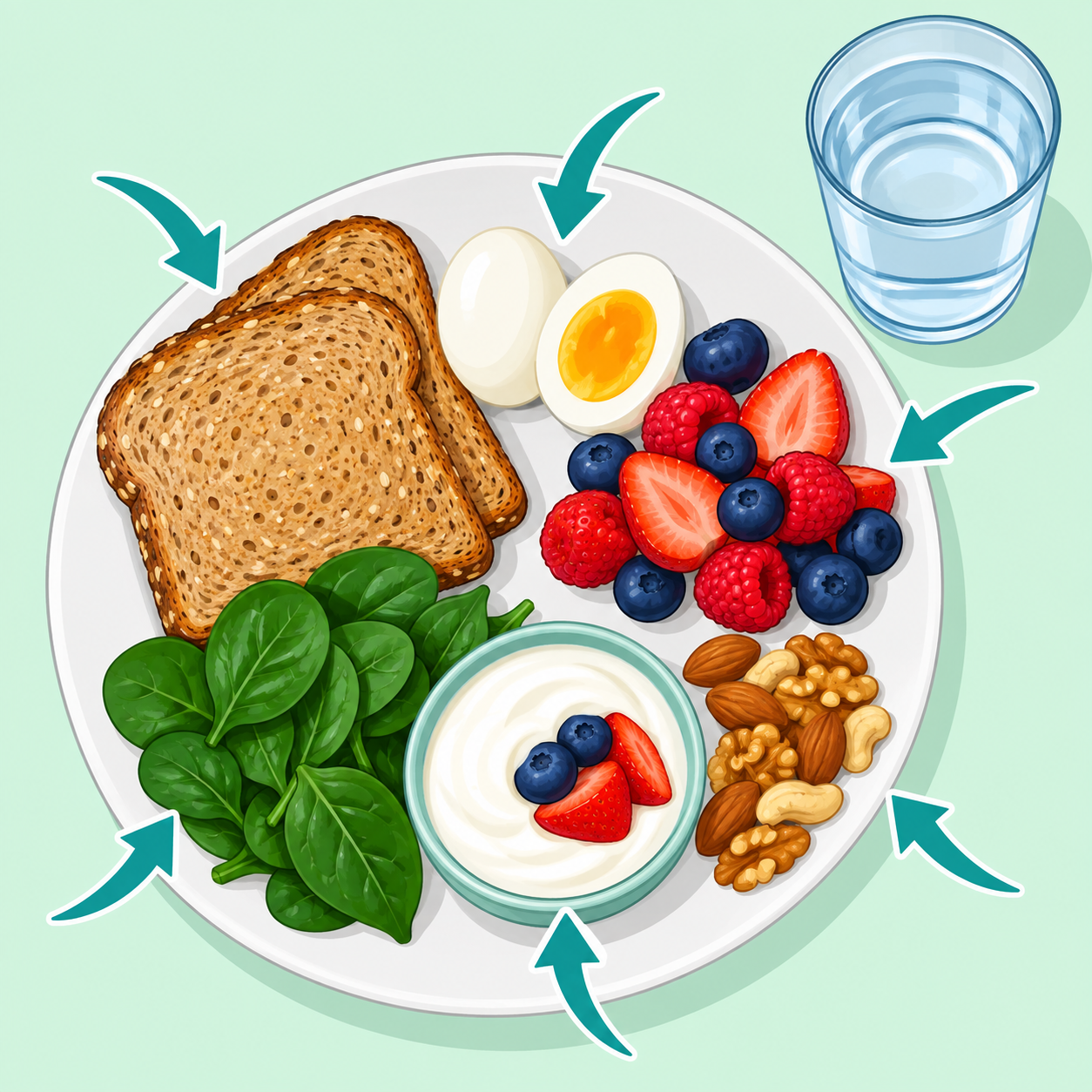
 Pin it
A breakfast plate can look full and still be missing something that helps it feel balanced. This guide shows you how to scan a plate for common gaps, such as low protein, little fiber, no fruit or vegetables, or a sugary drink. It uses general nutrition guidance, not a strict diet plan, so you can adapt it to your culture, budget, appetite, and health needs.
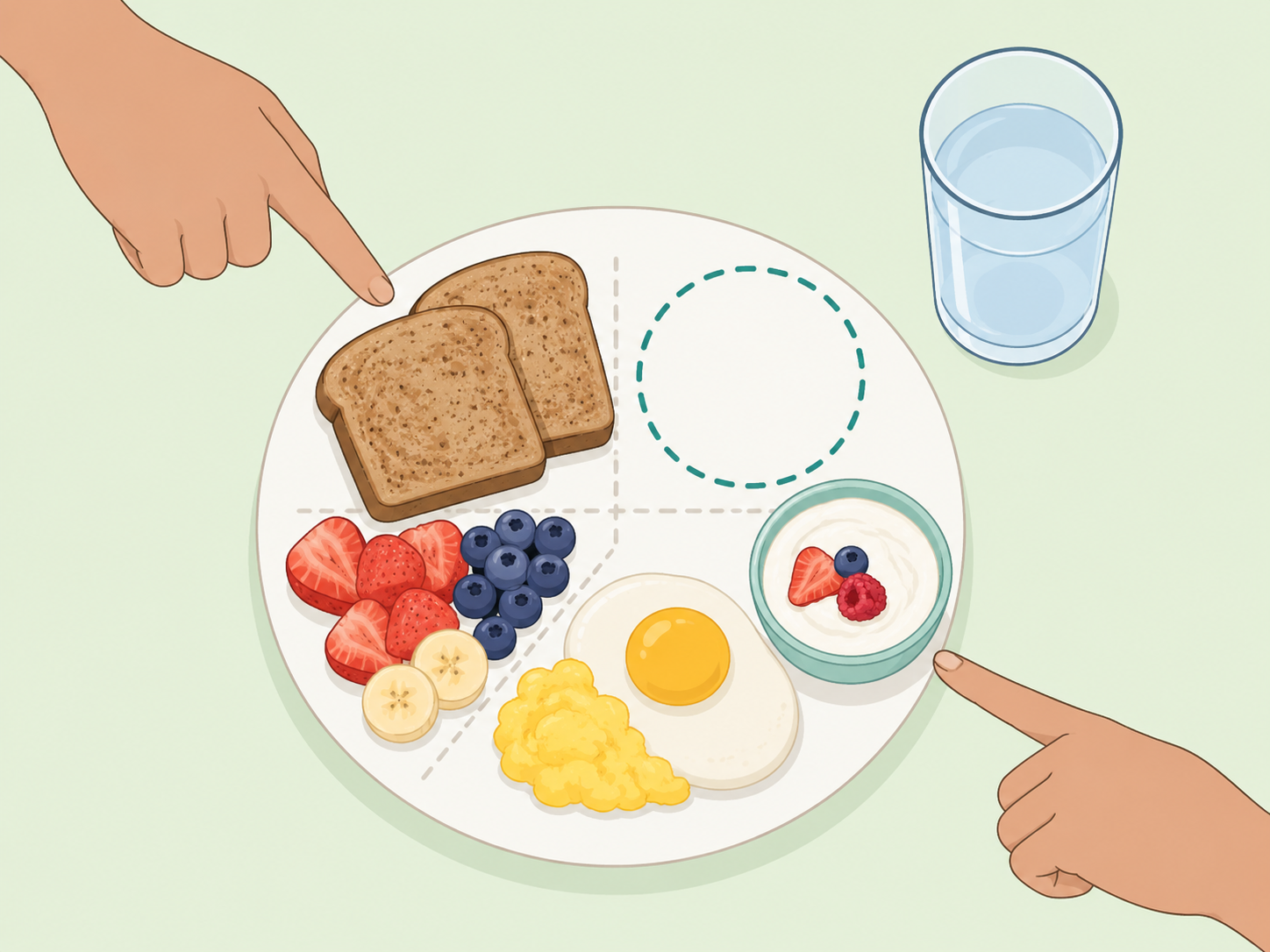
Scan the plate for the main food groups
Start by naming what is already there: a grain or starch, a protein food, fruit, vegetables, dairy or a fortified alternative, and a drink. MedlinePlus explains that a healthy eating pattern includes protein, dairy, vegetables, fruits, and whole grains, though the right amounts vary by person. The missing item is usually the group that is absent or barely present.
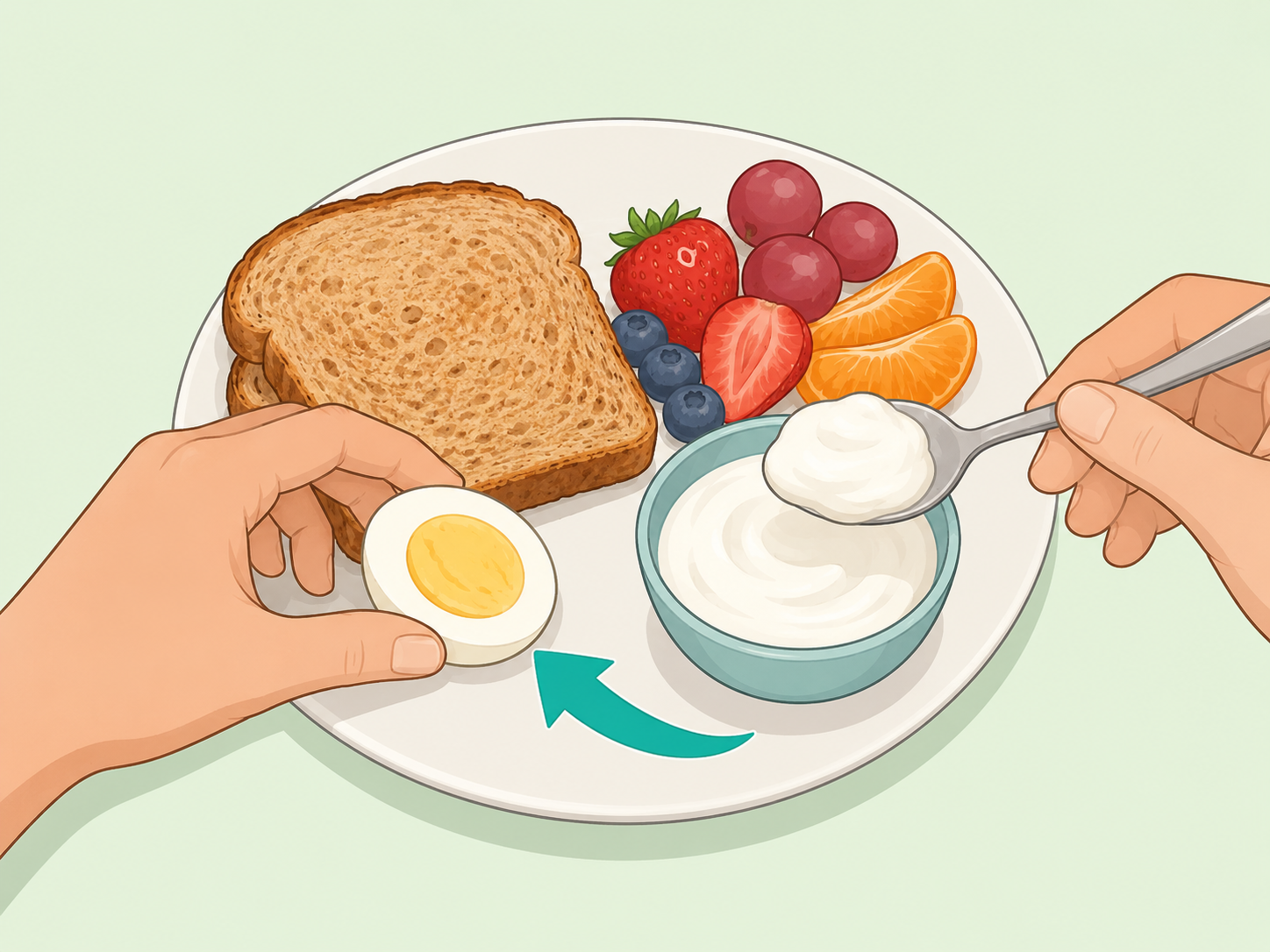
Add protein if the plate is mostly toast, cereal, or fruit
If breakfast is mostly carbohydrate, add a protein food such as eggs, plain Greek yogurt, cottage cheese, beans, tofu, nuts, seeds, or nut butter. The CDC recommends prioritizing protein foods at every meal and varying the sources you choose. A simple fix is toast with egg, oatmeal with nuts, or fruit with plain yogurt.
Choose a fiber-rich whole grain
When the plate has white toast, pastries, or sugary cereal, swap in oatmeal, whole-grain toast, a whole-grain English muffin, or another whole grain you enjoy. MedlinePlus notes that whole grains contain more fiber and protein than refined grains. Fiber is also linked with digestive health and feeling full longer, according to MedlinePlus guidance on dietary fiber.
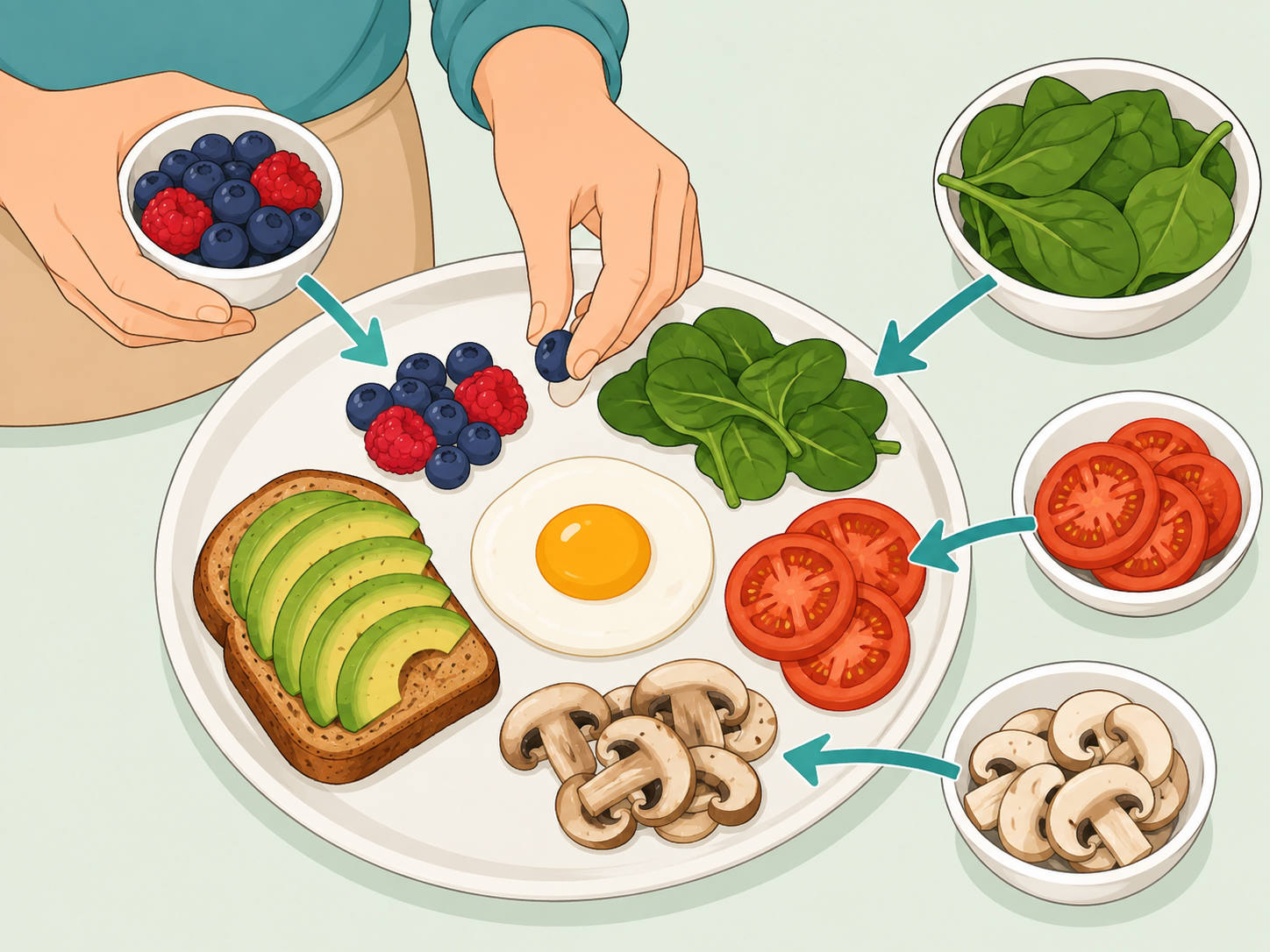
Put fruit or vegetables on the plate
If everything on the plate is beige or brown, add color with berries, an apple, citrus, tomato slices, avocado, spinach, mushrooms, peppers, or leftover roasted vegetables. The CDC advises eating a variety of vegetables and fruits in their original form, including fresh, frozen, canned, or dried options without added sugar and with low sodium. Breakfast does not have to be sweet; vegetables can work well with eggs, beans, tofu, or whole-grain toast.
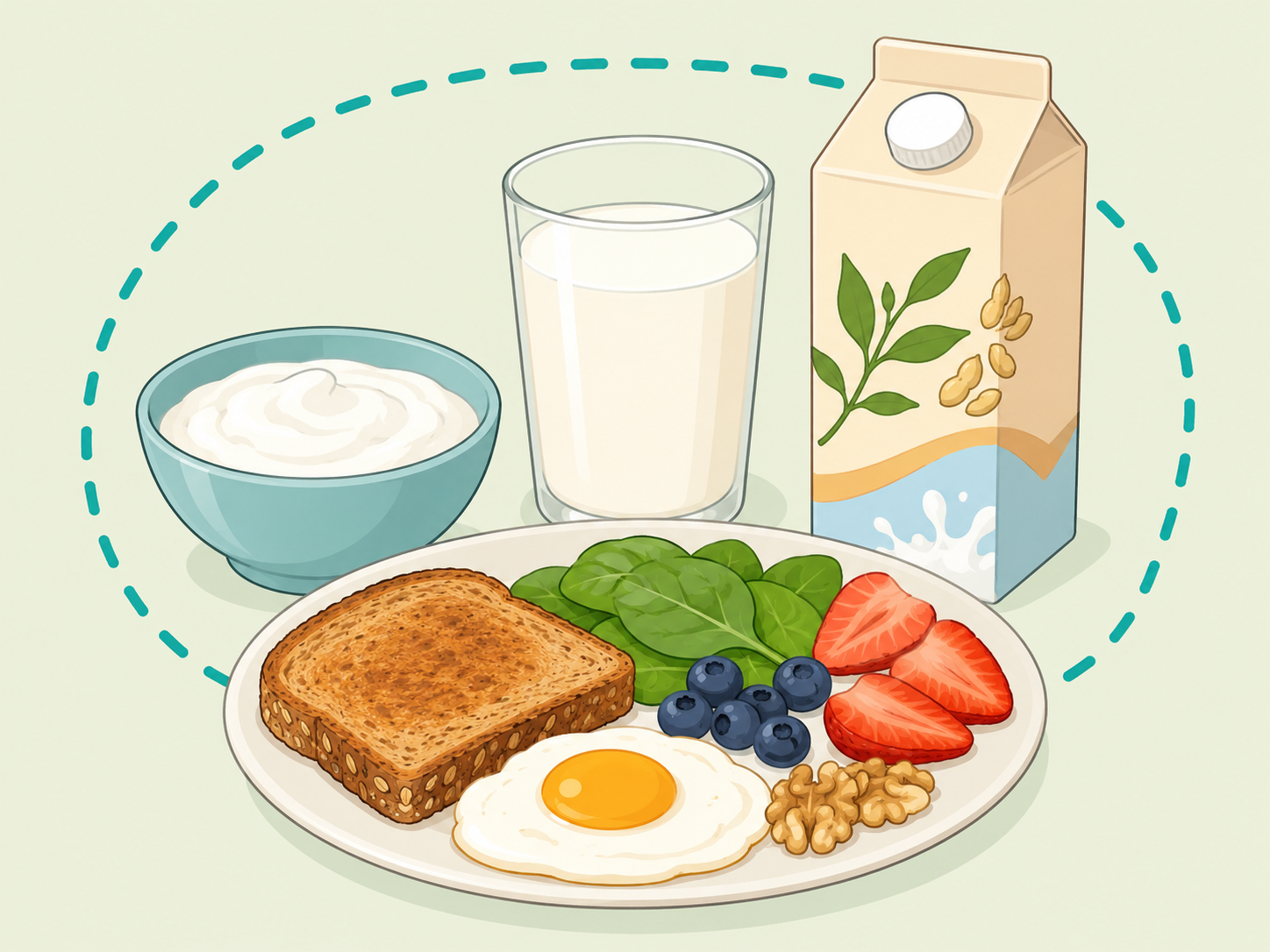
Include a calcium-rich option if it fits your eating pattern
Look for plain yogurt, milk, lactose-free milk, kefir, cheese, fortified soy milk, or another calcium-rich food that fits your needs. NIDDK lists dairy or plant-based dairy products among foods that can be part of healthy meal planning, and the CDC suggests choosing dairy foods without added sugars. If you do not use dairy, check labels so fortified alternatives actually provide nutrients such as calcium and vitamin D.
Add a small amount of healthy fat for staying power
If breakfast leaves you hungry quickly, add a modest portion of avocado, nuts, seeds, olive oil, or nut butter. The CDC includes healthy fats with essential fatty acids as part of nutritious meal planning. Keep the portion practical, since fats are energy-dense even when they come from nutritious foods.
Choose water or an unsweetened drink
Check the glass next to the plate, not just the food. The CDC says water helps prevent dehydration and has no calories, while sweetened coffee drinks, fruit drinks, sports drinks, and sweet teas can add a lot of sugar. If you use packaged drinks or flavored yogurts, read the label because added sugars can hide in everyday foods and drinks.
See a doctor or dietitian for personal nutrition needs
Get medical guidance if breakfast changes cause dizziness, frequent low energy, unwanted weight changes, digestive problems, or blood sugar concerns. You should also ask for help if you have diabetes, kidney disease, heart disease, pregnancy-related needs, food allergies, or a history of disordered eating. NIDDK recommends working with a health care team to create a meal plan that fits your situation, and a registered dietitian can provide nutrition counseling.
Summary
The bottom line: look at your breakfast as a pattern, not a test. If the plate has mostly refined starch or sweet foods, add one practical missing piece: protein, whole grains, fruit or vegetables, a calcium-rich option, healthy fat, or water.
Frequently Asked Questions
- What is most often missing from a breakfast plate?
Many breakfast plates are heavy on refined grains or sweet foods and light on protein, fiber, fruit, or vegetables. Start by adding one missing group rather than rebuilding the whole meal at once.
- Does every breakfast need dairy?
No. Dairy can be a useful source of nutrients, but lactose-free dairy and fortified plant-based options may also fit. If you avoid dairy, look for other calcium-rich foods that work for your needs.
- Is fruit juice the same as whole fruit at breakfast?
Whole fruit is usually the stronger choice because it keeps the fiber that helps make meals more filling. If you drink juice, keep it modest and choose 100% juice rather than fruit drinks with added sugar.
- What should I add if I am still hungry after breakfast?
Check for protein and fiber first. Adding eggs, plain yogurt, beans, nut butter, oats, whole-grain toast, berries, or vegetables often makes breakfast more satisfying than adding another sweet item.
- Is coffee okay with breakfast?
Plain coffee can fit for many adults, but it should not replace food or water if you need breakfast. Watch flavored syrups, sweet creamers, and sweet bottled coffee drinks if you are trying to limit added sugars.
- Do I need a special breakfast if I have diabetes or another condition?
You may need personalized guidance. If you have diabetes, kidney disease, a heart condition, food allergies, pregnancy-related nutrition needs, or a history of disordered eating, ask a doctor or registered dietitian for advice that fits your health plan.
References
Reliable references aided in composing and refining this content.
- https://medlineplus.gov/ency/article/002093.htm
- https://www.cdc.gov/healthy-weight-growth/healthy-eating/meals-snacks.html
- https://www.heart.org/en/healthy-living/healthy-eating/eat-smart/nutrition-basics/how-to-make-breakfast-a-healthy-habit
- https://medlineplus.gov/dietaryfiber.html
- https://www.cdc.gov/healthy-weight-growth/water-healthy-drinks/index.html
- https://www.cdc.gov/diabetes/healthy-eating/spotting-hidden-sugars-in-everyday-foods.html
- https://www.niddk.nih.gov/health-information/diabetes/overview/healthy-living-with-diabetes