
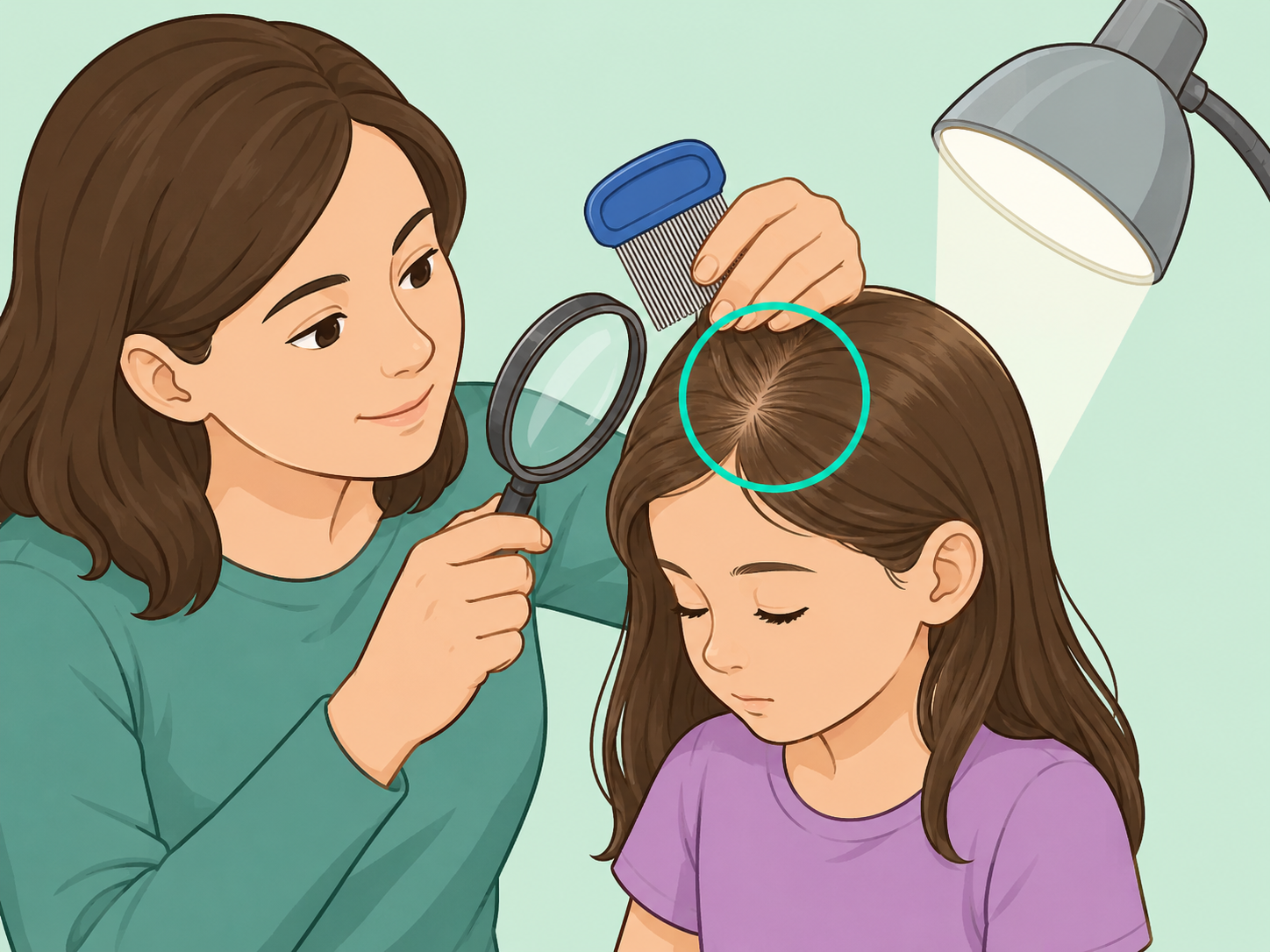
 Pin it
Finding something on your son's head can be unsettling, but the first step is simply to look closely. Head lice and their eggs, called nits, are common in children and do not mean a child is dirty or uncared for. This guide explains how to check the scalp, what signs to look for, what to do if you confirm lice, and when to get medical help.
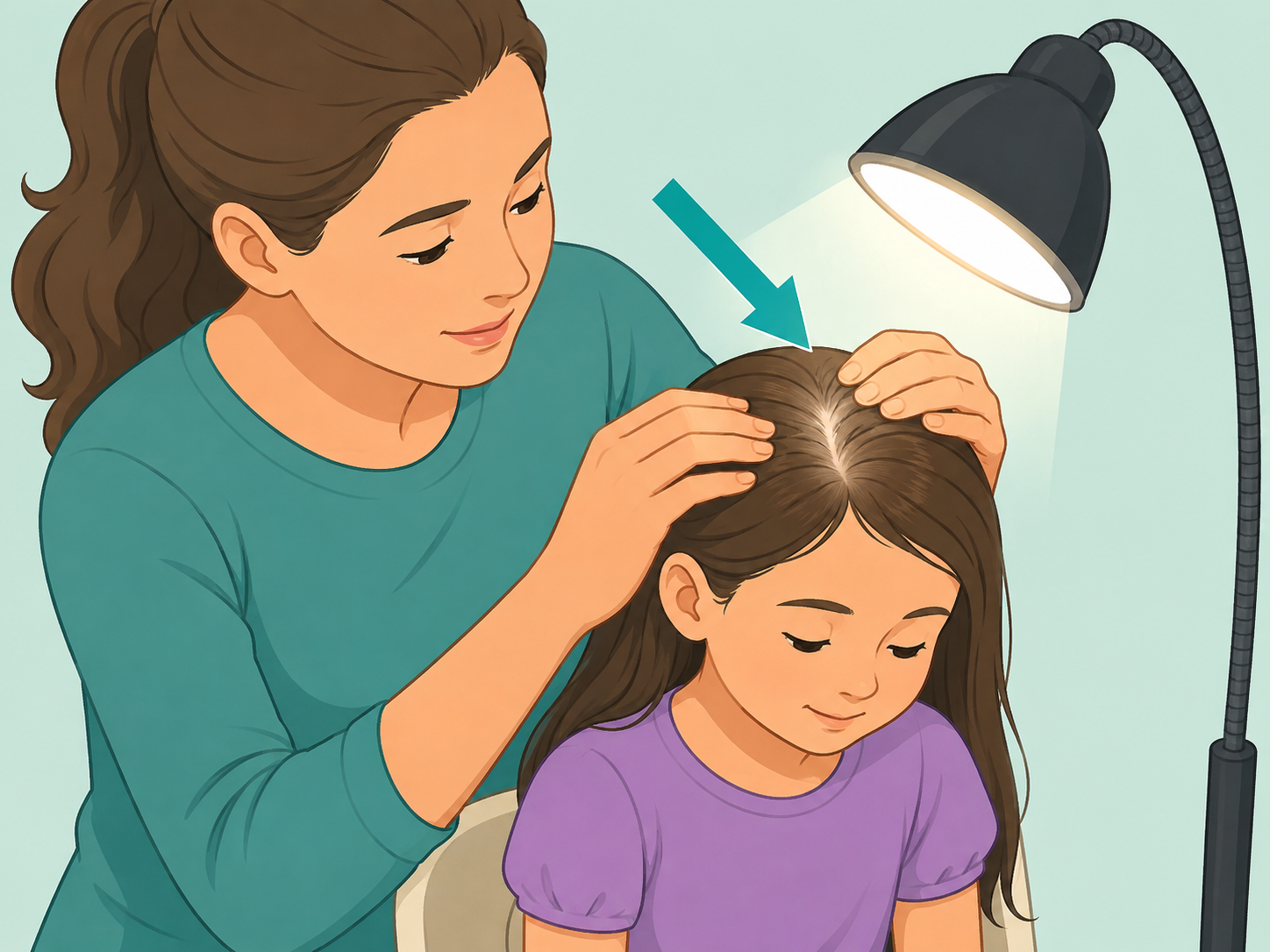
Stay calm and use bright light
Sit your son where you can see his scalp clearly, such as near a window or under a bright lamp. Head lice are small and move quickly, so dermatologists recommend bright light and a fine-toothed comb when checking at home. Avoid guessing from one quick glance, because flakes, scabs, hair products, and lint can look similar.
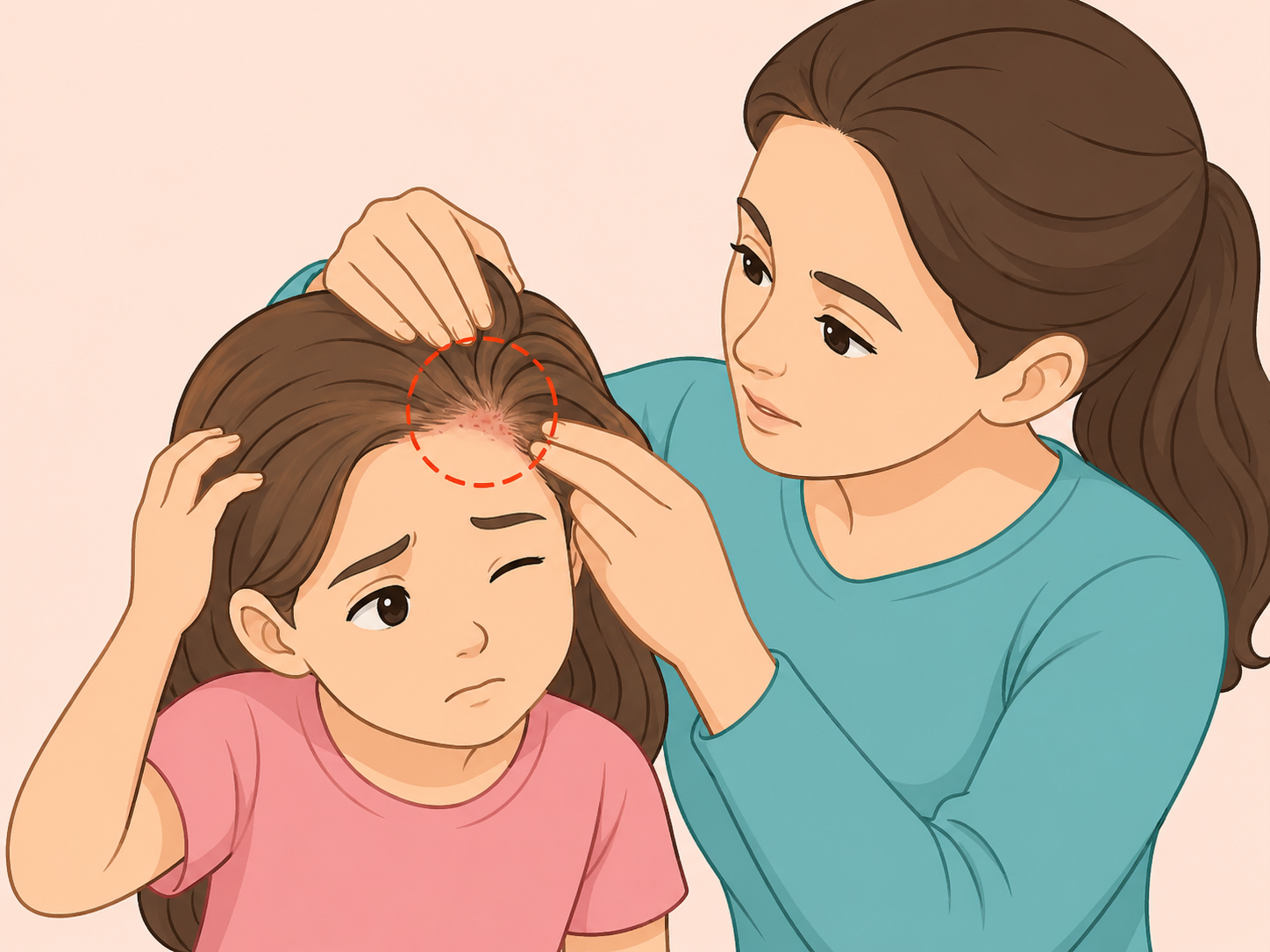
Look for itching, scratching, or a crawling feeling
Ask whether his scalp feels itchy or tickly, and look for scratch marks around the scalp and neck. The American Academy of Dermatology lists itching, scratching, a crawling feeling, visible bugs, and nits as common signs, but itching alone does not prove lice. Dandruff, eczema, and irritation can also make the scalp itch.
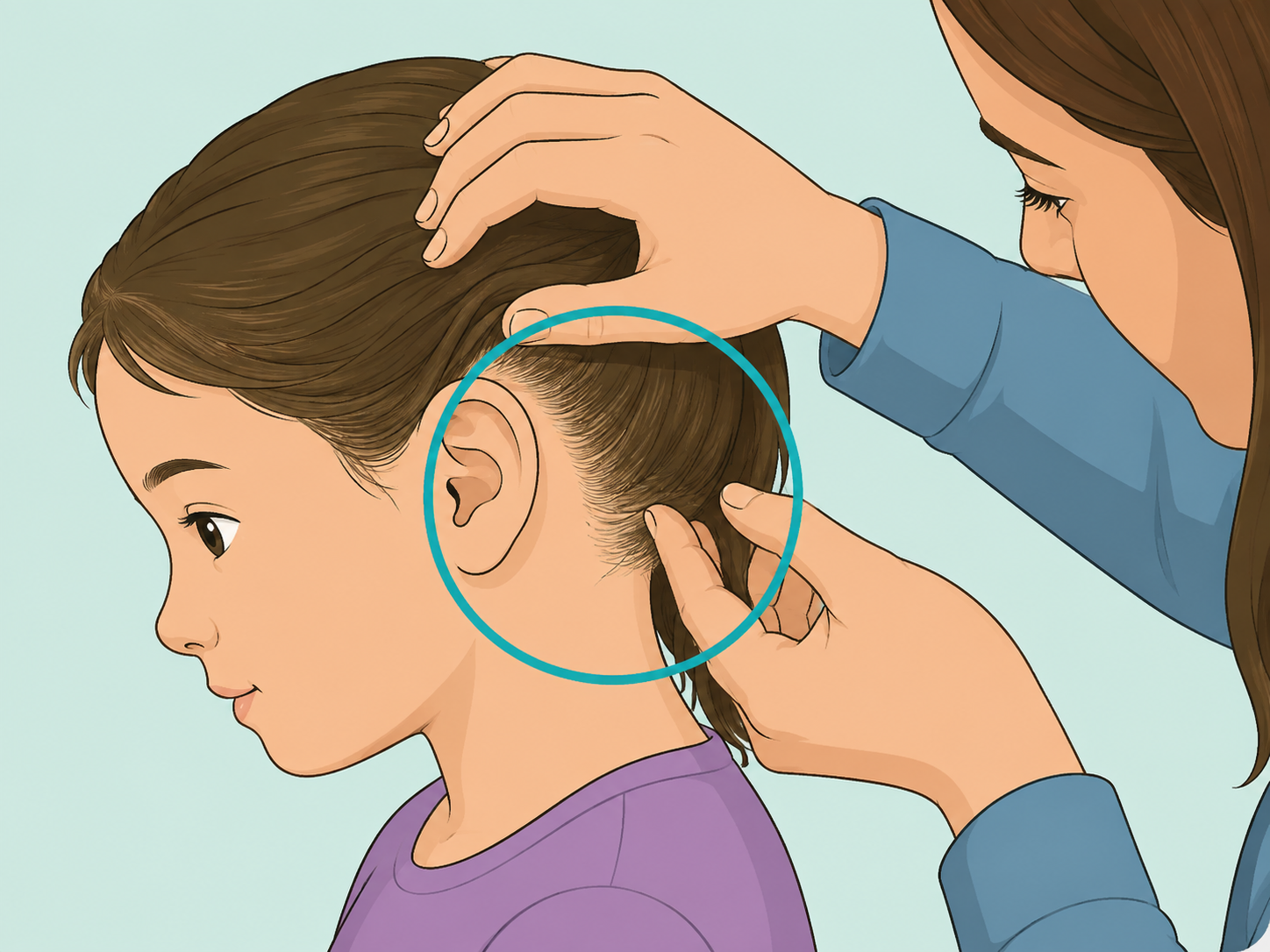
Check behind the ears and at the nape of the neck
Part the hair in small sections and inspect close to the scalp, especially behind the ears and along the back of the neck. The CDC says nits are often found in these areas and that a live nymph or adult louse is the best sign of an active infestation. A magnifying glass can help if the hair is thick or dark.
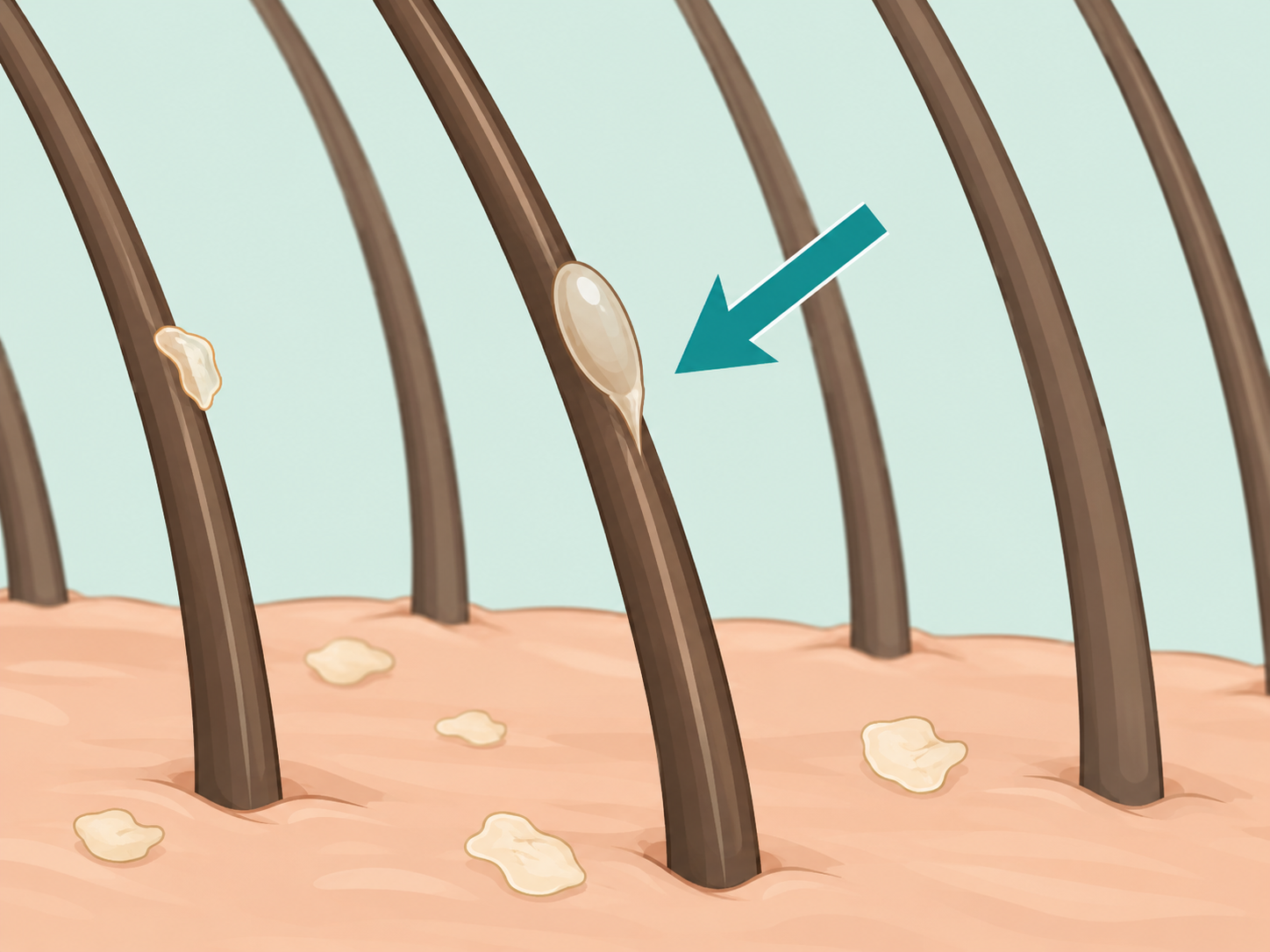
Learn the difference between lice, nits, and flakes
A live louse is a small crawling insect, while a nit is an egg attached to a hair shaft near the scalp. MedlinePlus explains that nits can look like dandruff flakes, but they tend to stay stuck to the hair instead of brushing away easily. If the speck slides off with a light touch, it is less likely to be a nit.
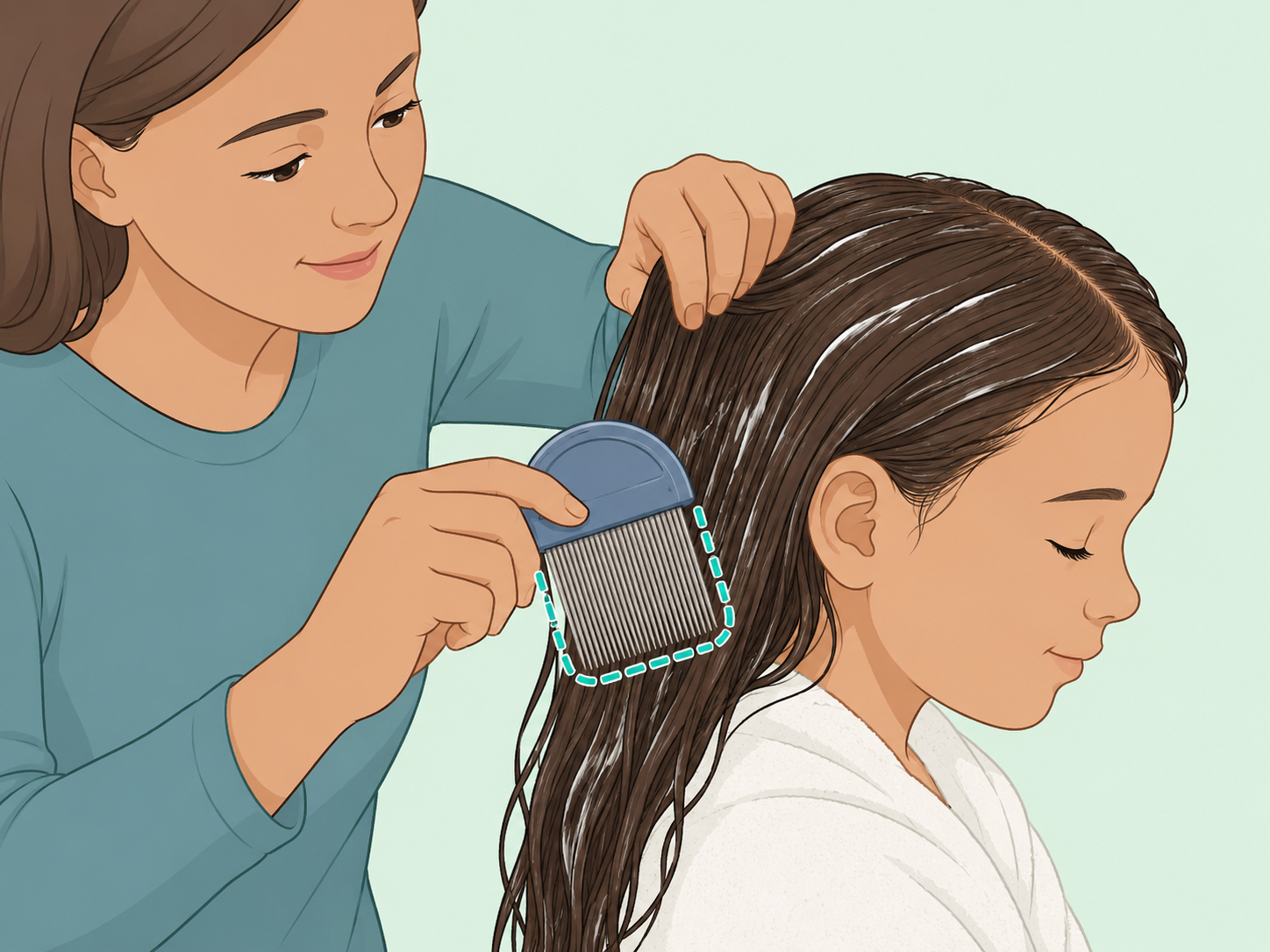
Comb through wet hair section by section
Wet the hair, add ordinary conditioner, and comb slowly from the roots to the ends with a fine-toothed detection comb. The NHS describes wet combing as a way to remove lice and nits, and it can make small insects easier to see. Wipe the comb on a light tissue after each pass so you can inspect what comes out.
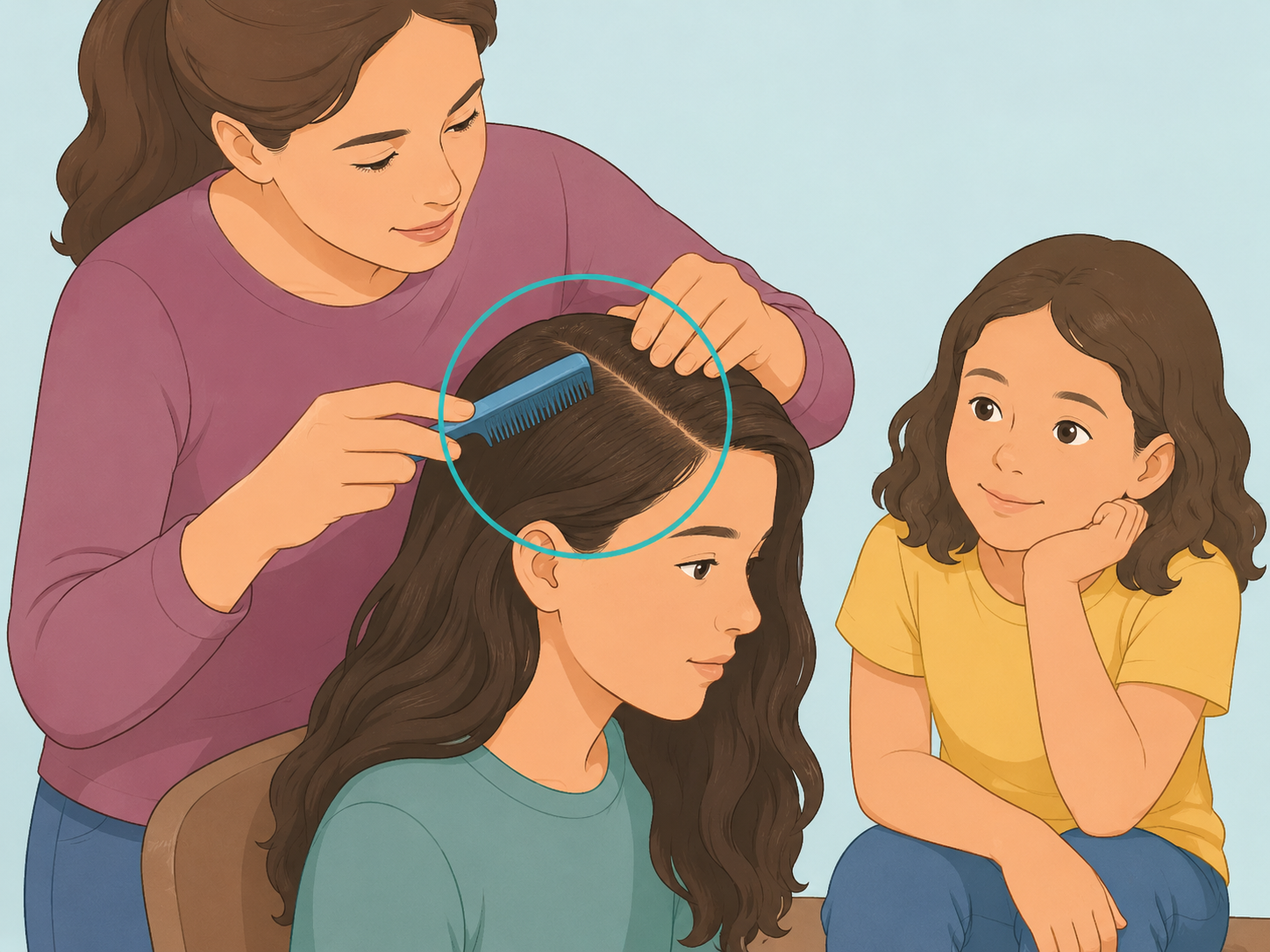
Check close contacts before treating anyone
If you find live lice or close-to-scalp nits, check everyone in the household and close contacts. The CDC advises treating people with live lice or nits within one-quarter inch of the scalp and checking household members every few days. Do not treat someone just because they were nearby if you do not find evidence of lice.
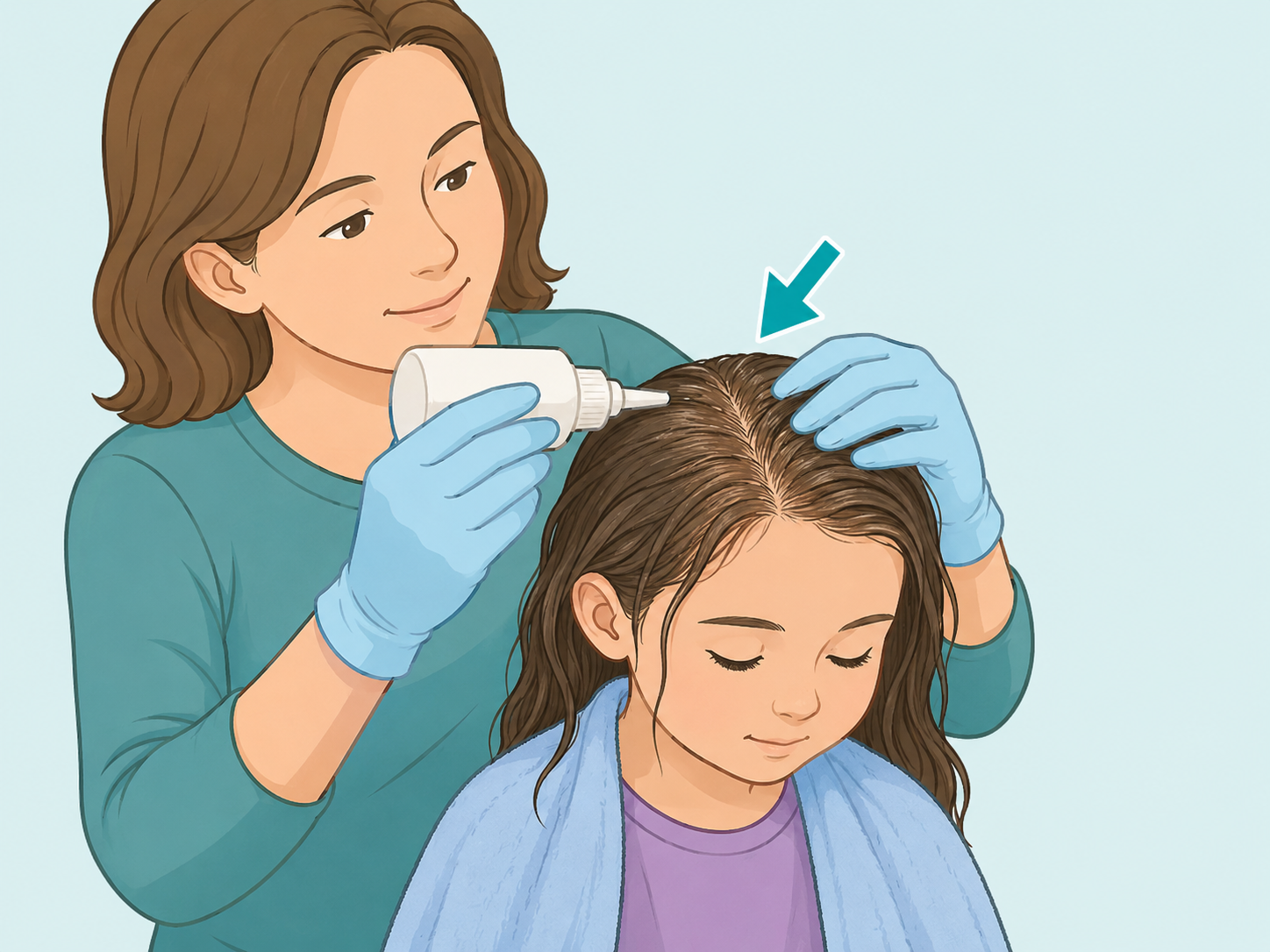
Treat confirmed head lice exactly as directed
Use an over-the-counter or prescription lice treatment only according to the label or a clinician's instructions. The CDC says head lice can be treated with approved medicines, but some products require a second treatment because they kill live lice better than eggs. Ask a doctor or pharmacist before treating a very young child, or if you are unsure which product is appropriate.
Clean recent items without overdoing it
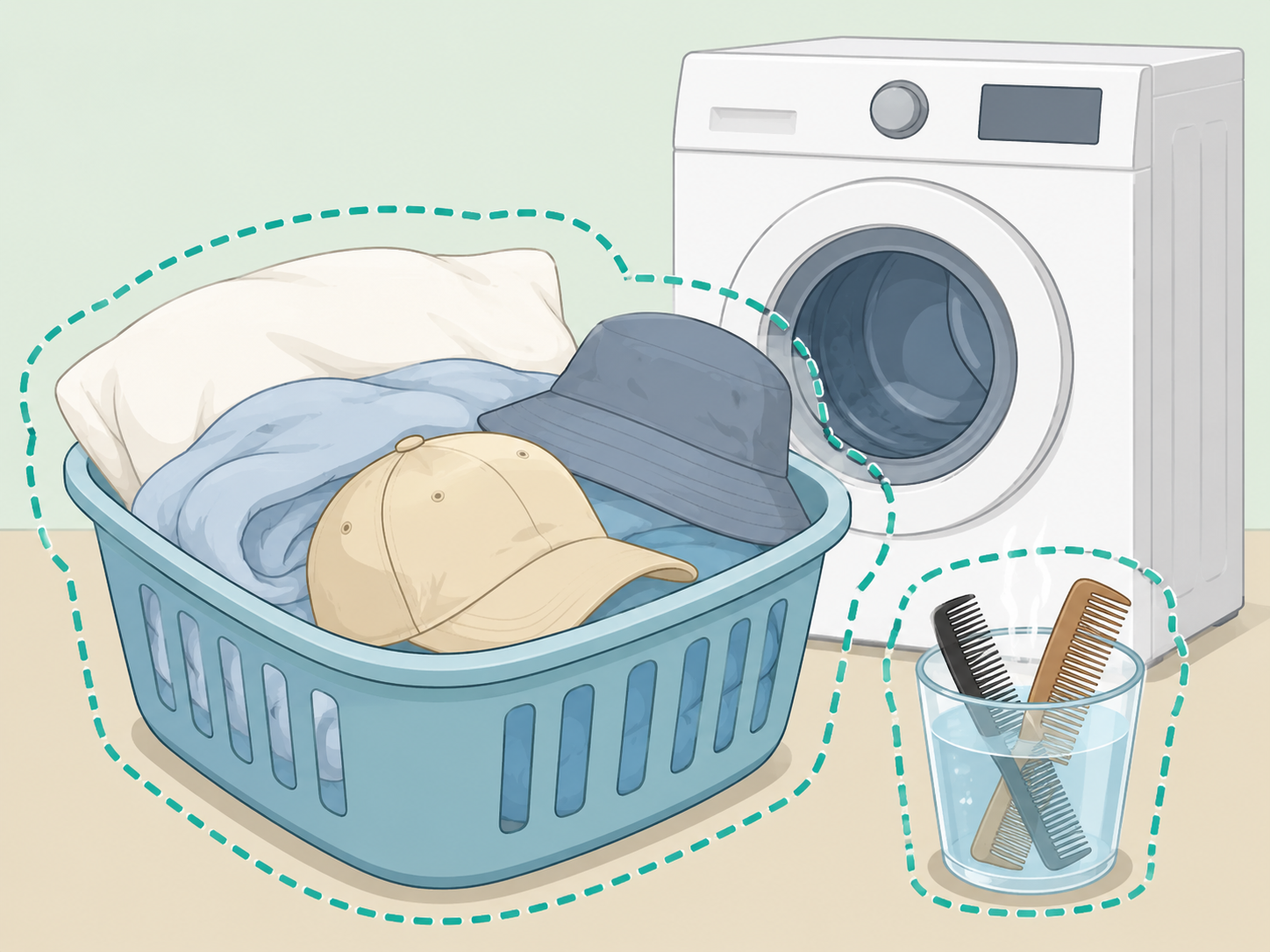
Wash clothing, bedding, towels, hats, and other items used in the two days before treatment if they may have touched the head. The CDC recommends hot washing and high-heat drying when possible, sealing nonwashable items in a bag for two weeks, soaking combs and brushes in hot water, and vacuuming areas where the person sat or lay. Focus on recent head-contact items rather than deep-cleaning the whole home.
Ask for medical help when signs are unclear or treatment fails
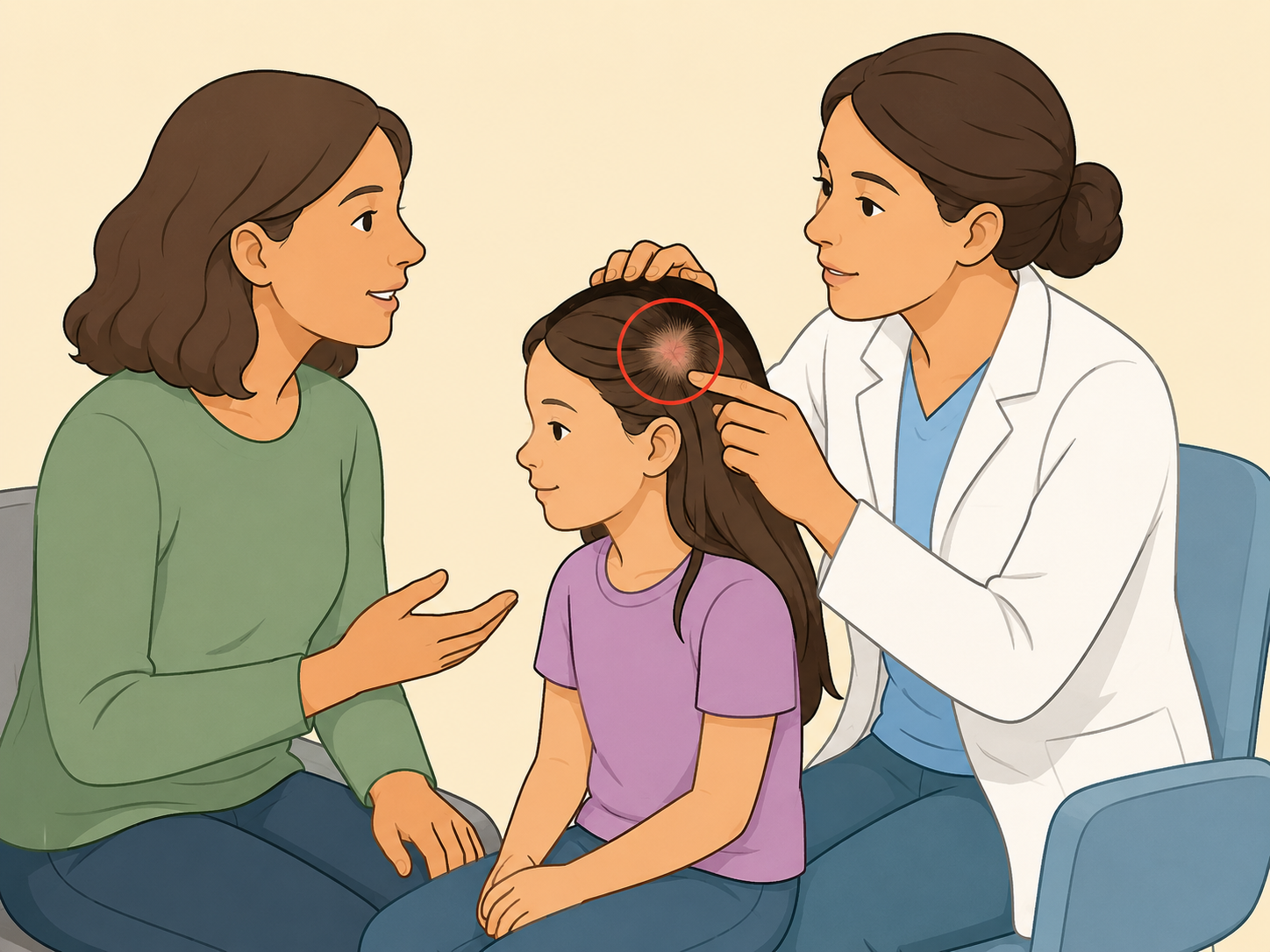
Contact a doctor, dermatologist, pharmacist, or school nurse if you cannot tell what you found, if the scalp has painful redness, swelling, pus, fever, or sores that are not healing, or if treatment does not seem to work. The AAD recommends seeing a dermatologist when home treatment fails or feels hard to manage. Get advice before repeating treatments more often than the label allows.
Summary
The bottom line: look carefully with bright light and a lice comb, focus near the scalp behind the ears and at the neck, and treat only if you find live lice or close-to-scalp nits. Head lice are common, treatable, and not a sign of poor hygiene.
Frequently Asked Questions
- What do head lice look like?
Adult head lice are tiny crawling insects that may look tan, gray, or light brown. Their eggs, called nits, are smaller and are usually attached firmly to hair near the scalp.
- Do head lice mean my child's hair is dirty?
No. Trusted health sources state that head lice are not caused by poor hygiene. They spread mainly through close head-to-head contact.
- Can lice jump or fly?
No. Head lice crawl; they do not jump or fly. Spread usually happens when hair touches hair during close contact.
- Are nits the same as an active lice problem?
Not always. Nits very close to the scalp may suggest active lice, but nits farther away are often hatched or dead. Finding a live crawling louse is the clearest sign.
- Should my child stay home from school because of lice?
The CDC says children with head lice do not need to leave school early and can usually return after appropriate treatment has begun. Check your child's school or daycare policy, since local rules may vary.
- Can pets spread head lice?
No. The CDC says animals do not get or spread human head lice.
- What should I do if treatment does not work?
Do not keep repeating products without guidance. Talk to a doctor, pharmacist, school nurse, or dermatologist, especially if live lice are still active after treatment or the scalp looks infected.
References
Reliable references aided in composing and refining this content.
- https://www.cdc.gov/lice/about/head-lice.html
- https://www.cdc.gov/lice/caring-head/index.html
- https://www.cdc.gov/lice/treatment/index.html
- https://www.aad.org/public/diseases/a-z/head-lice-symptoms
- https://www.aad.org/public/diseases/a-z/head-lice-treatment
- https://medlineplus.gov/headlice.html
- https://www.nhs.uk/conditions/head-lice-and-nits