
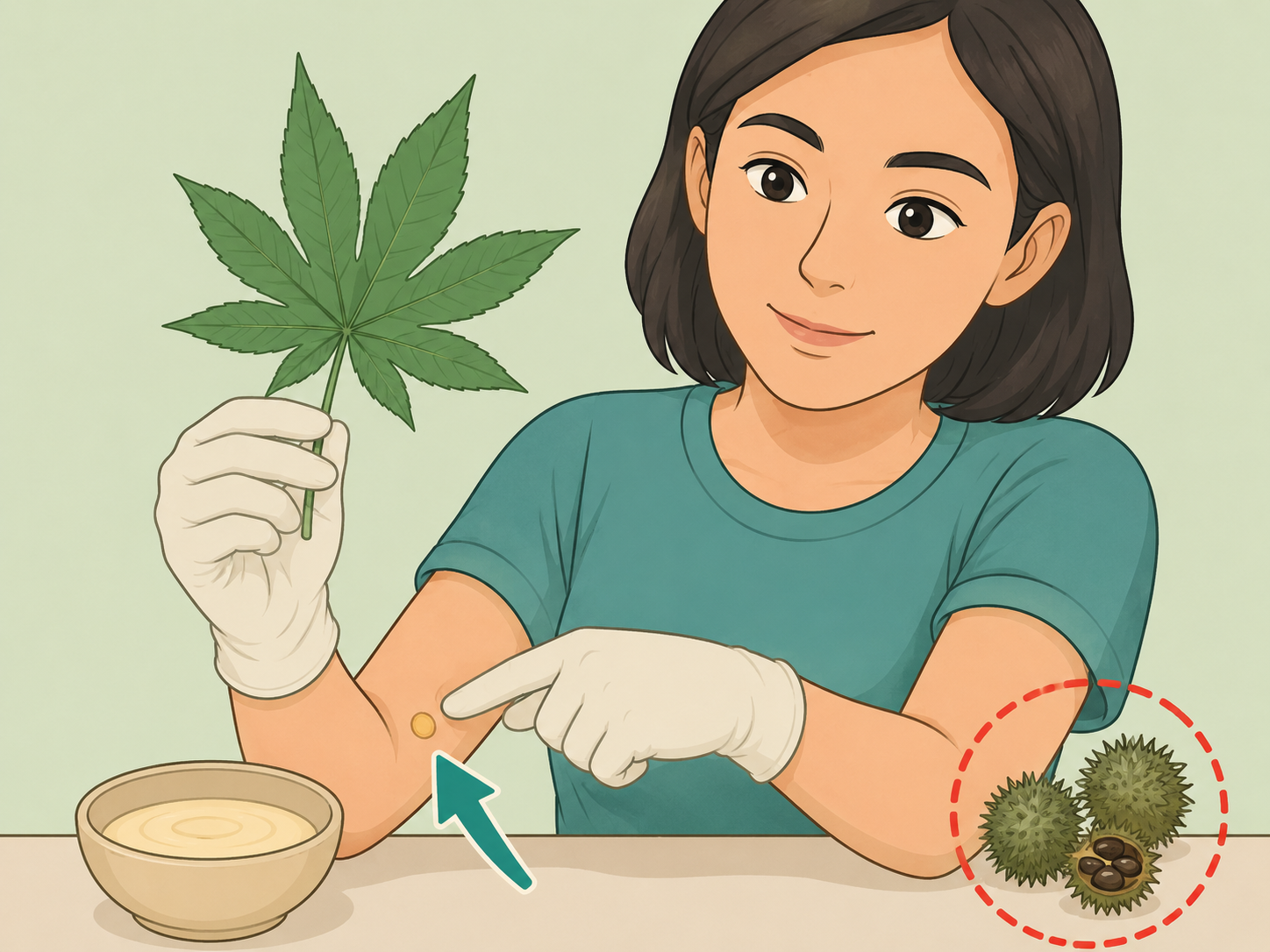
 Pin it
Castor leaves are often discussed in traditional beauty and wellness routines, but the evidence is still limited. Leaf extracts from Ricinus communis have shown antioxidant and anti-inflammatory activity in lab studies, yet that does not prove a homemade leaf paste will heal skin or pain in people. This guide explains how to think about the possible benefits while taking the safety risks seriously.
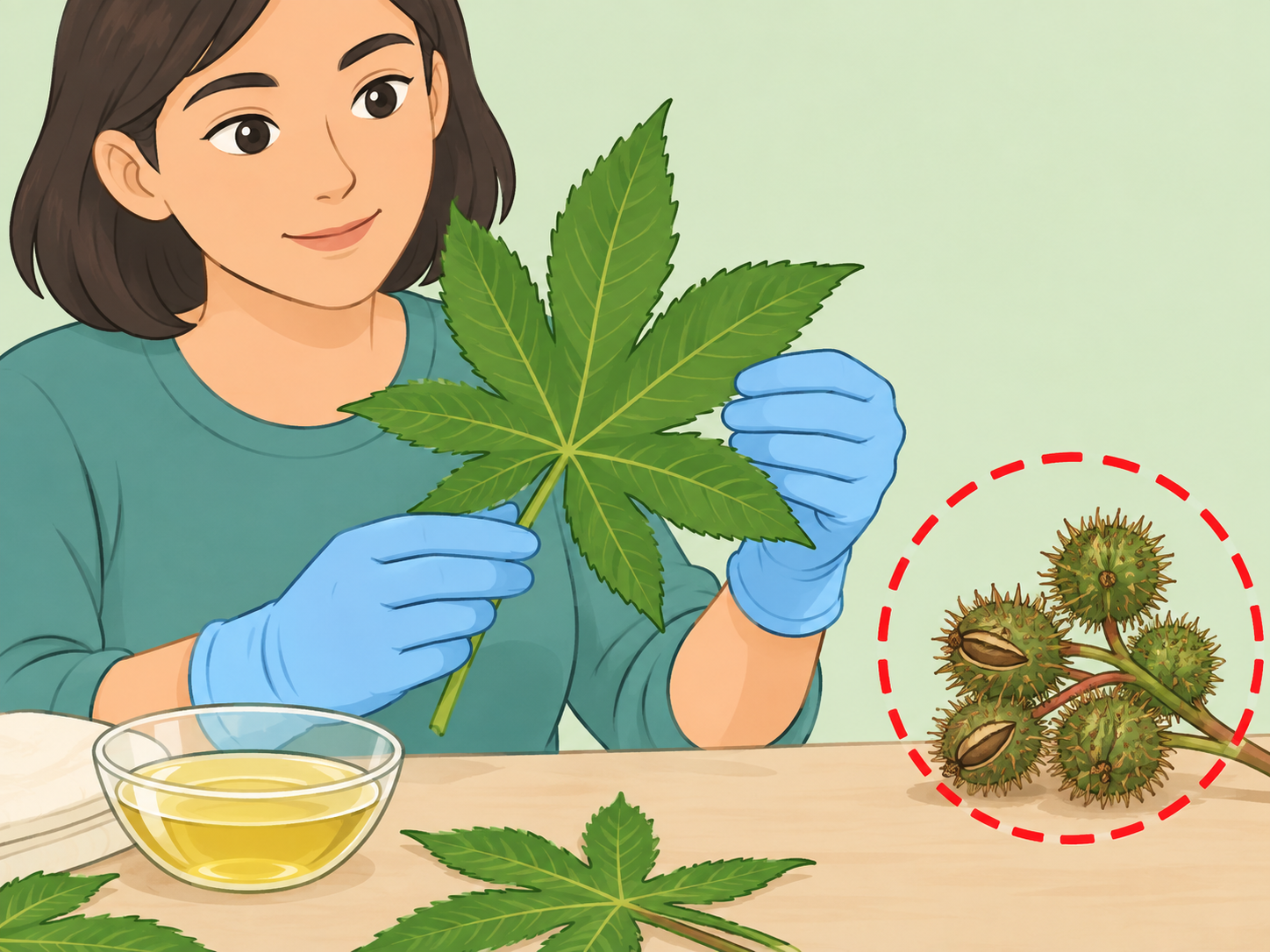
Identify the plant before handling it
Make sure you are dealing with the castor oil plant, Ricinus communis, and keep the leaves separate from the seed pods and beans. Poison Control explains that castor beans can release ricin when crushed or chewed, so do not handle the plant casually around children or pets. Wear gloves if you are pruning or collecting leaves.
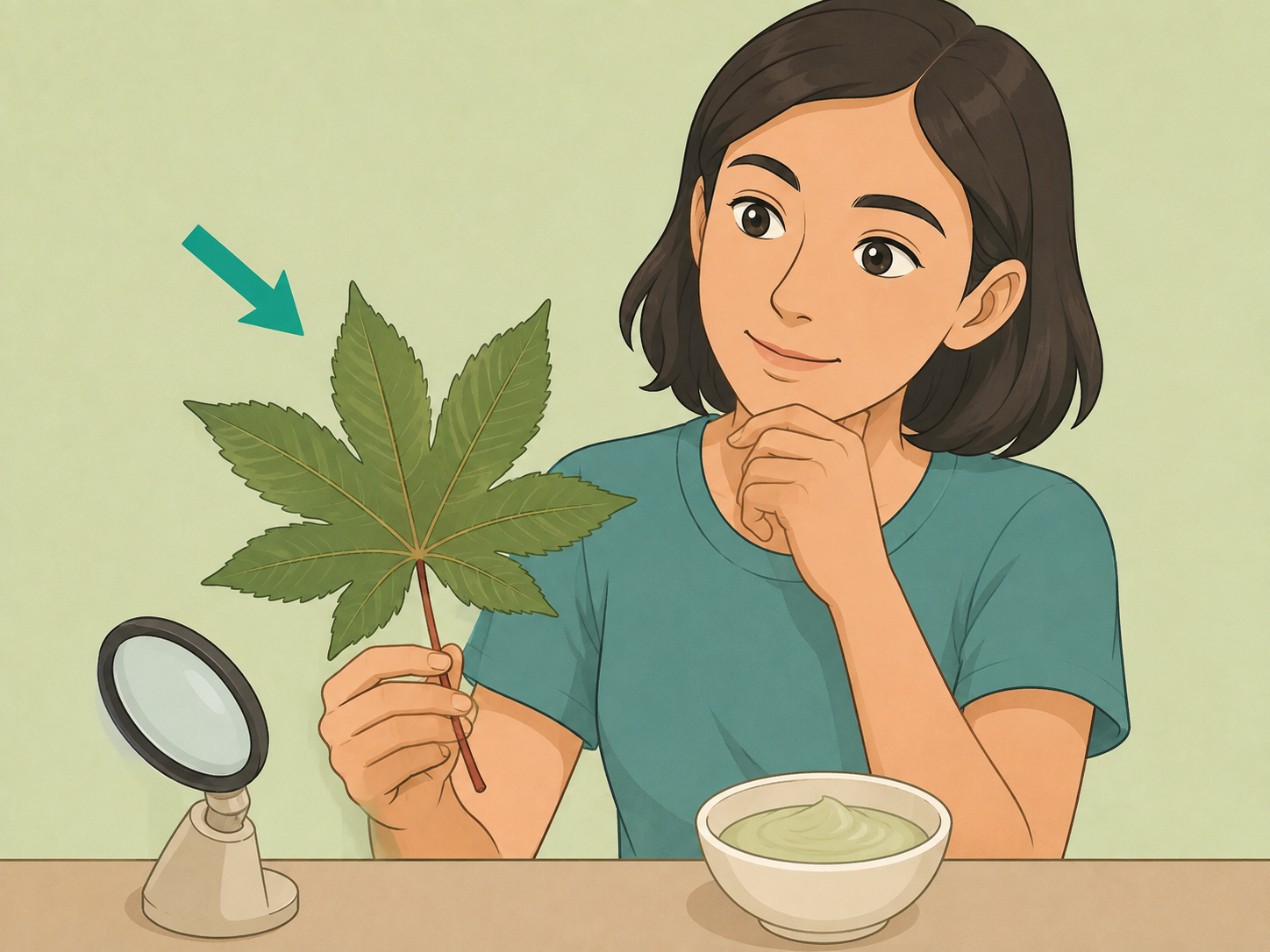
Treat the benefits as traditional, not proven
Castor leaves have a long history in traditional remedies, and reviews describe compounds with possible anti-inflammatory, antimicrobial, antioxidant, and wound-healing activity. A lab study of leaf extracts also reported antioxidant and anti-inflammatory effects in cell-based tests. These findings are interesting, but they do not prove that rubbing fresh leaves on skin will heal acne, scars, swelling, or pain.
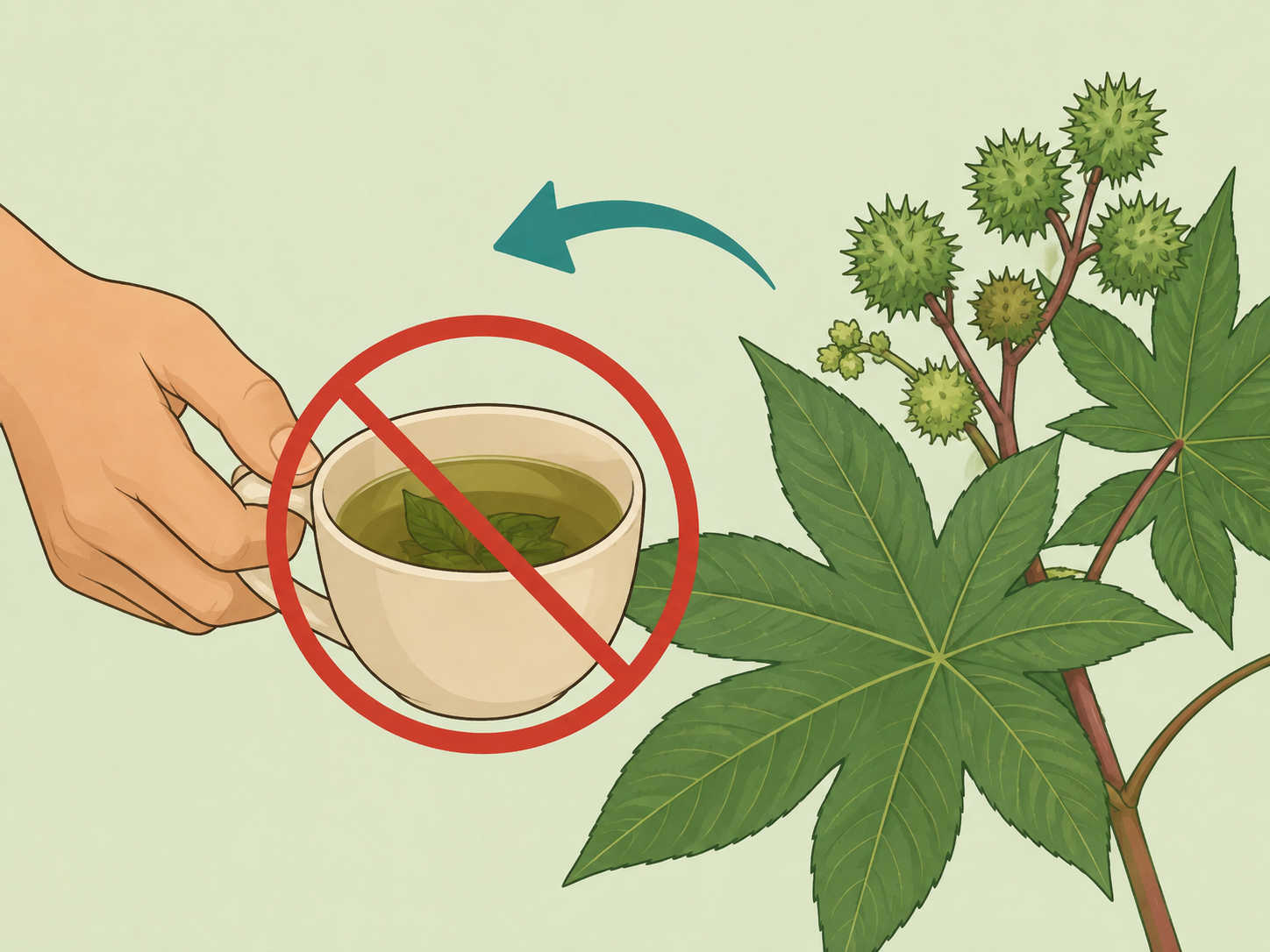
Avoid eating or drinking castor leaves
Do not eat castor leaves, drink castor leaf tea, or take homemade castor extracts for beauty or wellness. A recent review notes that Ricinus communis contains bioactive and toxic compounds, and homemade preparations vary too much to judge safely. Internal use is especially inappropriate for children, pregnant people, breastfeeding people, older adults, and anyone with a medical condition.
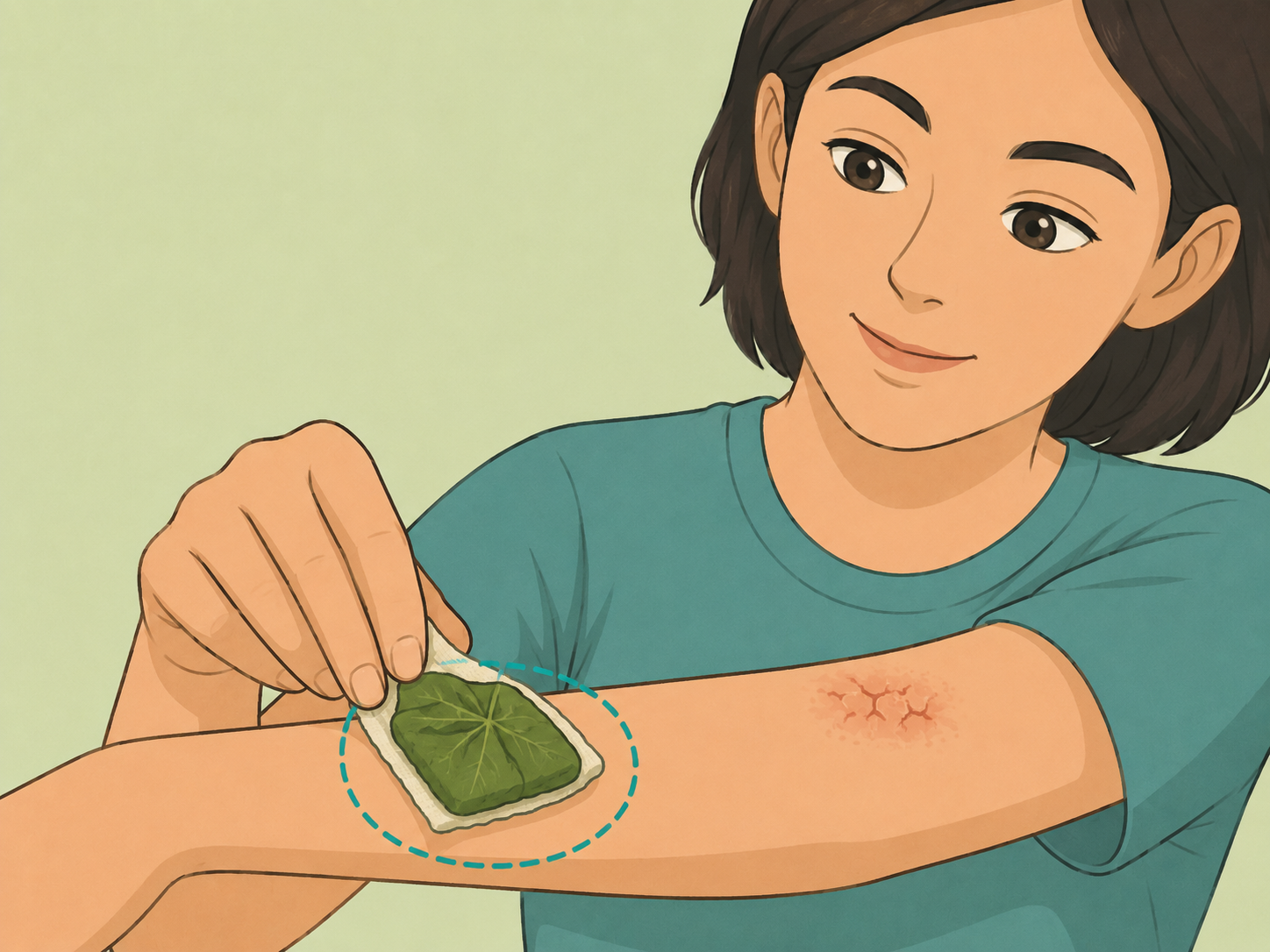
Keep any topical use limited and external
If you choose to try a traditional topical use, keep it brief, external, and only on a small area of intact skin. Do not use crushed leaves under tight wraps, on burns, on cuts, on rashes, or on infected skin. For routine beauty care, a tested cosmetic product is more predictable than raw plant material.
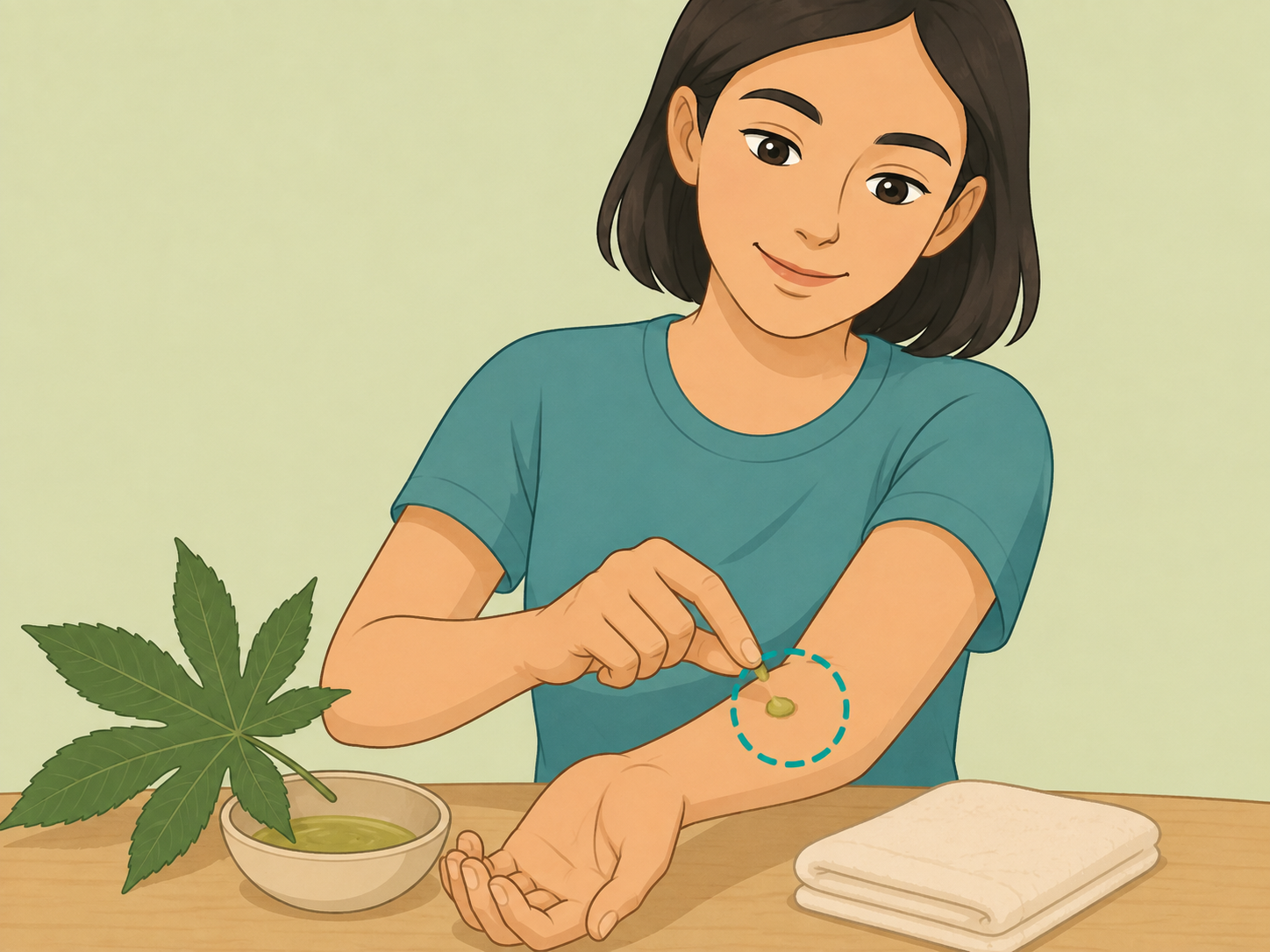
Patch test before applying more widely
Apply a tiny amount of the prepared leaf contact to a small area of inner arm skin, then wait at least a full day before using it elsewhere. Cleveland Clinic explains that contact dermatitis can happen when skin touches an irritant or allergen. Skip castor leaves entirely if you have very sensitive skin, eczema, open skin, or a history of plant allergies.
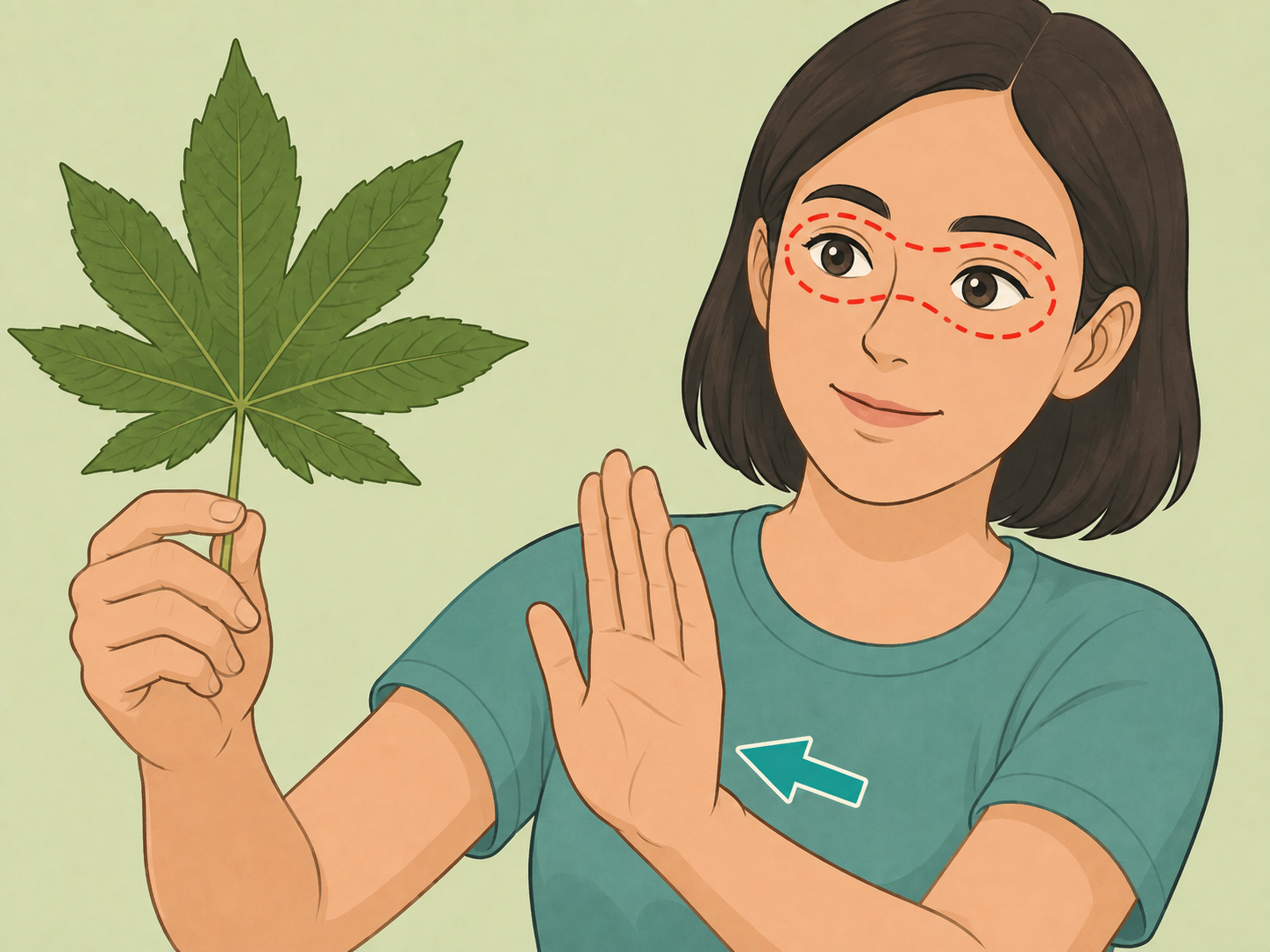
Keep it away from eyes and delicate areas
Do not apply castor leaves near your eyes, lips, genitals, nostrils, or freshly shaved skin. The CDC notes that ricin-related skin or eye contact can cause redness and pain on skin or in the eyes, and plant material can also irritate delicate tissue. Wash your hands well after handling the leaves.
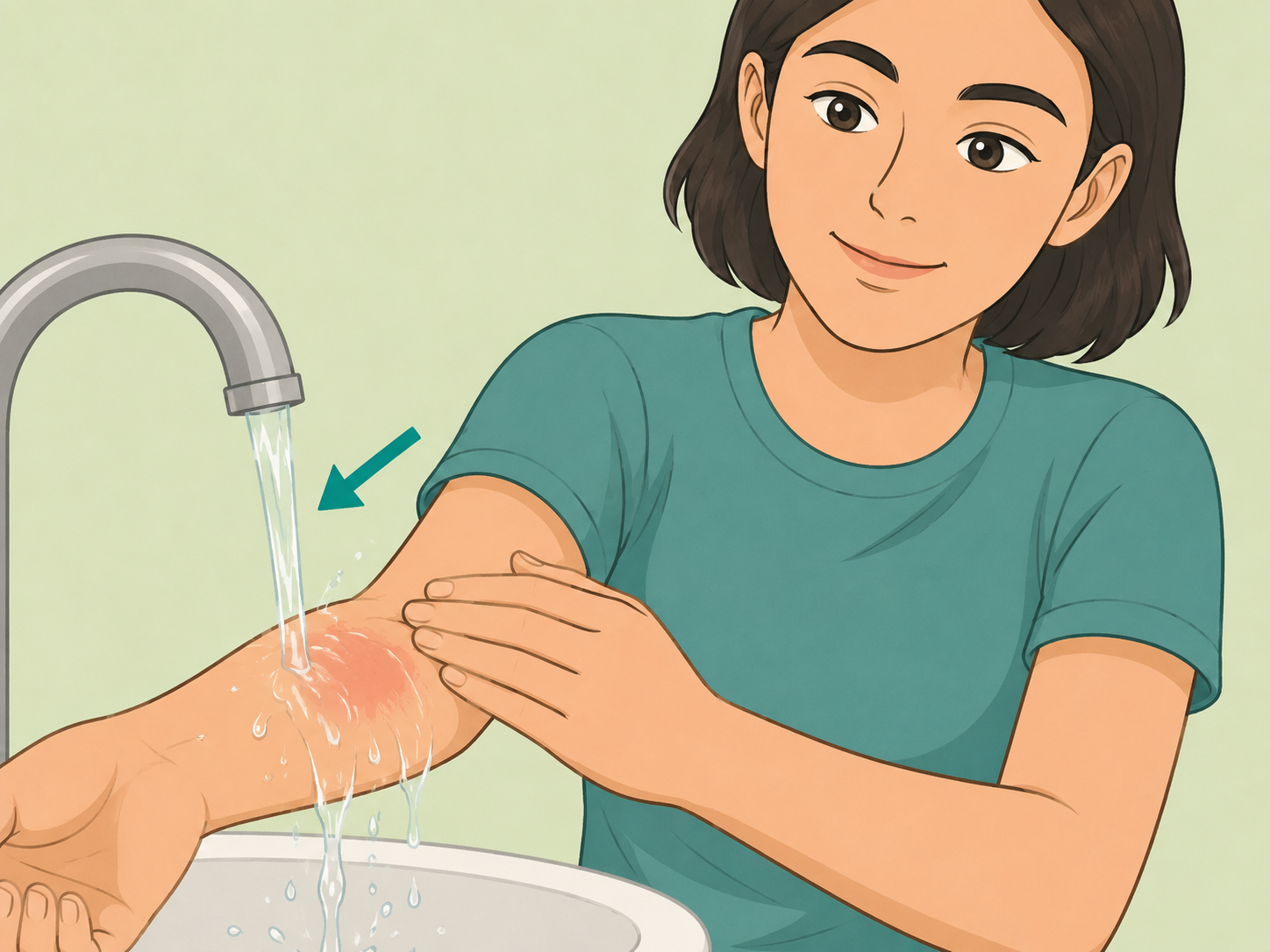
Stop immediately if your skin reacts
Remove the leaves or paste right away if you notice burning, itching, redness, swelling, hives, or worsening discomfort. Wash the area with mild soap and plenty of water; the CDC recommends soap and water to remove chemical residue from skin. Do not apply more castor leaves to try to calm the reaction.
Seek medical or poison help when needed
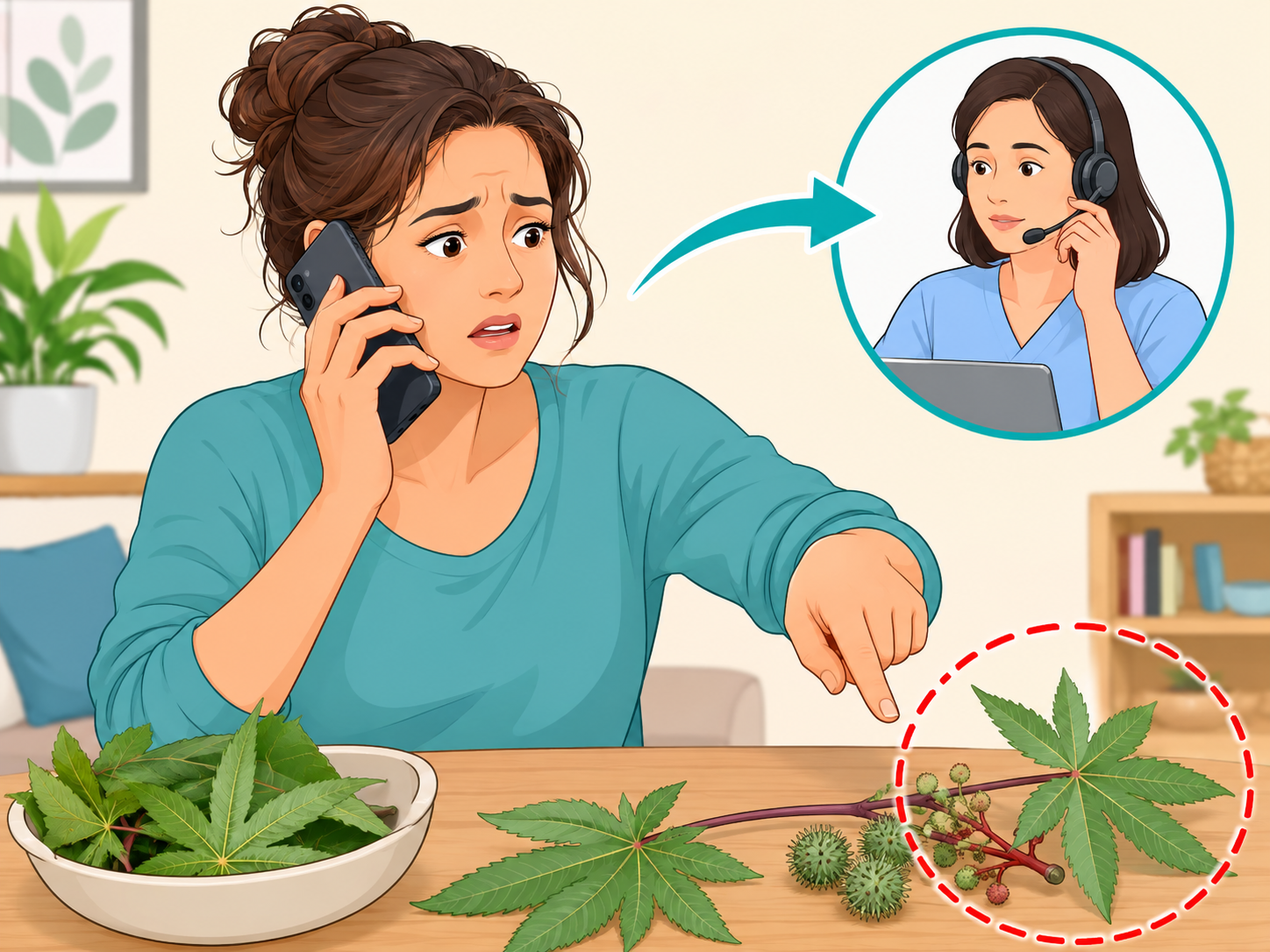
Call a doctor if a rash spreads, blisters, becomes painful, looks infected, or does not improve after you stop exposure. Get urgent help for trouble breathing, throat tightness, severe vomiting, bloody diarrhea, fainting, seizures, eye injury, or any swallowed castor plant material. In the United States, the CDC and Poison Control both direct people with exposure concerns to seek medical care or call Poison Help at 1-800-222-1222.
Summary
The bottom line: castor leaves may have interesting traditional and early research support, but they are not a proven skin treatment. Keep any use cautious, external, and limited, and get medical help for poisoning concerns, eye exposure, spreading rash, infection, pregnancy-related questions, or serious symptoms.
Frequently Asked Questions
- Are castor leaves proven to heal skin?
- No. Leaf extracts have shown antioxidant and anti-inflammatory activity in lab research, but that is not the same as proof that fresh castor leaves heal human skin. Use them cautiously and do not replace medical care.
- Can I put castor leaves on my face?
- It is safer to avoid using castor leaves on the face, especially near the eyes, lips, or irritated skin. Facial skin is sensitive, and plant material can trigger irritant or allergic contact dermatitis.
- Are castor leaves the same as castor oil?
- No. Castor oil is processed from castor seeds, while castor leaves are raw plant material. NCBI Bookshelf notes that castor oil is mainly known medically as a stimulant laxative, but that does not make homemade leaf preparations safe or proven for beauty use.
- Can I drink castor leaf tea for beauty benefits?
- Do not drink castor leaf tea or homemade castor plant extracts. The castor plant is associated with toxic compounds, and internal use is not a safe beauty practice.
- What should I do if castor plant material gets in my eyes?
- Rinse your eyes with clean running water for 10 to 15 minutes and seek medical advice if burning, redness, pain, or blurry vision continues. Do not rub your eyes or apply more plant material.
- What if a child or pet eats part of a castor plant?
- Call Poison Control at 1-800-222-1222 in the United States, use webPOISONCONTROL, or contact a veterinarian for pets. Seeds are the highest concern, but any uncertain exposure should be treated seriously.
References
Reliable references aided in composing and refining this content.
- https://pubmed.ncbi.nlm.nih.gov/25477994
- https://pubmed.ncbi.nlm.nih.gov/29084706
- https://pubmed.ncbi.nlm.nih.gov/40807390
- https://www.cdc.gov/chemical-emergencies/chemical-fact-sheets/ricin.html
- https://www.poison.org/articles/what-happens-if-i-eat-castor-beans-222
- https://my.clevelandclinic.org/health/diseases/6173-contact-dermatitis
- https://www.ncbi.nlm.nih.gov/books/NBK551626