
 Pin it
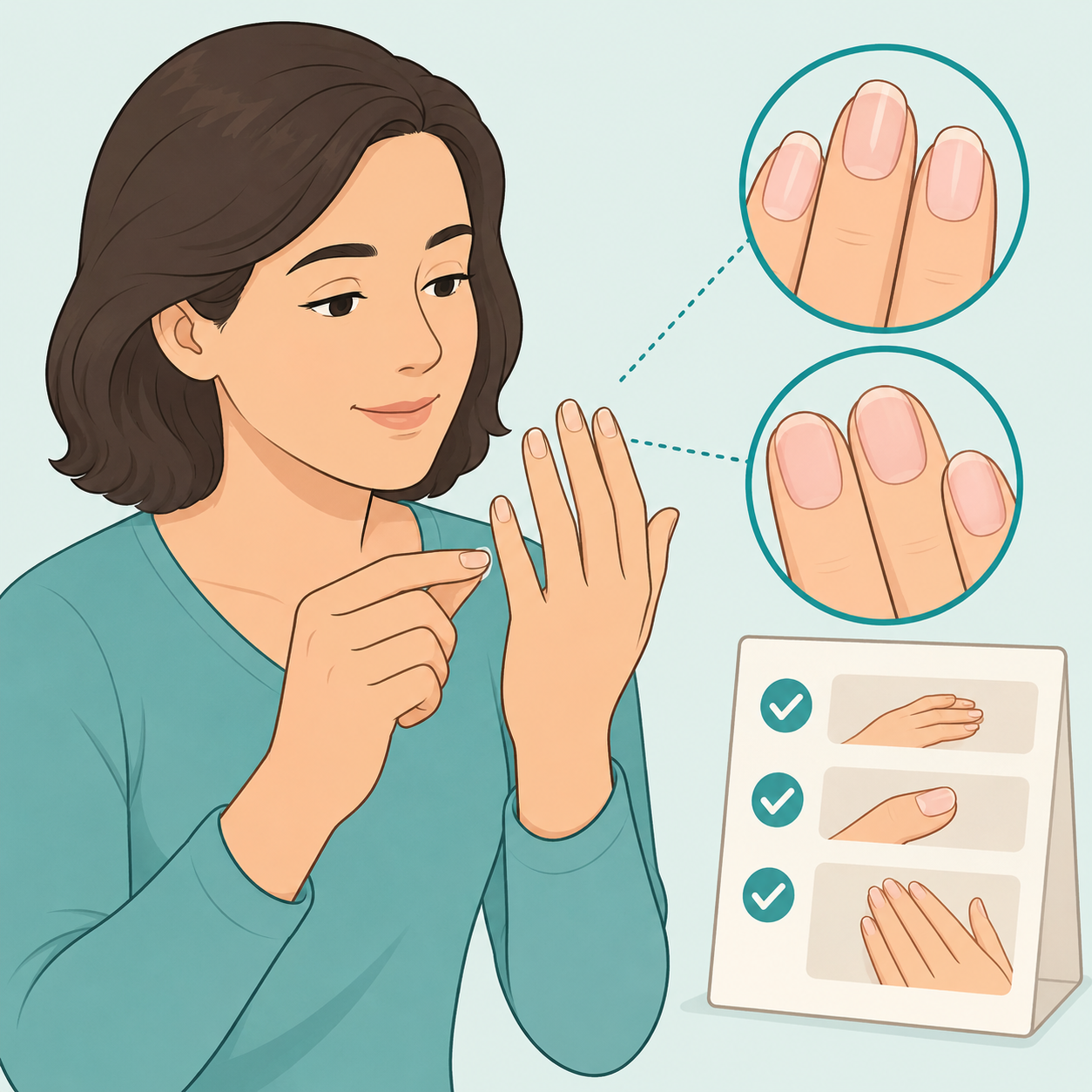
Fingernails can sometimes show clues about health, but they cannot tell you exactly how long you will live. Some viral claims about nails and life expectancy are based on limited research or overinterpretation. This guide explains how to check your nails calmly, what changes may matter, and when to get medical help.
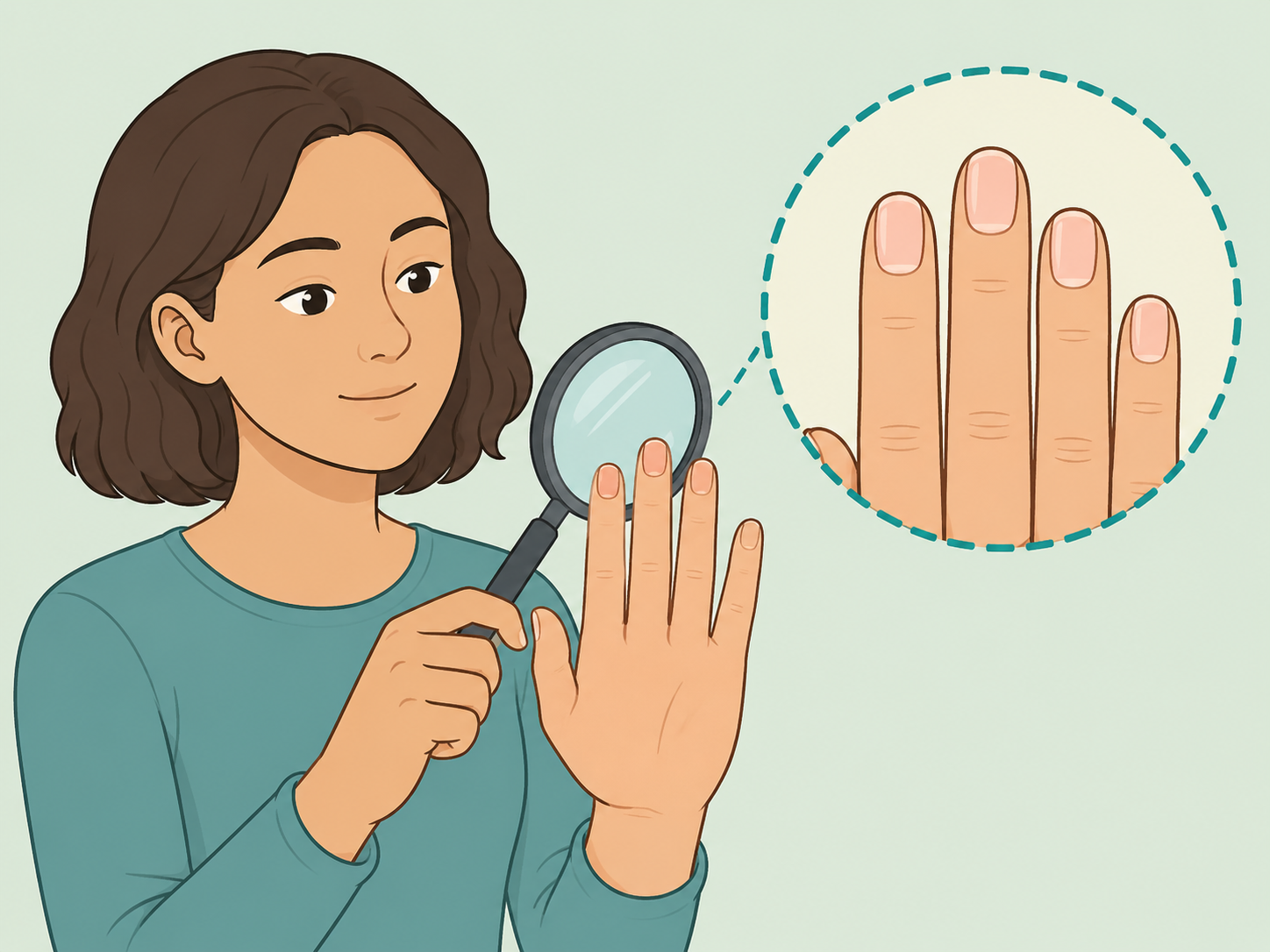
Treat life-expectancy claims as clues, not predictions
Be skeptical of claims that one fingernail sign can tell you how long you will live. The NIH describes biological age as a research concept measured with broader health data, not a simple nail check. One study found that white nails were associated with in-hospital mortality in older hospitalized patients, but that does not make white nails a home life-expectancy test.
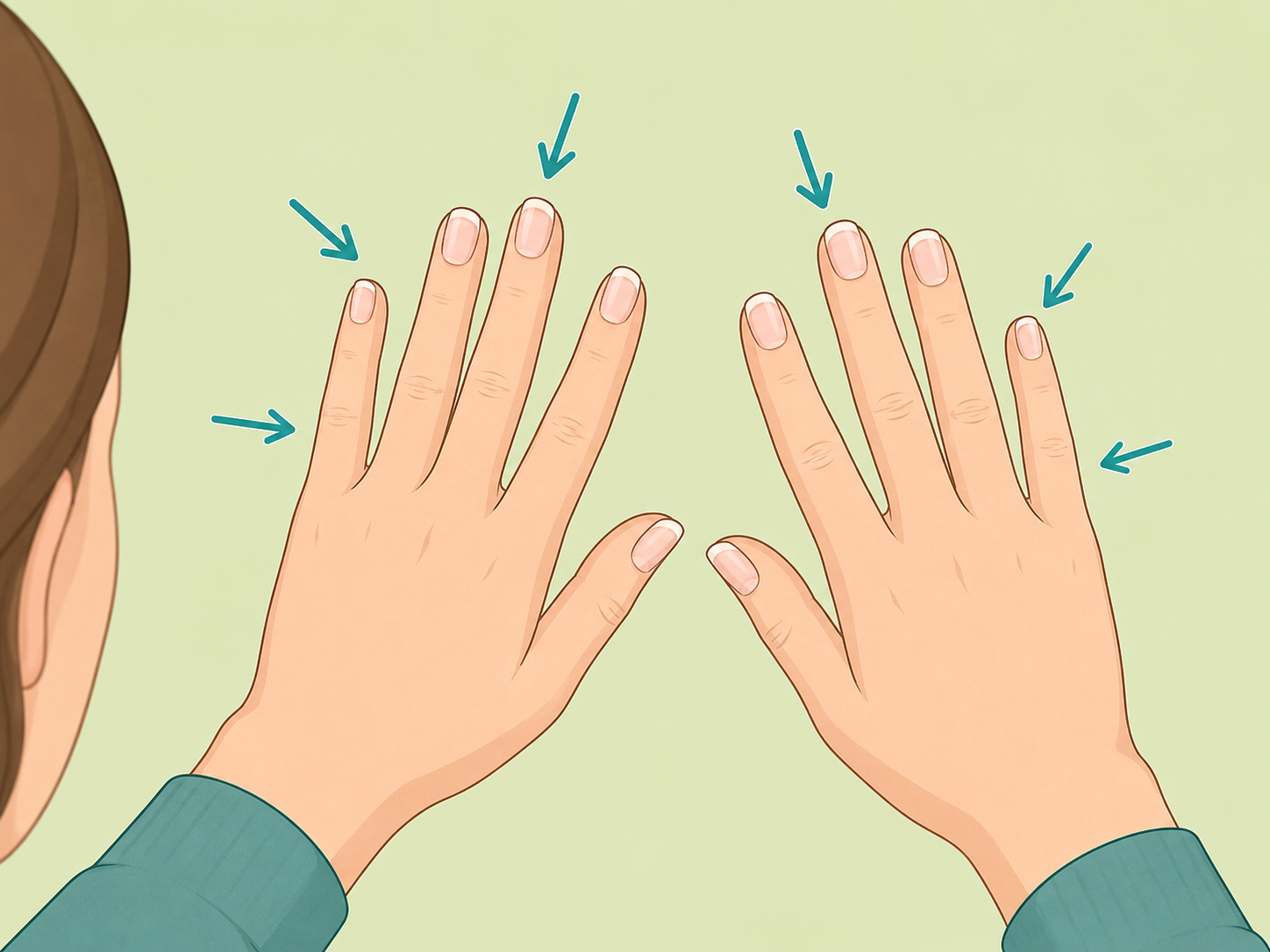
Look at all your nails in natural light
Wash your hands, remove dark polish if you can, and look at each fingernail and toenail in good light. Notice color, shape, thickness, texture, and whether the nail is attached normally, since NIH notes that nail changes can sometimes reflect health concerns. Check both hands so you can tell whether a change affects one nail or many nails.
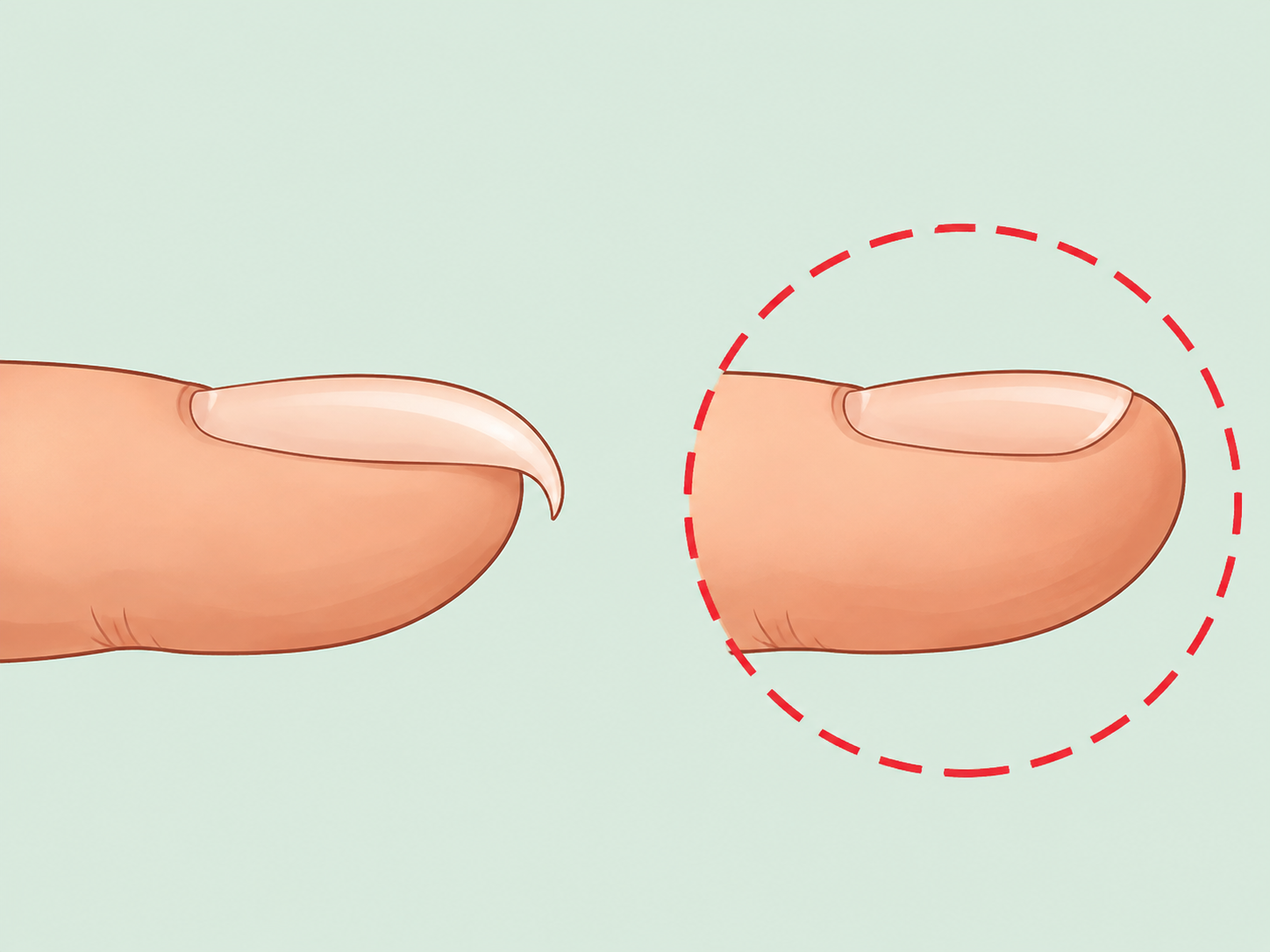
Check for clubbing at the fingertips
View each fingertip from the side and look for nails that curve down around widened, rounded fingertips. Cleveland Clinic explains that nail clubbing can make nails feel spongy or swollen and may be linked to lung, heart, digestive, liver, thyroid, or cancer-related conditions. New clubbing should be evaluated rather than watched indefinitely at home.
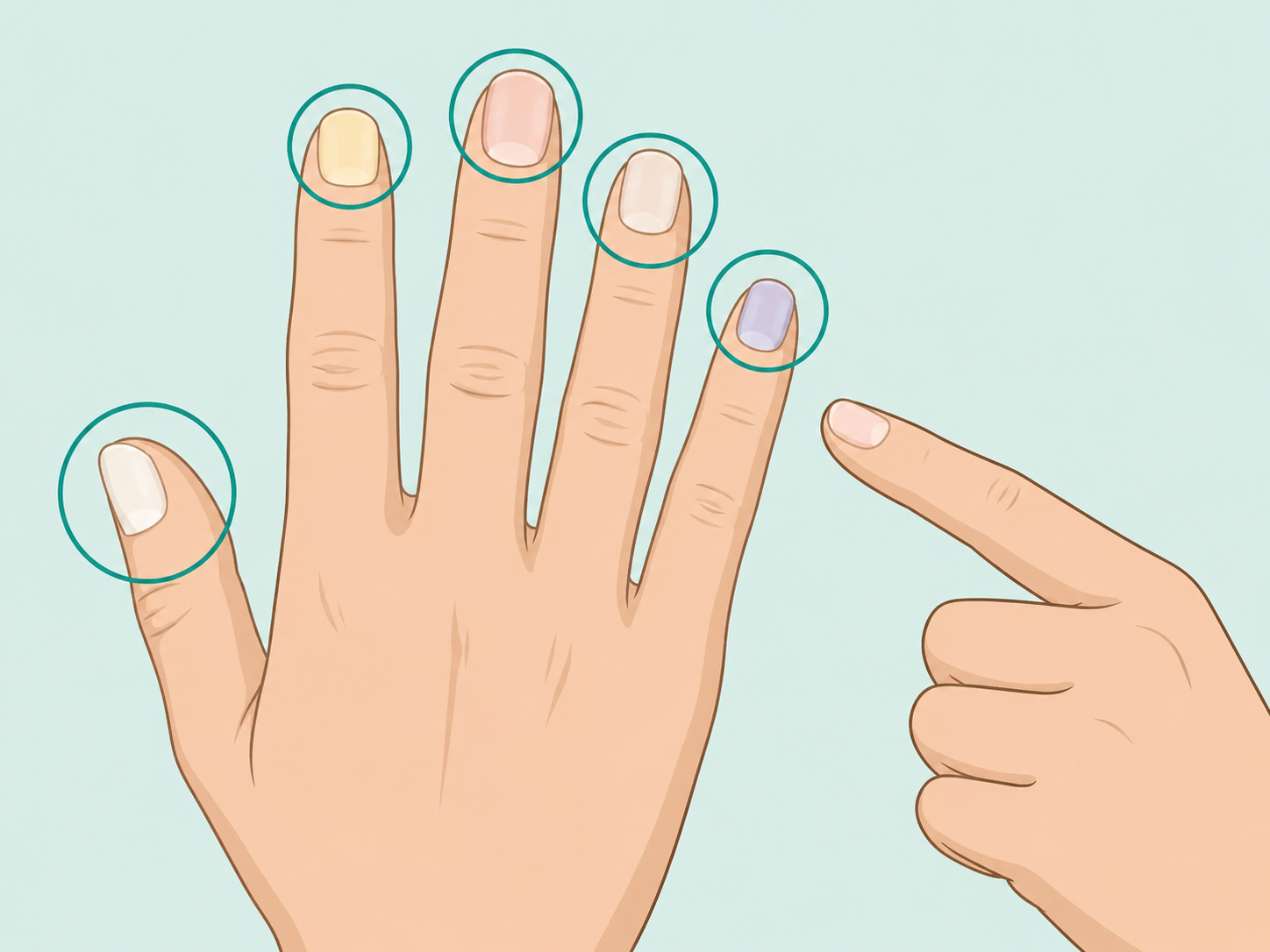
Notice white, blue, yellow, or pale color changes
Color changes matter most when they are new, affect several nails, or do not grow out like a bruise or stain. Mayo Clinic lists nail changes such as Terry's nails, yellow nail syndrome, spoon nails, and clubbing as changes that can sometimes point to medical concerns. MedlinePlus also advises contacting a provider for blue, pale, clubbed, distorted, painful, or pitted nails.
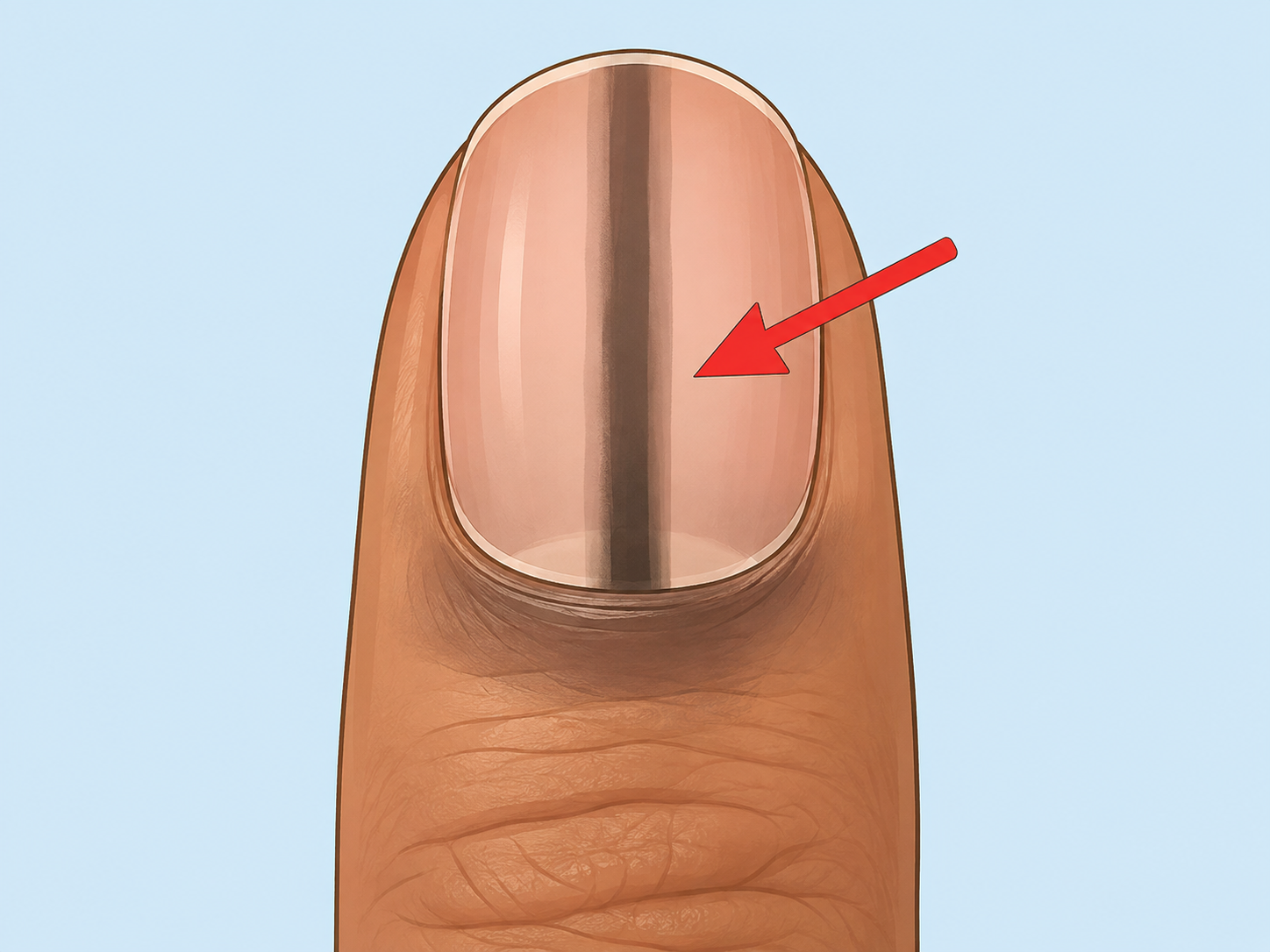
Watch for dark streaks or dark skin near a nail
A new brown or black streak running lengthwise in a nail should be checked, especially if it widens, changes, or appears with darker skin around the nail. The American Academy of Dermatology says a dark streak or nail lifting can be a sign of nail melanoma, although many dark streaks are not cancer. Do not try to scrape, bleach, or cover a changing streak instead of getting it examined.
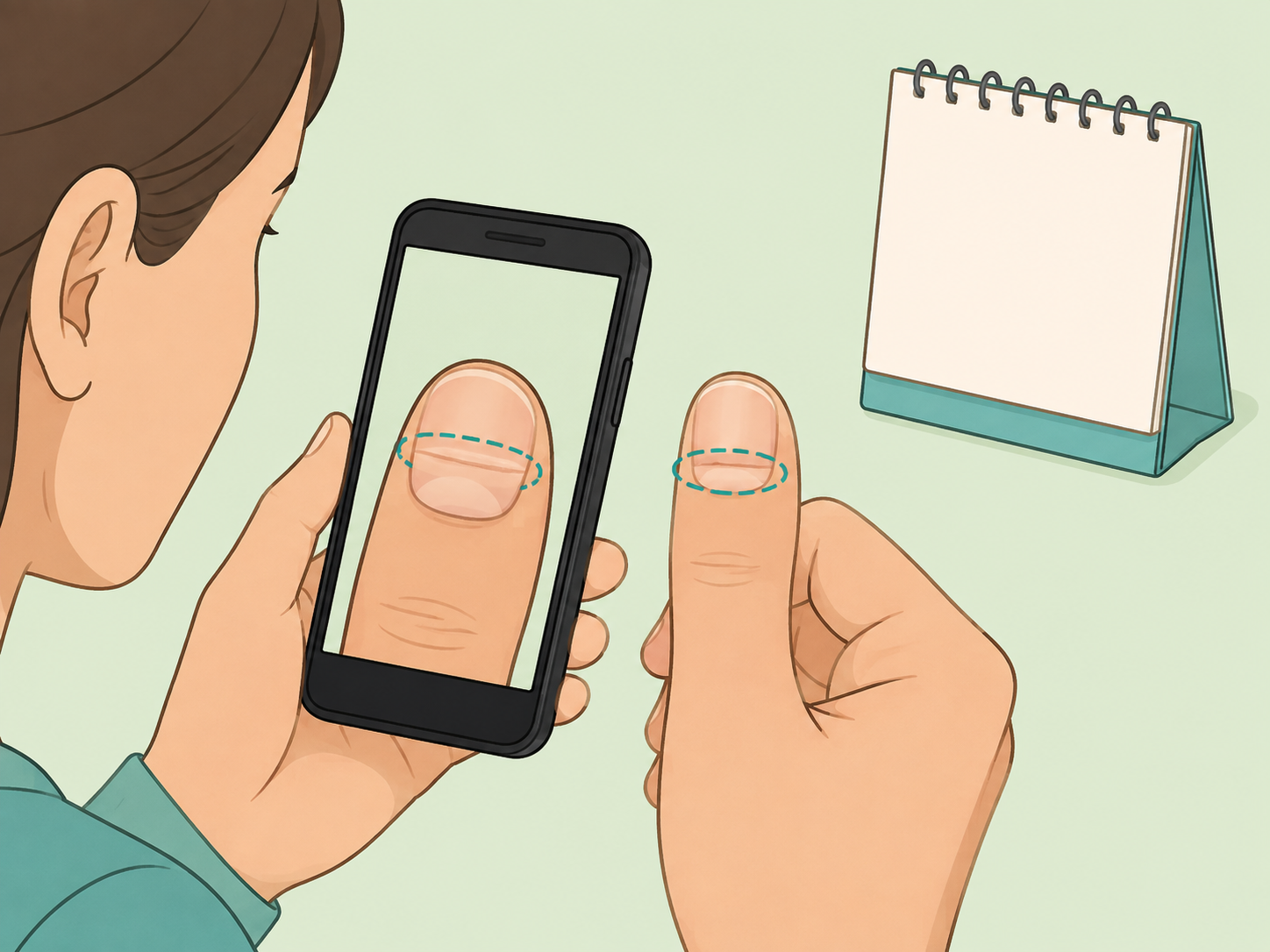
Track growth, ridges, and sudden horizontal grooves
Write down when you first noticed a change and take a clear photo every few weeks. MedlinePlus explains that nails often grow more slowly with age and may become dull or brittle, while deep horizontal grooves can appear after illness, injury, surgery, or other stress on the body. A single change after known trauma is different from a new pattern across many nails.
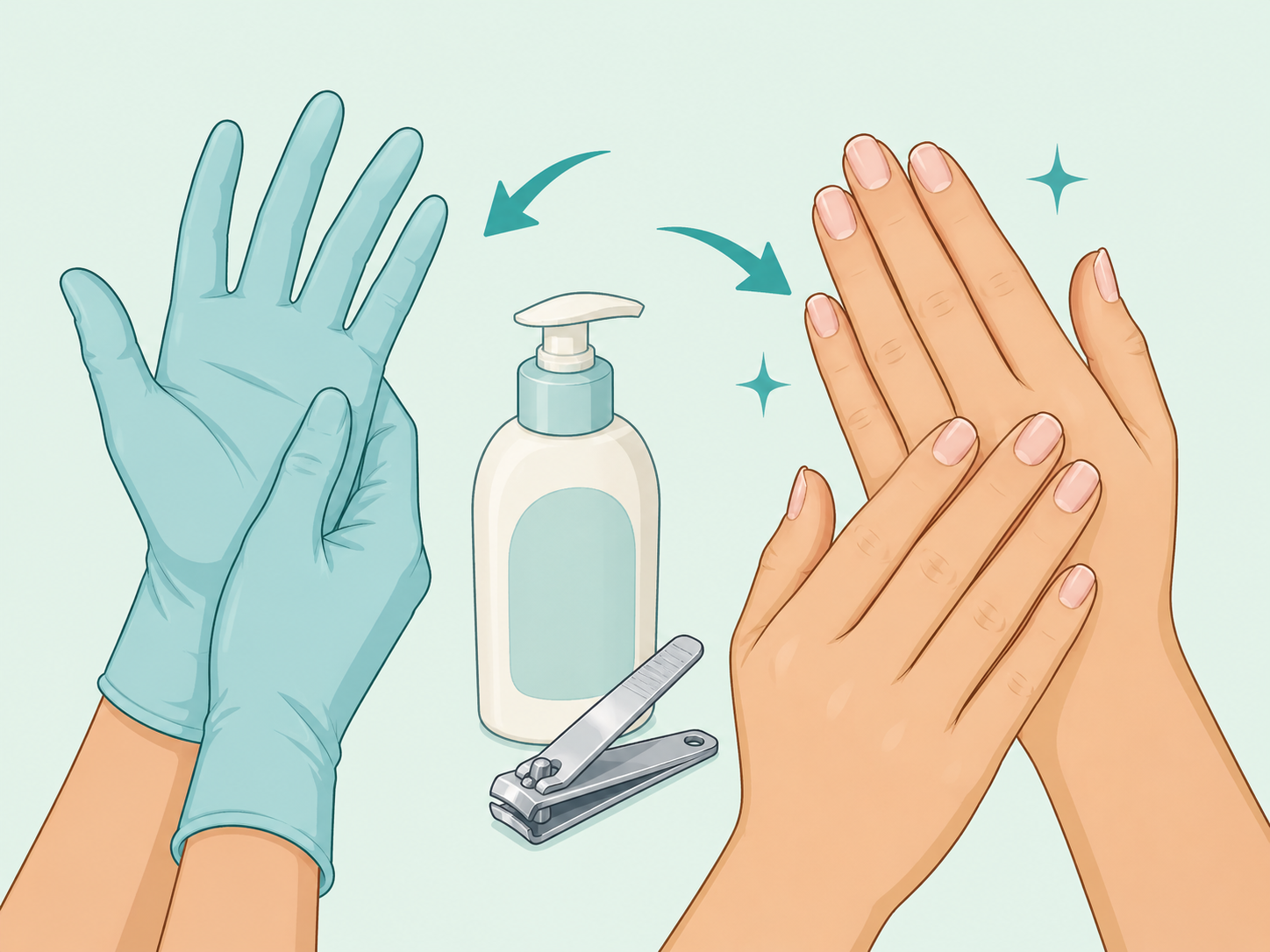
Protect your nails while you monitor changes
Keep nails trimmed, avoid picking at cuticles, wear gloves for wet cleaning tasks, and moisturize after washing. The American Academy of Dermatology recommends protecting nails from too much water exposure because it can contribute to splitting, peeling, and breakage. Gentle care makes it easier to tell whether a nail change is improving or getting worse.
See a doctor for new, painful, or persistent changes
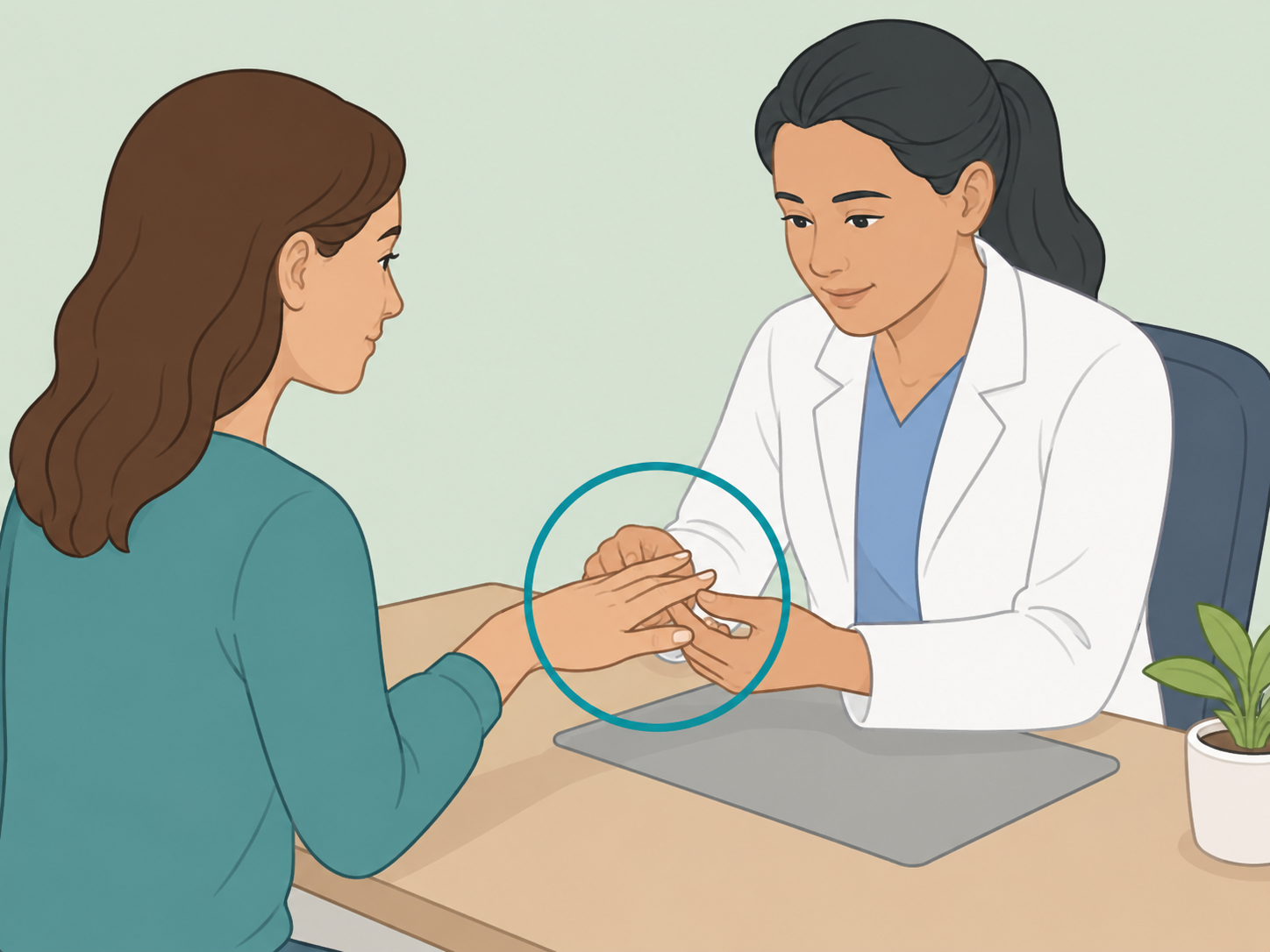
Make an appointment with a primary care clinician or dermatologist if you notice new clubbing, blue nails, a changing dark streak, nail lifting, swelling, pus, pain, or a change that lasts for weeks. The American Academy of Dermatology says changes in nail color, texture, or shape can be harmless or a sign of disease, and a specialist can decide whether testing is needed. Seek urgent care if nail changes come with chest pain, shortness of breath, blue lips, fever, or rapidly spreading redness.
Summary
The bottom line: use your fingernails as one small health clue, not a prediction tool. If you notice new clubbing, unusual color changes, a dark streak, pain, swelling, nail lifting, or changes that persist, make an appointment with a healthcare professional.
Frequently Asked Questions
- Can fingernails predict how long I will live?
No. Fingernails may reflect some health changes, but they are not a reliable life-expectancy calculator. Biological aging research uses much more complex measurements than a quick look at the nails.
- What nail sign is most important to get checked?
New nail clubbing, a new or changing dark streak, blue nails, painful swelling, nail lifting, or persistent distortion should be checked. These changes can have harmless causes, but they can also point to conditions that need care.
- Are vertical ridges in fingernails dangerous?
Often, no. Vertical ridges can become more common with age, but new pits, deep horizontal grooves, major color changes, or nail shape changes are more important to discuss with a clinician.
- What can white nails mean?
White or pale nails can be related to aging, injury, anemia, liver disease, kidney disease, diabetes, or other issues depending on the pattern and symptoms. A study linked white nails with higher in-hospital mortality among older admitted patients, but that finding should not be used as a home prediction test.
- Should I measure nail growth to track aging?
It is not a dependable method for judging your healthspan. Nails often grow more slowly with age, but growth also varies by finger, injury, illness, nutrition, and other factors.
- When should I seek urgent medical help?
Seek prompt care if nail changes come with shortness of breath, chest pain, blue lips or fingers, severe pain, spreading redness, pus, fever, or a rapidly changing dark streak. For non-urgent but persistent changes, schedule a primary care or dermatology visit.
References
Reliable references aided in composing and refining this content.
- https://www.nih.gov/news-events/nih-research-matters/can-we-slow-aging
- https://pubmed.ncbi.nlm.nih.gov/34946339
- https://newsinhealth.nih.gov/2021/08/funky-fingertips
- https://my.clevelandclinic.org/health/symptoms/24474-nail-clubbing
- https://www.mayoclinic.org/healthy-lifestyle/adult-health/in-depth/7-fingernail-problems-not-to-ignore/art-20546860?s=2
- https://medlineplus.gov/ency/article/003247.htm
- https://medlineplus.gov/ency/article/004005.htm
- https://www.aad.org/public/everyday-care/nail-care-secrets/basics/nail-changes-dermatologist-should-examine
- https://www.aad.org/public/diseases/skin-cancer/types/common/melanoma/nail-melanoma
- https://www.aad.org/public/everyday-care/nail-care-secrets/basics/healthy-nail-tips