
 Pin it
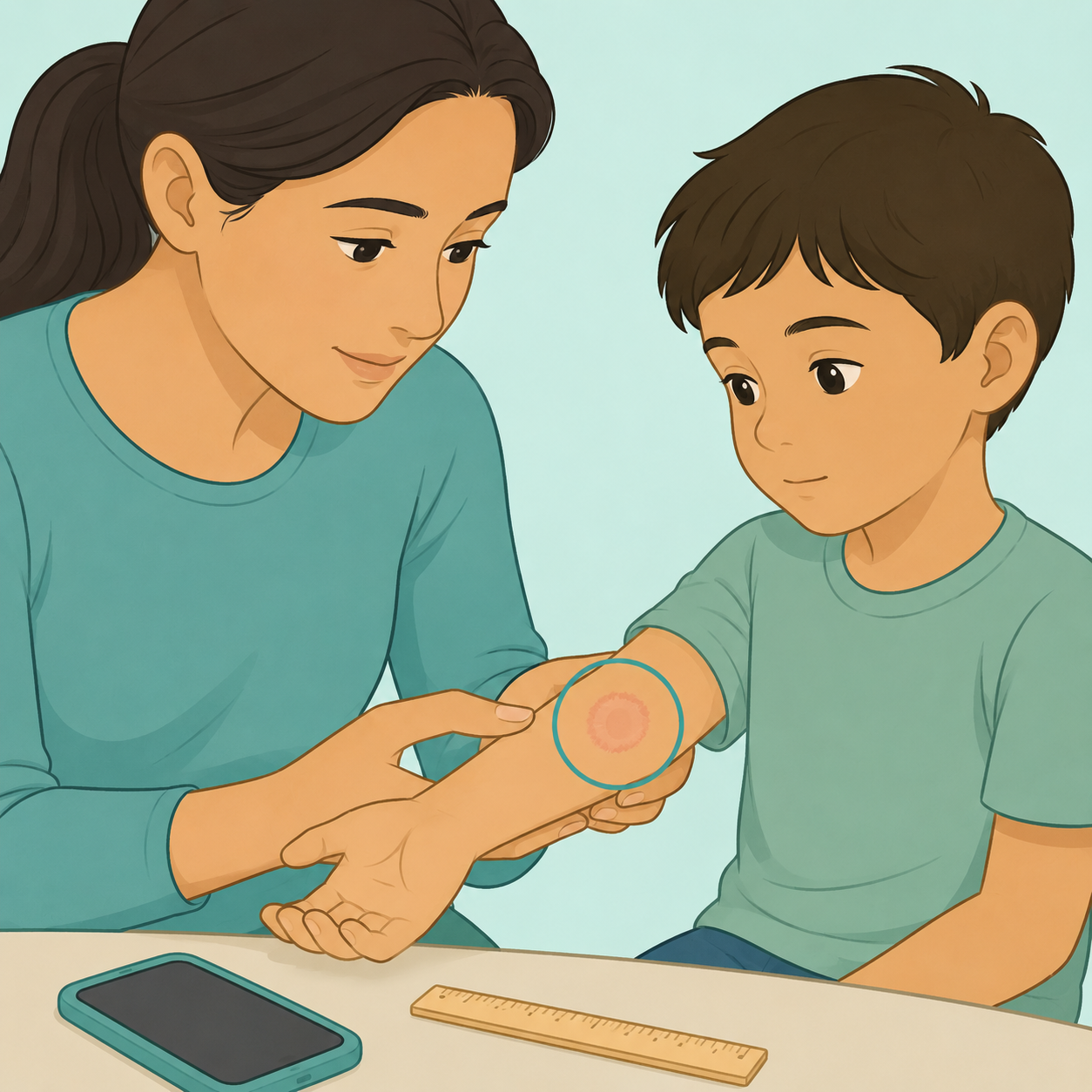
A red ring on your child's arm can look alarming, but many childhood rashes are minor and manageable. The important part is to look at the whole picture: how your child feels, how the rash looks, whether it is spreading, and whether a tick bite or ringworm exposure is possible. Use these steps to decide what to watch, what to avoid, and when to get medical help.
Check how your child is acting first
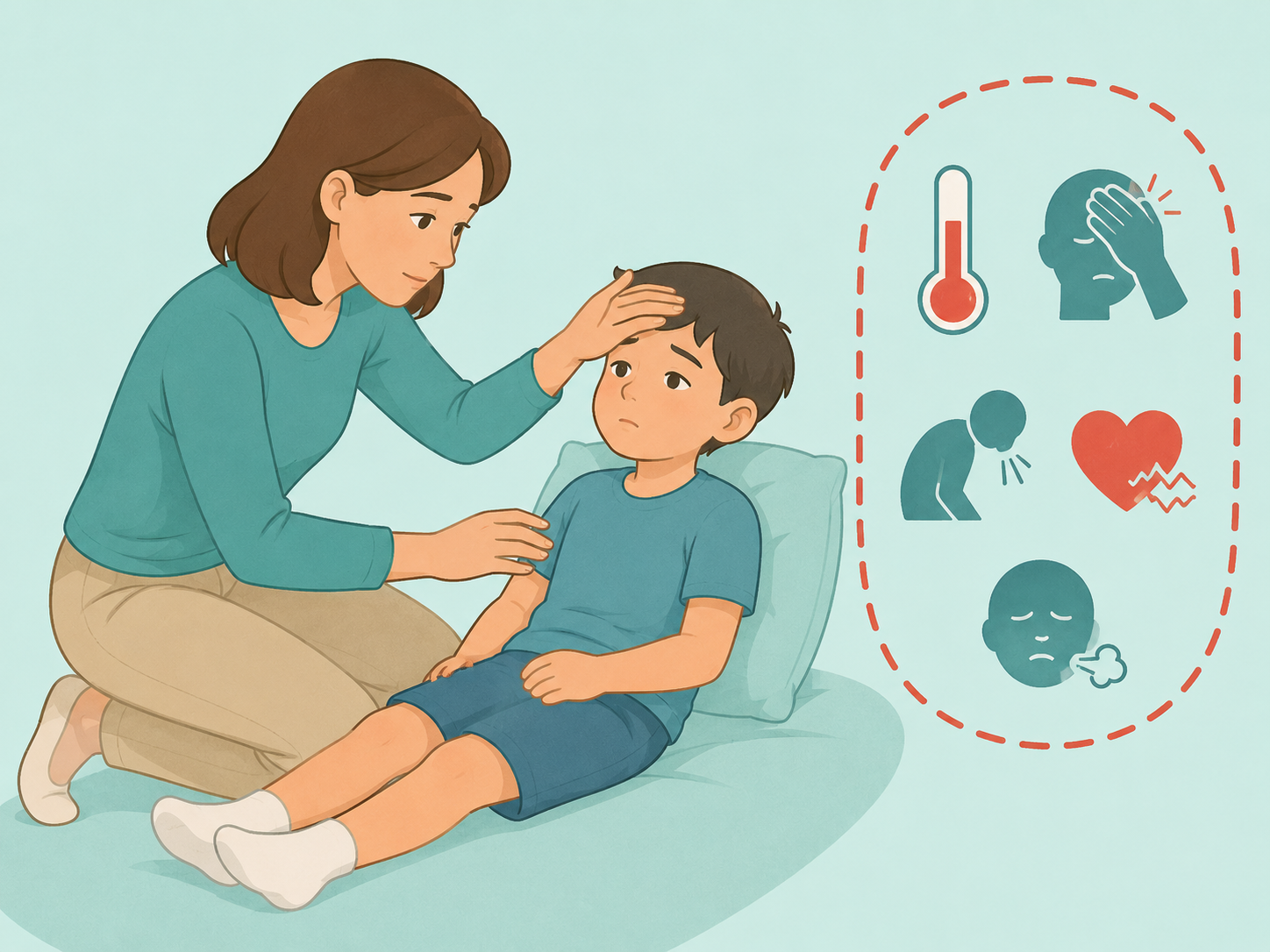
Before focusing on the ring itself, look at your child overall. Seek emergency care right away if your child is very unwell with a rash plus symptoms such as stiff neck, confusion, trouble breathing, sudden swelling of the lips or throat, or a bruise-like rash that does not fade with pressure, which the NHS lists as urgent warning signs.
Look closely at the ring's edge and texture
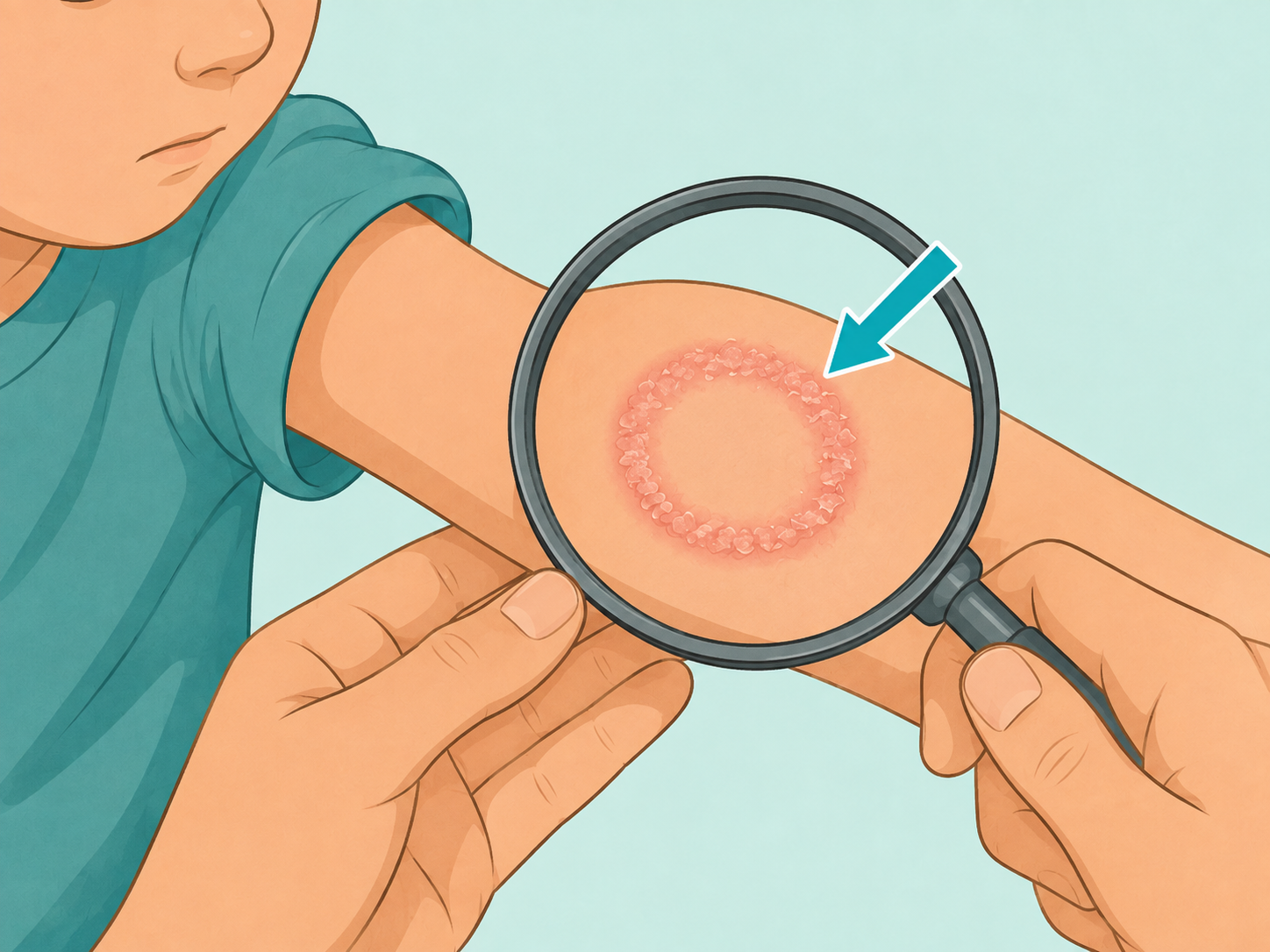
Notice whether the edge is raised, scaly, dry, itchy, or spreading outward. Ringworm is caused by fungi, not worms, and it often causes an itchy, scaly, ring-shaped rash that may look red on lighter skin or gray, brown, pink, purple-brown, or darker than nearby skin on deeper skin tones.
Think about recent tick exposure
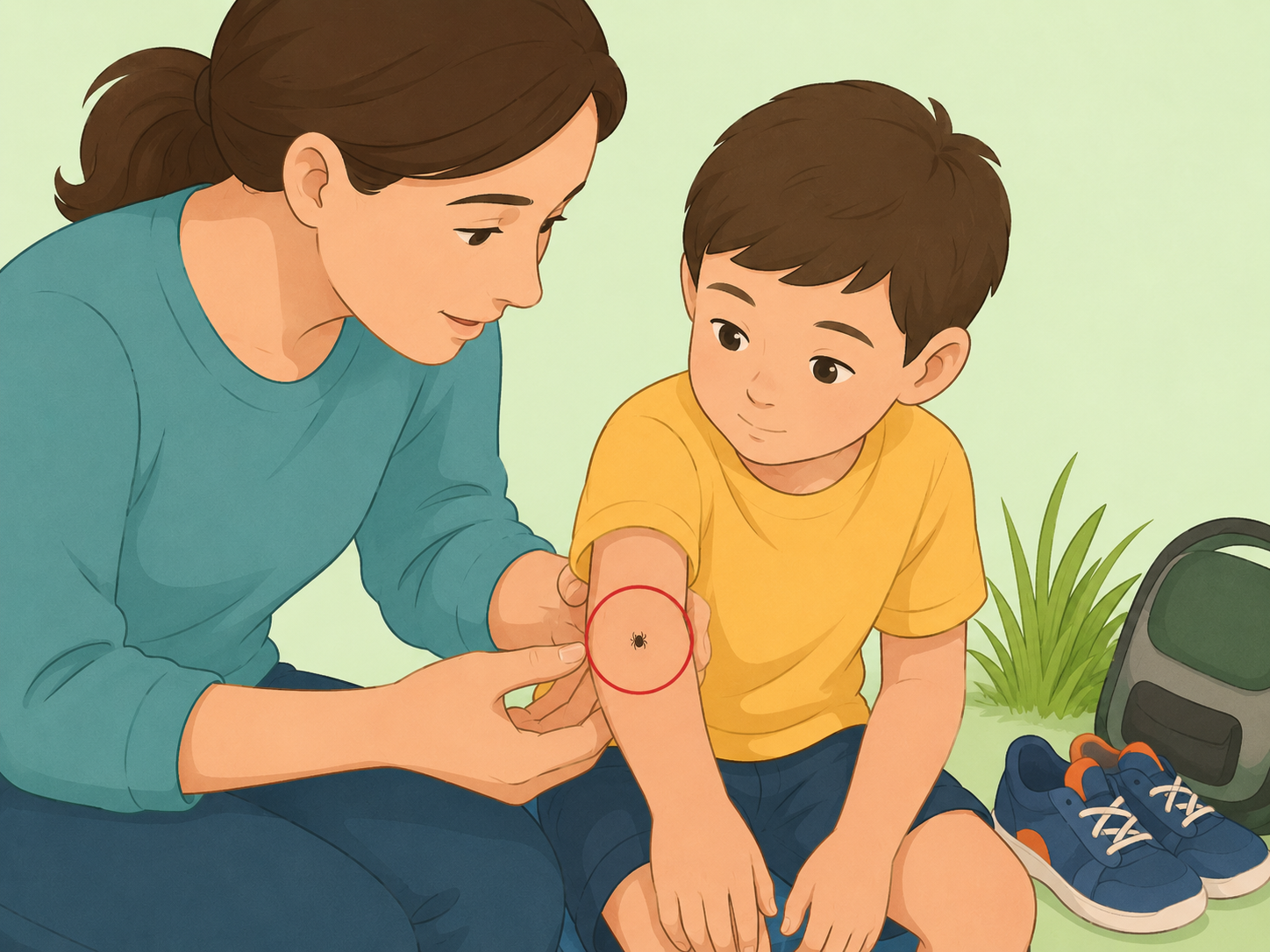
Ask whether your child has been in woods, tall grass, leaf piles, camps, parks, or around pets that could carry ticks. A Lyme disease rash can be circular or oval and may expand over time; the CDC shows that Lyme rashes do not always have a perfect bull's-eye shape. If a ring is growing after possible tick exposure, call your child's doctor promptly.
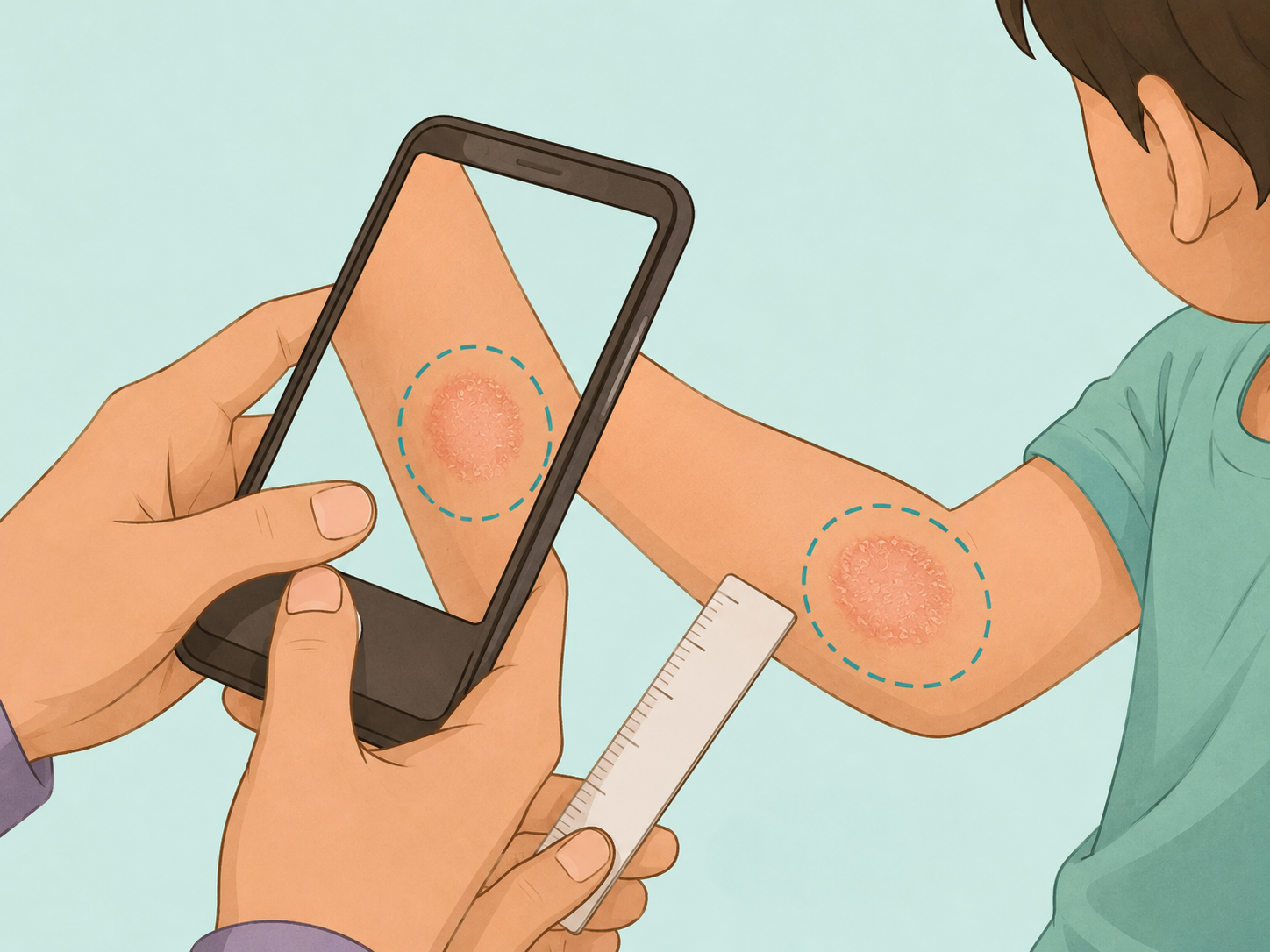
Photograph and measure the rash
Take a clear photo in good light and measure the widest part with a ruler. You can also lightly mark the outside edge with a washable pen to see whether it expands, since the Mayo Clinic advises medical contact when a tick-bite rash gets bigger or appears elsewhere.
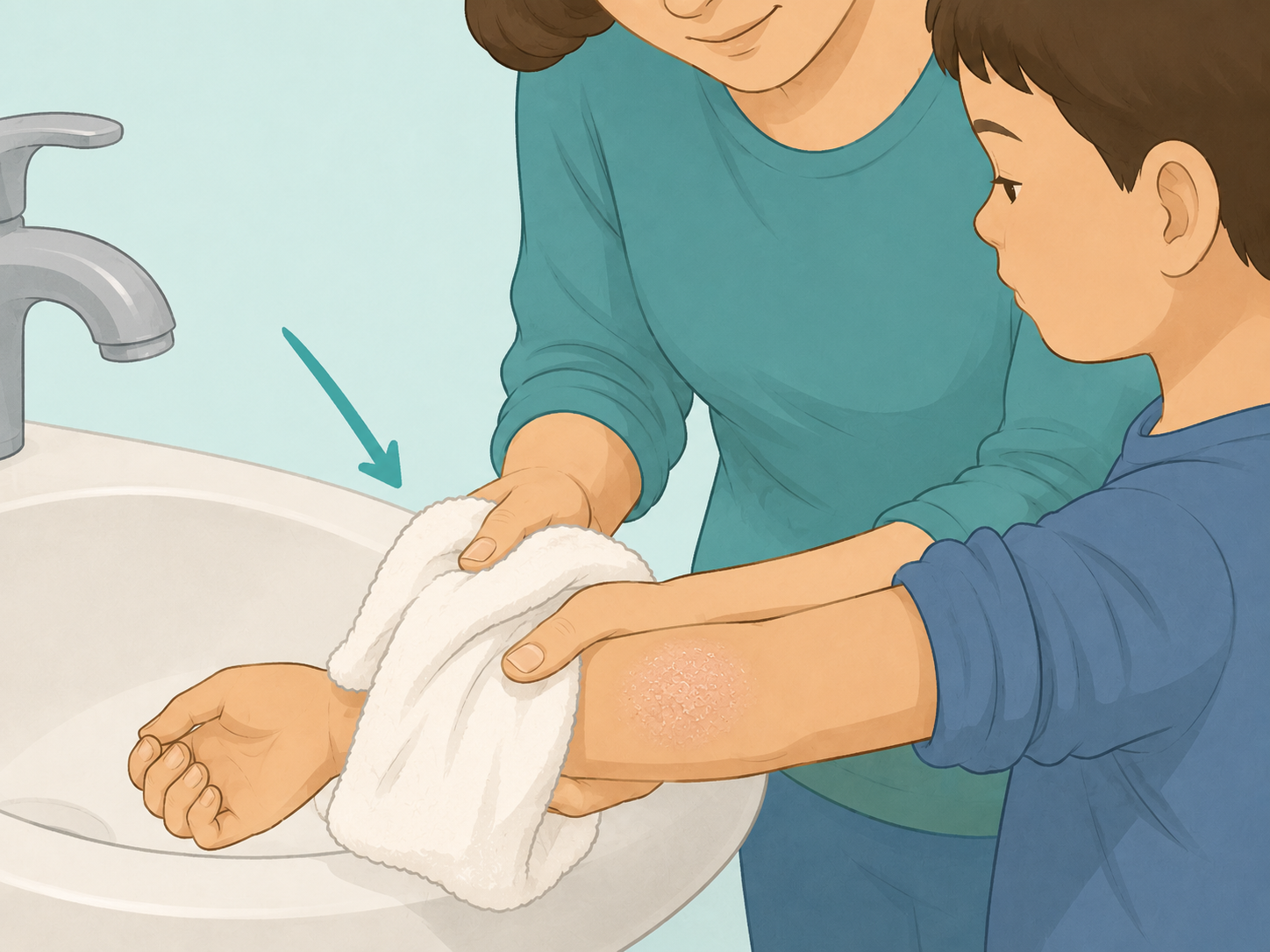
Keep the area clean and avoid scratching
Wash the skin gently with mild soap and water, pat it dry, and keep your child's nails short to reduce scratching. If ringworm is possible, the CDC recommends keeping skin clean and dry and avoiding shared personal items such as towels, clothing, socks, brushes, or sports gear.
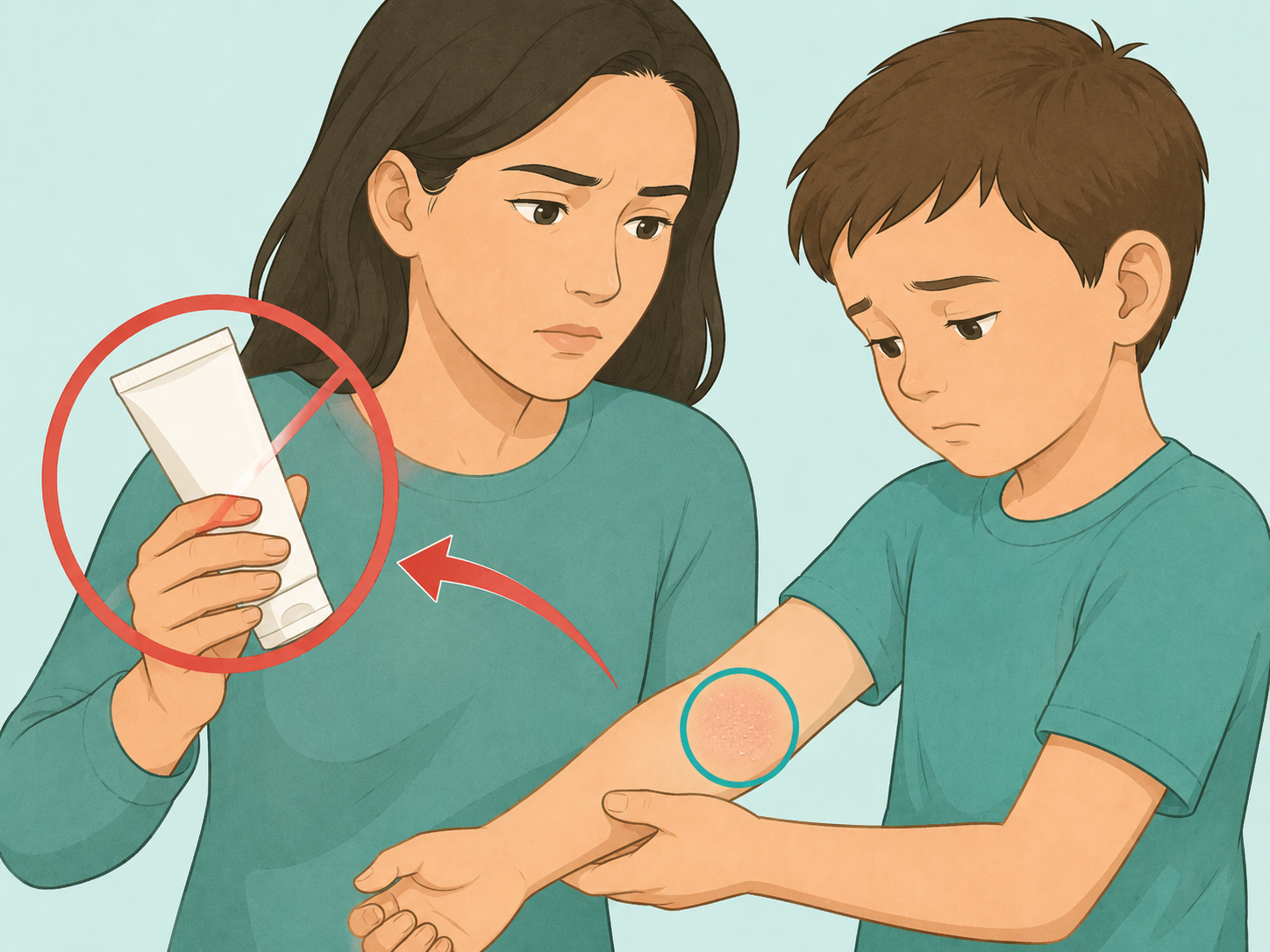
Avoid steroid rash creams unless a clinician says to use them
Do not reach for hydrocortisone or a combination steroid-antifungal cream just because the rash is red or itchy. The CDC warns that steroid creams can make ringworm worse and can change the rash's appearance, making it harder to diagnose later.
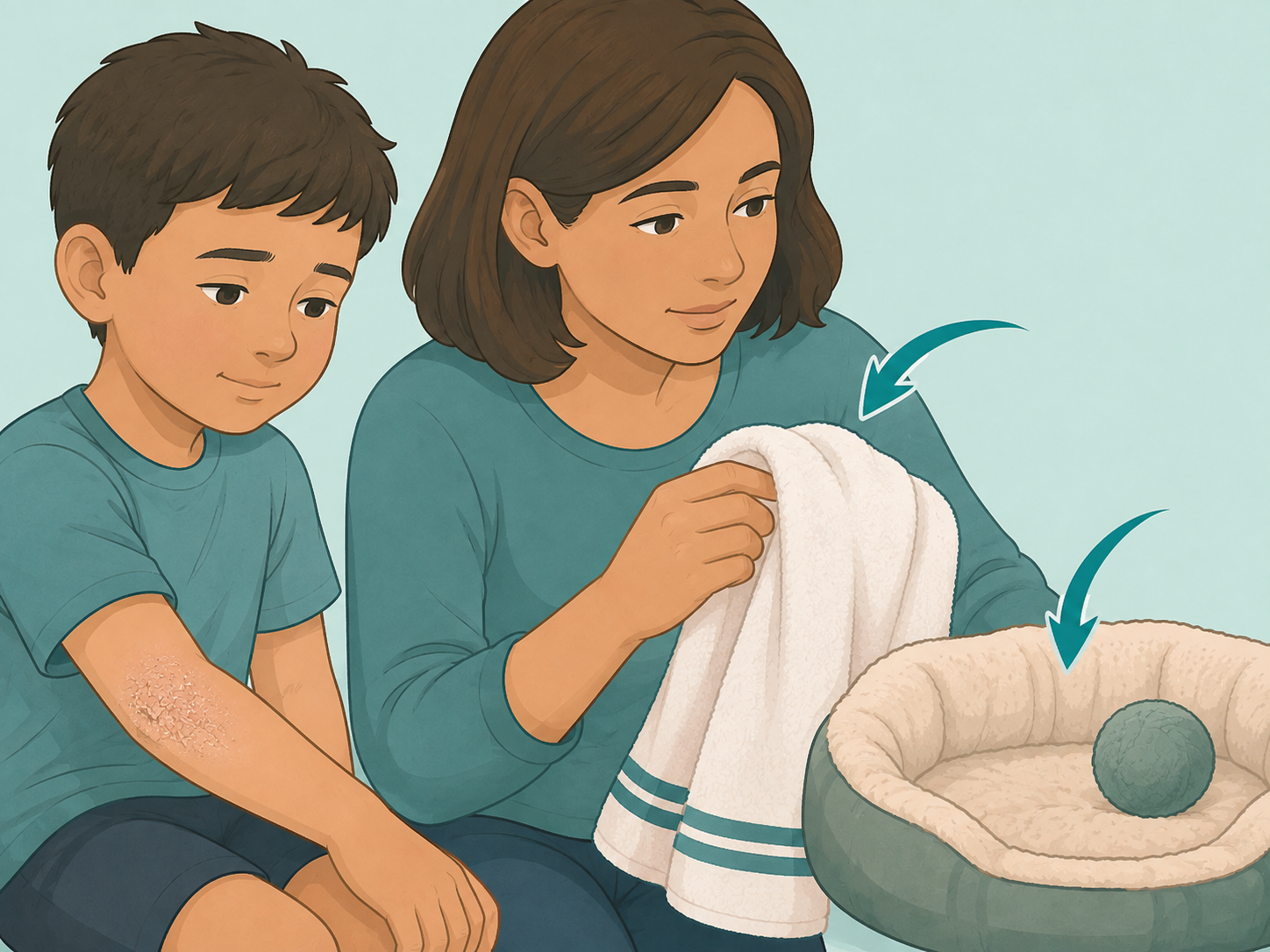
Check pets, sports gear, and close contacts
Ringworm can spread from infected people, animals, and contaminated objects. Ask about puppies, kittens, shared towels, locker rooms, wrestling, gymnastics mats, and close skin contact, and follow the American Academy of Pediatrics guidance to check household members and pets when tinea is suspected.
Use antifungal medicine only when ringworm fits
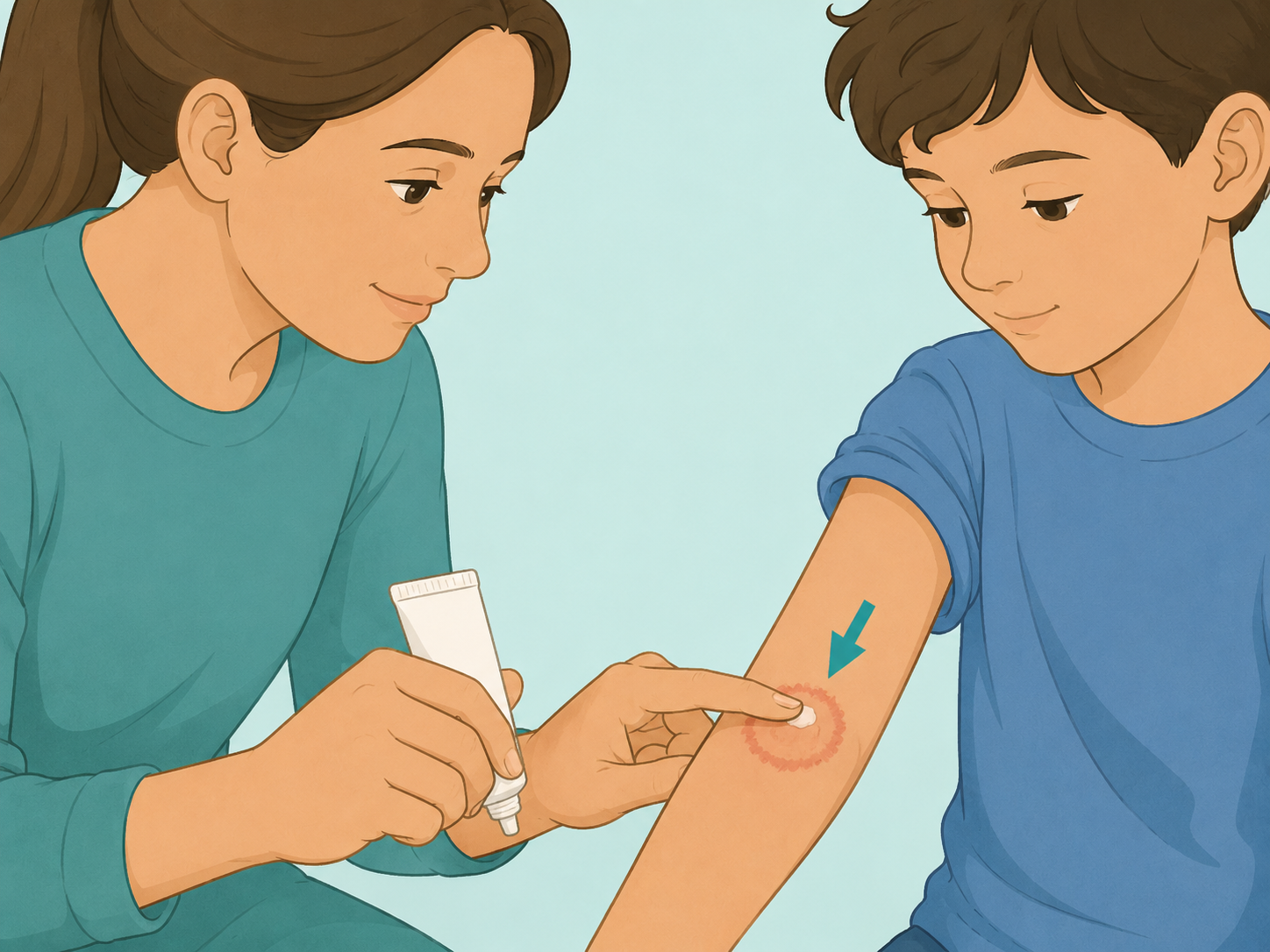
If a pharmacist, pediatrician, or product label supports treating it as ringworm on the body, use the antifungal exactly as directed and keep using it for the recommended time. CDC treatment guidance says skin ringworm is often treated with topical antifungal medicine for 2 to 4 weeks, while scalp or nail involvement usually needs medical care and prescription treatment.
Call a doctor when the cause is unclear or symptoms change
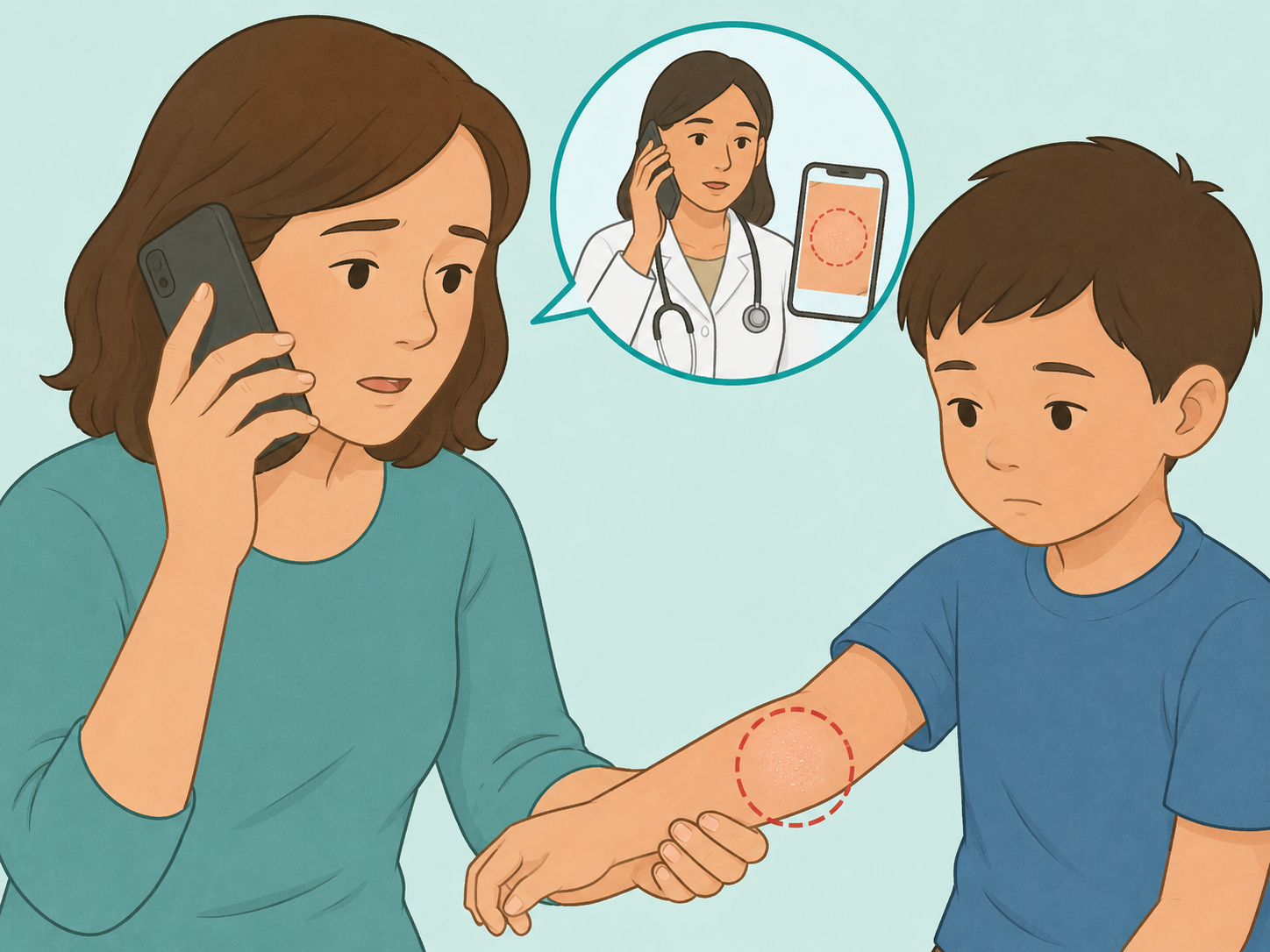
Contact your child's doctor if the rash is on the face, scalp, groin, or near the eye; if there are multiple spots; if it lasts more than a week without improving; if it worsens after treatment; or if your child has fever, swollen glands, pain, pus, blisters, or a weakened immune system. Also call promptly for any expanding ring after possible tick exposure, because early evaluation matters for suspected Lyme disease.
Summary
The bottom line: a ring-shaped rash is often something treatable, such as ringworm or an irritated bite, but an expanding rash after possible tick exposure or any rash with serious symptoms deserves prompt medical care. Take photos, avoid steroid creams unless advised, reduce spread, and contact a doctor if you are unsure.
Frequently Asked Questions
- Is a red ring on my child's arm always ringworm?
No. Ringworm is one common cause of a ring-shaped rash, especially when the edge is raised, scaly, or itchy, but insect reactions, eczema-like irritation, Lyme disease rashes, and other skin conditions can also look circular. A doctor can examine it and test if needed.
- How can I tell ringworm from a Lyme disease rash?
Ringworm often has a scaly, raised, itchy border. A Lyme disease rash is more concerning when it expands over days after possible tick exposure and may or may not look like a classic bull's-eye. If Lyme disease is possible, call a doctor rather than trying to diagnose it at home.
- Should I put hydrocortisone on a ring-shaped rash?
Do not use hydrocortisone or combination steroid rash creams on a rash that could be ringworm unless a healthcare professional tells you to. Steroids can make ringworm worse or change how it looks.
- Can my child go to school with suspected ringworm?
Many children with a small ringworm patch do not need to miss school, but the rash should be covered if practical and your child should not share towels, clothing, sports gear, hats, or brushes. Follow your school or daycare's policy and your clinician's advice.
- When is a ring-shaped rash an emergency?
Seek emergency care if your child seems very unwell, has trouble breathing, has swelling of the lips or throat, is confused or hard to wake, has a stiff neck, or has a rash that looks like bruising or bleeding under the skin and does not fade with pressure.
- What if the rash gets bigger overnight?
Take a clear photo, measure it, and call your child's doctor, especially if there was possible tick exposure, fever, pain, pus, blistering, or the rash is spreading quickly. A growing rash is useful information for a clinician.
References
Reliable references aided in composing and refining this content.
- https://www.nhs.uk/symptoms/rashes-babies-and-children
- https://www.cdc.gov/ringworm/about/index.html
- https://www.aad.org/public/diseases/a-z/ringworm-overview
- https://www.cdc.gov/lyme/signs-symptoms/lyme-disease-rashes.html
- https://www.mayoclinic.org/first-aid/first-aid-tick-bites/basics/art-20056671?p=1
- https://www.cdc.gov/ringworm/treatment/index.html
- https://www.healthychildren.org/English/health-issues/conditions/skin/Pages/Tinea-Infections-Ringworm-Athletes-Foot-Jock-Itch.aspx?form=HealthyChildren