
 Pin it
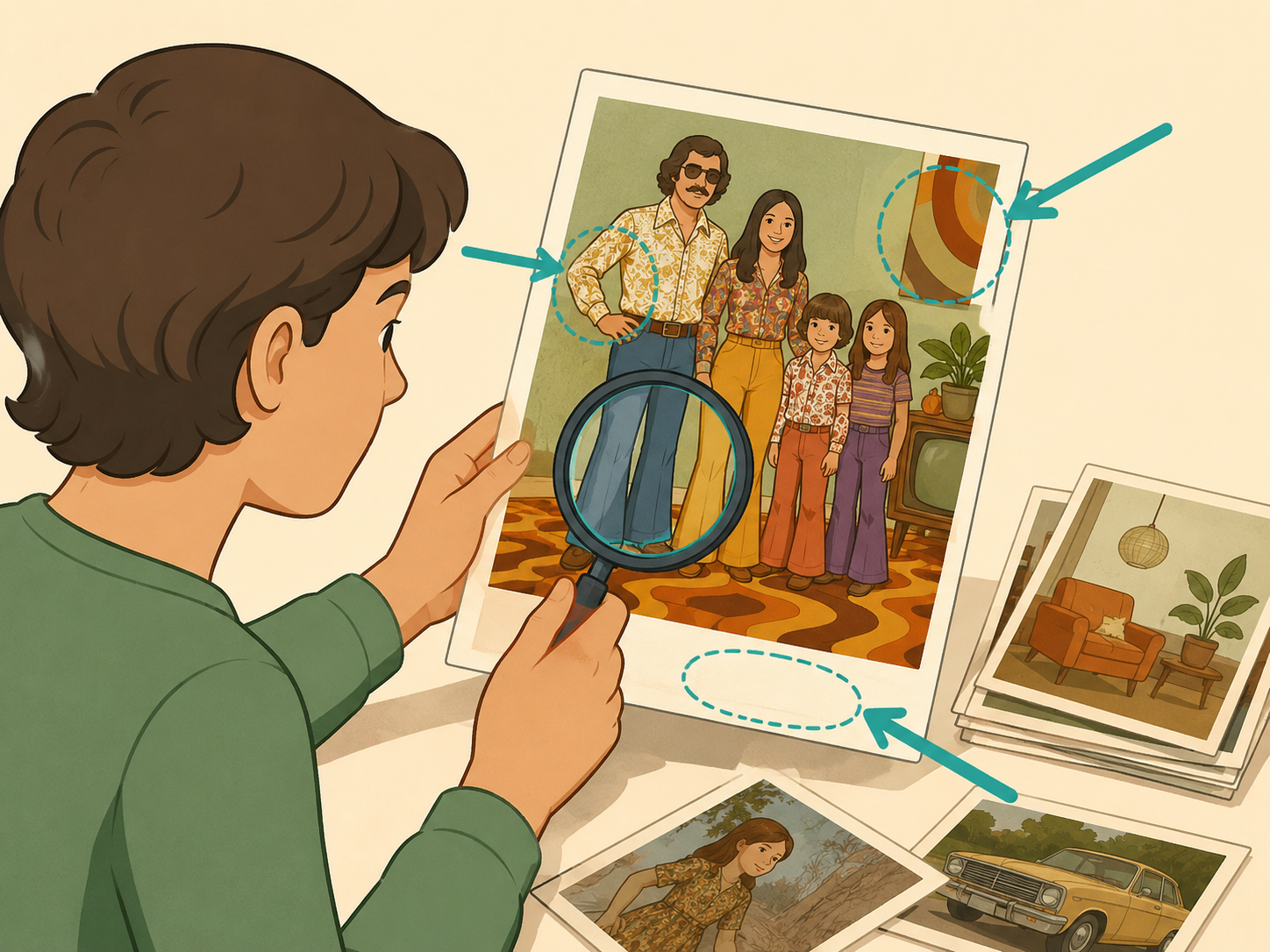
Old 1970s photos can seem easy to read at first glance, especially when the clothes, hair, or colors feel instantly recognizable. But one striking detail is rarely enough to explain the whole image. This guide shows you how to slow down, spot useful clues, and interpret vintage photos with more care.
Start with the first detail that catches your eye
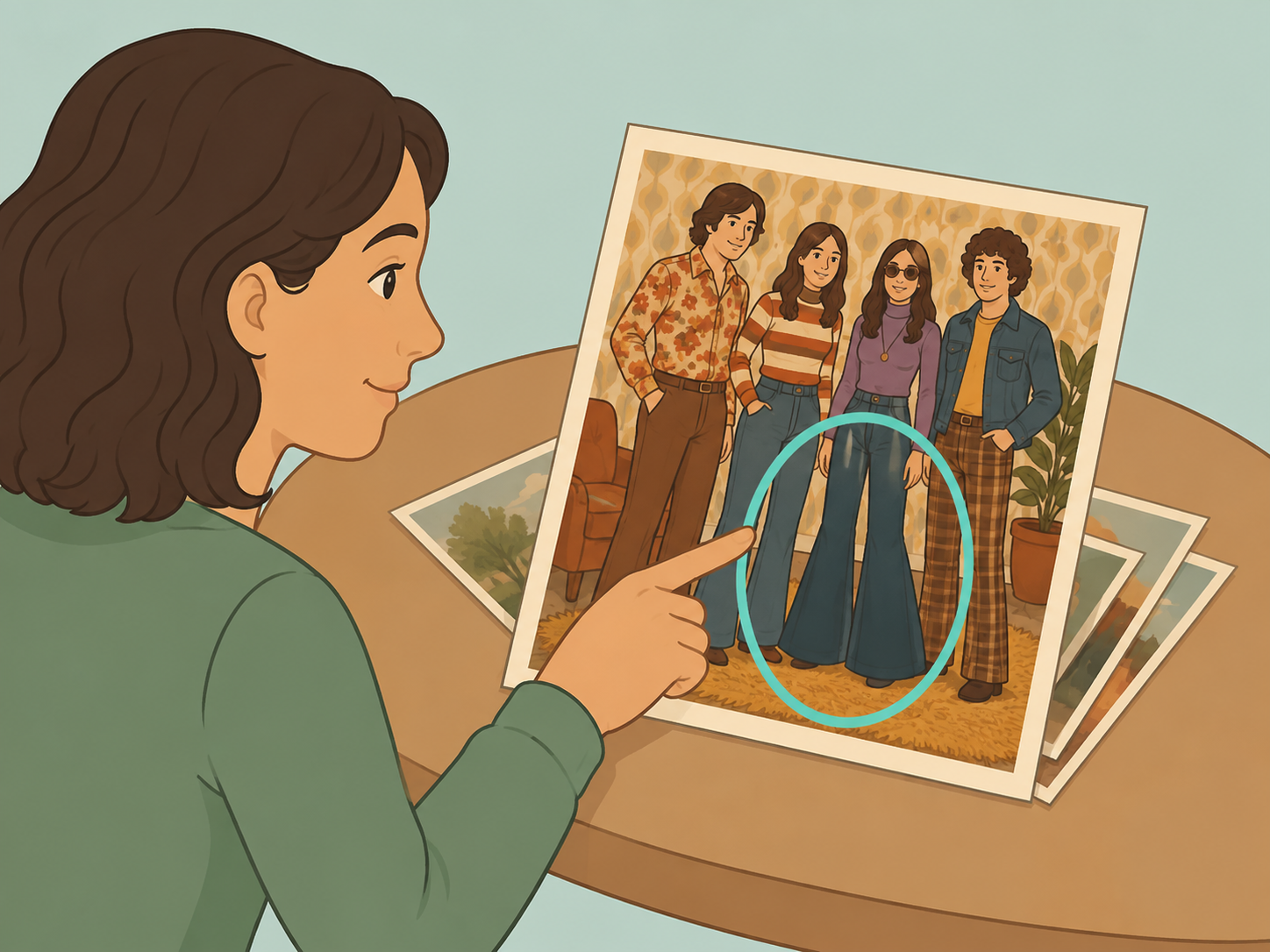
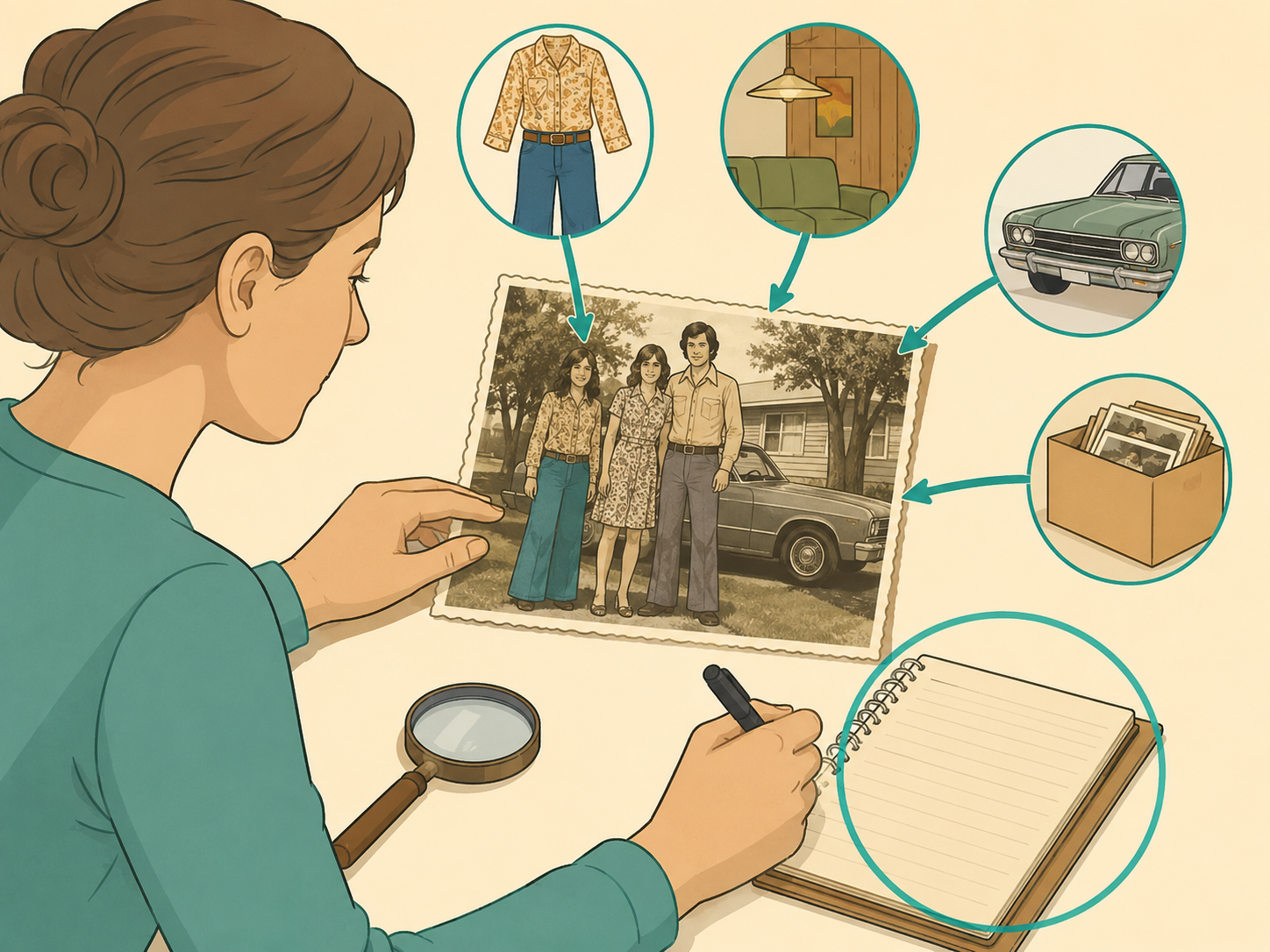
Notice the most obvious feature first, such as flared pants, bold prints, long hair, or a bright color palette. Then treat it as a clue rather than proof, because the Smithsonian's photo-reading guidance emphasizes looking for multiple clues to understand an old photograph.
Check the clothing shapes and fabrics
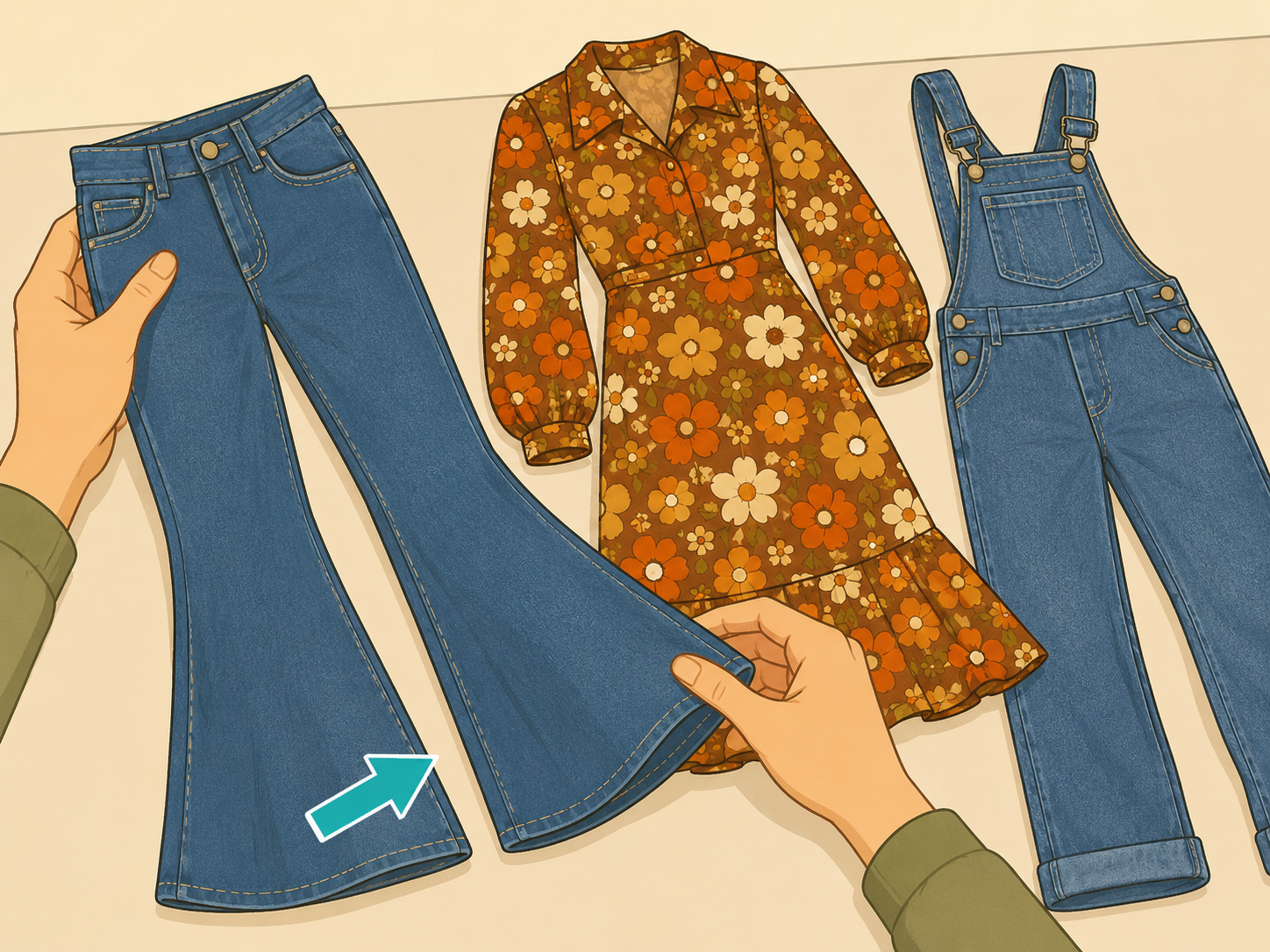
Look for wide-legged jeans, flared trousers, prairie-style dresses, overalls, vests, bold plaids, florals, paisleys, and synthetic-looking fabrics. The Fashion History Timeline notes that 1970s fashion used bold colors, patterns, polyester, flares, and more relaxed gender distinctions, especially in children's and teen clothing.
Compare the outfit to everyday life, not just fashion magazines
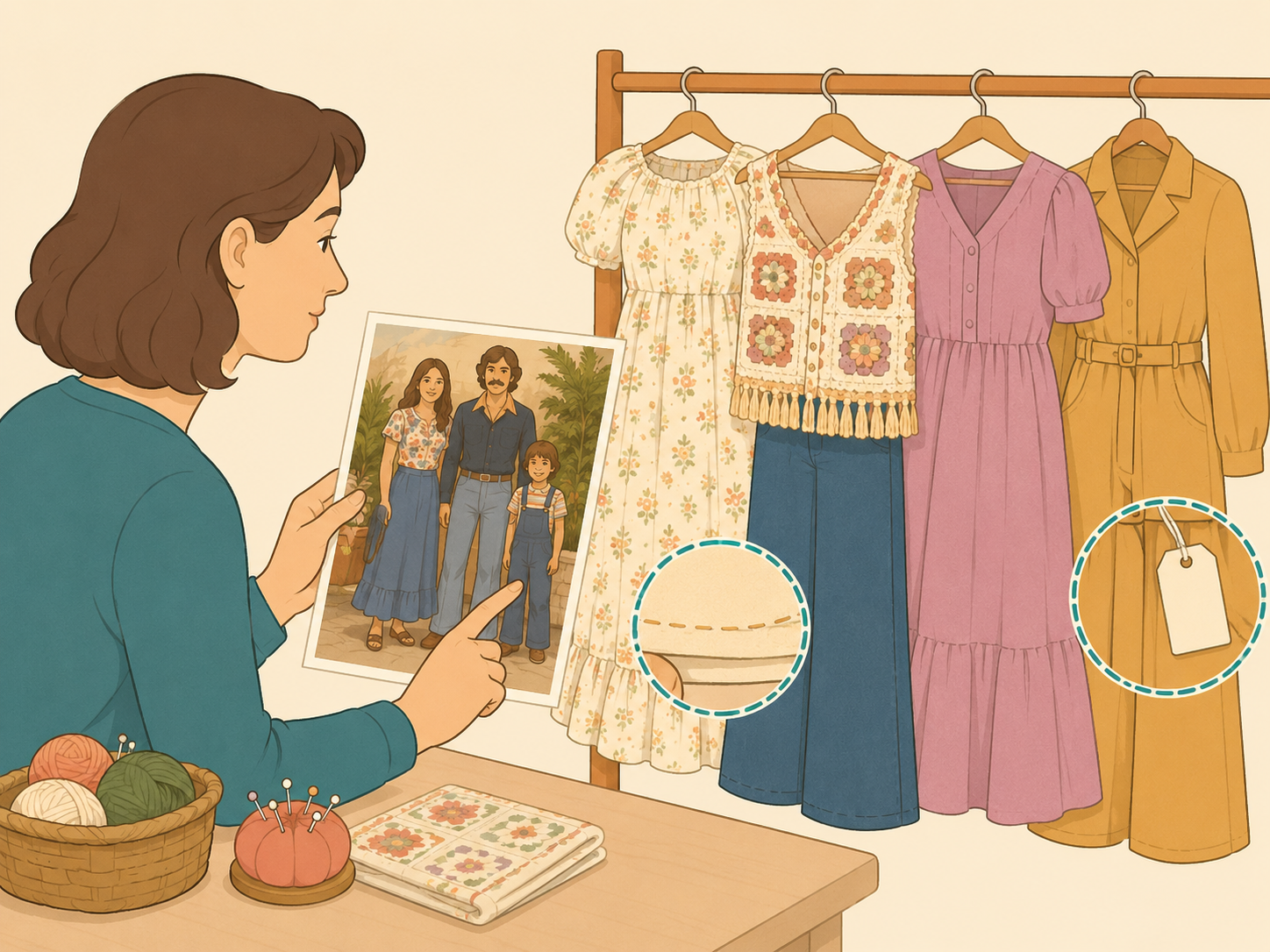
A photo of girls or teens in the 1970s may show school clothes, family hand-me-downs, homemade pieces, or regional habits rather than runway fashion. The National Women's History Museum explains that home sewing declined in the 1970s as shopping and ready-made clothing became more common, so both store-bought and handmade looks can appear in real family photos.
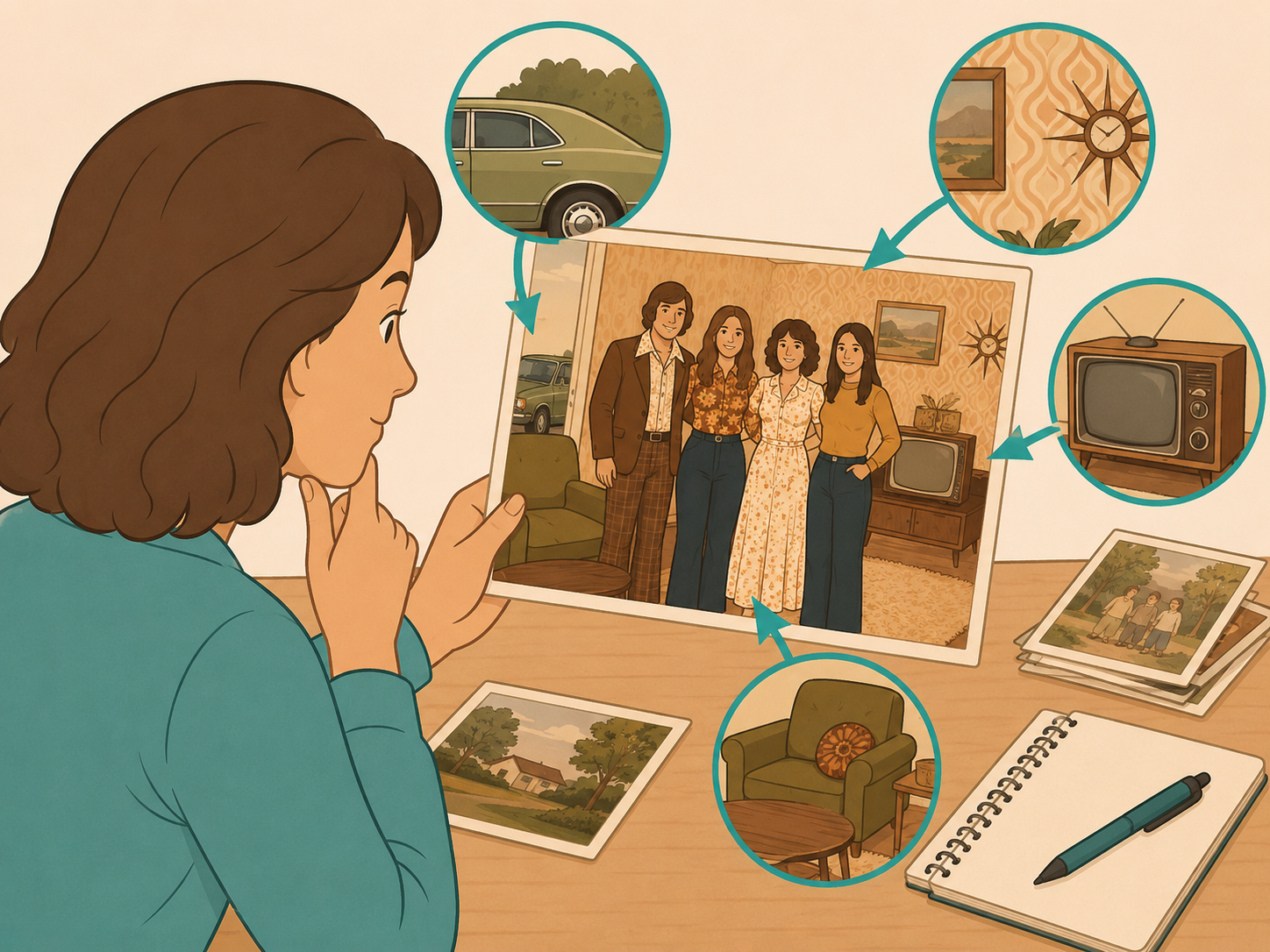
Study the setting for date clues
Scan the background for furniture, cars, appliances, street signs, school interiors, playground equipment, or home decor. The National Archives' DOCUMERICA collection shows that 1970s photography documented not only pollution and public issues but also fashions, cultural shifts, communities, and everyday surroundings from 1972 to 1977.
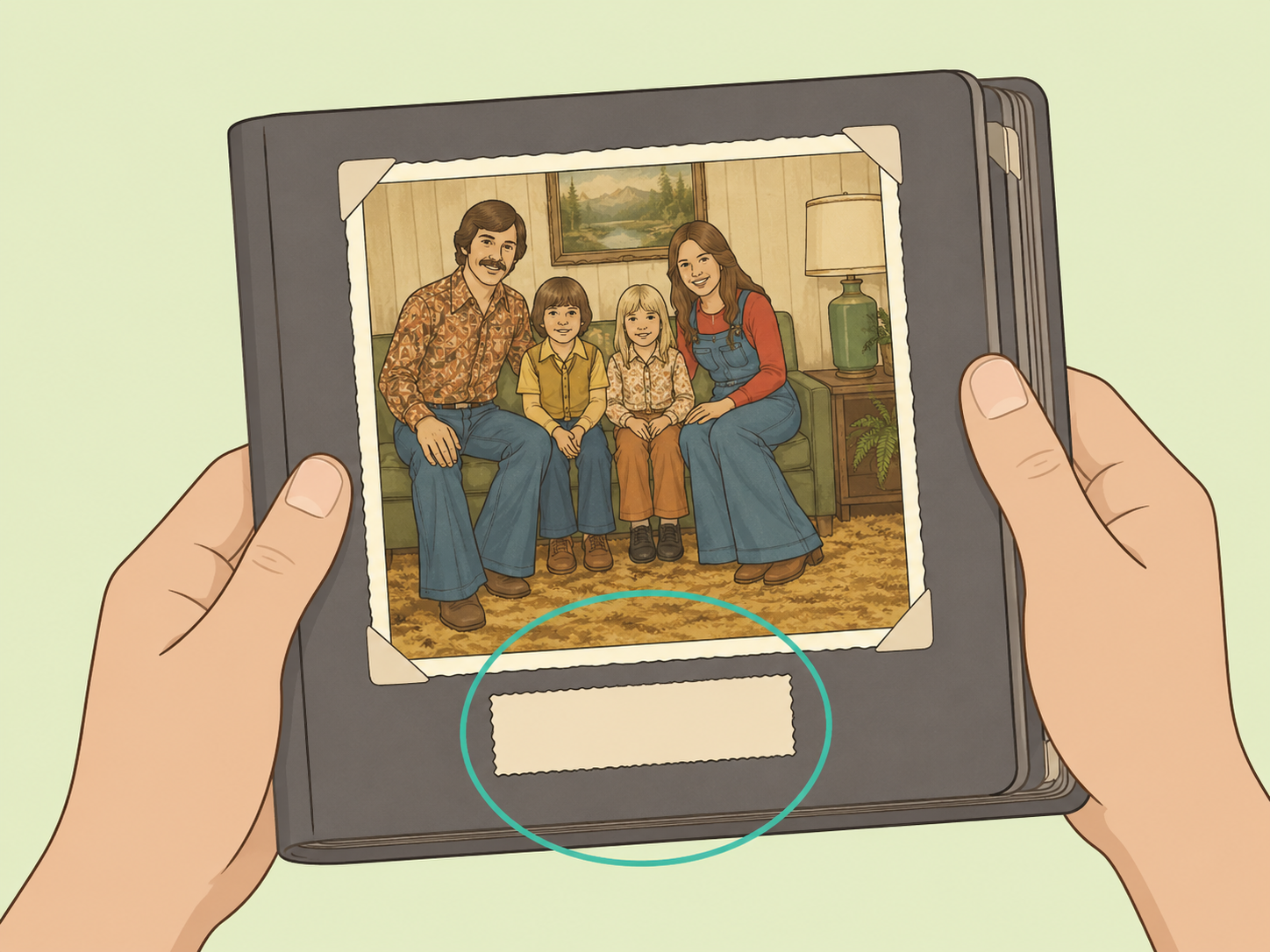
Use the caption and source before making a claim
Look for a written date, photographer name, family note, album page, archive record, or newspaper caption. OpenLearn's visual literacy course warns that a photo alone cannot answer every question about time, place, people, or purpose, so context matters as much as the visible image.
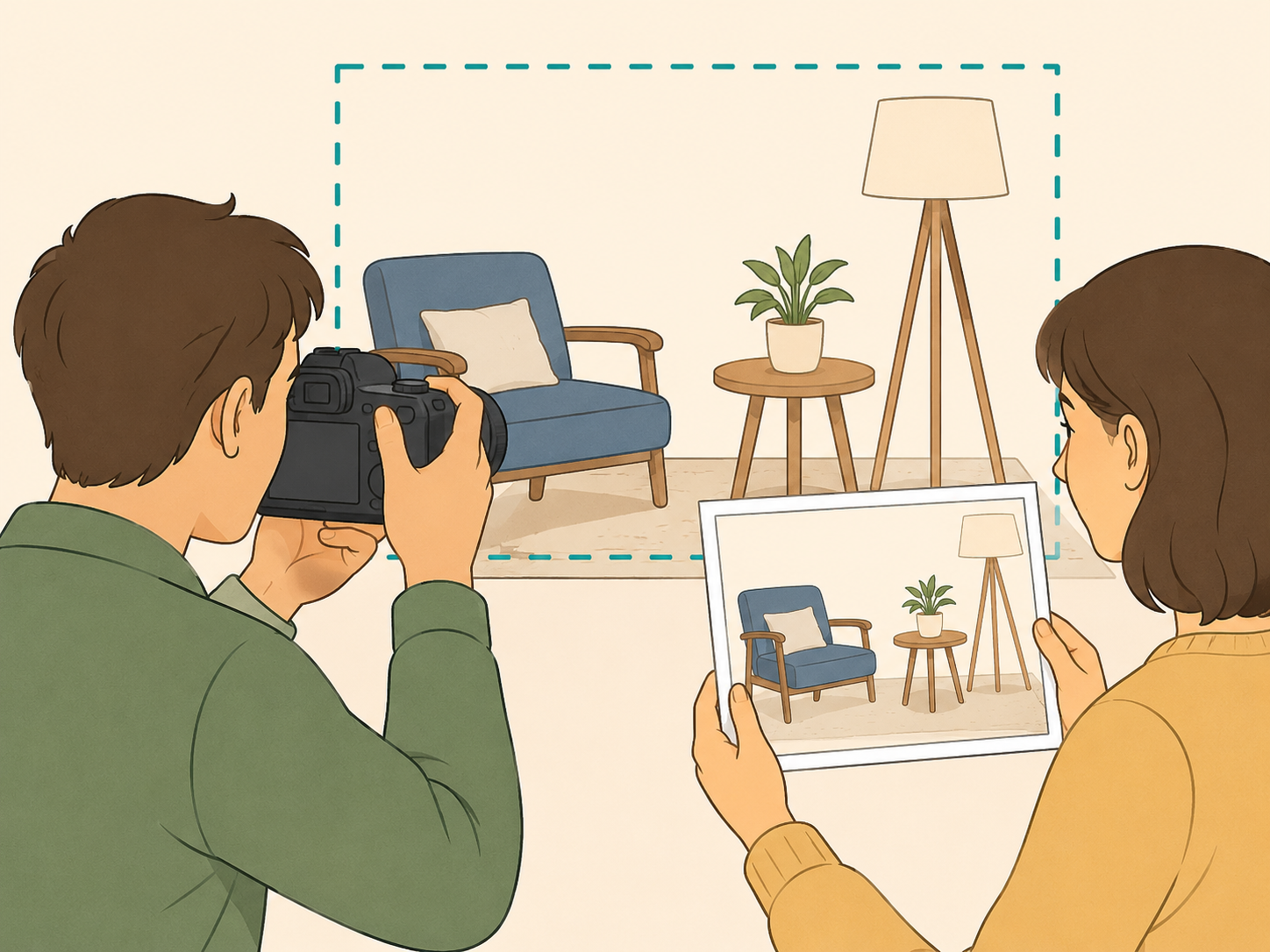
Look for signs of the photographer's choices
Ask what is centered, cropped out, posed, candid, lit brightly, or left in shadow. The National Gallery of Art notes that 1970s documentary photography changed through new subjects, activism, experimentation, and questions about truth and power, so every image reflects choices.
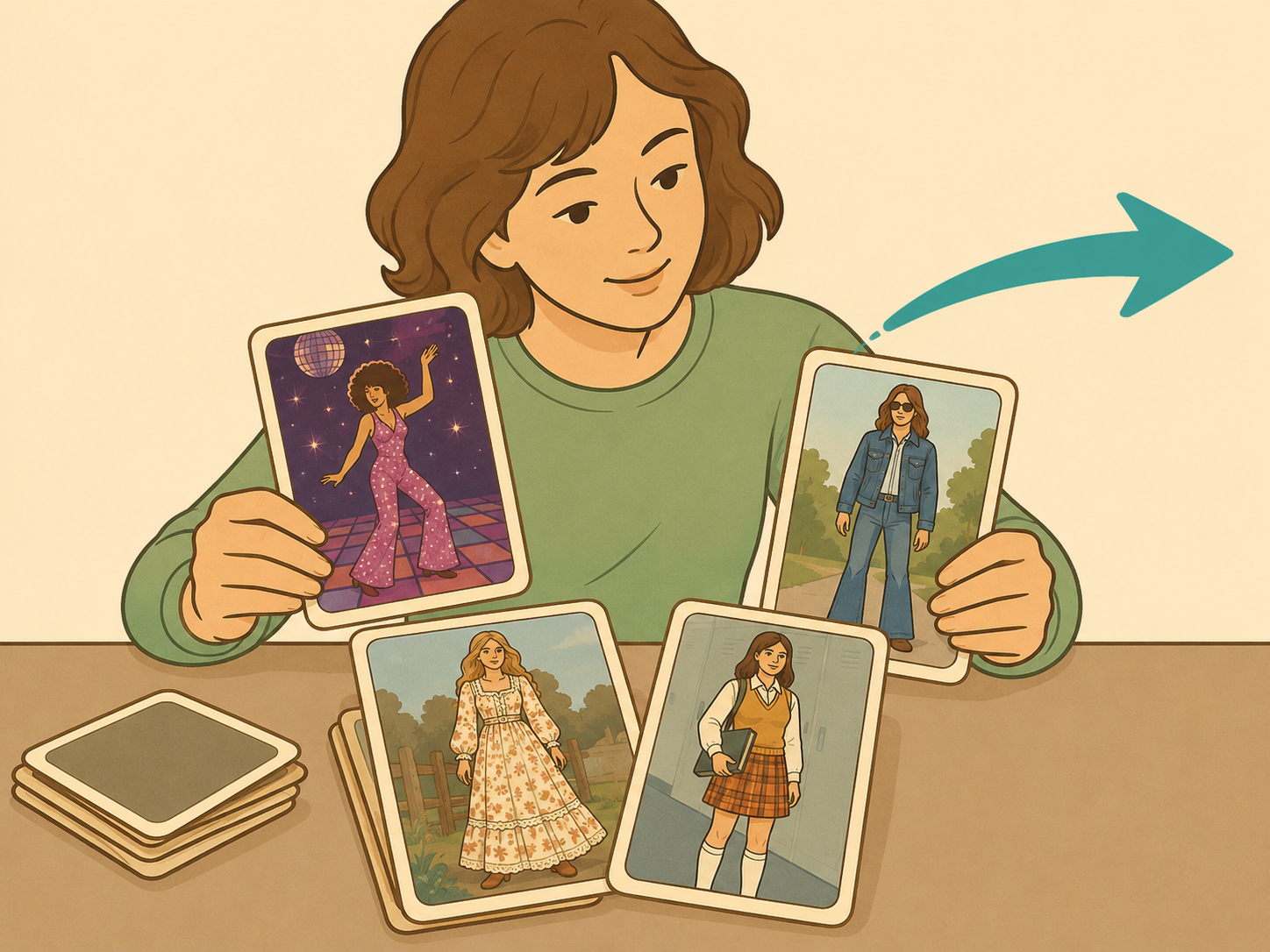
Avoid turning one detail into a stereotype
Disco clothes, hippie elements, punk styling, athletic wear, and prairie dresses all belonged to different parts of the decade and different communities. A single photo may show a trend, a local habit, a costume, or just one family's taste, so describe what you can see and separate it from what you are guessing.
Write a careful final observation
After checking clothing, setting, captions, and context, summarize the photo in cautious language. For example, say that a detail "suggests" the 1970s or "matches common 1970s styles" instead of claiming a definite date unless you have a reliable source.
Summary
The bottom line: the detail that catches your eye can start the investigation, but it should not end it. Read 1970s photos by combining visible clues with captions, source records, and historical context.
Frequently Asked Questions
- What detail usually makes a 1970s photo stand out first?
- Clothing often stands out first, especially flared pants, bold prints, prairie-style dresses, overalls, vests, and synthetic-looking fabrics. Hair, color tone, and home decor can also be strong clues.
- Can clothing alone prove a photo is from the 1970s?
- No. Clothes can be reused, homemade, borrowed, or worn after a trend has passed. Use clothing with other clues, such as captions, cars, furniture, photo paper, and archive records.
- Were flared pants common for girls in the 1970s?
- Yes, flared trousers and jeans were common in 1970s children's and teen fashion, but they were not the only style. Dresses, skirts, overalls, and matching sets were also widely seen.
- Why do many 1970s photos look warm or faded?
- Color prints can shift as dyes age, and consumer film and processing varied. A warm or faded look may support a vintage impression, but it is not enough to date a photo by itself.
- How should I describe people in old photos respectfully?
- Describe visible details without mocking clothing, bodies, or personal appearance. If you do not know someone's name, age, or background, avoid guessing beyond what the image and source can support.
- What is the safest way to fact-check a viral vintage photo?
- Look for the original archive, museum record, newspaper source, or family caption. If you cannot verify the source, use cautious wording and avoid repeating dramatic claims.
References
Reliable references aided in composing and refining this content.
- https://smithsonianeducation.org/educators/lesson_plans/old_photographs/index.html
- https://fashionhistory.fitnyc.edu/1970-1979
- https://www.womenshistory.org/exhibits/fashioning-yourself
- https://www.archives.gov/publications/prologue/2013/spring/searching-seventies
- https://www.open.edu/openlearn/mod/oucontent/view.php?id=4595&printable=1
- https://www.nga.gov/exhibitions/70s-lens-reimagining-documentary-photography