
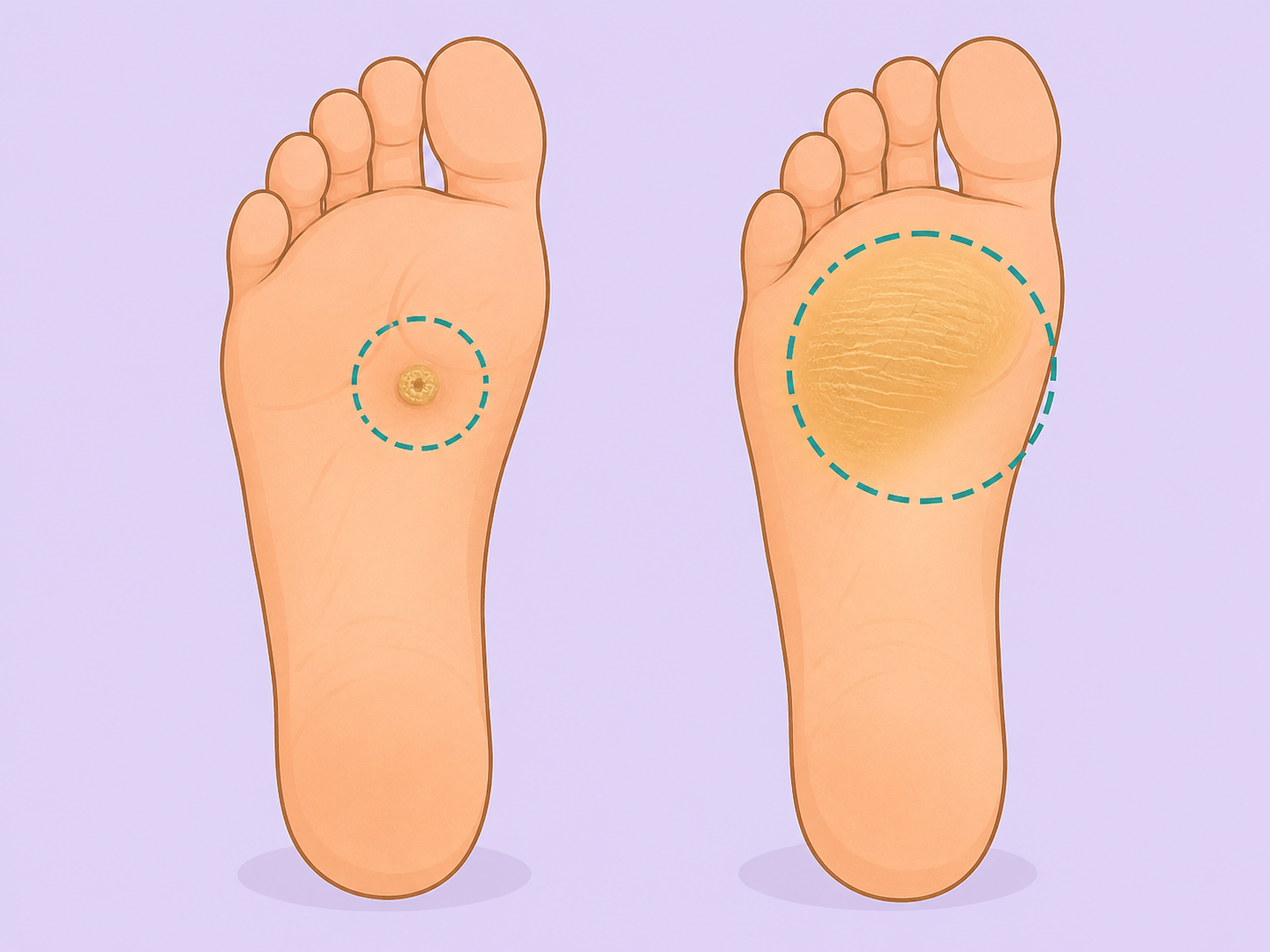
 Pin it
A spot people call a 'fish eye' on the foot is commonly confused with a callus, but it may be a plantar wart. This guide shows you how to compare the signs safely, protect the skin, reduce spreading, and know when to get professional care. It is not a diagnosis, but it can help you decide what to do next.
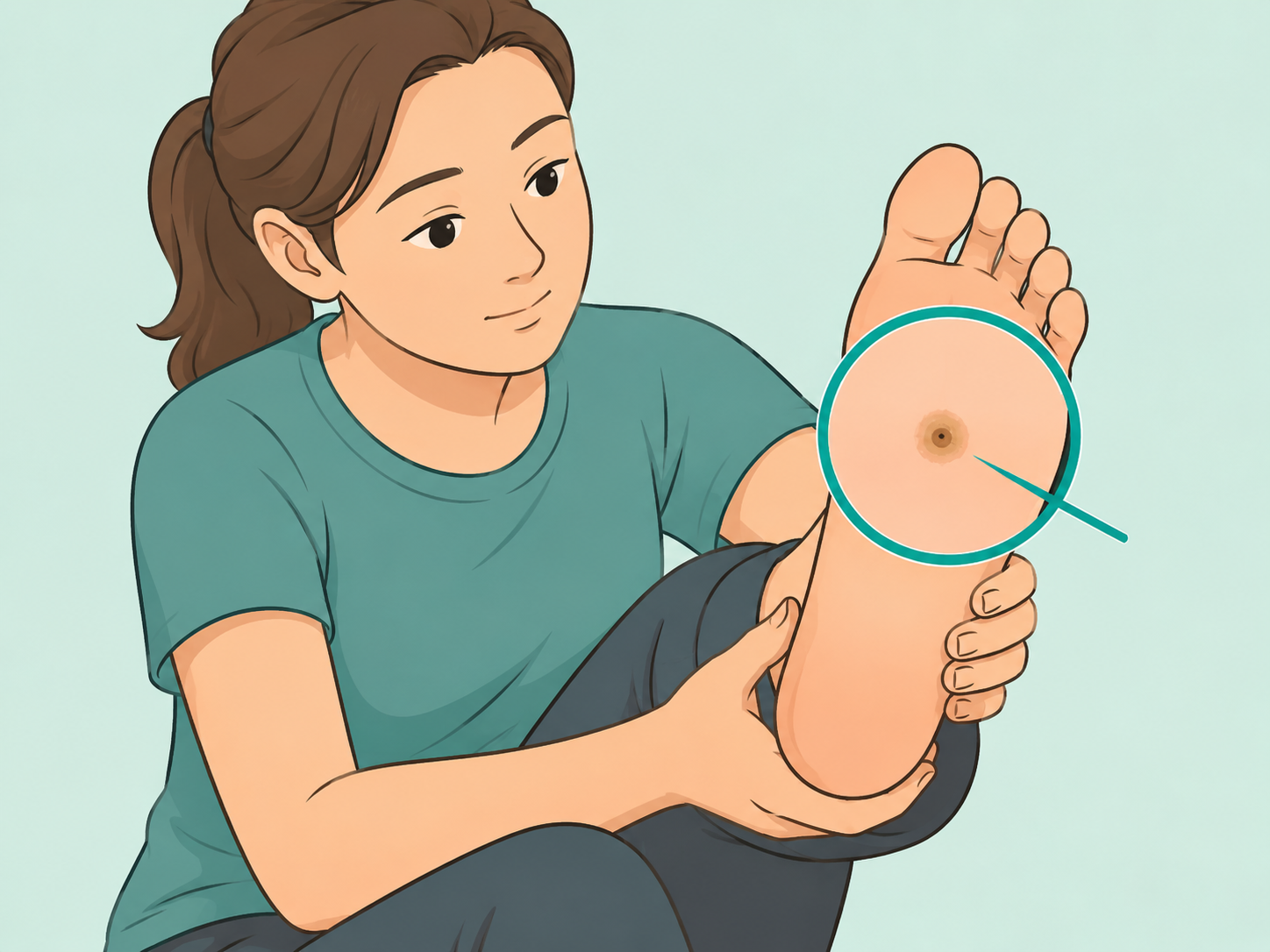
Treat the spot as a possible wart first
If a hard spot on the sole looks like a small round 'eye,' do not assume it is only a callus. Plantar warts often appear on weight-bearing areas such as the heel, ball of the foot, or base of the toes and can sit under thickened skin. A callus can look similar, so use several clues before choosing care.
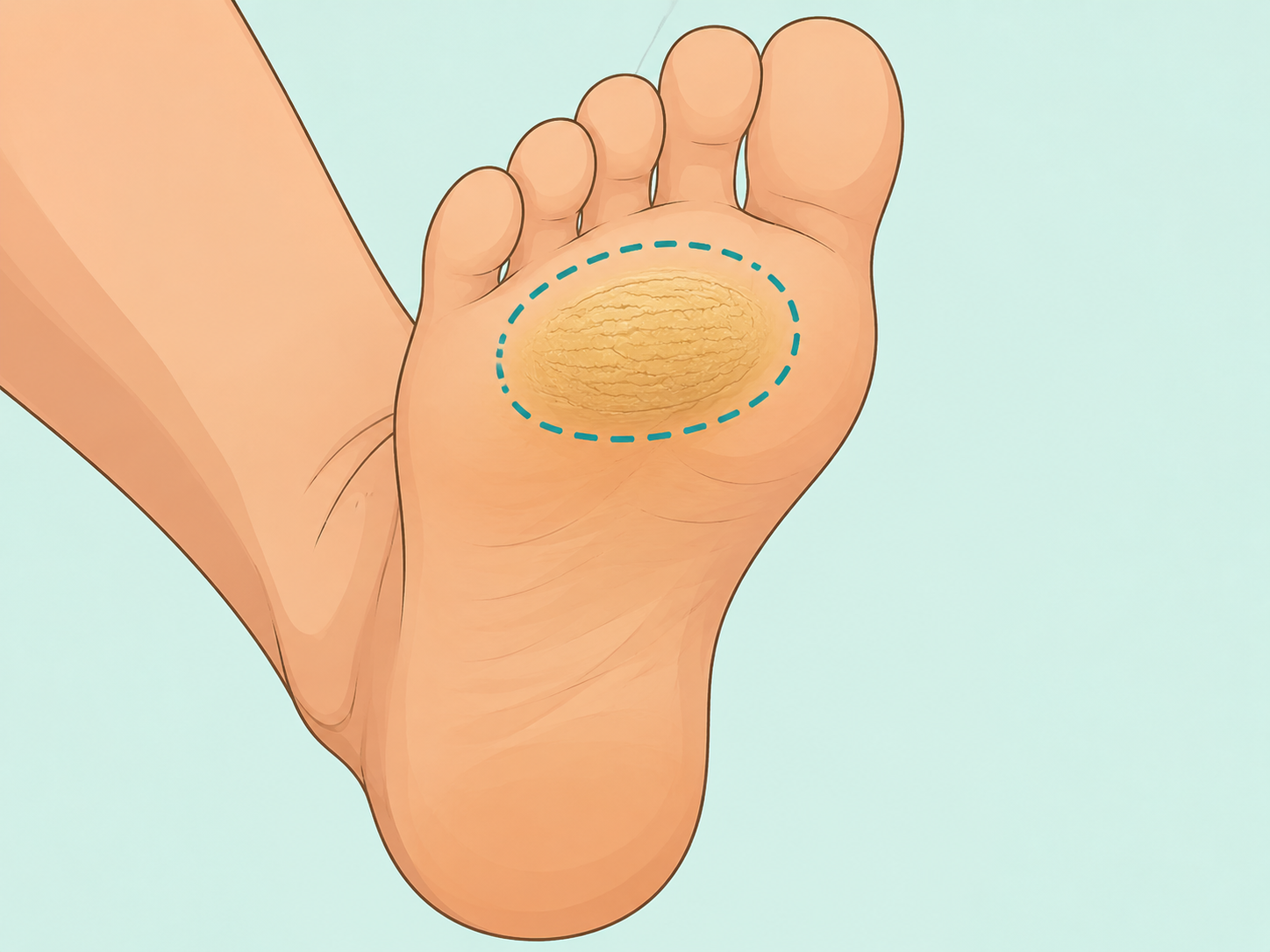
Compare it with a true callus
A callus is thick, hardened skin that forms when the skin protects itself from repeated rubbing or pressure. MedlinePlus notes that calluses commonly form on the soles of the feet, especially where shoes or body weight create pressure. If the thick skin improves when friction is reduced, that points more toward a callus.
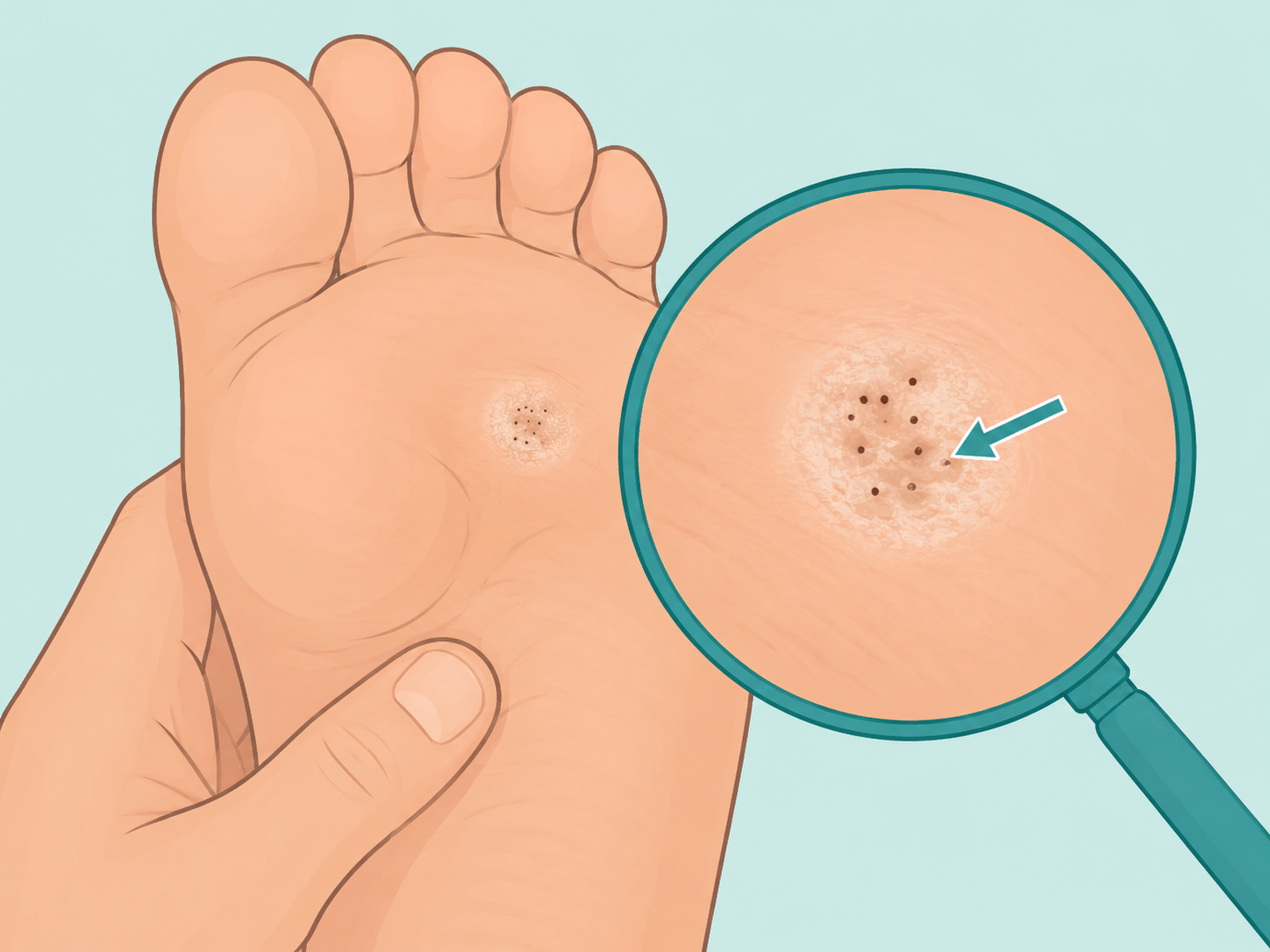
Look for tiny black dots
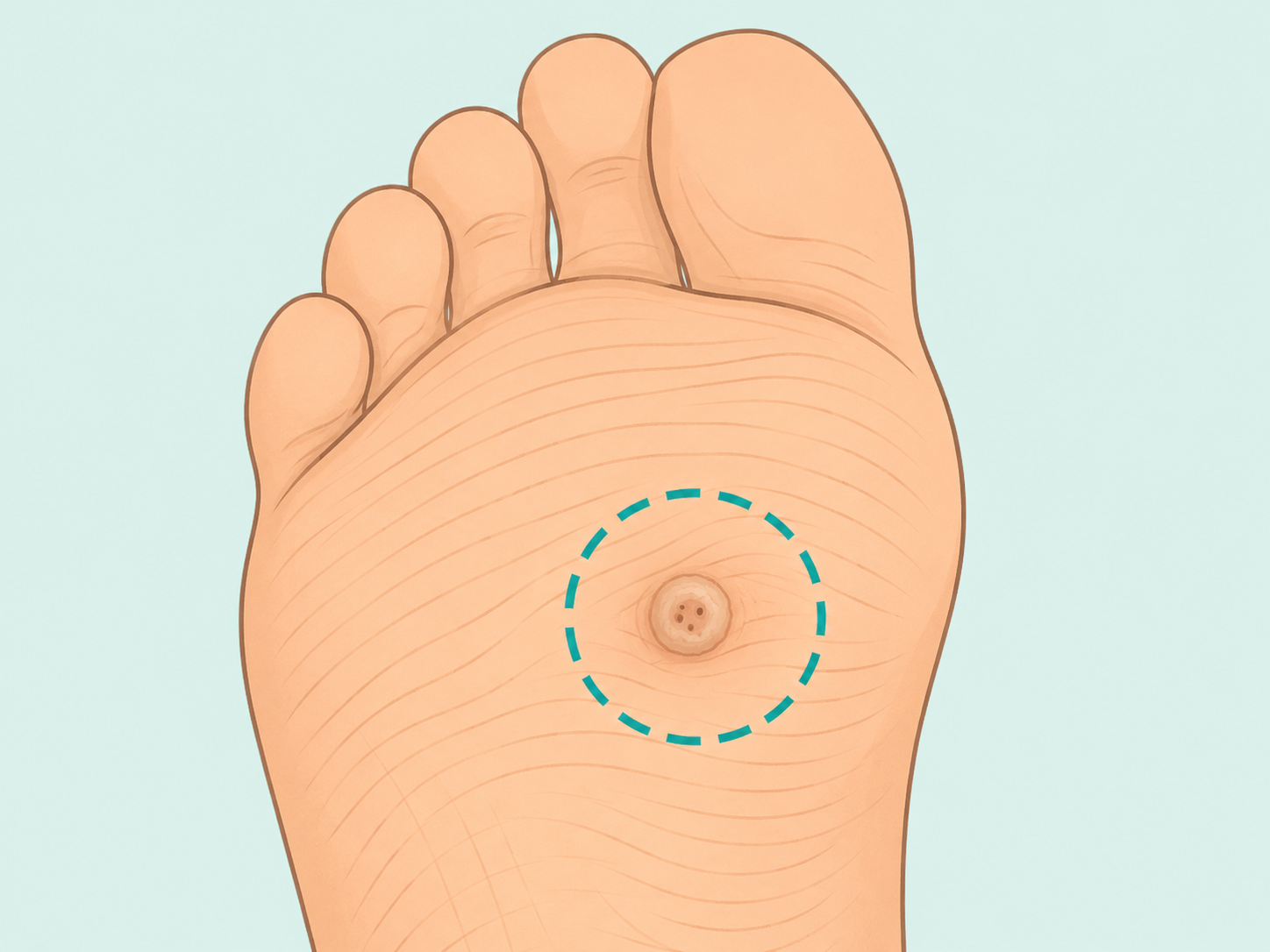
Check the surface in good light without cutting into it. The American Academy of Dermatology says some warts have black dots, which are small blood vessels. A callus usually looks more evenly thick, dry, or waxy instead of having pinpoint dots.
Check whether the skin lines are broken
Look at the natural lines and ridges on the sole around the spot. Plantar warts can interrupt the normal skin lines, while calluses often sit within an area of continued pressure. This clue is helpful, but it is not enough to diagnose the spot on its own.
Avoid cutting, digging, or picking at it
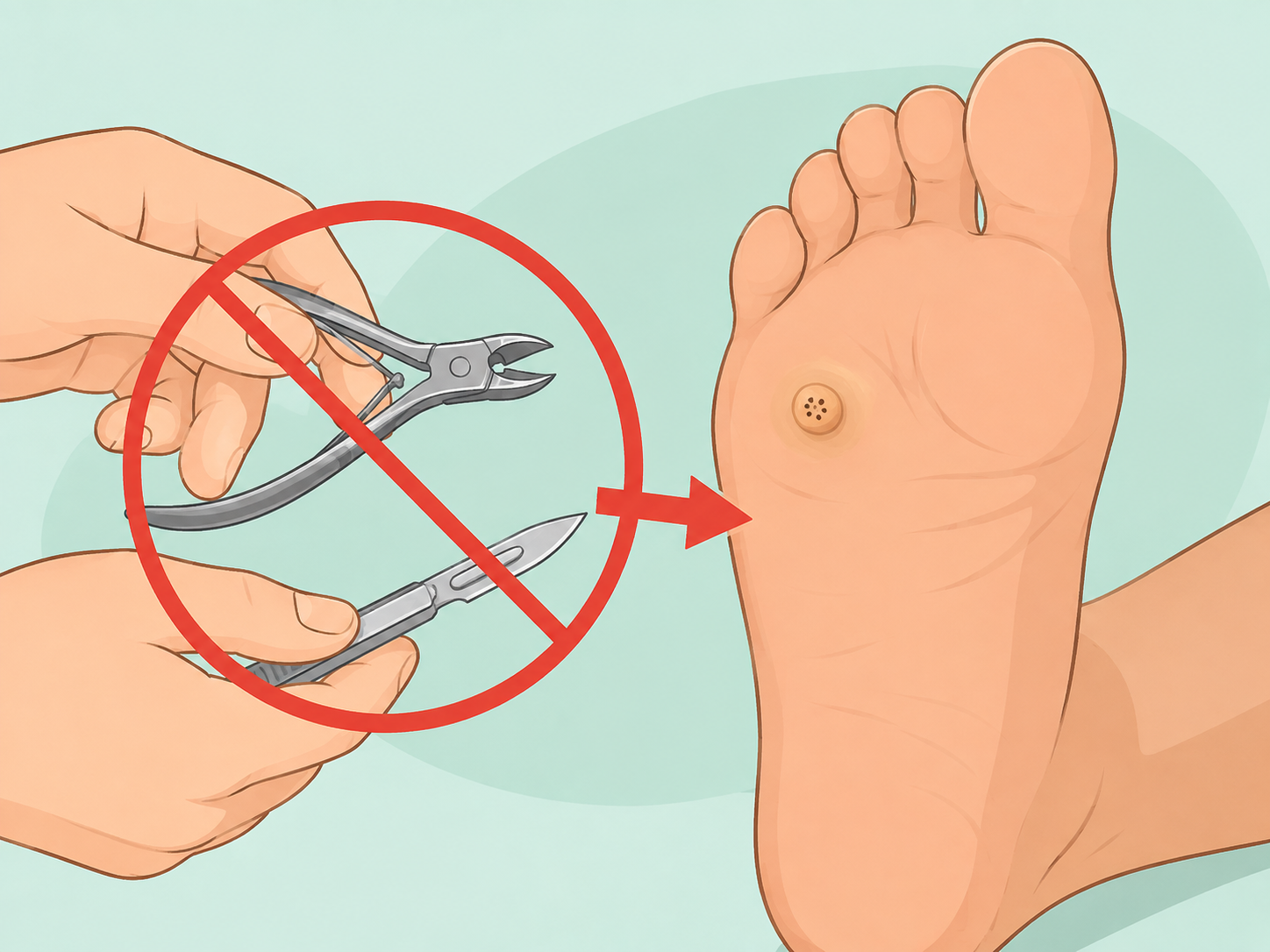
Do not slice the spot with razors, nail tools, or scissors, even if it feels like thick skin. MedlinePlus advises against shaving corns or calluses because it can lead to infection, and picking at a wart can irritate it or spread the virus. Use gentle protection instead of aggressive removal.
Reduce pressure while you watch it
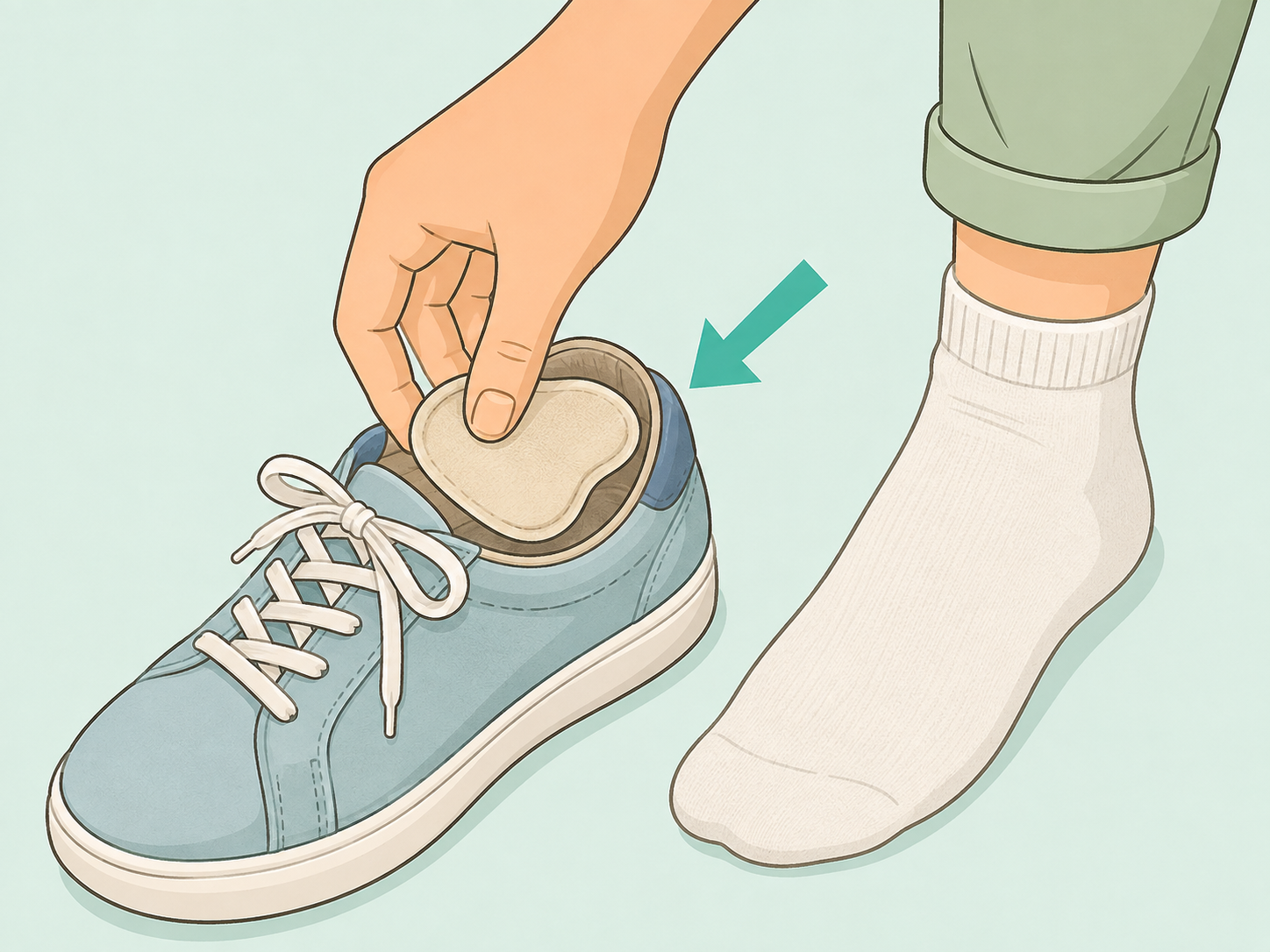
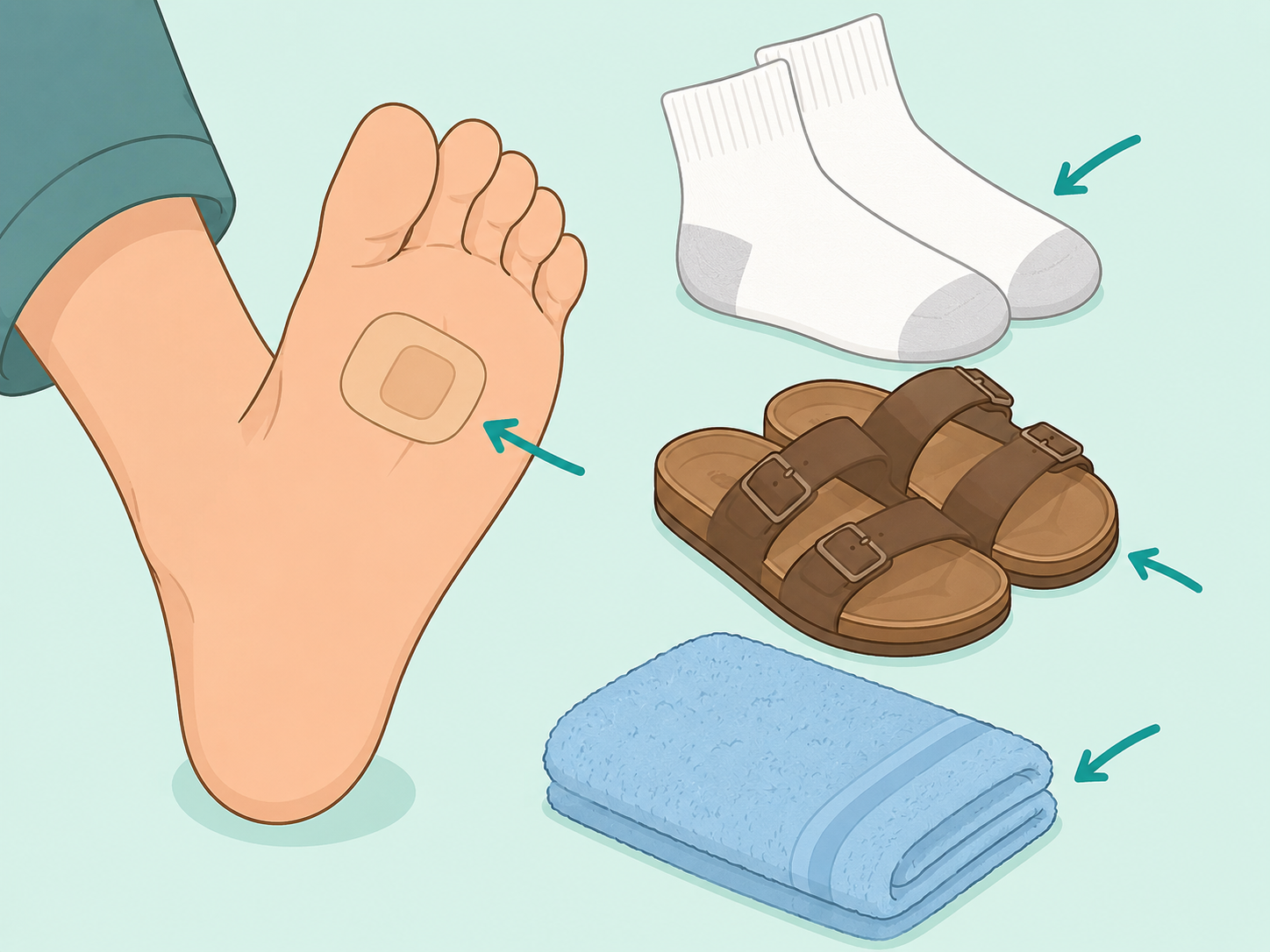
Wear roomy, comfortable shoes and cushioned socks so the spot is not pressed with every step. Non-medicated pads can help protect a callus-prone area, and reducing friction may also make walking more comfortable. If pain changes how you stand or walk, get the spot checked rather than pushing through it.
Use wart treatment only when it is appropriate
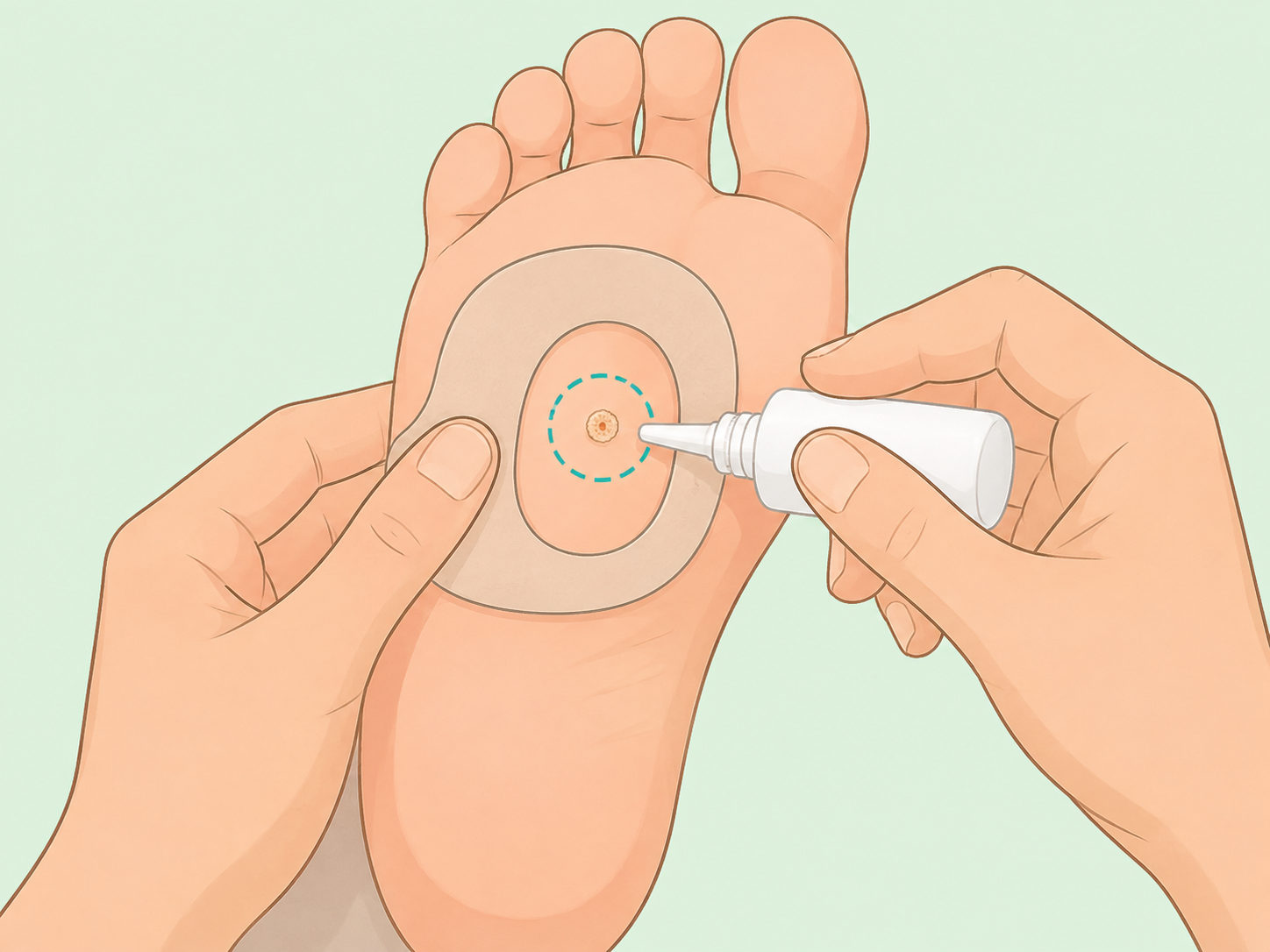
If you are confident it is a wart and you do not have risk factors, an over-the-counter wart product may be an option. AAD says salicylic acid is a common wart treatment, but it can irritate nearby healthy skin and should be used exactly as directed. Do not use at-home wart treatment if you are unsure what the growth is, or if you have diabetes, poor circulation, reduced feeling in your feet, or a weakened immune system.
Stop it from spreading
If the spot may be a plantar wart, keep it covered in shared wet areas and avoid touching or picking it. The NHS recommends washing your hands after touching a wart, changing socks daily, and not walking barefoot in public places if you have a verruca. Use a separate file or pumice stone for the area, and do not share towels, socks, or shoes.
See a doctor when you are unsure or symptoms change
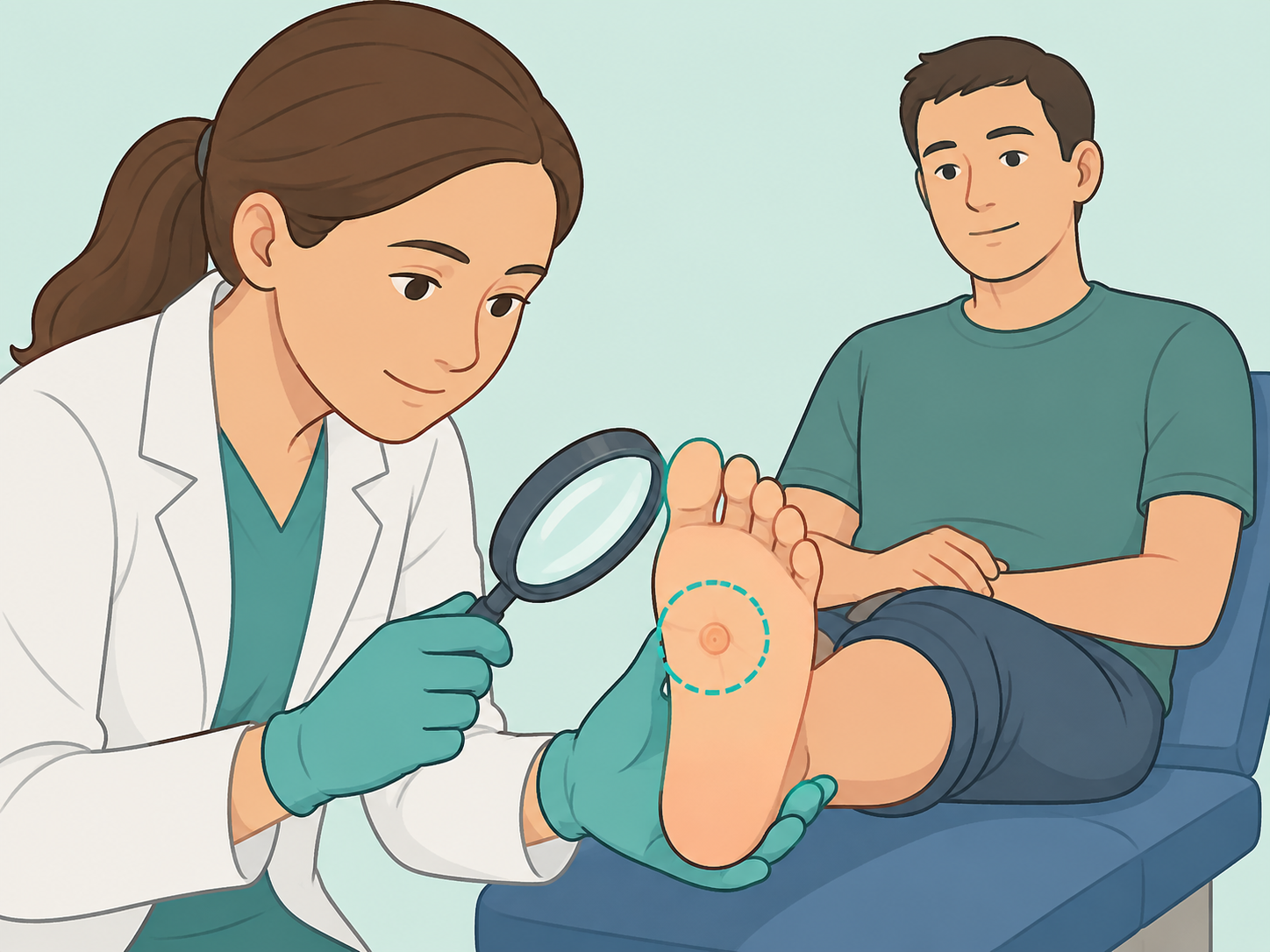
Make an appointment with a doctor, dermatologist, or podiatrist if the growth bleeds, changes color or shape, multiplies, comes back, or hurts enough to affect walking. A health care provider can examine the spot and choose appropriate treatment, such as professional wart care when needed. Get medical advice sooner if you have diabetes, poor feeling in your feet, circulation problems, or a weakened immune system.
Summary
The bottom line: a callus usually comes from friction or pressure, while a plantar wart is linked to HPV and may show black dots or interrupted skin lines. Do not cut into the spot, use cautious self-care only when appropriate, and see a health professional if you are unsure or have risk factors.
Frequently Asked Questions
- Are 'fish eyes' the same as calluses?
- Not usually. A spot called a 'fish eye' may be a plantar wart, while a callus is thickened skin caused by pressure or friction.
- What do black dots in a plantar wart mean?
- The tiny black dots that some people call seeds are small blood vessels, not roots or dirt. They are one clue that the spot may be a wart.
- Can I cut out a fish eye at home?
- No. Cutting, shaving, or digging into a foot growth can injure the skin and raise the risk of infection, especially if you have diabetes or circulation problems.
- Do plantar warts go away on their own?
- Many plantar warts are harmless and may clear without treatment, but it can take a long time. See a professional if it hurts, spreads, bleeds, changes, or does not improve.
- Can I use a callus remover on a fish eye?
- Do not use a medicated callus remover unless you are sure what the spot is and the product is appropriate. Wart and callus products can irritate healthy skin if used incorrectly.
- How can I stop a plantar wart from spreading?
- Keep the area covered, wash your hands after touching it, change socks daily, avoid picking it, and wear sandals in public showers or pool areas.
References
Reliable references aided in composing and refining this content.
- https://www.mayoclinic.org/diseases-conditions/plantar-warts/symptoms-causes/syc-20352691
- https://www.mayoclinic.org/diseases-conditions/plantar-warts/diagnosis-treatment/drc-20352697
- https://medlineplus.gov/cornsandcalluses.html
- https://www.aad.org/public/diseases/a-z/warts-symptoms
- https://www.aad.org/public/diseases/a-z/warts-treatment
- https://www.nhs.uk/conditions/warts-and-verrucas