
 Pin it
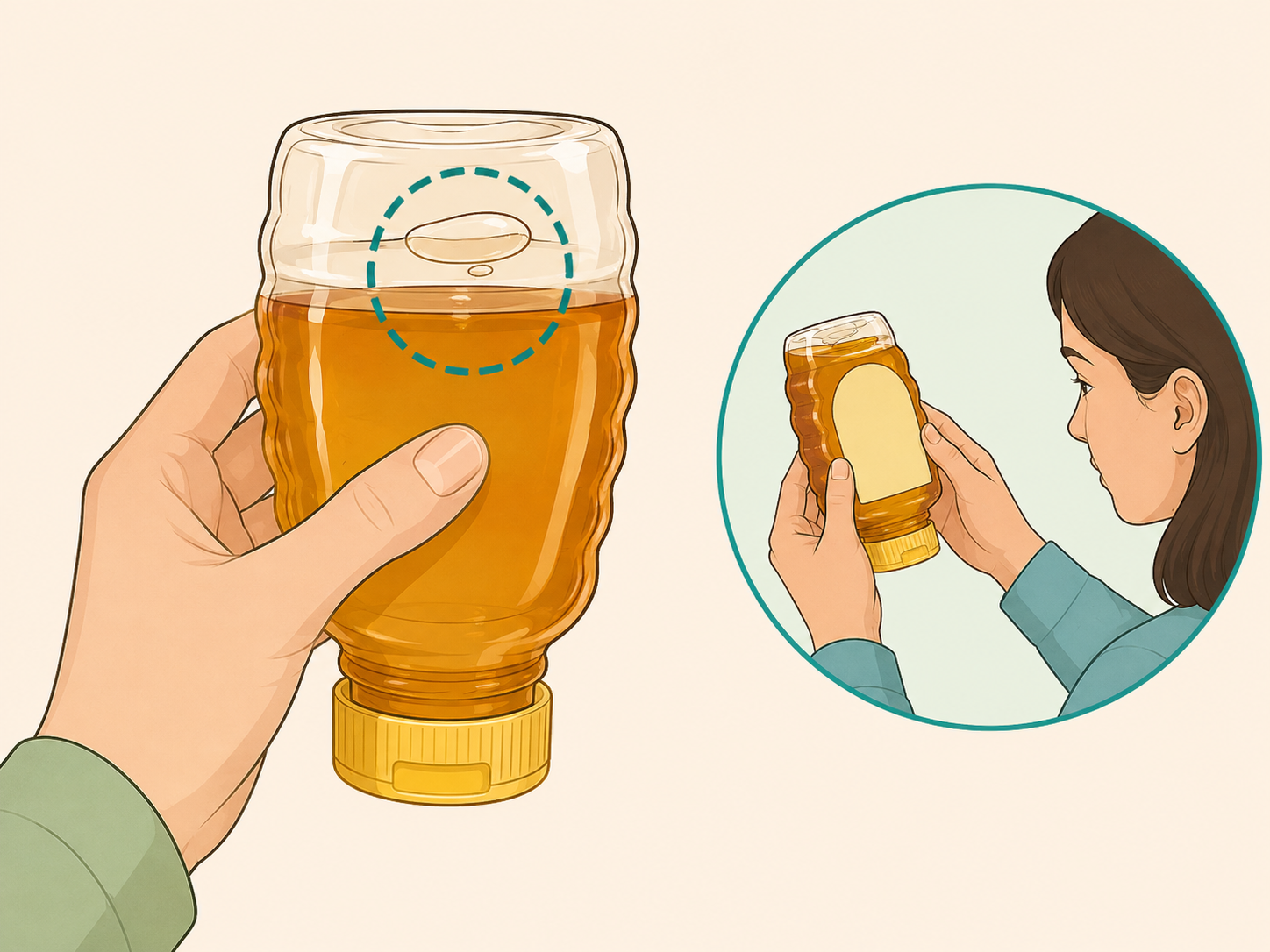
The upside-down bottle trick is a simple way to see how thick honey looks before you buy or use it. It can be a helpful first screen, but it cannot prove that honey is real or free of added sweeteners. Use it alongside label checks, storage clues, and basic skin-safety precautions.
Bring the honey to room temperature
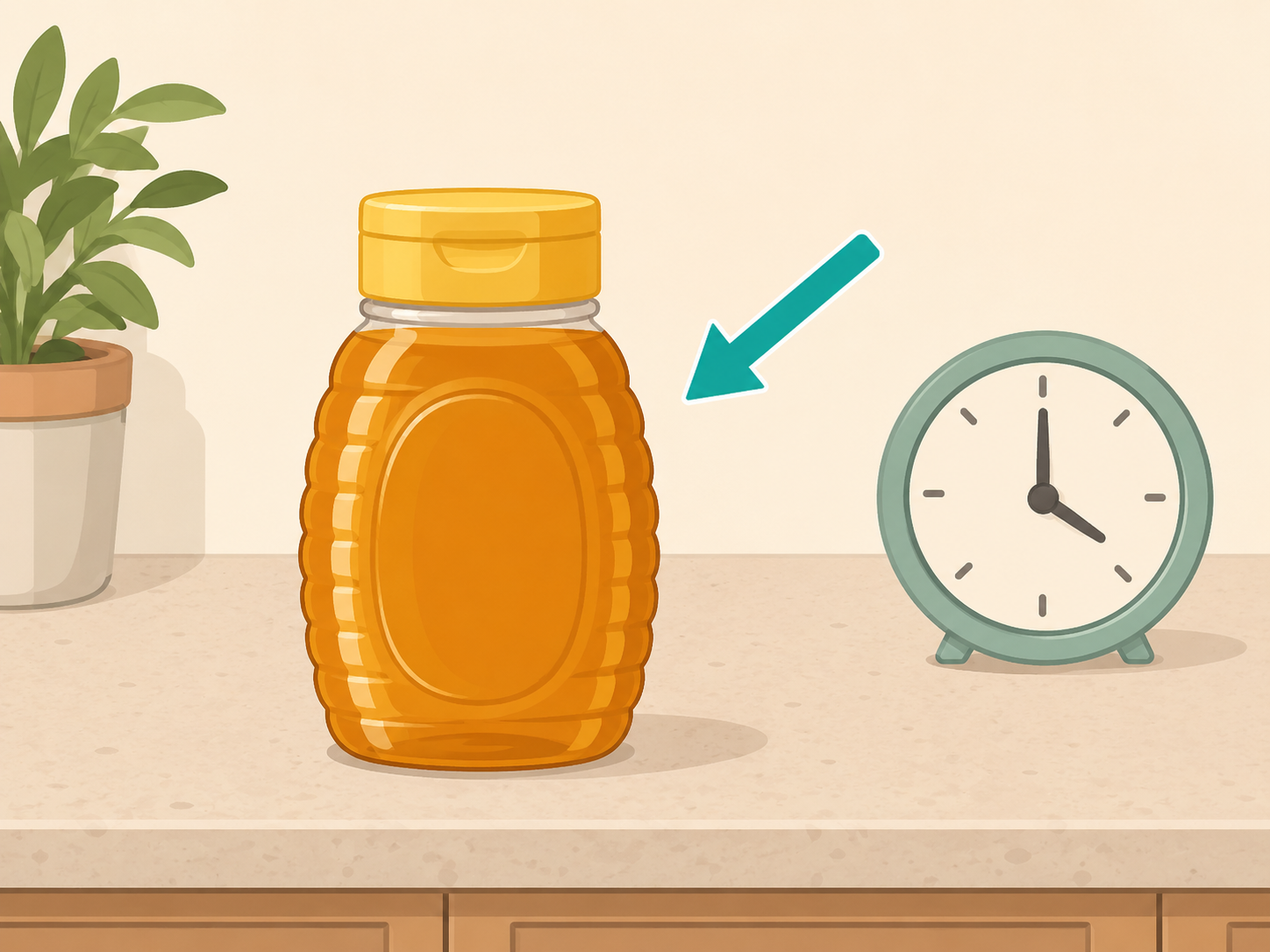
Set the closed bottle on the counter until it is no longer chilled, because cold honey can thicken or crystallize and make the test misleading. Utah State University Extension notes that refrigeration and temperature changes can encourage crystallization in honey and syrups.
Flip the closed bottle upside down
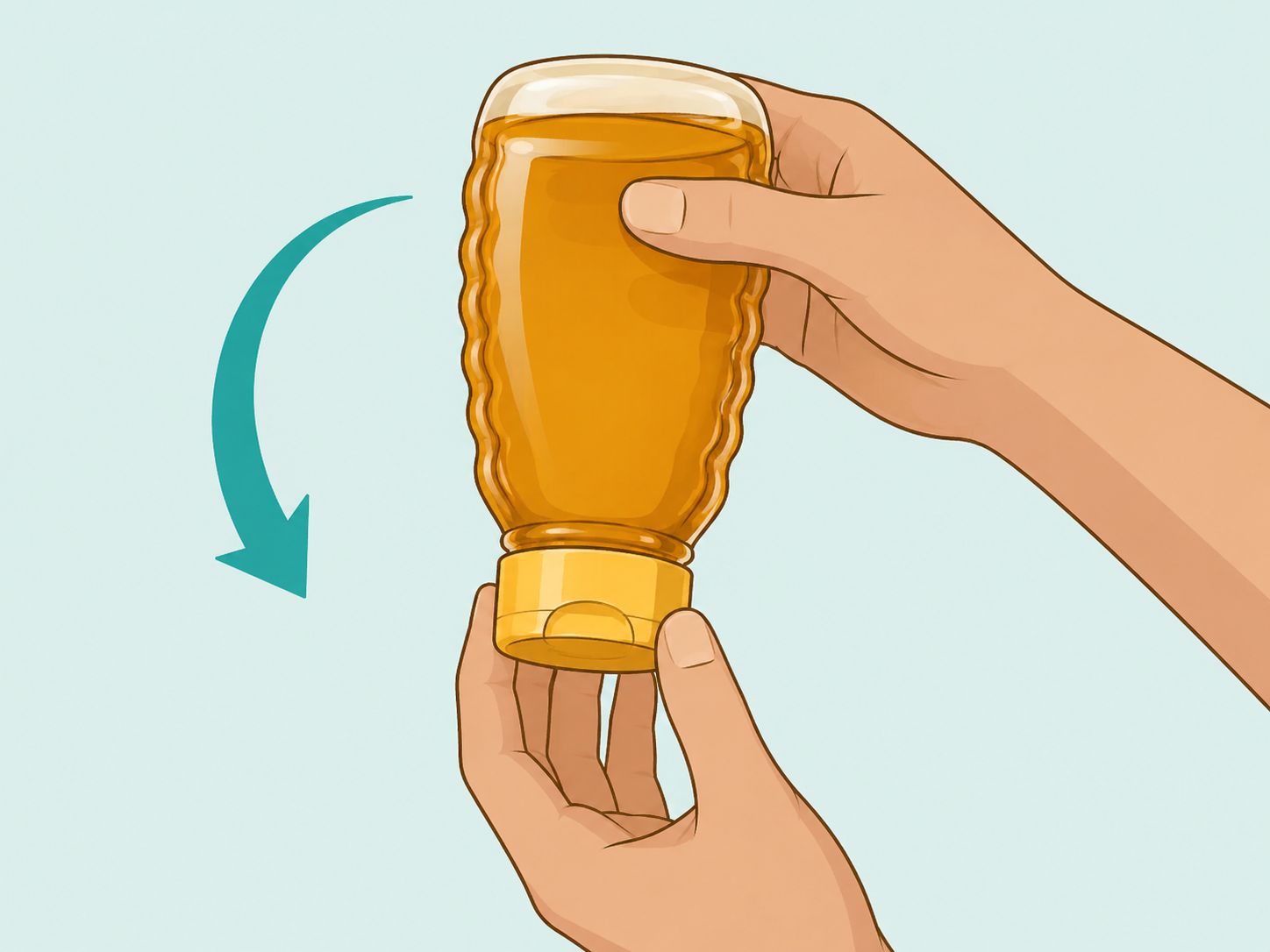
Hold the cap tightly, turn the bottle upside down, and keep it still for a few seconds. Use a clear bottle if possible so you can see the air bubble and how the honey moves without opening the container.
Watch the air bubble move slowly
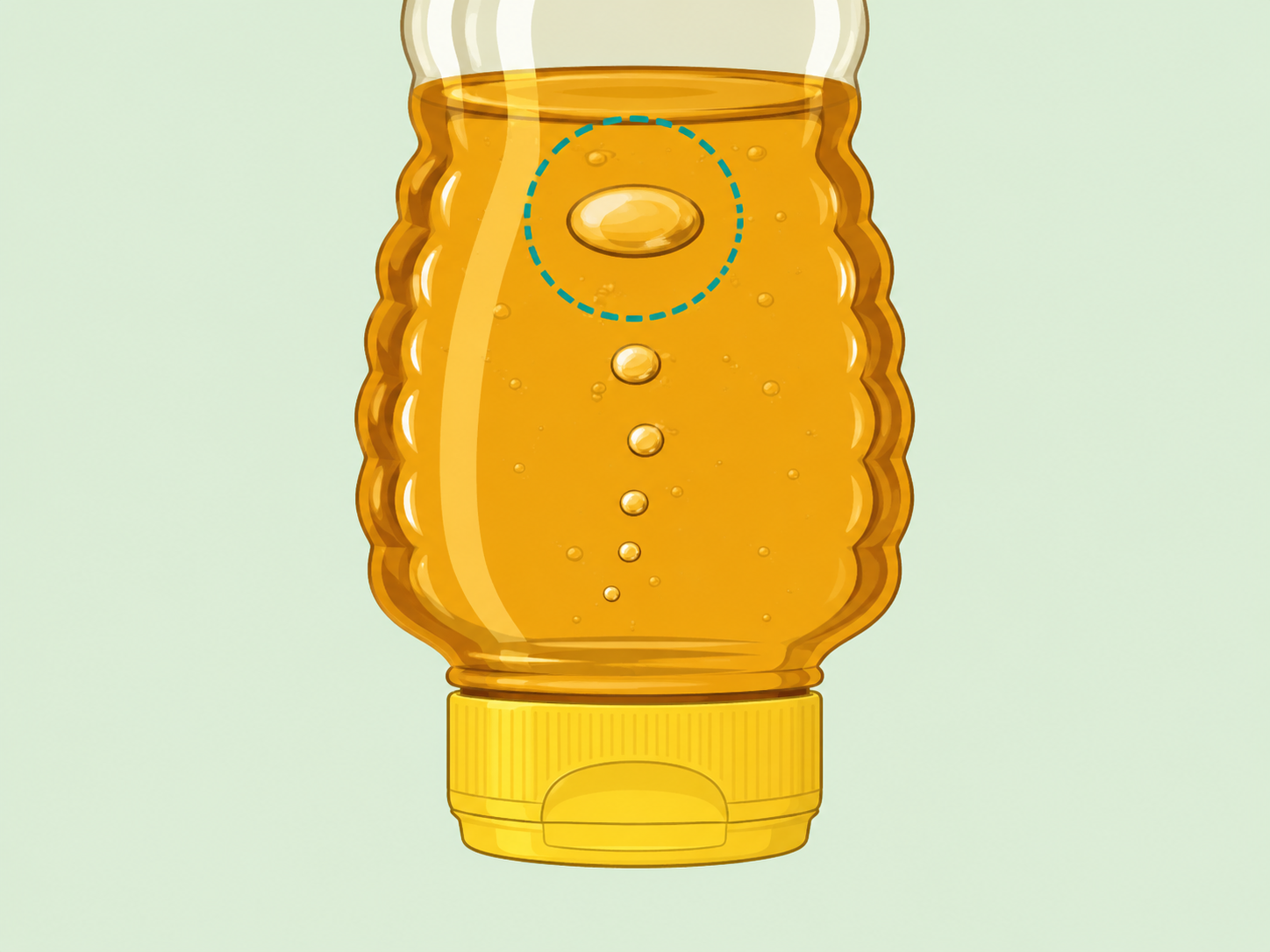
In thicker honey, the air bubble usually rises slowly and the honey moves as one heavy mass. If the bubble shoots upward and the honey pours like thin syrup, treat it as a reason to check further, not as a final answer, because the FDA uses analytical testing to look for undeclared added sweeteners in honey.
Check the ingredient statement next
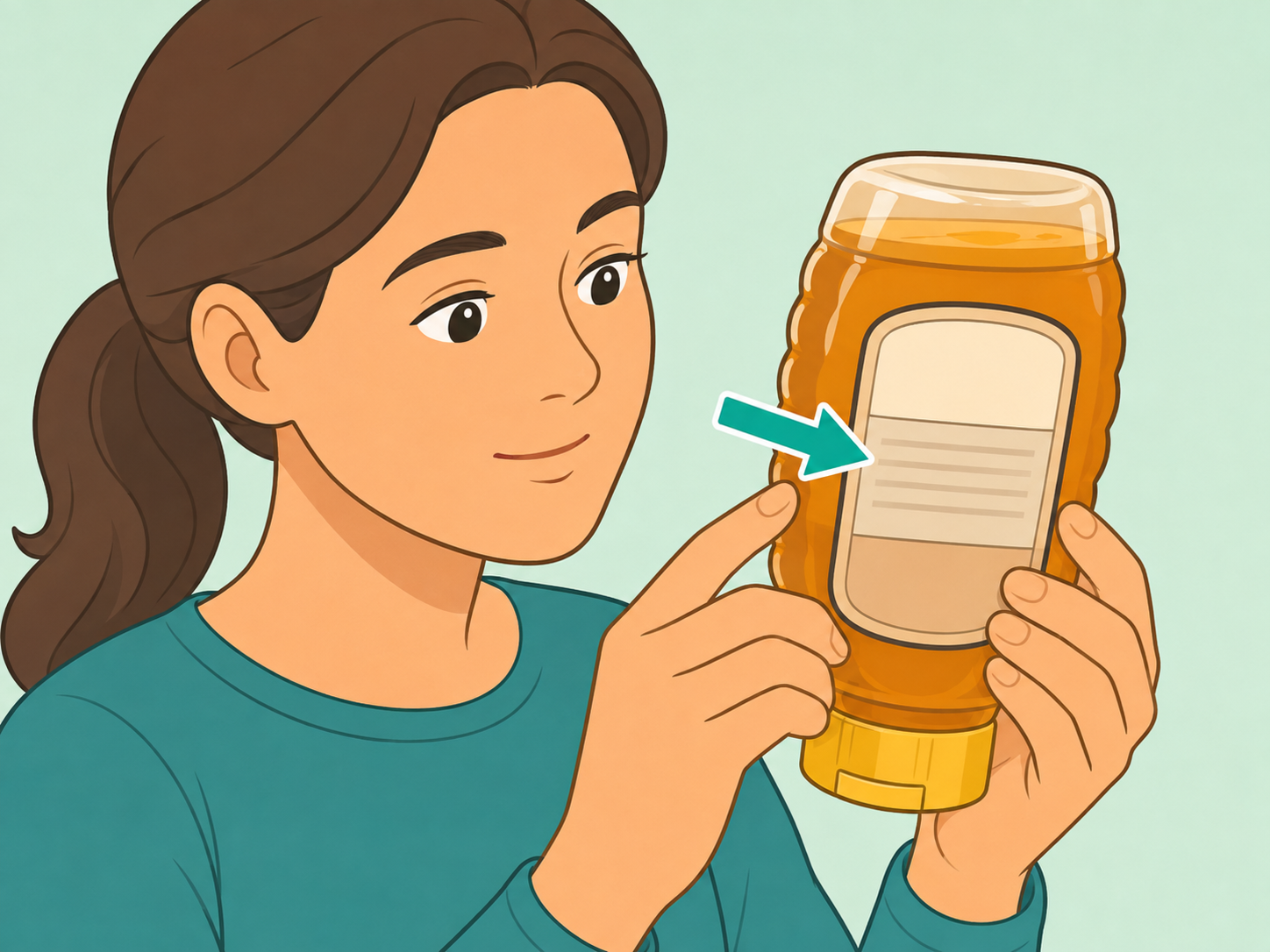
Read the ingredient list before you rely on any home trick. FDA guidance says accurate honey labeling helps prevent products from being adulterated or misbranded, and products with added sweeteners should not be presented simply as plain honey.
Treat crystals as a normal clue
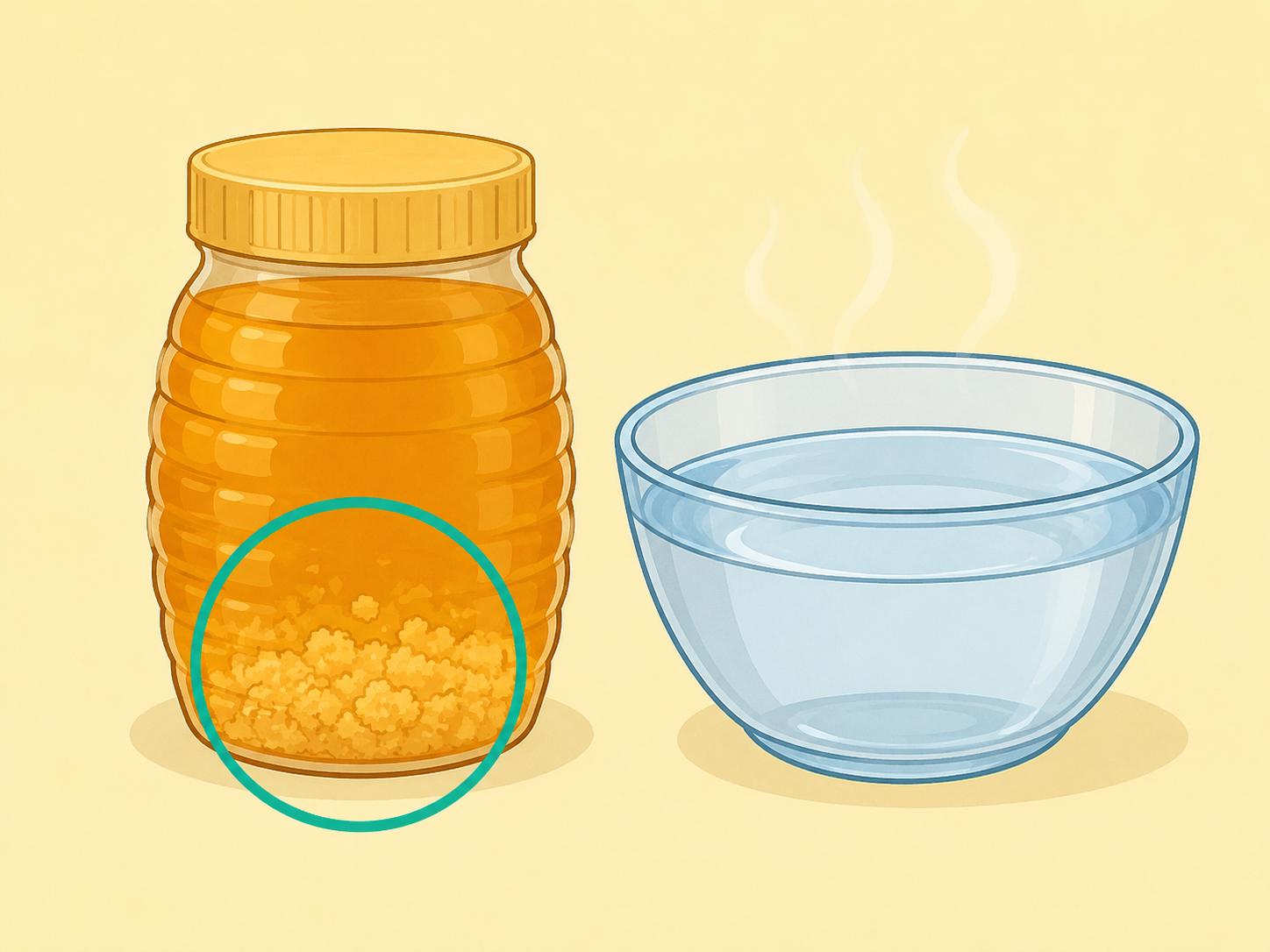
Do not throw out honey just because it has turned cloudy, grainy, or partly solid. Extension guidance explains that crystallized honey is still usable, and gentle warming in hot water can return it to liquid form.
Look at the source and quality signals
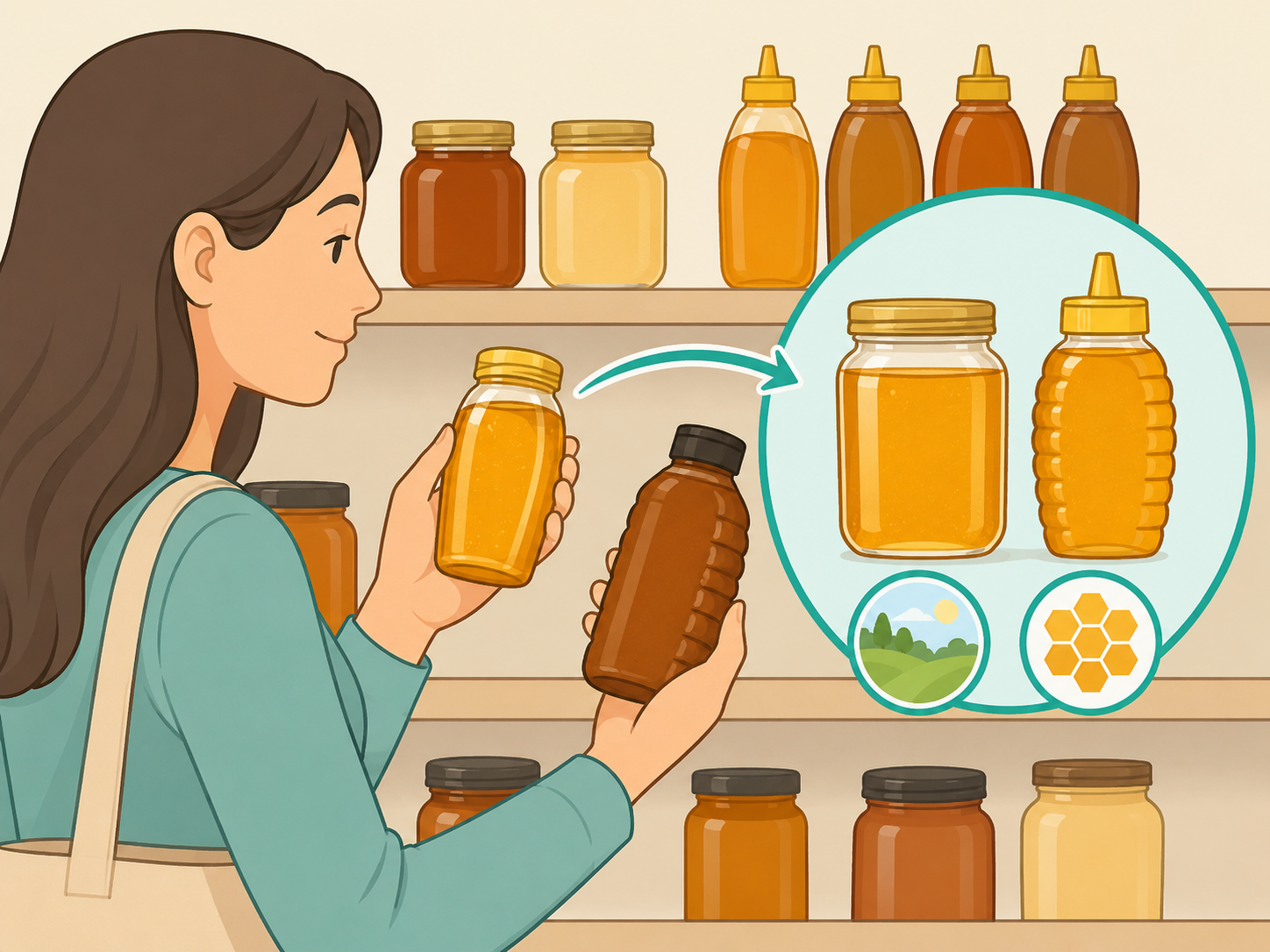
Choose honey from a seller that clearly identifies the product, origin, packer, and ingredients. USDA honey grades describe quality scoring for extracted honey, while FDA food-fraud work shows honey can still be vulnerable to economically motivated adulteration, so labels and seller reliability matter.
Avoid using questionable honey on your skin
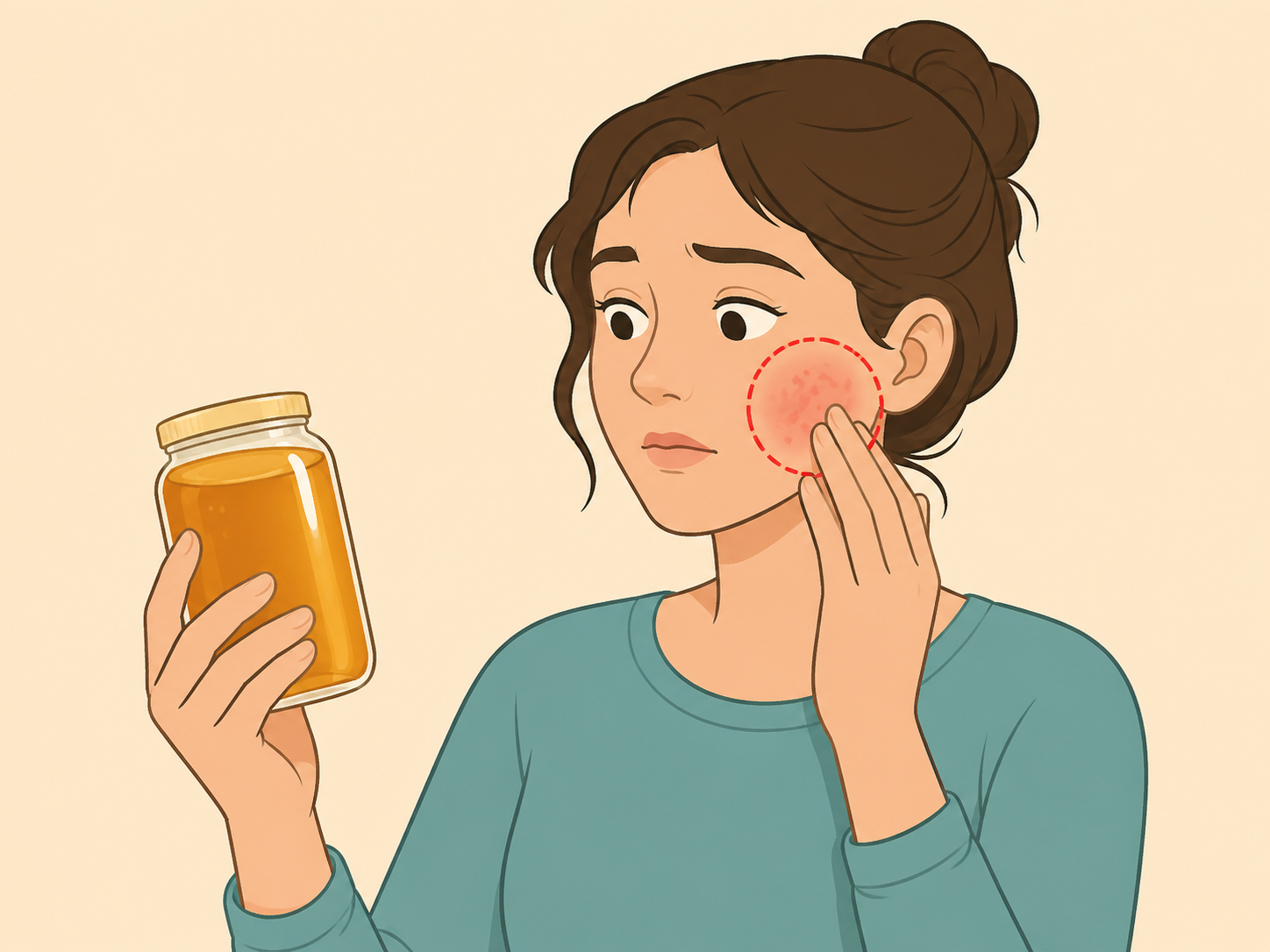
For beauty use, do not apply honey that smells fermented, is poorly labeled, or looks diluted. Mayo Clinic notes that honey can cause stinging on the skin in some people, and the American Academy of Dermatology explains that substances touching the skin can trigger irritant or allergic contact dermatitis.
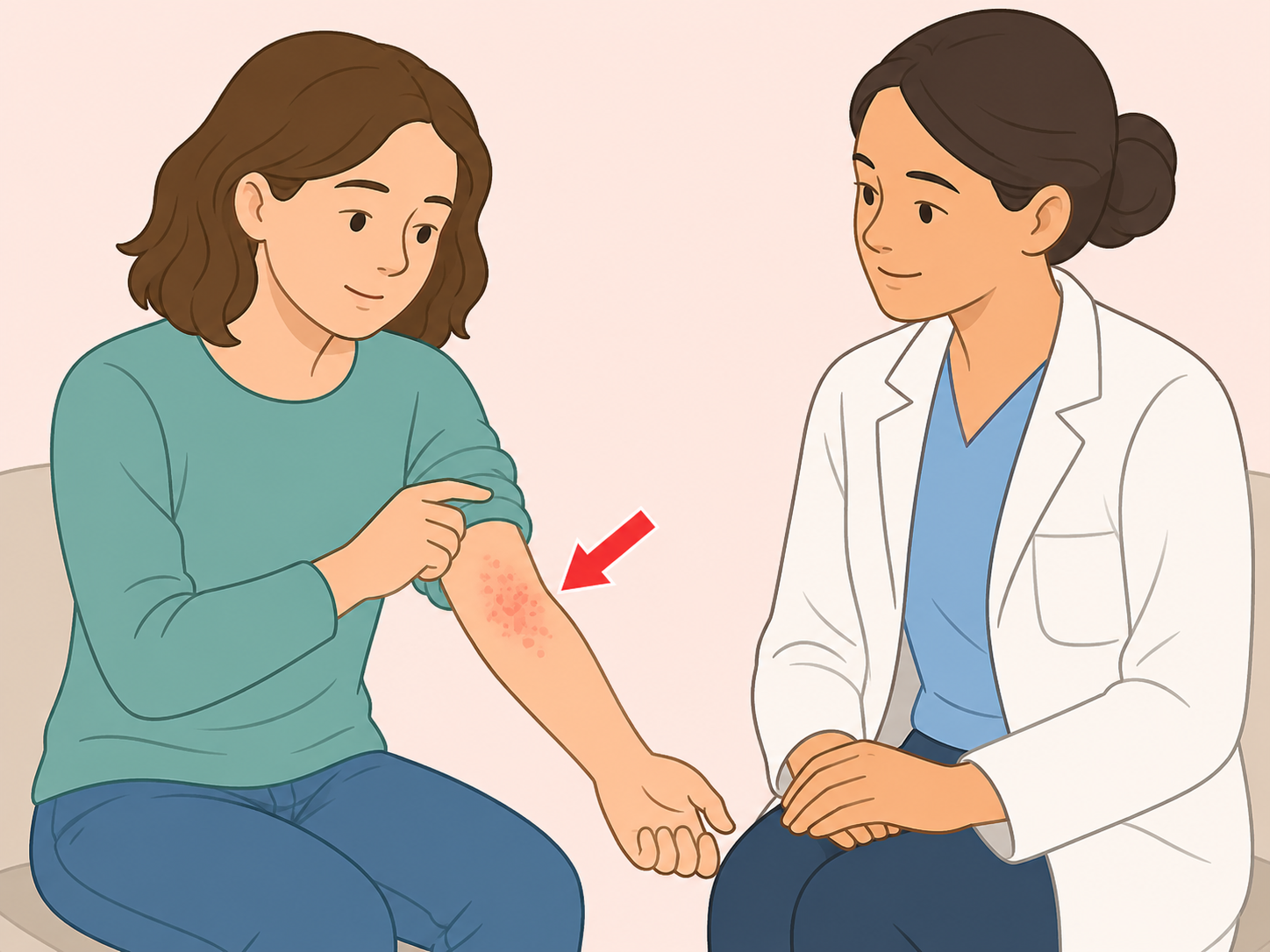
Seek medical help for allergy or skin symptoms
Stop using or eating honey if you develop hives, swelling, wheezing, vomiting, dizziness, or trouble breathing. Mayo Clinic advises seeing a health professional for food-allergy symptoms and getting emergency care for signs of anaphylaxis.
Summary
The bottom line: flip the bottle and watch how slowly the bubble moves, but do not treat that as proof. Real confidence comes from a clear ingredient label, a trustworthy seller, normal storage behavior, and avoiding honey that irritates your skin.
Frequently Asked Questions
- Does flipping the bottle prove honey is real?
- No. A slow-moving bubble suggests the honey is thick, but it does not prove the honey is authentic or free of added sweeteners.
- What should I look for when I flip the bottle?
- Turn the closed bottle upside down and watch the air bubble. Very watery honey with a fast-rising bubble deserves a closer label and source check.
- Is crystallized honey fake?
- No. Crystallization is a normal storage change in honey and syrup, especially when honey is kept cold or over time.
- What should the label say if I want pure honey?
- Look for honey as the only ingredient. If sweeteners are added, the product should be labeled as a blend and should list those ingredients.
- Can I use any honey on my face if it passes the flip test?
- No. The flip test is not a skin-safety test. Stop using honey if it stings, itches, or causes a rash, and do not apply questionable or poorly labeled honey to irritated skin.
- Can babies have honey that passes this test?
- No. Honey should not be given to babies under 1 year old because of the risk of infant botulism, even if the honey looks thick and pure.
References
Reliable references aided in composing and refining this content.
- https://www.fda.gov/regulatory-information/search-fda-guidance-documents/guidance-industry-proper-labeling-honey-and-honey-products
- https://www.fda.gov/food/economically-motivated-adulteration-food-fraud/fy25-sample-collection-and-analysis-domestically-produced-and-imported-honey-economically-motivated
- https://extension.usu.edu/preserve-the-harvest/research/storing-sugars
- https://www.ams.usda.gov/grades-standards/extracted-honey-grades-and-standards
- https://www.mayoclinic.org/drugs-supplements-honey/art-20363819
- https://www.aad.org/public/diseases/eczema/types/contact-dermatitis
- https://www.mayoclinic.org/diseases-conditions/food-allergy/symptoms-causes/syc-20355095