
 Pin it
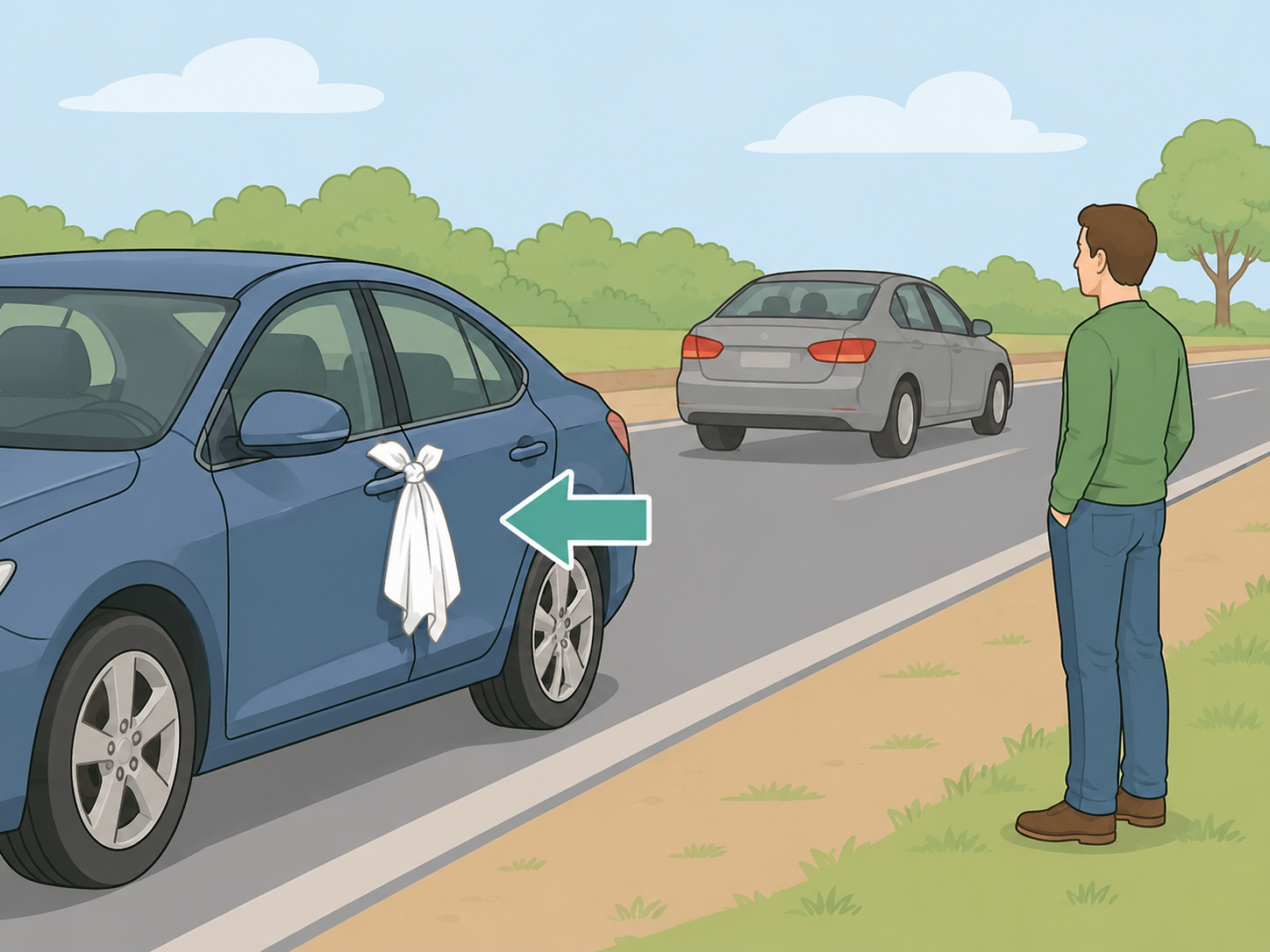
A white cloth, towel, or shirt tied to a car window or door handle is easy to miss if you do not know what it means. In many roadside situations, it is an informal signal that a vehicle has broken down or that the driver needs help. This guide explains how to interpret the signal calmly, how to respond as another driver, and how to use one safely if your own car breaks down.
Treat the cloth as a possible request for help
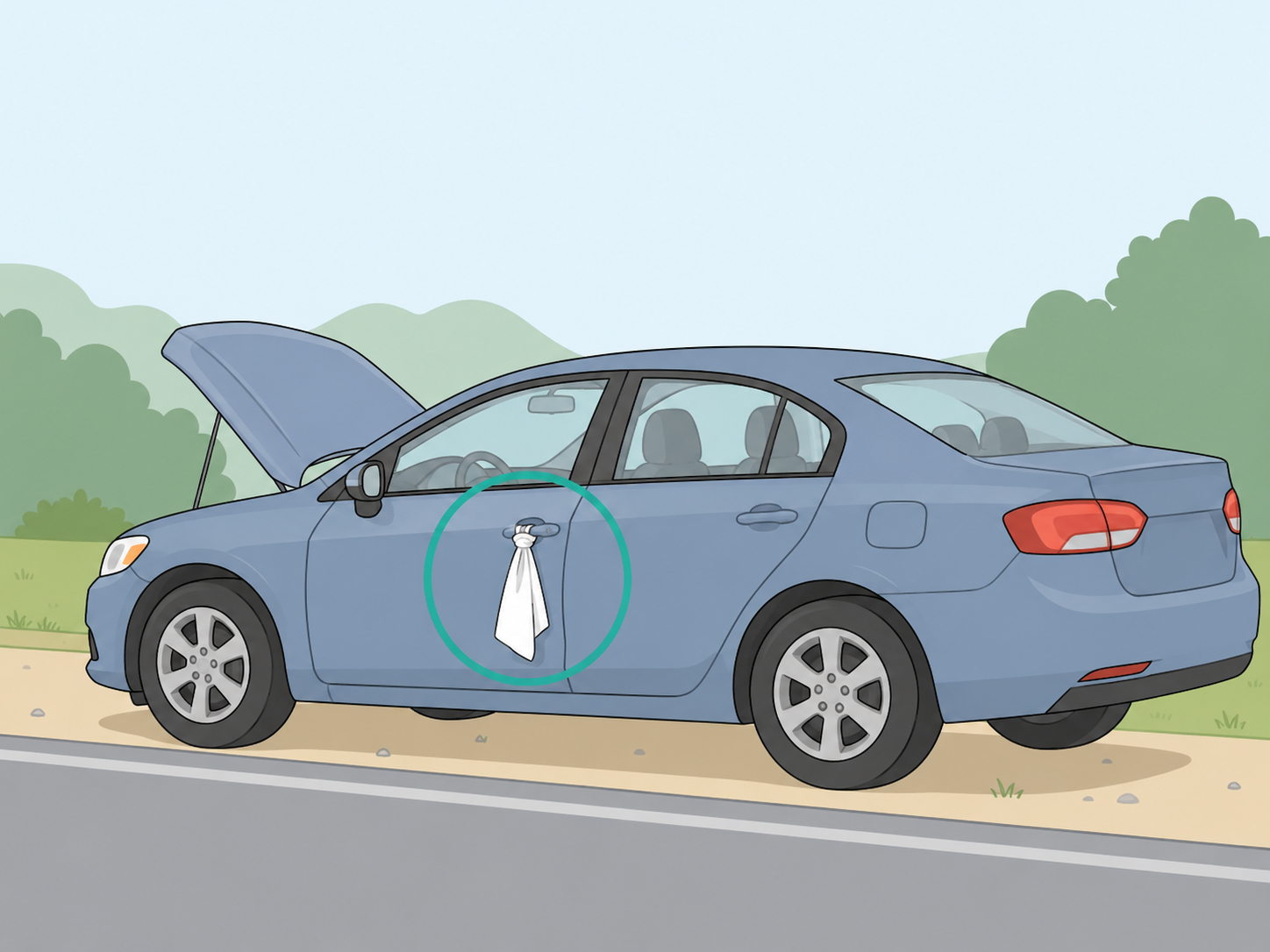
Assume a white towel, shirt, or cloth on a car may be a roadside help signal, especially if the vehicle is stopped, has its hood raised, or has hazard lights on. North Carolina public safety guidance specifically tells drivers who need help after a breakdown to tie a white cloth to the left door handle or radio antenna, so treat it as practical information rather than a mystery.
Read the whole scene before reacting
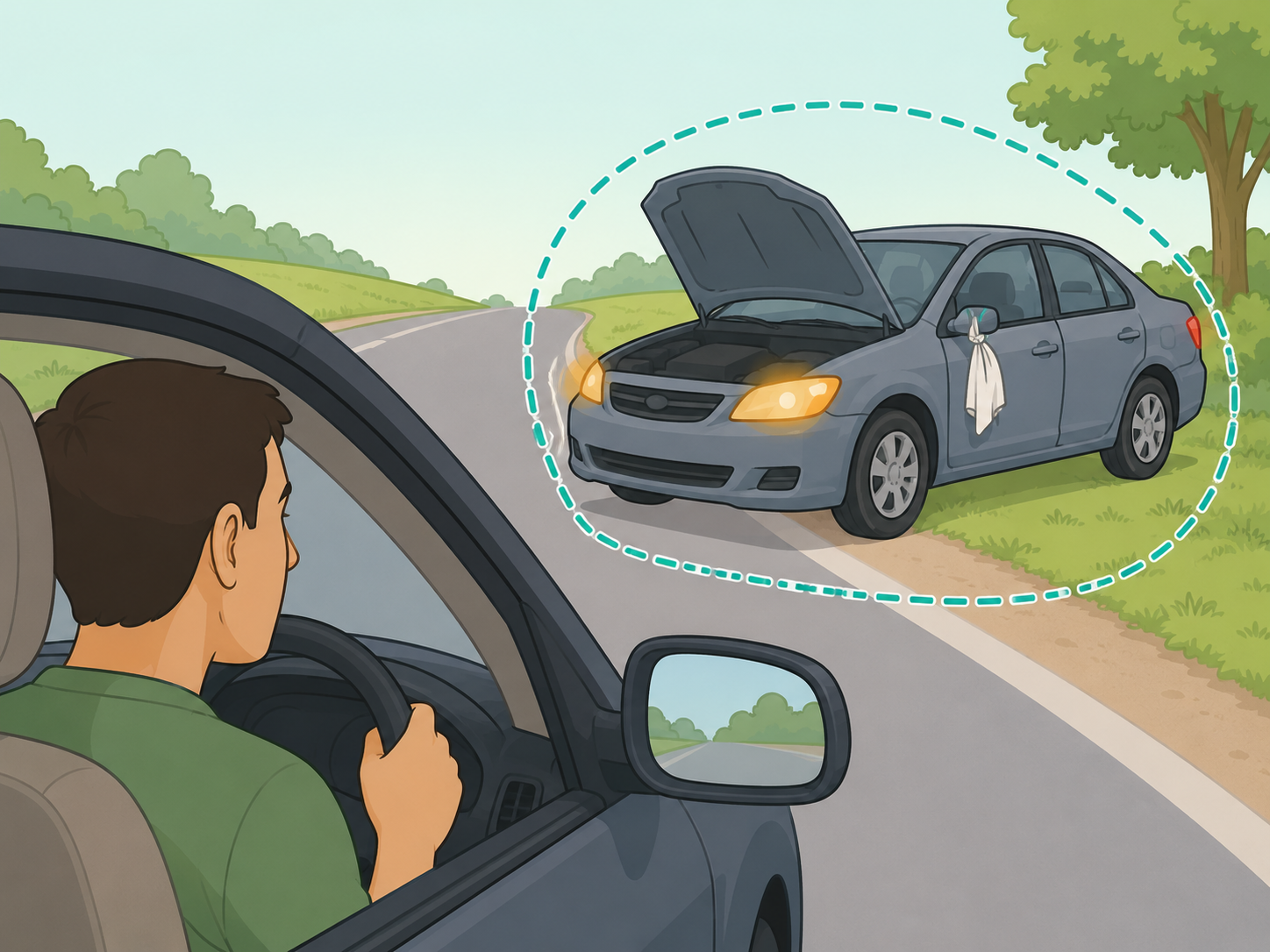
A cloth alone does not tell you exactly what is wrong, so look for other clues before you brake, pass, or pull over. Check whether the car is on the shoulder, whether anyone is waving, whether there is smoke or damage, and whether the vehicle is moving unpredictably; the New York driver manual gives similar emergency-driving guidance for pulling off the road when a vehicle becomes hard to control or unsafe.
Slow down and create space safely
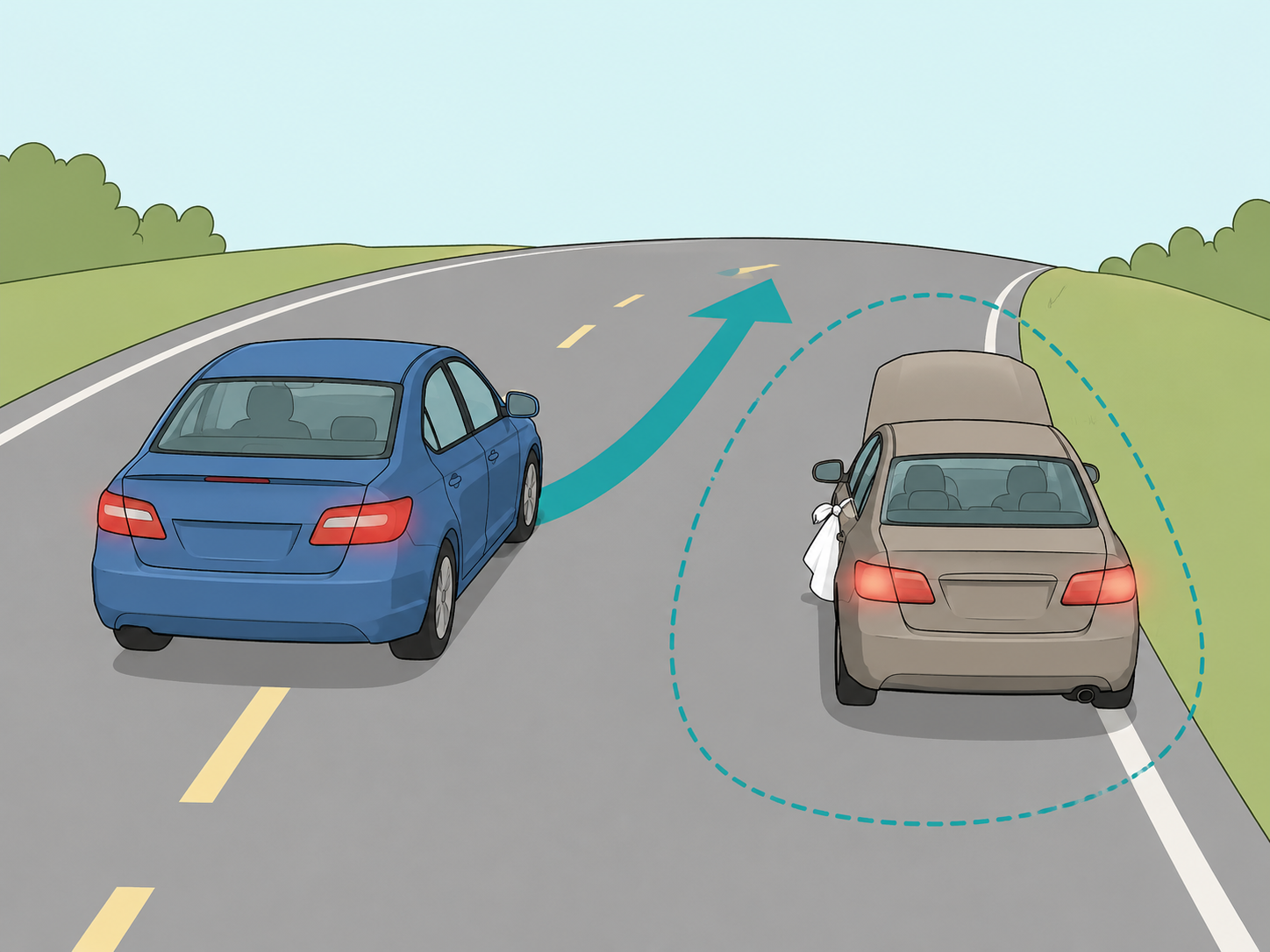
If the car is stopped on or near the road, ease off the accelerator, keep your steering steady, and leave extra following distance. When flashing lights are present, NHTSA says drivers should move over or slow down if they cannot safely change lanes, so make space without swerving or stopping abruptly.
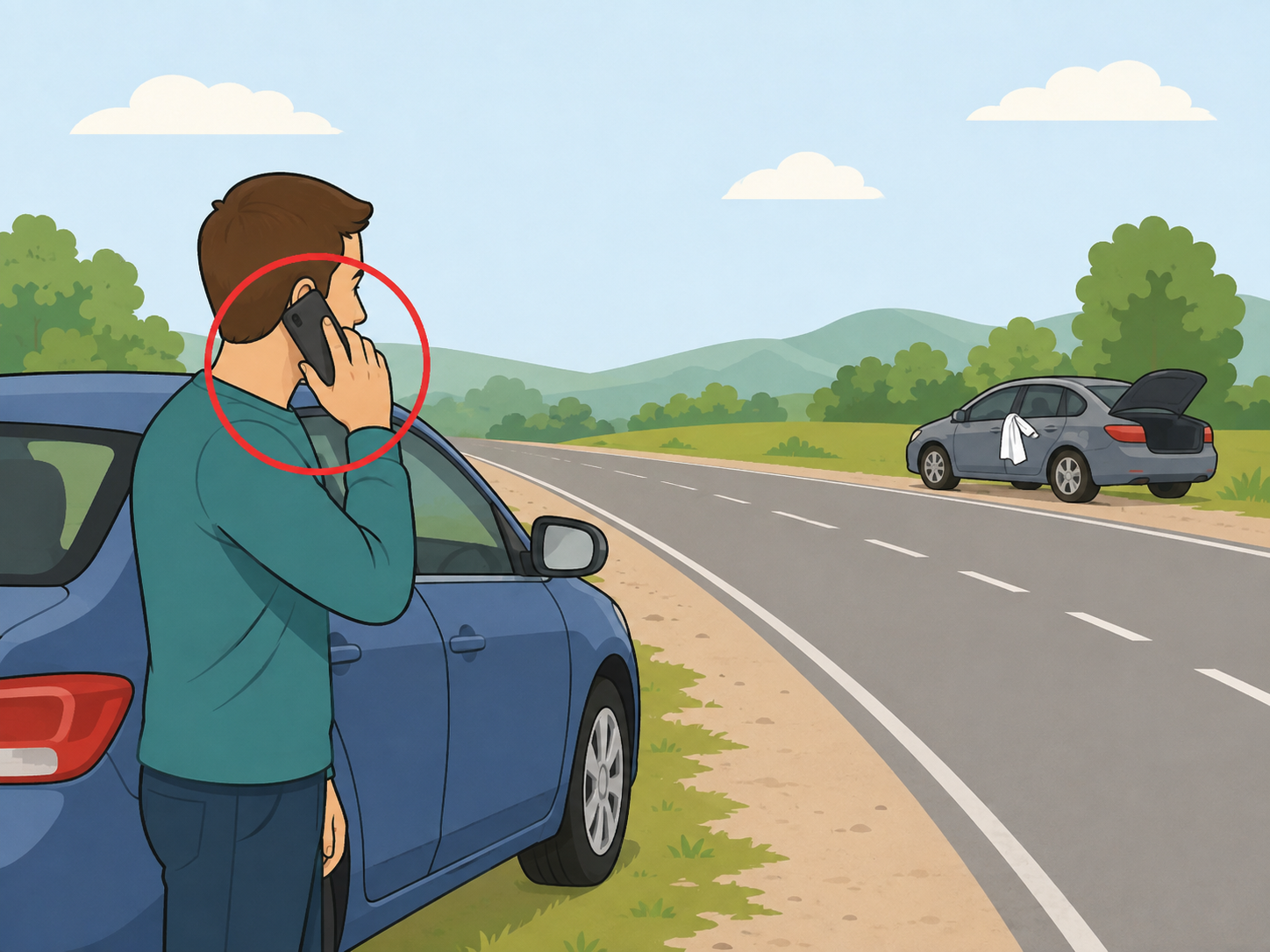
Call 911 when there is immediate danger
Call emergency services if you see a crash, fire, smoke, an injured person, a stranded person in traffic, or a vehicle creating an immediate hazard. The National 911 Program says callers should be ready to give the location, phone number, nature of the emergency, and important details, such as the vehicle description and direction of travel.
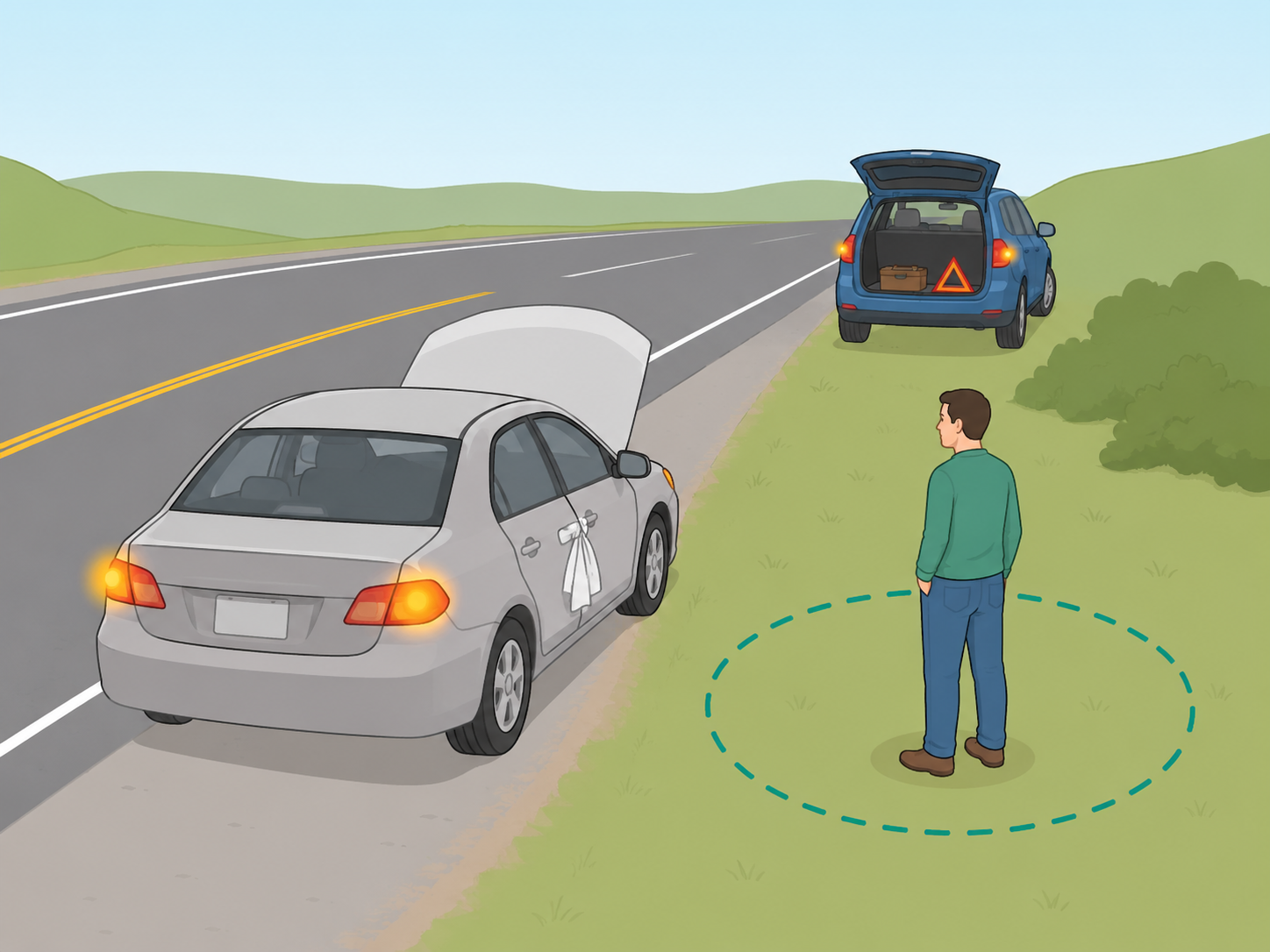
Offer help only from a safe place
If you decide to help, pull completely off the road in a legal, visible place well beyond the disabled vehicle. Avoid walking along the traffic side of the road, and remember that North Carolina guidance tells occupants waiting for assistance to stand away from the road and the vehicle rather than in front of or behind it.
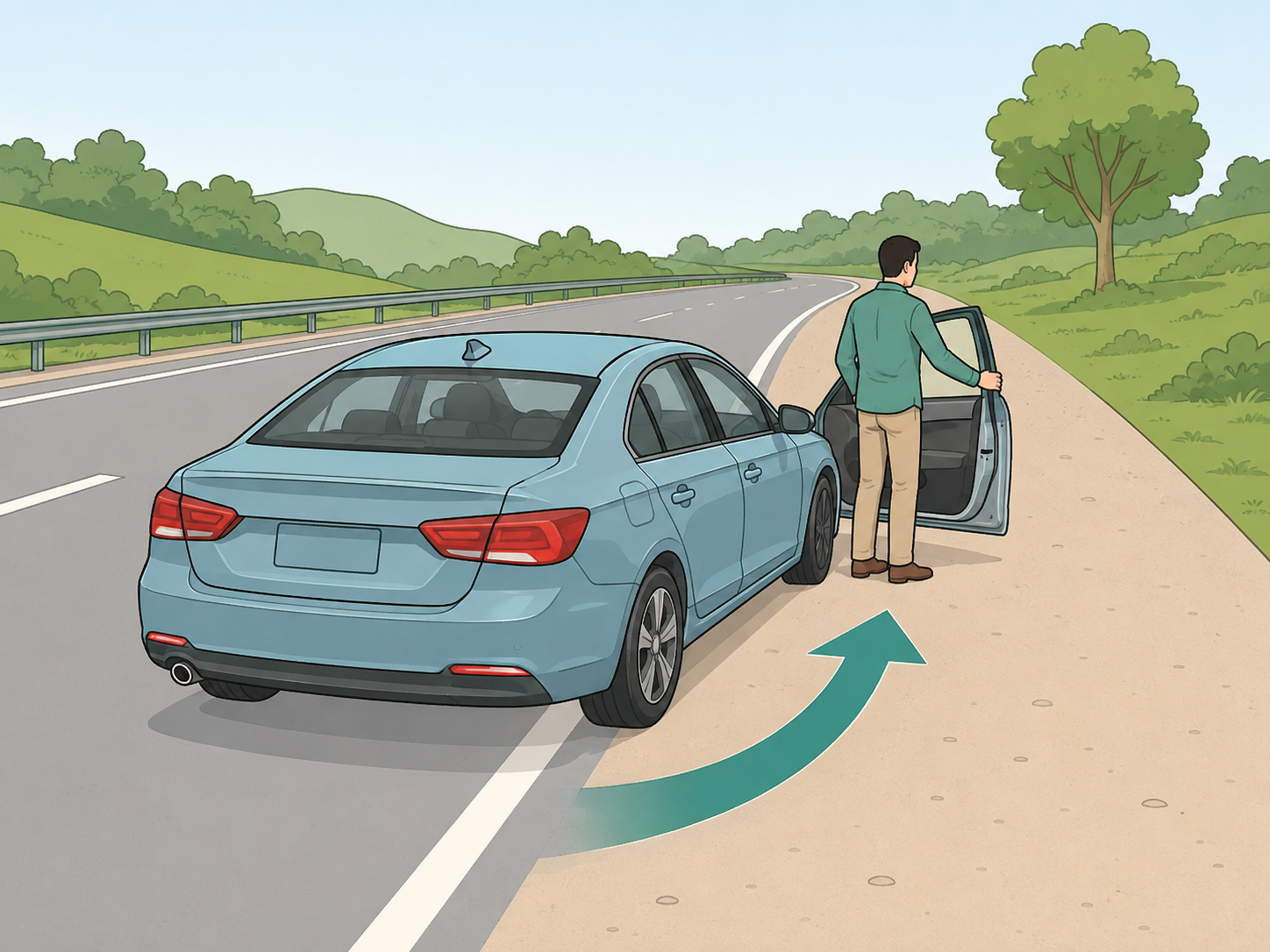
Use the signal only after getting off the road
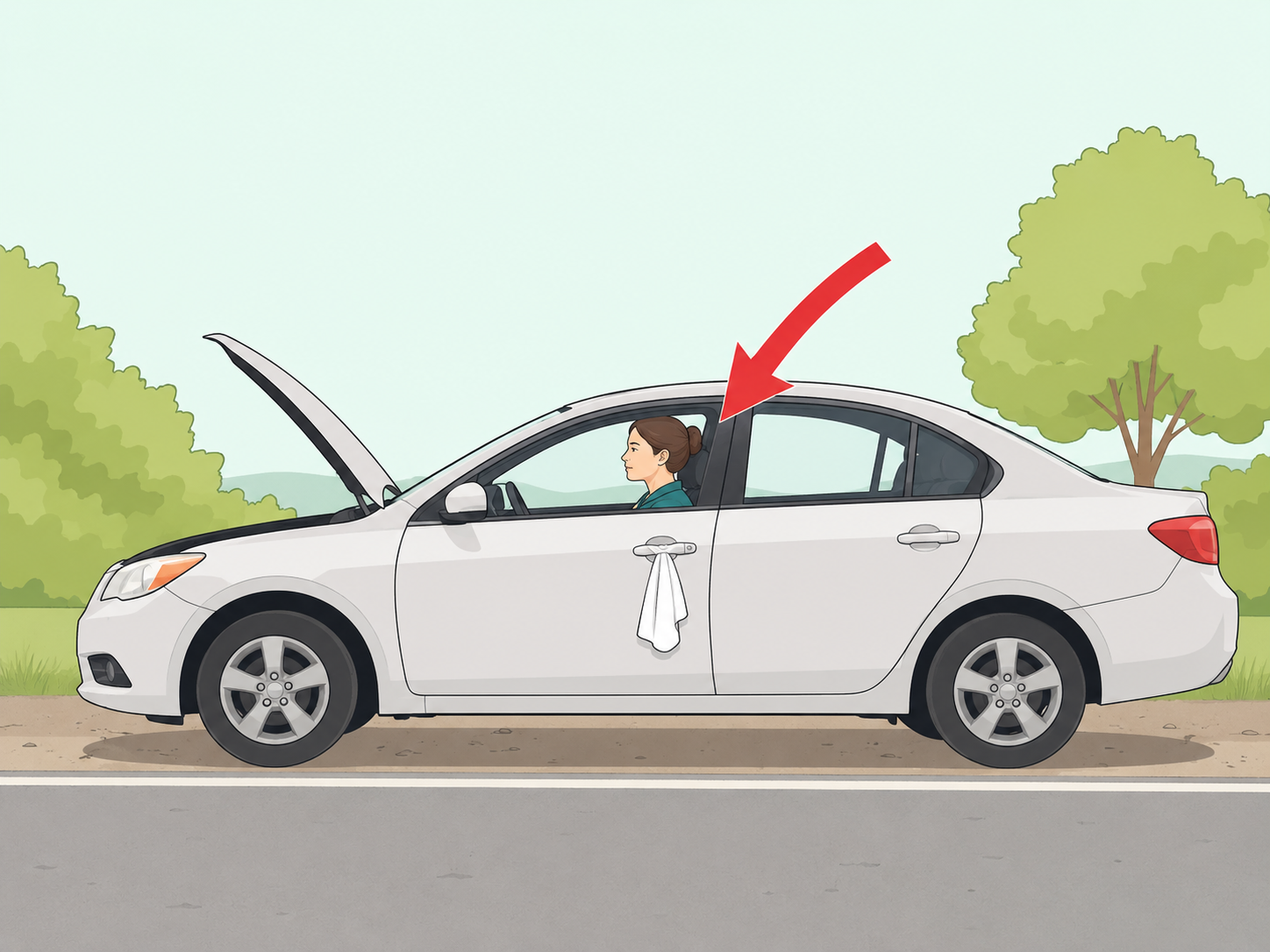
If your own vehicle breaks down, focus first on reaching the shoulder or another safe area. The same North Carolina public safety guidance says to move the vehicle completely off the road, exit from the passenger side when needed, and turn on emergency flashers before waiting for help.
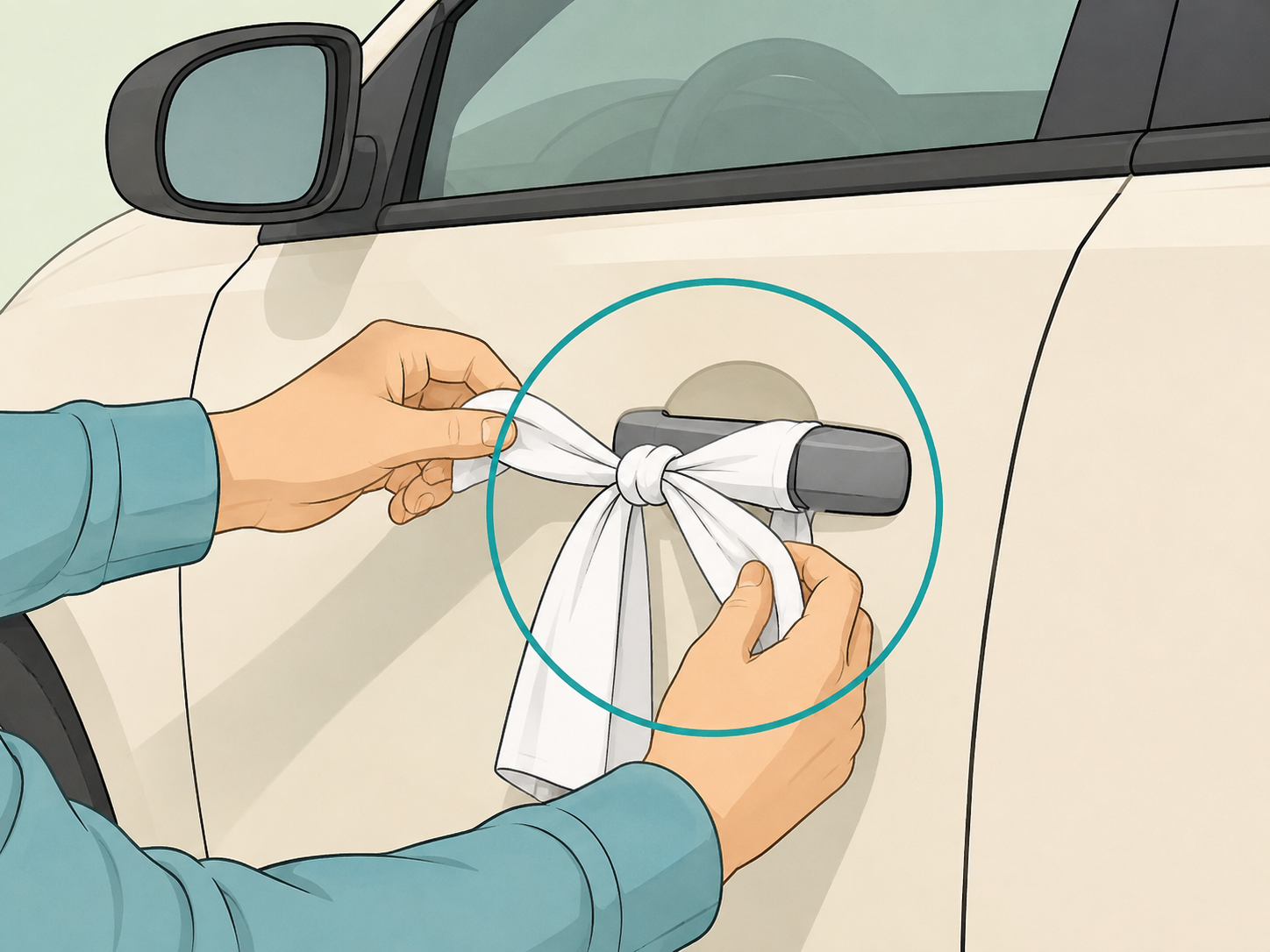
Tie the cloth securely outside the vehicle
Use a clean white cloth that is easy to see, and tie it firmly to the left door handle or radio antenna if your vehicle has one. Keep it clear of the windshield, mirrors, lights, and license plate; for example, California law treats impaired windshield or rear-window visibility as unsafe, so avoid any placement that could impair the driver's view.
Do not treat it as permission to break traffic laws
A private car with a white cloth is not the same as an ambulance, police car, or other authorized emergency vehicle. State driver manuals distinguish authorized emergency vehicles and hazard vehicles, and the New York DMV explains that non-emergency hazard vehicles still must obey traffic laws, so use the cloth to ask for help, not to claim special right of way.
Retrieve or report the vehicle promptly
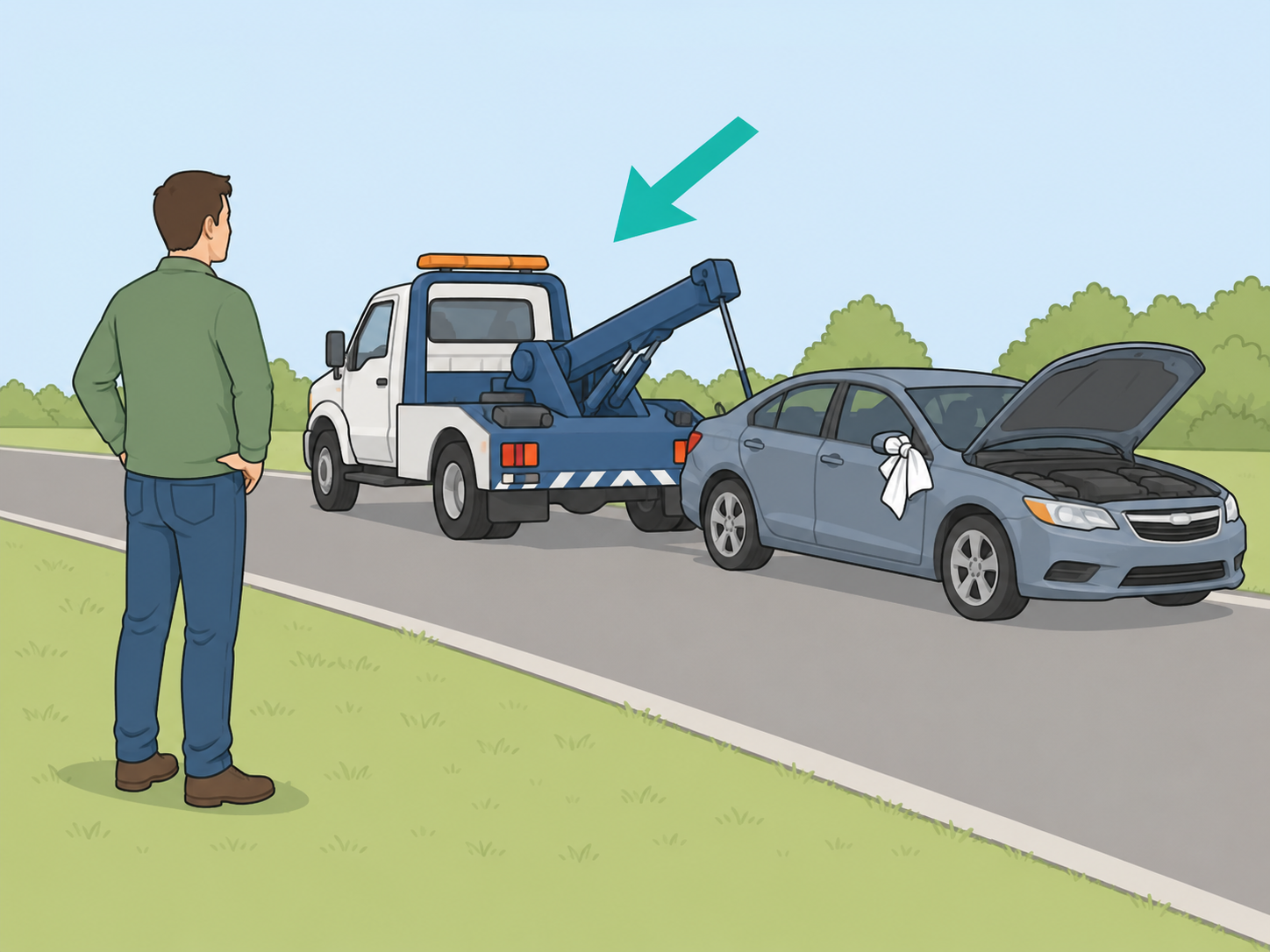
If you leave a disabled car to get help, contact roadside assistance, law enforcement, or the road authority as soon as possible and return only when it is safe. Local rules vary, but the Virginia DMV notes that a vehicle left unattended on the shoulder of a primary highway may be treated as an abandoned vehicle and may be towed.
Summary
The bottom line: a white cloth in a car window is usually a practical distress signal, not a decorative detail. Treat it as a reason to pay attention, give the vehicle room, and get professional help involved when there is danger.
Frequently Asked Questions
- What does a white cloth in a car window usually mean?
- It usually means the vehicle is disabled, the driver needs help, or the driver has left briefly to get assistance. The exact meaning can vary by place and situation.
- Is a white cloth an official emergency signal everywhere?
- No. Some state safety guidance mentions it, but it is not a universal legal signal. Treat it as a clue that something may be wrong, then look at the whole situation.
- Should I stop if I see a car with a white cloth?
- Only stop if you can do so safely and legally. On busy roads, it is often safer to keep distance and call emergency services or roadside assistance with the vehicle location.
- Where should I tie a white cloth if my own car breaks down?
- Tie it securely to the left door handle or radio antenna if your car has one. Keep it outside the vehicle and away from mirrors, lights, and any area that blocks your view.
- Can I drive with a white cloth hanging from my window?
- Avoid driving with anything loose or view-blocking on the window. A white cloth does not give a private driver emergency-vehicle privileges or permission to ignore traffic laws.
- Will a white cloth stop my car from being towed?
- No. It may show that the car is disabled or that help is needed, but abandoned-vehicle and towing rules vary by state, road, and local agency.
References
Reliable references aided in composing and refining this content.
- https://www.ncdps.gov/blog/2020/02/25/how-react-automobile-emergencies
- https://www.nhtsa.gov/move-over-its-law
- https://www.911.gov/calling-911
- https://dmv.ny.gov/new-york-state-drivers-manual-and-practice-tests/chapter-5-intersections-and-turns?from=singlemessage&isappinstalled=0
- https://leginfo.legislature.ca.gov/faces/codes_displaySection.xhtml?lawCode=VEH§ionNum=26710
- https://www.dmv.virginia.gov/vehicles/avp-faq
- https://www.vdh.virginia.gov/news/severe-weather-preparedness/preparing-your-emergency-supply-kit