 Pin it
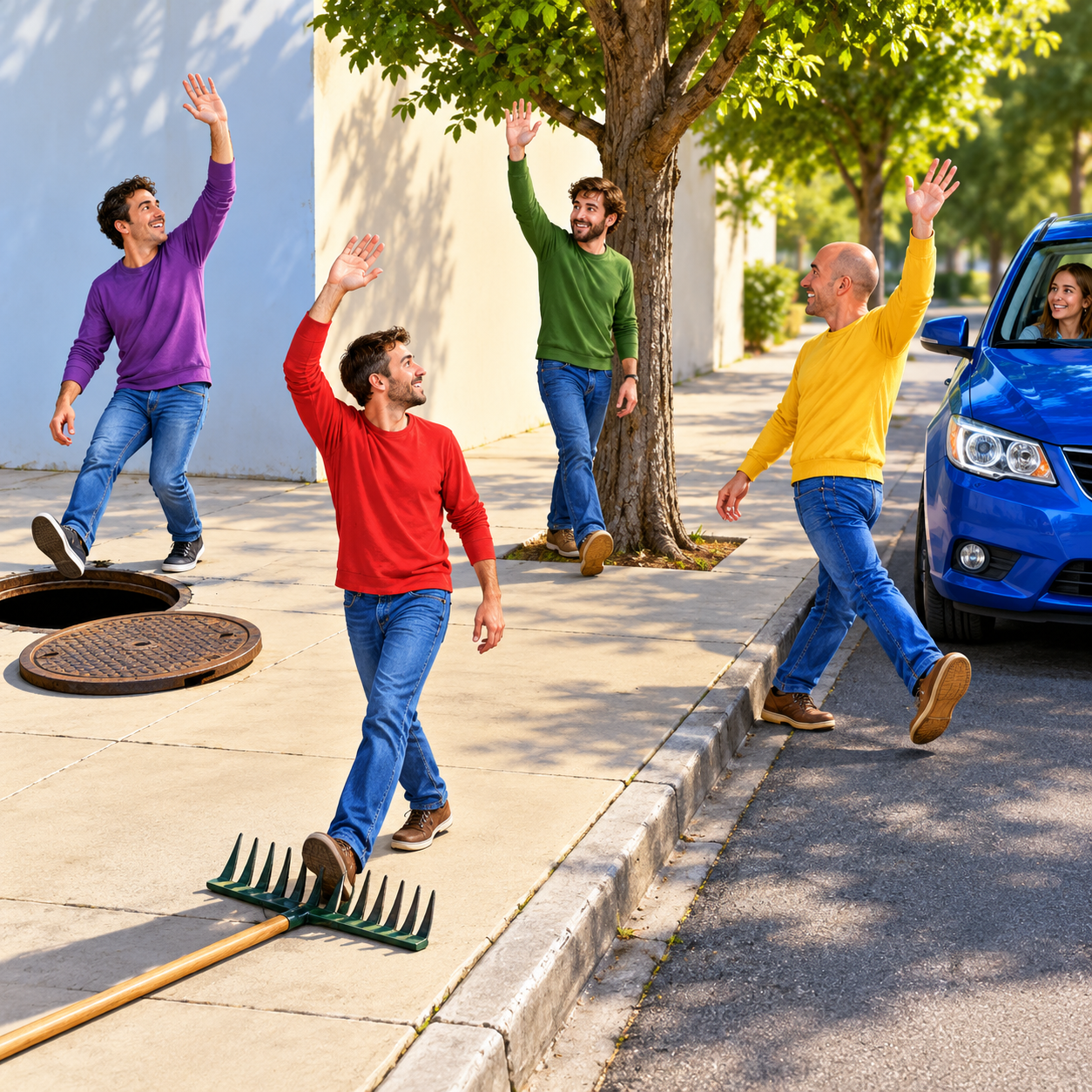
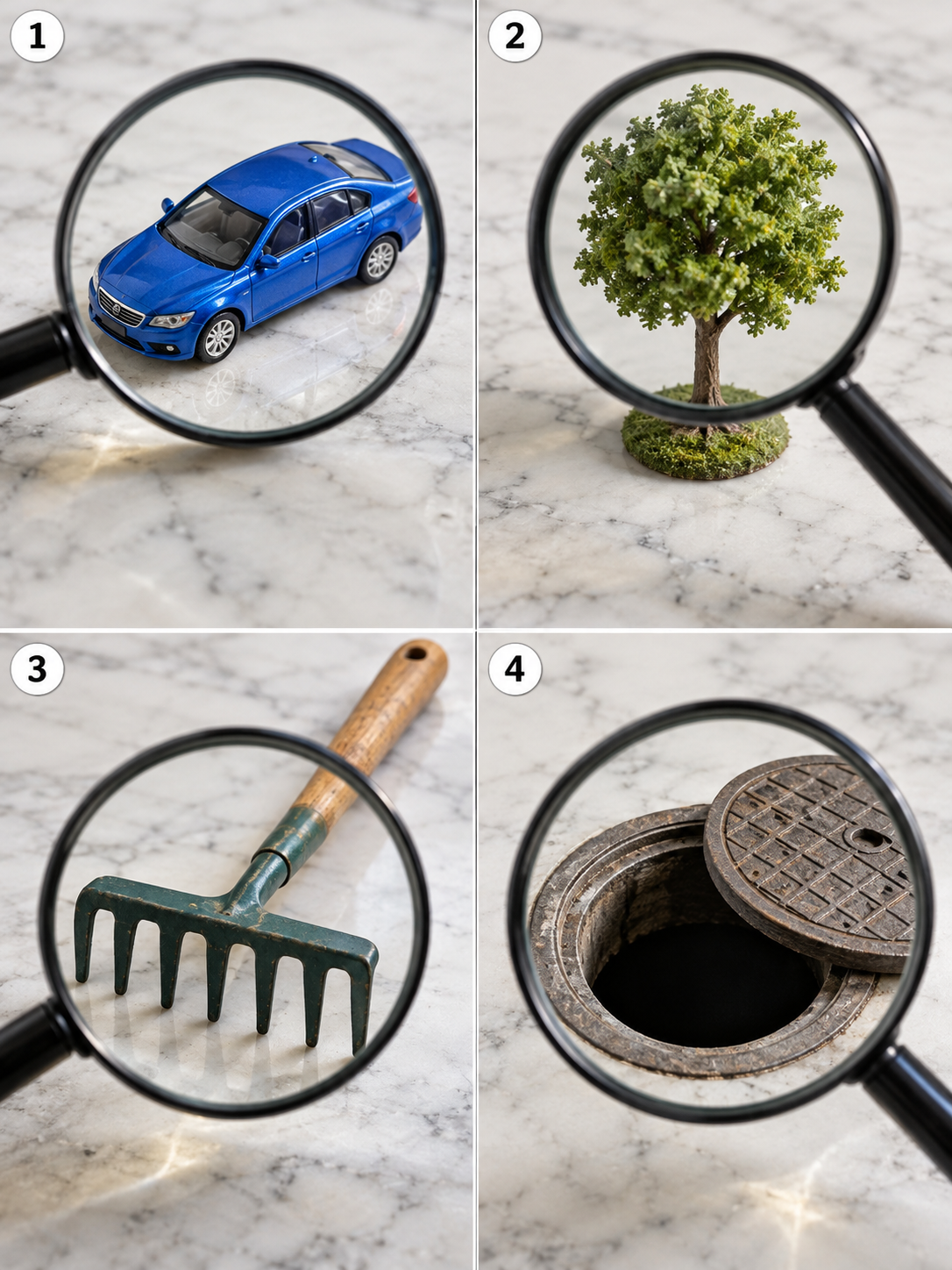
The Who is most safe? - beauty puzzle looks easy until you start second-guessing the picture. Four cartoon people are shown near different objects, and the question asks which one is in the safest position.
The clean way to solve it is to judge only what the image actually shows. Do not add hidden branches, imagined movement, or extra danger that is not drawn.
Who Is Most Safe Beauty Clues
The scene has four numbered people and three obvious dangers. The quickest solve is to name each hazard before choosing an answer.
- Person 1. Walking close to a moving car creates the most serious visible traffic risk.
- Person 2. Standing beside a tree looks calm because no clear danger is shown in their path.
- Person 3. Stepping on a rake can make the handle snap upward and hit the face or body.
- Person 4. Walking near an open manhole creates a clear fall hazard.
Solve It Without Guessing
- Check each person. Look at the object nearest to their feet and the direction they are moving.
- Separate shown from imagined. A tree is not a danger unless the drawing gives a reason to think it is falling, broken, or unstable.
- Compare direct hazards. Traffic, a rake, and an open manhole are all visible risks in the picture.
- Choose the calmest spot. Number 2 has no immediate visible hazard, so number 2 is the safest person.
Why Number 2 Wins
Number 2 wins because the question is comparative. It does not ask who is completely safe forever. It asks who is most safe in this image. Person 1 is too close to traffic. Person 3 is about to meet the rake. Person 4 is near a fall opening. Number 2 is the only person without a direct danger drawn beside them.
This is the same habit that helps with other visual riddles. In the viral beauty math trap, the wrong answer often comes from rushing. Here, the wrong answer often comes from adding details that are not there.
Why People Miss It
Visual puzzles lean on attention. You notice the dramatic parts first, then your brain tries to build a story around them. The American Psychological Association has written about how perception can miss or reshape details when attention is focused elsewhere in its overview of sensory processing.
That is why this puzzle feels oddly debatable. One viewer focuses on the car. Another thinks about the tree. Someone else remembers a classic rake gag and picks person 3. The clean solution comes from slowing down long enough to compare all four positions.
Real Safety Clues
The hazards in the cartoon are exaggerated, but they point to real safety basics. Roads demand attention because pedestrians are vulnerable around vehicles. NHTSA shares pedestrian reminders in its pedestrian safety guide.
Falls matter too. An open manhole is a cartoon version of a trip or drop hazard, but the idea is plain. The CDC recommends removing things people can trip over as part of its fall prevention advice. If you like practical safety checks, the same careful eye helps when you choose safe water containers at home.
Try More Beauty Puzzles
If this one pulled you in, try another image-based challenge next. Spotting five differences in a beauty picture puzzle trains the same patient scanning. Spotting winter beauty mistakes adds seasonal details that can hide in plain sight.
The useful trick is the same every time. Scan from left to right. Name what you can prove. Then answer before your imagination adds extra clues.
Share The Answer Cleanly
A good explanation is short. Say that person 2 is safest because person 1 is near a car, person 3 is near a rake, and person 4 is near an open manhole. Number 2 has no visible hazard beside them.
If someone argues about the tree, ask what in the drawing shows the tree is dangerous. That usually settles it. For a calmer kind of beauty read, you can switch from puzzles to habits with a simple beauty routine that works.
Summary
This puzzle works because it tempts people to invent clues. The best answer is number 2 because the visible hazards around the other three people are more direct and immediate.
Frequently Asked Questions
- → Who is most safe in the beauty puzzle?
The safest person is number 2. In this version, person 2 is simply standing beside a tree, while the others are near a car, a rake, or an open manhole.
- → Why is person 2 the answer?
Person 2 has no clear hazard touching their path. The puzzle asks for the safest option, so you compare the visible risks rather than guessing what might happen later.
- → Is the driver ever the correct answer?
Some versions of this riddle include a driver as a trick answer. In the beauty version described here, the numbered choices focus on the four pedestrians, so number 2 is the strongest answer.
- → Why do people choose person 3?
Person 3 may look less threatened than the person near traffic or the manhole. The rake is still a visible hazard because one step could flip the handle upward, so it is not the safest choice.
- → What is the trick in this puzzle?
The trick is overthinking. The drawing gives you enough information, but it also leaves space for viewers to imagine dangers that are not shown.
- → How can I solve similar picture puzzles faster?
Start by listing only visible facts. Then compare immediate risks, remove imagined details, and choose the option with the fewest real hazards.